

Railway
Passengers stranded as Abuja-Kaduna train breaks down, faulty engine replaced
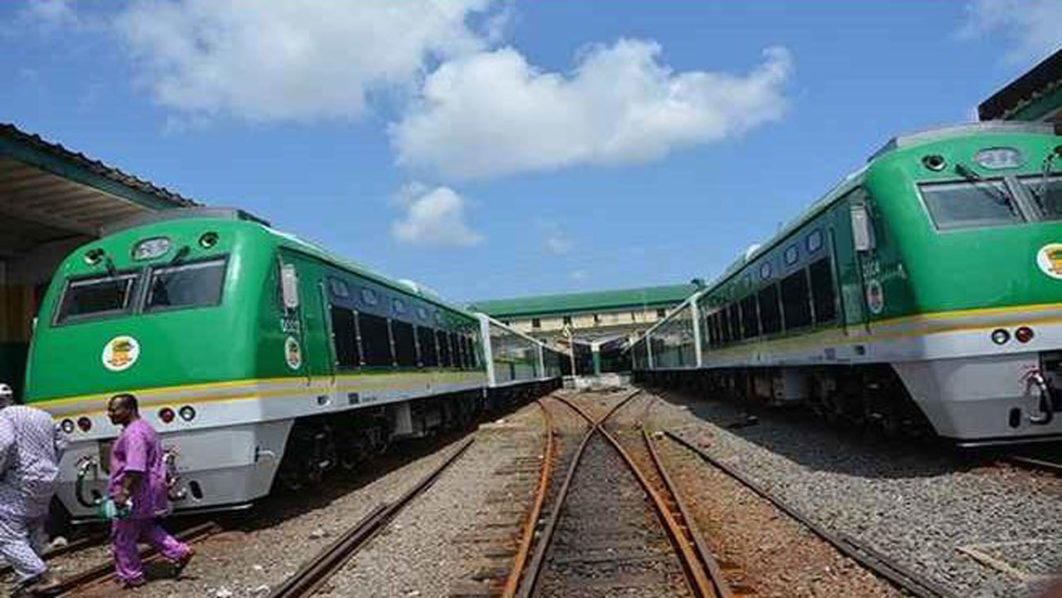
Scores of passengers travelling on a Kaduna-Abuja train Monday morning were stranded after their train broke down a few kilometres away from Rigasa Station, Kaduna State.
The train reportedly developed a mechanical fault just some five minutes after leaving Rigasa.
An engineer with the Nigerian Railway Corporation reportedly pleaded with the passengers over the incident, adding that they had contacted the train station at Idu in the Federal Capital Territory for another locomotive to be sent so that the passengers could be conveyed to their destination.
He said, “We are very sorry, the locomotive is faulty. We have contacted the Idu Train Station for another locomotive. It would take them two hours to be here.”
Secretary of the Nigeria Union of Journalists, Midat Joseph, who was on the train, said the train developed fault around 7am.
“I left my house as early as 5am to join the 6.40am train but unfortunately I have been trapped here in this forest,” Joseph said.
The Managing Director of the NRC, Fidet Okhiria, confirmed the incident, saying the train broke down as a result of engine failure but added that another engine had taken over.
“It’s an engine failure, but a relief engine has taken over.”
Last year, Minister of Transportation, Rotimi Amaechi, had said locomotives on the Abuja-Kaduna rail route broke down up to two times would be returned to China.
He said, “It is worrisome that these locomotives that are brand new are failing,” Amaechi said during an inspection in Lagos.
He said the locomotives had a warranty for over four years, adding that the government was considering returning them to China.
Many people travelling between Abuja and Kaduna use the train because of kidnapping on the road.
Although cases of abduction have abated, the train is still the preferred choice of passengers who go to Abuja from Kaduna and vice versa.

Railway
NRC Denies Ticket Racketeering, Says Abuja-Kaduna Rail Demand Exceeds Seats by 10-Fold
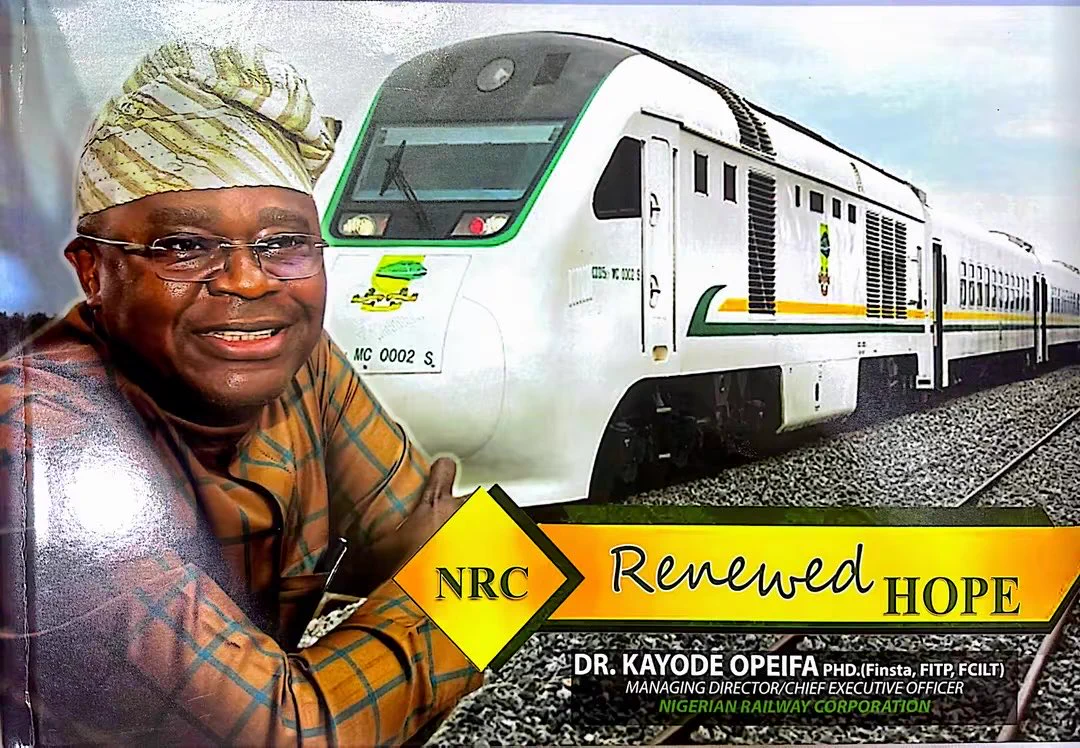
NRC Denies Ticket Racketeering, Says Abuja-Kaduna Rail Demand Exceeds Seats by 10-Fold
The Nigerian Railway Corporation has denied allegations that it deliberately creates artificial scarcity of tickets on the Abuja-Kaduna Train Service to facilitate their resale at exorbitant prices, blaming the persistent shortage on surging passenger demand and the activities of ticket touts exploiting the system.
The corporation, in a statement signed by its Chief Public Relations Officer, Callistus Unyimadu, said demand for rail services on the corridor had exceeded available capacity by more than 10 times, creating a severe imbalance between the number of passengers seeking tickets and the limited seats available.
The clarification followed a viral social media video by Instagram blogger Faizah Raji, operating under the handle @wearegst, who accused the NRC of withholding tickets from its official electronic booking platform and reselling them through unnamed agents at prices reportedly twice the approved fares.
However, the NRC described the allegations as misleading, insisting that the corporation neither buys nor sells train tickets but facilitates passenger access to the railway service through approved ticketing arrangements.
According to the management, Raji had acknowledged in her account that the corporation warned passengers to purchase tickets exclusively through authorised platforms but subsequently bought a ticket from an agent after failing to secure one through the official portal.
The NRC said while her experience might be genuine, patronising unofficial ticket sellers despite repeated warnings did not establish the corporation’s involvement in the alleged racket.
It warned passengers that tickets obtained through unauthorised agents, particularly those purchased with another person’s identification details, could be invalid and expose travellers to financial losses or denial of boarding.
The corporation explained that electronic ticketing across its standard-gauge railway operations was handled by private concessionaires under public-private partnership arrangements approved by the Infrastructure Concession Regulatory Commission and the Federal Executive Council before 2023.
READ ALSO:
- FG Draws Red Line on Fuel Subsidy, Warns of Naira Crisis if Reforms Are Reversed
- NRC Denies Ticket Racketeering, Says Abuja-Kaduna Rail Demand Exceeds Seats by 10-Fold
- Tinubu Reappoints INEC Commissioner, Nominates Six Others Ahead of 2027 Elections
It identified SecureID/TPS as the ticketing service provider for the Abuja-Kaduna Train Service, Global Software Digital Solutions for the Lagos-Ibadan Train Service, and Fane Warri-Itakpe Ticketing Solutions Limited for the Warri-Itakpe Train Service.
NIN verification introduced to combat ticket fraud
The NRC traced the growing challenge of ticket racketeering to fraudulent practices that persisted despite measures introduced to strengthen passenger identification and railway security.
It said the government introduced the use of the National Identification Number as a condition for purchasing train tickets following the 2022 train attack, partly to curb ticket racketeering.
However, according to the corporation, fraudsters subsequently devised ways of obtaining multiple NINs to purchase tickets in bulk for resale to unsuspecting passengers.
To tackle the practice, the NRC introduced an additional verification procedure in 2025, modelled on the system used at the Murtala Muhammed International Airport Terminal 2 in Lagos.
Under the arrangement, passengers’ NIN details are checked against the information used to purchase their tickets, while personal identification cards are also required before boarding.
The corporation said its verification system at Idu and Kubwa in Abuja, as well as Rigasa in Kaduna, is integrated with the National Identity Management Commission database, enabling officials to retrieve the photograph associated with the NIN used for a ticket purchase.
This, it explained, helps officials identify passengers attempting to travel with tickets purchased using another person’s identity.
The NRC, however, acknowledged that security challenges at the Rigasa station, which it described as having been hurriedly adopted, had occasionally made enforcement difficult because of limitations in its access-control infrastructure.
NRC vows crackdown on racketeering
Despite the challenges, the corporation declared zero tolerance for ticket racketeering, warning that any employee found participating in or colluding with fraudulent ticket sellers would face summary disciplinary action.
It also said the electronic ticketing concessionaires had been directed to improve the accessibility and ease of use of their booking platforms to ensure passengers could obtain tickets more conveniently while complying with established procedures.
The management maintained that the growing preference for train travel among Nigerians had placed considerable pressure on available capacity, reinforcing the need for passengers to use only approved booking channels.
It described the purchase of tickets through third parties using another person’s NIN or name as unacceptable and an act of economic sabotage that undermines the integrity of the railway system.
The corporation assured passengers that it remained committed to improving customer service, strengthening security and ensuring that rail travel became a preferred alternative for Nigerians.
It reiterated its commitment to providing safe, affordable, reliable and convenient train services across the country’s railway corridors while intensifying efforts to prevent criminal activities and protect the corporation’s reputation.
NRC Denies Ticket Racketeering, Says Abuja-Kaduna Rail Demand Exceeds Seats by 10-Fold
Railway
Rail-Port-Industry Link Critical to Cutting Logistics Costs – NRC
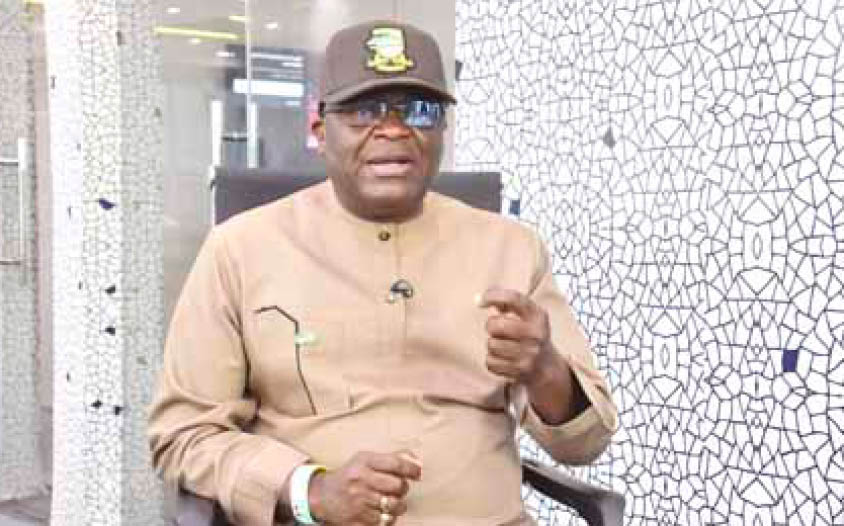
Rail-Port-Industry Link Critical to Cutting Logistics Costs – NRC
The Nigerian Railway Corporation has said Nigeria must urgently integrate its rail network with seaports, inland dry ports and industrial centres to cut logistics costs, ease pressure on the highways and make the movement of goods across the country more efficient.
The NRC said a seamless connection between rail lines, ports and major production centres would strengthen the movement of agricultural produce, containers, petroleum products and other bulk cargoes, while reducing the cost and time involved in transporting goods from ports to markets and industries.
The Managing Director/Chief Executive Officer of the NRC, Dr Kayode Opeifa, stated this on Thursday in Lagos in a speech delivered on his behalf at the Transport Correspondents Association of Nigeria conference, stressing that rail, road, maritime, inland waterways and aviation must work as an integrated transportation system if Nigeria is to unlock the full economic benefits of its logistics sector.
The NRC boss also revealed that the corporation had opened the door wider for private investors to participate in the development of freight terminals, logistics hubs, rolling stock and other critical infrastructure as part of efforts to transform Nigeria’s rail system into a major engine of economic growth.
He said stronger private-sector participation was imperative because government alone could not provide the massive investment required to build an efficient and interconnected transportation system capable of lowering logistics costs and boosting economic activities.
Opeifa said Nigeria could no longer afford to develop its transportation modes in isolation, stressing the need to connect rail with seaports, inland dry ports, industrial centres and major economic corridors.
He said such integration would enable rail to play a greater role in moving bulk cargo across the country, while reducing the pressure currently placed on the highways.
According to him, rail has the capacity to move large volumes of passengers and freight over long distances and should therefore become a critical component of Nigeria’s logistics architecture.
He said, “At the Nigerian Railway Corporation, our focus is therefore not only on passenger transportation but also on strengthening freight operations and creating greater connectivity between rail lines, seaports, inland dry ports, industrial centres and major economic corridors.”
The NRC MD identified agricultural produce, petroleum products, containers and other commodities as some of the major categories of cargo that could benefit from a more efficient rail freight system.
He said an effective multimodal transportation network involving rail, road, maritime, inland waterways and aviation would reduce the cost of doing business, improve access to markets and strengthen Nigeria’s competitiveness.
Opeifa also called for a regulatory framework capable of attracting private capital into the transportation sector, particularly in rolling stock, freight terminals, logistics hubs and related infrastructure.
“The future of Nigeria’s transportation sector must also be driven by stronger partnerships. Government alone cannot provide all the infrastructure and investment required,” he said.
The NRC’s position comes amid growing concerns over the high cost of logistics and the burden placed on Nigerian businesses by inefficient movement of goods from ports to markets and production centres.
Opeifa said transportation infrastructure should be viewed not simply as public assets but as critical economic infrastructure capable of stimulating industrial production, trade and employment.
He, however, warned that vandalism and encroachment remained major threats to railway investments, stressing the need for stronger collaboration among government agencies, security organisations, host communities and passengers to protect railway tracks, bridges, signalling systems and other infrastructure.
He said the protection of rail infrastructure must become a collective responsibility if the country was to derive the full economic benefits of ongoing investments in the sector.
The NRC chief executive also stressed the need to make transportation affordable and accessible, noting that improved mobility would provide Nigerians with greater access to jobs, markets, education and economic opportunities.
Opeifa reaffirmed the NRC’s commitment to the Federal Government’s vision of developing a modern, integrated and efficient transportation system capable of supporting the country’s economic aspirations.
He commended TCAN for providing a platform for policymakers, operators, investors, professionals and the media to deliberate on the challenges and opportunities in Nigeria’s transportation sector.
He said sustained investment, innovation, collaboration and effective policy implementation remained essential to building a logistics system capable of unlocking Nigeria’s economic potential.
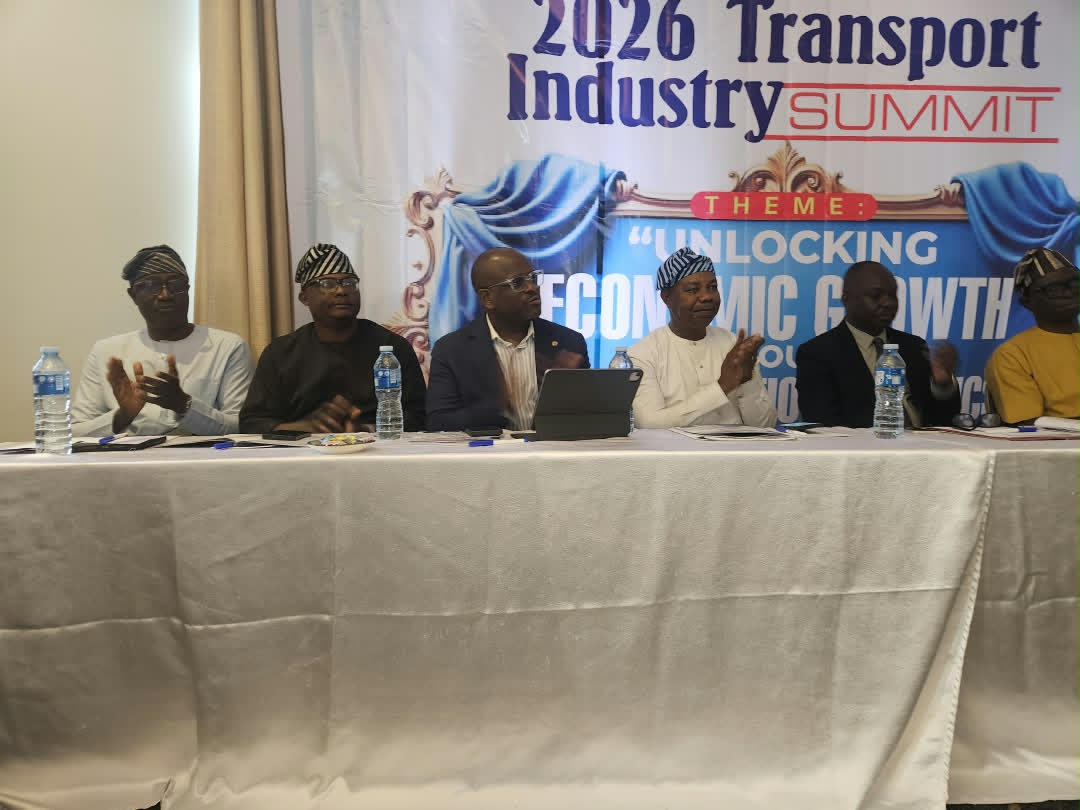
Railway
Fire Scare at Abuja Train Station as Electrical Fault Sparks Blaze, NRC Assures Passengers
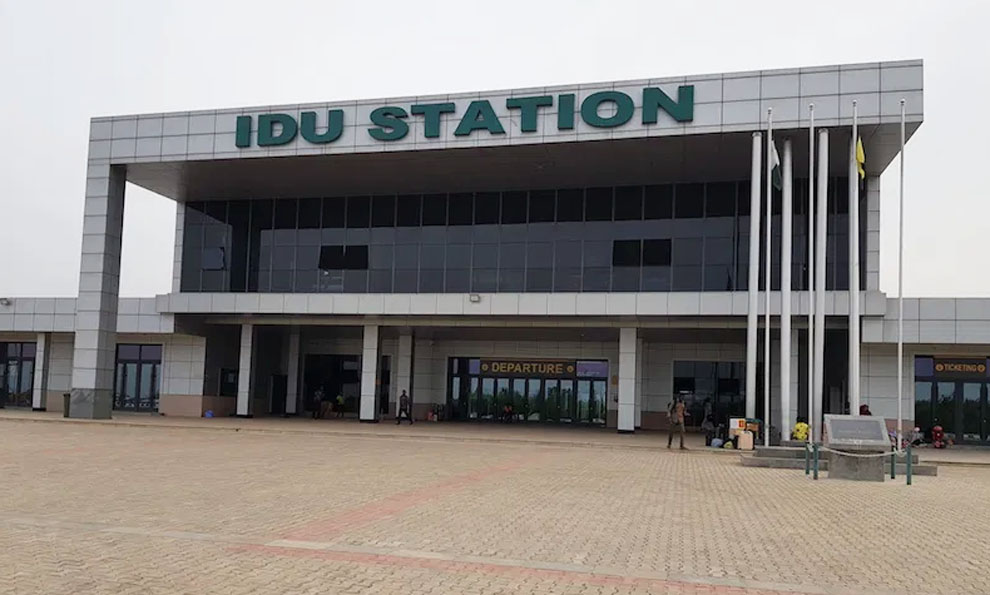
Fire Scare at Abuja Train Station as Electrical Fault Sparks Blaze, NRC Assures Passengers
A minor fire caused by an electrical fault broke out at the Idu Train Station in Abuja on Wednesday night, but the incident did not disrupt operations on the Abuja–Kaduna train route, the Nigerian Railway Corporation (NRC) has said.
The fire, which occurred in the station’s low-voltage electrical room, was detected at about 8:30 p.m. and was quickly brought under control by maintenance personnel.
A preliminary inspection showed that some electrical supply cables connected to the station’s control panels were damaged in the incident.
READ ALSO:
- Veteran Nollywood Actress Cries Out for Financial Help Over Cervical Cancer Battle
- MURIC Raises Alarm Over Alleged Religious Imbalance in NDA 78RC Admission
- Agunbiade fires back at Deji Yesufu: Don’t mistake Boko Haram for Islam
However, the NRC said the station’s solar power system was not affected, while power had been temporarily restored to the lifts and escalators.
According to the Corporation’s Chief Public Relations Officer, Callistus Unyimadu, all the lifts and escalators are currently operational except Lift 1.
The NRC stressed that the incident had no impact on Abuja–Kaduna train services, assuring passengers that scheduled operations would continue as normal.
The Corporation said its technical team was conducting a detailed assessment to establish the cause of the electrical fault and permanently restore the affected installations.
It added that appropriate safety measures had been put in place while the assessment and remedial work continued.
Fire Scare at Abuja Train Station as Electrical Fault Sparks Blaze, NRC Assures Passengers
-

 metro14 hours ago
Cancelled Wedding: Man Sues Ex-Fiancée’s Father Over Unpaid ₦70,000 Dowry
-

 Politics3 days ago
2027: APGA Chairman Says South-East Must Back Tinubu to Secure Igbo Presidency
-

 Entertainment3 days ago
Tope Alabi Threatens Pastor With Lawsuit Over Toluwanisings’ Death Claims
-

 International2 days ago
France Deploys 70,000 Police as Cost-of-Living Protests Intensify
-

 metro3 days ago
Borno: Troops Kill 15 Terrorists in Midnight Air Strike
-

 Politics3 days ago
Atiku Condemns Attack on Edo Comedian Over Refusal to Support Tinubu
-

 Auto15 hours ago
Car of the Year, other top honours up for grabs as NAJA Awards race begins
-
 International3 days ago
Tibet in Mourning: 7.0 Quake Kills 16, Injures 76 as Rescue Teams Race Against Time in Nagqu