

metro
Omokri Defends Electronic Transmission, Questions Feasibility of Real-Time Results in Nigeria

Omokri Defends Electronic Transmission, Questions Feasibility of Real-Time Results in Nigeria
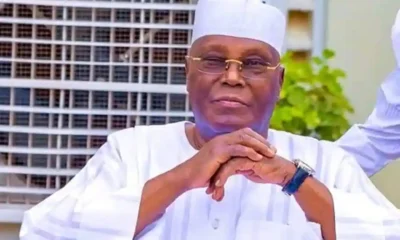
Former presidential candidate and ambassador-designate Reno Omokri has said that calls by Peter Obi and other opposition figures for real-time electronic transmission of election results reflect weak grassroots party structures rather than genuine electoral reform concerns.
Omokri made the remarks on Wednesday during an appearance on Channels Television’s Politics Today, where he addressed the intensifying national debate on electoral reforms, the Electoral Act amendment, and broader concerns about election credibility in Nigeria.
According to him, credible elections depend more on strong party presence at polling units than on technology alone. He argued that political parties serious about winning elections must deploy agents to every polling unit to monitor the voting process, witness counting, and sign official result sheets.
“If you have your party agents in every polling unit, it is impossible to rig. At the polling unit, the presiding officer signs the result and all party agents sign. If anything different is declared elsewhere, you can tender that result sheet in court,” Omokri said.
READ ALSO:
- 2027 Polls: Christian Group Cautions Shari’a Council Over INEC Boycott Threat
- Starvation Cult Preacher Faces Expanded Murder, Terrorism Charges in Kenya
- Lagos Allocates 180 Shops to Displaced Alabarago Market Traders
He stressed that the legally recognised result is the physical EC8A form signed at the polling unit, not the electronically transmitted version. “The EC8A form signed by the presiding officer and party agents is the real result. If what is transmitted electronically differs from that physical document, it is the physical document that the court will rely on,” he added.
Omokri claimed that during the 2023 general elections, the Labour Party lacked agents in several polling units nationwide, particularly in areas where it performed poorly. He said this absence fueled suspicions of manipulation. “In polling units where they lost and did not have agents, they assumed they were cheated. The issue is not about real-time transmission. The issue is structure. Whether it is ADC or Labour Party, get your party agents in every polling unit in Nigeria,” he stated.
His comments come amid renewed controversy over proposals to amend the Electoral Act and whether INEC should be mandated to carry out compulsory real-time electronic transmission of election results.
Despite his criticism, Omokri clarified that he supports electronic transmission of election results, describing it as necessary for transparency and accountability. However, he warned against what he called emotional or unrealistic expectations regarding instantaneous nationwide transmission.
“I support electronic transmission of election results. Anyone who is patriotic should support that. But what some people are asking for is real-time electronic transmission, and that is not practicable, even in countries that are far more technologically advanced than Nigeria,” he said.
He explained that in countries like the United States, early results announced on television are typically media projections based on exit polls rather than official declarations by electoral authorities. “The official results are announced later by the electoral authorities. We saw the danger of relying on that in 2000, when the media wrongly declared a winner and had to reverse itself,” he noted.
According to him, electronic transmission is meant to enhance transparency and public participation, not replace manual collation or physical documentation. “Electronic transmission is not the substantive or primary way of declaring results. It is a backup meant for transparency and accountability. Even if you hack the electronic system, it does not change the physical result,” he said.
Omokri also cited Nigeria’s infrastructure limitations, questioning the feasibility of seamless real-time result transmission across thousands of polling units, including rural communities with limited or no network coverage. “If banks cannot guarantee 100 per cent real-time transfers, how do you expect INEC to do real-time transmission across thousands of polling units?” he asked, adding that connectivity gaps are not unique to Nigeria.
Responding to criticisms surrounding his nomination as ambassador by President Bola Tinubu, Omokri rejected claims of hypocrisy for accepting a government appointment after previously criticising the administration. According to him, he never categorically ruled out serving Nigeria under the current government.
“When the facts changed, I changed with them. I went to Chicago State University myself to verify the truth, even though it went against my political interest. I deal with facts, not emotions,” he said. He clarified that while he may have declined certain roles previously due to past comments, he never said he would not serve Nigeria. “As an ambassador, I’m going to work for Nigeria. I will be an ambassador of the Federal Republic of Nigeria,” he stated.
Omokri is among the nominees President Bola Tinubu forwarded to the Senate for ambassadorial screening and confirmation.
He also criticised human rights activist Omoyele Sowore, expressing concern over what he described as his approach to economic policy discussions. Referencing a comment attributed to Sowore suggesting cannabis cultivation as part of economic diversification, Omokri questioned the viability of such a proposal.
“This is a drug considered ‘Class B’ in the UK and banned in so many countries. And this man said that is the key to Nigeria’s economic survival?” Omokri said. He argued that if Nigeria’s soil is fertile enough for such crops, it should instead prioritise more valuable and widely accepted agricultural exports.
Omokri Defends Electronic Transmission, Questions Feasibility of Real-Time Results in Nigeria









metro
Kaduna Troops Rescue Two-Year-Old Boy From Kidnappers, Search for Mother Continues
Kaduna Troops Rescue Two-Year-Old Boy From Kidnappers, Search for Mother Continues
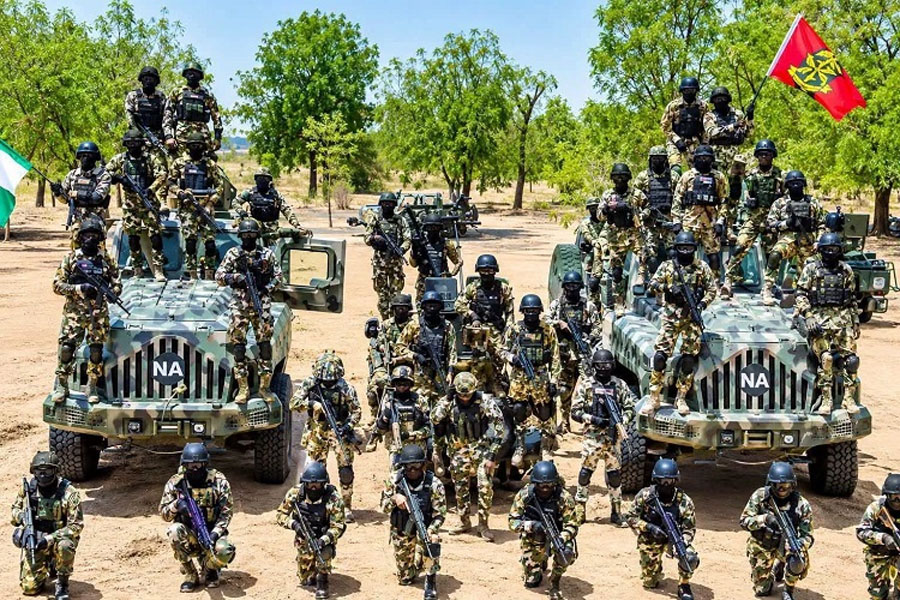
A two-year-old boy is back with his family after troops rescued him from suspected kidnappers in Kaduna State.
Jafaru Baba was abducted with his mother from Ungwan Nungu village in Sanga Local Government Area. Troops later recovered the child after tracking the kidnappers to an area around Tayu Village.
The rescue followed intelligence received by security forces about the movement of the abductors and their victims.
According to security sources cited by security analyst Zagazola Makama, troops launched the operation at about 4pm on Wednesday, September 16.
READ ALSO:
- Gaza Building Collapse Kills 21, Including Eight Children
- Niger Mosque Abductions: Terrorists Execute 30 of 500 Captive Muslim Worshippers
- OAU Investigates Death of Final-Year Student as Police Begin Probe
They searched Tayu High Grounds, Tayu Village and surrounding parts of Sanga LGA. The operation later brought the troops into contact with the suspected kidnappers.
A gunfight followed, forcing the abductors to retreat into the bush. In the process, they left the toddler behind.
The troops quickly secured Jafaru and later handed him over to his father.
Security sources said the troops fired 17 rounds of 7.62mm ammunition during the confrontation.
Meanwhile, the search has not ended. Security personnel are still combing the area for the child’s mother, who remains in the kidnappers’ custody.
They are also pursuing the suspects who fled after the encounter, as efforts continue to rescue the woman and bring those responsible for the abduction into custody.
Kaduna Troops Rescue Two-Year-Old Boy From Kidnappers, Search for Mother Continues
metro
Niger Mosque Abductions: Terrorists Execute 30 of 500 Captive Muslim Worshippers
Niger Mosque Abductions: Terrorists Execute 30 of 500 Captive Muslim Worshippers
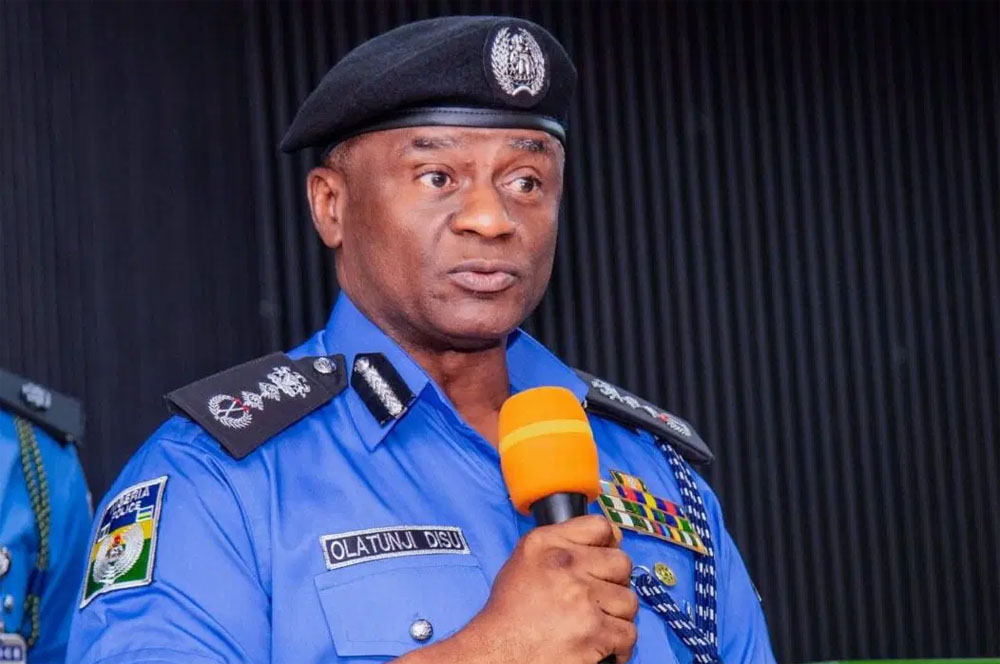
MINNA, NIGERIA – The mass abduction of worshippers from mosques in Niger State has escalated dramatically, with armed terrorists reportedly executing some of the hundreds of captives seized during Friday prayers. The Inspector-General of Police, Olatunji Disu, travelled to Niger State on Saturday to assess the security situation and ordered reinforced rescue operations.
The attacks occurred on Friday, 21 August 2026, at approximately 2pm. Police spokesperson Wasiu Abiodun confirmed that armed men simultaneously attacked mosques in four communities – Dekara, Kpenya, Sabon-Gida and Gidan-Zana – in the Borgu Local Government Area, while Muslims were observing Friday prayers. Witnesses described scenes of chaos. A Dekara resident, speaking on condition of anonymity, said the terrorists surrounded the mosque shortly after prayers began. “As soon as the imam said ‘Assalamualaikum’, the bandits surrounded the mosque and took people away.” Local residents estimate that more than 60 people were abducted from Dekara Central Mosque alone. In Gbezhin community, no fewer than 100 people remained unaccounted for as of Sunday evening. The terrorists later released a video claiming to hold approximately 500 captives, including women and children, with the sound of children crying audible in the footage.
On Saturday, the terrorists issued a warning to surrounding communities, ordering residents to vacate their homes within 30 minutes and threatening: “We will kill anyone we meet when we return.” Those threats appear to have been carried out. A Dekara resident told Daily Trust: “We received information that some of the abducted worshippers have been killed, but we do not know the exact number. Soldiers and vigilantes have moved to recover the bodies, but all routes accessible to security personnel have been planted with improvised explosive devices.” The Niger State chapter of the Christian Association of Nigeria (CAN), through its chairman, Bishop Bulus Dauwa Yohanna, confirmed that approximately 30 worshippers who attempted to flee were shot dead by the gunmen. This figure corresponds with reporting by NPO Reports.
READ ALSO:
- OAU Investigates Death of Final-Year Student as Police Begin Probe
- 57-Year-Old Man Arrested Over Sexual Abuse of Stepdaughter in Edo
- US-Based Nigerian Lawyers Disbarred: Full List of Fraud, Theft and Misconduct Cases
The continuing violence and execution threats have triggered mass displacement. Resident Usman Musa told journalists that more than 200 residents from Gbezin had fled to neighbouring Benin Republic for safety. Another resident added that approximately 230 residents from Gidan-Zana and Sabon-Gida were taking refuge in Gawungi, inside Benin, while others had fled to Kwara State to stay with relatives.
Among those abducted are several prominent community figures. According to Ismaila Yahaya, the 90-year-old village head of Ka’ada was among those taken. He is the biological father of the District Head of Dekara and had only recently been released from a previous kidnapping. The violence in Borgu Emirate has not been confined to the mosque attacks. The Niger State Government confirmed that Alhaji Ahmed Yusuf, the village head of Galla, was killed by armed men at his residence. Governor Mohammed Umaru Bago expressed condolences, describing the killing as evidence of the bandits’ “extreme arrogance”.
Amid the escalating crisis, Inspector-General of Police Olatunji Disu visited Niger State on Saturday, 29 August, meeting with Deputy Governor Yakubu Garba at the Government House in Minna. He conveyed his condolences to the families of the victims and pledged that “the safe rescue of the kidnapped victims and bringing the perpetrators to justice remains the focus of current operations”. Disu has ordered the deployment of elite reinforcements to Niger State, including counter-terrorism units, tactical squads and the police air wing. Assistant Inspector-General of Police Victor Olaiya of Zone 7 has been dispatched to coordinate rescue efforts. Addressing officers at the Niger State Police Command, the Inspector-General said: “Nigerians are watching to see the police do what is right. I am not here for ceremony, but to bring a strong message of support to officers and soldiers working under difficult conditions.”
The Nigerian Supreme Council for Islamic Affairs (NSCIA) described the attacks as “heinous and barbaric”, calling on the Federal Government to “move beyond sporadic rescue operations” and establish a permanent, intelligence-driven and community-centred security architecture. The Christian Association of Nigeria’s Niger State chapter urged the government to provide adequate security at places of worship nationwide, stressing that “an attack on any place of worship is an attack on the sanctity of worship and a threat to the wider community”. Amnesty International also urged Nigerian authorities to secure the safe release of the abducted worshippers, noting that at least 1,100 people were abducted in the country between January and April 2026, with the actual figure likely to be far higher.
As of press time, the Niger State Government said it had not received any contact or demands from the kidnappers. Information Commissioner Obed Nuhu, speaking in a television interview, said the attacks were suspected to have been carried out by Lakurawa and Boko Haram elements, though the exact number of victims remained unverified.
Niger Mosque Abductions: Terrorists Execute 30 of 500 Captive Muslim Worshippers
metro
Kano Police Trace 12 Stolen Vehicles, Arrest 10 Suspects
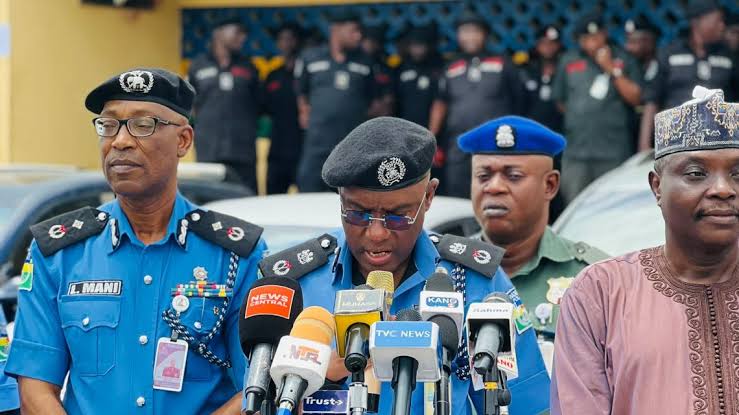
Kano Police Trace 12 Stolen Vehicles, Arrest 10 Suspects
The Kano State Police Command has arrested 10 suspected members of an alleged interstate car theft syndicate and recovered 12 vehicles linked to the group.
Commissioner of Police Ibrahim Adamu Bakori disclosed this on Wednesday during a briefing at the Tarauni Area Command.
According to him, five suspects were first arrested in Adamawa on September 7, leading to the recovery of a Mercedes-Benz GLK 350. Further investigation resulted in the recovery of 10 additional vehicles from Kano and neighbouring states.

Five more suspects were arrested on September 12 at Kwankwasiyya City Quarters, Tarauni, where police allegedly recovered a stolen Toyota Hilux.
Bakori said preliminary findings showed that the suspects allegedly operated across Kano, Katsina, Bauchi, Gombe and other states. He said the group allegedly stole vehicles, hid them at different locations and moved them across state borders for resale.
The commissioner noted that 11 of the 12 recovered vehicles were unregistered, making it difficult to trace their owners.
He urged vehicle owners to register their vehicles and display valid number plates, while warning that unregistered vehicles could make criminal investigations more difficult.
Bakori said investigations were ongoing and efforts were underway to arrest other suspected members of the syndicate.
Kano Police Trace 12 Stolen Vehicles, Arrest 10 Suspects
-
 Politics3 days ago
2027: Northern Lecturers Back Tinubu, ASUU Disowns Endorsement
-

 metro3 days ago
Police Arrest Mother Over Alleged Brutal Abuse of 7-Year-Old Girl in Anambra
-

 Sports2 days ago
‘I Was Never the Chosen One’ — Dembele Responds to Mbappe
-

 International1 day ago
Islamic Council Condemns Attempted Attack on Holy City of Mecca
-

 Education2 days ago
JAMB Moves 2027 UTME Time — Here’s What Candidates Need To Know
-

 metro2 days ago
Lagos Power Outage: Ikeja Electric Blames TCN as Businesses, Homes Groan
-
 News1 day ago
Keep Politics Out of My Office — Ogbomoso Grand Chief Imam Warns Politicians, Bloggers
-
 Politics2 days ago
2027: APC Governors Reject Wike’s Rainbow Coalition, Insist on Party Loyalty