

International
Netanyahu dispels death rumours, appears in video from Coffee Shop
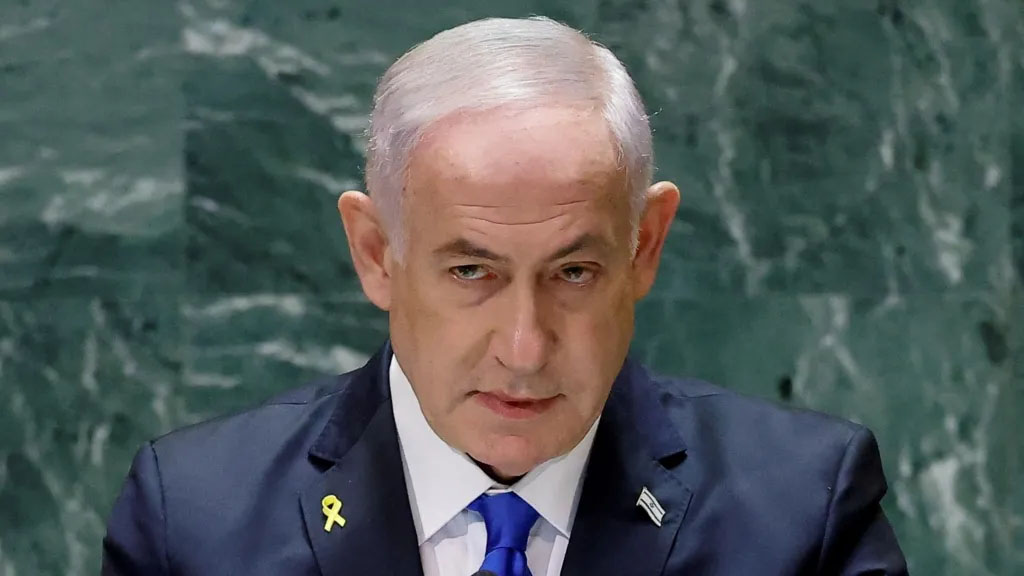
Netanyahu dispels death rumours, appears in video from Coffee Shop
Isreal Prime Minister Benjamin Netanyahu has dismissed rumours circulating online claiming that he was killed in a recent Iran attack, appearing in a video to reassure the public that he is alive.
In the video posted on his X page, the Israeli prime minister was seen sitting in a coffee shop while addressing the speculation about his alleged death.
Reports had earlier surfaced on social media suggesting that Netanyahu was killed during an attack on Israel by Iranian forces amid the escalating conflict in the Middle East.
Reacting to the claims, Netanyahu jokingly dismissed the rumours.
“They say I’m what? Watch,” he said in the video.
“I’m dying for coffee, you know what I mean? But for my people and how they behave, fantastic.”
The Israeli leader also used the opportunity to thank citizens for their support and urged them to continue observing safety instructions issued by the military.
“Your support is amazing, it empowers me, the government, the IDF,” he said, referring to the Israel Defense Forces.
“We’re doing things I can’t share now, but very strong operations in Iran and Lebanon today too.”
Netanyahu further advised Israelis travelling abroad to remain cautious and stay close to protected areas while the conflict continues.
“To those going abroad: go, but stay near a protected area,” he said.
He also urged the public to strictly follow directives from the Israel Home Front Command, which is responsible for civil defence and public safety during emergencies.
“To everyone: keep following Home Front Command orders at all times. Even heads of state, always near a protected room,” he added.
The video appears aimed at quelling speculation and reassuring Israelis as tensions continue to rise in the Middle East.


International
‘Completely False’ — Moreno Denies Using AI to Prepare Games

Robert Moreno has begun his interim tenure as South Korea’s coach with a denial of one of the more unusual controversies attached to his coaching career, claims that he used ChatGPT to help prepare his teams for matches.
The Spanish coach, who arrived in South Korea this weekend, was asked about the allegation as he began work with the national side.
Moreno was accused by Russian media earlier this year of heavily relying on artificial intelligence during his spell at Sochi, where he left in September 2025 following a poor run of results.
He has consistently rejected the claim.
Moreno said the reports were “completely false” and argued that his use of technology had been misrepresented.
His explanation comes as he takes over a South Korean side attempting to recover from a turbulent World Cup campaign. The team crashed out in the group stage, leading Hong Myung-bo to resign and leaving the Korea Football Association under pressure over both the team’s performance and its previous recruitment process.
The KFA appointed Moreno as a temporary replacement rather than immediately committing to a permanent coach. He is expected to lead the team through six international matches, beginning with September and October friendlies against Ecuador, Uruguay, Venezuela and Uzbekistan.
His first squad includes veteran captain Son Heung-min, who now plays for Los Angeles FC, as well as Lee Kang-in and Kim Min-jae.
Moreno said he wants his tenure to be about more than results, with the immediate goal of rebuilding the relationship between the national team and its supporters.
“I want to make Korean football fans happy,” he said.
For now, however, the AI controversy remains part of the baggage surrounding his appointment, something Moreno appears keen to put behind him as he begins the task of rebuilding South Korea’s national team.
International
Trump Downplays Report of Chinese Satellite Help to Iran

US President Donald Trump has played down a report alleging that Chinese entities supplied Iran with satellite imagery of a US military base in Jordan before and after a deadly Iranian missile strike.
The report, published by The Wall Street Journal, said US officials had linked high-resolution satellite imagery provided by Chinese entities to Iran’s July 17 attack on Muwaffaq Salti Air Base, where three American soldiers were killed and four others injured.
Trump, however, appeared to dismiss the significance of the allegation while speaking to reporters aboard Air Force One on Sunday.
“When they say that China spies on us, I say you’re right, and we spy on them too,” he said, adding that the two countries essentially engage in similar intelligence activities.
The report has not established that Beijing directly authorised or participated in the alleged transfer. US officials cited by the Journal did not identify the Chinese entities involved, while Chinese officials reportedly rejected the allegation and asked Washington to provide evidence.
The development comes as Washington and Beijing prepare for a potentially sensitive meeting between Trump and Chinese President Xi Jinping, expected to take place at the White House on September 24.
The US has previously accused Chinese companies of assisting Iran’s military capabilities. Washington sanctioned three China-based satellite firms in May over alleged support for Iran’s military operations.
Despite the latest dispute, Trump struck a conciliatory tone when discussing Xi, saying the Chinese leader had “behaved reasonably well” and that the US had done the same.
Trump’s response leaves the satellite imagery allegations unresolved, with Beijing denying involvement and Washington yet to publicly identify the companies allegedly involved.
International
Boris Johnson Caught in Russian Drone Strike Scare Near Poland Border
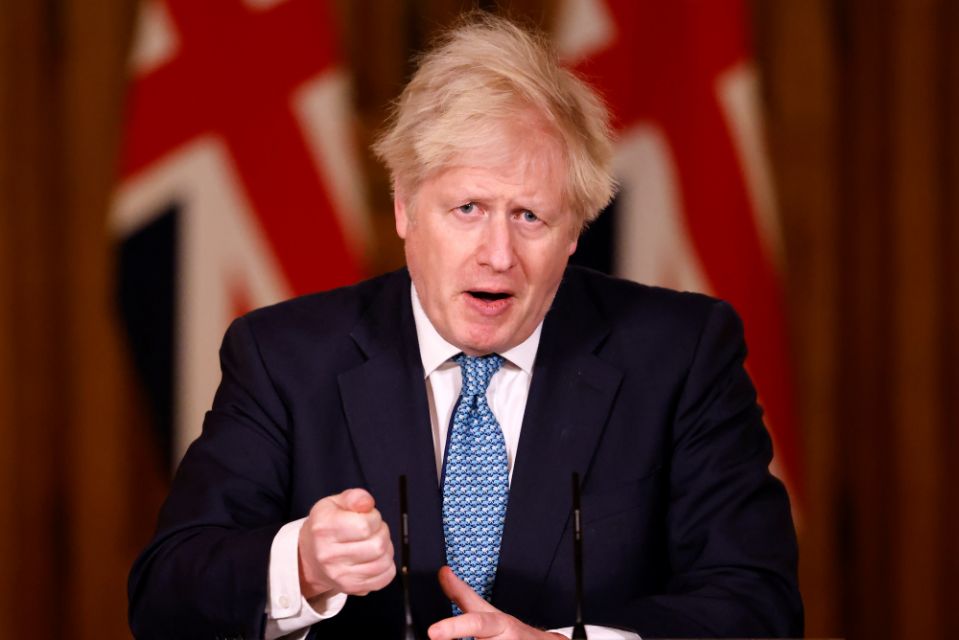
Boris Johnson Caught in Russian Drone Strike Scare Near Poland Border
Former British Prime Minister Boris Johnson was caught up in a major security scare involving a Russian drone attack after a passenger train was struck near Ukraine’s border with Poland, shortly after a diplomatic train carrying him and other European officials had passed through the area.
The incident occurred on Sunday, September 13, 2026, near Yahodyn in Ukraine’s Volyn region, about two kilometres from the Polish border.
Johnson was travelling from Kyiv after attending the Yalta European Strategy conference, where he joined other international political and security figures for discussions on the Russia-Ukraine war and European security.
He was aboard a diplomatic train carrying several prominent European figures, including former Swedish Prime Minister Carl Bildt, as the delegation travelled towards Poland.
The train reportedly passed through the Yahodyn area shortly before a Russian drone struck the locomotive of another passenger train.
The incident triggered heightened security measures in the area, although reports indicate that Johnson was not evacuated from the train and was not injured.
Ukraine’s state railway operator said the diplomatic train had departed the station earlier than scheduled because of security concerns.
A separate passenger train was subsequently targeted by a Russian drone near Yahodyn.
Railway officials said the drone was detected before the strike, allowing emergency procedures to be activated. The drone eventually hit the locomotive, but no casualties were reported.
The railway operator said there was a possibility that the diplomatic train carrying Johnson and other senior officials could have been the intended target. However, Ukrainian authorities have not conclusively established that the delegation was specifically targeted.
Another high-profile passenger in the area was former CIA Director David Petraeus, who was reportedly travelling separately and was also at Yahodyn around the time of the incident.
READ ALSO:
- South Africa: Two Women Arrested Over Alleged Rape, Kidnap of E-Hailing Driver
- Four-Storey Building Collapses in Enugu, Workers Trapped Inside
- 27-Year Wait Ends as Construction Begins on New Dutse Emir’s Palace
The attack has attracted international attention because of its proximity to Poland, which is a member of NATO and shares a long border with Ukraine.
The strike occurred only about two kilometres from Polish territory, raising fresh concerns over the potential for Russia’s war against Ukraine to create security risks along NATO’s eastern flank.
Polish authorities heightened their monitoring of the border area following the attack but there was no immediate indication that the Russian drone entered Polish airspace.
The incident came as Russia launched another major wave of drone and missile attacks across Ukraine.
Ukrainian authorities reported hundreds of drones being used during the overnight assault, with several regions targeted.
The western part of Ukraine has increasingly become a target of Russian long-range attacks despite being located far from the main battlefield.
The country’s railway network has also remained a key target because of its importance in transporting civilians, military equipment, humanitarian supplies and international officials.
Ukraine has repeatedly accused Russia of deliberately targeting civilian infrastructure, while Moscow maintains that its attacks are directed at military and strategic facilities.
The latest strike also underscored the dangers faced by foreign politicians and diplomats travelling inside Ukraine.
Johnson has remained one of the strongest Western supporters of Ukraine since Russia launched its full-scale invasion in February 2022.
During his time as British prime minister, he developed close relations with Ukrainian President Volodymyr Zelenskyy and strongly backed Western military and financial assistance to Kyiv.
Since leaving office, Johnson has continued to advocate greater military support for Ukraine and has repeatedly called for stronger measures against Russia.
Following the latest attacks, he renewed calls for increased air-defence assistance for Ukraine, arguing that Kyiv needs additional capabilities to protect its cities and critical infrastructure from Russian drones and missiles.
The incident also comes amid growing debate over the use of frozen Russian assets to support Ukraine’s defence and reconstruction.
Western governments have frozen hundreds of billions of dollars’ worth of Russian central bank assets since the invasion, although questions remain over the legal and financial implications of using the funds directly.
The security scare near Yahodyn is particularly significant because the area is an important transport corridor linking Ukraine with Poland and the wider European Union.
The railway route is regularly used by foreign delegations travelling to and from Kyiv, making it strategically important for Ukraine’s diplomatic engagement with Europe.
The latest attack has therefore raised concerns about the safety of the route as Russian strikes increasingly reach western Ukrainian infrastructure.
Despite the seriousness of the incident, Johnson was not reported to have been injured, and there was no indication that other members of the diplomatic delegation were harmed.
The circumstances surrounding the drone strike, including whether the diplomatic train was deliberately targeted, remain under investigation.
The incident nevertheless provides another indication of how the Russia-Ukraine conflict continues to pose security challenges well beyond the immediate front lines, particularly in areas close to NATO territory.
Boris Johnson Caught in Russian Drone Strike Scare Near Poland Border
-

 metro3 days ago
Woman disguises as Muslim woman in Niqab to steal in Ado-Ekiti market, video sparks outrage
-

 metro2 days ago
Ondo Herbal Drink Tragedy: Survivor Vows Never to Drink Again as Death Toll Tops 30
-

 metro2 days ago
Sokoto Cleric Stabbed Twice in Neck After Juma’at Prayer, Attacker Killed
-
 Business2 days ago
Dangote: ₦525 Refinery Shares Could Rise to ₦10,000
-

 Africa3 days ago
Murder of Nigerian Bishop in South Africa Sparks Outcry Over Unsolved Killings
-

 News3 days ago
AI on the Roads: LASTMA Turns to China to Fix Lagos Traffic
-

 metro2 days ago
MURIC fires back at Peter Obi: Forget Sallah ceremony, free Nigerian Muslims
-

 Community3 days ago
Kaduna Traditional Rulers Set for 100% Pay Rise as Zazzau Emir Backs Proposal