

Railway
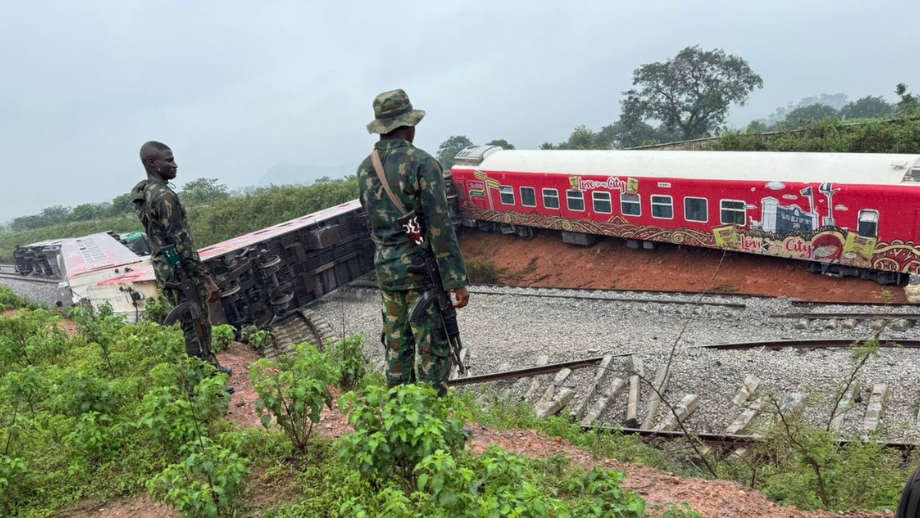
BREAKING: Several Passengers Injured as Abuja–Kaduna Train Derails After Collision
BREAKING: Several Passengers Injured as Abuja–Kaduna Train Derails After Collisio
Several passengers were injured on Monday after a train travelling along the Abuja–Kaduna rail corridor derailed following a collision, authorities have confirmed.
The incident reportedly occurred near Asham along the busy rail line linking Abuja with Kaduna State, causing panic among passengers onboard the train.
The Managing Director of the Nigerian Railway Corporation (NRC), Kayode Opeifa, confirmed the development, stating that emergency response teams were immediately deployed to the scene following the derailment.
According to preliminary reports, the train derailed after colliding with another object on the track, though officials have yet to disclose full details about the circumstances surrounding the accident.
READ ALSO:
- Saudi Intercepts 63 Drones as Iran Denies Responsibility, Blames US, Israel
- Police Launch Forensic Investigation Into Fatal Osogbo Shooting
- Court to Rule on ICPC’s Request for 14‑Day Detention Extension for El‑Rufai
Several passengers sustained injuries during the incident and were evacuated to the medical facility at the Idu Railway Station for treatment. Authorities, however, said no fatalities had been recorded as of the time of filing this report.
Eyewitness accounts and videos circulating on social media showed damaged train coaches and railway personnel assessing the situation while stranded passengers gathered near the tracks after disembarking from the train.
The Abuja–Kaduna rail corridor is one of Nigeria’s busiest passenger routes and serves thousands of commuters daily, particularly travellers seeking a safer alternative to road transportation.
Officials of the Nigerian Railway Corporation said investigations have commenced to determine the exact cause of the collision and derailment.
More details are expected as authorities continue rescue operations and assess the extent of the damage.
BREAKING: Several Passengers Injured as Abuja–Kaduna Train Derails After Collision









Railway
Fire Scare at Abuja Train Station as Electrical Fault Sparks Blaze, NRC Assures Passengers
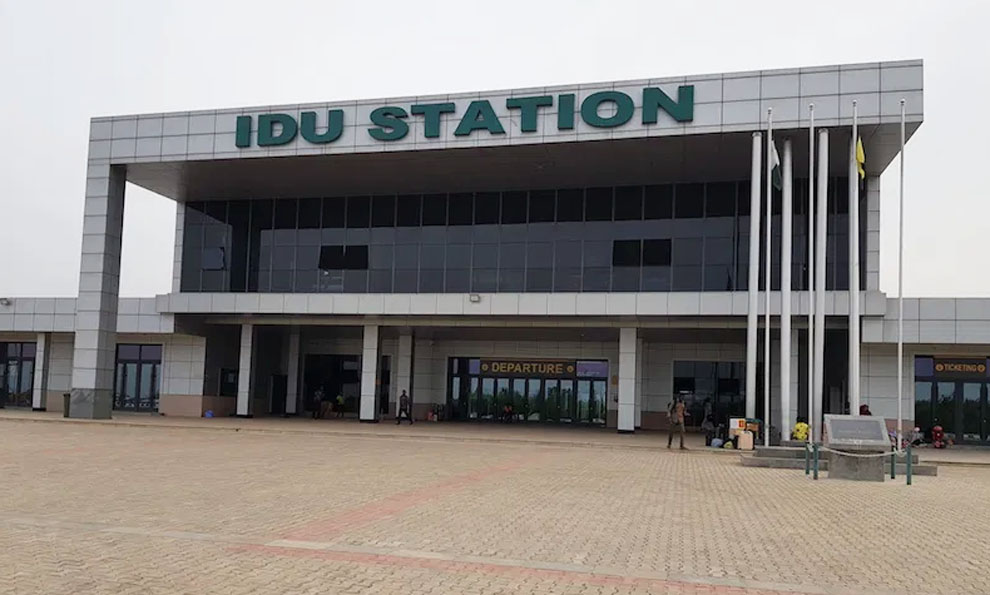
Fire Scare at Abuja Train Station as Electrical Fault Sparks Blaze, NRC Assures Passengers
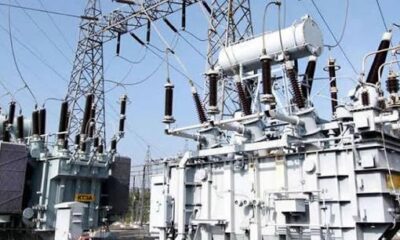
A minor fire caused by an electrical fault broke out at the Idu Train Station in Abuja on Wednesday night, but the incident did not disrupt operations on the Abuja–Kaduna train route, the Nigerian Railway Corporation (NRC) has said.
The fire, which occurred in the station’s low-voltage electrical room, was detected at about 8:30 p.m. and was quickly brought under control by maintenance personnel.
A preliminary inspection showed that some electrical supply cables connected to the station’s control panels were damaged in the incident.
READ ALSO:
- Veteran Nollywood Actress Cries Out for Financial Help Over Cervical Cancer Battle
- MURIC Raises Alarm Over Alleged Religious Imbalance in NDA 78RC Admission
- Agunbiade fires back at Deji Yesufu: Don’t mistake Boko Haram for Islam
However, the NRC said the station’s solar power system was not affected, while power had been temporarily restored to the lifts and escalators.
According to the Corporation’s Chief Public Relations Officer, Callistus Unyimadu, all the lifts and escalators are currently operational except Lift 1.
The NRC stressed that the incident had no impact on Abuja–Kaduna train services, assuring passengers that scheduled operations would continue as normal.
The Corporation said its technical team was conducting a detailed assessment to establish the cause of the electrical fault and permanently restore the affected installations.
It added that appropriate safety measures had been put in place while the assessment and remedial work continued.
Fire Scare at Abuja Train Station as Electrical Fault Sparks Blaze, NRC Assures Passengers
Railway
Nine Oxygen Cylinders Recovered as NRC, NSCDC Thwart Rail Vandalism in Osogbo
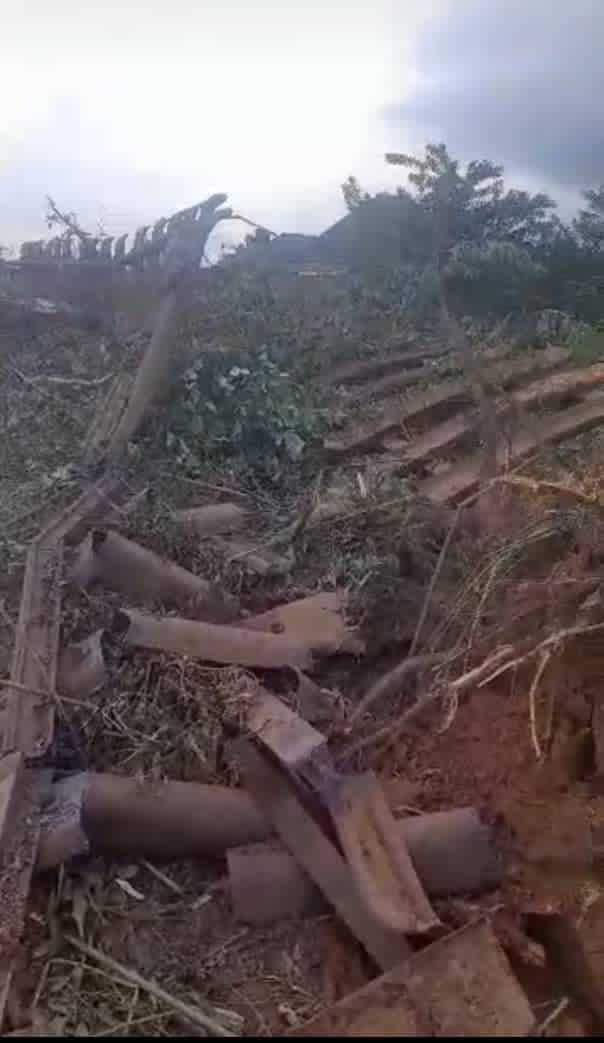
Nine Oxygen Cylinders Recovered as NRC, NSCDC Thwart Rail Vandalism in Osogbo
Suspected railway vandals fled for their lives after security operatives swooped on a railway siding serving the Dangote Steel Rolling Mills in Osogbo, Osun State, recovering nine oxygen gas cylinders allegedly deployed for the illegal operation.
The recovery operation, carried out by the Nigerian Railway Corporation (NRC) in collaboration with the Nigeria Security and Civil Defence Corps (NSCDC), followed a report of vandalisation of railway track materials at the siding, currently not in operation.
According to a statement issued by the NRC Chief Public Relations Officer, Callistus Unyimadu, and signed for the management, the Principal Track Officer (PTO), Osogbo, received a report on Friday, August 28, 2026, concerning the ongoing vandalisation of railway track materials at the location.
Following the report, the PTO proceeded to the site with security personnel, including officers of the NSCDC Railway Command. On sighting the operatives, the suspected vandals reportedly fled the scene.
A subsequent search of the area led to the recovery of nine oxygen gas cylinders, which were allegedly being used in the illegal operation.
The recovered railway materials and the surrounding area have since been secured by security personnel, the NRC said.
READ ALSO:
- DSS moves to halt Sowore’s cybercrime trial until after 2027 election
- Kogi Abduction: Kidnappers Demand ₦20m Ransom for Each NYSC Member
- Deadly Ikola clash: Lagos demolishes shanties beneath high-tension lines
Reacting to the development, NRC Managing Director and Chief Executive Officer, Dr Kayode Opeifa, commended the security personnel for their vigilance and timely intervention, describing the operation as another significant success in the sustained efforts to protect railway infrastructure from vandals and economic saboteurs.
Opeifa directed security operatives to intensify surveillance and enforcement at the Dangote Steel Rolling Mills siding and other railway corridors nationwide.
He also urged security formations across the railway network to strengthen collaboration with relevant agencies to prevent the vandalisation and theft of railway assets.
The NRC boss appealed to members of the public, particularly communities located along railway corridors, to promptly report suspicious activities around railway tracks, stations and other railway facilities.
He stressed that railway infrastructure constitutes critical national assets whose protection is essential to the safety of rail operations, sustainability of services and the economic development of the country.
Opeifa further assured that the NRC would continue to provide necessary support to security agencies in the collective effort to stamp out vandalism and other acts capable of undermining railway operations across the country.
The statement said the NRC remains committed to strengthening collaboration with security agencies to safeguard railway infrastructure nationwide.
Nine Oxygen Cylinders Recovered as NRC, NSCDC Thwart Rail Vandalism in Osogbo
Railway
NRC graduates 31 locomotive pilots to power rail expansion, freight reforms

NRC graduates 31 locomotive pilots to power rail expansion, freight reforms
The Nigerian Railway Corporation (NRC) has strengthened its drive to reposition rail transportation with the graduation of 31 newly trained locomotive pilots, declaring that a new generation of skilled operators will be at the heart of the Federal Government’s railway expansion and freight revolution.
Speaking at the graduation ceremony, the Managing Director of the NRC, Dr. Kayode Opeifa, described locomotive pilots as the “driving force” behind the corporation’s ongoing reforms, stressing that the graduates would play a pivotal role in improving safety, efficiency and reliability across Nigeria’s rail network.
Represented by the Director of Administration and Human Resources, Dr. Monsurat Omotayo, Opeifa said the graduates had completed more than one year of rigorous classroom and practical training, reflecting the corporation’s commitment to professionalism and operational excellence.
He said the pilots would be central to the expansion of railway operations nationwide, particularly as the Federal Government pursues partnerships with state governments to develop rail infrastructure and provide affordable, reliable transportation.
According to him, the corporation’s Track Access Policy and freight transportation reforms remain top priorities.
“As locomotive pilots, you will be at the centre of these initiatives and the future of railway transportation in Nigeria,” Opeifa said.
He assured the graduates—including two women—that the corporation would continue to invest in their professional development through exposure to global best practices aimed at enhancing operational safety and efficiency.
Earlier, the Assistant Director, Motive Power, Mr. Abiodun Olokun, disclosed that 45 employees drawn from different operational departments were selected for the training programme conducted at the NRC Training Schools in Lagos and Zaria, Kaduna State.
He explained that while 31 trainees successfully completed the programme, 11 were retained for further practical training to strengthen their competence. Two others did not meet the required performance standard, while one trainee was unable to complete the programme after being involved in a road accident. The three were returned to their respective departments.
Olokun said the trainees underwent three months of intensive classroom instruction, followed by six months of practical exposure across operational departments and simulator training in Zaria.
“The programme was designed to expose the trainees not only to locomotive operations but also to the entire railway operating environment,” he said.
Chief Locomotive Instructor Mr. Godwin Edet described the graduates as exceptional in both theory and practical performance, expressing confidence that they could compete favourably with locomotive operators anywhere in the world.
The Technical Adviser to the Managing Director on Railway Operations and Services, Mr. Adeife Olukolade, urged the graduates to strictly adhere to the operational rule book, noting that discipline and compliance with safety procedures remain the best safeguards against accidents.
Also speaking, the Director of Operations, Mr. Akin Osinowo, reminded the new pilots that they would be responsible for the safety of hundreds of passengers and the movement of freight, an area receiving renewed government attention.
The Director of Civil Engineering and New Lines, Engr. Adekunle Ayeni, described the graduation as a sign of renewed hope for the corporation and called for the recruitment and training of younger engineers to replace ageing personnel.
Similarly, the Deputy Director, Mechanical, Electrical, Signals and Telecommunications, Engr. Habeeb Olakunle Alaka, urged the graduates to collaborate closely with engineers by providing operational feedback that would improve equipment performance and overall efficiency.
Speaking on behalf of the graduating class, Amina Oden thanked the management for investing in their development and pledged that the graduates would uphold the highest standards of professionalism, discipline and dedication in the discharge of their duties.
The ceremony ended with the presentation of souvenirs to the NRC Managing Director, Dr. Kayode Opeifa, and the Director of Operations, Mr. Akin Osinowo, by the graduating locomotive pilots.
-
 metro2 days ago
Oyo Police: Student Who Died by Suicide Was Charged With Assault, Not ₦8,000 Debt
-

 metro3 days ago
Niger Miners’ Deaths: Families Demand Compensation, Justice for Victims
-

 metro3 days ago
Mambilla: ICC Raises Questions Over $500,000 Payment to Atiku’s Former Wife
-

 Entertainment3 days ago
“She Wanted to Stay Single”: Rema Opens Up About Rejection That Inspired Hit Song ‘Oh No’
-

 International20 hours ago
18 Suspects Transferred to US Over 2021 Killing of Haitian President Moïse
-

 Auto2 days ago
Abuja Demand Rises as Jetour Brings X70 Plus Experience to FCT
-

 metro2 days ago
Irreconcilable Developments: Wedding Cancelled 24 Hours Before Ceremony
-

 metro3 days ago
Niger Miners’ Deaths: Survivor Alleges Substance Was Sprayed in Cell as Probe Intensifies