

International
EU, UK Reject Trump’s Call for Military Action to Secure Strait of Hormuz
EU, UK Reject Trump’s Call for Military Action to Secure Strait of Hormuz
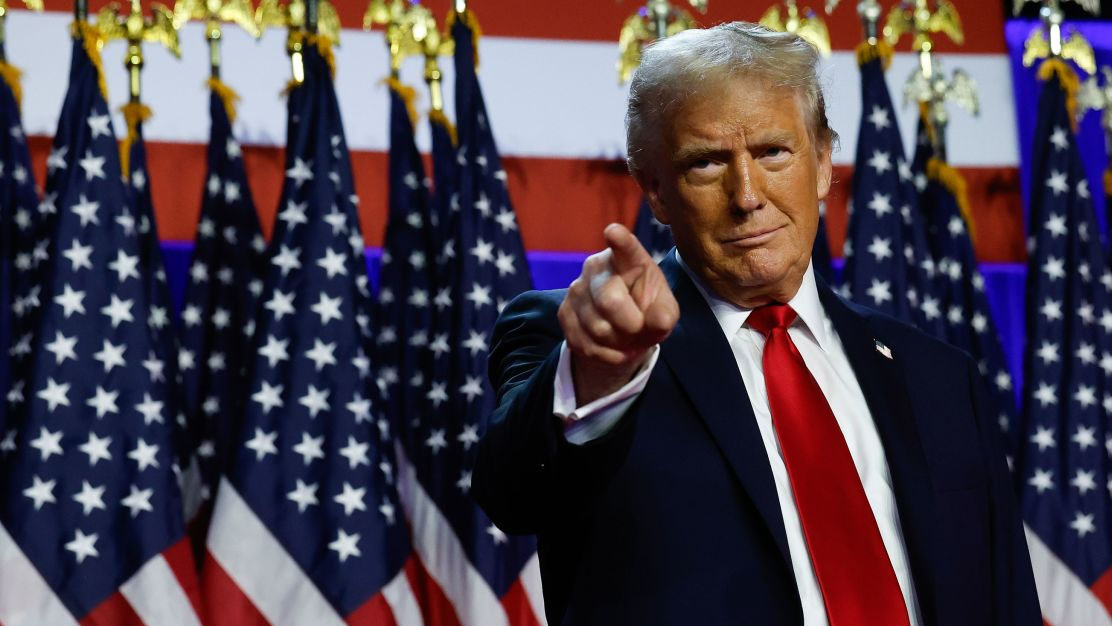
European and NATO allies have firmly rebuffed U.S. President Donald Trump’s demand for military assistance to secure the Strait of Hormuz, even as the strategic waterway remains effectively blocked amid the U.S.–Israeli war on Iran and global oil prices surge above $100 per barrel. The standoff highlights deep divisions among Western allies over how to respond to the crisis and underscores the challenges of securing international cooperation in the face of intensified regional tensions.
In a series of statements by European defence and foreign ministers, leaders made clear that military involvement in the Strait of Hormuz is not an option for most EU states, pointing instead to diplomatic engagement, strategic clarity, and wider de‑escalation as necessary prerequisites before any coordinated action can be considered.
“What does … Trump expect a handful or two handfuls of European frigates to do in the Strait of Hormuz that the powerful U.S. Navy cannot do?” German Defence Minister Boris Pistorius said in Berlin. “This is not our war. We have not started it.”
Similarly, Greek government spokesman Pavlos Marinakis stated that Greece would not participate in any military operations in the Strait of Hormuz, while Italian Foreign Minister Antonio Tajani confirmed that Italy would not extend its naval missions into the contentious waterway.
READ ALSO:
- Dangote, China’s GCL Sign $4.2bn Gas Deal to Power Ethiopia Fertiliser Megaproject
- Trump’s Claim of Former President Regret Over Iran Denied by Aides
- Oil Prices Jump as Strait of Hormuz Crisis Intensifies
Other European foreign ministers emphasised the need for more strategic clarity from Washington before any allied military support could be considered. Estonian Foreign Minister Margus Tsahkna said US allies wanted to understand Trump’s overall “strategic goals” and his plan for the wider conflict, while Polish Foreign Minister Radek Sikorski said that a formal NATO request would be required for his country’s participation.
“If there is a request via NATO, we will, of course, out of respect and sympathy for our American allies consider it very carefully,” Sikorski said, indicating that any European involvement would likely need to follow collective defence protocols.
In contrast, Danish Foreign Minister Lars Løkke Rasmussen urged EU member states to keep an open mind about helping ensure freedom of navigation through the strait, even if Europe does not endorse the US‑Israeli military campaign. “We must face the world as it is, not as we want it to be,” Rasmussen said, stressing that any engagement should prioritise de‑escalation.
The United Kingdom reiterated its commitment to working with allies to devise a collective strategy to reopen the Strait of Hormuz and restore freedom of navigation, but made clear it would not be drawn into a wider war. Prime Minister Keir Starmer said Britain was coordinating with partners on a plan aimed at securing maritime routes while avoiding expansion of the conflict.
Meanwhile, EU foreign policy chief Kaja Kallas told reporters in Brussels that EU leaders would focus on what member states are willing and able to contribute to efforts aimed at reopening the strait. “Of course, the need to open the Strait of Hormuz is there right now,” she said, noting that the closure — which has propelled oil prices above $100 per barrel — was inadvertently benefiting Russia’s war on Ukraine by boosting Moscow’s energy revenues.
Energy Market Response and IEA Actions
Amid political stalemate and pressure on oil markets, the International Energy Agency said it stands ready to release additional strategic oil reserves if needed, describing the current situation as “the largest supply disruption in the history of the global oil market.”
Last week, the IEA authorised a record release of 400 million barrels of oil to help cushion the immediate impact of the strait’s effective blockade. IEA Executive Director Fatih Birol noted that while recent decline in oil prices showed some relief, the release of reserves is not a lasting solution without assured access through the strait.
“The volume of oil supply offline is already higher than any previous disruption, including the oil crisis of 1973,” Birol said, while confirming that the agency still holds over 1.4 billion barrels in reserve, which could be deployed in future if necessary.
EU, UK Reject Trump’s Call for Military Action to Secure Strait of Hormuz







International
Ninth Body Discovered in South Africa: Nigeria Issues Urgent Safety Alert to Nationals
Ninth Body Discovered in South Africa: Nigeria Issues Urgent Safety Alert to Nationals
Police cordon off Kempton Park and post a $56,000 combined bounty as the Nigerian Consulate warns citizens to exercise heightened vigilance.
South African police recovered the body of a ninth woman on Thursday along a roadside in Dawn Park, intensifying public alarm and prompting the Nigerian Consulate-General in Johannesburg to issue an emergency safety advisory to its citizens.
In response to the discoveries, law enforcement teams placed Kempton Park in the Ekurhuleni municipality under lockdown and established roadblocks to inspect vehicles and restrict suspect movement.
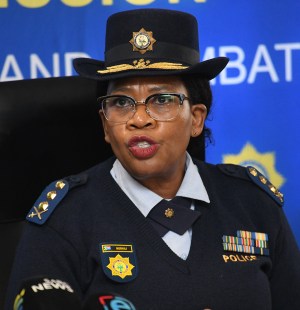
Deputy Police Chief Tebello Mosikili declared during a press conference that authorities will deploy specialized investigative units to track down those responsible.
To accelerate breakthroughs, police offered a 400,000 rand ($25,000) reward for credible tips, while South Africa’s Democratic Alliance provided an additional $31,000, establishing a combined bounty of $56,000.
Detectives are now evaluating forensic evidence to determine whether one perpetrator committed the murders or whether independent offenders copied earlier attacks.
Meanwhile, the Nigerian Consulate-General urged Nigerian residents, especially women and young people who commute, exercise, or study around Ekurhuleni, to take deliberate personal precautions.
The mission advised community members to travel in groups, stay clear of isolated trails, and share real-time travel details with trusted family members.
Furthermore, diplomatic officials emphasized that safety precautions must not shift the burden of crime prevention onto women, calling on South African authorities to ensure thorough investigations and justice for every victim.
Ninth Body Discovered in South Africa: Nigeria Issues Urgent Safety Alert to Nationals
Health
Fiji Declares National HIV Emergency as Diagnoses Surge Sixteenfold
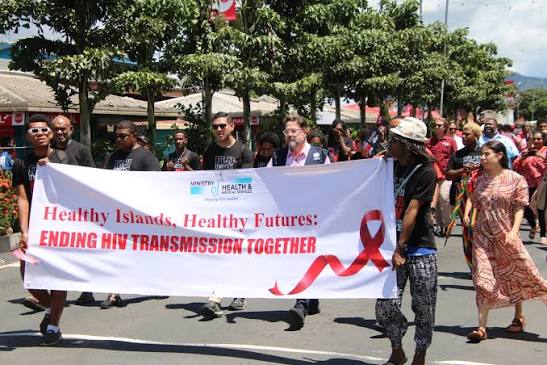
Fiji Declares National HIV Emergency as Diagnoses Surge Sixteenfold
Authorities launch a multi-agency public health campaign to expand free testing, treatment, and harm-reduction services
Fiji has announced a nationwide health response to address a significant rise in HIV cases and ensure that all residents can access essential medical care.
On Wednesday, Health Minister Dr. Atonio Lalabalavu shared the emergency declaration, explaining that national agencies are joining forces to provide rapid medical support, expand testing, and protect community well-being across the islands.
Official reports indicate that about one in every 60 adults in Fiji currently lives with HIV, following an increase in new infections over recent years. Health specialists explain that the virus spreads primarily through intimate sexual contact and shared needles among individuals using illicit substances.
Additionally, routine screenings revealed that two out of every 100 expecting mothers carry the virus, highlighting an urgent need for early maternal healthcare to protect newborns from infection.
To safeguard public health, authorities are delivering free daily treatments, distributing protective preventive medications, and setting up clean needle programs to stop infections before they start.
Furthermore, global partners, including Australia, New Zealand, India, and United Nations health bodies are providing financial resources and medical supplies to back the local effort.
By encouraging open community conversations and delivering accessible healthcare without judgment, health workers aim to ensure that everyone receives the care and dignity they deserve.
Fiji Declares National HIV Emergency as Diagnoses Surge Sixteenfold
International
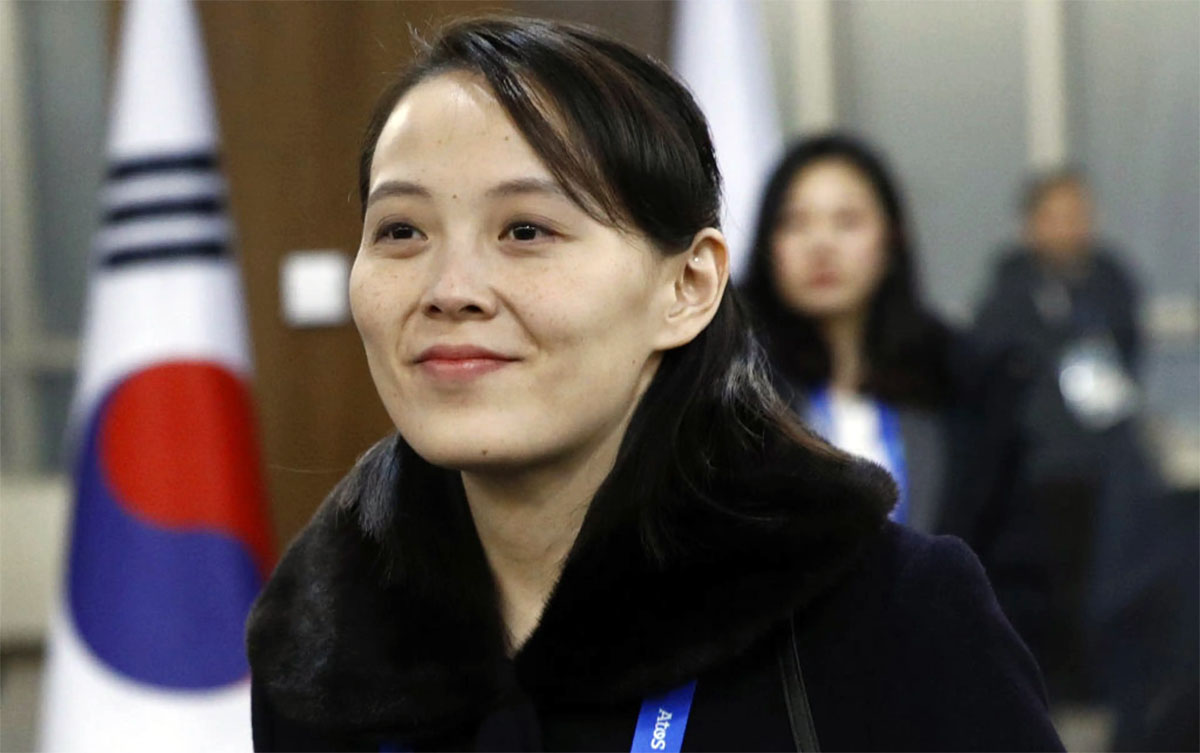
Kim Yo-jong: Only ‘Idiots’ Think North Korea Will Give Up Nuclear Weapons
-
 International2 days ago
Islamic Council Condemns Attempted Attack on Holy City of Mecca
-

 metro3 days ago
Lagos Power Outage: Ikeja Electric Blames TCN as Businesses, Homes Groan
-
 Politics3 days ago
2027: APC Governors Reject Wike’s Rainbow Coalition, Insist on Party Loyalty
-
 News2 days ago
Keep Politics Out of My Office — Ogbomoso Grand Chief Imam Warns Politicians, Bloggers
-
 metro1 day ago
Niger Mosque Abductions: Terrorists Execute 30 of 500 Captive Muslim Worshippers
-

 International3 days ago
US Court Blocks Trump Visa Rule Limiting Stay of Foreign Students, Journalists
-

 metro3 days ago
A Son Wouldn’t Have Done Better — Dangote Speaks on Daughters, Succession
-
 Entertainment2 days ago
BREAKING: Olu Jacobs Dies at 84, Atiku Mourns Cultural Icon