

Business
Oil rises to $76 as OPEC+ postpones production supply decision
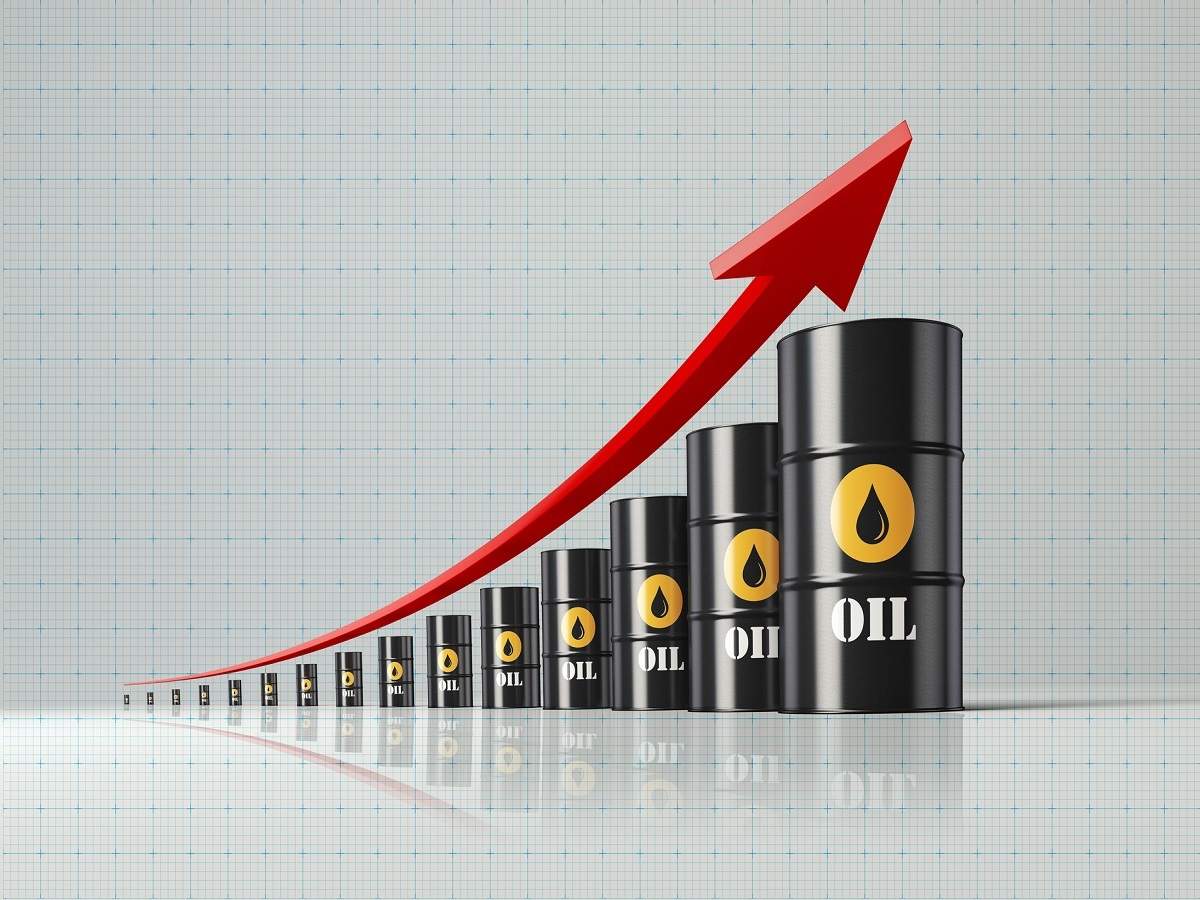
Crude oil prices rose on Monday ahead of another meeting of the Organisation of the Petroleum Exporting Countries and allies (OPEC+) for possible agreement on a gradual production increase.
Brent crude, the international benchmark, traded at $76.44 per barrel at noon on Monday with a 0.34 per cent increase.
The US West Texas Intermediate (WTI) crude also went up by 0.39 per cent to $75.45.
On Thursday, members of OPEC+ were reportedly expected to agree to a deal backed by Saudi Arabia and Russia that would further unwind previously agreed output curbs by allowing production to rise by 400,000 barrels per day every month from August to December — putting an additional two million barrels per day of crude into the market over the remainder of 2021.
The deal would also extend the duration of broader cuts that the group agreed to in 2021.
However, the United Arab Emirates (UAE) objected to the plan.
Reports said the UAE “unconditionally” supported an increase in production. But the country said the extension should be conditional on revising the so-called baseline, which determines how much a country is allowed to pump.
The UAE wants its baseline to be revised before extending those cuts till end of 2022, because it wants to produce more than it is now allowed based on the quota of its current baseline.
All OPEC+ agreements require unanimous approval.
The meeting was postponed to Friday but members failed to reach an agreement on its output policy and agreed to meet again on Monday (today).
Oil prices have surged more than 45 per cent in the first six months of 2021, with demand rising as global economies reopened.
“The issue is putting a condition on that increase, which is the extension of the agreement,” Suhail Al Mazrouei told CNBC’s Hadley Gamble, adding that the current proposal simply “wasn’t a good deal” for the UAE.
The current baseline set for the UAE was taken from October 2018, when it was producing around 3.2 million barrels a day. Last year, the number jumped to 3.8 million barrels per day







Business
Dangote Draws Battle Lines as Fuel Import Fight Heads Back to Court
Dangote Draws Battle Lines as Fuel Import Fight Heads Back to Court
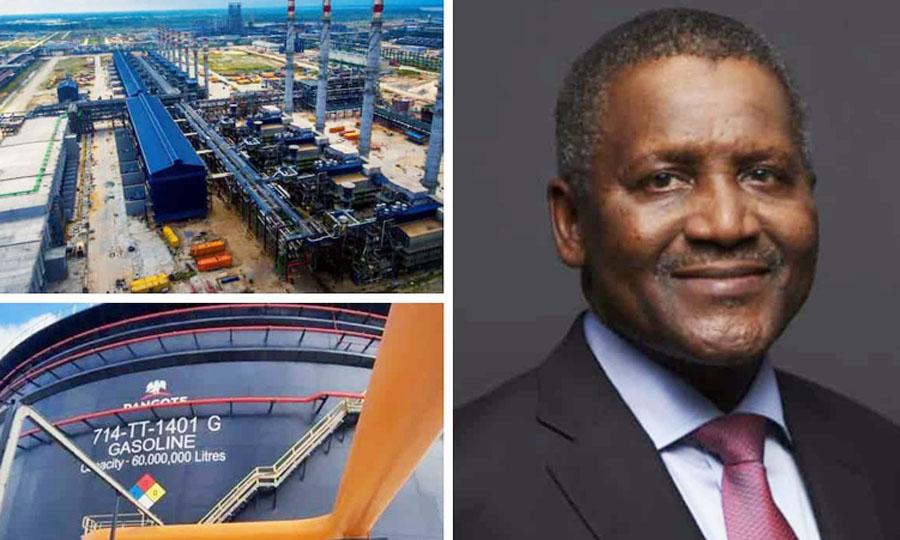
Aliko Dangote, President of Dangote Industries Limited, has said he is prepared to face legal challenges as the dispute over fuel imports, domestic refining and import licences intensifies in Nigeria.
Dangote spoke amid renewed litigation involving the Dangote Petroleum Refinery and the Nigerian Midstream and Downstream Petroleum Regulatory Authority (NMDPRA) over the continued importation of refined petroleum products into Nigeria.
The latest development followed a Federal High Court ruling in Abuja directing the NMDPRA to continue granting, extending or renewing fuel import licences for Matrix Energy, A.A. Rano and AYM Shafa, provided the companies meet the relevant legal and regulatory requirements.
Justice Inyang Ekwo ruled that the regulator’s handling of the companies’ applications did not comply with provisions of the Petroleum Industry Act (PIA). The court also held that the NMDPRA has a responsibility to promote competition in the midstream and downstream petroleum sectors.
The ruling did not give the three companies unrestricted authority to import petroleum products. Their operations remain subject to applicable regulatory and statutory requirements.
READ ALSO:
- Tinubu Returns After 30 Days in Europe, Says ‘I’m Healthy and Ready to Work’
- NMDPRA Moves Against Fuel Pump Fraud, Threatens Licence Revocation
- $2.1m Land Suit: Court Orders Wike’s Son to Produce American Passport
The judgment has added fresh momentum to a wider dispute over whether Nigeria should continue granting petrol import licences as domestic refining capacity expands.
The Dangote Refinery, which has a stated capacity of 650,000 barrels per day, has challenged the continued issuance or renewal of some import licences in a separate case.
The refinery’s position is that continued imports should be restricted where domestic refining capacity is available to supply the local market. The case remains before the court.
The NMDPRA, however, has continued to approve import permits, citing the need to safeguard petroleum supply and energy security.
The regulator approved permits covering about 830,000 metric tonnes of petrol for several marketers for the fourth quarter of 2026. The beneficiaries included Matrix Energy, A.A. Rano, AYM Shafa, NIPCO, Pinnacle Oil and Gas and Bono Energy.
The development has intensified debate over competition in Nigeria’s downstream oil sector, particularly as the Dangote Refinery expands its contribution to domestic fuel supply.
Dangote’s comments also came as his business interests face other legal challenges outside Nigeria.
In Kenya, a court has ordered the preservation of the existing status quo over land earmarked for Dangote’s proposed 700,000-barrel-per-day refinery in Lamu, following a dispute involving residents who claim ancestral rights over part of the proposed project site.
Dangote has maintained that he is prepared to defend his investments through the legal process.
The businessman has also said Africa could largely eliminate its dependence on imported refined petroleum products by 2030, as new refineries come on stream across the continent.
In Nigeria, the continuing dispute places domestic refining, fuel imports, competition, petroleum regulation and energy security at the centre of an increasingly significant legal and commercial battle.
The competing positions have not been finally resolved, with the various court cases still ongoing.
Dangote Draws Battle Lines as Fuel Import Fight Heads Back to Court
Business
NNPC Profit Rises to N7.2tn Despite Revenue Decline

NNPC Profit Rises to N7.2tn Despite Revenue Decline
The Nigerian National Petroleum Company Limited (NNPC Ltd) recorded a N7.2 trillion profit after tax in 2025, representing a 33.3 per cent increase from the N5.4 trillion it reported in 2024, despite a significant decline in revenue.
NNPC Group Chief Executive Officer, Bayo Ojulari, disclosed the figures on Tuesday while presenting the company’s audited financial results for the 2025 financial year in Abuja.
The company recorded N34.5 trillion in revenue in 2025, down from N45.1 trillion reported for 2024. Despite the revenue decline, profit increased as NNPC attributed the stronger bottom-line performance to improved operational efficiency and financial discipline.
Ojulari said lower international crude oil prices and reduced petroleum product sales, following changes in the downstream petroleum market, put pressure on revenue during the year.
However, improved operational performance helped cushion the impact, allowing NNPC profit to rise to N7.2 trillion.
The company also reported N22.33 trillion in taxes, royalties and other remittances to the Federal Government, representing a 39 per cent increase compared with the previous year.
The results also showed stronger production performance across the company’s upstream operations.
According to NNPC, crude oil and condensate production reached an average peak of 1.77 million barrels per day in 2025, the company’s highest level in five years.
READ ALSO:
- Hamzat Clarifies Lagos Traffic ‘Lifestyle’ Remark After Backlash
- US Judge Blocks Trump From Tying Counterterrorism Grants to Election Rules
- School Attack: 13-Year-Old Student Kills Teacher, Injures Two
Domestic gas supply also rose to a three-year high of 7.2 billion standard cubic feet per day, reflecting increased gas production and supply to the Nigerian market.
NNPC said the financial performance demonstrated the impact of efforts to improve asset management, increase production and strengthen efficiency across its businesses.
The company’s latest results come as Nigeria continues to seek higher crude oil production, increased domestic gas supply and greater investment across the petroleum value chain.
NNPC, which became a commercial company under the Petroleum Industry Act (PIA) in 2022, has been pursuing a strategy focused on increasing oil and gas output, expanding gas monetisation and strengthening its downstream operations.
The company said its future growth strategy would require continued investment in infrastructure, workforce development and operational capabilities.
NNPC also highlighted investments in digital capabilities and artificial intelligence as part of efforts to improve efficiency and strengthen its workforce.
More than 1,000 newly recruited professionals joined the company in 2025 and underwent a one-year internship and training programme before being deployed across its operations.
The company also reported that women now occupy more than 23 per cent of its leadership positions, compared with an industry average of 17 per cent.
The 2025 results come against the backdrop of major changes in Nigeria’s petroleum sector, including the removal of petrol subsidy and increased private-sector participation in fuel supply.
NNPC said the improved profitability had strengthened its capacity to invest in operations, contribute to government revenue and support Nigeria’s energy security.
The company’s performance will continue to be closely watched as Nigeria seeks to raise oil production, expand gas utilisation and increase the economic contribution of the oil and gas sector.
NNPC Profit Rises to N7.2tn Despite Revenue Decline
Business
Crude Oil Prices Ease After Monday Spike, Fuel Price Cuts Loom
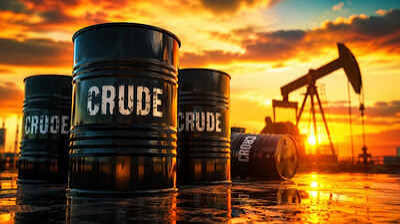
Crude Oil Prices Ease After Monday Spike, Fuel Price Cuts Loom
Global crude oil prices eased on Tuesday after a sharp rally triggered by renewed uncertainty over the possibility of a ceasefire between the United States and Iran, offering some relief to an oil market that has remained highly sensitive to geopolitical developments.
Brent crude, the international benchmark, fell to about $105.04 per barrel, while US West Texas Intermediate (WTI) declined to $92.24 per barrel, according to Reuters. The prices had risen sharply earlier amid concerns over possible disruptions to Middle East oil supplies.
The latest movement is particularly significant for Nigeria, where changes in international crude prices are increasingly reflected in the domestic petrol market following the removal of petrol subsidy and the operation of a largely market-driven downstream petroleum sector.
Nigeria has in recent weeks witnessed significant fluctuations in petrol prices as international crude prices rose on the back of Middle East tensions.
Dangote Petroleum Refinery, which has become a major source of domestic petrol supply, raised its gantry price to N1,350 per litre earlier in September before subsequently reducing it by N25 to N1,325 per litre as crude prices eased.
The impact has also begun to filter through to some retail outlets. Recent checks showed petrol selling at varying prices across the country, with some marketers reducing pump prices by between N20 and N25 per litre in response to lower wholesale costs.
In Abuja, for instance, MRS reportedly reduced its pump price from N1,395 to N1,370 per litre, while other marketers also adjusted their prices downward.
However, the latest fall in crude prices does not necessarily translate into an immediate or uniform reduction at filling stations.
This is because the price motorists pay is influenced by several factors, including the cost of crude, refining and wholesale prices, transportation and logistics, exchange-rate movements, and the margins of individual marketers.
Nigeria’s dependence on crude oil makes developments in the international petroleum market particularly important to the domestic economy.
Although the Dangote refinery has substantially increased local refining capacity and reduced reliance on imported petrol, international crude prices remain an important factor in determining the cost of feedstock and, ultimately, petroleum products.
The recent volatility has therefore kept motorists, transport operators and businesses on alert, with any sustained decline in crude prices potentially creating room for further reductions in petrol prices.
The latest crude movement followed reports of renewed diplomatic tension between Washington and Tehran.
Iran had reportedly proposed a seven-day truce, but US President Donald Trump rejected the proposal, triggering fresh concerns about the outlook for regional stability and oil supplies.
Crude prices surged during Monday’s trading session before retreating as investors reassessed the immediate supply risks and continued to monitor diplomatic efforts.
For Nigerian consumers, the key issue now is whether the downward movement in international crude prices will be sustained long enough to translate into broader and more significant reductions in petrol prices at filling stations.
-

 metro1 day ago
Osogbo Food Bonanza Turns Nightmare as Discount Vendor Vanishes With Customers’ Millions
-

 International3 days ago
Iran Claims Capture of Second US Underwater Drone in Strait of Hormuz
-

 News3 days ago
Fake Agency Scandal: Gbajabiamila Says He Never Betrayed Tinubu’s Trust
-

 News3 days ago
Anambra Govt Demands Unreserved Apology From Peter Obi Over Debt Claims
-

 metro3 days ago
Passenger Dies After Jumping From Moving Bus In Lagos
-

 metro2 days ago
24 Hours in Darkness: Iju Ishaga Residents, Businesses Count Losses as Ikeja Electric Fails to Restore Power
-

 Education23 hours ago
FG Releases 2026–2028 Approved Textbooks, Introduces QR Codes for Tracking
-

 News2 days ago
Agbede Mourns Baba Alado, Says Mushin Has Lost Pillar of Peace