

International
Trump Accuses Iran of Ceasefire Breaches as US–Iran Peace Talks Collapse

Trump Accuses Iran of Ceasefire Breaches as US–Iran Peace Talks Collapse
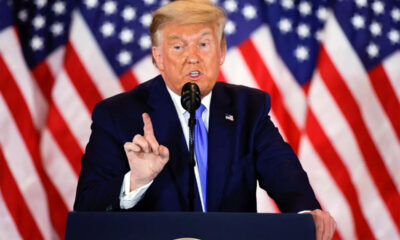
US President Donald Trump has accused Iran of repeatedly violating a fragile ceasefire agreement, as efforts to revive stalled US–Iran peace talks face increasing uncertainty amid rising tensions in the Middle East.
The temporary truce, which is expected to expire within days, is reportedly under severe strain after Iranian authorities confirmed that no delegation has yet been sent for renewed negotiations scheduled to take place in Islamabad, Pakistan.
Writing on Truth Social, Trump stated that Iran had violated the ceasefire “numerous times,” though he did not provide specific details or evidence of the alleged breaches. The accusation has further heightened diplomatic tensions between Washington and Tehran at a critical moment in the peace process.
A new round of negotiations had been expected to involve a US delegation led by Vice President JD Vance, following earlier talks in Islamabad that ended without a breakthrough. However, Iranian state media reports suggest that no officials have departed for the meeting, raising doubts over whether the dialogue will proceed as planned.
READ ALSO:
- Nigeria Records New COVID-19 Case in Cross River
- Middle East Crisis: Nigeria Records $4bn Oil Windfall
- Nigeria Police Begins Probe of 167 Senior Officers Over Misconduct
The breakdown in talks comes amid escalating geopolitical friction, including disputes over maritime activity and strategic waterways. Tensions around the Strait of Hormuz, a critical global oil shipping route, have intensified concerns about potential disruptions to global energy supplies.
Both the United States and Iran continue to trade accusations of ceasefire violations. Washington claims Iranian-linked forces targeted vessels in key maritime corridors, while Tehran insists that US naval actions and the reported seizure of an Iranian-linked ship constitute clear breaches of the agreement.
Despite the deadlock, Trump maintained that the United States remains in a strong negotiating position. He stated that Washington is confident it will ultimately secure a favorable agreement, even as diplomatic efforts continue to stall.
However, he also warned that failure to reach a deal could lead to renewed conflict. According to Trump, if the ceasefire expires without extension, “lots of bombs start going off,” signaling the possibility of a sharp escalation in hostilities.
Diplomatic efforts by Pakistan have intensified in recent days, with officials urging both sides to extend the truce and return to negotiations to avoid further escalation. Islamabad has been playing a mediating role in attempts to stabilize the situation and restart dialogue.
Despite these efforts, Iranian officials remain skeptical, accusing the United States of negotiating under pressure while maintaining sanctions and military pressure. A senior Iranian parliamentary official reiterated that Tehran would not engage in talks “under the shadow of threats,” warning that any renewed conflict could escalate rapidly.
Inside Iran, the prolonged crisis has deepened economic pressure and public uncertainty, with reports of worsening conditions despite the temporary ceasefire. Inflation, restricted trade, and instability have contributed to growing frustration among citizens.
At the regional level, the crisis is also affecting broader diplomatic dynamics, with parallel negotiations involving Israel and Lebanon continuing in Washington as part of wider efforts to manage tensions across the Middle East.
For now, the future of the US–Iran ceasefire remains uncertain, with both sides holding firm positions and diplomatic channels struggling to produce progress. Analysts warn that the coming days will be critical in determining whether the truce can be extended—or whether the region risks sliding back into open conflict.
Trump Accuses Iran of Ceasefire Breaches as US–Iran Peace Talks Collapse








International
Two Arrested in London Over Suspected Links to Iran Intelligence
Two Arrested in London Over Suspected Links to Iran Intelligence
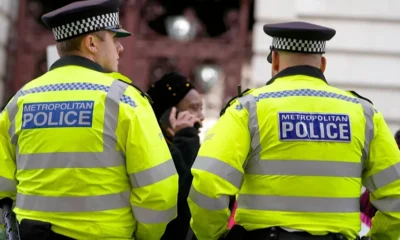
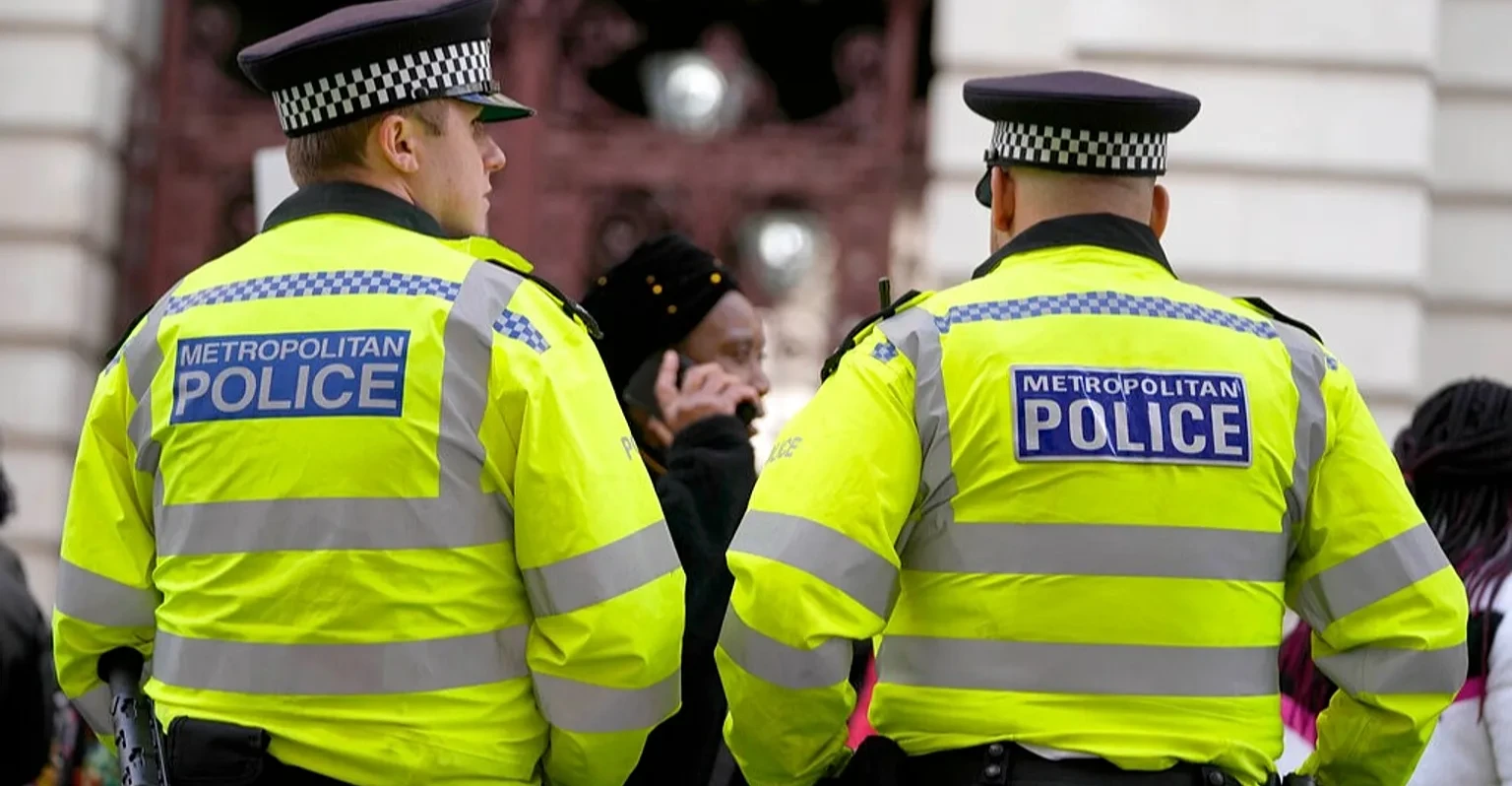
LONDON — British counter-terrorism police have arrested two people in London over suspected involvement in activities linked to Iran’s foreign intelligence service, in an ongoing national security investigation.
The Metropolitan Police said a 42-year-old woman was arrested at a residential address in north London, while a 60-year-old man was arrested at a property in north-west London on Wednesday, September 9.
Both suspects were arrested on suspicion of an offence under Section 3 of the UK National Security Act 2023, which covers assisting a foreign intelligence service.
Police said the investigation is linked to Iran, but have not disclosed the specific activities the two suspects are alleged to have carried out.
The arrests followed searches conducted by officers from Counter Terrorism Policing London at residential properties in north-west London on June 24.
According to the police, investigators continued their enquiries after the June searches, eventually leading to Wednesday’s arrests.
A third residential property in north-west London was also searched on Wednesday after the two suspects were arrested.
The two suspects were taken to a London police station for questioning and were later released on bail under strict conditions. Police said they are expected to return at a date in late October.
The Metropolitan Police stressed that the investigation is not connected to a series of incidents and attacks earlier this year targeting venues and buildings linked to Jewish and Iranian communities across London.
The force also said the investigation has no connection with activities or events associated with the upcoming High Holy Days period.
Commander Helen Flanagan, head of Counter Terrorism Policing London, said the arrests should not be interpreted as evidence of an immediate threat to the wider public.
READ ALSO:
- Peter Obi’s Benue Convoy Blockade Raises Questions Ahead of 2027
- Honda shakes up Nigeria operations, dissolves HAWA, retains HMN
- Fire Scare at Abuja Train Station as Electrical Fault Sparks Blaze, NRC Assures Passengers
“We do not believe there to be any imminent threat to the wider public in connection with this matter,” Flanagan said.
She said British authorities had recorded an increase in activity relating to national security and state threats over the past year, adding that the latest investigation formed part of efforts to identify and disrupt potentially hostile activity.
Flanagan also urged members of the public to remain vigilant and report anything they consider suspicious, while noting that the UK’s overall terrorism threat level remains severe.
The arrests come amid increased scrutiny by British authorities of suspected foreign state activity in the UK, including allegations that foreign intelligence services have attempted to use individuals inside Britain to conduct surveillance or support other activities.
The National Security Act 2023 strengthened Britain’s legal framework for dealing with espionage, foreign interference and other national-security threats. Under Section 3, assisting a foreign intelligence service can constitute a criminal offence when the conduct meets the requirements set out in the legislation.
The latest investigation follows other cases involving suspected Iranian intelligence activity in Britain.
In March, British counter-terrorism police arrested four men in a separate investigation into suspected assistance to an Iranian foreign intelligence service. That investigation reportedly involved allegations of surveillance targeting locations and individuals connected to London’s Jewish community.
British authorities have repeatedly expressed concern over alleged attempts by Iranian intelligence services to conduct operations against people and organisations in the UK.
However, police have made clear that the September arrests are separate from the earlier incidents involving Jewish and Iranian communities in London.
The two people arrested in the latest investigation have not been charged, and the allegations against them have not been tested in court.
Their arrest does not amount to a finding of guilt, and they remain entitled to due process as the investigation continues.
The Metropolitan Police said officers would continue their enquiries as they examine evidence gathered during the searches and subsequent investigative work.
Two Arrested in London Over Suspected Links to Iran Intelligence
International
$100 Crude Returns: Escalating US-Iran War Strains Global Maritime Chokepoints

World oil markets entered dangerous territory on Wednesday as Brent crude breached the symbolic $100 per barrel barrier amid mounting fears of sustained supply shocks in the Middle East. With the clash between the United States and Iran now stretching into its seventh month, commercial energy traders are growing increasingly convinced that diplomatic efforts have stalled and that physical barrels could become harder to move out of the Gulf.
Brent crude serves as the premier global benchmark because it sets the pricing baseline for roughly two-thirds of the world’s internationally traded oil contracts. Sourced from the North Sea, its light, sweet quality and direct access to deepwater marine terminals make it easy to refine and ship anywhere in the world. When Brent moves, it immediately resets the price tag for physical cargoes and national crude streams from West Africa to the Middle East, making its climb past $100 a direct trigger for broader global price shifts.
The immediate catalyst for the rally came from fresh exchanges in the Persian Gulf and surrounding transit hubs. Iran announced a retaliatory strike on a U.S. facility in Jordan following American operations against Iranian naval assets in the Strait of Hormuz. Adding to the market alarm, Iranian authorities declared commercial oil tankers near Kuwait and Bahrain to be potential targets, effectively freezing merchant shipping confidence across the waterway.
Alternative export pathways offer little immediate relief. Saudi efforts to bypass the blocked Strait of Hormuz by redirecting crude toward the Red Sea have collided with renewed military strikes by Houthi forces targeting energy installations around the Bab al-Mandab strait. With both primary and fallback shipping lanes compromised, the flow of crude faces its most severe maritime disruption in years.
Beyond the energy trade, triple-digit crude threatens to undo recent progress against global inflation. Central banks worldwide are facing renewed pressure to keep borrowing costs elevated to prevent higher transport and production bills from embedding into retail prices. The prospect of persistent inflation and high interest rates pulled down major equity indices in the United States and Europe, overshadowing selective gains in Asian tech sectors.
International
Truly Depraved Rapist Jailed for 17 Years After Violent Attack on Woman

A 24-year-old Nigerian national, Gift Oladele, dragged a young woman into woodland and violently raped her has been jailed for 17 years after a judge described his actions as “truly depraved”.
Gift Oladele carried out the attack in Wrexham, North Wales, in September last year after approaching the victim, who was 19 at the time, as she walked home from a night out.
Oladele was convicted of rape and sexual assault at Mold Crown Court in March. He was sentenced on Thursday.
How the Attack Happened
The court heard that Oladele approached the woman and her friends outside a takeaway in Wrexham city centre. He initially appeared friendly and flirtatious before offering to walk home with her.
According to prosecutor James Coutts, Oladele accompanied the woman until they reached an isolated area, where he grabbed her by the mouth and forced her into the woods.
He then carried out a violent rape.
“She described being terrified,” Coutts told the court. “She did what she thought she needed to do to get through the attack.”
Oladele threatened to find and harm the victim if she reported the rape. He also threatened to take photographs of her and post them online.
Despite the threats, the woman returned home and immediately told her parents, who contacted the police.
Oladele was arrested the following day at his cousin’s home in Wrexham. Officers said he had attempted to hide a mobile phone, which contained searches relating to sexual attacks.
The court heard that Oladele had a “fascination in forced sexual abuse and rape” and that he appeared to be acting out a fantasy shown in the videos he had searched for.
Victim Describes Lasting Trauma
In a victim impact statement, the woman told the court that she continued to wake up from nightmares in which Oladele had tracked her down.
“I’m petrified,” she said.
She also described taking medication to prevent HIV infection after the assault and suffering long-term emotional and psychological effects.
“I feel ashamed, and somehow damaged, since what he did to me,” she said.
“The emotional impact has been very significant.
“I can’t go anywhere on my own anymore.
“I feel unsafe.”
Judge Simon Mills praised the woman for her courage during and after the attack.
“You showed exceptional courage during the incident and afterwards,” he told her.
Previous Conviction and Deportation Appeal
At the time of the Wrexham attack, Oladele was already on bail over another rape allegation in Manchester dating from November 2024.
He had also been jailed in 2022 for a sexually motivated attack.
The court heard that Oladele was later due to be deported to Nigeria but successfully challenged the decision on human rights grounds.
An immigration tribunal judge described the deportation case as “finely balanced”, acknowledging the seriousness of Oladele’s previous offence and the public interest in deporting foreign criminals.
However, the tribunal also considered his ties to the United Kingdom, where he had grown up, and the consequences of relocating to Nigeria.
The Home Office made two attempts to appeal the decision, but both appeals were rejected.
Judge Calls Defendant Dangerous
During sentencing, The Judge described Oladele’s actions as “truly depraved”.
“You subjected her to a terrible violation,” he said.
“You are a dangerous offender.”
The judge said Oladele posed an exceptionally high risk of harm to young women and had shown “absolutely no remorse whatsoever”.
The Home Office described the case as horrific and said Oladele’s imprisonment was the right outcome.
The victim’s account has highlighted not only the brutality of the attack but also the lasting fear and emotional damage that sexual violence can cause long after the offender has been convicted.
-

 Politics2 days ago
Why Did Peter Obi Attend Seyi Makinde’s Campaign Launch? Here’s What He Said
-

 News2 days ago
Lagos Moves to Slash Agency Fees, Curb Rent Hikes With New Tenancy Bill
-

 metro3 days ago
Catholic priest leaves priesthood, weds Kenyan woman after 12 years in Kenya
-

 metro3 days ago
El-Rufai Demands ₦10bn from Defence Minister Over Southern Kaduna Killings Allegation
-

 metro2 days ago
Osun Police Arrest Woman After Vigilante Member Dies During Sexual Encounter in Ile-Ife
-

 Education2 days ago
FG opens six-month teacher certification for BSc, HND, ND holders – How to Apply
-

 Politics9 hours ago
Remi Tinubu Appeals To South-East Voters, Says She Wants To ‘Enjoy Nigeria’ In Old Age
-

 Politics12 hours ago
Amaechi will be caged politically, Wike shouldn’t bother about Ikwerre votes — Wihioka