

News
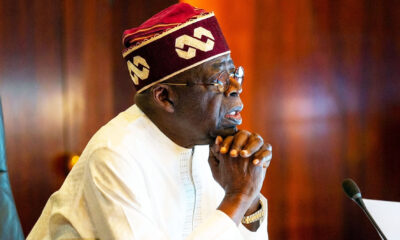
BREAKING : President Tinubu Seeks Fresh $516m Loan

BREAKING : President Tinubu Seeks Fresh $516m Loan
President Bola Ahmed Tinubu has formally requested Senate approval for a $516,333,007 external loan to finance key sections of the ambitious Sokoto–Badagry Superhighway project, a flagship infrastructure initiative aimed at boosting national connectivity.
The request was conveyed in a letter addressed to Senate President Godswill Akpabio and read during Thursday’s plenary session.
According to the President, the proposed funding will support the execution of Section 1, Phase 1a and 1b, covering about 120 kilometres of the planned 1,000km highway corridor linking Nigeria’s Northwest to the Southwest.
Tinubu explained that the highway will originate from Illela in Sokoto State and pass through Kebbi, Niger, Kwara, Oyo, and Ogun states before terminating in Badagry, Lagos State—creating a strategic economic route connecting inland production zones to coastal trade hubs.
The financing arrangement, the President noted, is structured as a syndicated loan from Deutsche Bank, backed by a partial risk guarantee from the Islamic Corporation for the Insurance of Investment and Export Credit, an arm of the Islamic Development Bank Group.
He added that the Federal Government will provide counterpart funding of ₦265.54 billion to cover land acquisition, compensation, and other ancillary infrastructure tied to the project.
READ ALSO:
- Lai Mohammed Rejects Christian Genocide Claims, Says Boko Haram Kills More Muslims
- Ted Cruz Accuses Nigerian Officials Over Alleged Attacks on Christians
- NAFDAC Busts Fake Alcohol Factories in Lagos, Seizes ₦350m Counterfeit Drinks
Details of the loan show a nine-year tenor, including a grace period of up to three years, with an interest rate capped at the Chicago Mercantile Exchange (CME) SOFR plus 5.3 percent annually.
Tinubu informed lawmakers that the Federal Executive Council (FEC) has already approved the financing structure and urged the Senate to incorporate the loan into Nigeria’s rolling borrowing plan.
The President emphasized that the Sokoto–Badagry Superhighway is expected to significantly enhance North-South connectivity, improve road safety, and reduce logistics and transportation costs across the country. He added that the project would strengthen trade, boost food security, and promote national cohesion by linking agricultural production zones to markets and ports.
The design also includes provisions for future development, with the central median reserved for rail integration and utility corridors, positioning the route as a multi-modal transport backbone.
Following the presentation, Akpabio referred the request to the Senate Committee on Foreign and Local Debts for further legislative scrutiny, with a report expected within one week.
Speaking in support of the project, Senator Mohammed Adamu Aliero (Kebbi Central) described the highway as a long-awaited development, noting that it had been under consideration for over five decades.
Aliero said he had personally inspected ongoing work and expressed satisfaction with the progress, revealing that sections of the road are being constructed using both concrete and asphalt, alongside modern features such as solar-powered streetlights.
He projected that upon completion, travel time between Sokoto and Lagos could be reduced by more than 70 percent, cutting a typical 13-hour journey to about six hours.
The proposed loan forms part of the Tinubu administration’s broader strategy to leverage external financing for large-scale infrastructure projects considered critical to Nigeria’s economic growth and regional integration.
BREAKING : President Tinubu Seeks Fresh $516m Loan








News
UNILORIN VC to graduates: Let this investment count
UNILORIN VC to graduates: Let this investment count
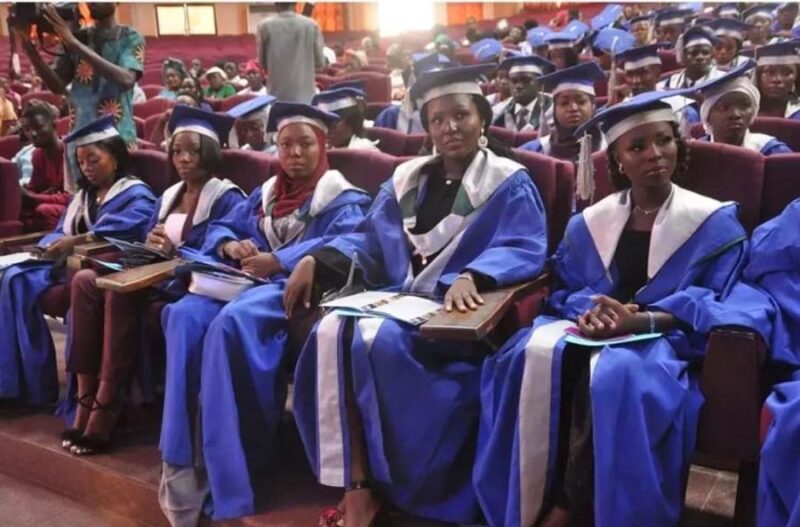
ILORIN — The Vice-Chancellor of the University of Ilorin (UNILORIN), Professor Wahab Olasupo Egbewole, SAN, has urged graduating students to justify the sacrifices made by their parents, guardians and other stakeholders by using their education, knowledge and skills to solve societal problems and contribute meaningfully to national development.
Egbewole gave the charge in his address titled “Let This Investment Count!” at the university’s 41st Convocation Ceremony, where he congratulated the graduands and challenged them to translate the opportunities provided by university education into tangible benefits for themselves and society.
The Vice-Chancellor’s message placed emphasis on the responsibilities that come with obtaining a university degree, particularly the need for graduates to demonstrate that the time, money, energy and other resources invested in their education have produced meaningful results.
He called on the graduands to appreciate the contributions of their parents and guardians, whose sacrifices had helped them reach the milestone, while also recognising the efforts of the university’s academic and non-academic staff and other stakeholders in their educational journey.
According to the message of the address, the significance of graduation goes beyond receiving certificates and celebrating academic achievements. It also marks the beginning of a new phase in which graduates are expected to apply their learning, demonstrate discipline and integrity, and contribute to the development of their communities.
The charge comes at a time when Nigerian graduates face concerns over unemployment, changing workplace requirements and the need to acquire practical competencies that complement conventional academic qualifications.
Egbewole’s appeal therefore highlights the importance of ensuring that university education produces individuals capable of creating opportunities, addressing real-life challenges and adding value to their workplaces and communities.
16,152 students to graduate
The 41st Convocation Ceremony is expected to see the university graduate a total of 16,152 students for the 2025/2026 academic session.
The figure comprises 11,213 students receiving first degrees and 4,939 candidates earning higher degrees and diplomas.
Among the undergraduate graduands, 365 earned First-Class honours, while 4,367 obtained Second-Class Upper Division degrees. Another 5,102 graduated with Second-Class Lower Division degrees, 1,006 earned Third-Class degrees and 30 obtained Pass degrees.
The graduating class also includes students from several professional programmes, including Medicine and Surgery, Nursing, Pharmacy, Optometry, Physiotherapy and Veterinary Medicine.
The scale of the graduating class underscores the responsibility confronting the university and other stakeholders in ensuring that graduates are adequately prepared for the demands of employment, entrepreneurship, professional practice and further learning.
For the graduands, the Vice-Chancellor’s message serves as a reminder that the value of their qualifications will increasingly be demonstrated through their conduct, competence, creativity and contributions beyond the university environment.
Beyond certificates, emphasis on practical skills
The university has also placed increasing emphasis on equipping students with practical skills to complement their academic qualifications.
One of the initiatives highlighted ahead of the convocation is the University of Ilorin’s U-INSPIRE programme, through which 8,320 participants successfully completed training designed to strengthen their employability, entrepreneurial capacity and readiness for the demands of the modern workplace.
The programme was developed in collaboration with industry partners to help students acquire relevant competencies beyond classroom instruction.
At the graduation ceremony for the programme’s second cohort, Egbewole urged participants to move beyond academic certificates, develop practical capabilities and turn innovative ideas into sustainable businesses.
The initiative reflects a broader recognition that graduates need more than theoretical knowledge to thrive in an increasingly competitive economy.
Practical experience, problem-solving ability, creativity and the capacity to identify and respond to emerging opportunities are becoming important complements to formal qualifications.
The university’s efforts in this area provide additional context for the Vice-Chancellor’s appeal to graduands to make their educational investment count.
Parents, guardians and stakeholders share in the investment
The address also draws attention to the role played by parents, guardians and other supporters in the education of university students.
For many Nigerian families, sponsoring a child through university involves considerable financial and personal sacrifices, including the payment of tuition-related charges, accommodation, feeding, learning materials, transportation and other expenses.
Beyond financial contributions, families often provide emotional support, encouragement and guidance throughout their children’s academic journeys.
The successful completion of a degree is therefore not only a personal achievement for the graduand but also a milestone for the families and communities that supported the process.
The Vice-Chancellor’s call places a responsibility on graduates to honour those sacrifices by making responsible decisions, upholding ethical standards and applying their knowledge in ways that benefit others.
It also reinforces the need for graduates to recognise education as an opportunity to develop their potential and contribute to society, rather than merely as a means of obtaining certificates.
UNILORIN highlights institutional progress
The convocation also provides an opportunity for the university to showcase its academic and institutional achievements during the 2025/2026 session.
Ahead of the ceremony, Egbewole highlighted several developments, including the accreditation of 11 academic programmes, the expansion of campus transportation and the strengthening of research, innovation and institutional partnerships.
The university also disclosed that it received a ₦25 million award from the Joint Admissions and Matriculation Board in recognition of its compliance with admission regulations.
In addition, the institution announced the introduction of 12 compressed natural gas-powered buses and 20 electric tricycles to improve transportation within the campus.
The university has continued to pursue its Vision 1:10:500 aspiration, which seeks to make it Nigeria’s leading university, place it among Africa’s top 10 institutions and secure a position among the world’s top 500 universities.
The vision reflects the institution’s stated ambition to strengthen academic standards, research output, innovation, partnerships and its international standing.
Egbewole has also stressed the importance of continuity, responsible management of resources and collective commitment to sustaining institutional progress.
A new responsibility for graduands
As the graduands prepare to leave the university, the message of “Let This Investment Count!” places their future contributions at the centre of the convocation celebration.
Their degrees represent years of learning and assessment, but they also carry expectations from families, employers, communities and the wider society.
For those entering the labour market, the challenge will be to demonstrate the knowledge and skills acquired through their studies. For aspiring entrepreneurs, it will be to identify opportunities, develop viable ideas and create value. Others will pursue postgraduate education, professional development or careers in public service.
Whatever paths they choose, the central challenge is to make their education relevant to the needs of society.
The university’s 41st Convocation Ceremony, which runs from October 16 to 25, 2026, celebrates the achievements of its graduating students while providing an opportunity to reflect on the responsibilities that accompany higher education.
For the graduands, the message is clear: the completion of a degree is not the end of their journey but the beginning of a new responsibility to themselves, their families and society.
The ultimate measure of the investment in their education will be what they do with the knowledge, discipline and opportunities they have acquired.
UNILORIN VC to graduates: Let this investment count
News
Mexico Clears Reno Omokri as Nigeria’s Ambassador After Eight-Month Wait

Mexico Clears Reno Omokri as Nigeria’s Ambassador After Eight-Month Wait
The Mexican government has granted diplomatic approval for Reno Omokri’s appointment as Nigeria’s ambassador to Mexico, ending an eight-month wait for the confirmation of his posting by the host country.
Omokri disclosed this in a post on his X account on Tuesday, saying José Manuel Briseño Flores, chargé d’affaires of the Embassy of Mexico in Abuja, had delivered the diplomatic approval, known as agrément, to Babagana Wakil, Director of Protocol at Nigeria’s Ministry of Foreign Affairs.
The approval covers Omokri’s appointment as Ambassador Extraordinary and Plenipotentiary to Mexico, with concurrent accreditation to Guatemala, Honduras and Nicaragua.
“ To God be the glory, the Chargé d’affaires of the Embassy of the United Mexican States in Abuja, Mr José Manuel Briseño Flores, today in Abuja delivered the agrément from the Government of the United Mexican States accepting me,” Omokri said.
The development clears a major hurdle in the process of deploying the former presidential aide and political commentator to his diplomatic assignment, following months of uncertainty over the status of his appointment.
President Bola Tinubu had in March approved the posting of 65 ambassador-designates and high commissioners to various countries as part of efforts to strengthen Nigeria’s diplomatic representation abroad.
Omokri was among those named for ambassadorial postings, with Mexico designated as his principal country of assignment.
However, his deployment could not be concluded immediately because Mexico had yet to formally accept his nomination, a necessary step in the diplomatic appointment process.
Under established diplomatic practice, a government seeking to appoint an ambassador must obtain the receiving country’s agrément before the nominee can be formally deployed. The procedure allows the host country to indicate its acceptance of the proposed envoy.
In August, the Ministry of Foreign Affairs disclosed that Mexico and Japan were among the countries that had yet to communicate formal acceptance of two outstanding ambassadorial appointments.
The ministry said it was engaging the relevant authorities in the affected countries and expressed confidence that the outstanding approvals would be secured in due course.
Mexico’s decision now resolves the uncertainty surrounding Omokri’s posting, although the completion of any remaining formalities and the commencement of his diplomatic duties may still depend on the applicable procedures.
Omokri, a former aide to ex-President Goodluck Jonathan, is known for his political commentary and frequent interventions in Nigeria’s public discourse. His appointment forms part of the Tinubu administration’s wider effort to fill key diplomatic positions and strengthen the country’s engagement with foreign governments.
With the approval secured, attention will now turn to the completion of the remaining diplomatic formalities and his eventual assumption of duty in Mexico.
News
Delta Mourns as Former Governor Uduaghan Dies After Brief Illness
Delta Mourns as Former Governor Uduaghan Dies After Brief Illness
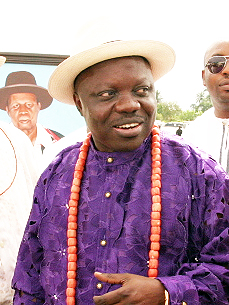
A former Governor of Delta State, Dr Emmanuel Eweta Uduaghan, has died at the age of 71 after a brief illness, his family announced on Monday.
Uduaghan, who governed Delta State for eight years between 2007 and 2015, died on the morning of October 19, 2026, according to a statement issued by the family and signed by Toju Andre Uduaghan.
The family described his death as a devastating loss, saying his life and years of public service touched many people across Delta State and Nigeria.
The statement, titled “Announcement of the Passing of His Excellency, Dr Chief Emmanuel Eweta Uduaghan,” read in part, “It is with hearts weighed down by immeasurable grief and profound sorrow that we announce the passing to glory of our beloved Father, Brother, Uncle, and Patriarch.”
The family said Uduaghan was a source of strength and a respected elder whose contributions to public service and family life would remain indelible.
“He served as Commissioner for Health from 1999 to 2003, Secretary to the Delta State Government from 2003 to 2007, and Governor of Delta State from 2007 to 2015,” the statement said.
It added that throughout his years in public service, the former governor demonstrated a commitment to the human and infrastructural development of the state.
The family described his death as a profound loss not only to his relatives but also to the people of Delta State and the country at large.
While expressing gratitude to God for his life and legacy, the family prayed for the repose of his soul and for divine comfort for those mourning his death.
“We pray that Almighty God, in His infinite mercy, will grant his soul eternal rest and comfort our family, friends, associates, former colleagues, and all who mourn this painful loss,” the statement added.
The family said Uduaghan’s memory would remain alive through the lives he touched and the legacy he left behind.
“Rest well, our beloved Father, Brother, and Uncle. Your memory will forever remain in our hearts, and your legacy will endure in the lives of those you touched,” it said.
The statement concluded with a prayer for the peaceful repose of his soul.
-

 metro1 day ago
Army Major, Soldiers Killed in ISWAP Ambush in Yobe State
-

 Politics3 days ago
Buhari Feared Tinubu Presidency, Resisted Pressure to Back Him – Baba-Ahmed Claims
-
 News3 days ago
FG Challenges World Bank’s 124% Debt-to-Revenue Warning, Cites Rising Income
-

 metro3 days ago
NAFDAC Probes Corps Member’s Death at Enugu Camp as Fake Drug Claims Emerge
-

 metro1 day ago
Breaking: Afenifere Leader Pa Fasoranti Dies at 100
-

 metro3 days ago
Ogun House Fire Horror: Husband Arrested After Wife Dies Following Domestic Dispute
-

 Entertainment3 days ago
Nollywood Mourns as Actress, Beauty Queen Tenia Abraham Dies at 32
-

 metro16 hours ago
‘We Don’t Know What Else to Do’ — Mother Begs for Release of Abducted Children