

Health
No Safe Level: Study Links Even Low Alcohol Intake to Higher Cancer Risk

No Safe Level: Study Links Even Low Alcohol Intake to Higher Cancer Risk
Seattle, Washington – Even a single daily drink could be enough to raise the risk of cancer, according to a major global study that delivers one of the strongest warnings yet about alcohol’s impact on human health. The massive analysis, covering 843 scientific studies and millions of people worldwide, found that alcohol is linked to a wide range of serious diseases, with cancer risks increasing even at low levels of drinking. Researchers declared that the findings reinforce a blunt scientific reality: alcohol is a known cause of cancer, officially classified as a Group 1 carcinogen by the World Health Organization’s International Agency for Research on Cancer (IARC) — the same category as tobacco, asbestos, and ionising radiation. And crucially, they warn there may be no completely safe level of consumption when it comes to cancer.
The study, published in Nature Health on June 1, 2026, examined alcohol’s effects on 20 major diseases, including multiple cancers, liver failure, heart disease, infections, and brain disorders. Across almost every category, the risks rose as drinking increased, but in several cancers, damage began at surprisingly low intake levels. The research applied the Institute for Health Metrics and Evaluation’s Burden of Proof (BoP) meta-analytic framework to carefully account for differences across studies and determine the most conservative estimate supported by the data.
One of the most alarming findings involved cancers of the throat and upper airways. The study found that pharyngeal cancer (excluding nasopharyngeal cancer) showed the strongest association, with at least a 105% increase in risk at average consumption levels — earning the highest five-star rating in the study’s evidence grading system. At around two alcoholic drinks per day (20g of alcohol), researchers found a 56% higher risk of certain pharyngeal cancers compared with non-drinkers. At higher levels, the danger escalated sharply, with risk more than tripling in some cases. At 40 grams per day (approximately four standard drinks), the mean relative risk reached 2.73 (230-323% increase), and at 76 grams per day (about 7.5 drinks), risk soared to 4.24 times higher than non-drinkers. The dose-response relationship for pharyngeal cancer was found to be non-linear, with risk increasing steeply at lower intake levels before levelling off at higher exposures. This means the greatest proportional increase in risk occurs at relatively low levels of drinking.
READ ALSO:
- Power Outage Hits Five States, Niger Republic as TCN Begins Transmission Line Repairs
- Toyota Motor Show Roars into Lagos Tomorrow with Test Drives, Debates, Free Diagnostics, Others
- Oyo Boils as Teachers Strike, Protesters Demand Freedom for Abducted Pupils
The study found harmful associations between alcohol use and all ten cancers examined, with risk increasing progressively as intake rose. Even consumption below one standard drink per day (less than 10 grams of pure alcohol) was associated with elevated risk for cancers of the pharynx, colorectum, esophagus, breast, liver, pancreas, and prostate. Laryngeal cancer, colorectal cancer, and lip and oral cavity cancer showed moderate evidence of harm, with the analysis indicating risk increases of at least 22% to 49% (three-star associations). Cirrhosis and other chronic liver diseases showed at least a 40% increase in risk, while pancreatitis showed at least a 22% increase (three-star associations). Esophageal cancer, breast cancer, liver cancer, pancreatic cancer, and prostate cancer showed weaker but consistent evidence of harm, with risks rising steadily as consumption increased (two-star associations). Of all cancers studied, stomach cancer was the one health outcome needing additional evidence to better understand the strength of the relationship.
The study’s findings challenge the widespread belief that moderate drinking is harmless. While some earlier research has suggested that small amounts of alcohol might offer limited protection against conditions such as heart disease, dementia, and diabetes, the authors of the new study explained that these findings are uncertain and likely influenced by differences in lifestyle, diet, and health status between drinkers and non-drinkers. For several non-cancer outcomes, the dose-response relationship was J- or U-shaped. Type 2 diabetes showed a small reduction in risk of at least 4.5% at low-to-moderate intake levels. Alzheimer’s disease and other dementias showed a reduction of at least 6.4% at low-to-moderate intake levels. For ischaemic heart disease, ischaemic stroke, and haemorrhagic stroke, evidence of lower risk at low-to-moderate intake was inconsistent. However, importantly, any possible protective effects disappeared as alcohol intake increased, while cancer risks continued to rise. At higher levels of consumption, the evidence points to increased risk across every outcome examined. Atrial fibrillation and flutter showed increased risk, with the analysis indicating at least a 6% increase.
The mechanisms through which alcohol increases cancer risk are well-established. According to health authorities, ethanol and its main metabolite acetaldehyde can damage DNA in cells, leading to mutations that can trigger cancer development. Alcohol also increases oestrogen levels, which is particularly important for breast carcinogenesis. It can act as a solvent for tobacco carcinogens, enhancing their cancer-causing effects, and produce reactive oxygen species and nitrogen species that can damage cellular components. Additionally, alcohol can alter folate metabolism, affecting DNA synthesis and repair. Crucially, alcohol’s carcinogenic effect is independent of the type of alcoholic beverage. The risk is the same whether the drink is beer, wine, or spirits. It is the ethanol itself — and its metabolite acetaldehyde — that causes the damage.
The researchers warned of a major public awareness gap. While most people understand the link between smoking and cancer, far fewer realise that alcohol is also a direct carcinogen. “This is not just a lifestyle issue; it is a cancer risk issue,” the study implies through its findings, highlighting alcohol as one of the most widespread avoidable causes of disease globally. According to a February 2026 survey by the Annenberg Public Policy Center, only 53% of American adults say that regularly consuming alcohol increases cancer risk — statistically unchanged from the previous year. More than a quarter (29%) remain unsure how alcohol consumption affects cancer risk. The survey noted that public awareness had improved following the U.S. Surgeon General’s January 2025 advisory on alcohol and cancer risk, which called for updated warning labels on alcoholic beverage containers. However, when the U.S. Department of Agriculture later removed the warning linking alcohol consumption to cancer from the Dietary Guidelines, it “turned its back on a substantial body of research,” according to APPC Director Kathleen Hall Jamieson.
READ ALSO:
- ‘No Evidence’: Atiku Camp Fires Back at Babachir Lawal Over ADC Rigging Claims
- Police Warn Nigerians Against Reprisal Over Fresh South Africa Xenophobic Attacks
- Breaking: CBN Redeploys All Four Deputy Governors in Major Leadership Shake-Up
Alcohol consumption accounts for an estimated 741,300 new cases of cancer worldwide annually (about 4% of all new cancer cases) and contributes to nearly 400,000 deaths due to cancer every year. Half of all alcohol-attributable cancers in the WHO European Region are caused by “light” and “moderate” alcohol consumption — defined as less than 1.5 litres of wine, less than 3.5 litres of beer, or less than 450 millilitres of spirits per week. The World Health Organization’s Regional Office for Europe and IARC launched a new volume of the IARC Handbooks of Cancer Prevention in October 2025, focusing specifically on the impact on cancer of reduction or cessation of alcohol consumption and the effectiveness of alcohol policies.
The authors called for stronger public warnings, clearer labelling, and updated health guidance that reflects alcohol’s cancer risk more directly. The UK Government’s National Cancer Plan for England, published in February 2026, acknowledges this need, committing to mandatory requirements for alcoholic drinks to display consistent nutritional information and health warning messages. Dr. Emmanuela Gakidou, senior author and Professor at IHME, explained the complexity: “The science on alcohol and health is genuinely complex. For cancer, the evidence is consistent and unambiguous: risk rises with any level of alcohol intake. For some cardiometabolic and dementia outcomes, studies suggest small reduced risks at low-to-moderate consumption, but those associations became weaker and reversed at higher levels of drinking. Rather than interpreting these results as an endorsement of drinking, they lay out a complex map of where the evidence is strong, weak, or mixed.” Dr. Xiaochen Dai, lead author and research collaborator at IHME, added: “Our framework takes a cautious approach by accounting for differences across studies and reporting the smallest plausible effect supported by the data. For some cardiometabolic and dementia outcomes, the relationship is more complex, and the evidence is weaker, which is exactly what our star ratings are designed to make clear.”
For millions of people who see alcohol as a normal part of daily life, the message from this landmark study is stark: even “moderate” drinking may come with a hidden cost — and that cost could be cancer. The study’s findings suggest that drinking guidelines should be informed by up-to-date evidence across the full range of health outcomes, discourage heavy episodic drinking, and clearly communicate that even low-to-moderate intake is associated with elevated risk for several conditions, especially cancers. The researchers note that complete cessation of alcohol consumption is the only certain way to eliminate alcohol-related cancer risk entirely.
For quick reference, the cancer risk findings at average consumption levels are as follows: pharyngeal cancer shows at least a 105% increase with five-star evidence; laryngeal cancer shows at least a 49% increase with three-star evidence; cirrhosis and chronic liver disease show at least a 40% increase with three-star evidence; colorectal cancer shows at least a 22% increase with three-star evidence; lip and oral cavity cancer shows at least a 22% increase with three-star evidence; pancreatitis shows at least a 22% increase with three-star evidence; and esophageal, breast, liver, pancreatic, and prostate cancers show consistent evidence of harm with two-star evidence ratings.
No Safe Level: Study Links Even Low Alcohol Intake to Higher Cancer Risk












Health
NAFDAC Seizes Fake Drinks Worth Over ₦2bn at Lagos Trade Fair Complex
NAFDAC Seizes Fake Drinks Worth Over ₦2bn at Lagos Trade Fair Complex
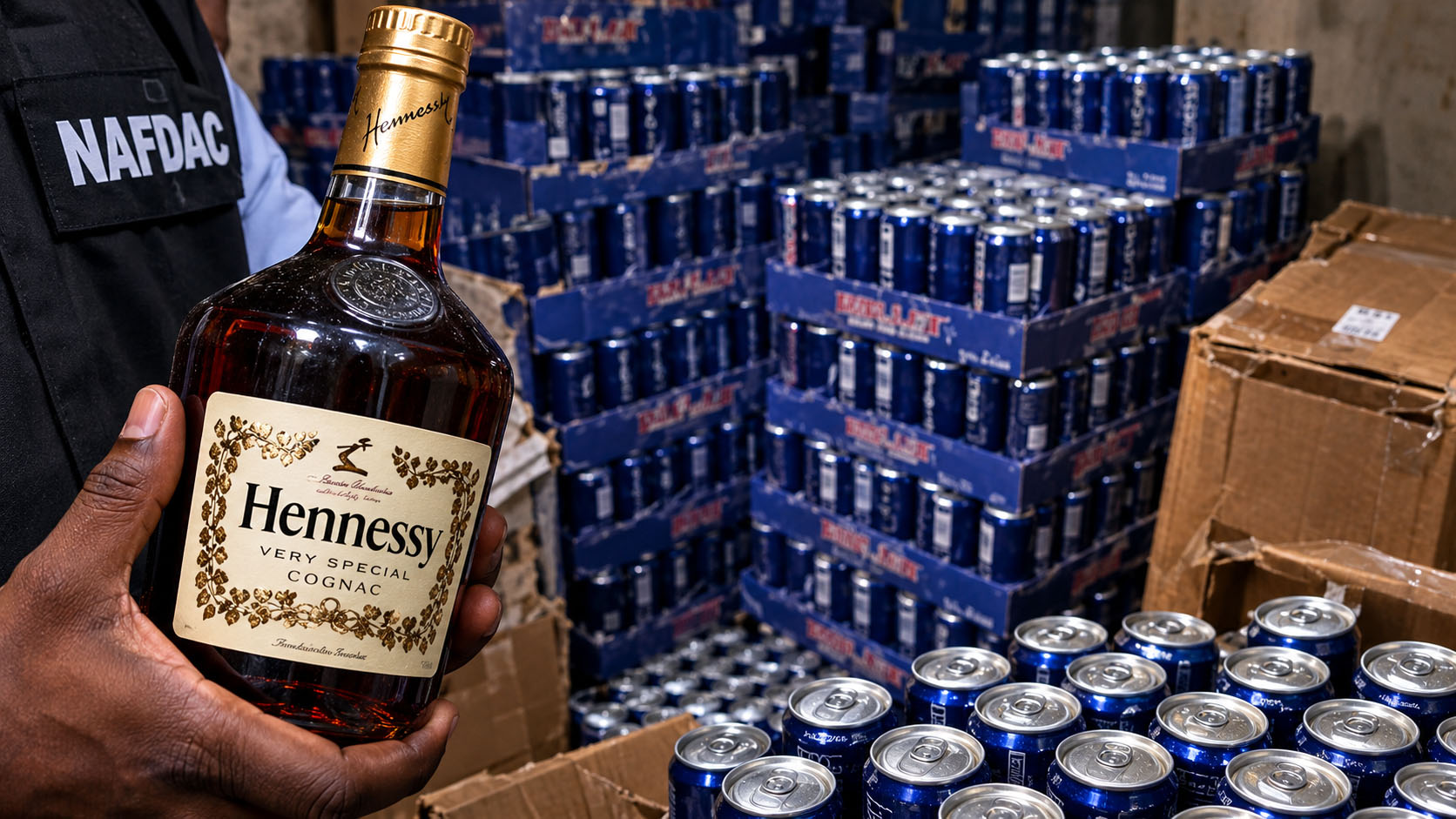
The National Agency for Food and Drug Administration and Control (NAFDAC) has uncovered a suspected large-scale counterfeit alcoholic beverage operation at the Lagos International Trade Fair Complex, seizing products reportedly valued at more than ₦2 billion.
The operation, conducted on Tuesday, October 13, 2026, followed intelligence reports about suspected illegal activities within the commercial complex.
The raid reportedly led to the discovery of more than 20 illegal stores allegedly used for the production and distribution of counterfeit alcoholic beverages and other prohibited activities.
According to reports on the operation, the facilities were concealed within makeshift stores originally designated as parking spaces within the complex.
During the exercise, NAFDAC officials reportedly discovered individuals allegedly involved in blending and counterfeiting popular alcoholic beverage brands, revalidating expired and unsafe drinks for resale, and stockpiling banned imported products.
Two suspects were reportedly apprehended during the operation, while the seized products were evacuated from the premises.
The discovery has raised concerns about the possible circulation of counterfeit, expired and unsafe alcoholic beverages in Nigerian markets, particularly products repackaged to appear genuine.
READ ALSO:
- Cosmetics Top Fake Products as NAFDAC Seals 179 Establishments, Arrests 52
- Nigeria Secures UN Human Rights Council Seat With 172 Votes
- Houthi Missile Targeting Riyadh Shot Down as Debris Injures Four, Damages 15 Homes
NAFDAC has repeatedly warned that the consumption of adulterated or unsafe beverages could expose consumers to serious health risks.
The agency urged members of the public to remain vigilant and report suspected cases of illegal manufacturing, relabelling, revalidation and sale of regulated products.
Consumers were also advised to exercise caution when purchasing alcoholic beverages, particularly products with suspicious packaging, questionable expiry dates or other signs of tampering.
NAFDAC provided its official complaints line, 0800-1-NAFDAC (0800-1-623322), for members of the public to report suspected violations.
The latest enforcement action forms part of the agency’s efforts to combat counterfeit and substandard products and protect public health.
Investigations are expected to establish the full extent of the alleged activities and identify other individuals who may be connected to the suspected distribution network.
NAFDAC Seizes Fake Drinks Worth Over ₦2bn at Lagos Trade Fair Complex
Health
Cosmetics Top Fake Products as NAFDAC Seals 179 Establishments, Arrests 52

Fake and substandard cosmetics accounted for the largest number of product seizure entries recorded by the National Agency for Food and Drug Administration and Control (NAFDAC) between January and August 2026, as the agency intensified its nationwide crackdown on counterfeit and unsafe products.
NAFDAC recorded 401 cosmetics seizure entries during the eight-month period, ahead of drinks, with 215 entries, and drugs, with 112, according to an enforcement report released on Wednesday, October 14.
The agency also reported 213 raids, 474 new cases, 295 concluded cases, 821 product seizure entries, 179 establishments closed or sealed, and 52 arrests during the period.
The figures were disclosed by NAFDAC Director-General, Professor Mojisola Adeyeye, in a statement detailing the activities of the agency’s Directorate of Investigation and Enforcement.
The enforcement operations covered a broad range of regulated products, including food, medicines, cosmetics, medical devices, packaged water, beverages and chemicals.
The agency said it also carried out 157 surveillance activities, imposed 218 administrative sanctions and conducted 22 product destruction exercises between January and August.
READ ALSO:
- Nigeria Secures UN Human Rights Council Seat With 172 Votes
- Houthi Missile Targeting Riyadh Shot Down as Debris Injures Four, Damages 15 Homes
- Outrage as Israeli Settlers Torch Mosque, Burn Vehicle in Occupied West Bank
The report further showed that cosmetics accounted for 64 of the 179 establishments closed or sealed, while drinks accounted for 67 of the 213 raids conducted during the period.
NAFDAC clarified that the seizure figures represented product seizure entries rather than the physical quantity or monetary value of goods confiscated. The numbers therefore indicate the frequency with which product categories appeared in enforcement records, not necessarily the total volume of items seized.
The prominence of cosmetics in the figures raises concerns about the circulation of counterfeit, unregistered and substandard beauty products in Nigeria. Unsafe cosmetics can expose consumers to harmful ingredients, contamination and misleading product claims, particularly when products are manufactured or sold outside regulatory controls.
Some skin-lightening and medicated cosmetic products have previously been seized by NAFDAC during enforcement operations. The agency has repeatedly warned consumers to exercise caution when buying products from unverified suppliers and to check registration details before use.
In February 2026, NAFDAC reported uncovering banned, counterfeit and unregistered cosmetic products valued at more than ₦3 billion in a warehouse at the APT Trade Fair Complex in Lagos. The products included prohibited whitening soaps and other cosmetic items.
The latest enforcement figures also come amid wider concerns over counterfeit medicines and adulterated food and beverages. NAFDAC has warned that falsified products may contain incorrect ingredients, harmful substances or ingredients that do not meet required quality and safety standards.
The agency’s enforcement directorate continued investigations, surveillance, raids and legal processes during the eight-month period. Of the 474 new cases recorded, 295 were concluded, while 52 arrests were made.
NAFDAC has maintained that sustained enforcement is necessary to disrupt the manufacture, importation and distribution of unsafe products and protect consumers from potential harm.
Consumers are advised to buy cosmetics and other regulated products from reputable outlets, inspect packaging and labelling, and verify product registration through NAFDAC’s official channels. Suspicious products or suspected counterfeiting activities can also be reported to the agency.
The figures underline the scale of enforcement activity required to tackle fake cosmetics and other unsafe products in Nigeria, while highlighting the need for continued surveillance, consumer awareness and accountability across the supply chain.
Cosmetics Top Fake Products as NAFDAC Seals 179 Establishments, Arrests 52
Health
NAFDAC Raises Alarm Over Toxic Pesticides in Beans, Seizes ₦800m Banned Chemicals
The National Agency for Food and Drug Administration and Control (NAFDAC) has raised the alarm over the detection of dangerous pesticide residues in some samples of beans sold in Nigeria, warning that the misuse of agricultural chemicals poses serious risks to public health.
The agency also disclosed that it seized banned agrochemicals worth more than ₦800 million in Ogun, Ondo, Osun and Oyo states in 2025, as part of efforts to prevent prohibited chemicals from entering the food supply chain.
NAFDAC Director-General, Professor Mojisola Adeyeye, disclosed the findings during a media briefing on pesticide safety in Lagos on Friday, October 9, 2026.
According to the agency, a recent market study detected residues of pyrethroids and dimethoate above permitted safety limits in some bean samples, raising concerns about the improper use of pesticides to preserve harvested agricultural produce.
Adeyeye explained that although pesticides play an important role in crop protection, their use must comply with approved regulations and safety instructions.
She warned that the misuse of chemicals, excessive application and failure to observe the prescribed waiting period between pesticide application and harvesting could expose consumers, farmers and the environment to harmful substances.
The NAFDAC chief stressed that a pesticide approved for use on crops in the field is not automatically suitable for preserving harvested food products.
She specifically cautioned against using dimethoate to preserve harvested beans against pests such as weevils, noting that the chemical was not approved for that purpose.
READ ALSO:
- 2027: Ekiti Driver Takes ₦3.5m Loan to Back Tinubu’s Re-election Bid
- 2023 Election: Tinubu’s Camp Dares Obi to Produce Evidence He Won Presidential Poll
- ‘Mad People’: Presidency Fires Back at Amaechi Over Tinubu Re-Election Remarks
While certain pyrethroids are permitted for post-harvest storage under approved conditions, she said users must follow the prescribed instructions and safety requirements.
Adeyeye identified common violations to include applying excessive quantities of pesticides, using products on crops for which they were not approved, harvesting before the recommended waiting period and improperly mixing chemicals.
She also warned against storing pesticides alongside food, animal feed or household items, reusing empty chemical containers for domestic purposes and disposing of pesticide waste carelessly.
NAFDAC Seizes Banned Chemicals Worth ₦800m
Providing details of the agency’s enforcement operations, Adeyeye said NAFDAC seized banned agrochemicals worth more than ₦800 million in Ogun, Ondo, Osun and Oyo states in 2025.
She added that enforcement operations in the North-West between September 2024 and July 2026 resulted in the seizure, interception or recovery of 2,974 cartons of pesticides containing paraquat, valued at approximately ₦148.7 million.
The agency also intercepted 120 cartons of pesticides containing chlorpyrifos, valued at more than ₦17 million, during the same period.
In a separate operation in Kebbi State, authorities intercepted 5,619 cartons containing 67,428 litres of paraquat, alongside 500 cartons of atrazine products.
The agency said the affected chemicals were among products prohibited under its regulatory measures, with the applicable phase-out periods for paraquat, chlorpyrifos and atrazine ending on January 1, 2026.
NAFDAC also disclosed that it sealed four unauthorised pesticide and agrochemical manufacturing facilities in Bichi, Kano State, in July 2026. Officials reportedly discovered unlabelled products, bulk chemicals and packaging materials associated with illegal production.
Adeyeye said suspects had been arrested in connection with enforcement operations, with one case undergoing prosecution.
She attributed the continued circulation of banned pesticides partly to illegal importation, unauthorised local production and distribution through unofficial supply channels.
The agency also announced restrictions on the 100-millilitre pack size of dichlorvos, prohibiting its importation, manufacture and sale in open markets and supermarkets because of concerns about its misuse on agricultural produce and other risks.
NAFDAC Warns Farmers, Dealers and Consumers
Adeyeye urged farmers to purchase pesticides from recognised agro-input dealers, use only approved products and follow label instructions, including recommended quantities and pre-harvest waiting periods.
Manufacturers, importers, distributors and retailers were also warned to comply with regulatory requirements, while businesses involved in illegal production and distribution could face enforcement action and prosecution.
The agency said it was strengthening surveillance, laboratory testing, inspections and collaboration with law enforcement authorities to identify and remove prohibited chemicals from circulation.
It has also trained more than 2,000 agro-input dealers on responsible pesticide handling and application, while expanding its enforcement zonal offices from three to six to improve regulatory coverage.
Deputy Director of Veterinary Medicine and Allied Products at NAFDAC, Dr Idayat Mudshiru, said continued engagement with farmers and other stakeholders was essential to reducing pesticide misuse.
She said the agency was working with industry stakeholders, including CropLife, to improve public awareness and promote safe handling and application of agricultural chemicals.
The agency emphasised that protecting Nigerians from harmful pesticide residues requires coordinated action across the agricultural value chain, from chemical manufacturers and importers to dealers and farmers.
The findings underscore the importance of food safety monitoring and proper pesticide management, particularly for staple foods such as beans that are widely consumed in Nigerian households.
NAFDAC Raises Alarm Over Toxic Pesticides in Beans, Seizes ₦800m Banned Chemicals
-

 Politics3 days ago
Obi Positioning for SGF Role Under Atiku’s ADC Ticket – Sowore
-

 metro3 days ago
How Bandits Demand ₦300m Ransom for Abducted Kaduna Couple, Baby in Viral Video
-

 Politics3 days ago
Okonkwo Alleges Return of Subsidy, Accuses NNPC of Plotting Trillions in ‘Lost Profit’
-

 metro2 days ago
Tragedy in Ibadan as Truck Kills Female Corps Member, Injures Others
-

 metro3 days ago
How Military Air Strike Crushed ISWAP Attack Plot, Killed Over 40 Fighters in Borno
-

 metro2 days ago
Oyo School Kidnappings: How ANSARU Allegedly Used Children to Pressure FG
-

 News3 days ago
FG Approves Upward Review of Feeding Allowance for NYSC Members
-

 metro2 days ago
Drama as Dutch Police Use Batons, Dogs to Shut Down Nigerian Wedding; Two Arrested