Don’t add lies to the terrorist horror in Oyo, By Farooq Kperogi - Newstrends
Connect with us

Health

Don’t add lies to the terrorist horror in Oyo, By Farooq Kperogi

Published

on

Case for replicating the Oyo kidnap-rescue template nationwide, By Farooq Kperogi
Farooq Kperogi

Don’t add lies to the terrorist horror in Oyo, By Farooq Kperogi
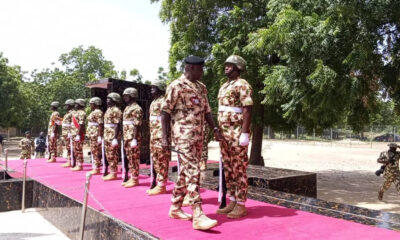
The kidnapping of schoolchildren and teachers in Oyo State is horrifying enough by itself. It does not need the embellishment of lies, half-truths, conjectures and opportunistic propaganda to make it more horrifying than it already is.

But that is precisely what appears to be happening with the viral, social-media-amplified list of “demands” allegedly made by the terrorist bandits who kidnapped schoolchildren and teachers in Oyo State.

According to the social media version of the story, the bandits have demanded four things as preconditions for releasing the innocent people in their captivity: one billion naira to be paid into an account in the Republic of Benin, the release of bandits supposedly being held in Agodi and Abolongo prisons, two Hilux vehicles and the amendment of Oyo State laws to introduce Sharia.

This list has travelled far and wide because it has all the elements that make rumors combustible in Nigeria. It involves money, foreign conspiracy, terrorism, prisons, Sharia and the implicit insinuation that some local Muslims must know more than they are saying. It is almost a perfect specimen of panic engineering.

The problem is that it has no firm evidentiary foundation. The abduction is, of course, real. So are the communal grief and the horrors people in Oyo and the Southwest are contending with now. But the four-point demand list that is now being hawked across social media as fact is not supported by any credible reporting.

The source of the social media-fueled four-point demand list appears to be a vague statement attributed to the Speaker of the Oyo State House of Assembly, Debo Ogundoyin. He was reported to have asked whether anyone would negotiate with terrorists if they asked for weapons, money or concessions on future laws of the land as part of their ransom.

That is a general, hypothetical-sounding formulation. But some people somewhere with a predetermined agenda sat down and chose to stretch this conjectural formulation from the Speaker as evidence of disclosure of a precise list of specific demands.

There is a world of difference between saying terrorists asked for “weapons, money or concessions on future laws” and saying they demanded “one billion naira into a Benin Republic account, two Hilux vehicles, release of detainees in Agodi and Abolongo prisons and the introduction of Sharia in Oyo State.” One is vague, perhaps even rhetorical. The other is specific, explosive and politically loaded. You cannot responsibly move from the first to the second without foolproof evidence.

READ ALSO:

Even the few newspaper reports that published the more sensational version were cautious and guarded in their language. They said, “reports indicate,” “reportedly attributed” and “according to the report” without once mentioning any “report.” That is lazy journalism’s way of saying, “We have no facts for this story.”

But certain people on social media have laundered the uncertainty into certainty, the allegation into fact, the list as a means to attract and monetize eyeballs, and the rumor into a psychological weapon.

The Sharia claim is the most suspicious part of the whole thing. Where will the Sharia be implemented? In the classrooms from which the children were abducted? In the Old Oyo National Park where the homicidal, blood-stained criminals are believed to be hiding? In the kidnappers’ forest camps? Or across Oyo State through a ransom note from bandits? The absurdity should detain us before outrage overtakes our capacity for critical thought.

The demand is also historically and empirically incoherent. Bandits and terrorists (who, in my dictionary, are indistinct) have murdered Muslims in states where Sharia already exists. They have attacked mosques. They have killed imams while they are leading prayers in mosques during Ramadan, Islam’s holiest month. They have kidnapped Muslim women, Muslim children, Muslim clerics and Muslim farmers.

They have devastated Zamfara, Katsina, Sokoto, Kebbi, Niger, Kaduna and other Muslim-majority communities such as Kwara North. Just last week, these insensate beasts abducted the wives and children of the Emir of Yasikiru in my natal local government of Baruten. Not done, they also burned the emir’s palace. This happened only a few months after murdering nearly 300 people and abducting nearly 300 women and children, most of whom are Muslims, in neighboring Kaiama Local Government.

To suddenly believe that the same species of criminals has discovered the virtues of Sharia and are championing its enshrinement in Oyo State’s laws is to suspend judgment in the service of prejudice.

READ ALSO:

The Benin Republic bank account story is also suspicious. Of course, no banking system is immune to criminal manipulation. Criminals use “mule accounts,” stolen identities and corrupt intermediaries everywhere. So, the existence of KYC and anti-money-laundering rules does not make the claim impossible. But it does make it evidentially demanding. If anyone claims that kidnappers asked for one billion naira to be paid into a named or unnamed Benin Republic account, the burden of proof should be higher than “according to reports.”

The danger of this rumor is not merely that it is false or unverified. It is that it has already acquired a social function. It is being used to suggest that Yoruba Muslims, especially those who have advocated the introduction of the civil aspects of Sharia to adjudicate issues like marriage and inheritance among Muslims, are somehow complicit in the crimes of these bandits.

It is also being used to imply that the abduction of Yoruba schoolchildren is part of an Islamic plot that local Muslims either endorse or secretly facilitate. This is how societies descend into self-sabotaging moral idiocy. Criminals commit crimes and innocent people who share a religion, ethnicity or language with the imagined identity of the criminals are made to bear the brunt of unjustified transferred aggression.

It bears stressing that Yoruba Muslims are not responsible for the abduction of schoolchildren in Oyo State. Muslim communities in Yorubaland are not accessories to banditry merely because a rumor says kidnappers demanded Sharia. The mere mention of Sharia in a viral post does not convert every Muslim in Oyo, Osun, Ogun or Lagos into a suspect. To argue otherwise is to accept the same collective guilt logic that has poisoned Nigeria’s intergroup relations for decades.

Terrorists murder Muslims, Christians, traditional worshippers and non-religious people. They murder Hausa, Fulani, Yoruba, Igbo, Tiv, Berom, Nupe, Baatonu and everyone else when doing so advances their greed, sadistic urges, murderous impulses or tactical objectives. They are not equal-opportunity humanists, of course. They often manipulate religion and ethnicity. They sometimes speak the language of faith while practicing the ethics of beasts. But their victims are not drawn from one religious community alone.

The fight against terrorism is weakened when we isolate innocent groups for demonization. It dissipates much-needed moral energy and produces enemies where allies are needed. It also encourages communities to hide behind siege mentalities instead of cooperating across religious and ethnic lines to expose criminals. The people who should be angry together are made to be angry at one another.

The people who kidnapped children in Oyo State are reprehensible, homicidal outlaws. The state must rescue the victims, punish the perpetrators, expose their collaborators and secure schools and forests. That is the task, and it is immense, urgent, ever-present and already morally overwhelming. It should not be complicated by people who are eager to graft their pre-existing animus onto other people’s pain.

Someone I discussed this issue with yesterday told me that the rumors of the list of demands are activated by an unusually heightened sense of vigilance. I get that. There is nothing wrong with vigilance. In fact, vigilance is now a condition for survival in Nigeria. But vigilance without verification can provoke self-annihilating hysteria and mob psychology.

The children and teachers in captivity deserve our full attention. Their families deserve empathy unpolluted by propaganda. Oyo State deserves security, not rumor-fed religious suspicion. Nigeria deserves a serious conversation about the collapse of state protection, the spread of kidnapping economies, the mass helplessness in the face of terror and the ungoverned spaces that have become refuge for terrorists and bandits.

What Nigeria does not need is another lie added to an already unbearable tragedy.

Don’t add lies to the terrorist horror in Oyo, By Farooq Kperogi


Kperogi is a renowned Nigerian columnist and United States-based Professor of Journalism.

Loading

Health

FG expands emergency healthcare services to 34 states

Published

on

FG expands emergency healthcare services to 34 states
Minister of State for Health and Social Welfare, Dr. Iziaq Salako

FG expands emergency healthcare services to 34 states

The Federal Government (FG) has expanded the National Emergency Medical Service and Ambulance System (NEMSAS) to 34 states, in a major push to improve emergency healthcare, strengthen intensive and critical care services, and accelerate progress towards Universal Health Coverage (UHC) across Nigeria.

The expansion was announced by the Minister of State for Health and Social Welfare, Dr. Iziaq Salako, during the opening of the 11th Annual Scientific Conference and Annual General Meeting of the Intensive and Critical Care Society of Nigeria (I-CCSN) in Abuja.

Speaking on the conference theme, “Sustainable Financing for Intensive Care in Public Hospitals in Nigeria,” Salako described emergency and intensive care as essential pillars of a resilient healthcare system, saying timely access to quality treatment saves lives, reduces preventable deaths and protects families from the devastating financial impact of critical illnesses.

According to a statement issued by the ministry’s Assistant Director of Information and Public Relations, Ado Bako, the minister said the expansion of NEMSAS from its pilot phase in the Federal Capital Territory (FCT) to 34 states represents one of the Federal Government’s flagship health sector reforms, with efforts already underway to extend the programme to all 36 states and the FCT.

The National Emergency Medical Service and Ambulance System (NEMSAS) was established to provide a coordinated national emergency response by ensuring the rapid evacuation and transportation of critically ill or injured patients to appropriate healthcare facilities. The initiative supports victims of road traffic crashes, maternal emergencies, medical complications, disasters and other life-threatening situations that require urgent intervention.

READ ALSO:

Salako said the Tinubu administration considers emergency and critical care a strategic investment in Nigeria’s healthcare system, noting that improved emergency response capacity is critical to achieving better health outcomes, strengthening national health security and reducing avoidable deaths.

He observed that delivering quality intensive care requires sustained investments in specialised infrastructure, fully equipped ambulances, intensive care units (ICUs), trauma centres, medical oxygen systems, modern diagnostic equipment, reliable electricity supply and highly trained healthcare professionals.

The minister also expressed concern over Nigeria’s continued dependence on out-of-pocket healthcare spending, warning that many households are forced into financial hardship because of the high cost of emergency treatment and intensive care.

To reduce this burden, he said the Federal Government is expanding health insurance coverage, strengthening sustainable healthcare financing and implementing reforms aimed at making emergency medical services more accessible and affordable.

According to Salako, the government is simultaneously implementing complementary programmes to improve maternal and newborn healthcare, strengthen referral systems and integrate ambulance services with intensive care units, operating theatres, rehabilitation centres and medical oxygen supply networks.

He added that lessons from the COVID-19 pandemic have prompted increased investment in medical oxygen infrastructure, with Pressure Swing Adsorption (PSA) oxygen plants already installed in several federal and state health facilities to improve oxygen availability for critically ill patients.

The minister further disclosed that the government is promoting digital health technologies, telemedicine and tele-critical care services to bridge gaps in access to specialist healthcare, particularly in underserved and rural communities.

Salako emphasised that achieving sustainable emergency healthcare requires stronger collaboration among the Federal Government, state governments, healthcare institutions, professional associations, academic and research institutions, development partners, civil society organisations and the private sector.

He also called for greater investment in healthcare workforce development through the training of more intensive care physicians, emergency medicine specialists, nurses, physiotherapists, pharmacists, anaesthetists, biomedical engineers and other specialised healthcare professionals.

The minister said these reforms align with the Nigeria Health Sector Renewal Investment Initiative and other ongoing efforts to strengthen primary healthcare, emergency medical services and referral systems nationwide.

Earlier, Chairman of the Conference Local Organising Committee, Dr. Harrison Nwogu, said participants would examine the persistent underfunding of intensive care units and explore innovative financing mechanisms, including public-private partnerships (PPPs), expanded health insurance, philanthropic support and diaspora investment.

Chairman of the occasion and Chief Medical Director of Zenith Medical and Kidney Centre, Dr. Olalekan Olutesi, urged wealthy Nigerians and corporate organisations to invest more in the health sector, suggesting tax incentives to encourage greater private-sector participation in healthcare delivery.

Delivering the keynote address, Professor Tamuno-Ojuemi Ogaji advocated a sustainable financing framework that guarantees access to quality intensive care regardless of a patient’s financial status.

He identified inadequate infrastructure, shortages of medical equipment and consumables, unstable electricity supply, limited intensive care beds and insufficient funding as some of the major obstacles affecting critical care delivery in Nigeria.

Also speaking, the Emir of Wase, Dr. Muhammadu Haruna, who represented the Emir of Tula, Dr. Abubakar Buba, described intensive care as a national development issue that affects every Nigerian family.

He said strengthening emergency and critical care services would improve survival rates, reduce preventable deaths and contribute significantly to Nigeria’s economic and social development.

The Federal Government expressed confidence that the continued expansion of NEMSAS, improved healthcare financing, stronger referral systems and sustained investments in emergency medical infrastructure would significantly improve access to life-saving care and strengthen Nigeria’s overall healthcare system.

FG expands emergency healthcare services to 34 states

Loading

Continue Reading

Health

Tinubu approves new health technology agency to modernise Nigeria’s healthcare system

Published

on

FG Clears N39.6bn Pension Arrears for Former NITEL, PHCN, Bank Workers

Tinubu approves new health technology agency to modernise Nigeria’s healthcare system

President Bola Tinubu has approved the establishment of the National Health Technology and Data Analytics Office (NHTDAO), a landmark initiative aimed at accelerating the digital transformation of Nigeria’s healthcare system through innovation, data-driven decision-making and improved coordination across the health sector.

The Presidency also announced the appointment of Dr. Obi Adigwe, a respected pharmaceutical researcher and health innovation expert, as the pioneer National Coordinator of the newly created office.

The development was disclosed in a statement issued by the Special Adviser to the President on Information and Strategy, Bayo Onanuga, who said the new agency would operate under the Office of the Coordinating Minister of Health and Social Welfare.

According to the Presidency, the NHTDAO will serve as a central coordinating platform for health technology, digital health systems and data analytics, helping to unify public and private healthcare institutions without taking over the statutory responsibilities of existing agencies.

Rather than replacing institutions already operating within the health sector, the office will strengthen collaboration among federal and state governments, healthcare providers, development partners and regulatory bodies while promoting the adoption of modern digital healthcare solutions nationwide.

The statement explained that the office would harmonise healthcare institutions, establish national interoperability standards and oversee the implementation of the National Digital Health Architecture, which was approved by the National Council on Health in November 2025.

READ ALSO:

The initiative is expected to accelerate the deployment of electronic medical records, improve healthcare data management, strengthen disease surveillance systems and support evidence-based policymaking across Nigeria’s health sector.

Government officials believe the new office will also improve emergency response capabilities, facilitate secure information sharing among healthcare institutions and enhance transparency, accountability and efficiency in healthcare delivery.

The Presidency said the creation of the agency aligns with President Tinubu’s commitment to building a secure, technology-driven and data-enabled healthcare system capable of delivering quality medical services to Nigerians under the administration’s Renewed Hope Agenda.

The appointment of Dr. Obi Adigwe is expected to provide strong leadership for the initiative, given his extensive experience in pharmaceutical research, digital health innovation and healthcare policy.

Before his appointment, Adigwe served as Director-General of the National Institute for Pharmaceutical Research and Development (NIPRD), where he led several groundbreaking initiatives to strengthen Nigeria’s pharmaceutical and biomedical research capacity.

His achievements include managing a ¥300 million nanotechnology research grant, overseeing an AFREXIMBank-funded project that established Africa’s first Active Pharmaceutical Ingredients (API) Training Facility and coordinating the roadmap that secured an €18 million European Union grant to support Nigeria’s pharmaceutical industry.

Adigwe also gained international recognition during the COVID-19 pandemic after leading the world’s first scientific evaluation that challenged claims surrounding the effectiveness of Madagascar’s Covid Organics herbal preparation.

To ensure effective implementation and policy coordination, the Federal Government has constituted a high-level steering committee to oversee the activities of the National Health Technology and Data Analytics Office.

The committee will be co-chaired by the Coordinating Minister of Health and Social Welfare, Professor Muhammad Ali Pate, and the Chairman of the Nigerian Economic Summit Group, Olaniyi Yusuf.

Its membership also includes the Minister of State for Health and Social Welfare, the Special Adviser to the President on Technology and Digital Economy, the heads of the National Primary Health Care Development Agency (NPHCDA), the National Health Insurance Authority (NHIA), the National Information Technology Development Agency (NITDA), as well as six representatives of State Commissioners of Health from Nigeria’s six geopolitical zones.

The steering committee is expected to provide strategic guidance, monitor implementation and ensure that digital health reforms are effectively integrated across the country’s healthcare ecosystem.

The establishment of the NHTDAO complements ongoing reforms under the Nigeria Health Sector Renewal Investment Initiative, which seeks to strengthen primary healthcare services, improve access to quality medical care, expand emergency health services and modernise healthcare infrastructure across the country.

Health policy experts say the initiative could significantly transform Nigeria’s healthcare system by improving health data management, promoting innovation, strengthening policy coordination and enabling more efficient healthcare delivery nationwide.

The Presidency expressed confidence that the new office would accelerate Nigeria’s transition to a secure, interoperable and data-driven healthcare ecosystem capable of improving health outcomes for millions of citizens.

Tinubu approves new health technology agency to modernise Nigeria’s healthcare system

Loading

Continue Reading

Health

AI Smartphone App Detects Eye Cancer with Near-Specialist Accuracy, Study Finds

Published

on

AI Smartphone App Detects Eye Cancer with Near-Specialist Accuracy, Study Finds

AI Smartphone App Detects Eye Cancer with Near-Specialist Accuracy, Study Finds

A smartphone-based Artificial Intelligence (AI) application has demonstrated the ability to detect cancers on the surface of the eye with near-specialist accuracy, offering hope for faster diagnosis and improved access to care for patients with potentially sight-threatening and life-threatening conditions.

The application, known as Capture-Tumor, uses advanced deep-learning technology to analyze photographs of the eye taken with a smartphone and identify signs of ocular surface malignancies. Researchers say the innovation could transform early cancer detection by enabling users to perform initial screenings from home before being referred to specialist care.

The findings were published in JAMA Ophthalmology following a non-randomized clinical trial led by researchers at Sun Yat-sen University, China, who evaluated the system’s effectiveness in real-world settings.

According to the researchers, the AI model was trained using more than 12 years of specialist ophthalmic images collected by eye care professionals. The system was initially developed using slit-lamp photographs taken in hospitals before being adapted to work with standard smartphone images captured by patients themselves.

The app includes built-in image-quality assessment tools and provides real-time instructions to help users take suitable photographs. Once captured, images are uploaded to a cloud-based platform where the AI analyzes them and flags suspicious lesions that may require specialist review.

The study involved 614 participants aged between four and 87 years, with a median age of 46. Participants were recruited through television campaigns, social media platforms and online hospital portals. Researchers analyzed 805 eye images from 535 participants included in the final assessment.

READ ALSO:

To ensure diagnostic accuracy, images were matched against histopathological findings where available. In cases where tissue diagnosis was not possible, clinical examinations and telemedicine reviews were used to establish final diagnoses.

The primary objective was to determine how effectively the AI system could distinguish between malignant and benign eye surface lesions.

Results showed impressive performance. During controlled testing using specialist clinical images, the model achieved an Area Under the Curve (AUC) score of 0.945, indicating a high level of diagnostic accuracy. When deployed in real-world conditions using smartphone photographs and in-app guidance, performance improved further, reaching an AUC of 0.977.

The system recorded a sensitivity rate of 89.3 percent, meaning it correctly identified most cancer cases, while its specificity reached 95.9 percent, demonstrating a strong ability to rule out non-cancerous conditions.

One of the study’s most significant findings was the app’s ability to identify previously undiagnosed cancers.

The AI platform generated 58 referrals to specialist centers, resulting in the confirmation of 20 malignant cases through histopathological examination. Remarkably, 19 of those cancers had not been previously diagnosed, highlighting the technology’s potential role in detecting disease earlier than traditional referral pathways.

Researchers noted that none of the newly diagnosed patients required removal of the eye or surrounding orbital tissue, suggesting that earlier intervention may have contributed to more favorable treatment outcomes.

The study also found that the app significantly streamlined access to specialist care. Before using the AI system, patients required an average of 3.69 referrals before reaching definitive treatment. Following implementation of the technology, that figure dropped dramatically to just 1.02 referrals, representing a major improvement in efficiency and patient access.

READ ALSO:

Experts believe this could reduce delays that often occur when patients move between multiple healthcare providers before receiving an accurate diagnosis.

The researchers further suggested that widespread adoption of smartphone-based screening could substantially increase the number of eye cancer cases detected and treated at specialist centers. However, they cautioned that these projections require additional validation through larger studies.

An accompanying editorial described Capture-Tumor as a pioneering “closed-loop” healthcare model that combines public awareness, AI-assisted screening, specialist triage and targeted referrals within a single platform.

Experts said the study provides an important proof of concept for using AI and mobile technology to decentralize screening for rare diseases, particularly in regions where access to specialist ophthalmologists remains limited.

Eye surface cancers, collectively known as ocular surface squamous neoplasia (OSSN) and related malignancies, can be difficult to diagnose in their early stages because symptoms often resemble less serious eye conditions. Delayed diagnosis can lead to vision impairment, extensive surgery and, in severe cases, cancer spread.

The emergence of smartphone-based AI screening tools could therefore play a critical role in reducing diagnostic delays and improving patient outcomes, especially in low-resource settings where specialist care is scarce.

Despite the promising findings, researchers acknowledged several limitations. Most participants were of Chinese origin, meaning further studies are needed to determine how well the technology performs across diverse ethnic and geographic populations. They also noted that older users may face challenges using smartphone-based screening tools and that the study primarily assessed short-term diagnostic outcomes rather than long-term clinical benefits.

The team emphasized that the application is intended to support—not replace—medical professionals. Any suspicious findings identified by the app would still require confirmation through clinical examination and specialist evaluation.

As healthcare systems increasingly adopt AI-powered diagnostic tools, experts say technologies such as Capture-Tumor could help bridge gaps in access to specialist care, improve early cancer detection and potentially save sight and lives through timely intervention.

AI Smartphone App Detects Eye Cancer with Near-Specialist Accuracy, Study Finds

Loading

Continue Reading

Trending