

Africa
Court Remands Woman Accused of Poisoning Two Sons, Defers Bail Hearing

Court Remands Woman Accused of Poisoning Two Sons, Defers Bail Hearing
A 27-year-old South African woman has briefly appeared in court on charges of murdering her two young children after reportedly administering a poisonous substance to them at their family home in Limpopo. Ntanganedzeni Siphugu made a brief appearance before the Tshilwavhusiku Magistrate’s Court on Tuesday, where she has been charged with two counts of murder following the deaths of her children, aged six and nine. Siphugu remains in custody pending the outcome of bail proceedings scheduled for June 12, 2026.
According to the National Prosecuting Authority (NPA) spokesperson Mashudu Malabi, the alleged incident occurred on June 1, 2026, at Madabani Village in Limpopo. Malabi said prosecutors allege that Siphugu gave the two children a poisonous substance, resulting in both children becoming seriously ill. The children did not show immediate signs of distress on the day of the alleged poisoning. However, both children fell ill the following day. The deaths prompted a police investigation, which ultimately led to Siphugu’s arrest on June 3, 2026. Authorities subsequently charged her with two counts of murder. The case was brought before the Tshilwavhusiku Magistrate’s Court, where proceedings were postponed to June 12, 2026, to allow for a formal bail application. Meanwhile, Siphugu remains in custody pending the outcome of those proceedings. The NPA has signaled its intention to see the matter through the full criminal justice process, with spokesperson Malabi stating that “the National Prosecuting Authority will continue to present the state’s case in court as the matter proceeds through the criminal justice process”.
The sequence of events on June 2, 2026, paints a harrowing picture of the tragedy that unfolded in Madabani Village. At approximately 9:20 am, the father of one of the children, who does not reside with him, transported the six-year-old boy to Tshilwavhusiku Health Centre after the child complained of stomach pains, diarrhoea, and vomiting earlier that morning. The child was certified dead at the facility at around 11:10 am. Later that same day, at about 12:30 pm, police received a complaint from a family member regarding a missing eight-year-old boy who had been at school. A search was conducted in the area, and the child was found dead at his home in Madabani village, lying on a bed wearing a blue tracksuit top and long tracksuit trousers. Emergency Medical Services personnel declared him dead at the scene. Preliminary investigations revealed that the two deceased are siblings from Madabani village, and both deaths are suspected to be linked to poisoning. A forensic pathology post-mortem examination will be conducted to determine the exact cause of death. The motive for the incident is not yet known, though some reports suggest that Siphugu may have poisoned her children following a dispute with their father.
READ ALSO:
- Nigeria-US Joint Strikes Eliminate 21 ISWAP Fighters in Borno – Presidency
- NRC counters Transport ministry on Warri-Itakpe train crash passenger list, casualties
- Okonkwo Releases Evidence Against Peter Obi as ₦5bn Defamation Battle Looms
This tragic case comes amid growing concerns about child poisonings in South Africa, particularly those involving highly toxic substances. The deaths have been linked in other incidents to a pesticide known as Terbufos, an organophosphate chemical legally permitted only for agricultural use, mainly in the cultivation of potatoes and maize. Terbufos, also known as Halephirimi, has been linked to the deaths of more than 175 South Africans annually, according to a review carried out by the Department of Health’s Advisory Committee on Foodborne Illness. Approximately 35 percent of these victims were children. The issue was thrust into the public spotlight after the deaths of six young children in Naledi, Soweto, in October 2024, who consumed snacks bought from a local spaza shop that had been contaminated with the pesticide. Professor Leslie London, a public health expert at the University of Cape Town, described Terbufos as “one of the most toxic pesticides known,” noting that it is classified by the World Health Organisation in the highest toxicity category possible. The effects of Terbufos poisoning can range from eye watering, vomiting and diarrhea to muscle weakness, breathing difficulties, convulsions, coma and eventually death. Despite these tragedies, Terbufos continues to be sold openly for as little as R10 by street vendors and in informal markets, particularly in townships and informal settlements where residents contend with rat infestations. It is not registered for sale in the European Union and has already been banned in a number of other African countries.
The South African government has taken steps to address the crisis. In June 2025, the cabinet approved a ban on Terbufos and its import into South Africa. The Department of Agriculture gazetted a prohibition notice in January 2026, calling for public input until February 27, 2026, with the ban proposed to take effect from February 28, 2026. The ban would prohibit the acquisition, disposal, use, sale, manufacturing, and distribution of agricultural remedies containing Terbufos. However, Professor London expressed concern about the delay in implementation. He estimated that given the rate of deaths in 2023 and 2024 averaging one every second day, a delay of six months or more could mean up to another 100 deaths. “This means prolongation of the fatal poisoning epidemic from Terbufos,” he said. President Cyril Ramaphosa addressed the issue in a national address in November 2024, noting that while Terbufos was only registered for agricultural use, it was being sold informally as a so-called “street pesticide” for domestic use in townships to control rats. “After stringent testing, a chip packet found on one of the children who had died had traces of Terbufos on both the inside and the outside of the packet,” he said.
This case is not isolated. In a separate incident in May 2026, a 43-year-old Zimbabwean national was convicted by the Johannesburg Magistrate’s Court for the murder of her two young children after poisoning them at a public park in Parktown nearly three years ago. The National Prosecuting Authority confirmed that Lister Nkomo was found guilty on two counts of murder for the deaths of her two-year-old daughter and seven-month-old son, who died on June 3, 2023, at Empire Park in Johannesburg after ingesting poison administered by their mother. According to evidence presented during the trial, Nkomo contacted her sister on the day of the incident and told her that she was in trouble and intended to kill herself together with the children. The sister informed their father, who rushed to the park and discovered both children lying motionless. Nkomo was also found unconscious after allegedly consuming poison herself but survived after receiving medical treatment. A State forensic analyst testified that the substance used was capable of causing death in humans. Nkomo chose not to testify during the trial. When delivering judgment, the magistrate ruled that, without any explanation from Nkomo, the only reasonable inference was that she had poisoned the children.
The case against Ntanganedzeni Siphugu continues to unfold. She is scheduled to return to the Tshilwavhusiku Magistrate’s Court on June 12, 2026, for a formal bail application, where the court will hear arguments on whether she should be released pending trial. The exact nature of the poisonous substance allegedly used in this case remains subject to forensic investigation and post-mortem examination results. The NPA has indicated it will proceed with prosecution as the case moves through the criminal justice system. These incidents highlight the concerning reality of filicide (the killing of one’s own child) in South Africa. While each case has its own circumstances, common factors such as mental health challenges, financial distress, and relationship difficulties often emerge in such tragic cases. As the nation watches closely, hoping for justice for the two young victims whose lives were tragically cut short, the broader crisis of pesticide poisoning and the urgent need for effective regulation of highly toxic substances remain pressing public health concerns.
Court Remands Woman Accused of Poisoning Two Sons, Defers Bail Hearing










Africa
South Africa: Two Women Arrested Over Alleged Rape, Kidnap of E-Hailing Driver
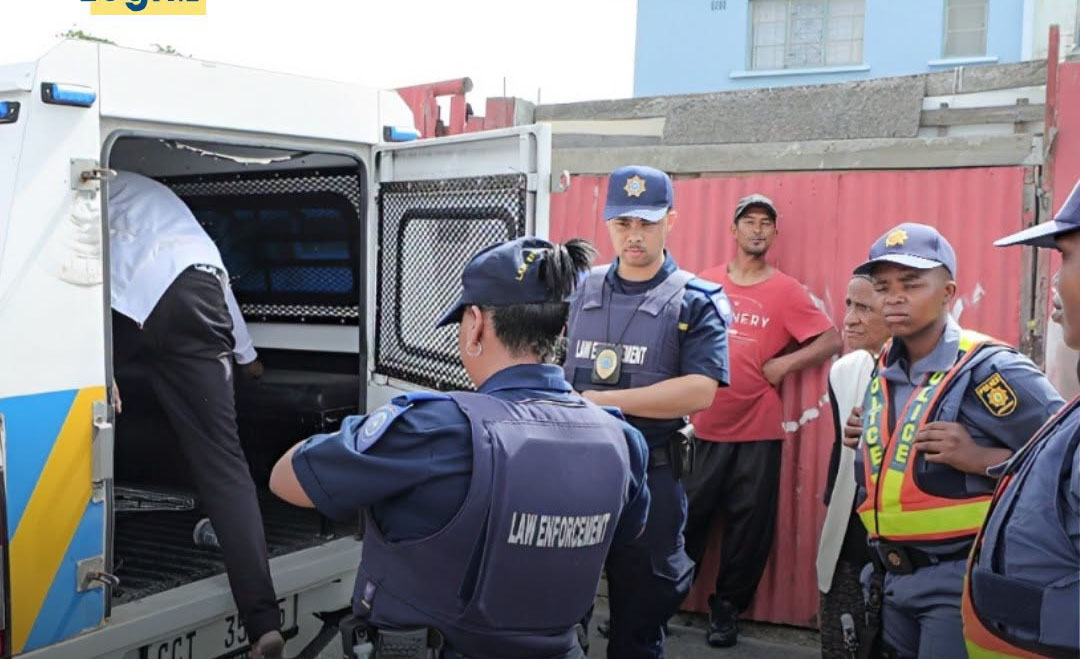
South Africa: Two Women Arrested Over Alleged Rape, Kidnap of E-Hailing Driver
South African police have arrested five suspects, including two women and a teenager, after a 25-year-old e-hailing driver was allegedly kidnapped, sexually assaulted and held for ransom in Cape Town.
The incident occurred in the Steenberg area of Cape Town on Saturday, September 12, 2026, after the driver reportedly went to meet a woman he had previously connected with through his e-hailing business.
Police said the driver’s brother alerted authorities after the suspects allegedly contacted him and demanded R4,000 in cash for the driver’s release.
Following the report, Steenberg police launched an investigation and used a vehicle tracking device to establish the driver’s location.
The tracking information led officers to Southampton Road in Heathfield, where they found and rescued the 25-year-old driver.
According to police, the victim had met one of the female suspects about a week before the incident through his e-hailing business.
The two reportedly exchanged telephone numbers and remained in contact for several days before arranging to meet.
Police allege that when the driver went to meet the woman on Saturday, he was instead kidnapped by the group and taken to another location.
The two female suspects allegedly sexually assaulted the driver while the other suspects were involved in holding him captive.
The five suspects arrested comprise two women aged 23 and 34, two men aged 42 and 48, and a 16-year-old boy.
The teenager is the youngest of the suspects arrested in connection with the case.
The arrests followed the alleged ransom demand made to the victim’s brother. After receiving the report, police acted on information from the vehicle tracking system and were able to locate the driver and bring him to safety.
READ ALSO:
- Four-Storey Building Collapses in Enugu, Workers Trapped Inside
- 27-Year Wait Ends as Construction Begins on New Dutse Emir’s Palace
- Mother ‘sold daughter’s abuse videos for $300’: Nigeria child pornography case shocks nation
The suspects are expected to appear before the Wynberg Magistrate’s Court on Monday, September 14, 2026, where they are expected to face charges relating to the alleged kidnapping and rape.
The case has drawn attention to the safety challenges confronting e-hailing drivers, who regularly meet passengers, customers and other contacts at different locations, sometimes without knowing the people they are meeting.
The incident also highlights the fact that men can be victims of rape and sexual violence. Sexual assault can affect people of any gender, and the circumstances of an alleged attack should be treated with the same seriousness regardless of whether the victim is male or female.
However, the suspects have not been convicted of any offence. The allegations against them will be tested before the court, and they remain entitled to due process under South African law.
Police have not disclosed further details about the alleged sexual assault or indicated whether additional arrests are expected.
Investigations are continuing as authorities work to establish the full circumstances surrounding the alleged kidnapping, sexual assault and ransom demand.
The incident comes amid broader concerns about the safety of e-hailing operators in Cape Town and other parts of South Africa, with driver associations and operators repeatedly calling for stronger measures to protect drivers from attacks and criminal activities while carrying out their work.
South Africa: Two Women Arrested Over Alleged Rape, Kidnap of E-Hailing Driver
Africa
Murder of Nigerian Bishop in South Africa Sparks Outcry Over Unsolved Killings

Murder of Nigerian Bishop in South Africa Sparks Outcry Over Unsolved Killings
Family and community leaders rally for justice after 58-year-old cleric from Ekiti is assassinated in his Johannesburg residence.
To his congregation and loved ones, Nigerian clergyman Bishop Taiwo Michael Fakunle was a pillar of faith and moral guidance. But that sanctuary was violently shattered inside his Kensington home in Johannesburg when two gunmen forced their way inside and opened fire at point-blank range.
Hit more than seven times, the 58-year-old Ekiti native died at the scene, sending shockwaves across the Nigerian expatriate community and turning deep grief into a collective cry for justice.
Leading the push for accountability, the Nigerian Citizens Association South Africa (NICASA) voiced the community’s sorrow and growing frustration with violent crime.
READ ALSO:
- Jetour T2 PHEV Storms Abuja as Jetour Steps Up Nigeria Expansion
- Obi Explains Why He Won’t Step Down for Atiku in 2027
- ASUU Threatens Nationwide Strike Over Unpaid Salaries, Unimplemented Agreement
Association leaders stressed that Bishop Fakunle’s family, church, and compatriots deserve clear answers rather than empty reassurances.
Urging South African investigators to act with speed and transparency, the group warned authorities against letting the tragedy become another forgotten statistic in an endless stack of unsolved homicides.
As detectives at Jeppe Police Station proceed with the murder inquiry, community heads are calling for robust oversight from Nigerian diplomats while urging the public to exercise restraint.
Despite the intense anger surrounding the brazen attack, leaders emphasized that justice must be pursued through legitimate legal channels.
As mourners across South Africa and Nigeria remember the slain bishop, their message to investigators remains clear: the community will not look away until those responsible are brought before a judge.
Murder of Nigerian Bishop in South Africa Sparks Outcry Over Unsolved Killings
Africa
Court Sentences TV Presenter, 11 Others to Death Over Narcotics Network

Court Sentences TV Presenter, 11 Others to Death Over Narcotics Network
A Cairo criminal court has sentenced Egyptian television presenter Sarah Khalifa and 11 other defendants to death by hanging after convicting them of forming an organized criminal gang involved in manufacturing and trafficking narcotics, as well as possessing unlicensed firearms and ammunition.
The court also sentenced nine defendants to life imprisonment and acquitted seven others, bringing the total number of defendants in the case to 28.
Khalifa, 39, is best known for presenting the crime-focused programme Mission Impossible on the private channel al-Mehwar. She also owns a plastic surgery clinic and a production company that specialises in organising parties and events. She has 2.5 million followers on her Instagram account. Khalifa was arrested in Cairo in April 2025 in connection with the investigation. An arrest warrant was issued on April 17, 2025, and she told prosecutors she was arrested that day, while the formal seizure report was dated April 19.
The Public Prosecution charged Khalifa and 27 other defendants with forming an organized criminal group specializing in importing raw materials used in the manufacture of synthetic narcotics, to produce and traffic the drugs, as well as possessing unlicensed firearms and ammunition. According to the prosecution’s investigations, members of the group divided roles among themselves, with some responsible for importing raw materials, others for manufacturing the drugs, and others for distributing them. The group used a residential property to store the materials and manufacture the drugs. Prosecutors alleged that Khalifa provided funds for the operation and travelled abroad to meet two of the alleged leaders and help coordinate their activities with other members of the group. The case was referred to the criminal court with 28 defendants. The prosecution also ordered the defendants’ assets and bank accounts to be placed under precautionary measures and ordered the continued detention of those in custody. Two defendants who remain at large were placed on travel bans and watch lists.
READ ALSO:
- Kneeling to Propose Is Why Western Marriages Fail — Pete Edochie Sparks Fresh Debate
- US Strikes Three Iranian Oil Tankers in Retaliation for Missile Attack on Navy Ships
- Ondo Tragedy: 3 Siblings, Including Twins, Found Dead Near River on Family Farm
The prosecution presented evidence from 20 witnesses, as well as technical and digital evidence, including messages, photographs, and videos that the prosecution said documented the defendants’ alleged criminal activities. Authorities reportedly seized more than 750 kilograms of narcotics and raw materials, and discovered two apartments used as laboratories, as well as unlicensed firearms and ammunition.
Khalifa has consistently denied the charges against her. According to the state-run Akhbar al-Youm newspaper, when asked by a judge about her alleged role during a court appearance last September, Khalifa stated she had never seen any drugs until she was photographed with them inside the anti-narcotics authority offices. In a post on X following the sentencing, she declared: “I’ve never smoked a cigarette in my life. I swear to God, I’m innocent.” In a separate case, the court also sentenced Khalifa and others to five years in prison over the kidnapping and assault of a young man.
The death sentence was confirmed only after the court obtained a religious opinion from the Grand Mufti of Egypt, a legal requirement in capital cases. The Mufti’s opinion is advisory and not binding on the court. Despite the verdict, Khalifa’s lawyer has stated that she will appeal the death sentence. The verdict is subject to appeal before the Court of Cassation, the country’s highest court for criminal cases.
Egypt applies the death penalty for premeditated murder, terrorism, some rape offenses, and drug trafficking. Human rights groups have raised concerns about the use of the death penalty in Egypt. According to a 2025 report by Amnesty International, there were 492 death sentences issued in the country that year, 23 of which were carried out. The Egyptian Commission for Rights and Freedoms reported that 541 death sentences were issued in Egypt in 2025. The defendants were found guilty of drug trafficking and rape, “crimes that did not amount to ‘intentional killing’ to which the use of the death penalty must be restricted under international law and standards,” the Amnesty International report said.
Court Sentences TV Presenter, 11 Others to Death Over Narcotics Network
-

 metro2 days ago
Woman disguises as Muslim woman in Niqab to steal in Ado-Ekiti market, video sparks outrage
-

 metro2 days ago
Ondo Herbal Drink Tragedy: Survivor Vows Never to Drink Again as Death Toll Tops 30
-

 metro2 days ago
Sokoto Cleric Stabbed Twice in Neck After Juma’at Prayer, Attacker Killed
-

 Business1 day ago
Dangote: ₦525 Refinery Shares Could Rise to ₦10,000
-

 Africa2 days ago
Murder of Nigerian Bishop in South Africa Sparks Outcry Over Unsolved Killings
-

 Community2 days ago
Kaduna Traditional Rulers Set for 100% Pay Rise as Zazzau Emir Backs Proposal
-

 News2 days ago
AI on the Roads: LASTMA Turns to China to Fix Lagos Traffic
-

 metro1 day ago
MURIC fires back at Peter Obi: Forget Sallah ceremony, free Nigerian Muslims