

Politics
Ekiti 2026: EU Observers Hail Peaceful Poll, 96% BVAS Performance

Ekiti 2026: EU Observers Hail Peaceful Poll, 96% BVAS Performance
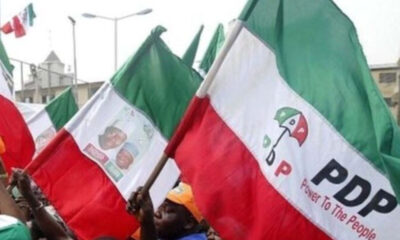
The European Union Support to Democratic Governance in Nigeria (EU-SDGN) Election Observation Hub has described the governorship election in Ekiti State as largely peaceful, orderly, and inclusive, with early deployment of electoral officials and impressive functionality of the Bimodal Voter Accreditation System (BVAS) . The EU-backed observers, who monitored the election through 598 personnel deployed across the state’s 16 local government areas, noted that while the poll was generally peaceful, incidents of voter inducement, intimidation, and isolated violence remained major concerns capable of eroding public confidence in the electoral process. The observation hub, which comprises organisations including Yiaga Africa, the International Press Centre, the Centre for Media and Society, TAF Africa, The Kukah Centre, and the Nigerian Women Trust Fund, was established to provide real-time monitoring and strengthen electoral transparency.
Presenting a joint situational statement in Ado-Ekiti on Saturday, the observation hub said reports from its observers indicated that the Independent National Electoral Commission (INEC) achieved significant success in the early deployment of personnel and election materials. According to the group, officials were present in about 75 per cent of sampled polling units by 7:30 a.m. , while accreditation and voting commenced by 8:30 a.m. in 69 per cent of polling units observed. The observers also reported that the BVAS performed optimally across the state, recording a functionality rate of 96 per cent in the polling units monitored. The statement stated that election materials, both sensitive and non-sensitive, were generally complete and adequate in the polling units observed, while voting processes commenced on schedule in most locations. The high performance of the BVAS was particularly significant given that the election marked one of the first major tests of Nigeria’s new electoral framework under the Electoral Act 2026. Despite the positive assessment, the mission identified discrepancies in election materials, noting inconsistencies between the number of political parties listed on ballot papers, result sheets, and INEC’s final list of candidates. The group observed that while INEC’s final list contained 14 candidates, ballot papers featured 19 political parties, while result sheets provided spaces for 15 parties, warning that such mismatches could create confusion during voting and collation.
READ ALSO:
- Bandits Flee as Troops Rescue 17 Passengers, 5 Farmers in Sokoto Raids
- Ekiti 2026: Governor Oyebanji Sweeps Polling Unit with 326 Votes as PDP Records Zero
- Argentine TV Presenter Resigns After Falsely Reporting Death of Lionel Messi’s Father
Despite the high functionality rate reported by observers, reports from the field indicated that some polling units experienced significant technical difficulties with the BVAS, causing delays in voter accreditation and sparking frustration among voters and candidates. Senator Babafemi Ojudu, a former presidential aide, lamented that it took nearly 30 minutes for election officials to successfully capture his fingerprints and photograph before he was accredited to vote at his polling unit in Ereguru, Ward 8, Ado-Ekiti Local Government Area. Speaking with journalists, Ojudu expressed concern that the slow accreditation process could discourage popular participation and disenfranchise many voters. The Peoples Democratic Party (PDP) governorship candidate, Dr Wole Oluyede, also criticised the performance of the BVAS, describing the electoral process as unacceptable after the machine malfunctioned at his polling unit in Unit 6, Ward 3, Osagburu Family Hall. Oluyede noted that only six voters had been accredited since voting began at about 8:30 a.m., as INEC officials struggled to fix the faulty machine, describing the electoral process as “nonsense” and expressing frustration that many of his supporters were yet to vote. Similarly, there were reports of BVAS difficulties in capturing the fingerprints and facial features of some elderly voters at Ward 6, Unit 005, Oke Iyinmi area of Ado Local Government, with electoral officials seen making repeated attempts before some of the affected voters could be successfully accredited. An elderly man, Gabriel Ojo, described the incident as unfortunate, urging INEC to improve the voting process, particularly for the elderly.
The EU-SDGN observation hub raised concerns over what they described as “well-organised voter inducement and vote-buying schemes,” revealing that 24 separate cases of vote-buying and voter intimidation were documented across nine local government areas. According to the report, some of the incidents were allegedly aimed at compromising the secrecy of the ballot and influencing voter choices. Civil society organisations had earlier raised alarms over reports of pre-credited bank accounts being used to harvest voters’ Permanent Voter Card details and National Identification Numbers in exchange for votes in Irepodun/Ifelodun, Ikole, Ikere, Ekiti East, and Ekiti West Local Government Areas. Premium Times reporters monitoring the election observed that party agents in Ise-Ekiti and Emure-Ekiti were using numbered slips instead of cash to facilitate vote-buying. The agents were seen asking voters to display their marked ballot papers as proof of their voting preference before issuing the numbered slips, which were believed to be linked to subsequent payments. In a separate incident, an agent of the All Progressives Congress (APC) was observed assisting some voters to thumbprint ballot papers and insert them into the ballot box at Polling Unit 007, Babafemi House, Isan, Ward 11, in Oye Local Government Area, with an official of Civil Defence present at the polling unit failing to intervene. The governorship candidate of the African Democratic Congress (ADC), Dare Bejide, alleged incidents of vote-buying and assault of his driver at his polling unit in Polling Unit 004, Ward 2, Oke Adura, Ilawe-Ekiti. Bejide accused members of the APC of openly distributing money to voters in an attempt to influence the outcome of the election and claimed that several APC leaders, including local government officials, gathered at the polling unit with large sums of money for vote-buying purposes. According to Bejide, his driver sustained injuries during an altercation at the polling unit while trying to shield him from being pushed, and was subsequently taken to a hospital for treatment. The ADC flagbearer said the incident had been reported to the police but expressed dissatisfaction with the inadequate response of security personnel at the scene. A mild drama unfolded at Unit 4, Ward 2, Ilawe Ekiti, as supporters of the APC and ADC engaged in a heated confrontation over allegations of vote-buying, which reportedly escalated into a physical altercation, leaving one ADC supporter with a head injury and requiring urgent medical attention. Responding to the allegations, APC chieftain Makinde Araoye dismissed the claims and maintained that the election was being conducted peacefully across the state, expressing confidence that Governor Biodun Oyebanji would secure re-election.
READ ALSO:
- #EkitiDecides2026: APC Leads Early Results as Vote Counting Begins
- VIDEO: Drama as Ekiti Voters Chase EFCC Operatives Out of Polling Unit
- #EkitiDecides2026: Fayose Predicts Landslide Victory for Oyebanji
On inclusiveness, the observers commended the active participation of women, persons with disabilities (PWDs), and other vulnerable groups in the electoral process. The Nigerian Women Trust Fund, one of the organisations within the observation hub, reported that women, who constitute about 51 per cent of the voting population in Ekiti State, participated actively as voters, polling officials, and party agents. According to the report, women accounted for 58 per cent of polling unit officials observed, while their presence on voting queues was described as significant across the state. The observers also noted substantial participation by persons with disabilities, with no major incidents of harassment or discrimination recorded. The report indicated that nearly 90 per cent of polling units observed were physically accessible to PWDs, while priority voting arrangements were implemented in more than 80 per cent of the locations monitored. However, a few operational challenges were recorded, including the initial denial of priority voting to a nursing mother in Ise/Orun Local Government Area and BVAS difficulties in capturing the biometrics of some elderly voters in Ikere Local Government Area. On security, the EU-backed observers described the overall atmosphere as calm and peaceful, noting the deployment of between five and 10 security personnel to each of the state’s 2,442 polling units. The mission said voting proceeded without significant disruption, large-scale violence, or major operational failures in most parts of the state. However, the mission disclosed that 24 incidents of violence were reported across 10 local government areas, including Ado-Ekiti, Irepodun/Ifelodun, Emure, Ido-Osi, Ilejemeje, Ijero, Ise/Orun, Gboyin, Ikole, and Oye. The observation hub further reported that journalists generally enjoyed unhindered access to polling units across the state and commended efforts by stakeholders to counter misinformation, fake news, and disinformation during the election. However, it noted that security operatives in some areas, including Ikere, Ado-Ekiti, Ekiti South-West, Ekiti West, and Ikole local government areas, restricted the movement of journalists, while some party agents allegedly obstructed media practitioners from carrying out their duties.
The group urged INEC to promptly replace malfunctioning BVAS machines, extend voting hours in polling units affected by technical challenges, and ensure strict compliance with guidelines on result transmission and publication. It also called on security agencies to intensify efforts against vote-buying, maintain neutrality throughout the process, and provide adequate security during result collation. Political parties and candidates were urged to desist from voter inducement, caution their supporters against violence, and respect the will of the electorate. The observers equally advised voters to reject financial inducements, vote according to their conscience, and protect the secrecy of their ballots. Describing its findings as preliminary, the EU-SDGN Election Observation Hub said it would continue monitoring the voting, collation, and results declaration processes before issuing a comprehensive post-election assessment. The election has been viewed as a critical test of Nigeria’s electoral framework and a dress rehearsal for the 2027 general elections.
Ekiti 2026: EU Observers Hail Peaceful Poll, 96% BVAS Performance


Politics
APC Wins Four of Five By-Elections as APM Takes Bauchi Seat
APC Wins Four of Five By-Elections as APM Takes Bauchi Seat
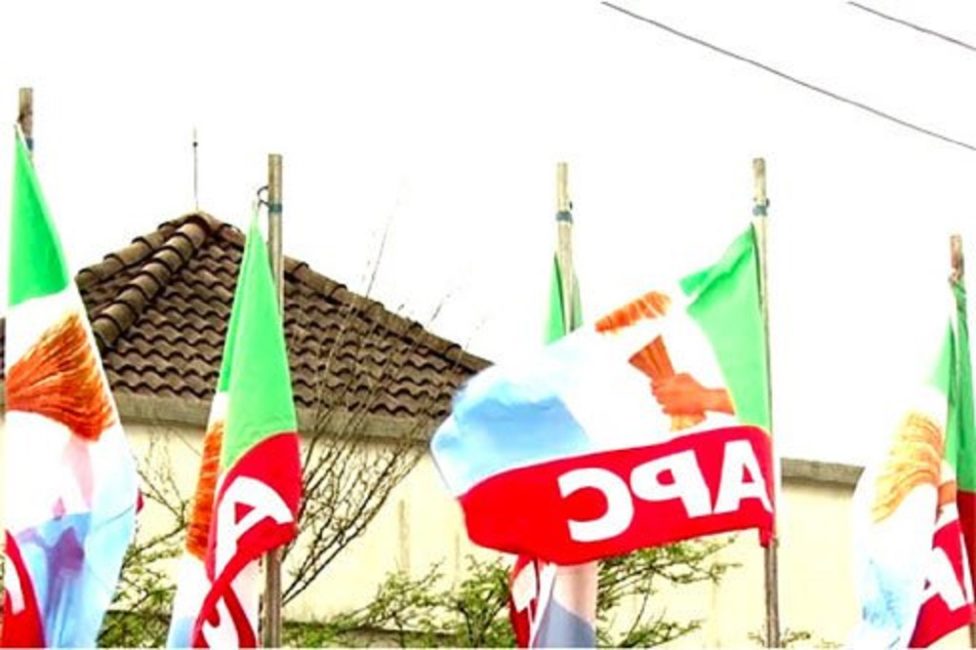
The All Progressives Congress (APC) won four of the five legislative by-elections conducted across Gombe, Kano, Bauchi and Delta states, while the Allied Peoples Movement (APM) secured the remaining seat in Bauchi.
The elections, conducted by the Independent National Electoral Commission (INEC) on Saturday, September 19, 2026, were held to fill one vacant federal constituency seat and four vacant state assembly seats.
The APC victories came in the Gombe/Kwami/Funakaye Federal Constituency of Gombe State, Dawakin Kudu State Constituency in Kano, Udu State Constituency in Delta and Disina State Constituency in Bauchi.
The APM won the Sakwa State Constituency in Zaki Local Government Area of Bauchi State.
In Gombe, APC candidate Kallamu Usman MaiJama’a won the Gombe/Kwami/Funakaye Federal Constituency election with 41,121 votes. The Labour Party candidate polled 3,553 votes, while the APM candidate received 872 votes.
In Kano, APC candidate Husseini Datti emerged winner of the Dawakin Kudu State Constituency election with 22,890 votes. The Peoples Redemption Party scored 270 votes, while the Peoples Democratic Party recorded 108 votes. Other parties recorded lower figures.
In Delta State, APC candidate Okolosi Ator won the Udu State Constituency seat with 8,724 votes, while the PDP candidate polled 214 votes.
The APC also secured the Disina State Constituency seat in Bauchi, where its candidate, Yakubu Ali, obtained 5,846 votes. The APM candidate scored 5,225 votes, while the PRP candidate received 3,701 votes.
The second Bauchi contest produced a different result, with Adamu Yakubu of the APM winning the Sakwa State Constituency seat with 8,515 votes. The APC polled 3,771 votes, the PDP 2,076, and the PRP 727.
The results followed INEC’s conduct of the five polls across the four states after the seats became vacant through different circumstances, including death, resignation and defection.
READ ALSO:
- Atiku Offers Scholarship to Viral Niger Teen Miner After 37 Miners’ Deaths
- NDLEA Seizes N3.4bn Drugs, Arrests Fake Police Officer in Nationwide Crackdown
- Oyo: Police Arrest Serving Air Force Personnel Over Alleged Robbery, Abduction
The Gombe/Kwami/Funakaye federal seat became vacant following the death of the former lawmaker, Yaya Bauchi Tongo, in June 2026. In Bauchi, the Sakwa seat became vacant following the death of its former occupant, while the Disina seat became vacant after the lawmaker resigned to pursue another political position.
The Udu seat in Delta became vacant following the defection of its former occupant, Collins Egbetamah, from the APC to the Nigeria Democratic Congress. The Dawakin Kudu seat in Kano became vacant after its former occupant, Rabiu Shuaibu, left the state assembly to contest the Dawakin Kudu/Warawa Federal Constituency election.
Ahead of the polls, INEC deployed sensitive materials and electoral personnel to the affected constituencies, while security agencies announced deployments aimed at maintaining order before, during and after voting.
INEC Chairman, Professor Joash Amupitan, monitored the elections from the commission’s National Situation Room in Abuja and described the exercise as an important operational test ahead of the 2027 general elections.
Amupitan said the five by-elections would provide the commission with lessons on logistics, technological deployment and the readiness of field personnel.
He stressed that bye-elections should not be treated as routine exercises because each poll provides an opportunity for INEC to assess and improve its electoral processes ahead of larger elections.
Reports from the four states indicated that voting was generally peaceful, although some operational challenges were recorded.
In parts of Gombe and Kano, reports indicated relatively low voter turnout, while some Bimodal Voter Accreditation System (BVAS) challenges were reported during the Delta election.
The Bauchi election also recorded a security incident, with the state police command reporting the arrest of 47 suspects in parts of Shira Local Government Area.
According to the police, the suspects allegedly posed as members of a state-owned security outfit and were found in possession of items including guns, cutlasses and sticks. The arrests were made in connection with the election security operation.
The results have also drawn attention because of their timing ahead of the 2027 general elections, although the outcome of five constituency-level by-elections does not by itself determine the outcome of the wider 2027 elections.
APC National Chairman, Professor Nentawe Yilwatda, congratulated the party’s candidates who won the four seats and commended APC members, campaign teams and party leaders involved in the contests.
Yilwatda also acknowledged voters, INEC, security agencies and other stakeholders who participated in the elections, while urging the successful candidates to remain committed to their constituents.
President Bola Ahmed Tinubu also congratulated the successful candidates. He urged the newly elected lawmakers to justify the confidence placed in them by their constituents and called on unsuccessful candidates to accept the results in good faith.
The INEC election results portal continued to receive result sheets from the five constituencies after the polls, providing an electronic record of results uploaded from polling units.
The commission is scheduled to conduct the next nationwide presidential and National Assembly elections on January 16, 2027, followed by governorship and state House of Assembly elections in participating states on February 6, 2027.
The September 19 by-elections therefore provide INEC and participating political parties with an opportunity to review electoral logistics, voter participation, technology deployment and election security before the larger 2027 electoral cycle.
APC Wins Four of Five By-Elections as APM Takes Bauchi Seat
Politics
2027: NDC Predicts Wider Obi Victory Over Tinubu in Lagos
2027: NDC Predicts Wider Obi Victory Over Tinubu in Lagos
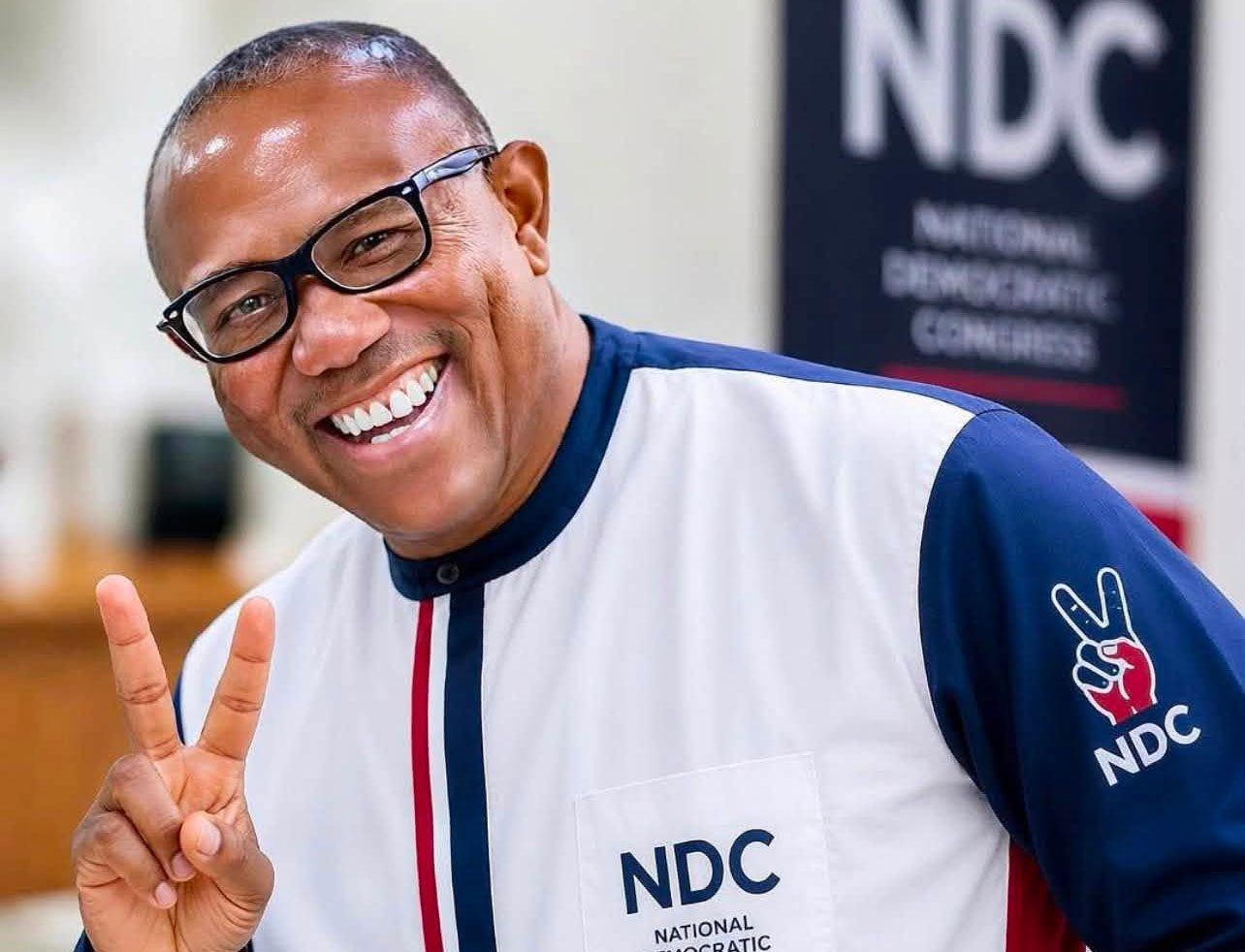
The Nigeria Democratic Congress (NDC) has expressed confidence that its presidential candidate, Peter Obi, will defeat President Bola Ahmed Tinubu in Lagos State in the 2027 presidential election, predicting that the former Anambra State governor will win by a wider margin than he did in 2023.
The party’s National Publicity Secretary, Osa Director, said Obi’s victory over Tinubu in Lagos during the 2023 presidential election was not accidental, describing it as a reflection of the political mood in the state.
Director said the NDC expected Obi to build on his previous performance if the 2027 election was conducted under conditions the party considers free and fair.
He also challenged the All Progressives Congress (APC) and its supporters to allow voters to determine the outcome of the election without intimidation, violence, inducement or other forms of electoral malpractice.
According to him, the NDC has studied the lessons of the 2023 election and is preparing to strengthen its structures and protect its votes across the country.
Director said the party was prepared to confront any challenges that could arise during the election, including alleged attempts to intimidate voters or disrupt the electoral process.
Another NDC candidate in Lagos, Ladipo Johnson, also expressed confidence in Obi’s prospects in the state, attributing the expected improvement to what he described as dissatisfaction with the Tinubu administration.
Johnson said Obi would win Lagos again and by a wider margin, adding that the NDC had become stronger following the realignment of opposition politicians and political groups ahead of the 2027 election.
READ ALSO:
- Olawepo-Hashim: My Political Ideology Differs From Obi, Atiku
- Ortom and His 23 Cars’ ‘Bonus’, by Dele Sobowale
- Abuja Demand Rises as Jetour Brings X70 Plus Experience to FCT
He also raised concerns about possible voter intimidation, harassment and vote buying, urging Nigerians to protect their votes and ensure that electoral choices are respected.
However, the claims by Director and Johnson about Obi’s expected performance in Lagos are political predictions by NDC officials and do not constitute an established election outcome.
The 2023 presidential election remains the latest completed presidential contest in Lagos. Obi won the state with 582,454 votes, narrowly ahead of Tinubu, who polled 572,606 votes, according to results declared by the Independent National Electoral Commission (INEC).
Obi won nine of Lagos State’s 20 local government areas, including Ajeromi-Ifelodun, Amuwo-Odofin, Eti-Osa, Ikeja, Kosofe, Oshodi-Isolo, Somolu, Ojo and Alimosho.
Tinubu won the remaining 11 local government areas: Agege, Apapa, Badagry, Epe, Ibeju-Lekki, Ifako-Ijaiye, Ikorodu, Lagos Island, Lagos Mainland, Mushin and Surulere.
The result made Lagos one of the closely watched states in the 2023 presidential contest, particularly because Tinubu had previously served as governor of the state and maintained a significant political structure there.
The political landscape has since changed considerably ahead of the 2027 election.
INEC has published its final list of presidential candidates, with 18 candidates cleared to contest the January 16, 2027 presidential election.
Tinubu is listed as the APC presidential candidate, while former Vice President Atiku Abubakar is contesting under the African Democratic Congress (ADC). Obi is listed as the presidential candidate of the NDC, with former Kano State Governor Rabiu Musa Kwankwaso as his running mate.
The changes mean that the party alignments and political structures involved in the 2027 contest are different from those that shaped the 2023 election.
Obi’s move from the Labour Party to the NDC has also changed the political platform through which he is seeking the presidency, while Kwankwaso’s emergence as his running mate has brought another major political bloc into the NDC structure.
For the NDC, Lagos remains an important target as it seeks to expand Obi’s support beyond the areas where he performed strongly in 2023.
The party’s argument is based partly on the margin by which Obi won Lagos in 2023 and its assessment of the current political environment in the state.
The APC, meanwhile, remains a major political force in Lagos, where it has maintained a strong organisational structure over several election cycles.
The 2027 contest will therefore take place against a different political backdrop, with new party alliances, candidates and campaign structures competing for the support of Lagos voters.
Beyond Lagos, the NDC is seeking to build a nationwide campaign around Obi’s candidacy, while the APC and other parties are also working to consolidate their respective support bases.
Issues likely to shape the campaign include the economy, cost of living, security, employment, governance, electoral credibility and the performance of the federal government.
The NDC has continued to emphasise the need for a credible electoral process, with its officials urging security agencies, electoral authorities and political parties to ensure that voters can cast their ballots without intimidation.
For now, the prediction that Obi will defeat Tinubu by a wider margin in Lagos remains the stated expectation of the NDC and its candidates.
The actual result will depend on the votes cast and officially declared in the 2027 presidential election.
2027: NDC Predicts Wider Obi Victory Over Tinubu in Lagos
Politics
Olawepo-Hashim: My Political Ideology Differs From Obi, Atiku

Olawepo-Hashim: My Political Ideology Differs From Obi, Atiku
Accord Party presidential candidate Gbenga Olawepo-Hashim has sought to distinguish his political philosophy from those of former Anambra State Governor Peter Obi and former Vice President Atiku Abubakar, saying the three politicians do not share the same political ideology.
Olawepo-Hashim’s position comes as political parties and opposition figures continue to realign ahead of the 2027 presidential election, with competing platforms emerging from the broader opposition movement.
The former presidential aspirant has repeatedly argued that Nigerian politics should be driven by clearly defined policies and ideology rather than alliances formed principally around personalities or the immediate objective of winning elections.
His comments also reflect his longstanding emphasis on economic policy, federalism, electoral reform, institutional governance and political restructuring.
Olawepo-Hashim has particularly used the issue of fuel subsidy removal to highlight differences between his position and that of Atiku.
He has criticised Atiku’s past position on petroleum subsidy and questioned subsequent calls for a targeted subsidy, arguing that politicians who change their positions on major economic policies should explain the reasons for such changes to Nigerians.
The Accord candidate has maintained that he opposed the removal of petroleum subsidy and believes government policy should take into account its effect on households, businesses and the productive economy.
Beyond subsidy policy, Olawepo-Hashim has argued that Nigeria’s political challenges cannot be resolved simply by changing the occupants of political offices.
READ ALSO:
- Ortom and His 23 Cars’ ‘Bonus’, by Dele Sobowale
- Abuja Demand Rises as Jetour Brings X70 Plus Experience to FCT
- Enough Is Enough: Muslim Supporters Demand New Man United Owners
He has advocated stronger institutions and a more decentralised political system, while distinguishing federalism from the practice of rotating political offices among geopolitical zones.
His position on political restructuring has been a recurring feature of his public interventions, including his criticism of the country’s electoral system and the role of institutions in guaranteeing credible elections.
The politician has also become embroiled in a legal dispute over his status as the Accord Party presidential candidate for the 2027 election.
Following the publication of the final list of candidates, Olawepo-Hashim’s name was omitted. He subsequently maintained that he remained the party’s duly nominated candidate and that the dispute was before the courts.
He said he emerged from an Accord presidential primary held on May 30, 2026, which he said was monitored by electoral officials, and argued that an administrative decision could not finally determine a candidate’s eligibility where a court case was pending.
The development has added another dimension to the political contest involving Olawepo-Hashim and Accord as parties prepare for the 2027 election.
Meanwhile, the opposition landscape has continued to change following the formation of a coalition involving Atiku, Obi and other political figures.
Obi is now the presidential candidate of the Nigeria Democratic Congress (NDC), while Atiku is the presidential candidate of the African Democratic Congress (ADC). The earlier coalition that brought the two politicians and other opposition leaders together has since developed into separate political platforms.
Olawepo-Hashim has therefore positioned his campaign separately from both politicians, stressing what he describes as differences in political philosophy and policy priorities.
His comments come against the backdrop of renewed efforts by opposition groups to build alliances ahead of the 2027 poll. However, disagreements over presidential candidates, party structures, zoning and policy positions have continued to shape the opposition landscape.
For Olawepo-Hashim, the distinction between his political approach and those of Obi and Atiku goes beyond party affiliation.
He has argued that Nigerians should assess political leaders based on their policy programmes, ideological positions, institutional reform proposals and approach to governance, rather than simply on the strength of political alliances.
His campaign has continued to focus on issues including economic restructuring, democratic reform, electoral credibility, federalism and strengthening institutions.
The differences he has highlighted between himself, Obi and Atiku are therefore part of his broader effort to establish a distinct political identity ahead of the 2027 Nigeria presidential election.
As the election approaches, the competing positions of opposition politicians are likely to remain a major feature of the political debate, particularly as parties continue negotiations and legal disputes over candidates and alliances.
Olawepo-Hashim: My Political Ideology Differs From Obi, Atiku
-
 News2 days ago
ECOWAS Biometric Card Expands as Seven Countries Begin Rollout
-

 Sports2 days ago
Ballon d’Or 2026: Mbappe Responds to Yamal’s Bold Claim
-
 metro2 days ago
FG Suspends Niger NSCDC Commandant As 37 Suspected Illegal Miners Die In Custody
-

 Politics2 days ago
Toyin Abraham Rejects Lagos APC Campaign Council Inclusion
-
 International2 days ago
Ninth Body Discovered in South Africa: Nigeria Issues Urgent Safety Alert to Nationals
-

 Politics2 days ago
2027: Sowore Says He’d Rather Die Than Travel Abroad For Medical Treatment
-
 Politics2 days ago
2027: Tinubu May Mediate Wike-APC Governors Rift In France
-

 International2 days ago
BREAKING: Bloodbath at Pakistan Mosque as Suicide Blast Kills 21, Injures 103