

metro
FG Clears N39.6bn Pension Arrears for Former NITEL, PHCN, Bank Workers
FG Clears N39.6bn Pension Arrears for Former NITEL, PHCN, Bank Workers
The Federal Government has paid more than N39.6 billion in outstanding pension liabilities to thousands of retirees under the Defined Benefit Scheme (DBS), ending years of unpaid arrears owed to former employees of the defunct Nigerian Telecommunications Limited (NITEL), Mobile Telecommunications Limited (MTEL), Power Holding Company of Nigeria (PHCN), Assurance Bank, NICON, and the People’s Bank of Nigeria.
The Pension Transitional Arrangement Directorate (PTAD) announced the payment on Friday, describing it as a major milestone in the Federal Government’s efforts to clear inherited pension liabilities and improve the welfare of retired public servants.
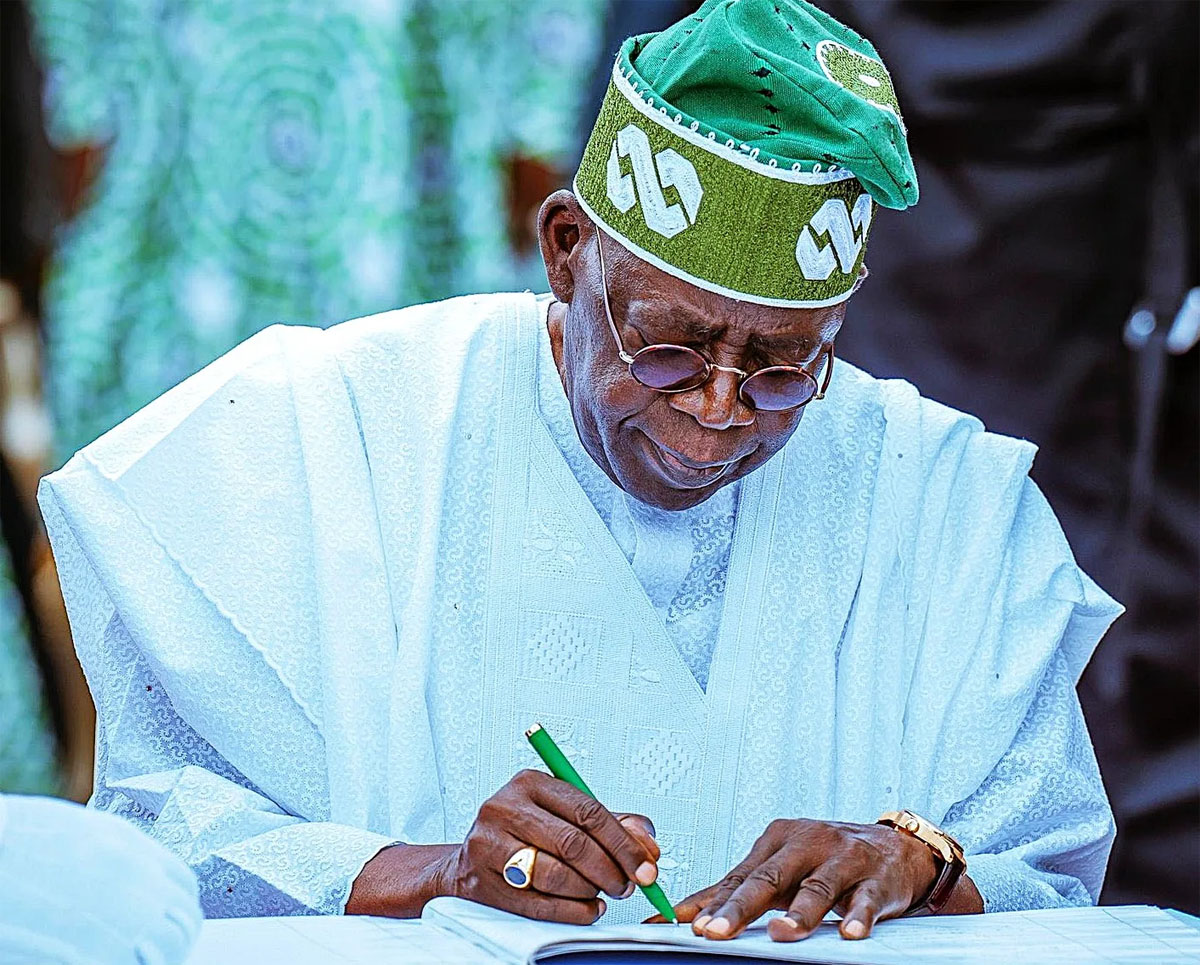
According to PTAD, the disbursement fulfils President Bola Ahmed Tinubu’s commitment under the Renewed Hope Agenda to resolve longstanding pension obligations that had remained unpaid for several years.
A breakdown of the payments shows that N25.05 billion was released to settle 35 months of pension arrears owed to 9,675 eligible retirees of the defunct NITEL and MTEL.
The Federal Government also paid N9.48 billion, representing the first 50 per cent of the Back End Computation (BEC) arrears due to 3,959 eligible PHCN pensioners.
In addition, N5.09 billion was disbursed as the outstanding balance of the 10.66 per cent and 12.95 per cent pension increment arrears owed to 11,180 eligible pensioners from Assurance Bank, NICON, NITEL, and the People’s Bank of Nigeria.
READ ALSO:
- Appeal Court Overturns Hijab Verdict, Declares UI International School Can Enforce Dress Code
- Appeal Court Verdict: UI International School to Enforce Hijab Ban from Monday
- Baba Ijesha Receives Chieftaincy Title, Brand-New Car from Ooni of Ife
In total, the latest payment benefits more than 24,800 retirees, many of whom had waited years for the settlement of their outstanding entitlements.
PTAD said the payment represents another significant step towards restoring confidence in Nigeria’s pension administration system, particularly for pensioners under the Defined Benefit Scheme, which predates the country’s contributory pension system.
Speaking on the development, the Executive Secretary of PTAD, Tolulope Odunaiya, praised President Tinubu for approving the release of funds to offset the inherited liabilities.
She described the payment as evidence of the administration’s commitment to protecting the welfare and dignity of retired public servants.
“These landmark achievements mark yet another significant milestone in the Federal Government’s unwavering commitment to safeguarding the welfare and dignity of Defined Benefit Scheme pensioners. It is a clear demonstration of the visionary leadership of President Bola Ahmed Tinubu, whose Renewed Hope Agenda places priority on social protection, inclusive governance and the well-being of senior citizens,” she said.
Odunaiya noted that the settlement had resolved some of the oldest outstanding pension liabilities inherited by the current administration.
“Under the President’s leadership, the Directorate has successfully resolved all longstanding inherited pension liabilities, bringing lasting relief to thousands of Defined Benefit Scheme pensioners.”
She explained that the payment followed presidential approval granted in August 2025, while the required funds were subsequently provided in the 2026 Appropriation Act.
According to her, clearing the arrears underscores the Federal Government’s commitment to sustaining pension reforms and ensuring retirees receive their entitlements without unnecessary delays.
“The successful liquidation of these liabilities underscores the Federal Government’s resolve to sustain pension reforms and ensure that Defined Benefit Scheme pensioners receive their rightful entitlements in a timely manner, consistent with the objectives of the Renewed Hope Agenda.”
Odunaiya also thanked the affected retirees for their patience throughout the period the liabilities remained unpaid.
She reaffirmed PTAD’s commitment to transparent, efficient and pensioner-focused service delivery while assuring beneficiaries that the agency would continue working to improve pension administration.
The Defined Benefit Scheme covers federal retirees who left public service before the introduction of the Contributory Pension Scheme (CPS) under the Pension Reform Act 2004. Established in 2013, PTAD is responsible for administering pensions under the old scheme and settling outstanding obligations inherited from defunct government agencies and privatised public enterprises.
For years, pensioners’ associations have repeatedly appealed to the Federal Government to clear accumulated arrears and implement approved pension increases, arguing that inflation and the rising cost of living had significantly eroded retirees’ purchasing power.
Labour and pension advocacy groups have welcomed the latest payment as a positive step towards rebuilding confidence in the country’s pension system. However, they urged the government to ensure that future pension payments, arrears and approved increments are settled promptly to prevent another backlog.
Analysts also believe the clearance of the inherited liabilities will strengthen confidence in Nigeria’s pension reforms, improve retirees’ welfare and demonstrate the government’s commitment to honouring its obligations to former public servants.
The latest disbursement forms part of broader efforts by the Federal Government to modernise pension administration, eliminate legacy debts and ensure timely payment of benefits to retirees across the country.
FG Clears N39.6bn Pension Arrears for Former NITEL, PHCN, Bank Workers








metro
Over 1,000 APM Members Defect to APC in Oyo

Over 1,000 APM Members Defect to APC in Oyo
More than 1,000 members of the Allied Peoples Movement (APM) in Oluyole Local Government Area of Oyo State have defected to the All Progressives Congress (APC), citing dissatisfaction with their political experience in the state.
The defectors formally joined the APC at the party’s state secretariat in Oke-Ado, Ibadan, on Friday, October 2, 2026.
They were led by APM chieftain Mustapha Kazeem, popularly known as Oba Oluyole, and received by Oyo State APC Chairman, Otunba Moses Alake Adeyemo, alongside members of the party’s state executive committee. (The Times)
Speaking on behalf of the defectors, Kazeem said their decision followed what he described as a series of experiences while supporting the administration and political structure associated with Governor Seyi Makinde.
He alleged that some supporters had not received adequate recognition for their loyalty and sacrifices, while accusing members of Makinde’s political structure in Oluyole of victimising members of his group.
Kazeem said the situation eventually convinced them to leave the APM and join the Oyo APC, declaring that they had reached a point where they could no longer pretend about their dissatisfaction.
He described the APC as a platform through which the defectors could pursue their political interests and said they were no longer willing to remain within what he described as “deceit and propaganda.”
READ ALSO:
- Wike to Amaechi: What Did You Bring to Rivers After 24 Years in Power?
- Electric Spark Suspected as Fire Destroys 21 Shops at Abuja’s Kugbo Market
- Ebonyi Widow Alleges Death Threats, Ostracisation Over Late Husband’s Property
The allegations against Makinde’s political structure were made by the defectors and were not independently established in the report.
Receiving the new members, the Oyo APC chairman welcomed them into the party and presented brooms to them as a symbol of their formal admission.
Adeyemo urged the defectors to put their previous political differences behind them and participate actively in the activities of the APC in Oyo State.
The defection comes amid increasing political realignments in Oyo State ahead of the 2027 elections, with political parties and their supporters seeking to strengthen their structures and mobilise members across the state.
The latest movement also comes against the backdrop of continuing discussions among opposition politicians over possible cooperation ahead of the 2027 presidential election.
An APM chieftain, Oluwaseun Adeloro, recently argued that opposition parties still had an opportunity to work towards a common presidential candidate.
Speaking on Arise Television’s The Morning Show, Adeloro said opposition politicians could still reach an agreement despite the separate ambitions of major political figures.
He specifically mentioned former Vice-President Atiku Abubakar and Peter Obi while discussing the challenges of reaching a consensus.
Adeloro also expressed support for Governor Seyi Makinde as a possible consensus candidate and defended Makinde’s proposal for a four-year “reset” of Nigeria.
The latest APM-to-APC defection in Oyo adds to the political activity already underway ahead of the 2027 general elections.
For the defectors, the move marks a shift from the APM to the APC, while the allegations they cited concerning their treatment within Makinde’s political structure remain their stated reasons for leaving.
Over 1,000 APM Members Defect to APC in Oyo
metro
Police Arrest Man Caught Sexually Assaulting 12-Year-Old Girl in Car

Police Arrest Man Caught Sexually Assaulting 12-Year-Old Girl in Car
The Federal Capital Territory Police Command has arrested a man identified as Zayyanu Halilu after he was allegedly caught sexually assaulting a 12-year-old girl inside a car in Abuja.
Halilu was arrested on Friday, October 2, 2026, by operatives of the Police Anti-Kidnapping Unit during a routine patrol at the Airport Bridge Taxi Park in Abuja.
According to the police, officers became suspicious after noticing a fully tinted navy-blue Volkswagen parked at the location with its windows wound up. The vehicle was reportedly shaking, prompting the officers to approach and inspect it.
The officers allegedly opened the vehicle and found the suspect with the 12-year-old child, leading to his immediate arrest and the rescue of the girl.
The child was subsequently taken for medical attention, while the suspect was detained for investigation.
The police said preliminary findings indicated that the suspect had allegedly taken the girl to the same location on previous occasions and sexually abused her.
READ ALSO:
- Electric Spark Suspected as Fire Destroys 21 Shops at Abuja’s Kugbo Market
- Ebonyi Widow Alleges Death Threats, Ostracisation Over Late Husband’s Property
- Police Arrest Woman Seen Threatening Officer With Knife Over Cannabis Arrest
The Command further alleged that the suspect had threatened the child with harm if she disclosed the abuse to anyone.
A medical examination, according to the police, subsequently showed that the child was about three months pregnant. She remains under medical care and is undergoing further assessment.
The police said the suspect would be charged to court after the completion of the investigation.
The FCT Police spokesperson, SP Josephine Adeh, confirmed the arrest, while the Commissioner of Police, CP Ahmed Muhammed Sanusi, urged parents and guardians to pay close attention to the safety, welfare and whereabouts of children under their care.
The Command also urged residents to report suspicious activities involving children or other vulnerable persons to the police.
The latest incident has again highlighted concerns about child sexual abuse and the protection of minors in Abuja. Under Nigerian law, allegations involving sexual offences against children are subject to investigation and prosecution, and suspects are presumed innocent until proven guilty by a court.
The identity of the child has not been disclosed in keeping with the need to protect the privacy and welfare of a minor allegedly involved in a sexual-abuse case.
Police Arrest Man Caught Sexually Assaulting 12-Year-Old Girl in Car
metro
Electric Spark Suspected as Fire Destroys 21 Shops at Abuja’s Kugbo Market

Electric Spark Suspected as Fire Destroys 21 Shops at Abuja’s Kugbo Market
An electrical spark has been blamed by an eyewitness for a fire that destroyed 21 shops and a vehicle at Kugbo Furniture Market along the Abuja-Keffi Expressway in the Federal Capital Territory.
The fire, which occurred on Friday, October 2, 2026, left traders counting losses after flames swept through a section of the market where furniture, foam, timber and other highly combustible materials were stored.
An eyewitness, Mary Aniekan, alleged that the fire started shortly after electricity was restored by the Abuja Electricity Distribution Company (AEDC). She said traders noticed an electrical spark before the fire rapidly spread through the affected shops.
However, emergency authorities have not officially established the cause of the fire, making the electrical-spark account an eyewitness explanation rather than a confirmed finding.
The National Emergency Management Agency (NEMA) said its Abuja Operations Office received a distress call at about 11:15am and immediately activated emergency responders, including the Federal Fire Service.
READ ALSO:
- Ebonyi Widow Alleges Death Threats, Ostracisation Over Late Husband’s Property
- Police Arrest Woman Seen Threatening Officer With Knife Over Cannabis Arrest
- Amaechi: Tinubu’s Policies Made My Mother’s Drugs Unaffordable
According to NEMA‘s preliminary assessment, 21 shops and one vehicle were affected by the fire. No death was recorded, while some valuable items were reportedly recovered from the affected area.
Firefighters and other emergency personnel worked to contain the blaze and prevent it from spreading to other parts of the market. The affected area was subsequently dampened to reduce the possibility of a secondary outbreak.
Emergency operations were brought to an end at about 1:40pm after the situation was brought under control.
Traders said the fire spread quickly because of the nature of goods stored in the affected shops, including foam, timber, furniture materials and other combustible products.
The chairman of the Kugbo Wood Machinist Association, Godswill Ndukwe, estimated that goods worth about N500 million were destroyed in the incident. The figure is a preliminary estimate by traders and has not been independently verified.
Ndukwe appealed to the Federal Capital Territory Administration and Abuja Municipal Area Council to take measures to improve fire prevention and emergency response arrangements at the market.
The latest Kugbo Market fire has also renewed concerns about recurring fire incidents in the area. In February 2026, another fire reportedly destroyed more than 15 shops and adjoining residential structures at the market.
Traders and residents had, during the earlier incident, raised concerns about the concentration of workshops and combustible materials, as well as inadequate spacing and other conditions that could make it difficult for emergency responders to contain fires quickly.
The latest incident did not result in any reported fatalities or injuries, but the destruction of the shops has left affected traders facing significant financial losses.
Authorities are expected to establish the actual cause of the fire as investigations continue, while traders have called for improved fire safety measures, electrical checks and emergency preparedness at Kugbo Market.
Electric Spark Suspected as Fire Destroys 21 Shops at Abuja’s Kugbo Market
-

 metro2 days ago
Workers to Begin Nationwide Warning Strike Over Petrol Price, Wage Award
-

 metro2 days ago
[UPDATED] Imo Highway Attack: 10 Rescued after Gunmen Abducted NYSC Prospective Members
-

 Entertainment1 day ago
Phyna Knocks Out Nkechi Blessing in Fourth Round, Wins ₦50m, New Car
-
 Politics2 days ago
2027: Amaechi Recalls How APC Defeated PDP, Orders ADC Mobilisation
-

 Business2 days ago
Dangote Sets 40-Month Deadline for $16bn East Africa Refinery in Kenya
-
 News2 days ago
Independence Day: Tinubu Unveils Plan to Cut Living Costs, Expand Jobs
-

 metro1 day ago
2027 Hajj: Nigeria Secures 10,000 Extra Slots, Allocation Hits 60,000
-

 Politics2 days ago
2027: Wike Vows to Resign If Tinubu Loses FCT, Rivers