

metro
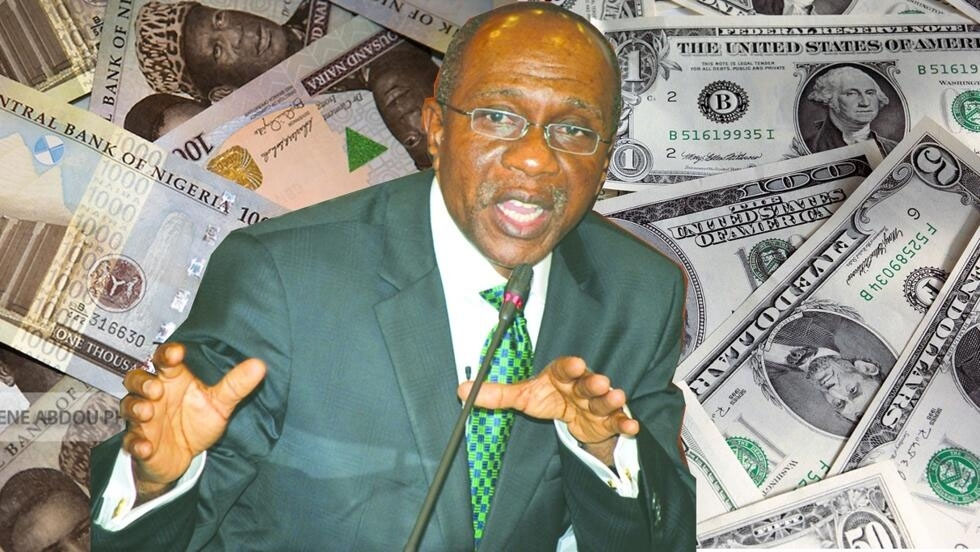
Emefiele Trial: Witness Tells Court $6.23m CBN Election Observer Fund Was ‘Pure Theft’
Emefiele Trial: Witness Tells Court $6.23m CBN Election Observer Fund Was ‘Pure Theft’
The trial of former Central Bank of Nigeria (CBN) Governor, Godwin Emefiele, took a dramatic turn on Thursday as a prosecution witness told the Federal Capital Territory (FCT) High Court in Abuja that the controversial release of $6.23 million for a purported foreign election observer mission was fraudulent and amounted to “pure theft.”
The allegation was made by the 14th prosecution witness, Commissioner of Police Okpoziakpo Eloho of the Nigeria Police Force Fraud Unit, during proceedings before Justice Hamza Muazu in the ongoing case filed by the Economic and Financial Crimes Commission (EFCC) against the former CBN governor.
According to the EFCC, the witness testified that the entire $6.23 million was released based on Emefiele’s approval without sufficient documentation to justify the expenditure.
“The entire money was released. We saw the approval of the governor,” Eloho told the court.
He further alleged that investigators found no legitimate basis for the transaction.
“It was pure theft. It was stolen, otherwise obtained under false pretence,” the police commissioner testified.
While identifying Exhibit PD5, which purportedly contained a presidential directive authorising a foreign election observer mission, the witness insisted that investigators concluded the document was fraudulent.
“Our finding with regards to PD5 is that it is all fraud,” he said.
The prosecution witness also disclosed that investigators recovered part of the allegedly diverted funds.
Although he could not recall the exact amount, Eloho said approximately $800,000 had been recovered during the course of the investigation.
READ ALSO:
- Documents Expose How Disputed Presidential Council Secured Approval to Recruit 300 Staff
- Tinubu Lightens Mood, Calls First Lady ‘Iya Alakara’ After Viral Akara Debate
- Trump Weighs Entry Restrictions for Pregnant Foreign Visitors After Supreme Court Ruling
“I can’t remember the figure but it was about Eight Hundred Thousand United States Dollars,” he told the court.
During cross-examination by defence counsel, Matthew Burkaa (SAN), the witness acknowledged that Emefiele, as the CBN governor at the time, had authority over the bank’s funds.
However, he maintained that the disbursement did not comply with the Central Bank’s established approval procedures.
According to Eloho, the approval moved directly from the governor to the Director of Banking Services without following the normal administrative chain through a deputy governor.
“This document is from the governor to the Director Banking Services. Protocol was not followed. I presume that the procedure would have been for the document to follow through the deputy governor,” he testified.
The witness also identified Jibril Abubakar as the individual who allegedly received the $6.23 million.
Presenting Exhibit PD4, Eloho told the court that although Abubakar presented a staff identity card linked to the Office of the Secretary to the Government of the Federation (OSGF), investigators established that the identification number did not belong to him.
“The staff ID card number does not belong to him. He is not a staff of the SGF. That is what the investigation revealed,” the witness said.
Eloho further informed the court that investigators interviewed former Secretary to the Government of the Federation (SGF), Boss Mustapha, during the investigation.
According to him, although one of the documents tendered by the prosecution purportedly originated from the SGF’s office, Mustapha denied that the signature appearing on the document belonged to him.
The EFCC alleges that the $6.23 million was released in February 2023 for the payment of foreign election observers ahead of Nigeria’s 2023 general election based on forged presidential approval.
The anti-graft agency is prosecuting Emefiele on charges bordering on criminal breach of trust, forgery, conspiracy, and obtaining by false pretence, arguing that the election observer mission never existed and that the documents used to obtain the funds were fabricated.
Emefiele has pleaded not guilty to all the charges and continues to deny any wrongdoing.
The former CBN governor is also facing separate criminal cases before the Federal High Court and the FCT High Court involving allegations of procurement fraud, abuse of office, unlawful possession of firearms and corruption. He has equally denied those allegations.
Following Thursday’s proceedings, Justice Hamza Muazu adjourned the matter until Friday, July 3, 2026, for the continuation of the trial.
The case remains one of Nigeria’s most closely watched corruption trials, with the prosecution seeking to establish that the controversial $6.23 million CBN disbursement was fraudulently authorised, while the defence maintains that Emefiele acted within the powers vested in him as governor of the apex bank.
Emefiele Trial: Witness Tells Court $6.23m CBN Election Observer Fund Was ‘Pure Theft’

metro
Nigeria Launches 11-Character Digital Postcode System for Every Addressable Building

Nigeria Launches 11-Character Digital Postcode System for Every Addressable Building
The Federal Government has launched Nigeria’s National Digital Alphanumeric Postcode System, giving addressable buildings across the country unique 11-character digital postcodes linked to their precise geographical locations.
The system was officially launched on October 1, 2026, through the Nigerian Postal Service (NIPOST) as part of efforts to modernise Nigeria’s addressing infrastructure and make it easier to identify homes, businesses, schools, farms, offices and other locations.
The new digital postcode system uses Geographic Information System technology to provide a precise and verifiable digital reference for buildings. Unlike the traditional postcode system, which generally identifies broader geographical areas, the new system is designed to pinpoint individual addressable buildings.
The 11-character code is organised across five geographical levels: state, local government area, district, area and building. The characters progressively narrow the location down to a specific building.
The Federal Government said the system is designed to address longstanding problems associated with inaccurate or incomplete addresses, including missed deliveries and difficulties faced by emergency responders, businesses and government agencies.
Minister of Communications, Innovation and Digital Economy, Bosun Tijani, said accurate location information was essential to improving commerce, public services and economic participation.
Tijani urged Nigerians to find, save and use their digital postcodes, saying the system could help businesses reach customers, enable families to provide precise locations during emergencies and support government agencies in delivering services.
The government estimates that Nigeria loses between ₦50 billion and ₦80 billion annually through missed and failed deliveries associated with poor addressing. Officials said the impact extends beyond logistics to emergency response, security operations, financial services, business activities and government planning.
READ ALSO:
- Military Personnel Begin Receiving FG-Approved Salary Increase
- Trump Threatens Iran With ‘Very Hard’ Response Over Flydubai Attack
- Phyna Knocks Out Nkechi Blessing in Fourth Round, Wins ₦50m, New Car
The NIPOST digital postcode belongs to a building rather than an individual. This means the code remains associated with the property even when residents or businesses occupying it change.
The new system is also designed to complement existing street addresses and mapping services rather than replace them. Users can provide their digital postcode alongside their conventional address when receiving deliveries or accessing services.
Nigerians can search for their postcode through the official Digital Postcode platform or mobile application. Users can search for their building or use location services to identify the building where they are.
Where a building cannot be found, users can submit its location and address details for verification and assignment of a postcode.
The service allows individuals to find, save and share their postcodes with family members, businesses, delivery companies and other service providers that require accurate location information.
Organisations can also integrate the digital postcode into their platforms for functions including address verification, customer and merchant onboarding, logistics, deliveries and location-based services.
The system is expected to have significant applications in e-commerce and last-mile delivery, where inaccurate addresses and dependence on informal landmarks can cause delays and additional costs.
Emergency response agencies are also expected to benefit from the system because responders can use a standard location reference to identify specific buildings during emergencies.
Security agencies, financial institutions, government departments and other organisations can similarly use the location data for planning, verification and service delivery.
The launch followed preparatory work by NIPOST, including a nationwide postcode validation exercise aimed at improving the accuracy and reliability of location data ahead of the national rollout.
The Federal Government has described the initiative as an important part of Nigeria’s digital infrastructure, with potential applications in logistics, e-commerce, emergency services, security, financial inclusion, urban planning and digital public services.
NIPOST is encouraging Nigerians to identify their 11-character digital postcode and begin using it whenever precise location information is required.
The rollout is expected to provide Nigeria with a common digital location reference and reduce some of the challenges associated with identifying and reaching specific buildings across the country.
Nigeria Launches 11-Character Digital Postcode System for Every Addressable Building
metro
Military Personnel Begin Receiving FG-Approved Salary Increase

Military Personnel Begin Receiving FG-Approved Salary Increase
Personnel of the Nigerian Armed Forces have begun receiving their September salaries with the Federal Government-approved salary increase reflected in their payments, the Defence Headquarters (DHQ) has confirmed.
The Director of Defence Information, Maj.-Gen. Samaila Uba, confirmed the development on Wednesday, saying the implementation marked the fulfilment of the Federal Government’s commitment to improving the welfare and conditions of service of military personnel.
The revised military salary structure followed President Bola Ahmed Tinubu’s approval in August and took effect from September 1, 2026.
Under the approved arrangement, personnel from the rank of Private to Sergeant are entitled to an 80 per cent salary increase, while those from Warrant Officer to Colonel are to receive a 50 per cent increase.
Officers from the rank of Brigadier-General and above are to receive a 30 per cent increase.
The Federal Government had said the adjustment would raise the annual salary bill for the Armed Forces from about ₦660 billion to ₦924 billion, representing an additional ₦264 billion in personnel expenditure.
READ ALSO:
- 2027 Hajj: Nigeria Secures 10,000 Extra Slots, Allocation Hits 60,000
- [UPDATED] Imo Highway Attack: 10 Rescued as Gunmen Abduct NYSC Prospective Members
- Workers to Begin Nationwide Warning Strike Over Petrol Price, Wage Award
The implementation comes as the military continues operations against terrorism, banditry, kidnapping, oil theft and other security threats across the country.
The government has linked the salary review to broader efforts to improve troop welfare and conditions of service, alongside investments in military infrastructure, equipment and manpower.
The Defence Headquarters’ confirmation also comes amid the Federal Government’s wider expansion of the Armed Forces. The Nigerian Army is being expanded from eight to 12 divisions, while additional personnel are being recruited to strengthen the military’s operational capacity.
In a related development, the Federal Government is also implementing infrastructure projects aimed at improving accommodation and living conditions for military personnel and their families.
The revised pay structure is expected to provide increased remuneration for serving personnel according to their ranks, while further implementation details will determine how the new salary package is reflected across the different services and categories of personnel.
The Army, Navy and Air Force remain covered by the revised salary arrangement as the government continues its broader military welfare programme.
Military Personnel Begin Receiving FG-Approved Salary Increase
metro
2027 Hajj: Nigeria Secures 10,000 Extra Slots, Allocation Hits 60,000

2027 Hajj: Nigeria Secures 10,000 Extra Slots, Allocation Hits 60,000
Nigeria has secured an additional 10,000 Hajj slots from Saudi Arabia, raising the country’s total allocation for the 2027 Hajj pilgrimage from 50,000 to 60,000 pilgrims.
The National Hajj Commission of Nigeria (NAHCON) announced the development on Thursday, October 1, 2026, saying the additional allocation followed sustained engagements between the Federal Government and Saudi Arabian authorities.
Of the additional 10,000 slots, 7,500 have been allocated to State Muslim Pilgrims Welfare Boards, Agencies and Commissions, while the remaining 2,500 slots have been assigned to seven lead licensed private tour operator companies.
The additional allocation represents a 20 per cent increase over Nigeria’s previously approved 50,000-slot quota for the 2027 Hajj.
Before the increase, Nigeria’s allocation stood at 50,000 pilgrims, comprising 35,000 slots for government-sponsored pilgrims and 15,000 for licensed private tour operators.
The latest approval followed an earlier decision by Saudi Arabia to reject Nigeria’s request for additional slots. NAHCON had announced in September that the request was turned down due to capacity limitations, structural constraints at the holy sites and the Kingdom’s policy of adhering to approved country quotas.
Further engagements between Nigerian officials and the Saudi authorities subsequently resulted in the additional allocation.
NAHCON Chairman and Chief Executive Officer, Ambassador Ismail Abba Yusuf, expressed appreciation to the Federal Government and Saudi authorities for the additional slots.
Yusuf also acknowledged Saudi Arabia’s Minister of Hajj and Umrah, Dr Tawfiq bin Fawzan Al-Rabiah, and Deputy Minister Dr Abdul Fattah bin Sulaiman Mashat, for the Kingdom’s cooperation.
READ ALSO:
- [UPDATED] Imo Highway Attack: 10 Rescued as Gunmen Abduct NYSC Prospective Members
- Workers to Begin Nationwide Warning Strike Over Petrol Price, Wage Award
- Nigeria at 66: MURIC Urges Unity, Peace, Justice Ahead of 2027 Elections
The NAHCON chairman said the development reflected the longstanding relationship between Nigeria and Saudi Arabia, particularly their cooperation in facilitating the Hajj pilgrimage for Nigerian Muslims.
He assured intending pilgrims and other stakeholders that the additional slots would be administered transparently and judiciously, in line with Nigerian and Saudi Arabian regulations and operational requirements.
NAHCON also reiterated its commitment to making Hajj accessible and affordable to Nigerians, while maintaining standards in service delivery, accountability and operational efficiency.
The commission said it would work with state pilgrims’ welfare boards, agencies and commissions, as well as licensed private tour operators, to implement the expanded allocation.
The increase comes as preparations for the 2027 Hajj are already underway. NAHCON had earlier required the biometric data of intending pilgrims to be uploaded to the designated Nusuk-Masar platform in line with requirements from the Saudi Ministry of Hajj and Umrah.
The additional allocation means NAHCON and relevant state and private pilgrimage operators will now have to incorporate the extra beneficiaries into the existing operational arrangements.
The precise breakdown of the additional 7,500 state-controlled slots among individual states was not contained in the commission’s announcement.
The new allocation is expected to provide additional places for Nigerian Muslims seeking to undertake the 2027 Hajj, following strong demand from intending pilgrims and requests for increased allocations.
NAHCON said it would continue working with Saudi authorities and other stakeholders to ensure a well-coordinated 2027 Hajj exercise and protect the welfare of Nigerian pilgrims.
With the latest approval, Nigeria’s 2027 Hajj allocation now stands at 60,000 pilgrims, comprising the original 50,000 slots and the newly approved 10,000 additional places.
2027 Hajj: Nigeria Secures 10,000 Extra Slots, Allocation Hits 60,000
-

 metro2 days ago
$2.1m Land Suit: Court Orders Wike’s Son to Produce American Passport
-

 metro3 days ago
Hamzat Clarifies Lagos Traffic ‘Lifestyle’ Remark After Backlash
-
 metro2 days ago
Osogbo Food Bonanza: Angry Customers Loot Warehouse After Operators Vanish
-

 metro3 days ago
Chimamanda Adichie: Hospital Seeks to Stop Inquest Into Son’s Death
-

 Sports3 days ago
Nigeria XI vs Guinea-Bissau: Awoniyi, Lookman, Adams Lead Super Eagles Attack
-
 Business1 day ago
Dangote Sets 40-Month Deadline for $16bn East Africa Refinery in Kenya
-
 News2 days ago
Tinubu Returns After 30 Days in Europe, Says ‘I’m Healthy and Ready to Work’
-
 Politics1 day ago
2027: Amaechi Recalls How APC Defeated PDP, Orders ADC Mobilisation