

International
Trump unveils plan for US control of Strait of Hormuz, seeks payment for security
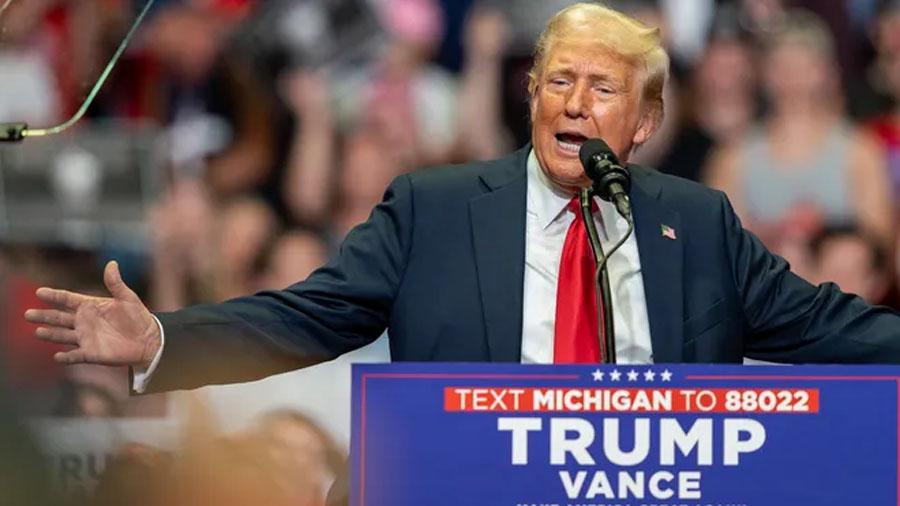
Trump unveils plan for US control of Strait of Hormuz, seeks payment for security
US President Donald Trump has announced plans for the United States to assume control of the strategically important Strait of Hormuz, declaring that Washington should be compensated for protecting one of the world’s busiest maritime trade routes as tensions with Iran continue to escalate.
Speaking during a telephone interview with Fox News’ Fox & Friends, Trump said the US would become the “guardian” of the Strait of Hormuz and ensure that the critical shipping lane remains open for international commerce.
“We’re going to keep the strait, and we’ll probably run it. We’ll become the guardian of the strait. Maybe we’ll call it the guardian angel of the strait. And we should be reimbursed for that,” Trump said.
The US president argued that countries benefiting from the security of the waterway should contribute financially to its protection.
“We’re going to guard it. We’re going to get paid for guarding it—a lot of money. We’re going to be reimbursed because the other nations are very wealthy. They’re on our side, and we can’t be expected to do that for nothing,” he added.
Trump later expanded on the proposal, suggesting that commercial cargo passing through the Strait of Hormuz could be subject to a 20 per cent transit charge to offset the cost of US security operations in the region.
His remarks came amid a sharp deterioration in relations between Washington and Tehran, following renewed military exchanges that have heightened fears of a wider regional conflict.
Iran recently announced the closure of the Strait of Hormuz, citing security concerns after a series of missile and drone strikes involving Iranian and US forces.
Tehran said commercial shipping through the strategic waterway would remain suspended until what it described as the restoration of “stability and calm.”
READ ALSO:
- Appeal Court upholds judgment barring INEC from recognising ADC state congresses
- Victor Osimhen reveals plans to earn university degree after football career
- Heavy rains, flash floods kill 51 as over one million affected in Bangladesh
Trump accused Iran of reneging on previous agreements designed to keep the waterway open for international navigation.
“We had a deal. It was a done deal, and then they broke it. They always break it. We’ve had 10 deals with these people, and so we’re just going to hit them very hard,” he said.
Meanwhile, Iran’s Islamic Revolutionary Guard Corps (IRGC) insisted that the only way to restore normal maritime traffic through the Strait of Hormuz is for the United States to halt its military operations in the Gulf.
The Iranian military warned that continued US intervention could further destabilise the region and disrupt global oil and gas supplies.
The latest confrontation follows several days of missile and drone attacks between the two countries, with Iran claiming responsibility for strikes on US military installations in the Gulf, while Washington launched retaliatory attacks on Iranian military targets.
The renewed hostilities have effectively undermined a temporary understanding reportedly reached between the two countries last month to reopen the Strait of Hormuz and reduce military tensions while diplomatic negotiations continued.
The Strait of Hormuz is regarded as one of the world’s most strategically significant maritime chokepoints, linking the Persian Gulf with the Gulf of Oman and the Arabian Sea.
An estimated 20 per cent of global seaborne crude oil and a substantial share of the world’s liquefied natural gas exports pass through the narrow waterway every day, making it indispensable to global energy markets.
Major oil-exporting countries, including Saudi Arabia, Iraq, Kuwait, Qatar and the United Arab Emirates, rely heavily on the route to transport crude oil and natural gas to international markets.
The renewed tensions have already sent global oil prices higher as investors worry that prolonged disruption of shipping through the Strait of Hormuz could tighten energy supplies, increase transportation costs and fuel inflation worldwide.
Trump’s proposal has also generated international legal debate, with maritime law experts questioning whether any nation can unilaterally assume control of or impose transit charges on an international waterway governed by international maritime law.
Diplomatic observers warn that any attempt to enforce such a policy could further complicate already fragile relations in the Middle East and heighten geopolitical risks in one of the world’s most volatile regions.
Governments, energy companies and international shipping operators are expected to closely monitor developments as the security situation in the Gulf continues to evolve.
Trump unveils plan for US control of Strait of Hormuz, seeks payment for security





International
Nigeria Secures UN Human Rights Council Seat With 172 Votes
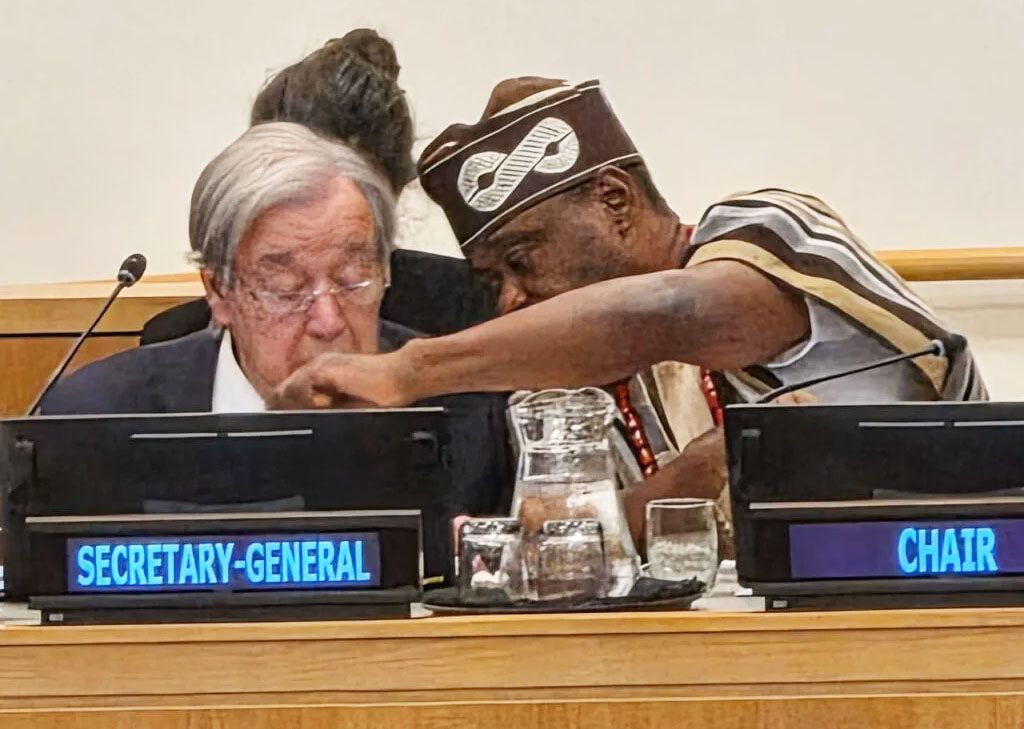
Nigeria has secured a seat on the United Nations Human Rights Council (UNHRC) after receiving 172 votes in an election by the UN General Assembly, earning the country a three-year term on the international body responsible for promoting and protecting human rights worldwide.
The election was held on Tuesday, October 13, 2026, at the United Nations headquarters in New York. Nigeria will serve on the 47-member council from January 1, 2027, to December 31, 2029.
Nigeria was among 15 countries elected to the council for the new term. The other successful candidates included Zambia, Ghana, Burundi, Brazil, the Dominican Republic, Uruguay, Germany, Ireland, Japan, Jordan, Kuwait, Nepal, Moldova and Ukraine.
Among the African candidates, Zambia received 177 votes, Ghana secured 173, Nigeria obtained 172, while Burundi received 160 votes.
The election gives Nigeria an opportunity to participate in international deliberations on human rights standards, alleged violations and measures aimed at improving the protection of fundamental freedoms across the world.
However, the process has attracted criticism from human rights organisations because the election was uncontested. Regional groups nominated exactly as many candidates as there were available seats, meaning there was no competitive ballot among rival candidates within the respective groups.
The UN Human Rights Council is an intergovernmental body based in Geneva, Switzerland. Established in 2006, it is mandated to address human rights violations, promote respect for fundamental freedoms and make recommendations to governments and the international community.
READ ALSO:
- Houthi Missile Targeting Riyadh Shot Down as Debris Injures Four, Damages 15 Homes
- Outrage as Israeli Settlers Torch Mosque, Burn Vehicle in Occupied West Bank
- Attempted Suicide: ‘If You Survive, We’ll Jail You’ – Akpabio
The council comprises 47 member states elected by the UN General Assembly through a secret ballot. Its seats are allocated among five regional groups to ensure geographical representation, and members serve staggered three-year terms.
The body examines human rights situations in individual countries, conducts its Universal Periodic Review of UN member states and considers complaints and reports concerning alleged abuses. It can also appoint independent experts, establish commissions of inquiry and authorise fact-finding missions to investigate serious allegations.
Although the council plays an important role in international human rights oversight, it does not operate as a criminal court and cannot independently impose criminal sentences on individuals accused of abuses.
Nigeria’s election comes amid continuing international scrutiny of human rights conditions in several countries, including concerns about police conduct, accountability, freedom of expression and the treatment of vulnerable groups.
The selection of countries with contested human rights records has been criticised by advocacy organisations, which argue that uncontested elections can weaken accountability and reduce pressure on candidates to demonstrate their commitment to protecting fundamental rights.
The criticism has also raised questions about how elected countries will use their positions on the council to address allegations of abuses and support international human rights standards.
For Nigeria, membership offers a platform to contribute to debates on issues such as unlawful killings, torture, discrimination, the rights of women and children, freedom of expression and the protection of civilians during armed conflicts.
The country will also be expected to participate in council sessions, consider resolutions and engage with other member states on international human rights concerns.
Nigeria’s three-year membership begins in January 2027. Its performance on the council will be watched alongside its domestic human rights record, including how authorities address allegations of misconduct and strengthen accountability and protection for citizens.
The election is therefore both a diplomatic achievement for Nigeria and an opportunity for the country to demonstrate its commitment to the principles the council was established to uphold.
Nigeria Secures UN Human Rights Council Seat With 172 Votes
International
Houthi Missile Targeting Riyadh Shot Down as Debris Injures Four, Damages 15 Homes

Houthi Missile Targeting Riyadh Shot Down as Debris Injures Four, Damages 15 Homes
Saudi Arabia’s air defences have intercepted and destroyed a Houthi ballistic missile targeting Riyadh, as debris from earlier missile interceptions injured four people and damaged about 15 residential homes in the Saudi capital.
The developments were announced on Wednesday, October 14, 2026, amid escalating attacks involving Saudi Arabia and Yemen’s Houthi armed group.
Major General Turki Al-Maliki, spokesman for the Saudi-led coalition supporting Yemen’s internationally recognised government, confirmed that a ballistic missile launched towards Riyadh had been intercepted and destroyed.
Saudi authorities subsequently lifted danger warnings issued for Riyadh and Al-Kharj Governorate through the country’s National Early Warning Platform, indicating that the immediate threat covered by those alerts had passed.
The missile interception came after loud explosions were heard over Riyadh late on Tuesday as Saudi air defences engaged incoming aerial threats.
According to the Saudi Civil Defence, debris from two previously intercepted cruise missiles fell on residential areas, injuring four people and causing material damage to approximately 15 homes.
The injured comprised two women, a man and a child. Authorities said the debris caused limited damage to the affected properties, while images released by Saudi officials showed damage inside residential buildings.
READ ALSO:
- Outrage as Israeli Settlers Torch Mosque, Burn Vehicle in Occupied West Bank
- Attempted Suicide: ‘If You Survive, We’ll Jail You’ – Akpabio
- Yamal Inspires Barcelona Comeback to Sink Osimhen’s Galatasaray
Emergency services responded to the incident, and the relevant authorities implemented established safety procedures. The four injuries were attributed to falling missile fragments rather than a direct impact from the intercepted missiles.
The latest interception was part of a broader series of missile and drone attacks targeting Saudi Arabia. The Saudi-led coalition reported intercepting threats over Riyadh and other parts of the kingdom, including Dhahran and Al-Kharj.
Saudi officials also reported that three drones had been destroyed north of Riyadh on Tuesday.
In a separate incident, Saudi Arabia’s Energy Ministry confirmed that an administrative building belonging to state-owned oil giant Saudi Aramco in Dhahran, in the kingdom’s Eastern Province, was struck on Tuesday evening, causing what authorities described as a limited fire.
The ministry said there were no casualties from the fire. Reports indicated that the building was part of the Aramco headquarters complex, which houses offices associated with the company’s extensive oil and energy operations.
The Houthis have claimed attacks against Saudi strategic and energy facilities, including Aramco installations and King Khalid International Airport in Riyadh. The latest developments have raised further concerns about the security of civilian areas and critical infrastructure across the kingdom.
Saudi Arabia has vowed to respond to attacks against its territory. The Saudi Cabinet, chaired by Crown Prince Mohammed bin Salman, condemned the attacks and reaffirmed the kingdom’s commitment to protecting its security and freedom of navigation in the Red Sea and the Bab al-Mandab Strait.
The renewed confrontation has also prompted military action by the Saudi-led coalition in Yemen. On Tuesday, the coalition announced operations targeting facilities it said were being used to support Houthi attacks. It issued warnings urging civilians to stay away from designated locations.
The Houthis, who control Yemen’s capital, Sanaa, have said their attacks are retaliation for Saudi military operations against them. The conflict has intensified after years of intermittent fighting and has increased concerns about the potential impact on regional stability, energy supplies and international shipping.
The latest missile interception in Riyadh underscores the continuing threat posed by missiles and drones in the conflict. Although the ballistic missile targeting the capital was destroyed, falling debris from earlier interceptions demonstrated the risks to residents even when air defences successfully engage incoming weapons.
Saudi authorities have not reported further casualties from the latest ballistic missile interception. The situation remains tense as the kingdom continues to monitor and respond to incoming aerial threats.
Houthi Missile Targeting Riyadh Shot Down as Debris Injures Four, Damages 15 Homes
International
Outrage as Israeli Settlers Torch Mosque, Burn Vehicle in Occupied West Bank
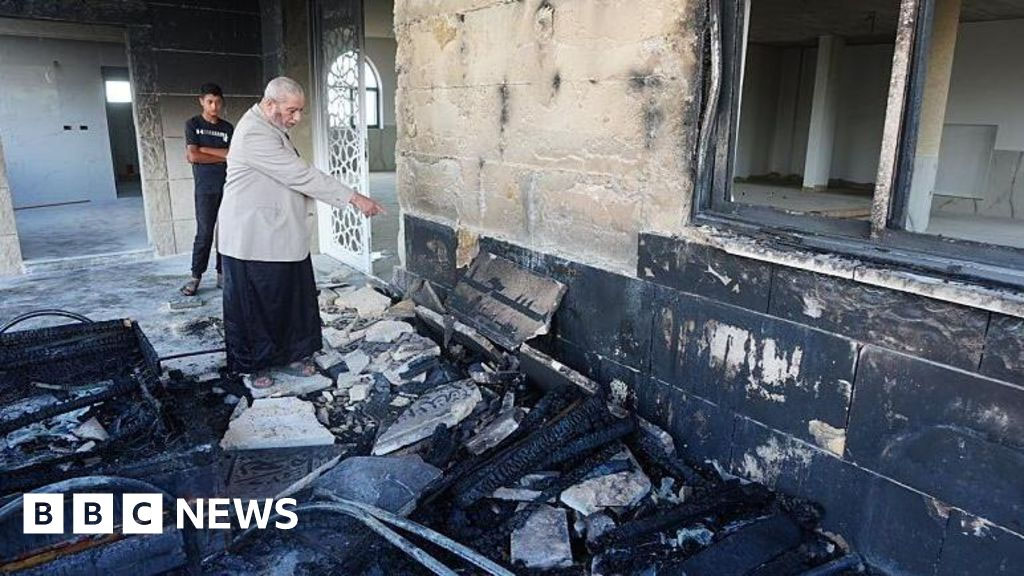
Israeli settlers have reportedly set fire to a mosque, a vehicle and an olive tree in a Palestinian village in the occupied West Bank, in an attack that has renewed concerns about violence against Palestinian communities and religious sites.
The incident occurred in the early hours of Wednesday, October 14, 2026, when a group of settlers raided Mikhmas, also spelt Mukhmas, northeast of occupied Jerusalem.
According to the Palestinian news agency WAFA, the Jerusalem Governorate reported that dozens of settlers entered the village shortly after midnight and set fire to a mosque and a nearby olive tree. A vehicle was also completely burned during the attack.
Reports from the scene showed damage to the mosque’s entrance. No injuries were reported in the initial accounts of the incident.
Mohammed Kanaan, a member of Mikhmas’ municipal council, told Anadolu Agency that the attackers set fire to a prayer room and a vehicle at about 2 a.m. local time. He said residents alerted the relevant authorities and requested the intervention of firefighting crews.
Reports also indicated that nationalist and racist slogans were spray-painted on the mosque and other buildings in the village. The extent of the damage and whether anyone had been arrested in connection with the attack were not immediately clear.
READ ALSO:
- Attempted Suicide: ‘If You Survive, We’ll Jail You’ – Akpabio
- Yamal Inspires Barcelona Comeback to Sink Osimhen’s Galatasaray
- Press Freedom: Judge Blocks Trump’s Ban on Three Major US Media Outlets
The attack adds to continuing concerns over Israeli settler violence in the occupied West Bank, where Palestinian residents have reported assaults, intimidation, property destruction and attacks on farmland.
The incident is particularly sensitive because it involved a Muslim place of worship. Religious sites and civilian property are protected under international humanitarian law, and deliberate attacks against them raise serious legal concerns.
The latest incident also comes amid the annual olive harvest, an important source of income for many Palestinian farming families. The Palestinian Colonization and Wall Resistance Commission said on Monday that it had documented 136 attacks linked to the olive harvest since the beginning of October. The reported incidents included beatings, intimidation, gunfire, theft of olives and farming equipment, and damage to trees.
The burning of the mosque in Mikhmas follows other reported arson attacks on mosques in the West Bank in recent months. In July, two mosques in the Palestinian villages of Qusra and Kour were set on fire following deadly clashes in the territory.
Reuters reported at the time that the Israeli military had confirmed evidence of arson and graffiti at the affected mosque sites and condemned attacks on religious places. The incidents prompted renewed calls for measures to prevent further attacks and hold those responsible accountable.
The wider situation in the Israeli-occupied Palestinian territory remains tense, with attacks by settlers and Israeli military operations contributing to insecurity for residents. Palestinian officials have repeatedly called for stronger protection of communities and accountability for attacks on civilians and their property.
The circumstances surrounding Wednesday’s mosque attack remain under investigation, and it was not immediately clear whether Israeli authorities had announced arrests or opened a formal inquiry.
The incident has once again highlighted concerns over the safety of Palestinian religious sites, homes and agricultural land, as calls grow for effective action against violence in the occupied West Bank.
Outrage as Israeli Settlers Torch Mosque, Burn Vehicle in Occupied West Bank
-
 metro3 days ago
₦8.7bn Erosion-Control Budget Gap Raises Questions as Anambra Gullies Expand
-
 Politics2 days ago
Obi Positioning for SGF Role Under Atiku’s ADC Ticket – Sowore
-
 metro2 days ago
How Bandits Demand ₦300m Ransom for Abducted Kaduna Couple, Baby in Viral Video
-
 metro3 days ago
Child Soldiers, Baby Factories: US Raises Alarm Over Official Complicity in Nigeria
-
 News3 days ago
Fuel Subsidy May Ease Hardship Today, But Could Cripple Nigeria’s Economy Tomorrow — FG
-
 metro3 days ago
2027 Elections: Atiku Demands Names of INEC Ballot Printers, Questions Secret Contracts
-

 Politics2 days ago
Okonkwo Alleges Return of Subsidy, Accuses NNPC of Plotting Trillions in ‘Lost Profit’
-
 metro2 days ago
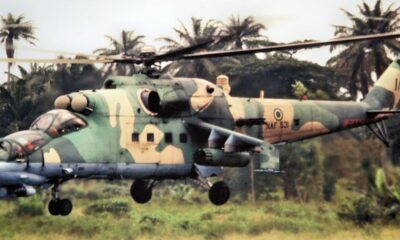
How Military Air Strike Crushed ISWAP Attack Plot, Killed Over 40 Fighters in Borno