

International
US strikes hit Iran for seventh consecutive night as Middle East conflict deepens
US strikes hit Iran for seventh consecutive night as Middle East conflict deepens
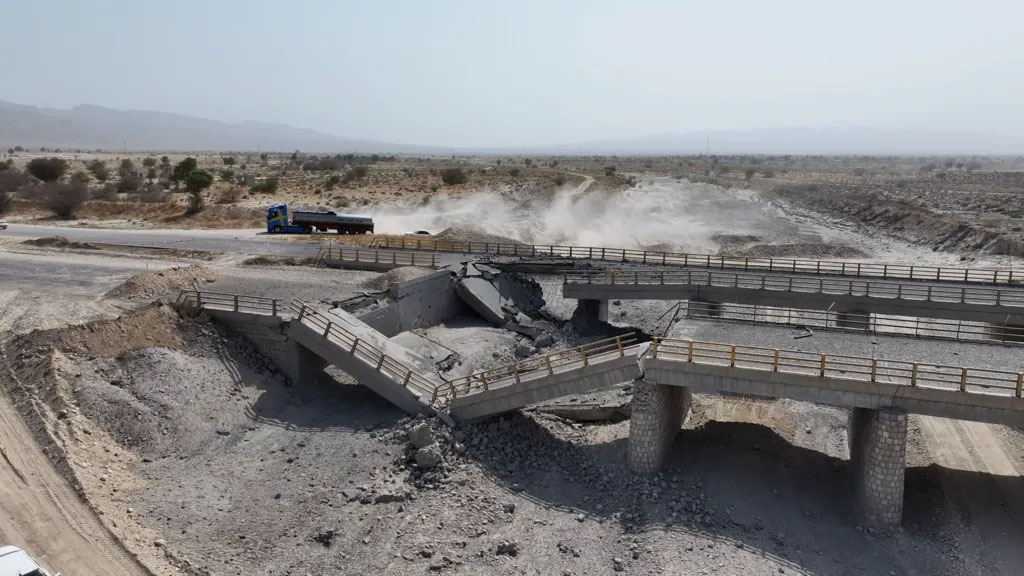
The United States has launched a seventh consecutive night of airstrikes on Iran, targeting military infrastructure and strategic assets as tensions between Washington and Tehran continue to escalate, raising fears of a broader conflict across the Middle East and threatening global energy security.
The latest military operation came after US President Donald Trump declared that the temporary ceasefire reached between the two countries in June was “over,” following the collapse of diplomatic efforts aimed at ending the conflict.
According to the US Central Command (CENTCOM), American forces struck surveillance sites, military logistics infrastructure, underground weapons storage facilities and maritime capabilities across multiple locations in Iran.
CENTCOM said the operation concluded after several hours of coordinated attacks involving fighter jets, armed drones, warships and other precision strike systems, describing the mission as part of efforts to weaken Iran’s military capabilities and protect US interests and allies in the region.
The latest strikes reportedly hit areas around Yazd, Qeshm Island, Bandar Abbas and other strategic locations, with Iranian state media reporting multiple explosions.
Images and videos circulating online showed damage near the Shahid Mirzaei twin tunnels north of Bandar Abbas, while local authorities reported that attacks on electricity infrastructure and desalination facilities near Jask disrupted drinking water supplies for about 10,000 residents across 20 villages.
Iranian officials also disclosed that more than 100 telecommunications towers were knocked out of service in parts of Hormozgan Province, disrupting mobile, internet and landline communications.
In response, Iran launched fresh missile and drone attacks targeting countries hosting US military assets in the Gulf.
Authorities in Kuwait said Iranian strikes damaged a power generation and water desalination facility, triggering a fire that forced the shutdown of several electricity generation units.
READ ALSO:
- China unveils 5,000 AI training opportunities for developing countries at WAIC 2026
- Christian Council opposes ₦50,000 fine for bus preaching, seeks Tinubu’s intervention
- EFCC secures final forfeiture of 52 luxury Lekki homes in landmark court ruling
Kuwait’s state news agency later reported that an oil facility also sustained significant damage during repeated attacks, while several people were reportedly injured.
Meanwhile, Jordan said its air defence systems intercepted 10 Iranian missiles that entered its airspace overnight, preventing damage on the ground.
Bahrain also announced that its air defence forces successfully intercepted Iranian projectiles aimed at its territory.
The renewed fighting follows the collapse of a ceasefire agreement reached in June to facilitate negotiations between Washington and Tehran.
Although the truce initially reduced hostilities, tensions resurfaced after Iran allegedly targeted commercial oil tankers transiting the Strait of Hormuz, insisting that vessels obtain Tehran’s approval before passing through the strategic waterway.
The United States subsequently resumed military operations and reinforced restrictions around Iranian ports, while Iran declared the Strait of Hormuz closed to shipping.
The waterway remains one of the world’s most important energy corridors, carrying roughly 20 per cent of global oil and liquefied natural gas exports. The disruption has heightened concerns over global energy supplies and contributed to renewed volatility in international oil markets.
The International Energy Agency (IEA) has warned that prolonged instability around the Strait could significantly affect global energy security and international trade.
Iran has also claimed responsibility for attacks on US military facilities in Kuwait, Bahrain, Jordan and Syria, although Washington has disputed several of Tehran’s claims.
US officials acknowledged that several American service members were injured during recent Iranian attacks on military installations in Jordan but maintained that US operations have been directed exclusively at military objectives.
The White House rejected allegations that American forces deliberately targeted civilian infrastructure, insisting that military planners focused on logistics facilities, surveillance systems and assets linked to the Islamic Revolutionary Guard Corps (IRGC).
US Defence Secretary Pete Hegseth also confirmed that American forces destroyed a control tower at the port of Chabahar, describing it as part of an IRGC maritime surveillance network used to monitor shipping movements around the Gulf of Oman and the Strait of Hormuz.
The latest escalation has prompted renewed international calls for restraint, with governments and diplomatic organisations warning that continued military exchanges could trigger a wider regional conflict involving additional countries.
Security analysts say the confrontation now represents one of the most serious geopolitical crises in the Middle East in recent years, with potential consequences for global trade, energy markets and international security.
With neither Washington nor Tehran signalling an immediate willingness to de-escalate, concerns continue to grow that the conflict could intensify further in the coming days.
US strikes hit Iran for seventh consecutive night as Middle East conflict deepens










International
Trump’s White House Press Secretary Quits After Just Five Days as Credentials Storm Erupts
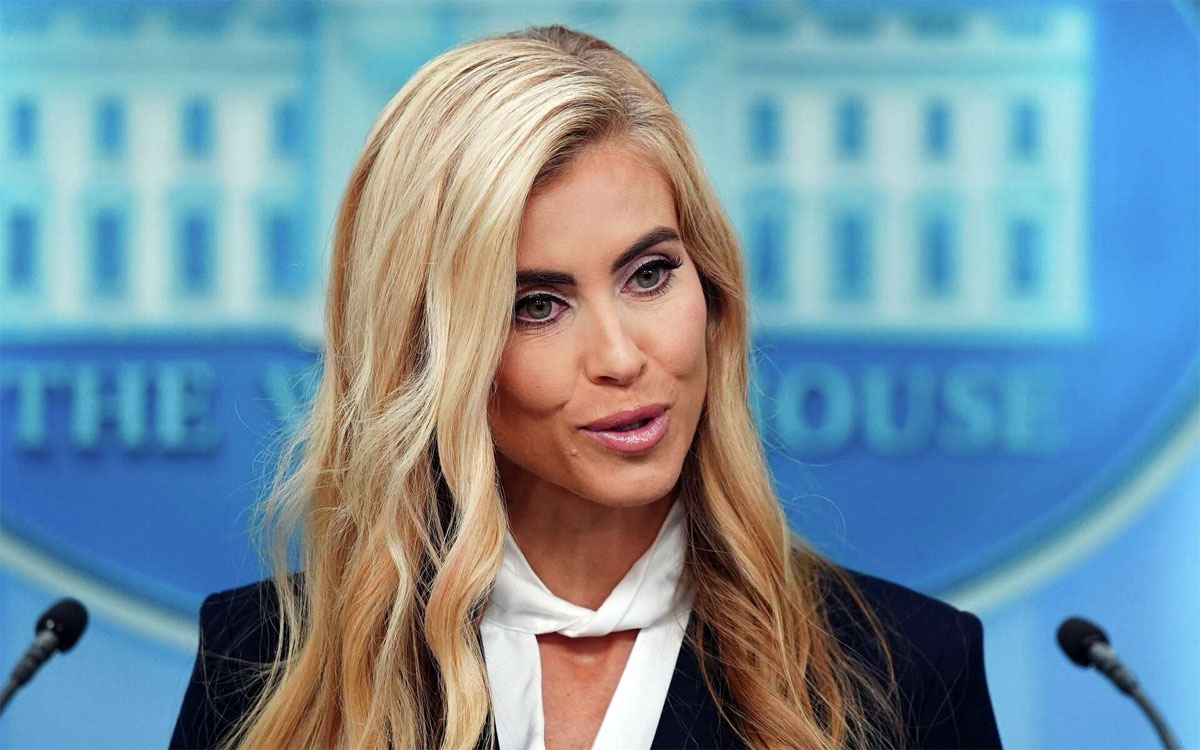
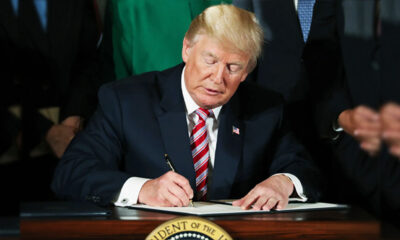
WASHINGTON, DC — US President Donald Trump’s new White House press secretary, Katie Zacharia, has left her position after just five days on the job, following criticism of her first press briefing and questions about her professional credentials.
Zacharia’s departure was reported on Friday, October 16, 2026, after Trump disclosed that he had advised her to reconsider remaining in the high-profile position. A White House official subsequently confirmed that she was leaving the role.
The departure came just days after Trump announced her appointment to succeed Karoline Leavitt on Friday, October 9. Zacharia began work on Monday, October 12, and held her first White House press briefing the following day, Tuesday, October 13.
The brief tenure quickly became controversial after Zacharia’s first interaction with journalists attracted criticism. The briefing lasted approximately 14 minutes, during which she took questions from only three reporters, prompting scrutiny of her performance as the administration’s principal spokesperson.
The controversy deepened on Thursday, October 15, when questions emerged about her professional credentials. During an interview with Fox News host Sean Hannity, Zacharia acknowledged that she had not passed the bar examination, despite holding a law degree from Pepperdine University.
READ ALSO:
- Imodi-Ijebu Muslim Community Bets on 20 Chiefs to Drive Education, Economic Growth
- Suspended Archbishop Ibezim Drags Anglican Primate to Court, Challenges Six-Month Leave
- Toyin Abraham Breaks Silence as Leaked Audio Sparks Fresh Nollywood Feud
In the United States, obtaining a law degree does not automatically qualify a graduate to practise as a licensed attorney. Admission to practise generally requires passing the relevant bar examination and satisfying other requirements set by the jurisdiction.
The revelation intensified scrutiny of how Zacharia’s legal background had been presented before her appointment, further complicating her early days in the White House role.
Zacharia defended her handling of the first briefing, explaining that she had limited time to prepare. She also indicated that the session was intentionally brief because Trump was expected to speak to reporters later that morning.
Trump, meanwhile, said he had encouraged her to consider whether the position was right for her, arguing that the media scrutiny surrounding the job could make it difficult to remain in the role.
The White House press secretary is responsible for communicating the president’s positions, explaining administration policies and responding to questions from journalists. The position frequently involves contentious exchanges with the media and intense public scrutiny.
Before joining the White House, Zacharia worked in communications for Trump Media, the company behind the president’s Truth Social platform. She had also held a position at the Department of Homeland Security and worked as a conservative political commentator.
Her exit leaves the Trump administration needing to determine who will handle daily press briefings and serve as its principal spokesperson. As of Friday, October 16, the White House had not publicly announced a successor.
Zacharia’s departure followed a compressed timeline: Trump announced her appointment on October 9, she began work on October 12, delivered her first briefing on October 13 and left the position on October 16. The five-day description refers to her working tenure rather than five full days from the date her appointment was announced.
Trump’s White House Press Secretary Quits After Just Five Days as Credentials Storm Erupts
International
School Turns Death Trap as Roof Collapse Claims 22 Lives
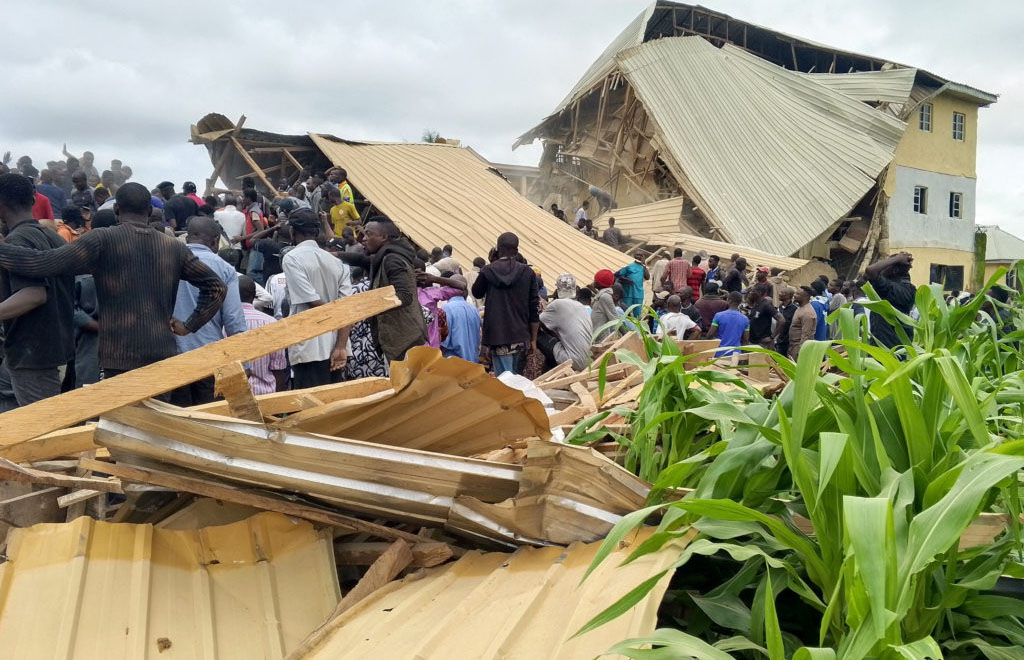
School Turns Death Trap as Roof Collapse Claims 22 Lives
At least 21 children and a teacher have been killed after the roof of a private school collapsed in Peshawar, north-western Pakistan, triggering an emergency rescue operation as authorities searched for people feared trapped beneath the rubble.
The incident occurred on Thursday, October 15, 2026, in the Dir Colony area of Peshawar, the capital of Khyber Pakhtunkhwa province. The victims were pupils attending the school when the roof gave way, according to reports citing local officials and hospital authorities.
More than 40 people were reportedly injured in the collapse, with several taken to hospital for treatment. Some of the injured were said to be in critical condition, raising concerns that the death toll could increase as rescue efforts continued.
Mohammad Asim, a spokesperson for Lady Reading Hospital, confirmed that children and a teacher were brought to the facility after the incident. Early reports said the children killed were all aged 13 or younger.
Emergency responders, including personnel from Rescue 1122, were deployed to the scene to remove debris, search for survivors and transport injured pupils to medical facilities. Rescue workers continued to check the wreckage for anyone who might still be trapped beneath the collapsed structure.
READ ALSO:
- Outrage as Residents Scoop Groundnut Oil From Lagos Tanker Crash Scene
- Shettima Attacks Atiku Over Tinubu Remarks, Questions Subsidy Plan
- 2027: We Know How to Stop Tinubu From Getting Second Term – Momodu
The cause of the collapse had not been established at the time of reporting. Authorities are expected to investigate the circumstances surrounding the incident, including the condition of the school building and whether construction and safety standards were observed.
Pakistan’s Prime Minister, Shehbaz Sharif, expressed sorrow over the loss of lives and extended condolences to the bereaved families. He also prayed for the strength of the families affected by the tragedy.
The disaster has renewed concerns about building safety and construction standards in Pakistan, where structural collapses have repeatedly caused deaths and injuries. Poor construction materials and weak enforcement of safety regulations have been cited in reports on previous incidents, although the cause of the Peshawar collapse remains unconfirmed.
In June 2026, a roof collapse at a tutoring centre in Lahore killed at least 14 children. The recurring incidents have intensified calls for stricter inspections of educational facilities and stronger enforcement of building regulations to protect pupils and school staff.
Authorities are expected to establish what caused the latest collapse and determine whether any safety breaches contributed to the tragedy.
School Turns Death Trap as Roof Collapse Claims 22 Lives
International
Nigeria Secures UN Human Rights Council Seat With 172 Votes
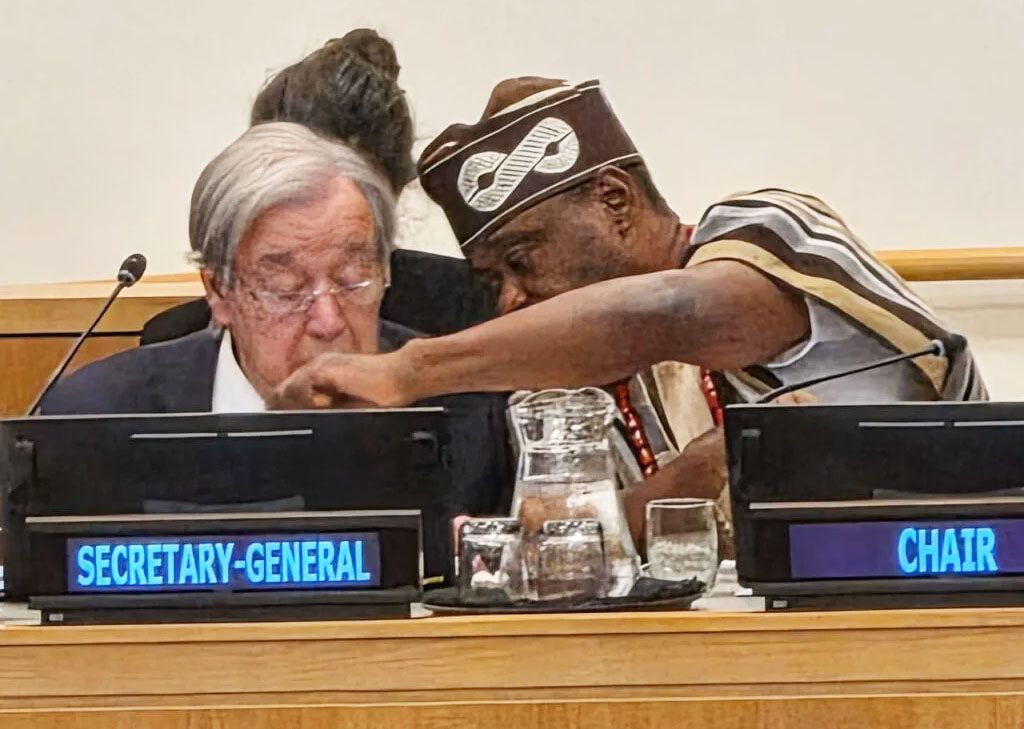
Nigeria has secured a seat on the United Nations Human Rights Council (UNHRC) after receiving 172 votes in an election by the UN General Assembly, earning the country a three-year term on the international body responsible for promoting and protecting human rights worldwide.
The election was held on Tuesday, October 13, 2026, at the United Nations headquarters in New York. Nigeria will serve on the 47-member council from January 1, 2027, to December 31, 2029.
Nigeria was among 15 countries elected to the council for the new term. The other successful candidates included Zambia, Ghana, Burundi, Brazil, the Dominican Republic, Uruguay, Germany, Ireland, Japan, Jordan, Kuwait, Nepal, Moldova and Ukraine.
Among the African candidates, Zambia received 177 votes, Ghana secured 173, Nigeria obtained 172, while Burundi received 160 votes.
The election gives Nigeria an opportunity to participate in international deliberations on human rights standards, alleged violations and measures aimed at improving the protection of fundamental freedoms across the world.
However, the process has attracted criticism from human rights organisations because the election was uncontested. Regional groups nominated exactly as many candidates as there were available seats, meaning there was no competitive ballot among rival candidates within the respective groups.
The UN Human Rights Council is an intergovernmental body based in Geneva, Switzerland. Established in 2006, it is mandated to address human rights violations, promote respect for fundamental freedoms and make recommendations to governments and the international community.
READ ALSO:
- Houthi Missile Targeting Riyadh Shot Down as Debris Injures Four, Damages 15 Homes
- Outrage as Israeli Settlers Torch Mosque, Burn Vehicle in Occupied West Bank
- Attempted Suicide: ‘If You Survive, We’ll Jail You’ – Akpabio
The council comprises 47 member states elected by the UN General Assembly through a secret ballot. Its seats are allocated among five regional groups to ensure geographical representation, and members serve staggered three-year terms.
The body examines human rights situations in individual countries, conducts its Universal Periodic Review of UN member states and considers complaints and reports concerning alleged abuses. It can also appoint independent experts, establish commissions of inquiry and authorise fact-finding missions to investigate serious allegations.
Although the council plays an important role in international human rights oversight, it does not operate as a criminal court and cannot independently impose criminal sentences on individuals accused of abuses.
Nigeria’s election comes amid continuing international scrutiny of human rights conditions in several countries, including concerns about police conduct, accountability, freedom of expression and the treatment of vulnerable groups.
The selection of countries with contested human rights records has been criticised by advocacy organisations, which argue that uncontested elections can weaken accountability and reduce pressure on candidates to demonstrate their commitment to protecting fundamental rights.
The criticism has also raised questions about how elected countries will use their positions on the council to address allegations of abuses and support international human rights standards.
For Nigeria, membership offers a platform to contribute to debates on issues such as unlawful killings, torture, discrimination, the rights of women and children, freedom of expression and the protection of civilians during armed conflicts.
The country will also be expected to participate in council sessions, consider resolutions and engage with other member states on international human rights concerns.
Nigeria’s three-year membership begins in January 2027. Its performance on the council will be watched alongside its domestic human rights record, including how authorities address allegations of misconduct and strengthen accountability and protection for citizens.
The election is therefore both a diplomatic achievement for Nigeria and an opportunity for the country to demonstrate its commitment to the principles the council was established to uphold.
Nigeria Secures UN Human Rights Council Seat With 172 Votes
-

 metro2 days ago
₦130m Toyota Tundra Wrecked: Lagos Dealer Questions Police Over Suspect’s Release
-

 News2 days ago
₦200m Fake Alcohol Packaging Uncovered as NAFDAC Raids Aba Market
-

 metro3 days ago
Outrage as Residents Scoop Groundnut Oil From Lagos Tanker Crash Scene
-
 metro17 hours ago
Suspended Archbishop Ibezim Drags Anglican Primate to Court, Challenges Six-Month Leave
-
 metro3 days ago
Borno Woman Jailed Two Years for Sexual Exploitation of 16-Year-Old Girl
-

 Sports1 day ago
Real Madrid Demand Tebas’ Exit After Explosive Nazi Propaganda Row
-
 Politics3 days ago
Shettima Attacks Atiku Over Tinubu Remarks, Questions Subsidy Plan
-
 News3 days ago
Terrorists Storm Borno Military Post in Fierce Gun Battle, Soldiers Feared Dead