

metro
NRS Boss Under Fire Over Alleged Secret Transfer of $279m Oil Fund
NRS Boss Under Fire Over Alleged Secret Transfer of $279m Oil Fund
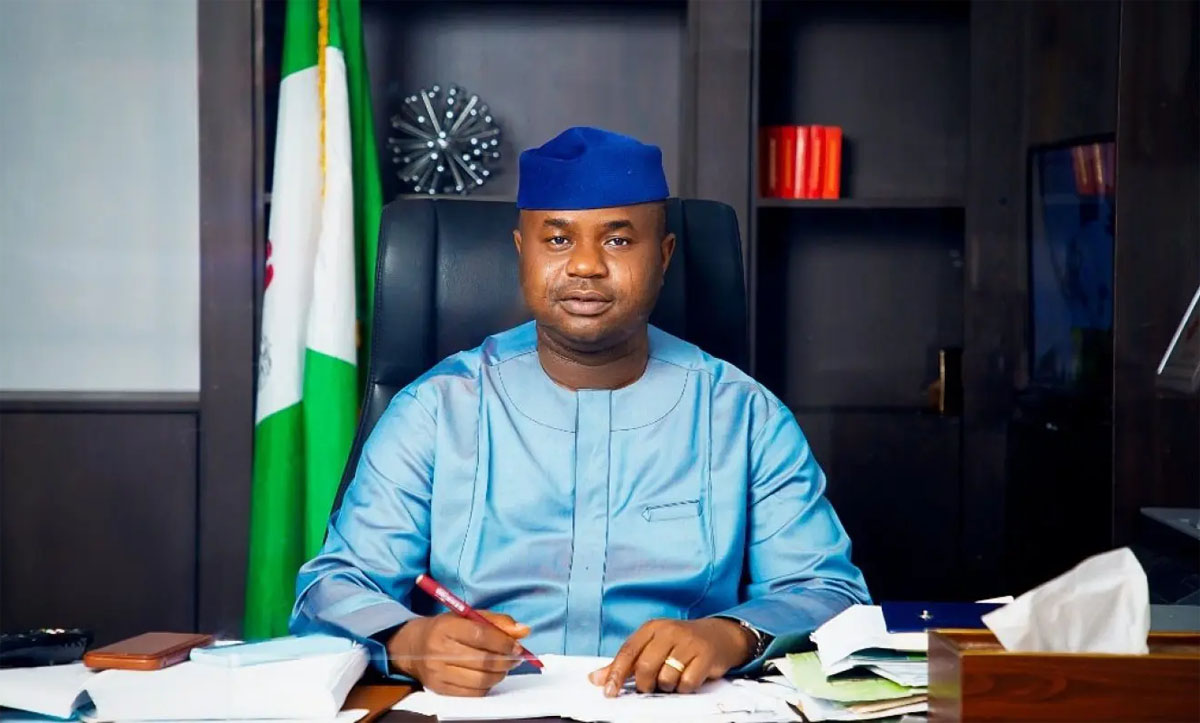
The Executive Chairman of the Nigeria Revenue Service (NRS), Zacch Adedeji, has come under intense scrutiny following allegations that $279 million was secretly transferred from Nigeria’s Frontier Exploration Fund account without the approval of designated signatories. Stakeholders are demanding a comprehensive forensic investigation, answers on the destination of the funds, the legal authority for the transaction, and the identity of the beneficiaries, as the controversy threatens to escalate into a major governance crisis.
Fresh controversy has enveloped the management of Nigeria’s Frontier Exploration Fund following allegations that $279 million was secretly transferred from the fund’s account without the approval of designated signatories, prompting calls for a comprehensive forensic investigation into the transaction. The allegations have placed the Executive Chairman of the Nigeria Revenue Service, Zacch Adedeji, under scrutiny, with stakeholders demanding explanations over the circumstances surrounding the movement of the funds and whether due process was observed. The timing of the allegations is particularly significant, coming just weeks after President Bola Tinubu signed Executive Order 9, which redirected revenues previously earmarked for the Frontier Exploration Fund into the Federation Account pending broader fiscal reforms, creating a complex legal and political backdrop to the controversy.
According to the allegations, the transfer was executed without the authorisation or signatures of the officials designated to approve transactions from the Frontier Exploration Fund account, raising fundamental questions about internal controls and financial oversight within the agency responsible for administering the fund. It was further alleged that no official explanation has been provided regarding the destination of the funds, the legal authority for the transfer, or the beneficiaries of the transaction, leaving stakeholders and oversight bodies in the dark about what may have happened to the substantial sum. The lack of transparency surrounding the transaction has only intensified calls for immediate investigation and accountability.
The claims have triggered concerns among stakeholders in the oil and gas industry, who argued that if established, such a transaction would raise serious questions about financial governance, transparency, and compliance with the Petroleum Industry Act (PIA) 2021, which created the fund and stipulates how it should be managed. Consequently, they are calling on anti-corruption agencies, the National Assembly, and other oversight institutions to undertake an independent forensic audit of the account to determine whether the transaction complied with existing laws and financial regulations. The stakeholders also want investigators to establish who authorised the transfer, where the money was moved to, whether the funds were subsequently utilised for purposes permitted under the law, and whether any public official violated financial management procedures, leaving no stone unturned in the search for the truth.
READ ALSO:
- EFCC Acted Lawfully in Freezing Osun Account – Falana
- Osun election: Police pledge neutrality, warn against vote buying, violence
- VIDEO: Lagos Bridge Vandalism: 27 Arrested as Scavengers Strip Pillars of Iron Bars
The controversy surrounding Adedeji comes amid a parallel legislative confrontation between the House of Representatives Committee on Federal Character and the NRS boss, adding another layer of pressure on the embattled revenue service chairman. The committee has accused Adedeji of repeatedly failing to honour legislative invitations, ordering the immediate suspension of all NRS recruitment exercises nationwide. Lawmakers have threatened to invoke Sections 88 and 89 of the Constitution to compel his appearance, with the committee chair, Hon. Ahmed Idris Wase, declaring: “No agency, commission, or public official is above the Constitution or beyond the reach of parliamentary oversight.” The committee noted that Adedeji had ignored at least seven previous official invitations dating back to October 2023, suggesting a pattern of disregard for legislative oversight that has now come to a head alongside the more serious allegations of financial impropriety.
The Frontier Exploration Fund is one of the major innovations introduced under Section 9 of the Petroleum Industry Act (PIA), 2021, representing a significant departure from previous approaches to petroleum sector governance in Nigeria. The fund was created to finance petroleum exploration in frontier basins where commercially viable hydrocarbon deposits have not yet been fully established, with the objective of expanding Nigeria’s proven oil and gas reserves by supporting geological mapping, seismic surveys, exploratory drilling, appraisal wells, basin studies, and other exploration activities considered necessary to unlock hydrocarbon resources in underexplored areas. Nigeria’s designated frontier basins include the Chad Basin, Sokoto Basin, Bida Basin, Benue Trough, Anambra Basin, and Dahomey Basin, with the Nigerian Upstream Petroleum Regulatory Commission (NUPRC) also holding the statutory authority to designate additional frontier basins where exploration activities may be undertaken.
To ensure sustainable funding for the programme, the PIA provides that 30 per cent of NNPC Limited’s profit oil and profit gas generated from Production Sharing Contracts (PSCs), Profit Sharing Contracts, and Risk Service Contracts shall be paid into the Frontier Exploration Fund, representing a significant commitment of public resources to high-risk exploration activities. The law requires NNPC Limited to remit the money into a dedicated Frontier Exploration Fund Escrow Account within 21 days after the end of every quarter, with administration of the fund resting with the NUPRC, which is responsible for establishing and managing the escrow account, approving exploration programmes, monitoring utilisation of the funds, and ensuring that the resources are deployed strictly for frontier exploration activities in accordance with the provisions of the PIA.
READ ALSO:
- Ronaldo predicts Cristiano Jr. will be ‘bigger than me’, reveals biggest challenge
- ISWAP Overruns Rival JAS Enclave In Borno Following ₦40m Cash Theft
- Lagos Needs 80,000 More Health Workers to Avert Crisis – Sanwo-Olu Raises Alarm
Since its creation, however, the Frontier Exploration Fund has remained one of the most debated aspects of the Petroleum Industry Act, with passionate arguments advanced on both sides of the policy divide. Supporters argue that Nigeria must continue exploring new basins to replace depleting reserves in the Niger Delta and maintain its long-term position as a leading oil and gas producer, contending that without sustained investment in frontier exploration, the country’s reserve replacement ratio could decline, threatening future production and government revenues. Critics, on the other hand, have questioned the decision to allocate as much as 30 per cent of NNPC Limited’s profit oil and profit gas to high-risk exploration projects, arguing that the money could be better utilised for infrastructure development, healthcare, education, or distributed through the Federation Account for the benefit of all tiers of government. Oil-producing states have also consistently argued that the funding arrangement reduces revenues available for statutory allocation, while some industry experts have questioned whether frontier exploration should continue to receive significant public funding at a time when the global energy transition is accelerating investment away from fossil fuels.
The debate intensified in 2026 after President Bola Tinubu signed Executive Order 9, directing that revenues previously earmarked for the Frontier Exploration Fund should instead be paid into the Federation Account pending broader fiscal reforms, a move that fundamentally altered the funding landscape for frontier exploration. The South-South Governors Forum welcomed the decision, describing it as a critical shift towards restoration of constitutional integrity in Nigeria’s petroleum sector that would eliminate “opaque deductions” and effectively strip NNPC Limited of the “nebulous 30 per cent Frontier Exploration Fund,” which often led to large idle cash balances. However, the directive immediately generated legal and policy debates over whether an executive order could validly suspend or alter a funding mechanism expressly established by an Act of the National Assembly without legislative amendment. The African Energy Council warned that courts may declare the executive order “ultra vires,” noting that the PIA “is a law passed by the National Assembly. An Executive Order is a subsidiary instrument; it implements law; it does not amend it.”
It is against this backdrop that the latest allegations concerning the alleged $279 million transfer have attracted widespread attention, adding fresh fuel to an already heated debate about the management of Nigeria’s petroleum revenues. Stakeholders insist that irrespective of the ongoing policy debate surrounding the future of the Frontier Exploration Fund, every transaction involving the account must comply with the provisions of the law, established financial control procedures, and internationally accepted standards of public financial management. They argue that any movement of public funds without appropriate authorisation, if proven, would undermine public confidence in the management of petroleum revenues and weaken transparency in one of the country’s most strategic sectors. Accordingly, they are urging relevant oversight institutions to conduct a detailed forensic examination of the transaction, publish their findings, and hold accountable any individual or institution found to have breached the law.
They also called on the Federal Government to provide a comprehensive explanation regarding the allegations in order to reassure Nigerians and investors that the management of petroleum revenues remains transparent and subject to strict accountability mechanisms, particularly given the country’s ongoing efforts to attract foreign investment in its oil and gas sector. As of the time of publication, the allegations regarding the $279 million transfer have not been independently established, and any response from the relevant authorities would be important in determining the facts surrounding the transaction. The coming weeks are likely to be crucial in determining whether the allegations are substantiated and what consequences may follow for those involved, with oversight bodies, anti-corruption agencies, and the public all watching closely for developments.
NRS Boss Under Fire Over Alleged Secret Transfer of $279m Oil Fund

metro
Mambilla: Malami Defends $200m Settlement, Rejects ICC Corruption Findings
Mambilla: Malami Defends $200m Settlement, Rejects ICC Corruption Findings
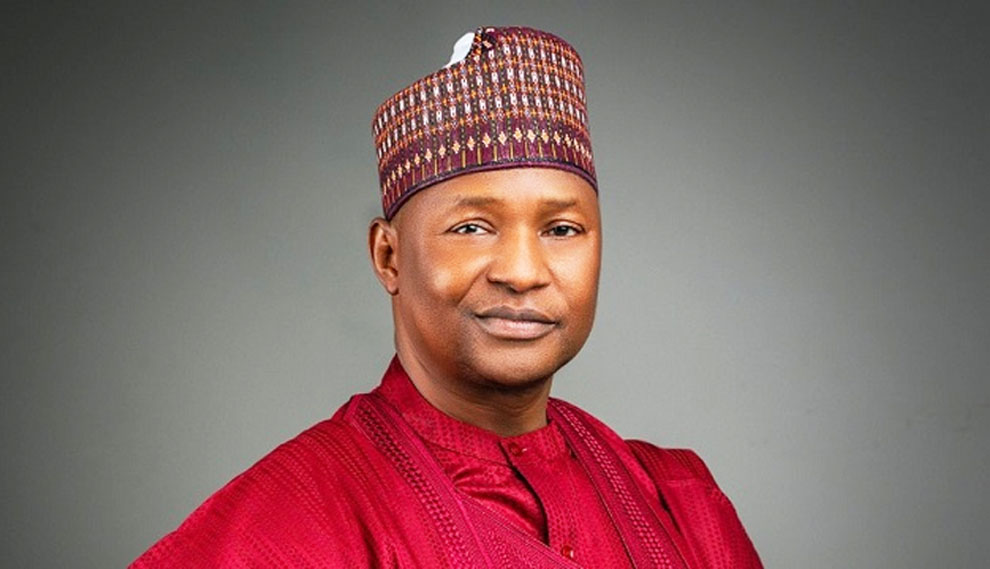
Former Attorney-General of the Federation and Minister of Justice, Abubakar Malami, has defended the controversial $200 million settlement agreement reached between the Federal Government and Sunrise Power and Transmission Company Limited over the long-running Mambilla Hydroelectric Power Project dispute.
Malami said the proposed settlement was negotiated in what he considered to be Nigeria’s interest, arguing that the government was attempting to resolve a dispute that had persisted for years and had become an obstacle to the development of the 3,960-megawatt Mambilla power project in Taraba State.
His response followed a 616-page final award delivered by an International Chamber of Commerce (ICC) arbitration tribunal in Paris on September 16, 2026. The tribunal rejected Sunrise Power’s claims against Nigeria but also made adverse findings about Malami’s handling of the settlement negotiations.
The tribunal found that the 2020 settlement agreement and its addendum were not binding on Nigeria because they lacked the required presidential approval. It also concluded that the agreements were products of corruption and contrary to Nigerian public policy.
Malami has rejected those findings concerning his conduct, stressing that the arbitration was a commercial proceeding and not a criminal trial.
He said the tribunal’s award should therefore not be presented as a criminal conviction against him.
According to Malami, the dispute between Sunrise Power and the Federal Government began years before he became Attorney-General and passed through several administrations, ministries and Attorneys-General.
He said his involvement arose from his constitutional and professional responsibility to advise the government on its legal exposure and possible options for resolving the longstanding dispute.
The Mambilla controversy dates back to 2003, when Sunrise became involved in plans for the development of the hydroelectric project in Taraba State. The project was later redesigned with a proposed capacity of 3,960MW, but disagreements over Sunrise’s contractual role eventually produced years of litigation and international arbitration.
READ ALSO:
- Obasanjo Family, Orji Kalu Among Nigerians Linked to $271m US Property Investigation
- Nationwide Blackout Looms As Electricity Workers Give NAF Three-Day Ultimatum
- Phyna, Nkechi Blessing Take Social Media Feud To Boxing Ring In Lagos
By 2019, Malami said, the unresolved dispute had become an impediment to financing discussions surrounding the Mambilla power project, including engagements involving China Exim Bank.
He said Sunrise initially demanded $500 million as a full and final settlement during negotiations in London in November 2019.
Government representatives reportedly countered with $100 million before negotiations produced the $200 million figure that was eventually incorporated into the settlement agreement.
The January 2020 agreement provided for Nigeria to pay Sunrise $200 million to settle the dispute.
However, a subsequent addendum dated March 25, 2020 introduced another $200 million liability in the event of default, potentially increasing Nigeria’s exposure to $400 million, apart from interest.
The additional liability became a major issue before the ICC tribunal.
The tribunal examined the circumstances surrounding the settlement and the subsequent addendum, including communications between Malami and Leno Adesanya, the promoter of Sunrise Power.
According to the tribunal’s findings reported from the final award, Adesanya alleged that Malami and former Minister of Power Saleh Mamman discussed a payment arrangement under which Nigeria would initially release $100 million and the remaining $100 million would be paid after Adesanya had done “what is needed”.
Adesanya also claimed to have audio and video recordings relating to the alleged discussions.
The tribunal noted, however, that those recordings were not produced before it. It therefore considered the absence of the recordings when assessing the evidence surrounding the allegations.
Despite that limitation, the tribunal concluded that the evidence before it established what it described as a corrupt deal between Malami and Adesanya and found that the settlement agreements were consequently tainted.
The tribunal also found that Malami had acted against Nigeria’s interests and was motivated by other incentives in his handling of the settlement. It noted that Malami did not appear before the tribunal to give evidence.
Malami has categorically rejected the allegation.
In a statement issued by his Special Assistant on Media, Mohammed Doka, the former AGF said his official actions were not motivated by a promise of personal financial benefit.
He argued that the allegation should be assessed against the complete documentary and evidentiary record, including whether he ever received money or any other financial benefit from Sunrise, Adesanya or an associated entity.
READ ALSO:
- Edo Police Arrest Cleric Over Alleged Abduction, Sexual Abuse Of Five Girls
- Abia Police Rescue Four-Day-Old Baby, Arrest Four Over Alleged Theft, Trafficking
- Rent Crisis Deepens as Tenants Struggle With Soaring Housing Costs in Calabar, Lagos, Abuja
Malami also pointed to the fact that former President Muhammadu Buhari never approved the $200 million settlement.
According to the tribunal’s findings, Buhari wrote in a note dated April 20, 2020 that the Federal Government did not have the $200 million required to pay Sunrise.
A later request for approval was also rejected. On January 18, 2021, Buhari reportedly wrote “Not approved” on a communication relating to the settlement.
Malami said his subsequent actions should be considered in that context.
He maintained that when Sunrise later sought to enforce the settlement against Nigeria, he instructed government lawyers to resist the attempt and preserve the country’s legal position.
The former AGF therefore argued that it would be inaccurate to portray his role simply as an attempt to secure payment for Sunrise despite Buhari’s position.
The tribunal reached a different conclusion about aspects of his conduct, finding that Malami and Adesanya had maintained an inappropriate relationship during the dispute and had coordinated on matters relating to the settlement.
The findings have generated calls for further investigation from anti-corruption groups.
The Human and Environmental Development Agenda (HEDA Resource Centre) has called on Nigeria’s anti-corruption agencies to investigate the tribunal’s findings and prosecute any offences established by the evidence.
The ICC proceedings themselves, however, were commercial arbitration proceedings, not a criminal prosecution of Malami.
That distinction is significant because the tribunal’s findings regarding alleged corruption do not amount to a criminal conviction. Any criminal liability would have to be established through the appropriate criminal justice process.
While the tribunal criticised the handling of the settlement, its overall decision was favourable to Nigeria in the underlying arbitration.
Sunrise had sought hundreds of millions of dollars from Nigeria in connection with the settlement and was pursuing a separate claim exceeding $2.7 billion over the Mambilla project dispute.
The tribunal rejected Sunrise’s claims, including its demand for $400 million under the 2020 settlement and subsequent default provision. It also ordered Sunrise and Adesanya to reimburse Nigeria for a substantial portion of its legal costs.
Reports on the award put Nigeria’s recoverable legal fees and expenses at about $11.82 million, while Sunrise and Adesanya were also ordered to bear most of the arbitration costs.
President Bola Ahmed Tinubu welcomed the ruling and described it as the removal of a major legal obstacle to the long-delayed Mambilla Hydroelectric Power Project.
The President commended the Federal Ministry of Justice, Nigeria’s legal defence team and witnesses who participated in the arbitration, including former President Olusegun Obasanjo and the late President Muhammadu Buhari.
The Federal Government has said the arbitration outcome clears a major legal hurdle surrounding the Mambilla project, which has remained stalled for years.
The project is expected to have a generation capacity of 3,960MW, making it one of Nigeria’s most ambitious planned power developments.
For Malami, however, the ICC decision has created two separate issues: Nigeria’s success in defeating Sunrise’s financial claims and the tribunal’s findings about his conduct during the settlement negotiations.
He has welcomed the arbitration victory while rejecting the corruption findings against him.
Malami said he would provide a more comprehensive response after reviewing the complete ICC award and the evidence underpinning the tribunal’s conclusions.
The Mambilla settlement controversy is therefore likely to remain a subject of scrutiny, particularly over the circumstances surrounding the $200 million agreement, the March 2020 addendum that potentially doubled Nigeria’s liability, the absence of presidential approval and the communications between Malami and Sunrise’s promoter.
At the same time, the ICC ruling has settled the immediate arbitration dispute in Nigeria’s favour by preventing Sunrise from enforcing the disputed $400 million settlement claim.
The distinction between the two aspects of the case remains important: the ICC arbitration victory belongs to Nigeria in the commercial dispute, while the tribunal’s adverse findings concerning Malami are allegations and findings arising from that arbitration and are being expressly rejected by the former AGF.
Mambilla: Malami Defends $200m Settlement, Rejects ICC Corruption Findings
metro
Obasanjo Family, Orji Kalu Among Nigerians Linked to $271m US Property Investigation
Obasanjo Family, Orji Kalu Among Nigerians Linked to $271m US Property Investigation
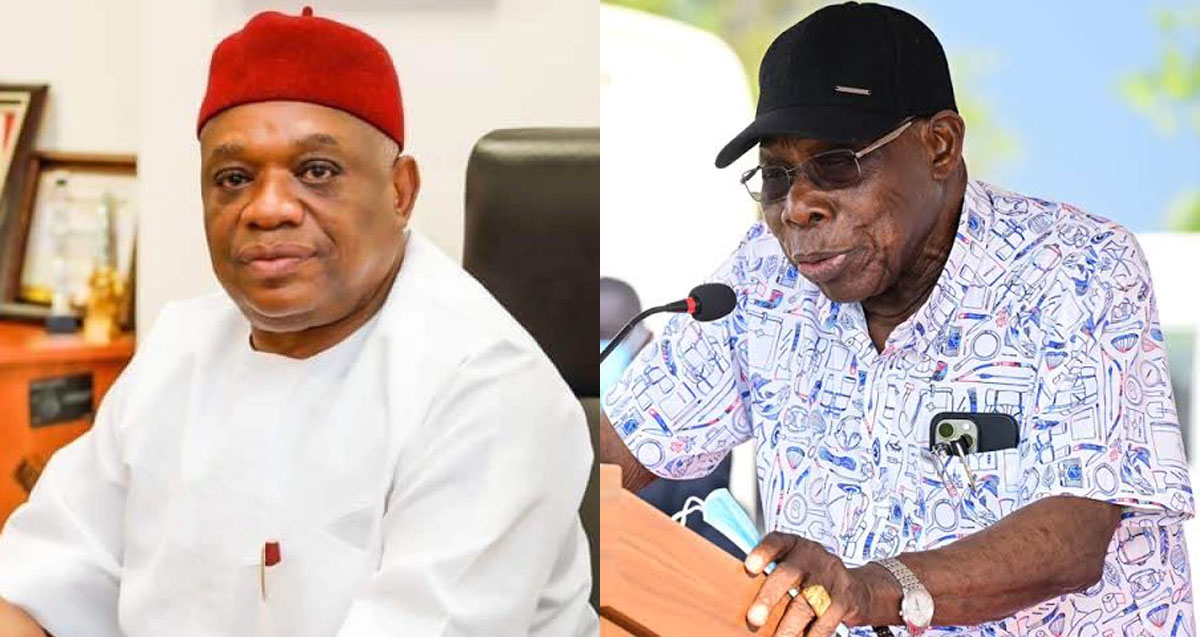
Members of the families of former President Olusegun Obasanjo and former Abia State governor Orji Uzor Kalu are among 61 Nigerian-linked individuals identified in a fresh investigation into about $271 million worth of US property and assets.
The investigation was conducted by the Platform to Protect Whistleblowers in Africa (PPLAAF) in partnership with the Anti-Corruption Data Collective (ACDC) as part of a broader examination of how wealth connected to Nigerian politically exposed persons (PEPs) has been moved into and held through United States real estate.
The findings, released on Tuesday, September 22, 2026, examine property ownership records, corporate structures and other data relating to Nigerian political figures, their relatives and associates.
The investigation comes days after PPLAAF announced that it had uncovered additional US properties linked to the families of former Nigerian officials, saying the findings pointed to gaps in the ability of Nigerian and American authorities to trace assets across borders.
However, being named in the investigation does not by itself establish that an individual committed a crime or that every property identified was acquired with proceeds of corruption.
Rather, PPLAAF and ACDC have presented the investigation as an examination of asset ownership, financial flows and corporate structures, with the aim of identifying properties and transactions that may warrant further scrutiny by competent authorities.
The investigation has renewed attention on the overseas assets of Orji Kalu, whose family has previously been the subject of a separate PPLAAF investigation into US property.
According to PPLAAF’s earlier findings, Kalu spent about $3.3 million on US properties while serving as Abia State governor and acquired additional properties worth about $4.4 million in the 18 months after leaving office, during a period when he was facing corruption charges in Nigeria.
PPLAAF further reported that Kalu and members of his family had owned properties valued at approximately $20 million across Maryland, North Carolina, South Carolina and Texas.
The properties included residential, commercial and undeveloped assets, with some acquisitions made through companies associated with Kalu and his family.
READ ALSO:
- Nationwide Blackout Looms As Electricity Workers Give NAF Three-Day Ultimatum
- Phyna, Nkechi Blessing Take Social Media Feud To Boxing Ring In Lagos
- Edo Police Arrest Cleric Over Alleged Abduction, Sexual Abuse Of Five Girls
Kalu was governor of Abia State from 1999 to 2007 and was subsequently prosecuted by the Economic and Financial Crimes Commission (EFCC) over allegations relating to the diversion of public funds.
He was convicted in 2019, but the Supreme Court overturned the conviction in 2020 on grounds relating to the composition of the trial court.
The PPLAAF investigation into Kalu’s US assets therefore predates the latest $271 million investigation and provides part of the background to his inclusion in the broader examination of Nigerian-linked wealth in the United States.
The investigation has also brought renewed attention to the use of family members, trusts, companies and other legal structures in holding foreign property.
A recent PPLAAF investigation involving former Enugu State governor Chimaroke Nnamani illustrates the type of transactions the organisation has been examining.
PPLAAF said its investigation identified at least nine properties in Florida and Virginia acquired by Nnamani and members of his family during and after his tenure as governor.
The properties were reportedly worth several million dollars, with seven of those identified being purchased after the EFCC had begun proceedings against Nnamani.
According to PPLAAF, the EFCC had accused Nnamani, his sister Chinero Nwaigwe and associated companies of stealing and laundering approximately $41.8 million from Enugu State.
The organisation said US authorities subsequently investigated financial transactions linked to the family and identified companies, wire transfers and a Florida property purchased for about $1.8 million.
PPLAAF’s review of property records subsequently identified other assets that it said were not mentioned in the earlier Nigerian or US proceedings.
READ ALSO:
- Abia Police Rescue Four-Day-Old Baby, Arrest Four Over Alleged Theft, Trafficking
- Rent Crisis Deepens as Tenants Struggle With Soaring Housing Costs in Calabar, Lagos, Abuja
- Plateau Imposes 6pm–6am Curfew on Three LGAs After Fresh Attacks
One of the properties, according to the organisation, was purchased by Nwaigwe in Virginia in January 2022 for approximately $1.5 million and transferred to Nnamani in December of the same year without stated consideration. Nnamani was serving as a senator at the time.
PPLAAF said the wider Nnamani property network included assets acquired through trusts and companies, which it said raised questions about beneficial ownership and the source of funds.
Nnamani has denied wrongdoing and rejected allegations that he was the subject of an FBI investigation or US criminal proceedings, according to PPLAAF’s published investigation. The organisation said other family members it contacted did not respond to its questions.
The Nnamani case is significant to the latest investigation because PPLAAF had announced ahead of the September 22 release that it would publish a broader report detailing how hundreds of millions of dollars in American real estate were connected to current and former senior Nigerian officials.
The organisation said the report would examine the structures and regulatory gaps that can allow wealth to move across international borders and become invested in foreign property.
The broader investigation focuses on a problem that extends beyond Nigeria: the difficulty of identifying the true owners of property when assets are held through corporations, trusts or other legal arrangements.
Such structures are not inherently illegal. Companies and trusts are routinely used for legitimate estate planning, investment, privacy and commercial purposes.
However, investigators and anti-corruption organisations have argued that opaque ownership structures can also make it more difficult for authorities to establish who ultimately controls an asset and where the money used to purchase it originated.
This has made US real estate an important area of interest in international investigations into suspected illicit financial flows.
The latest investigation by PPLAAF and ACDC consequently raises questions about whether Nigerian and US authorities have sufficient information to trace the ownership and source of funds behind Nigerian-linked property holdings.
ACDC has worked with investigative journalists, researchers and other organisations on investigations involving transnational corruption and illicit financial flows, while PPLAAF focuses on whistleblower protection, investigations and legal advocacy concerning matters of public interest.
The two organisations have previously collaborated on investigations involving complex international financial structures and property ownership.
For Nigeria, the issue is particularly relevant because the recovery of assets allegedly acquired with public funds often depends on cooperation between domestic agencies and foreign authorities.
The EFCC, Independent Corrupt Practices and Other Related Offences Commission (ICPC), Nigeria Financial Intelligence Unit (NFIU) and other agencies can require international cooperation when assets suspected of being proceeds of crime are located outside the country.
The latest findings therefore do not amount to a judicial determination that the individuals identified are guilty of corruption or money laundering.
Instead, the report places a large number of Nigerian-linked US properties and assets under renewed public scrutiny and calls attention to the need for authorities to establish ownership, source of funds and, where necessary, whether particular assets are connected to criminal proceeds.
The distinction is important because property ownership alone is not evidence of corruption. Any allegation that a particular asset represents proceeds of crime would ultimately require evidence and, where contested, determination through the appropriate legal process.
The investigation is nevertheless likely to generate further questions about Nigerian politicians’ foreign assets, the role of relatives and corporate entities in holding property abroad, and the capacity of Nigerian institutions to recover assets located in other jurisdictions.
PPLAAF’s recent investigations have also highlighted cases in which property records revealed assets that investigators said were not fully reflected in earlier corruption or forfeiture proceedings.
The organisation has called on Nigerian and US authorities to investigate the newly identified financial and property structures and determine whether any of the assets warrant further action.
As scrutiny of the $271 million US property investigation continues, the central issue will be whether the ownership structures and financial transactions identified by the investigators can be independently verified and whether competent authorities find evidence of unlawful conduct.
For the individuals and families named, inclusion in the investigation should therefore be understood as an allegation or investigative finding requiring further verification, rather than proof of criminal liability.
Obasanjo Family, Orji Kalu Among Nigerians Linked to $271m US Property Investigation
metro
Nationwide Blackout Looms As Electricity Workers Give NAF Three-Day Ultimatum

Nationwide Blackout Looms As Electricity Workers Give NAF Three-Day Ultimatum
A nationwide blackout could occur if electricity workers proceed with threatened industrial action over the alleged assault and detention of staff of the Jos Electricity Distribution Company (JED) by personnel of the Nigerian Air Force (NAF) in Bauchi State.
The National Union of Electricity Employees (NUEE) and the Senior Staff Association of Electricity and Allied Companies (SSAEAC) have issued a three-day ultimatum to the authorities, demanding action over the alleged treatment of electricity workers following a dispute over unpaid electricity bills.
The ultimatum, which commenced on September 21, 2026, expires on September 23, after which the unions have threatened to withdraw their services nationwide if their demands are not addressed.
The dispute reportedly began after JED disconnected electricity supply to NAF residential quarters along Ningi Road in Bauchi over an outstanding electricity bill.
JED said the disconnection took place on September 14 following prolonged non-payment and put the outstanding debt owed by the affected NAF quarters at ₦196,730,844.
The distribution company said the amount represented about two per cent of the outstanding debt profile within its Bauchi franchise.
According to JED, the situation escalated on September 18, when NAF personnel allegedly invaded the company’s Bauchi headquarters following the disconnection.
The company said its State Operating Officer, Samaila Isa Bukar, was among those allegedly taken away, alongside an unconfirmed number of meter installers working under the Distribution Sector Recovery Programme (DISREP).
JED alleged that the workers were taken in Air Force vehicles to the disconnected residential quarters.
The company further alleged that some of the meter installers were physically assaulted and that Bukar was threatened with further assault unless electricity supply was restored.
JED also alleged that the workers’ mobile phones were seized during the incident and that they were released only after power was restored to the affected quarters.
The allegations have triggered strong reactions from electricity workers, who say the incident threatens the safety of personnel responsible for operating and maintaining Nigeria’s electricity distribution infrastructure.
READ ALSO:
- Edo Police Arrest Cleric Over Alleged Abduction, Sexual Abuse Of Five Girls
- Abia Police Rescue Four-Day-Old Baby, Arrest Four Over Alleged Theft, Trafficking
- Rent Crisis Deepens as Tenants Struggle With Soaring Housing Costs in Calabar, Lagos, Abuja
The unions have demanded an investigation into the incident and protection for their members while carrying out their official responsibilities.
Rilwanu Shehu, national deputy president of SSAEAC, said the alleged incident had created fear among electricity workers in Bauchi.
He said workers could not be expected to continue performing their duties if they were exposed to alleged intimidation or physical attacks in the course of their work.
The unions have also called for medical examination of the affected workers, the return of their belongings and an apology over the alleged treatment.
The NUEE Bauchi branch has reportedly directed workers to remain at home pending further instructions from the union’s national leadership.
Union officials have also approached the Bauchi State Commissioner of Police and the state director of the Department of State Services (DSS) to report the matter and seek intervention.
The unions said they were prepared to shut down electricity-sector operations nationwide if the dispute was not resolved before the expiration of the ultimatum.
Such an action could affect activities across the electricity generation, transmission and distribution sectors, potentially disrupting power supply to homes, businesses, industries and public institutions.
However, the threat of a nationwide blackout should not be interpreted as confirmation that such a shutdown has already begun. The proposed action remains conditional on the outcome of efforts to resolve the dispute before the September 23 deadline.
The disagreement also highlights the continuing challenges surrounding electricity debt collection and enforcement of payment obligations involving government establishments and other large electricity consumers.
JED has maintained that the disconnection of the NAF quarters followed prolonged non-payment and that the company had taken the action as part of its efforts to recover outstanding revenue.
The company has also alleged that the subsequent intervention by NAF personnel resulted in the forced restoration of electricity supply.
The Nigerian Air Force, however, had not issued a substantive public response to the allegations in the reports reviewed as of Tuesday.
An NAF spokesperson in Bauchi, Friday Ogili John, was reported to have indicated that the military would respond to the allegations.
Consequently, the claims of assault, unlawful detention, seizure of phones and forced reconnection remain allegations pending an official response and any findings from investigations.
The controversy comes as Nigeria continues to grapple with challenges in the power sector, including electricity distribution losses, infrastructure constraints, unpaid bills and the gap between available generation and reliable supply to consumers.
Power Minister Joseph Tegbe said on September 21 that electricity generation and transmission had remained above 5,000 megawatts in the preceding weeks. He acknowledged, however, that higher generation had not necessarily translated into reliable electricity supply in every community.
The immediate focus is now on the intervention efforts involving the unions, security agencies, JED and the NAF before the expiration of the three-day ultimatum.
If no resolution is reached and the electricity workers implement their threat to withdraw services, the resulting disruption could have implications for Nigeria’s national power supply.
For now, the unions’ September 23 deadline remains the key date in the dispute.
Nationwide Blackout Looms As Electricity Workers Give NAF Three-Day Ultimatum
-
 metro3 days ago
Oyo Police: Student Who Died by Suicide Was Charged With Assault, Not ₦8,000 Debt
-
 International1 day ago
18 Suspects Transferred to US Over 2021 Killing of Haitian President Moïse
-

 Auto2 days ago
Abuja Demand Rises as Jetour Brings X70 Plus Experience to FCT
-

 metro2 days ago
Irreconcilable Developments: Wedding Cancelled 24 Hours Before Ceremony
-

 Sports2 days ago
Enough Is Enough: Muslim Supporters Demand Change of New Man United Owners
-
 Politics2 days ago
2027: NDC Predicts Wider Obi Victory Over Tinubu in Lagos
-

 Sports1 day ago
Messi Fires Stunning 75th Career Free-Kick to Reach 930 Goals in Inter Miami Draw
-
 metro1 day ago
My Heart Has Always Been Home With You — Tinubu’s Powerful Message to Oluremi at 66