Atiku, Obi Make Moves on Campaign Councils as APC Takes Early Lead in 2027 Race - Newstrends
Connect with us

Politics

Atiku, Obi Make Moves on Campaign Councils as APC Takes Early Lead in 2027 Race
Published

on

Atiku, Obi Make Moves on Campaign Councils as APC Takes Early Lead in 2027 Race
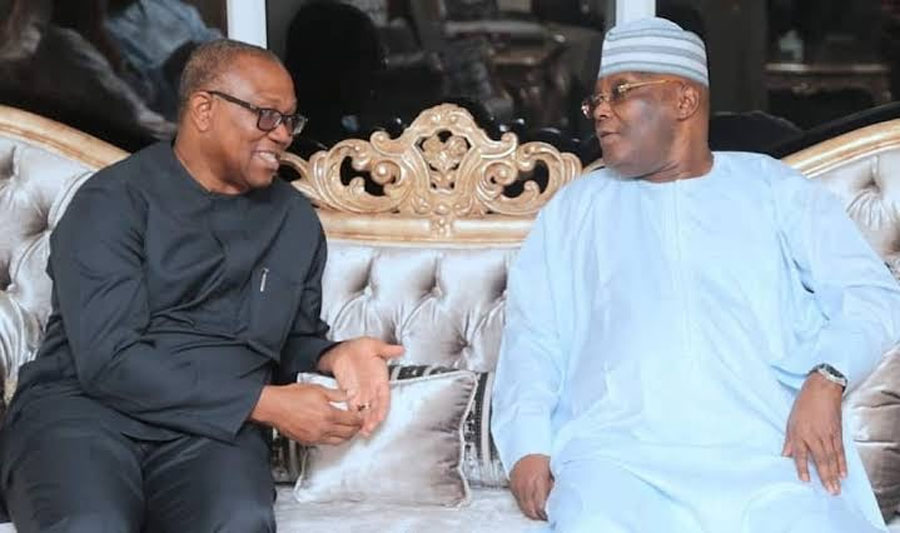
Atiku, Obi Make Moves on Campaign Councils as APC Takes Early Lead in 2027 Race

Opposition parties race to complete campaign teams as ruling party takes early lead in presidential race

Political parties and presidential candidates are stepping up preparations for the 2027 general elections, with former Vice President Atiku Abubakar and Peter Obi’s National Democratic Congress (NDC) moving to finalise their campaign structures as the ruling All Progressives Congress (APC) has already unveiled its 223-member Presidential Campaign Council. The development follows the formal opening of the campaign period by the Independent National Electoral Commission (INEC) on August 19, 2026, allowing political parties and candidates to begin their campaigns in line with the electoral timetable. Under the 2026 Electoral Act, campaigns are approved to commence 150 days before Election Day, setting the stage for what promises to be a highly competitive electoral contest.

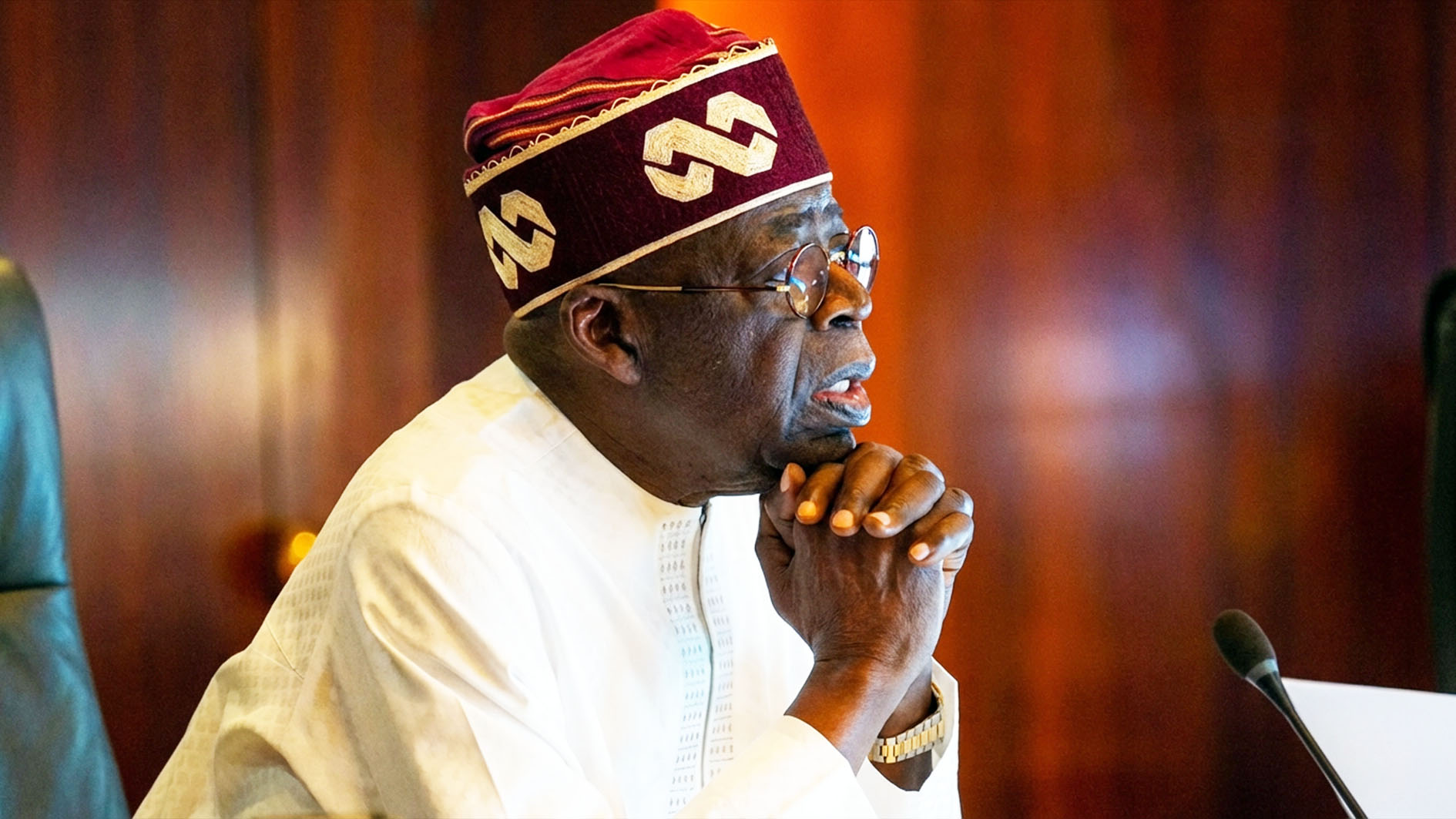
President Bola Tinubu has constituted the All Progressives Congress Presidential Campaign Council, appointing former Zamfara State Governor Senator Abdulaziz Yari as Director-General and Imo State Governor Hope Uzodimma as Secretary. The list of members was released on Saturday, August 22, 2026, by the State House. President Tinubu will serve as Chairman of the council, while Vice President Kashim Shettima will be Vice Chairman. APC National Chairman, Professor Nentawe Yilwatda, will also serve as Vice Chairman. The council includes a body of advisers comprising Chief Bisi Akande, Chief Segun Osoba, Senator Rochas Okorocha, Senator Abdullahi Adamu, and Senator Florence Ita Giwa. Senate President Godswill Akpabio, Speaker of the House of Representatives Tajudeen Abbas, and Yobe State Governor Mai Mala Buni have been appointed Deputy Directors-General for the South and North. They will work with Senator Opeyemi Bamidele and Deputy Senate President Jibrin Barau in coordinating the two geopolitical blocs. Other key appointments include Adams Oshiomhole as Deputy Director-General in charge of mobilisation, James Abiodun Faleke as Deputy Director-General for Election Planning, Coordination and Monitoring, Muiz Adeyemi Banire, SAN as Director of the Legal Directorate, Mohammed Idris Malagi as Coordinating Director for Media and Strategic Communication, Dele Alake as Lead Spokesperson, and Segun Dada as Director of New Media. President Tinubu charged all council members to work tirelessly to deliver victory for the party in the January 2027 elections, while also encouraging leaders of the various directorates to reach out to other party members who may not have been formally listed to join their efforts.

READ ALSO:

While the ruling APC has already announced its campaign council, Atiku Abubakar’s African Democratic Congress (ADC) is still consulting on the composition and leadership of its campaign team. The party’s National Publicity Secretary, Mallam Bolaji Abdullahi, had indicated last week that the party was ready to unveil its campaign structure, but the delay has sent some signals. Investigations revealed that an intense debate has been ongoing among the party’s hierarchy on the exact pattern the campaign structure would take. A source stated that while the National Chairman, Senator David Mark, and the presidential candidate, Atiku Abubakar, have had discussions on the way forward, some “i’s and T’s” are still being dotted and crossed. The discussion has reportedly been about mixing things up and introducing new dimensions to the campaign while some insist on including the old regular faces who have always dominated campaigns. One of the issues to be resolved is the geopolitical configuration of the headship of the campaign council, with Atiku from the North-East zone and his running mate, former governor Rotimi Amaechi, from the South-South. Atiku’s Senior Special Assistant on Public Communication, Phrank Shaibu, said Nigerians would be informed once the consultations were concluded, adding that the former vice-president’s campaign council would be announced at the appropriate time, alongside details of the formal campaign launch. Shaibu also disclosed that Atiku’s campaign would have its own fundraising framework, which he said would comply with the law and be transparent, accountable and consistent with applicable campaign-finance regulations. According to him, Atiku’s immediate priority is to engage Nigerians on the issues affecting them and present his proposed alternatives to the policies of the current administration, particularly pointing to Atiku’s support for what he called a targeted fuel subsidy linked to domestic production and aimed at encouraging local refining while reducing the financial burden on Nigerians.

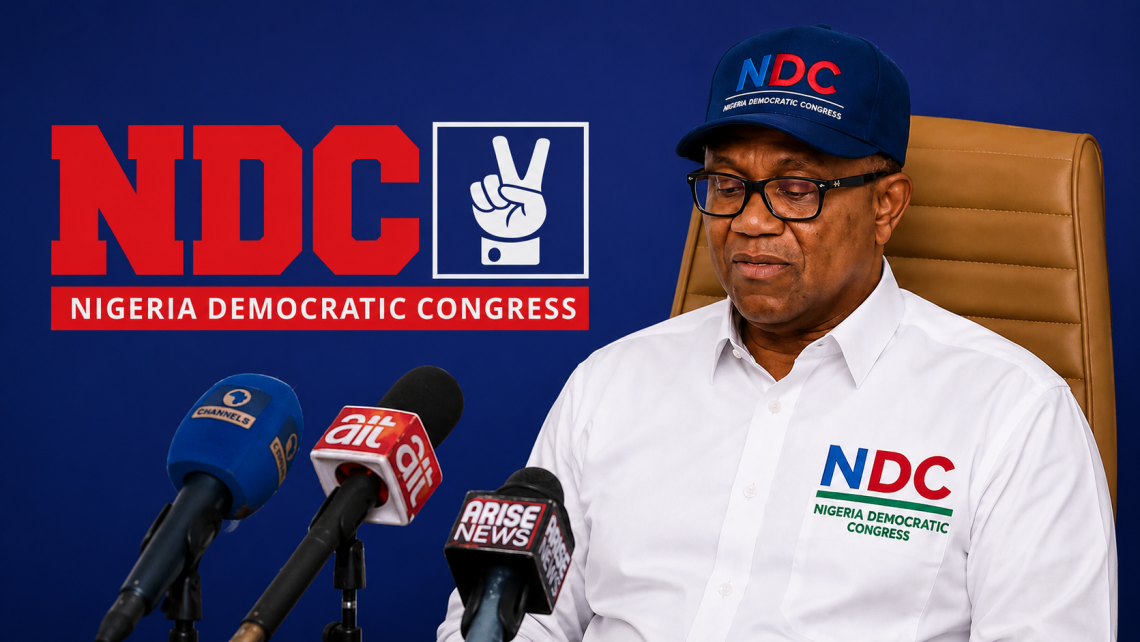
Attention is also turning to the campaign structure of the National Democratic Congress (NDC) , which has Peter Obi as its presidential candidate. The NDC is expected to hold a meeting next weekend to determine the composition of its campaign council and settle on the date and venue for the formal commencement of its campaign. The party’s National Publicity Secretary, Osa Director, said some prominent figures were expected to feature in the campaign structure, specifically mentioning Prof Pat Utomi, Buba Galadima and Bishop Idahosa as some of the names expected to be involved. Director said the NDC planned to take its campaign to all 36 states and the Federal Capital Territory, although the party was yet to decide where it would begin, adding that they might even visit some states twice. Meanwhile, Obi has unveiled a region-by-region economic strategy for Nigeria, promising to leverage the comparative advantages of each part of the country to drive production, investment, employment and shared prosperity if elected in 2027. The North-West is positioned to expand agriculture, livestock, irrigation, agro-processing and manufacturing; the North-East will focus on reconstruction, livelihood restoration, agriculture, education, enterprise and regional trade; the North-Central will strengthen food production and processing while developing mineral resources responsibly; the South-West will build on existing strengths in manufacturing, technology, finance, trade and the creative economy; the South-East will leverage entrepreneurial and industrial base through improved infrastructure, stronger connectivity and greater access to investment; the South-South will extract greater value from oil and gas while expanding maritime services, fisheries and agriculture; and the FCT will become a model for efficient urban planning, transportation, housing, sanitation, security and public services. “Every region must produce. Every region must contribute. Every region must benefit,” Obi said. He has also taken his campaign message to Nigerian youths through football, challenging them to channel the same passion they invest in European football into the pursuit of good governance and national development, noting that Nigeria’s challenge is not a lack of talent but the absence of systems that reward merit, invest in infrastructure, ensure security, and promote accountability.

READ ALSO:

The Young Progressives Party (YPP) has already fixed a date for the commencement of its presidential campaign, with its candidate, Prof Peter Agada, announcing September 9 as the date for the formal launch of his campaign, with Lagos expected to serve as the starting point before the campaign moves to other parts of the country. Agada emerged as the YPP presidential candidate at the party’s Presidential and Vice-Presidential Substitution/Affirmation Programme, securing 71 votes out of the 83 votes cast, with his running mate being Ndidi Patience Key. Agada said his campaign organisation had been in preparation for months and was not waiting for the official opening of the campaign period to begin its work. He explained that a political structure known as The Movement Nigeria had been established about four months ago and would form a major part of his campaign machinery. After resigning from the Obidient Movement, Agada said many Obidients did not go with Peter Obi but came with him, leading to the establishment of The Movement Nigeria. Agada proposed YPP Deputy National Chairman, Ambassador Nana Aisha Mahmoud, as Director-General of his campaign council, subject to final approval, while also identifying Prof Osaze as the proposed secretary and Evelyn Ohiole as the Director of Media. Agada said his campaign would adopt a nationwide approach, beginning with major locations before expanding into the various geopolitical zones, listing Lagos, Kano, Kaduna and Abuja as some of the first areas of focus. The YPP candidate also said technology would play a major role in his campaign, particularly in demonstrating the party’s proposed approach to governance. “Our party is driven by GPS. It is a GPS governance system. We intend to demonstrate that capability utilising ICT to showcase how government can be run with GPS. So, we are going to deploy it in this campaign to the eyes of everyone,” Agada said. He added that coordinators had already been put in place across states, local government areas and wards.

The unveiling of the APC council has drawn criticism from the NDC vice-presidential candidate, Senator Rabiu Kwankwaso, who asked Yari to reconsider his decision to lead Tinubu’s re-election campaign. Kwankwaso argued that Yari, as a former governor of Zamfara State, was familiar with the security and economic difficulties facing many Nigerians and should consider whether heading the campaign for the continuation of the present administration was consistent with his understanding of those challenges. He also questioned the involvement of senior public officials, including the Executive Chairman of the Nigeria Revenue Service (NRS), Dr Zacch Adedeji, and the Director-General of the Budget Office of the Federation, Dr Tanimu Yakubu Kurfi, in the campaign’s fundraising and finance structures. Kwankwaso said officials responsible for public revenue and national finances should maintain institutional neutrality and called for clarification on their participation in partisan campaign activities. Former Kogi West Senator Dino Melaye has also threatened to challenge Adedeji’s appointment in court, arguing that his position as head of the country’s revenue-collecting agency could create a conflict of interest, stating that he would test the constitutionality of the appointment in court. Kwankwaso maintained that the strength of any campaign structure would ultimately depend on the electorate, declaring that “no campaign council is more powerful than the Nigerian people.”

The Labour Party, meanwhile, is yet to announce its campaign timetable. Its presidential candidate, Dr Chibuzor Okereke, said the decision would be left to the party’s strategy team, adding that the party had not decided whether its campaign would begin in a state or the FCT. “You will be informed when we unveil it. Be rest assured that we are going to roll out everything once a decision has been taken,” Okereke said. The APC National Secretary, Senator Ajibola Basiru, however, said the ruling party had not fixed the date or venue for the campaign launch, stating that “a date and state for the kick-off can’t be announced until the campaign council meets to discuss it.” As the political landscape continues to evolve, all eyes remain on the various parties as they finalise their strategies and prepare for what promises to be a fiercely contested 2027 presidential election.

Atiku, Obi Make Moves on Campaign Councils as APC Takes Early Lead in 2027 Race
Loading

Politics

2027: Dino Melaye heads to court over NRS chairman’s role in Tinubu campaign team

Published

on

2027: Dino Melaye heads to court over NRS chairman’s role in Tinubu campaign team
Former Kogi West Senator Dino Melaye

2027: Dino Melaye heads to court over NRS chairman’s role in Tinubu campaign team

Former Kogi West Senator Dino Melaye has announced plans to approach the court over the appointment of Nigeria Revenue Service (NRS) Executive Chairman Zacch Adedeji as Deputy Director of Fundraising in President Bola Tinubu’s 2027 presidential campaign council.

Melaye argued that Adedeji’s position as the head of Nigeria’s revenue-collecting agency raises serious questions about his participation in a partisan campaign organisation, particularly because the fundraising role involves mobilising financial support for Tinubu’s re-election bid.

The former senator, who is now a prominent member of the opposition African Democratic Congress (ADC), disclosed his plan in a video shared on his Facebook page.

He said he would commence legal proceedings on Monday, August 24, to challenge what he described as a potential conflict of interest involving the NRS chairman.

“The most disturbing part of the list released by the APC is seeing the chairman of the Nigerian Revenue Service, the body that collects our revenue, serving as Deputy Director in charge of fundraising for Tinubu’s presidential campaign,” Melaye said.

“Is there no conflict in this? As a lawyer, by the grace of God, on Monday, I’m heading to court. We have to test that. If that is not a conflict of interest, then I don’t know what would be.”

Melaye further argued that Adedeji is a public official who receives a government salary and is expected to comply with the rules governing public service.

He questioned how a serving head of a federal revenue agency could simultaneously occupy a senior political position in a presidential campaign structure.

READ ALSO:

“That a civil servant, a man who earns a salary and is supposed to adhere to public service rules, is not just supporting a presidential candidate but serving as Deputy Director in charge of fundraising,” he added.

The controversy followed the unveiling of the APC Presidential Campaign Council for the 2027 election.

Under the structure announced by the ruling party, President Bola Tinubu is the chairman of the campaign council, while Vice President Kashim Shettima serves as Vice Chairman I and APC National Chairman Nentawe Yilwatda as Vice Chairman II.

Former Zamfara State Governor Abdulaziz Yari was named Director-General, while Imo State Governor Hope Uzodimma was appointed Secretary.

Ogun State Governor Dapo Abiodun was named Director of Fundraising, with Adedeji appointed Deputy Director of Fundraising.

Other senior figures were also given responsibilities across mobilisation, administration, election planning, logistics, parliamentary mobilisation and other areas of the campaign.

The APC has presented the structure as part of its preparations to secure victory for Tinubu in the 2027 presidential election.

Melaye, however, has criticised both the composition of the council and Tinubu’s decision to serve as chairman of his own re-election campaign structure.

He questioned the size of the campaign council and argued that the arrangement raised concerns about how the ruling party was organising its campaign ahead of the election.

His planned lawsuit, however, is specifically focused on the role of the NRS chairman in the campaign fundraising structure.

The proposed legal action could bring renewed attention to the rules governing the participation of serving public officials in partisan political activities.

The legal question will ultimately depend on the specific provisions Melaye relies upon and the interpretation placed on those provisions by the court if the suit is formally filed.

ADC attacks Tinubu campaign council

The controversy over Adedeji’s appointment comes alongside a separate criticism of the campaign council by the African Democratic Congress.

The opposition party accused the APC of using the campaign structure to provide political rehabilitation for individuals who, according to the ADC, still face unresolved questions relating to allegations of corruption and financial misconduct.

The party specifically questioned the inclusion of former Humanitarian Affairs Minister Betta Edu and former Nigeria Social Insurance Trust Fund chairman Ngozi Olejeme.

ADC National Publicity Secretary Bolaji Abdullahi said the government should explain the status of previous investigations involving the two former officials if they had been cleared of wrongdoing.

“If they have been cleared, the government should show how and when and by whom they were cleared,” Abdullahi said.

The opposition party argued that Nigerians deserved transparency regarding the outcome of corruption investigations before individuals previously associated with such controversies returned to prominent political positions.

The ADC alleged that some financial-crime investigations under the Tinubu administration had gradually disappeared from public attention before some of the individuals involved resurfaced in political activities.

The party said political usefulness should not replace accountability, particularly where allegations involving public funds had previously been raised.

ADC says 2027 election will test Tinubu’s record

The ADC also argued that the 2027 presidential election would be a referendum on Tinubu’s record since taking office in May 2023.

The opposition party said political mobilisation and campaign appointments would not erase the economic challenges facing Nigerians.

It pointed to concerns over the cost of living, inflation, food prices, transportation costs and household economic pressure, arguing that voters would ultimately judge the administration on its performance.

The party also renewed its call for measures aimed at cushioning the impact of economic reforms on Nigerians, including a targeted and controlled intervention on fuel prices.

The ADC proposed that any such intervention should have a clear spending limit, budgetary backing and independent auditing to ensure transparency.

The opposition party maintained that the 2027 election would therefore be fought not only around political alliances and campaign structures but also around governance, accountability and economic performance.

Melaye’s legal threat adds to growing 2027 contest

Melaye’s proposed court action introduces a legal dimension to the growing political contest ahead of the 2027 general election.

At the centre of the dispute is whether a serving head of a federal revenue agency can simultaneously perform a senior role in the campaign organisation of a presidential candidate, particularly one involving fundraising.

Melaye has said he intends to ask the court to determine whether the arrangement is compatible with the rules governing public officials.

As of Sunday, August 23, there was no indication that a court had already ruled on the matter. Melaye’s comments therefore amount to an announcement of planned legal action, rather than confirmation of a concluded court case.

The controversy is expected to attract further attention as political parties intensify preparations for the 2027 election and opposition groups increase scrutiny of the APC’s campaign structure.

For now, the APC has unveiled its campaign machinery, while Melaye has promised to test the legality of Adedeji’s appointment in court.

The dispute over the NRS chairman’s campaign role is likely to become part of the wider debate over public-sector neutrality, political participation by serving officials and the boundaries between government responsibilities and partisan electioneering ahead of 2027.

2027: Dino Melaye heads to court over NRS chairman’s role in Tinubu campaign team

Loading

Continue Reading

Politics

2027: Wike explains why he won’t join Tinubu’s campaign council

Published

on

2027: Wike explains why he won’t join Tinubu’s campaign council

2027: Wike explains why he won’t join Tinubu’s campaign council

Minister of the Federal Capital Territory, Nyesom Wike, has explained why he will not seek a prominent position in President Bola Ahmed Tinubu’s 2027 presidential campaign, saying his priority is to deliver tangible results rather than pursue campaign titles.

Wike said he would have declined the position of Director-General of the APC Presidential Campaign Council if it had been offered to him, stressing that he is not a member of the All Progressives Congress (APC).

The former Rivers State governor spoke on Saturday while inspecting ongoing FCT infrastructure projects, including the Apo-Karshi Road and Bwari-Kubwa Road.

His comments came shortly after the Presidency announced the composition of the APC Presidential Campaign Council for the 2027 election, with former Zamfara State Governor, Senator Abdulaziz Yari, named as Director-General and Imo State Governor, Hope Uzodimma, appointed secretary.

President Tinubu and Vice President Kashim Shettima are expected to serve as chairman and vice chairman of the campaign council respectively.

Wike said occupying a senior position in a presidential campaign should not be regarded as proof of political influence or electoral success.

According to him, what matters is whether campaign leaders can mobilise voters and deliver their respective states to their presidential candidates on election day.

“I am not a member of the APC. So the issue of their Presidential Campaign Council is out of the question,” Wike said.

He cited the experiences of former Rivers State Governor Rotimi Amaechi, former Senate President Bukola Saraki, former Sokoto State Governor Aminu Tambuwal and former Plateau State Governor Simon Lalong to support his argument.

Wike recalled that Amaechi served as Director-General of Muhammadu Buhari’s 2015 presidential campaign while he was Rivers State governor, but Buhari lost Rivers State.

He also referred to the 2019 election, when Amaechi again played a prominent role in Buhari’s campaign, arguing that Rivers State still did not deliver the expected result.

Wike said Saraki, who led Atiku Abubakar’s 2019 presidential campaign, also lost Kwara State, while Tambuwal, who served as Atiku’s campaign DG in 2023, lost Sokoto State.

READ ALSO:

He further cited Lalong, who headed Tinubu’s 2023 campaign, as another example of a campaign leader whose home state did not produce the desired result for the presidential candidate.

“I don’t want to lose my state. I will be in my state. I have two states, FCT and Rivers State. What’s important is, are you able to deliver those two states?” Wike said.

The FCT minister maintained that his support for Tinubu’s 2027 re-election bid does not require him to hold an official position in the APC campaign structure.

He recalled that he and other politicians who supported Tinubu during the 2023 presidential election were not members of the APC Presidential Campaign Council.

Wike also referred to the political alliance known as the Rainbow Coalition, which brings together politicians from different political backgrounds who support Tinubu while retaining their membership of their respective parties.

He said the coalition was already active in states including Rivers, Kwara, Bayelsa, Osun and Benue.

Rather than focusing on campaign titles, Wike said his priority was to use his position as FCT minister to complete major infrastructure projects and demonstrate the impact of government policies.

“Campaign is what have you done for the people? What has the government got to show? It’s not about promises. It’s about showing action,” he said.

Wike disclosed that the FCT Administration was targeting the completion of more than 10 major projects before the 2027 elections, adding that the number could increase depending on the pace of work.

During the inspection, he expressed confidence that the Apo-Karshi Road project would be completed within the timeline given by the contractor.

The road project, which has been in development for several years, is expected to improve connectivity between communities along the Apo-Karshi corridor and ease movement in the Federal Capital Territory.

Wike also inspected the Bwari-Kubwa Road, another major FCT project, and said the contractor had assured the administration that the road would be completed and handed over by December.

The minister said the administration would also publish details of projects inherited from previous governments alongside those awarded under the current administration.

According to Wike, the publication would cover projects inherited from administrations dating back to Olusegun Obasanjo, as well as those of Umaru Musa Yar’Adua, Goodluck Jonathan and Muhammadu Buhari.

He said Nigerians would then be able to compare inherited projects with those initiated and completed by the current FCT Administration.

Beyond infrastructure, Wike announced tougher enforcement of regulations governing commercial transportation in Abuja.

He warned taxi drivers and other commercial operators against picking up passengers outside designated bus terminals, saying vehicles used in violation of the rules could be impounded.

The minister also disclosed that the FCT Administration had begun reclaiming green areas and public spaces allegedly converted to car dealerships and other commercial activities.

Wike said a task force had been established to recover the affected areas, alleging that some allocation documents had been issued for spaces originally designated as parks and green areas.

He warned operators occupying such spaces to vacate them or face enforcement action, including possible seizure of vehicles.

Wike clarified that approvals for buildings and other developments in the FCT are handled by relevant departments and agencies of the administration rather than personally by the minister.

He said affected operators would be given time to comply before enforcement measures are implemented.

Wike’s position means he is set to remain outside the formal APC 2027 campaign council despite his continued support for Tinubu’s re-election bid.

His comments also reinforce his stated strategy of concentrating on delivering electoral support in Rivers State and the FCT, rather than seeking a formal campaign position.

For Wike, political success should ultimately be judged by electoral results, completed projects and measurable impact on citizens, rather than by the title or position held within a presidential campaign organisation.

2027: Wike explains why he won’t join Tinubu’s campaign council

Loading

Continue Reading

Politics

Umahi’s Son, 28, Wins Ebonyi LG Chairmanship, Vows to Reject Salary

Published

on

Umahi's Son, 28, Wins Ebonyi LG Chairmanship, Vows to Reject Salary
Osborn Nweze Umahi

Umahi’s Son, 28, Wins Ebonyi LG Chairmanship, Vows to Reject Salary

Osborn Nweze Umahi, the 28-year-old son of Works Minister David Umahi, has won the Ohaozara Local Government Area chairmanship election in Ebonyi State and immediately announced he will forgo his salary and allowances throughout his tenure to focus resources on development.

OHAOZARA, Nigeria – Osborn Nweze Umahi, the 28-year-old son of Nigeria’s Minister of Works and former Ebonyi State Governor David Umahi, has emerged as the chairman-elect of Ohaozara Local Government Area following Saturday’s local government election conducted by the Ebonyi State Independent Electoral Commission (EBSIEC). The younger Umahi contested the election on the platform of the All Progressives Congress (APC) and secured victory after a campaign centred on grassroots mobilisationeconomic development, and improved local administration.

Shortly after being declared the winner, the new council chairman made a pledge that has drawn significant public attention. Umahi announced that he would not collect salary or allowances throughout his tenure, stating that his decision was driven by a desire to channel the local government’s resources towards development rather than personal financial benefit. “I will neither accept any salary nor allowance as Ohaozara LGA chairman. I am coming to serve and not to enrich myself,” he said. A trained engineer and entrepreneur by background, Umahi has pledged to prioritise infrastructure developmentyouth empowerment, economic opportunities, and improved service delivery across Ohaozara. During his campaign, he presented himself as a representative of a younger generation of politicians, promising to bring private-sector ideas, efficiency, and innovation into local government administration. At 28, he is among a growing number of young professionals stepping into grassroots political leadership roles in Nigeria.

READ ALSO:

After casting his vote at his Onuofukulu polling unit in Umunaga, Uburu, Umahi commended the peaceful conduct of the election. “I’m satisfied with the conduct of the election so far. I’m happy to see that everything has been peaceful,” he said, expressing hope that the peaceful atmosphere would be sustained throughout the process.

Several political leaders and government officials who participated in the election commended the exercise. The Commissioner for Special Duties, Valentine Okike-Uzor, after voting at his Onu Borehole polling unit in Onicha Local Government Area, urged whoever emerged chairman to govern all residents regardless of their political affiliations. “After today, the chairman becomes the chairman of everybody in the local government, not just one political party,” he said. The Commissioner for Housing and Urban Development, Francis Ori, similarly praised the conduct of the election and the turnout of voters, while thanking Governor Francis Nwifuru for what he described as the peaceful environment in the state. Senator Anthony Ani, representing Ebonyi South Senatorial District, described the election as a demonstration of the state’s commitment to democratic governance and urged elected officials to ensure that residents benefited from the democratic process through effective governance and accountability. Member of the House of Representatives for Ohaozara/Onicha/Ivo Federal Constituency, Kama Nkemkanma, also expressed satisfaction with voter participation, noting that the turnout showed residents remained interested in local government administration.

Meanwhile, the People’s Democratic Party (PDP) in the state boycotted the exercise, alleging that the process was designed to favour the ruling party. In a statement issued on Saturday, PDP Publicity Secretary Darlington Peter-Onwe called on EBSIEC to “suspend forthwith the local government election” until compliance with a subsisting order of Justice Oshomah. The party stated its position that “what EBSIEC and the Ebonyi State Government are presenting to the public as a local government election holding today, August 22, 2026, is not, in law or in fact, an election at all.” The PDP described the exercise as “a brazen assault on our democracy, a flagrant act of contempt, a continuing abuse of subsisting court process, and an exercise being conducted on a foundation the courts have already, and repeatedly, declared to be nothing.” The opposition party also questioned the tenure of local government chairmen and councillors under the Ebonyi State Local Government Law, arguing that certain provisions were inconsistent with constitutional requirements and existing judicial pronouncements. The PDP called on the Independent National Electoral Commission (INEC) to intervene and formally note the development, and reserved the right to seek judicial redress over the conduct and outcome of the election.

Osborn Nweze Umahi had earlier won the APC chairmanship primaries for Ohaozara Local Government Area in January 2026, polling 55 votes to emerge as the party’s candidate after his only rival was disqualified for failing to register online in the party’s membership exercise. Following his victory, he thanked Governor Francis Nwifuru for nominating him to contest the chairmanship election, and acknowledged his father’s prayers and his siblings’ encouragement. The emerging council chairman’s political rise has attracted attention not only because of his age but also due to his pledge to adopt a development-focused approach to local government administration. His emergence is expected to heighten expectations among residents, particularly over the improvement of roads, employment opportunities, and access to essential public services across Ohaozara.

Umahi’s Son, 28, Wins Ebonyi LG Chairmanship, Vows to Reject Salary

Loading

Continue Reading

Trending