

metro
Mother ‘sold daughter’s abuse videos for $300’: Nigeria child pornography case shocks nation

Mother ‘sold daughter’s abuse videos for $300’: Nigeria child pornography case shocks nation
- Nigerian father recounts how he discovered wife was allegedly sexually abusing their daughter: from denial to confession
Summary: A 36-year-old Nigerian mother has been arrested on suspicion of sexually abusing her eight-year-old daughter and uploading pornographic content involving the child to an online platform for financial gain. Her husband discovered the alleged abuse after a friend showed him a video circulating online. The wife initially denied the allegations, claiming the footage was AI-generated, but later confessed at a police station. Police rescued four children and recovered sex toys and other evidence. The case has sparked widespread outrage across Nigeria, with the Anambra State First Lady intervening to demand a thorough investigation and rehabilitation support for the rescued children.
According to reports from Punch and Vanguard, Ikechukwu Onyeanyusi was returning from his business on the evening of Thursday, 10 September 2026, when a friend called him and showed him a video that was circulating online. Speaking in a video posted on the Facebook page of the Anambra State Ministry of Women and Social Welfare, Onyeanyusi recalled: “I saw the video. It was my wife, and I saw my daughter. She was molesting the child.” Describing his reaction, he said: “I got a bit confused — ‘What is this? What is happening? Could this be true?’ Immediately, I wanted to leave, but my friend held me. He said no, no, I should calm down, I should take it easy.”

Anulika Onyeanusia
Onyeanyusi later confronted his wife, Anulika Onyeanusia, at their home. According to his account, she initially denied the allegation entirely and claimed the video was generated using artificial intelligence (AI). “I came to her, and I asked her, ‘What exactly is this that I saw on the internet?’ She said what? ‘I saw your video molesting my daughters. How come this happened?’ She said no. That it’s not true,” he recounted. According to him, when he asked her how she could deny what he had seen, she maintained that the video was not genuine. “I saw you! I saw your video! I saw everything, and you are telling me it’s not true? What makes it not to be true?” “And she said that it’s AI,” he said. Onyeanyusi even returned to his friend to ask whether the video could actually have been generated by AI — suggesting he still held onto a sliver of doubt, hoping the footage might be a technological fabrication.
READ ALSO:
- Petrol Subsidy: Presidency Rejects Atiku’s Plan, Says No Going Back
- JAMB Takes Over HND Admissions in Polytechnics, Health Institutions Nationwide
- SERAP Threatens Legal Action Over ₦126bn INEC Electoral Funds
Shortly after the confrontation, police officers arrived at the family’s residence. According to a police statement, the Anambra State Police Command acted on open-source intelligence on 10 September, tracing the disturbing viral video and identifying the suspect. Onyeanyusi recalled: “Before I knew it, police had already come to my house. They said they wanted to search. I said to them, ‘Okay.’ So they did all the searching they did, they arrested her and all of us left.” During the operation, police rescued four children, aged two, three, six and nine, and recovered sex toys and other items relevant to the investigation.
At the police station, the wife eventually admitted to the allegation. Onyeanyusi described the moment: “When they were asking her in the police station, that is when she accepted that it is true. The DPO called me because I was outside while she was inside the office with the DPO. And the DPO asked me in her presence, ‘Do you know about what your wife is doing with my… daughters?’ I said, ‘No, I don’t know.’ Then they asked her, ‘Did your husband know about this?’ And she also said no, that ‘he didn’t know about it.’ That is when I turned to her, I asked her, ‘Did you do this, really?’ And she said yes.” Onyeanyusi said he was devastated by the admission: “I got weak. I got tired. How come this kind of a thing can happen? How can you do this kind of a thing? I just sat down in the police office, I can’t get myself. I was, you know, reasoning, ‘What is this? What has happened to me?'”
According to reports from Eagle Online and The Source, Onyeanusia told investigators that she uploaded content involving her daughter to a pornographic platform for money. She admitted that the highest amount she received from uploading such content was $300. She also disclosed that the eight-year-old girl seen in the video was her second child. Preliminary police investigations indicated that Onyeanusia may have subjected her first daughter to similar abuse, uploading the resulting content to a pornographic platform. During questioning, the suspect reportedly blamed the devil for her actions and pleaded for forgiveness, while maintaining that her husband was unaware of what she had been doing.
Anambra State Police Command spokesperson SP Tochukwu Ikenga confirmed the arrest in a statement. He said the Commissioner of Police, CP Nnanna Oji Ama, described the alleged act as unacceptable, particularly because it involved the exploitation of children who are incapable of protecting themselves. The Commissioner directed a thorough and professional investigation while ensuring the rescued children receive appropriate care and protection. The statement emphasised: “Beyond investigation and prosecution, the priority of the police command is the safety, dignity and wellbeing of the rescued children.” Police will work with child-protection agencies to ensure the victims receive necessary care, protection, counselling and other rehabilitation support. Police also disclosed that the suspect’s husband was being interrogated to determine whether he had any connection with the alleged offence.
Anambra State First Lady Dr Nonye Soludo condemned the alleged abuse in strong terms, describing it as “deeply disturbing” and “beyond comprehension.” She said: “There are certain things that simply defy comprehension, and the abuse of innocent children is one of them. Children deserve to be protected, loved and given the space to grow safely — not subjected to any form of sexual exploitation or abuse.” She urged the police to conduct a “thorough, transparent and professional investigation that leaves no stone unturned,” to establish the full facts, identify all those who may have been involved, and ensure the law takes its full course where wrongdoing is established. The First Lady stressed the importance of aftercare for the four rescued children: “Beyond immediate rescue, we must focus on what happens next. The physical safety of a child is only the beginning; we must also heal the emotional and psychological wounds they may have suffered.” She pledged to follow the case closely and work with relevant government agencies to provide the children with necessary medical, psychological, social and rehabilitation support.
Mother ‘sold daughter’s abuse videos for $300’: Nigeria child pornography case shocks nation










metro
2027: LP Chieftain Sues WAEC, UNN, NYSC Over Peter Obi’s Credentials
2027: LP Chieftain Sues WAEC, UNN, NYSC Over Peter Obi’s Credentials
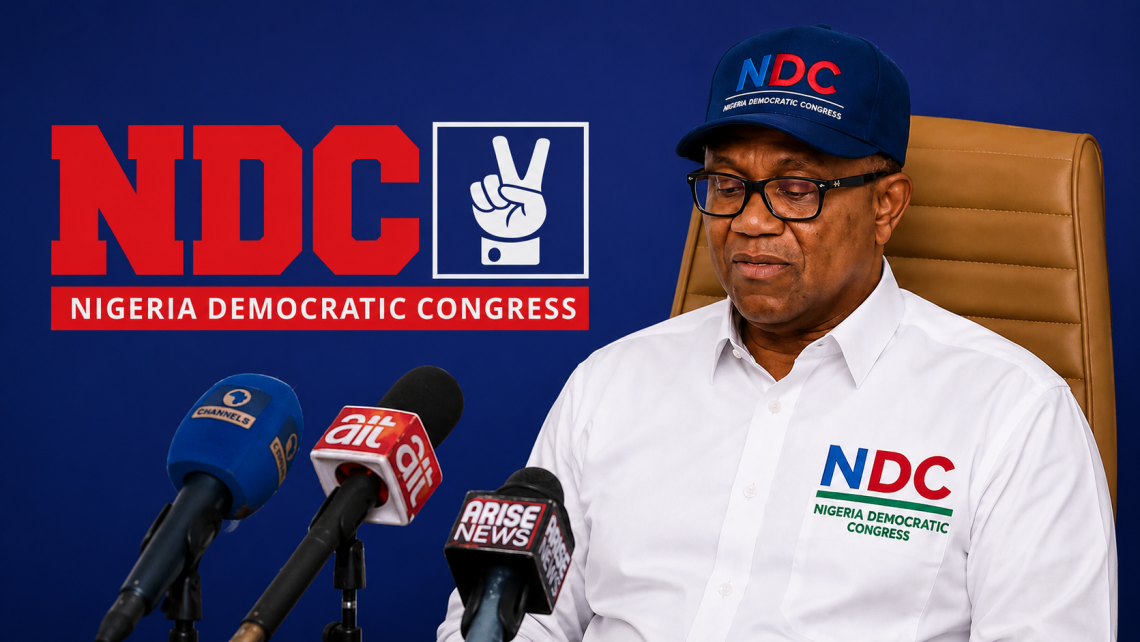
ABUJA — The academic and National Youth Service Corps records of Peter Obi, presidential candidate of the Nigerian Democratic Congress (NDC) in the 2027 election, have come under fresh scrutiny following three separate suits filed before the Federal High Court in Abuja.
The suits, instituted by Abayomi Arabambi, a chieftain of the Labour Party (LP), seek orders of mandamus compelling the West African Examinations Council (WAEC), the University of Nigeria, Nsukka (UNN) and the National Youth Service Corps (NYSC) to release official records relating to certificates allegedly issued to Obi.
The legal actions are based on provisions of the Freedom of Information (FOI) Act 2011, with Arabambi alleging that the institutions failed to provide information he requested concerning the academic credentials and NYSC records of the former Anambra State governor.
The three cases were filed separately.
The suit against WAEC, marked FHC/ABJ/CS/2064/2026, and the action against NYSC, marked FHC/ABJ/CS/2063/2026, were filed on September 1, 2026.
The separate suit against UNN, marked FHC/ABJ/CS/2144/2026, was filed on September 9, 2026.
Arabambi filed the cases through his legal team led by Anderson Asemota.
However, the plaintiff has stressed that he is not asking the Federal High Court to determine whether the certificates associated with Obi are genuine or forged.
Instead, he is asking the court to compel the institutions to disclose their existing official records so that the status and particulars of the certificates can be established from the records of the organisations that allegedly issued or processed them.
The distinction is significant because the suits, as presently constituted, do not amount to a judicial finding that Peter Obi’s certificates are forged, invalid or fraudulent.
In the WAEC case, Arabambi is asking the court to compel the examination body to release a Certified True Copy (CTC) of WAEC Certificate No. SC042560, which the plaintiff says was issued to “Obi Gregory Onwubuase” in June 1978.
READ ALSO:
- 27-Year Wait Ends as Construction Begins on New Dutse Emir’s Palace
- Mother ‘sold daughter’s abuse videos for $300’: Nigeria child pornography case shocks nation
- Petrol Subsidy: Presidency Rejects Atiku’s Plan, Says No Going Back
He is also seeking information that would enable him to establish the circumstances surrounding the certificate and its details.
Arabambi said he had previously written to WAEC requesting the information under the Freedom of Information Act, but the examination body declined the request.
WAEC reportedly communicated its refusal in a letter dated August 11, 2026, citing Sections 14(1)(a) and 14(2)(a) and (b) of the FOI Act.
The plaintiff is challenging the refusal and wants the court to declare that the grounds relied upon by WAEC were not sufficient to deny him access to the requested information.
The suit against University of Nigeria, Nsukka focuses on Certificate No. D000198, which Arabambi says relates to a Bachelor of Arts degree in Philosophy allegedly awarded to Obi.
He is asking the university to release its certificate register, academic records, graduation records, Senate or degree-award records, as well as other existing official documents relevant to the certificate, insofar as such records exist.
The plaintiff said his request was intended to establish what the university’s own records show concerning the certificate rather than to ask the court to pronounce on its authenticity.
He is specifically seeking an order compelling UNN to communicate the result of any verification of Certificate No. D000198 based on its existing official records, including whether the certificate and its particulars appear in those records.
According to the court processes, Arabambi had earlier written to the university under the FOI Act but alleged that the request was not granted.
A subsequent reminder was also reportedly sent after the initial request did not receive the response he expected.
The third suit concerns NYSC Certificate No. 203495, which Arabambi says was issued on May 1, 1986, to “Obi, Gregory Peter-Onwubuase (Mr.).”
The plaintiff wants the NYSC to release the relevant certificate and any existing official records, documents or other materials upon which the certificate was based or issued.
READ ALSO:
- JAMB Takes Over HND Admissions in Polytechnics, Health Institutions Nationwide
- SERAP Threatens Legal Action Over ₦126bn INEC Electoral Funds
- Why I Gave Peter Obi My Vehicle During Benue Visit — Ortom
He is also seeking information about the appearance of the name “Peter-Onwubuase” in the relevant NYSC records.
The request is intended, among other things, to establish what the NYSC’s official records show about the certificate and the particulars attached to it.
Arabambi has told the court that the information he is seeking is in the public interest, particularly because it relates to transparency and accountability concerning a person seeking election to public office.
He is asking the court to compel the institutions to disclose information that is not legally exempt and to identify any portion of the requested information they believe is protected from disclosure.
One of the reliefs sought by the plaintiff is an order directing the respondents, where they contend that any part of the information is exempt, to identify the specific information withheld and the precise statutory provision relied upon for the refusal.
He is also seeking disclosure of any severable portion of the records that is not covered by a lawful exemption.
Another relief invokes Section 25 of the Freedom of Information Act, asking the court to order disclosure if it determines that the institutions are not authorised to deny access, lack reasonable grounds for doing so, or that the public interest in disclosure outweighs the interest served by withholding the information.
The cases have emerged amid heightened political attention to the credentials of presidential candidates ahead of the 2027 general election.
Obi, who previously contested the 2023 presidential election under the Labour Party, is now the NDC presidential candidate for the 2027 election.
The legal action by Arabambi, who remains a Labour Party chieftain, therefore introduces another layer to the political contest surrounding the opposition candidate.
The controversy over Obi’s academic records is not entirely new, as questions about his certificates and names appearing on official documents have previously generated political debate and public commentary.
Supporters of Obi have in the past rejected allegations questioning the validity of his educational credentials.
The current cases, however, seek to obtain information directly from the institutions whose records are expected to contain details about the certificates.
The Federal High Court will therefore be asked to determine whether the plaintiff is entitled under the FOI Act to the information he requested and whether the respondents were legally justified in withholding or refusing to provide the records.
The outcome could have wider implications for access to official records concerning public office seekers, particularly where requests involve educational qualifications, professional credentials and other documents submitted for electoral purposes.
For now, there has been no judicial finding that Peter Obi’s certificates are forged or invalid.
The immediate issue before the court is whether WAEC, UNN and NYSC should be compelled to release or verify the relevant records requested by Arabambi.
As of September 13, 2026, no hearing date had been fixed for the three suits.
The cases are expected to attract significant attention as political parties and candidates intensify preparations for the 2027 presidential election.
2027: LP Chieftain Sues WAEC, UNN, NYSC Over Peter Obi’s Credentials
metro
Army Confirms Abduction of Six Imams in Zamfara, Denies Kidnapping at Yari’s Residence

Army Confirms Abduction of Six Imams in Zamfara, Denies Kidnapping at Yari’s Residence
The Nigerian Army has confirmed the abduction of six Islamic clerics in Zamfara State, while dismissing reports that the victims were kidnapped at the residence of former Zamfara State governor and Senator representing Zamfara West, Abdul’aziz Yari.
The Army said the six Juma’at imams were abducted while travelling through a rural area in Zamfara, not at Yari’s residence as earlier reports suggested.
The clarification followed reports that the clerics were abducted during a gathering at Yari’s residence, where they were said to have assembled for a special prayer session.
The Army’s 8 Division, operating under Operation FANSAN YAMMA, said available intelligence showed that the clerics were intercepted while travelling from the Sububu forest axis in Bakura Local Government Area towards Talata Mafara.
According to the military, the incident occurred along the Dakko–Damri feeder road, around the Gonar Sarkin Forest area.
The Army described reports linking the abduction to Yari’s residence as misleading and urged the public to rely on verified information concerning the incident.
The clarification does not dispute that the clerics were abducted. Rather, it corrects the location and circumstances surrounding the incident.
The Zamfara State Police Command has also confirmed the abduction of the six Islamic scholars and said security agencies had commenced efforts to rescue them.
The clerics were reportedly travelling towards Talata Mafara when they were intercepted by suspected bandits operating in the area.
The incident has generated concern because the victims were reportedly associated with a planned prayer gathering connected with political activities ahead of the 2027 general election.
READ ALSO:
- Petrol Subsidy: Presidency Rejects Atiku’s Plan, Says No Going Back
- JAMB Takes Over HND Admissions in Polytechnics, Health Institutions Nationwide
- SERAP Threatens Legal Action Over ₦126bn INEC Electoral Funds
Reports indicated that the clerics were heading to a special prayer session for peace in the country and the success of President Bola Ahmed Tinubu’s 2027 re-election bid.
The gathering was reportedly linked to Senator Yari, who is also playing a prominent role in the 2027 presidential campaign.
Yari, a former governor of Zamfara State, has emerged as a key figure within the ruling political structure as preparations intensify for the next presidential election.
However, the Army stressed that there was no evidence that the clerics were abducted from Yari’s residence.
Military authorities said troops and other security agencies had intensified efforts to locate the victims and secure their release.
The operation is being conducted under Operation FANSAN YAMMA, the military’s ongoing campaign against banditry and other security threats in parts of the North-West.
Security personnel are also working with local intelligence networks to establish the movements of the abductors and determine the whereabouts of the kidnapped clerics.
The police command has similarly said it is coordinating with other security agencies in the rescue effort.
The latest incident underscores the continuing security challenges in Zamfara State, where bandit groups have continued to operate along rural roads, forest corridors and communities despite sustained military and police operations.
The Sububu Forest and other forested areas in Zamfara have frequently been identified as hideouts and operational corridors for criminal groups involved in kidnapping, cattle rustling and other violent crimes.
The abduction also highlights the security risks faced by travellers using rural roads linking communities in the state.
Authorities have repeatedly advised residents and travellers to exercise caution and provide security agencies with timely information about suspicious movements.
The Army has appealed to members of the public to avoid spreading unverified reports that could create confusion or compromise ongoing security operations.
It also urged residents with credible information about the location or movements of the abducted clerics to provide such information to security agencies.
The latest development comes amid continuing efforts by security forces to dismantle criminal camps and rescue kidnapped victims across Zamfara and neighbouring states.
The military has in recent months intensified operations against armed groups in the North-West, including targeted operations aimed at denying bandits access to forest hideouts and disrupting their logistics networks.
Despite these operations, kidnapping remains a major security concern in Zamfara and other parts of the region.
The abduction of the six imams has therefore added fresh pressure on security agencies to secure the victims and prevent further attacks along the state’s rural routes.
For now, the authorities have confirmed that the clerics were abducted but have rejected the claim that they were taken from Yari’s residence.
Efforts are continuing to locate the six victims and bring them to safety, while security agencies investigate the circumstances surrounding the attack and pursue those responsible.
Army Confirms Abduction of Six Imams in Zamfara, Denies Kidnapping at Yari’s Residence
metro
DSS warns Osun churches, mosques, markets over alleged terrorist attack plot ahead of 2027
DSS warns Osun churches, mosques, markets over alleged terrorist attack plot ahead of 2027
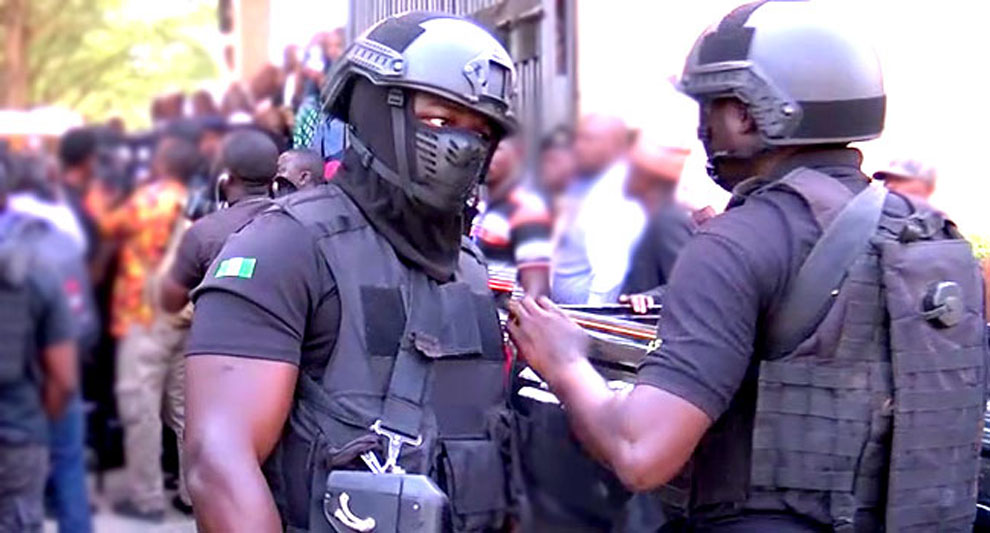
The Department of State Services (DSS) has raised a security alert in Osun State over an alleged plan by terrorist elements to attack churches, mosques, markets, schools and other crowded locations ahead of the 2027 general elections.
The warning was reportedly issued during separate security briefings held with leaders of the Muslim and Christian communities in Osogbo on Wednesday, September 9, 2026.
According to information presented at the meetings, the alleged attackers may attempt to extend their activities from northern Nigeria into the South-West, with Osun State reportedly identified as one of the areas of concern.
The alleged plan is said to be aimed at creating fear and insecurity among residents and potentially discouraging citizens from participating in the 2027 elections.
However, there is currently no public indication from the DSS that an attack is imminent, while the agency has not publicly identified the specific terrorist organisation allegedly behind the reported plan.
The alert has nevertheless prompted religious and community leaders to review security arrangements around places where large numbers of people gather.
The President of the Osun State Muslim Community, Mustapha Olawuyi, confirmed that Muslim leaders met with DSS officials in Osogbo and described the information provided during the meeting as serious.
Olawuyi urged Muslims across the state to remain vigilant and cooperate with security agencies.
According to him, the DSS warned that terrorist elements could attempt to mobilise towards the South-West to cause mayhem, spread fear and create an atmosphere that could discourage citizens from exercising their civic rights during the 2027 elections.
He also said security agencies had been monitoring the activities and movements of suspicious individuals in the state.
READ ALSO:
- ‘Tinubu Will Win Again in 2027’ — Charismatic Bishops’ Secretary
- Fake miracles, bogus grants: How clerics allegedly fleece Nigerians of millions
- ‘Unacceptable’ — Arteta Furious Over Sunderland Penalty in Arsenal Win
Olawuyi disclosed that the Muslim community had previously expressed concerns over the arrival of hundreds of unfamiliar persons in some parts of Osun.
He commended the DSS for sharing intelligence with community leaders before any possible attack occurs.
As part of the preventive measures discussed at the meeting, mosque leaders were reportedly advised to pay greater attention to security during Friday prayers and other large religious gatherings.
They were urged to watch out for suspicious vehicles parked around mosques and immediately report unusual activities or persons to security agencies.
Mosque authorities were also reportedly advised against allowing people to sleep within mosque premises and encouraged to provide security guards, particularly at night.
Religious leaders were further urged to exercise caution when dealing with unfamiliar commercial motorcycle operators and other persons whose identities or movements could not be adequately established.
The warning was also extended to the Christian community.
The Osun State Chairman of the Christian Association of Nigeria (CAN), Pastor John Adeleke, confirmed that DSS officials held a separate security meeting with Christian leaders.
Adeleke said Christian leaders were warned to strengthen security around churches and other public gathering centres.
He said the information was subsequently circulated to various CAN blocs and Christian groups across Osun State.
According to him, churches were advised against allowing unidentified vehicles to park close to worship centres because of the possibility that such vehicles could potentially be used to conceal explosives or other dangerous materials.
Church leaders were also encouraged to properly identify visitors and remain vigilant about unfamiliar people entering their premises.
Adeleke said churches were advised to exercise particular caution during night programmes, when darkness and reduced visibility could create security vulnerabilities.
He urged Christians to remain calm but security-conscious and to report suspicious persons, vehicles or activities to the appropriate authorities.
The warning also covers schools, markets, clubs, viewing centres and other public facilities where large numbers of people regularly gather.
According to Adeleke, school owners and managers of public facilities were advised to review their security arrangements and ensure adequate measures were in place to protect students, staff, worshippers, customers and other members of the public.
A report of the Christian leaders’ meeting, signed by Ajayi J.K., the State Assistant Secretary of Osun CAN, reportedly stated that the DSS informed the Christian leadership that terrorists had allegedly mapped out Osun as part of a wider plan to attack some states before the 2027 presidential election.
The report reportedly indicated that the alleged attackers could move through Kaduna and Jos before heading towards Osun.
READ ALSO:
- US Blockade Tightens As CENTCOM Redirects 100 Commercial Ships From Iranian Ports
- Five Islamic Clerics Abducted After Tinubu Re-Election Prayer At Yari’s Zamfara Residence
- Obafemi Martins Plans Six-Zone Football Tournament for Tinubu’s Re-election
It listed churches, mosques, markets, schools, clubs and viewing centres among the locations that could potentially be targeted.
The Christian leaders were subsequently urged to strengthen security around their premises and pay close attention to unusual activities.
The Osun alert comes against the background of broader concerns about possible retaliatory attacks by terrorist and criminal groups following intensified security operations across northern Nigeria.
The Office of the National Security Adviser (ONSA) had earlier warned Nigerians to remain vigilant, saying terrorist and criminal groups facing setbacks from military operations could resort to isolated attacks designed to create fear, attract public attention or demonstrate that they still possess the capacity to strike.
The national advisory followed reported security operations against terrorist and bandit groups in parts of the North-East, North-West and North-Central regions.
The ONSA said the operations had resulted in the elimination of several terrorist and bandit commanders and the disruption of camps and other criminal strongholds.
Among those reportedly killed was ISWAP commander Abubakar Mainok, also known as Abu Bilal Al-Minuki.
Although the ONSA advisory did not specifically identify Osun as a target, its warning about possible isolated attacks provides wider context for the latest DSS briefing in the state.
Security concerns have also prompted some institutions across Nigeria to strengthen their preventive measures.
Schools and churches in some parts of the country have reportedly introduced measures including improved surveillance, stronger perimeter controls, additional security personnel and emergency procedures in response to the wider security environment.
Osun authorities have also previously expressed concern about the movement and presence of unfamiliar individuals in some communities.
In July, the state government announced a mining community intelligence architecture following concerns over alleged infiltration of some communities by foreign nationals and other unidentified persons.
The government called on community leaders to work with the DSS, Nigeria Police Force, Nigeria Security and Civil Defence Corps (NSCDC), Amotekun Corps and other security agencies to improve intelligence gathering and community security.
READ ALSO:
- NANS Threatens ‘Mother of All Protests’ Over Ondo Varsity Strike
- Former PDP Chairman Bamanga Tukur Dies at 90
- Police Arrest Woman Over Alleged Drug Trafficking in Delta
The state has also recorded cases of kidnapping and other criminal threats, although there is no evidence that those incidents are connected to the alleged terrorist plot contained in the latest DSS warning.
The timing of the alert is significant as political activities gradually intensify ahead of the 2027 general elections.
Security concerns around elections in Nigeria have historically included political violence, communal tensions, attacks on campaign activities and threats against voters and election officials.
The latest DSS warning therefore places additional responsibility on security agencies and community leaders to ensure that legitimate political and civic activities can take place without intimidation.
At the same time, the warning presents a delicate challenge for authorities because excessive alarm or the circulation of unverified information could create unnecessary fear among residents.
The available information does not show that the DSS has publicly named a specific terrorist organisation behind the alleged Osun plot, nor has it announced that an attack is certain to occur.
The warning should therefore be understood as a preventive security alert based on reported intelligence, rather than confirmation that an attack is imminent.
Religious and community leaders have consequently been encouraged to remain vigilant without spreading unverified information.
Residents have also been urged to promptly report suspicious persons, abandoned or suspicious vehicles, unusual movements and other security concerns to law enforcement authorities.
For churches and mosques, practical measures such as controlled access, proper identification of visitors, adequate lighting, security personnel and vigilance around parked vehicles could help reduce vulnerabilities.
Schools, markets, entertainment centres and other facilities that attract large crowds are similarly expected to review their emergency response and security procedures.
The broader objective is to ensure that terrorist or criminal groups do not exploit crowded public places to cause mass casualties, spread fear or disrupt peaceful civic activities.
With Nigeria heading towards the 2027 elections, closer cooperation between security agencies, religious institutions, traditional leaders, schools, businesses and residents could be critical to preventing attacks and maintaining public confidence.
For residents of Osun, the immediate message from community leaders is vigilance without panic.
Citizens are expected to continue their normal activities while remaining alert and promptly providing credible information to security agencies that could help prevent any planned attack.
DSS warns Osun churches, mosques, markets over alleged terrorist attack plot ahead of 2027
-

 metro2 days ago
Woman disguises as Muslim woman in Niqab to steal in Ado-Ekiti market, video sparks outrage
-

 metro1 day ago
Ondo Herbal Drink Tragedy: Survivor Vows Never to Drink Again as Death Toll Tops 30
-

 Business1 day ago
Dangote: ₦525 Refinery Shares Could Rise to ₦10,000
-

 metro1 day ago
Sokoto Cleric Stabbed Twice in Neck After Juma’at Prayer, Attacker Killed
-

 Africa2 days ago
Murder of Nigerian Bishop in South Africa Sparks Outcry Over Unsolved Killings
-

 News2 days ago
AI on the Roads: LASTMA Turns to China to Fix Lagos Traffic
-

 Community2 days ago
Kaduna Traditional Rulers Set for 100% Pay Rise as Zazzau Emir Backs Proposal
-

 International2 days ago
Iran’s President Seeks End to War as US Tightens Economic Pressure