

News
Afghanistan: Biden defends US pullout, warns Taliban leaders
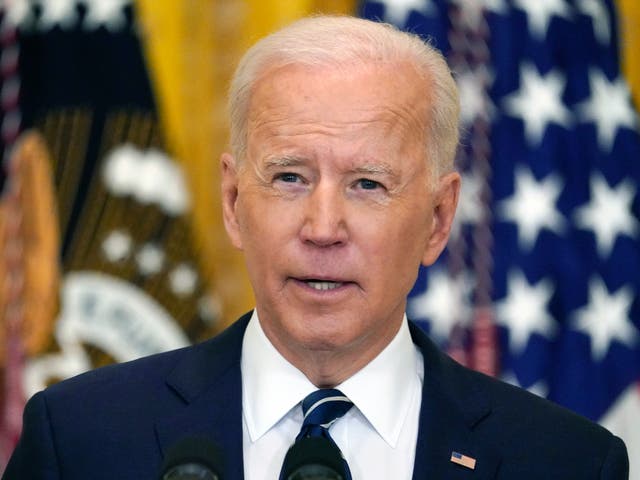
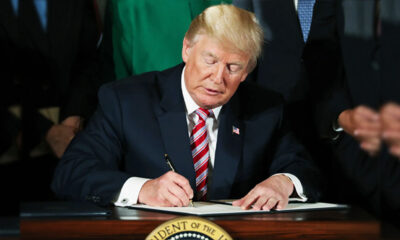
President Joe Biden says he has no regrets in withdrawing the United States troops from Afghanistan despite searing images of chaos in Kabul that exposed the limits of US power and plunged him into the worst crisis of his presidency.
He spoke Monday on the US pullout after scenes of bedlam dominated television news channels for days.
Biden blamed the Taliban’s takeover in Afghanistan on Afghan political leaders who fled the country and the unwillingness of the US-trained Afghan army to fight the militant group.
He warned Taliban leaders that they would face “devastating force” should they interfere with the US pullout.
“I’m deeply saddened by the facts we now face. But I do not regret my decision to end America’s war-fighting in Afghanistan and maintain a laser focus on our counterterrorism mission,” he said.
Biden was forced to send US troop reinforcements to Kabul to ensure a safe withdrawal of American diplomatic personnel and civilians as well as Afghan citizens who worked with the United States and could face reprisals.
Full speech of Joe Biden’s remarks on Afghanistan
Good afternoon.
I want to speak today to the unfolding situation in Afghanistan, the developments that have taken place in the last week and the steps we’re taking to address the rapidly evolving events.
My national security team and I have been closely monitoring the situation on the ground in Afghanistan and moving quickly to execute the plans we had put in place to respond to every contingency, including the rapid collapse we’re seeing now.
I’ll speak more in a moment about the specific steps we’re taking. But I want to remind everyone how we got here and what America’s interests are in Afghanistan.
We went to Afghanistan almost 20 years ago with clear goals: get those who attacked us on Sept. 11, 2001, and make sure Al Qaeda could not use Afghanistan as a base from which to attack us again. We did that. We severely degraded Al Qaeda and Afghanistan. We never gave up the hunt for Osama bin Laden and we got him.
That was a decade ago. Our mission in Afghanistan was never supposed to have been nation-building. It was never supposed to be creating a unified, centralized democracy. Our only vital national interest in Afghanistan remains today what it has always been: preventing a terrorist attack on the American homeland.
I’ve argued for many years that our mission should be narrowly focused on counterterrorism, not counterinsurgency or nation-building. That’s why I opposed the surge when it was proposed in 2009 when I was vice president. And that’s why as president I’m adamant we focus on the threats we face today, in 2021, not yesterday’s threats.
Today a terrorist threat has metastasized well beyond Afghanistan. Al Shabab in Somalia, Al Qaeda in the Arabian Peninsula, Al Nusra in Syria, ISIS attempting to create a caliphate in Syria and Iraq and establishing affiliates in multiple countries in Africa and Asia. These threats warrant our attention and our resources. We conduct effective counterterrorism missions against terrorist groups in multiple countries where we don’t have permanent military presence. If necessary, we’ll do the same in Afghanistan. We’ve developed counterterrorism over-the-horizon capability that will allow us to keep our eyes firmly fixed on the direct threats to the United States in the region, and act quickly and decisively if needed.
When I came into office, I inherited a deal that President Trump negotiated with the Taliban. Under his agreement, U.S. forces would be out of Afghanistan by May 1, 2021, just a little over three months after I took office. U.S. forces had already drawn down during the Trump administration from roughly 15,500 American forces to 2,500 troops in country. And the Taliban was at its strongest militarily since 2001.
The choice I had to make as your president was either to follow through on that agreement or be prepared to go back to fighting the Taliban in the middle of the spring fighting season. There would have been no cease-fire after May 1. There was no agreement protecting our forces after May 1. There was no status quo of stability without American casualties after May 1. There was only a cold reality of either following through on the agreement to withdraw our forces or escalating the conflict and sending thousands more American troops back into combat in Afghanistan and lurching into the third decade of conflict.
I stand squarely behind my decision. After 20 years, I’ve learned the hard way that there was never a good time to withdraw U.S. forces. That’s why we’re still there. We were clear about the risks. We planned for every contingency. But I always promised the American people that I will be straight with you.
The truth is, this did unfold more quickly than we had anticipated. So what’s happened? Afghanistan political leaders gave up and fled the country. The Afghan military collapsed, sometimes without trying to fight. If anything, the developments of the past week reinforced that ending U.S. military involvement in Afghanistan now was the right decision.
American troops cannot and should not be fighting in a war and dying in a war that Afghan forces are not willing to fight for themselves. We spent over a trillion dollars. We trained and equipped an Afghan military force of some 300,000 strong. Incredibly well equipped. A force larger in size than the militaries of many of our NATO allies. We gave them every tool they could need. We paid their salaries, provided for the maintenance of their air force, something the Taliban doesn’t have. Taliban does not have an air force. We provided close air support. We gave them every chance to determine their own future. What we could not provide them was the will to fight for that future.
There are some very brave and capable Afghan special forces units and soldiers. But if Afghanistan is unable to mount any real resistance to the Taliban now, there is no chance that one year — one more year, five more years or 20 more years — that U.S. military boots on the ground would have made any difference.
Here’s what I believe to my core: It is wrong to order American troops to step up when Afghanistan’s own armed forces would not. The political leaders of Afghanistan were unable to come together for the good of their people, unable to negotiate for the future of their country when the chips were down. They would never have done so while U.S. troops remained in Afghanistan bearing the brunt of the fighting for them. And our true strategic competitors, China and Russia, would love nothing more than the United States to continue to funnel billions of dollars in resources and attention into stabilizing Afghanistan indefinitely.
When I hosted President Ghani and Chairman Abdullah at the White House in June, and again when I spoke by phone to Ghani in July, we had very frank conversations. We talked about how Afghanistan should prepare to fight their civil wars after the U.S. military departed. To clean up the corruption in government so the government could function for the Afghan people. We talked extensively about the need for Afghan leaders to unite politically. They failed to do any of that. I also urged them to engage in diplomacy, to seek a political settlement with the Taliban. This advice was flatly refused. Mr. Ghani insisted the Afghan forces would fight, but obviously he was wrong.
So I’m left again to ask of those who argue that we should stay: How many more generations of America’s daughters and sons would you have me send to fight Afghanistan’s civil war when Afghan troops will not? How many more lives, American lives, is it worth, how many endless rows of headstones at Arlington National Cemetery? I’m clear on my answer: I will not repeat the mistakes we’ve made in the past. The mistake of staying and fighting indefinitely in a conflict that is not in the national interest of the United States, of doubling down on a civil war in a foreign country, of attempting to remake a country through the endless military deployments of U.S. forces. Those are the mistakes we cannot continue to repeat because we have significant vital interest in the world that we cannot afford to ignore.
I also want to acknowledge how painful this is to so many of us. The scenes that we’re seeing in Afghanistan, they’re gut-wrenching, particularly for our veterans, our diplomats, humanitarian workers — for anyone who has spent time on the ground working to support the Afghan people. For those who have lost loved ones in Afghanistan, and for Americans who have fought and served our country in Afghanistan, this is deeply, deeply personal. It is for me as well.
I’ve worked on these issues as long as anyone. I’ve been throughout Afghanistan during this war, while the war was going on, from Kabul to Kandahar, to the Kunar Valley. I’ve travelled there on four different occasions. I’ve met with the people. I’ve spoken with the leaders. I spent time with our troops, and I came to understand firsthand what was and was not possible in Afghanistan. So now we’re focused on what is possible.
We will continue to support the Afghan people. We will lead with our diplomacy, our international influence and our humanitarian aid. We’ll continue to push for regional diplomacy and engagement to prevent violence and instability. We’ll continue to speak out for the basic rights of the Afghan people, of women and girls, just as we speak out all over the world.
I’ve been clear, the human rights must be the centre of our foreign policy, not the periphery. But the way to do it is not through endless military deployments. It’s with our diplomacy, our economic tools and rallying the world to join us.
Let me lay out the current mission in Afghanistan: I was asked to authorize, and I did, 6,000 U.S. troops to deploy to Afghanistan for the purpose of assisting in the departure of U.S. and allied civilian personnel from Afghanistan, and to evacuate our Afghan allies and vulnerable Afghans to safety outside of Afghanistan. Our troops are working to secure the airfield and ensure continued operation on both the civilian and military flights. We’re taking over air traffic control. We have safely shut down our embassy and transferred our diplomats. Our diplomatic presence is now consolidated at the airport as well.
Over the coming days we intend to transport out thousands of American citizens who have been living and working in Afghanistan. We’ll also continue to support the safe departure of civilian personnel — the civilian personnel of our allies who are still serving in Afghanistan. Operation Allies Refuge, which I announced back in July, has already moved 2,000 Afghans who are eligible for special immigration visas and their families to the United States. In the coming days, the U.S. military will provide assistance to move more S.I.V.-eligible Afghans and their families out of Afghanistan.
We’re also expanding refugee access to cover other vulnerable Afghans who work for our embassy. U.S. nongovernmental organizations and Afghans who otherwise are a great risk in U.S. news agencies — I know there are concerns about why we did not begin evacuating Afghan civilians sooner. Part of the answer is some of the Afghans did not want to leave earlier, still hopeful for their country. And part of it because the Afghan government and its supporters discouraged us from organizing a mass exodus to avoid triggering, as they said, a crisis of confidence.
American troops are performing this mission as professionally and as effectively as they always do. But it is not without risks. As we carry out this departure, we have made it clear to the Taliban: If they attack our personnel or disrupt our operation, the U.S. presence will be swift, and the response will be swift and forceful. We will defend our people with devastating force if necessary. Our current military mission is short on time, limited in scope and focused in its objectives: Get our people and our allies as safely and quickly as possible. And once we have completed this mission, we will conclude our military withdrawal. We will end America’s longest war after 20 long years of bloodshed.
The events we’re seeing now are sadly proof that no amount of military force would ever deliver a stable, united, secure Afghanistan, as known in history as the graveyard of empires. What’s happening now could just as easily happen five years ago or 15 years in the future. We have to be honest, our mission in Afghanistan made many missteps over the past two decades.
I’m now the fourth American president to preside over war in Afghanistan. Two Democrats and two Republicans. I will not pass this responsibility on to a fifth president. I will not mislead the American people by claiming that just a little more time in Afghanistan will make all the difference. Nor will I shrink from my share of responsibility for where we are today and how we must move forward from here. I am president of the United States of America, and the buck stops with me.
I’m deeply saddened by the facts we now face. But I do not regret my decision to end America’s war-fighting in Afghanistan and maintain a laser focus on our counterterrorism mission, there and other parts of the world. Our mission to degrade the terrorist threat of Al Qaeda in Afghanistan and kill Osama bin Laden was a success. Our decades-long effort to overcome centuries of history and permanently change and remake Afghanistan was not, and I wrote and believed it never could be.
I cannot and will not ask our troops to fight on endlessly in another country’s civil war, taking casualties, suffering life-shattering injuries, leaving families broken by grief and loss. This is not in our national security interest. It is not what the American people want. It is not what our troops who have sacrificed so much over the past two decades deserve. I made a commitment to the American people when I ran for president that I would bring America’s military involvement in Afghanistan to an end. While it’s been hard and messy and, yes, far from perfect, I’ve honoured that commitment.
More importantly, I made a commitment to the brave men and women who serve this nation that I wasn’t going to ask them to continue to risk their lives in a military action that should’ve ended long ago. Our leader did that in Vietnam when I got here as a young man. I will not do it in Afghanistan.
I know my decision will be criticized. But I would rather take all that criticism than pass this decision on to another president of the United States, yet another one, a fifth one. Because it’s the right one, it’s the right decision for our people; the right one for our brave service members who risked their lives serving our nation. And it’s the right one for America.
Thank you. May God protect our troops, our diplomats and all brave Americans serving in harm’s way.









News
NSCDC Evidence Scandal: Tunji-Ojo Says Officers Tampered With Evidence in Miners’ Deaths
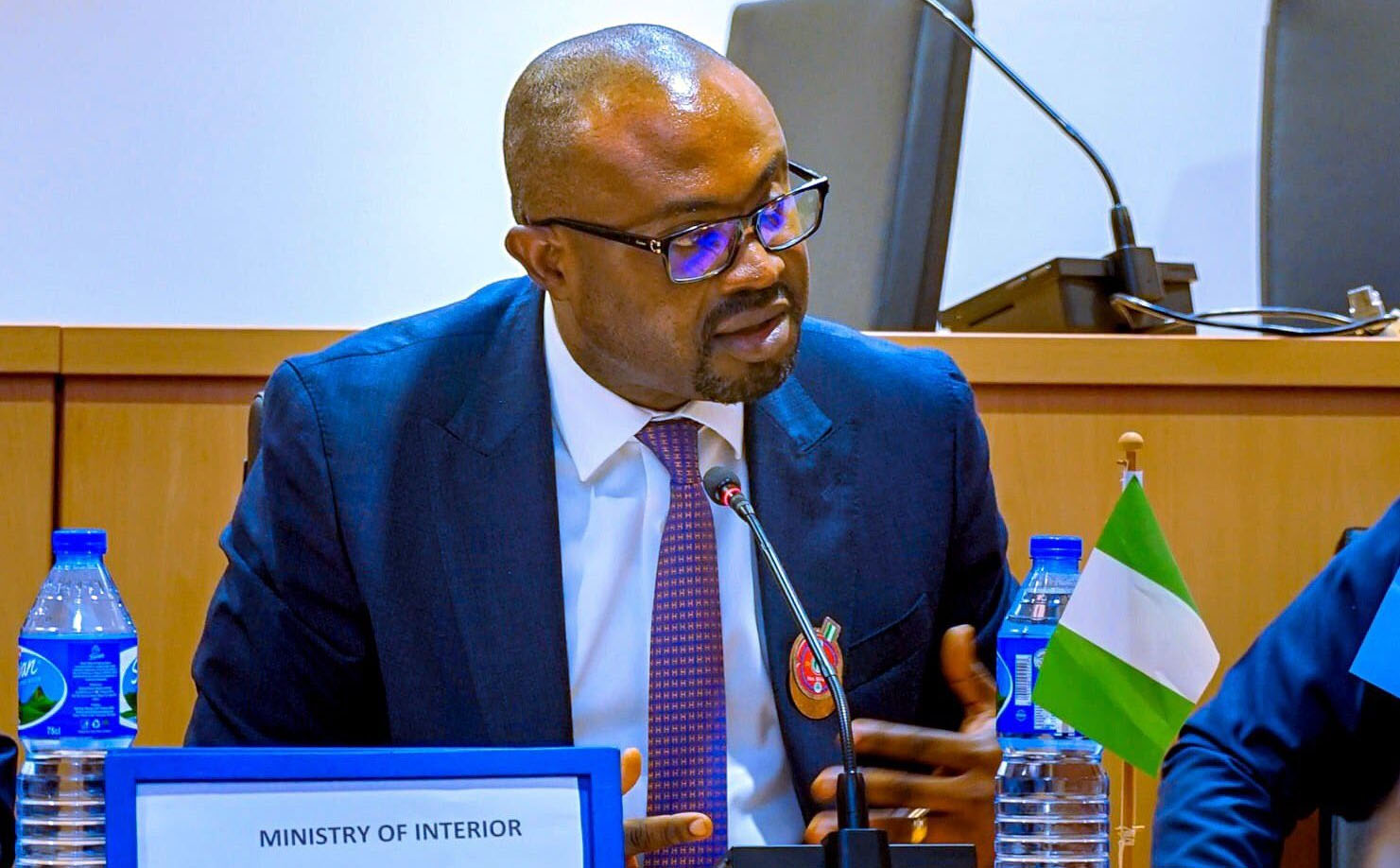
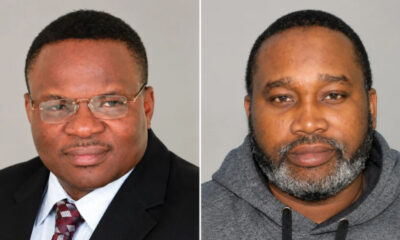
Nigeria’s Interior Minister, Olubunmi Tunji-Ojo, has raised concerns over alleged evidence tampering by officers of the Nigeria Security and Civil Defence Corps (NSCDC) during investigations into the deaths of suspected illegal miners in custody in Minna, Niger State.
The development emerged as a Federal Government investigative panel submitted its report on the incident on Tuesday, October 27, 2026, recommending disciplinary action against personnel found responsible and a ₦1.4 billion compensation package for bereaved families and survivors.
The panel found that the detainees had been held in a severely overcrowded cell, where poor ventilation, extreme heat and dehydration contributed to the deaths. It said the incident was preventable and identified failures in supervision, detention procedures and the duty of care owed to people in custody.
According to the committee, the operation that led to the arrests was conducted without an operational order from the NSCDC national headquarters. It also found that the corps’ specialised Mining Marshals Unit was not involved in the operation.
The panel recommended the dismissal of personnel whose actions directly contributed to the deaths, as well as prosecution where the evidence supports criminal charges. It called for administrative sanctions against officers whose failures did not directly cause the fatalities.
READ ALSO:
- Why Nigerians’ Data Finishes So Fast: MTN Reveals the Hidden Data Drains
- 21 Dead, 40 Injured as Drone Hits Market in Sudan’s Darfur Region
- Ansaru Claims Killing of Katsina Cleric Masussuka as Police Launch Manhunt
The proposed ₦1.4 billion compensation package includes ₦30 million for each of the 33 bereaved families and ₦10 million for each of the 41 survivors. Other recommendations include educational support for the dependants of deceased detainees, medical rehabilitation for survivors, psychological support for affected families and a formal government apology.
The deaths followed the arrest of suspected illegal miners during enforcement operations in Minna in September. The incident sparked public outrage and calls for accountability, prompting President Bola Ahmed Tinubu to order a comprehensive investigation.
The reported death toll has varied: initial accounts referred to 33 deaths, while the Niger State Government and subsequent federal investigation reports referred to 37. The figures should therefore be distinguished when reporting the panel’s findings.
The panel’s recommendations are not criminal convictions. Any prosecution must follow due process, and responsibility must be established through the appropriate legal proceedings.
NSCDC Evidence Scandal: Tunji-Ojo Says Officers Tampered With Evidence in Miners’ Deaths
News
INEC Under Fire as Missing Voters’ Register Sparks 2027 Election Transparency Row
INEC Under Fire as Missing Voters’ Register Sparks 2027 Election Transparency Row
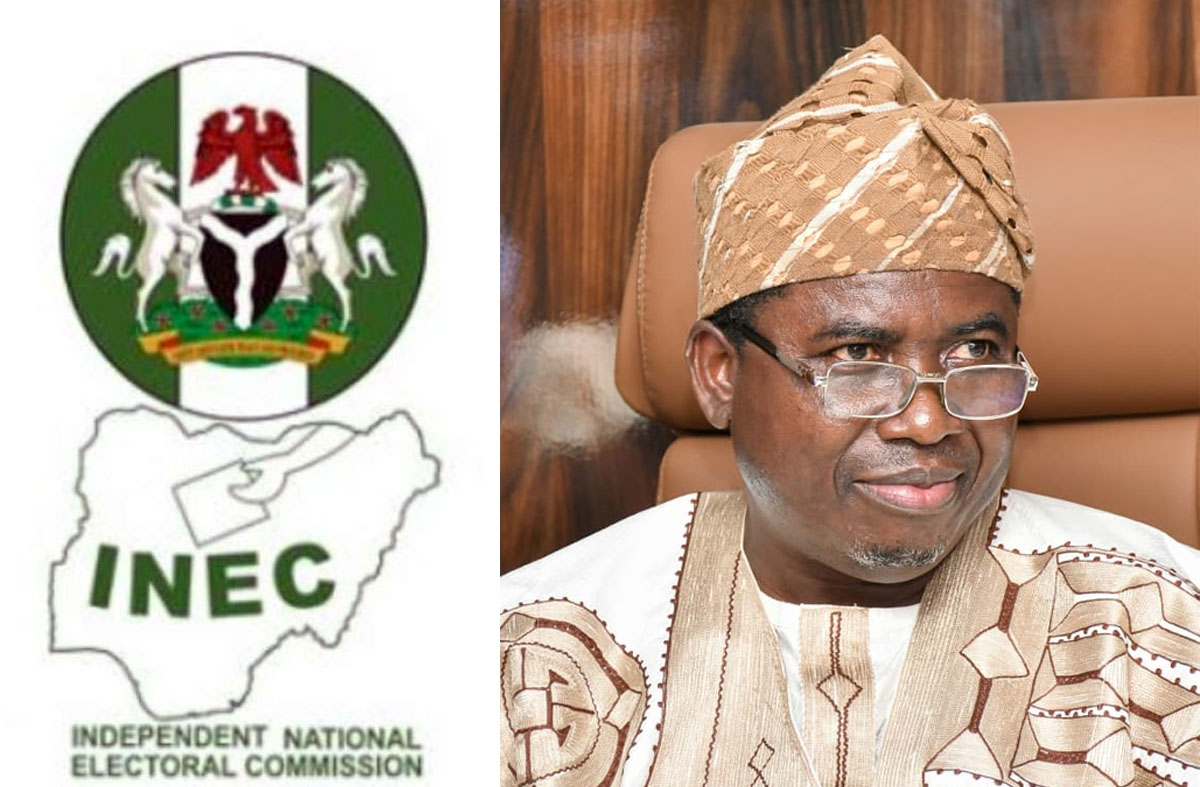
The Independent National Electoral Commission (INEC) has come under scrutiny after explaining why Nigeria’s preliminary voters’ register was not uploaded to its official website during the period scheduled for public scrutiny, despite being displayed physically at registration areas across the country.
The development has triggered concerns about transparency and compliance with the Electoral Act 2026 as preparations gather momentum for the 2027 general elections.
INEC National Commissioner and Chairman of the Information and Voter Education Committee, Mohammed Haruna, reportedly explained that the register had been made available at the wards but was not uploaded to the commission’s website.
“The voter register has been published, but in the wards. It just wasn’t published on our website,” Haruna was quoted as saying by *The PUNCH*.
The explanation followed complaints that the commission’s online portal did not provide access to the preliminary register during the period designated for voters to check their registration details and raise objections where necessary.
INEC had announced that the preliminary voters’ register would be displayed nationwide from October 9 to 15, 2026, to enable registered voters to verify their details and submit claims or objections concerning errors, omissions or questionable entries.
The controversy has raised questions about whether physical display alone satisfies the legal requirements for the exercise, particularly for voters who cannot easily travel to their registration areas.
In a separate explanation reported by *Premium Times*, Haruna said the commission was receiving and compiling claims and objections arising from the physical display of the register.
According to the report, INEC planned to prepare a clean copy for publication by December 15, 2026.
However, the proposed date has not, by itself, resolved concerns about why the preliminary register was unavailable online during the stipulated period for public scrutiny.
Section 19(1) of the Electoral Act 2026 requires INEC to designate a seven-day period for public scrutiny of the voters’ register, with copies made available at registration areas and on its official website or another website established for that purpose.
The provision is designed to give registered voters and other interested persons an opportunity to identify errors, omissions and questionable entries before the register is finalised. It also provides a framework for claims and objections concerning the inclusion or omission of names and the correction of personal details.
Section 19(5) prescribes a penalty for an INEC official who fails to display or publish the register as required. The provision specifies a fine of ₦100,000, imprisonment for up to six months, or both.
The central legal question is whether displaying the register physically without making it available online during the stipulated period satisfies the requirements of the law. The controversy has therefore placed the commission’s handling of the exercise under renewed scrutiny.
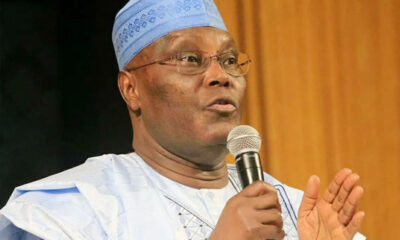
Former Vice-President Atiku Abubakar has also criticised INEC over the absence of the preliminary register from its website, calling for the list to be made accessible so that voters can verify whether their names and personal details have been properly captured.
Atiku’s position is that announcing the total number of registered voters is not sufficient to enable individuals to determine whether their names appear correctly on the register. Voters need access to the detailed list to identify omissions and other discrepancies and take appropriate steps to address them.
The controversy has added to concerns among political stakeholders and election observers about the accessibility of electoral information ahead of the 2027 polls.
It comes after INEC announced that Nigeria’s national register of voters had exceeded 103 million following the completion of the three phases of the Continuous Voter Registration exercise and subsequent biometric checks.
INEC Chairman, Professor Joash Ojo Amupitan, disclosed the figure during an engagement with media executives in Abuja in early October. The registration exercise recorded more than 10.7 million new registrants across its three phases, subject to the commission’s verification processes.
Although the aggregate figure provides an indication of the size of Nigeria’s voting population, it does not enable individual voters to confirm whether their names and personal details have been correctly captured. That is why the preliminary display is an important safeguard against errors, omissions and questionable entries.
The absence of online access has practical implications for voters who live far from their registration areas or cannot easily visit INEC offices. Making the register available online would allow them to check their details more conveniently and identify corrections that may be required.
Online publication would also provide political parties, election observers and other stakeholders with an additional means of scrutinising the register and raising concerns through the appropriate procedures.
Although INEC maintains that the preliminary register was displayed physically at registration areas, questions remain about the failure to upload it to the website during the announced period and the implications for public access and electoral transparency.
With preparations for the 2027 general elections gathering momentum, the commission faces pressure to clarify the circumstances surrounding the omission and explain how affected voters will be able to exercise their rights to scrutiny and objection.
INEC’s reported plan to publish a clean copy by December 15, 2026, is expected to attract close attention from political parties, civil society organisations and the public.
However, the planned publication does not automatically settle questions about whether the earlier exercise complied with the law. The commission’s explanation, the timing of online publication and the practical access available to voters remain central to the debate over the credibility and transparency of Nigeria’s electoral process.
INEC Under Fire as Missing Voters’ Register Sparks 2027 Election Transparency Row
News
Bill Clinton condemns anti-Muslim prejudice, cites Qur’an’s message of coexistence
Bill Clinton condemns anti-Muslim prejudice, cites Qur’an’s message of coexistence
Former US president recalls daughter Chelsea’s experience reading Islamic holy book, says people should not be denigrated because of their faith
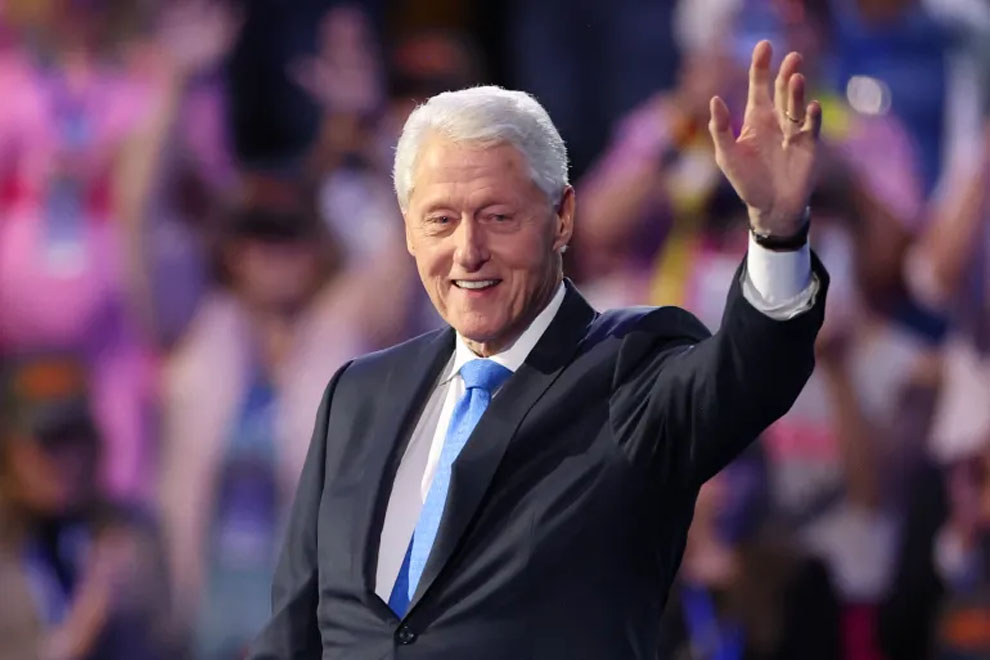
Former United States President Bill Clinton has condemned discrimination against Muslims, declaring that he is tired of people being denigrated simply because of their religious beliefs.
Clinton made the remarks on Tuesday, October 20, 2026, while speaking at an interfaith gathering at Koinonia Worship Center in Florida, where he cited a passage from the Qur’an that encourages mutual understanding among people of different backgrounds.
The former president recalled how his daughter, Chelsea Clinton, introduced him to the message after reading the Qur’an from beginning to end when she was 15 years old.
According to reports of his speech, Clinton used the experience to highlight the importance of religious tolerance, peaceful coexistence and the need to resist prejudice against people because of their faith.
“I’m tired of people denigrating Muslims for being Muslims,” Clinton said.
He argued that religious differences should not become a basis for hostility and that people should not be judged collectively on account of the actions of individuals who share their faith.
“There are bad actors in every faith because we’re all flawed human beings,” he added.
Clinton also expressed weariness with religious wars and cultural conflicts, calling attention to the need for greater understanding across religious and cultural boundaries.
READ ALSO:
- MURIC Applauds Army as Mogadishu Cantonment Mosque Reopens After Week-Long Closure
- Atiku Condemns Attack on Edo Comedian Over Refusal to Support Tinubu
- US Declares Two Nigerians Wanted Over $3.1m Medicare Fraud, Drug Offences
Recounting his daughter’s experience, Clinton said Chelsea had read the Qur’an from beginning to end at the age of 15 and subsequently drew his attention to a passage concerning humanity’s diversity and the relationship between different peoples.
The passage, identified as Qur’an 49:13, is found in Surah Al-Hujurat, which teaches that Allah created humanity from a male and a female and made people into nations and tribes so that they might know one another.
The verse further states that the most honoured in the sight of Allah is the most righteous.
Clinton paraphrased the passage as a message that people were created differently not to despise one another, but to become acquainted with and learn from one another.
His reference to the verse formed a central part of his argument against religious prejudice, emphasising that differences in faith, ethnicity and culture should encourage understanding rather than discrimination.
The Qur’anic passage is widely associated with the Islamic principle of human dignity and the recognition of diversity among peoples.
Clinton’s remarks challenged the tendency to associate the actions of individuals with entire religious communities. By observing that wrongdoing occurs among followers of different faiths, he argued against treating Muslims or members of any other religious group as collectively responsible for the misconduct of particular individuals.
His comments also drew attention to the consequences of religious and cultural divisions, which can deepen mistrust and encourage hostility between communities.
The former president’s position, as reported from the event, was that people should be assessed as individuals rather than denigrated merely because they belong to a particular religion.
The remarks have attracted attention because they place the Qur’an’s message of mutual understanding at the centre of a public discussion about anti-Muslim prejudice in the United States.
Clinton spoke at the Florida gathering against the backdrop of political controversy surrounding comments about Muslim political figures in the United States.
Reports on the event linked his remarks to the debate surrounding Abdul El-Sayed, a Muslim Democratic candidate seeking election to the United States Senate from Michigan, who has faced criticism from political opponents.
President Donald Trump has reportedly used the term “jihadist” in referring to El-Sayed, drawing attention to the use of religiously charged language in American political discourse.
Clinton’s comments, however, focused on the broader issue of denigrating Muslims because of their faith and the need to promote understanding across religious communities.
The event also featured David Jolly, the Democratic candidate for governor of Florida, whose campaign was the political context for Clinton’s appearance.
The gathering brought together religious and political issues, with the former president using the occasion to speak about inclusion, tolerance and the dangers of defining people through religious hostility.
Following the circulation of Clinton’s remarks, some social media posts attributed additional statements to him and his daughter, including claims that Chelsea described the Qur’an as a “miraculous book” and declared that all negative things said about Muslims were lies.
However, those additional statements have not been established by the available reports of Clinton’s speech.
What is supported by the reported remarks is that Clinton recalled Chelsea’s reading of the Qur’an, cited the message of Surah Al-Hujurat 49:13 and condemned the denigration of Muslims because of their religious identity.
The distinction is important because a genuine statement can be accompanied by unverified additions as it spreads across social media.
Clinton’s documented message remains a call for religious tolerance and mutual understanding, rather than evidence that every statement contained in the viral version was made by him or his daughter.
The passage Clinton cited, Qur’an 49:13, states in part that Allah made humanity into nations and tribes so that people may know one another. The verse places human diversity within a moral framework in which righteousness, rather than ethnic or social identity, determines a person’s standing before Allah.
For Muslims, the passage is a reminder that differences among peoples should not automatically become grounds for contempt or discrimination.
Clinton’s decision to invoke the verse in condemning anti-Muslim prejudice has therefore brought renewed attention to its message of recognition and coexistence.
His remarks also underscore the importance of verifying quotations attributed to public figures, particularly when religious issues and politically sensitive debates are involved.
Bill Clinton condemns anti-Muslim prejudice, cites Qur’an’s message of coexistence
Source: Al Jazeera, Siasat and other published reports on Clinton’s October 20, 2026, remarks at Koinonia Worship Center, Florida.
-

 metro15 hours ago
Cancelled Wedding: Man Sues Ex-Fiancée’s Father Over Unpaid ₦70,000 Dowry
-
 Politics3 days ago
2027: APGA Chairman Says South-East Must Back Tinubu to Secure Igbo Presidency
-

 Entertainment3 days ago
Tope Alabi Threatens Pastor With Lawsuit Over Toluwanisings’ Death Claims
-
 International3 days ago
France Deploys 70,000 Police as Cost-of-Living Protests Intensify
-
 metro3 days ago
Borno: Troops Kill 15 Terrorists in Midnight Air Strike
-

 Auto15 hours ago
Car of the Year, other top honours up for grabs as NAJA Awards race begins
-

 Politics3 days ago
Atiku Condemns Attack on Edo Comedian Over Refusal to Support Tinubu
-
 International3 days ago
Tibet in Mourning: 7.0 Quake Kills 16, Injures 76 as Rescue Teams Race Against Time in Nagqu