

Business
Akinwumi Adesina: No business can survive in Nigeria without generators — it’s abnormal

Akinwumi Adesina, president of the African Development Bank (AfDB), says the lack of reliable power supply is affecting the growth of industries in Nigeria.
Adesina said this on Tuesday while speaking at the 49th annual general meeting of the Manufacturers Association of Nigeria (MAN) in Abuja.
Quoting a report by the International Monetary Fund (IMF), Adesina said the country loses $29 billion annually, which is about 5.8 percent of its gross domestic product (GDP) due to a lack of reliable power supply.
He also added that Nigerians spend $14 billion yearly on generators and fuel.
“Today, no business can survive in Nigeria without generators. Consequently, the abnormal has become normal,” Adesina said.
“Traveling on a road one day in Lagos, I saw an advertisement on a billboard which caught my attention. It was advertising generators, with the bold statement “we are the nation’s number one reliable power supplier!”
Adesina said the manufacturing sector in Nigeria is faced with numerous challenges; chief among them is power supply.
“To be a manufacturer in Nigeria is not an easy business. You succeed not because of the ease of doing business, but by surmounting several constraints that limit industrial manufacturing,” he said.
READ ALSO:
https://newstrends.ng/2021/10/27/gunmen-abduct-8-in-ekiti-demand-n50m-ransom/
https://newstrends.ng/2021/10/27/again-gunmen-kill-six-raze-houses-in-kogi-community/
“Today, the major challenge facing Nigeria’s manufacturing is the very high cost and unreliability of electricity supplies. Load shedding and the inconsistent availability of electrical power have resulted in high and uncompetitive manufacturing costs.”
Noting that Nigeria focuses on the model of import substitution, he lamented that the manufacturing sector represents only three percent of total revenue from exports, but accounts for 50 percent of imports.
He advised the country to create wealth through a greater export market and value diversification.
The AfDB president further said that unless Nigeria decisively tackles its energy deficiency and reliability, its industries will always remain uncompetitive.
“There should be massive investments in variable energy mixes, including gas, hydropower resources and large scale solar systems to ensure stable baseload power for industries, to direct power preferentially to industries, and to support industrial mini-grids to concentrate power in industrial zones,” he added.
“In addition, we should develop more efficient utilities, reducing technical and non-technical losses in power generation, transmission and distribution systems.”
Adesina explained that the Africa Continental Free Trade Area (AfCFTA) presented a huge opportunity for Nigeria to drive an export-driven industrial manufacturing pathway.
He said Nigeria should respect the rule of law for illegal imports not to happen.
“The size of the free trade zone, with a collective GDP of 3.3 trillion dollars, makes it the largest free trade zone in the world by the number of countries,” he said.
“We must be ready to seize the opportunity and become a key player based on our massive potential.”
The Cable










Business
Nigerians May Pay More for Fuel as Global Oil Prices Surge Above $100 Per Barrel
Nigerians May Pay More for Fuel as Global Oil Prices Surge Above $100 Per Barrel
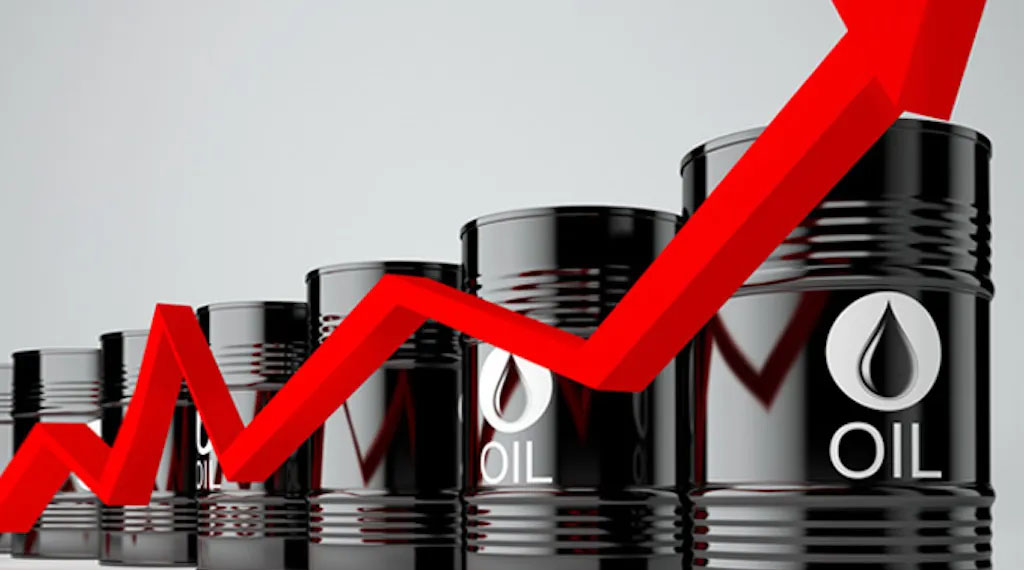
Nigerians face the prospect of higher petrol prices, increased transport fares, and renewed inflationary pressure as global crude oil prices have surged above $100 per barrel for the first time since May amid escalating conflict in the Middle East.
The surge represents about a 6.77 per cent increase on Thursday following several days of gains as the United States stepped up military strikes against Iran. Brent crude, the international benchmark against which Nigeria’s oil is priced, climbed above $100 per barrel on Thursday, July 23, 2026, reaching $100.69 after surging more than seven per cent in a single day. By 4:40 p.m. WAT, Brent crude had risen 7.43 per cent to $101.10 per barrel, while U.S. benchmark West Texas Intermediate (WTI) gained 6.77 per cent to trade at $92.71 per barrel.
The latest price rally has been driven by threats to two of the world’s most strategic shipping routes: the Strait of Hormuz, through which roughly a fifth of the world’s oil supply passes, and the Bab el-Mandeb Strait in the Red Sea. The Iran-aligned Houthi militia in Yemen has opened a new front by targeting vessels carrying Saudi oil in the Bab el-Mandeb Strait after declaring a naval blockade on shipments from Saudi Arabia. The Houthi group claimed to have attacked two Saudi oil tankers, identified as ENCELIA and LAYLA, using ballistic and cruise missiles as well as drones. The attacks have lifted global benchmark prices by about 20 per cent over the past two weeks. Several oil tankers have altered their routes, with at least five changing course in the Red Sea. The disruption has been compounded by other supply constraints. Kazakhstan has reportedly begun cutting oil production after drone attacks disrupted tanker loadings at the Caspian Pipeline Consortium terminal on the Black Sea. Indian state refiners have suspended Iraqi crude loadings because of shipping risks around Hormuz, while Russian fuel exports remain constrained following months of attacks on refinery infrastructure. Strategic petroleum reserves released by several governments since the conflict escalated have reduced emergency stockpiles, commercial inventories have continued to decline, and China has increasingly relied on previously accumulated reserves rather than fresh imports. Goldman Sachs has warned that Brent crude could climb to as high as $120 a barrel by the end of the year if exports through the strategic waterway remain disrupted.
READ ALSO:
- US Imposes 12.5% Tariff on Nigerian Imports Over Forced Labour Claims
- “Don’t Let Me Die”: Veteran Nollywood Actress Ngozi Nwosu Begs for ₦30m Surgery Fund
- Osun election: Àtàọ́ja should stop running joro-jara-joro
- Dollar to Naira Exchange Rate Today: Naira Holds Steady as Fuel Importer Demand Mounts
The surge in crude oil prices has already translated into higher costs at Nigerian pumps. The impact is already beginning to reflect in Nigeria’s downstream market, with prices at filling stations in Lagos and its environs currently ranging between N1,300 and N1,400 per litre, depending on location. In Abuja, pump prices have increased from about N1,155 per litre to approximately N1,350 per litre, adding further pressure on households and businesses already grappling with elevated living costs. Dangote Petroleum Refinery resumed gantry loading of Premium Motor Spirit (PMS) in naira on Thursday after a week-long suspension, while raising its ex-depot petrol price to N1,215 per litre, up from the previous N1,075 per litre, representing a 13.02 per cent increase. The refinery had suspended gantry and coastal loading on July 15 after introducing a dollar-denominated pricing template for refined petroleum products, a move that disrupted fuel supply and forced marketers to source products from private depots. Fresh loading data obtained from petroleum marketers showed an upward movement in ex-depot prices across Lagos, Warri and Calabar. In Lagos, A.A. Rano increased its ex-depot price from N1,275 to N1,279 per litre, while African Terminal, Ascon, Gulf Treasure, Integrated and T.Time hiked their rates to N1,275. The spokesperson of the Independent Petroleum Marketers Association of Nigeria (IPMAN), Chinedu Ukadike, confirmed that loading had resumed across depots, although it remains unclear whether purchases directly from the Dangote Refinery are now being settled in dollars.
The rise in crude oil prices presents a mixed picture for Nigeria. The 2026 Federal Government budget was benchmarked at a crude oil price of $64.85 per barrel**, daily production of 1.84 million barrels, and an exchange rate of N1,400 to the US dollar. At current prices, Nigeria is earning about **$35 more per barrel than projected, potentially generating billions of naira in additional revenue if production and exports remain stable. However, revenue gains may be moderated by lower-than-budgeted output. According to the Nigerian Upstream Petroleum Regulatory Commission (NUPRC), current oil production stands at about 1.7 million barrels per day, including condensate. More importantly, economists caution that the fiscal windfall may be outweighed by the rising cost of living, as Nigerians bear the burden of higher fuel prices under the deregulated downstream petroleum market. The Centre for the Promotion of Private Enterprise (CPPE) has warned that domestic refining alone may not significantly reduce petrol prices, as crude oil feedstock is priced using international benchmarks and denominated in US dollars.
Transport fares have already begun to rise across the country as a result of the fuel price increases. In Abuja, residents have expressed frustration over the latest increase, saying transportation costs now consume a significant portion of their earnings. A civil servant told Daily Trust: “My salary has not changed, but I now spend much more just getting to work and back. It is becoming impossible to survive in Abuja.” Any increase in petrol prices is expected to trigger fresh hikes in transport fares, with knock-on effects on the prices of food, manufactured goods, and other essential commodities across the country. The International Energy Agency (IEA) has warned that refined fuel markets remain tighter than crude supplies, meaning that markets for refined oil products, including diesel and gasoline, are considerably tighter than those for crude. IEA Executive Director Fatih Birol warned that a “full and unconditional reopening of the Strait of Hormuz” would be essential to prevent a further deterioration in global energy security.
Commenting on the development, Managing Director of Petroleumprice.ng, Jeremiah Olatide, said the downstream sector has become increasingly volatile. “With the resumption of loading by Dangote Petroleum Refinery in naira at N1,215 per litre on Wednesday, we expected fuel importers to reduce prices, and some actually did. However, the sudden spike in crude oil prices due to the Middle East crisis has disrupted that trend. We should expect more price instability in the coming weeks,” he told Vanguard. National President of the Oil and Gas Services Providers Association of Nigeria (OGSPAN), Mazi Colman Obasi, noted that while depots and filling stations had yet to implement widespread price increases, the impact could soon be felt across the economy. “The implications will be far-reaching for households, businesses and the wider economy once operators across the value chain adjust their prices,” he warned. Energy experts say the current situation reflects the realities of Nigeria’s deregulated petroleum market under the Petroleum Industry Act (PIA). Professor Dayo Ayoade, an energy law expert at the University of Lagos, explained that local petrol prices are now tied directly to international crude oil prices and exchange rate movements. The exposure of Nigeria’s local PMS markets to the vulnerabilities of an oil shock and increasing prices due to the US-Iran war will be ongoing. So long as the conflict continues, the price will go up, and Nigeria will be unable to protect itself against that higher cost.
Nigerians May Pay More for Fuel as Global Oil Prices Surge Above $100 Per Barrel
Business
Dollar to Naira Exchange Rate Today: Naira Holds Steady as Fuel Importer Demand Mounts
Dollar to Naira Exchange Rate Today: Naira Holds Steady as Fuel Importer Demand Mounts
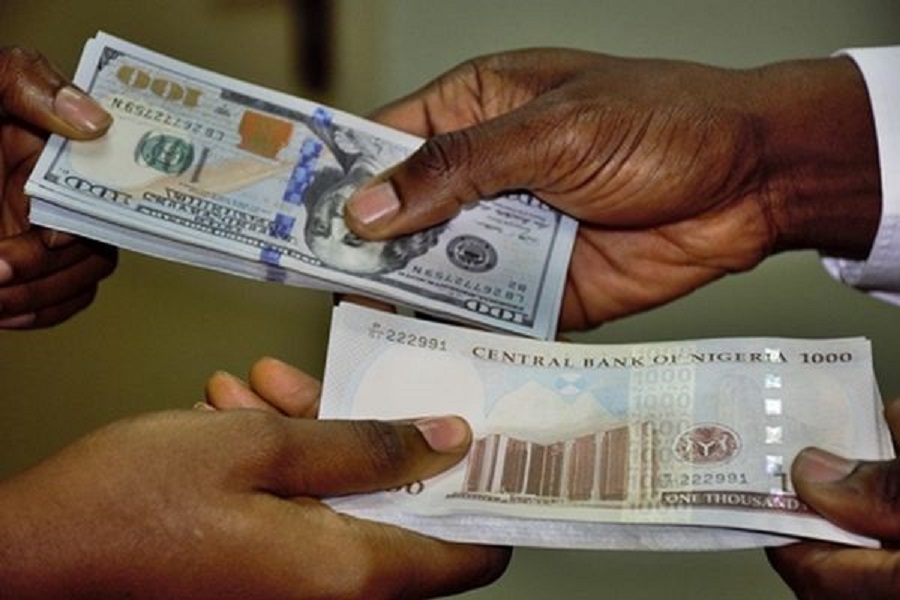
The Nigerian naira traded within a relatively stable range against the United States dollar on Friday, July 24, 2026, at both the official Nigerian Foreign Exchange Market and the parallel market, though analysts warn that increased dollar purchases by fuel importers could trigger further depreciation in the coming days.
Data from the official market showed the naira exchanging at approximately ₦1,369.92 to the US dollar at the Nigerian Foreign Exchange Market (NFEM), which serves as Nigeria’s official exchange rate benchmark. According to Central Bank of Nigeria data, the highest rate offered during trading was ₦1,370 per dollar, while the lowest rate stood at ₦1,365 per dollar. In the parallel market, commonly referred to as the black market, the dollar traded at around ₦1,420 per dollar, according to market trackers, with Bureau de Change operators buying at approximately ₦1,410 and selling at ₦1,420. Rates may differ slightly depending on location, dealer margins, and transaction volumes. Based on the prevailing official rate, $100 would exchange for about ₦136,992**, while **$1,000 would be worth roughly ₦1.37 million at the NFEM.
READ ALSO:
- Senate Bill Requiring Social Media Offices in Nigeria Gains Stakeholder Support at Public Hearing
- Army Declares Soldier Wanted Over Alleged Sale of Military Uniforms to Terrorists
- Igboho Launches Iru Ekun Security Network in Kwara, Vows to Reclaim Forests from Bandits
The naira is coming under renewed pressure as fuel importers increase foreign exchange purchases to build inventories, according to a Reuters report cited by The Punch. The Nigerian currency, alongside those of Ghana and Uganda, is projected to weaken against the dollar over the next week, while Kenya’s shilling and Zambia’s kwacha are expected to remain broadly stable. The anticipated depreciation is attributed to increased demand for foreign exchange by fuel importers who have been granted licences by the Nigerian Midstream and Downstream Petroleum Regulatory Authority (NMDPRA) to import refined petroleum products for the July–September period. Importers including AA Rano, AYM Shafa, Bono, NIPCO, and Pinnacle are building inventory for the quarter, requiring significant foreign currency purchases that are outpacing supply and creating downward pressure on the naira. A trader told Reuters that the local currency was likely to face downside risks as importers sought more dollars to finance fuel purchases. “We expect the naira to come under pressure, with downside risks skewed toward a depreciation as fuel importers front-load dollar purchases to build inventories,” the trader said.
The naira showed some strength earlier in the week as foreign exchange market activity surged dramatically. On Tuesday, July 21, **total turnover at the NFEM climbed to $1.5 billion**, up 87.63 per cent from $816.79 million recorded the previous day. The spike in trading volume lifted the naira on both official and parallel markets, with the dollar falling to N1,375.31 at the NFEM, representing a 0.35 per cent gain. The number of transactions executed at the NFEM also increased by 16.79 per cent to 313 on Tuesday from 268 the day before. The spread between the official and parallel market rates remained relatively narrow compared with previous years, reflecting ongoing foreign exchange reforms and improved market liquidity. The narrowing gap to approximately 1.8 to 2.38 per cent signals improving alignment between official and street prices, down significantly from historic highs. CBN Governor Olayemi Cardoso has credited ongoing reforms for pushing Nigeria’s net foreign reserves from about $3 billion to over $40 billion. Nigeria’s gross external reserves have continued to rise, reaching $51.743 billion, supported by crude oil earnings and stronger foreign portfolio investment inflows. However, analysts caution that reserve growth alone may not be enough to ease parallel market pressure if dollar demand continues to exceed official supply.
The Central Bank of Nigeria determines the official NFEM exchange rate using a volume-weighted average of transactions executed in the market, while parallel market rates are driven by demand and supply among currency dealers. It is important to note that the Central Bank of Nigeria does not recognize the parallel market, as it has directed individuals who want to engage in foreign exchange transactions to approach their respective banks. Rates at which individuals buy or sell forex may differ from published rates because prices vary by location, dealer margins, and transaction volumes.
Market observers noted modest fluctuations driven by supply conditions, demand from importers, and recent developments in the petroleum sector, including the resumption of naira-based sales at the Dangote Refinery. The Reuters projection comes amid growing concerns by downstream operators that continued fuel imports are increasing demand for foreign exchange despite rising domestic refining capacity. Businesses and individuals relying on foreign exchange continue to monitor these daily movements closely, as they directly affect import costs, remittances, and everyday transactions.
Dollar to Naira Exchange Rate Today: Naira Holds Steady as Fuel Importer Demand Mounts
Auto
Nigeria Takes Centre Stage at UN Road Safety Summit as Tinubu Delegates FRSC Corps Marshal

Nigeria Takes Centre Stage at UN Road Safety Summit as Tinubu Delegates FRSC Corps Marshal
President Bola Ahmed Tinubu has reinforced Nigeria’s commitment to the global campaign against road traffic fatalities by appointing the Corps Marshal of the Federal Road Safety Corps (FRSC), Shehu Mohammed, to lead the country’s delegation to the United Nations High-Level Meeting on Improving Global Road Safety in New York, United States.
The high-level gathering at the United Nations General Assembly Headquarters has brought together Heads of State, ministers, global policymakers and road safety experts to review progress and accelerate efforts towards achieving the UN target of reducing road traffic deaths and serious injuries by 50 per cent before 2030 under the Decade of Action for Road Safety.
Representing President Tinubu at the plenary session, Shehu Mohammed delivered Nigeria’s national statement on the meeting’s theme, “Scaling Up and Accelerating Implementation of Commitments to Halving Road Traffic Deaths and Injuries by 2030.”
He reaffirmed the Federal Government’s determination to strengthen road safety governance through sustained political commitment, strategic investments, innovation and stronger international partnerships in line with the administration’s Renewed Hope Agenda.
The Corps Marshal highlighted the significant progress Nigeria has recorded in advancing road safety, noting that the Federal Government has strengthened the institutional capacity of the FRSC through strategic reforms, technology-driven enforcement systems, enhanced emergency response mechanisms and intensified public education campaigns aimed at reducing crashes and fatalities.
He also showcased Nigeria’s growing influence in road safety across Africa, citing the recent launch of the Nigeria Road Assessment Programme (NigeriaRAP) in partnership with the International Road Assessment Programme (iRAP).
According to him, the initiative adopts the globally recognised Safe System Approach to improve road infrastructure safety and reduce crash risks.
Mohammed further pointed to Nigeria’s role as host of the Secretariat of the African Association of Road Safety Lead Agencies (AARSLA), describing it as a strategic platform for promoting collaboration, knowledge sharing and institutional development among road safety agencies across the continent.
On sustainable transportation, the FRSC boss told delegates that Nigeria is aligning its mobility agenda with global environmental goals through the Presidential Initiative on Compressed Natural Gas (CNG) and Electric Vehicles (EVs), while developing comprehensive safety standards for heavy-duty vehicles and emerging transport technologies.
While acknowledging the progress already made, Mohammed stressed that achieving the 2030 target would require stronger international cooperation in areas such as intelligent enforcement technologies, road infrastructure safety assessments, institutional capacity development and technology transfer.
He therefore urged development partners and the international community to expand technical cooperation and support capacity-building programmes that would help countries accelerate the implementation of global road safety commitments.
Reaffirming Nigeria’s position, the Corps Marshal declared that road safety remains a national priority under President Tinubu’s administration, assuring the global community that the country would continue to collaborate with international partners to build safer roads, save more lives and contribute meaningfully to the attainment of the Sustainable Development Goals.
The UN High-Level Meeting, convened by the President of the United Nations General Assembly in collaboration with the World Health Organization (WHO), is expected to adopt a Progress Declaration that will shape global road safety actions towards meeting the 2030 target.
The meeting is also reviewing countries’ progress since the 2022 Political Declaration and the Fourth Global Ministerial Conference on Road Safety held in Marrakech, Morocco, in 2025.
-

 metro2 days ago
How to apply for FG’s YouthCred loan and qualify for up to ₦2 million
-

 News2 days ago
NACOMYO urges greater Muslim youth participation in politics at Lagos summit
-

 Politics2 days ago
Ondo Speaker given Sunday deadline to resign or face impeachment
-

 Opinion2 days ago
UI, UCH and the Question of Inclusive Leadership
-

 Politics3 days ago
2027: North-Central group backs Tinubu for second term, says re-election ‘done deal’
-

 Education3 days ago
High graduation fees spark outrage among parents, guardians
-

 News2 days ago
Kalu denies ₦1bn church budget claim, says actual allocation is ₦780m
-

 Politics3 days ago
Atiku’s lobbying firm sends Tinubu’s forfeiture records to US Congress