

metro
EndSARS: Controversy as panel members, govt clash over alleged technicalities, discrepancies in report
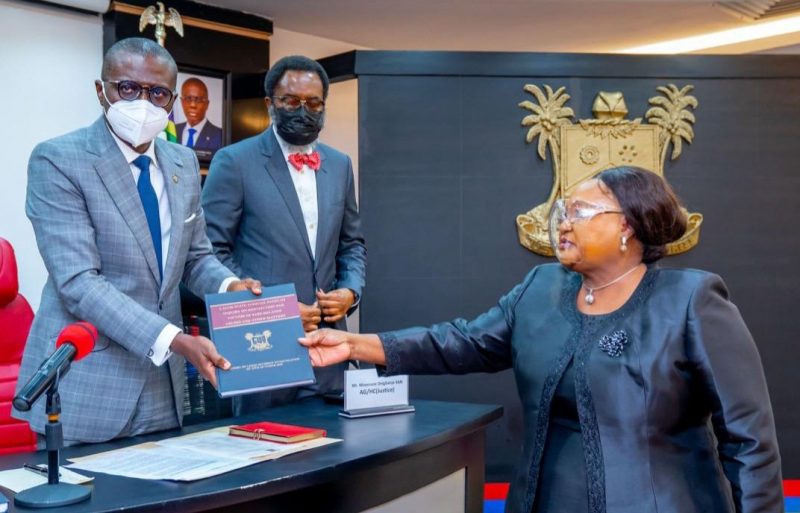
The leaked report by the Lagos State Judicial Panel of Inquiry and Restitution on Lekki Toll Gate Shooting Incident and Cases of Police Brutality as well as human rights violations, is currently generating controversy across the country.
DAILY POST reports that the panel which was set up by the state government to investigate the allegations of killings at the Lekki Tollgate during the EndSARS protest in October 20, 2020, submitted its report to the state government on Monday, October 15.
The 309-page report which went on circulation since Monday has indicted the Nigerian Army and the Police of being responsible for the death of protesters at the Lekki Tollgate, admitting that there was a massacre.
The report has, however, generated controversies from concerned Nigerians who called out the presidency over its constant claim that there was no such killings by the Nigerian army and the police.
READ ALSO:
- Gunmen kidnap ex-Imo deputy governor’s father
- 7 female Maulud celebrants drown as boat capsizes in Jigawa
- N32bn debt: I’ll soon take over GTB, says Innoson boss
Many stakeholders have lambasted President Muhammadu Buhari over the content of the report, accusing him of masterminding the massacre of the Nigerian youths who were protesting against extrajudicial killings by the police particularly the disbanded Special Anti-Robbery Squad, SARS.
DAILY POST recalls that a former presidential aide, Reno Omokri, upon sighting the report, swiftly issued a petition on the change.org platform against the president, saying Buhari ordered the shooting which led to the death of unspecified Nigerian youths.
Following the report which is currently being studied by the Lagos State government, the former presidential aide petitioned Buhari for allegedly ordering the Lekki shooting.
As of 8pm on Friday when DAILY POST visited the website, it was observed that about 86, 000 Nigerians have signed the petition which is directed to the International Criminal Court – ICC, to prosecute the President over the allegations.
According to Omokri, the petition will be submitted to the President of the ICC, Piotr Hofmański after it receives hundred thousand (100,000) signatures.
He said, “By the grace of God, Buhari will retire to prison in 2023 and all future Presidents will see that there is a consequence to the mass murder of Nigerians by the state.”
READ ALSO:
- BREAKING: Boko Haram kidnap 22 girls in Rafi, Niger for marriage
- Troops kill 11 ISWAP terrorists in Borno
- Breaking: Reprive as railway workers call off strike
DAILY POST also recalls that Anthony Ehilebo, the Peoples Democratic Party, PDP, Director of New Media, on Thursday called for the sack of Lai Mohammed, the Minister of Information and Culture, over the EndSARS panel report.
Ehilebo who expressed anger over the controversy surrounding the Lekki shooting and the findings of the panel, also called for the immediate removal of former Chief of Army Staff, Lt. Gen. Tukur Buratai’s immunity to expose him to the wrath of the law.
It could be recalled that the Benin branch of the Nigerian Bar Association while reacting to the report, commended the panel for its timely finding, advising other states who had set up such panels to make their reports public to engender public confidence.
Similarly, the Peoples Democratic Party (PDP), while speaking on the report, described the ruling All Progressive Congress (APC) as a “murderous party”.
The opposition party, in a statement by Ita National Publicity Secretary, Kola Ologbondinya, on Tuesday, said the report of the panel confirming the gruesome killings of innocent youths, strengthened the fact that the APC was running a “murderous and oppressive regime”, that has no regard for life.
Following the outrage by Nigerians who stormed the various social media to express their grievances, the Lagos State Government on Wednesday, warmed those accusing it of killing the unarmed protesters.
A statement issued on Wednesday by the Information Commissioner, Gbenga Omotoso, appealed to the people to watch their words
Also, the Lagos State Government’s lawyer, Abiodun Owonikoko, SAN, blamed the panel for making its findings, recommendations and conclusions available to the general public.
READ ALSO:
- BREAKING: Hilton Hotel owner, Adedoyin, speaks from detention, says ‘I know nothing about OAU student’s death’
- Buhari to Igbo Leaders: I’ll consider your demand for Nnamdi Kanu’s release, but…
- I’ll handle Super Eagles better than Gernot Rohr ― Orji Kalu
While claiming that there are at least 40 discrepancies in the report, he said it should not be in the news pending the original copy. Owonikoko also said that the content of the report is not completely accurate.
But the head of the panel, Ebun-Olu Adegboruwa SAN, on Friday, insisted that he acted on the mandate of the Governor, Babajide Sanwo-Olu, to fulfill his promise by making its findings public.
He raised the alarm over the alleged persecution of panel members, saying that since the report of its findings was submitted to the state government on Monday, some of them have been under media attacks.
Mr Adegboruwa said in his statement that members of the panel are being “unfairly persecuted,” and called names by some officials of the government.
Recall also that the United States, US Mission in Nigeria on Tuesday while welcoming the report, said America awaits the response from President Muhammadu Buhari’s government and the Lagos authorities, urging them to act fast on the report.
Responding to that, President Buhari on Thursday while meeting with the US Secretary of State, Antony Blinken, said that the Federal Government will allow the system to exhaust itself, stressing that it will wait for pronouncements from state governments that have set up panels to probe the alleged police brutality in the country.
This has also triggered reactions as some Nigerians alleged that the government is unhappy with the report and was probably expecting the panel to remain silent like other previous cases.
Some respondents told DAILY POST that the government is currently struggling and finding a way to still cover up the massacre with lies.
A current affair analyst, Mr John Ameh who spoke to our correspondent, said, “I actually commend the Lago panel. They have done so well. From the reactions of the government, you can see that they were not expecting the panel to reveal the truth.
“This is how the Federal Government and even most states have been inaugurating panels to investigate crimes and at last, no report will come out. This one ‘choke’ them well.
“Even when the panels submit their reports, you find out that it will not be implemented and nothing will be heard about it again”.
He recalled the case of Human Rights Violations Investigation Commission of Nigeria, also called the Oputa Panel, which was set up by the former President, Olusegun Obasanjo to investigate the military dictatorship that controlled the country until 1998.
According to him, nothing has been done on the report till date, alleging that the federal and Lagos State government expected the panel on Lekki to take a similar step.
DAILY POST also reports that the recommendations of the Steve Oronsaye Panel on rationalisation of ministries, agencies and parastatals which was set up by the former President, Goodluck Jonathan is yet to be implemented by the Federal Government.
Recall also that the report of the panel headed by the Kaduna State Governor, Nasir El-Rufai on restructuring has not been implemented till date and government has taken no further actions.
Daily Post







metro
Delta Police Intercept Sienna With Military Uniforms, Suspected Drugs
Delta Police Intercept Sienna With Military Uniforms, Suspected Drugs
The Delta State Police Command has intercepted a Toyota Sienna allegedly conveying military camouflage uniforms, boots, hats and cartons of suspected illicit drugs, arresting the driver in the process.
The interception was carried out on Friday, September 18, 2026, by operatives of the command’s Anti-Cult Unit (CACU), Asaba, following intelligence about the movement of the vehicle from Onitsha in Anambra State towards Ondo State.
The police said operatives mounted surveillance along the anticipated route and intercepted a green Toyota Sienna with registration number KP 527 AAA at about 4:50am.
The vehicle was allegedly driven by Isaac Urji, 45, from Abia State, who was arrested after the search.
According to the police, officers recovered cartons of substances suspected to be Tramadol and other illicit drugs, alongside military camouflage uniforms, boots and hats.
The Delta State Police Public Relations Officer, SP Bright Edafe, disclosed the development in a statement made available to journalists in Warri on Saturday.
Edafe said investigation had commenced to determine the source and intended destination of the recovered items and identify other people who may have been connected with the consignment.
The interception comes amid a wider crackdown by the command on kidnapping, cultism, illicit drugs and illegal firearms across Delta State.
In a separate operation on September 18, operatives of the Special Anti-Kidnapping Unit (SAKU), Sector III, Ubulu-Uku, arrested two suspected cultists at Alisheme Community in Ika South Local Government Area.
READ ALSO:
- Jehovah’s Witnesses Adjust Blood Transfusion Rules, Allow Personal Choice
- Ogun 2027: APC Highlights Adeola’s Projects, Challenges Adebutu
- Akpabio Links Okowa’s APC Defection to EFCC Investigation
The suspects, identified as Destiny Okafor, 18, and Sunday Bryan, 22, were allegedly linked to cultism and kidnapping-related activities.
Police said preliminary investigations indicated that the two suspects identified themselves as members of the NBM Confraternity. Officers reportedly recovered a locally fabricated single-barrel gun, a battle axe, two cutlasses, mobile phones and a laptop.
In another operation on September 15, police and other security personnel conducted a cordon-and-search operation around Ogboli Quarter and other areas of Issele-Uku in Aniocha North Local Government Area following intelligence about suspected cult activities.
Four suspected cultists were arrested during the operation, while police said they recovered two locally made pistols, one pump-action gun and six live cartridges.
The arrests and recoveries are part of the Delta Police Command’s intelligence-led operations targeting criminal activities across the state.
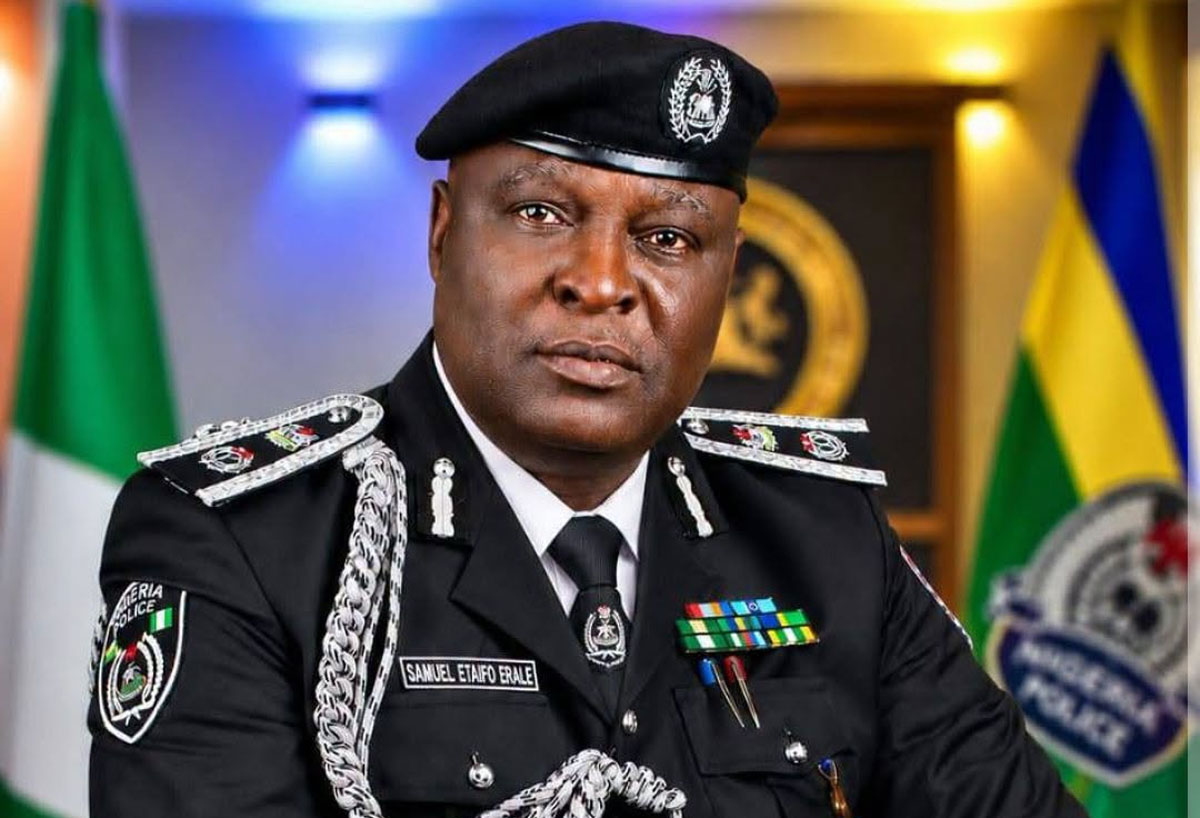
The Commissioner of Police, CP Samuel Erale, said the command would sustain operations against kidnapping, cultism and the proliferation of illegal firearms.
He also urged residents to continue providing credible information to security agencies, assuring the public that information supplied to the police would be treated confidentially.
Meanwhile, the driver arrested in connection with the intercepted Sienna remains in police custody as investigators work to establish the circumstances surrounding the movement of the military uniforms and suspected illicit drugs.
The police have not announced any charges against the suspect, and the investigation is expected to determine whether other individuals were involved in the consignment.
Delta Police Intercept Sienna With Military Uniforms, Suspected Drugs
metro
Jehovah’s Witnesses Adjust Blood Transfusion Rules, Allow Personal Choice
Jehovah’s Witnesses Adjust Blood Transfusion Rules, Allow Personal Choice
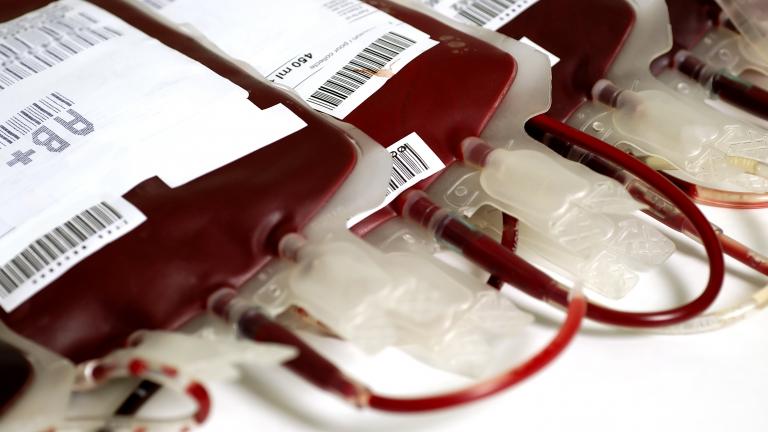
The Jehovah’s Witnesses have announced a major adjustment to their longstanding blood transfusion policy, allowing individual members to decide according to personal conscience whether to accept or donate four major blood components.
The new position covers red blood cells, white blood cells, plasma and platelets derived from another person’s blood. The decision was announced by the organisation’s Governing Body on Friday, September 18, 2026, from its World Headquarters in Warwick, New York.
Under the revised policy, members can personally decide whether to accept medical treatment involving any of the four components. They can also decide whether to donate blood for the production of components or fractions intended for another person’s treatment.
The organisation stressed that its prohibition on whole-blood transfusions remains unchanged. The position is based on its interpretation of the biblical instruction to “abstain from blood.”
Jehovah’s Witnesses said decisions involving the four components are now matters of individual conscience, meaning local congregations are not to interfere with or judge members over such choices.
International spokesman Paul Gillies said the organisation continued to regard blood and life as sacred while recognising that decisions concerning the four components should be made personally by individual Witnesses.
READ ALSO:
- Ogun 2027: APC Highlights Adeola’s Projects, Challenges Adebutu
- Akpabio Links Okowa’s APC Defection to EFCC Investigation
- Barau Sacks Aide Over ‘Abba Must Go’ Social Media Posts
The adjustment follows a policy clarification announced in March 2026 concerning the use of a member’s own blood during medical procedures. That position also left the decision to individual conscience where blood is removed, stored and subsequently returned during treatment.
According to the organisation, the latest decision reflects its interpretation that the Bible does not specifically address whether members should accept the four primary blood components in medical treatment.
The organisation said its members seek professional medical care and do not practise faith healing. It also said healthcare professionals should discuss individual decisions concerning blood components directly with patients and respect those choices.
The medical uses of the components vary. Red blood cells can be used to replace blood lost through surgery or serious injury, while platelets help manage certain bleeding conditions. Plasma is used in several treatments involving bleeding and clotting disorders, while white blood cells have more specialised clinical applications.
The Associated Press reported that the revised policy permits members to receive products derived from donated blood while retaining the prohibition on whole-blood transfusions.
Jehovah’s Witnesses said the organisation has more than nine million members worldwide, with congregations in more than 200 countries and territories.
The September decision represents a significant change in the organisation’s approach to the four major blood components, with responsibility for accepting or donating them now placed on individual members.
The ban on whole-blood transfusions, however, remains in place.
Jehovah’s Witnesses Adjust Blood Transfusion Rules, Allow Personal Choice
metro
Akpabio Links Okowa’s APC Defection to EFCC Investigation
Akpabio Links Okowa’s APC Defection to EFCC Investigation
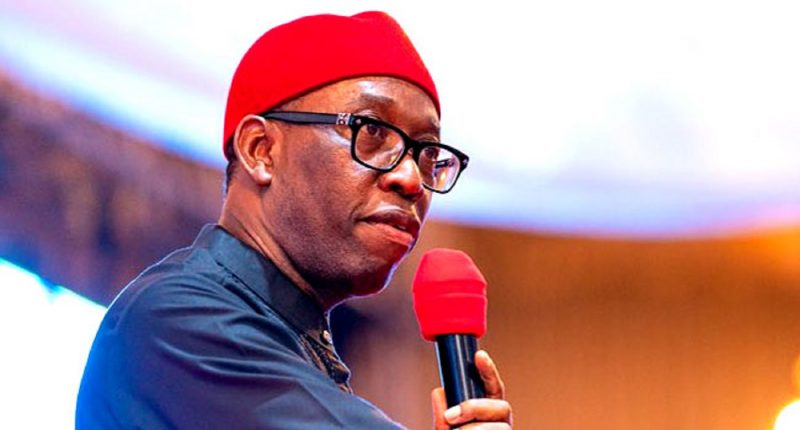
Senate President Godswill Akpabio has alleged that former Delta State Governor Ifeanyi Okowa joined the All Progressives Congress (APC) partly because of concerns over an ongoing investigation by the Economic and Financial Crimes Commission (EFCC).
Akpabio made the allegation while discussing political developments in Delta State in an audio recording involving Sandra Duru, which was circulated publicly and reported by Nigerian media organisations.
According to reports quoting the recording, Akpabio said Okowa’s defection to the APC was influenced by fears surrounding the corruption allegations against him, rather than solely by political considerations.
The Senate President was also quoted as saying that Okowa was not involved in discussions surrounding the emergence of the current APC leadership, claiming that key decisions had already been taken before the former governor joined the party.
Akpabio further claimed that he played a role in helping Okowa secure the APC senatorial ticket for Delta North ahead of the 2027 general elections.
The allegation has emerged against the backdrop of the EFCC investigation into Okowa, which dates back to his tenure as Delta governor between 2015 and 2023.
Okowa was arrested and questioned by the EFCC in November 2024 over allegations involving the management of funds accruing to Delta State through the 13 per cent derivation allocation from the Federation Account.
The investigation has also focused on alleged investments and assets associated with the former governor, including interests linked to the UTM Floating Liquefied Natural Gas (FLNG) project and properties in Asaba and Abuja.
Okowa has denied wrongdoing and previously said he was not afraid of being investigated, maintaining that funds belonging to Delta State were used appropriately during his administration.
The former governor’s political move to the APC did not bring the EFCC investigation to an end.
READ ALSO:
- Barau Sacks Aide Over ‘Abba Must Go’ Social Media Posts
- Niger Miners’ Deaths: FG Suspends 21 NSCDC Officers, Releases Names
- Adeyanju Rejects Payment for Niger Miners’ Probe, Vows to Expose Any Cover-Up
The anti-graft agency has previously stated that Okowa’s defection to the APC would not stop its investigation. In a more recent development, Okowa visited the EFCC’s Lagos office in June 2026 amid the continuing investigation.
Reports at the time said the visit was connected with efforts to secure the release of his international passport to enable him to travel abroad for medical treatment. There was no indication that the visit amounted to a fresh arrest.
The EFCC has maintained that the investigation remains active. Its Director of Legal and Prosecution, Sylvanus Tahir, SAN, was quoted as saying that the case was still undergoing investigation and that the commission would act based on its findings.
The continuing investigation is significant in assessing the context of Akpabio’s latest allegation, but the EFCC’s position does not establish that the investigation was the reason for Okowa’s defection.
Okowa joined the APC in April 2025, alongside his successor, Delta State Governor Sheriff Oborevwori, several commissioners, local government chairpersons and other political leaders who previously belonged to the Peoples Democratic Party (PDP).
At the time, Okowa explained the decision in terms of Delta State’s relationship with the Federal Government.
He said the state needed to establish stronger links with the Federal Government in Abuja because of its contribution to the national economy and the resources available at the federal level.
The former governor had previously served as the PDP’s vice-presidential candidate alongside Atiku Abubakar in the 2023 presidential election.
His subsequent move to the APC represented a significant political realignment in Delta State and brought him into the same party as Governor Oborevwori and other former PDP leaders in the state.
Okowa has since secured the APC ticket for the Delta North senatorial contest scheduled for the 2027 elections.
Akpabio, who represents Akwa Ibom North-West Senatorial District, has also become involved in the political arrangements surrounding Okowa’s new role within the APC.
The Senate President’s latest comments have nevertheless raised questions about the circumstances surrounding the former governor’s defection, particularly because the EFCC investigation remains unresolved.
However, no public evidence has established that Okowa joined the APC in order to stop or avoid prosecution by the EFCC. Akpabio’s statement is an allegation about the former governor’s motivation, while Okowa’s publicly stated reason for joining the APC centred on the political and developmental interests of Delta State.
The allegations also come as political parties and their leading figures intensify preparations for the 2027 general elections, with defections and alliances continuing to reshape party structures across the country.
For now, the established position is that the EFCC investigation involving Okowa remains ongoing, while the reason Akpabio has attributed to the former governor’s APC defection remains his own claim.
The outcome of the EFCC investigation and any future response from Okowa could provide further clarity on the issues surrounding the allegations.
Akpabio Links Okowa’s APC Defection to EFCC Investigation
-
 metro3 days ago
Niger Mosque Abductions: Terrorists Execute 30 of 500 Captive Muslim Worshippers
-

 Business2 days ago
Fuel Prices Climb to ₦1,500 per Litre Across Nigeria, Sparking Calls for Urgent Action
-
 News2 days ago
OAU Investigates Death of Final-Year Student as Police Begin Probe
-
 News1 day ago
ECOWAS Biometric Card Expands as Seven Countries Begin Rollout
-
 metro3 days ago
US-Based Nigerian Lawyers Disbarred: Full List of Fraud, Theft and Misconduct Cases
-
 Politics2 days ago
Aisha Buhari Visits Atiku Amid Opposition Coalition Activities
-

 Business2 days ago
NCAA Moves Against Airlines Over Rising Flight Delays
-
 Interview2 days ago
He Does Not Lose Elections”: Abdulmumin Jibrin Predicts 65% Landslide for Tinubu in 2027