

Politics
Saraki announces plans to contest 2023 presidential election
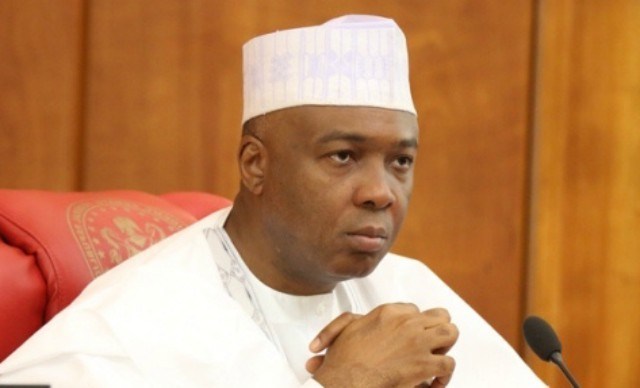
Former Senate President, Dr. Bukola Saraki, yesterday informed Governor Samuel Ortom, elders and members of the State Working Committee, SWC, of the Peoples Democratic Party, PDP, in Benue State of his intention to contest the presidency in 2023.
The former Kwara State governor was accompanied to Makurdi by the former Governor of Kogi State, Idris Wada, former National Chairman of the PDP, Kawu Baraje, Senator Suleiman Adokwe and the Chairman of Council, Saraki for President Campaign, Prof. Iyorwuese Hagher.
Addressing the gathering, Dr. Saraki said among others; “A political party that cannot organize its affairs has no business leading this country. A party that has organized its affairs is ready to lead the country and that is the PDP.”
READ ALSO:
- EndSARS: Real reason Buhari govt is discrediting panel report – Law Mefor
- EFCC arrests Fani-Kayode for ‘forgery’
- Kidnapped government secondary school students, others rescue in Zamfara
According to him; he was in the state for a private meeting with the governor who as a good party man insisted that he should speak with the party leaders saying that the North Central Zone had paid its due by working so hard to keep the country together as one united entity insisting that “this time we must stand for our own and charity they say begins at home.”
Receiving the former Senate President and his entourage, Governor Ortom said Dr. Saraki was one Nigerian who contributed so much to the development of democracy in Nigeria.
Governor Ortom who stated that it was time to rescue the country from the bottom position it descended to, under the APC led federal government, to the top noted that Dr. Saraki was the first from the North Central zone to indicate interest in the presidency and would therefore be treated as such.
Speaking on behalf of members of the SWC, Chairman of the party in the state, Sir John Ngbede, represented by his deputy, Mr. Isaac Mfo, said the party in the state was solidly behind Governor Ortom and would support any acceptable aspirant.
Vanguard







Politics
Olawepo-Hashim: My Political Ideology Differs From Obi, Atiku

Olawepo-Hashim: My Political Ideology Differs From Obi, Atiku
Accord Party presidential candidate Gbenga Olawepo-Hashim has sought to distinguish his political philosophy from those of former Anambra State Governor Peter Obi and former Vice President Atiku Abubakar, saying the three politicians do not share the same political ideology.
Olawepo-Hashim’s position comes as political parties and opposition figures continue to realign ahead of the 2027 presidential election, with competing platforms emerging from the broader opposition movement.
The former presidential aspirant has repeatedly argued that Nigerian politics should be driven by clearly defined policies and ideology rather than alliances formed principally around personalities or the immediate objective of winning elections.
His comments also reflect his longstanding emphasis on economic policy, federalism, electoral reform, institutional governance and political restructuring.
Olawepo-Hashim has particularly used the issue of fuel subsidy removal to highlight differences between his position and that of Atiku.
He has criticised Atiku’s past position on petroleum subsidy and questioned subsequent calls for a targeted subsidy, arguing that politicians who change their positions on major economic policies should explain the reasons for such changes to Nigerians.
The Accord candidate has maintained that he opposed the removal of petroleum subsidy and believes government policy should take into account its effect on households, businesses and the productive economy.
Beyond subsidy policy, Olawepo-Hashim has argued that Nigeria’s political challenges cannot be resolved simply by changing the occupants of political offices.
READ ALSO:
- Ortom and His 23 Cars’ ‘Bonus’, by Dele Sobowale
- Abuja Demand Rises as Jetour Brings X70 Plus Experience to FCT
- Enough Is Enough: Muslim Supporters Demand New Man United Owners
He has advocated stronger institutions and a more decentralised political system, while distinguishing federalism from the practice of rotating political offices among geopolitical zones.
His position on political restructuring has been a recurring feature of his public interventions, including his criticism of the country’s electoral system and the role of institutions in guaranteeing credible elections.
The politician has also become embroiled in a legal dispute over his status as the Accord Party presidential candidate for the 2027 election.
Following the publication of the final list of candidates, Olawepo-Hashim’s name was omitted. He subsequently maintained that he remained the party’s duly nominated candidate and that the dispute was before the courts.
He said he emerged from an Accord presidential primary held on May 30, 2026, which he said was monitored by electoral officials, and argued that an administrative decision could not finally determine a candidate’s eligibility where a court case was pending.
The development has added another dimension to the political contest involving Olawepo-Hashim and Accord as parties prepare for the 2027 election.
Meanwhile, the opposition landscape has continued to change following the formation of a coalition involving Atiku, Obi and other political figures.
Obi is now the presidential candidate of the Nigeria Democratic Congress (NDC), while Atiku is the presidential candidate of the African Democratic Congress (ADC). The earlier coalition that brought the two politicians and other opposition leaders together has since developed into separate political platforms.
Olawepo-Hashim has therefore positioned his campaign separately from both politicians, stressing what he describes as differences in political philosophy and policy priorities.
His comments come against the backdrop of renewed efforts by opposition groups to build alliances ahead of the 2027 poll. However, disagreements over presidential candidates, party structures, zoning and policy positions have continued to shape the opposition landscape.
For Olawepo-Hashim, the distinction between his political approach and those of Obi and Atiku goes beyond party affiliation.
He has argued that Nigerians should assess political leaders based on their policy programmes, ideological positions, institutional reform proposals and approach to governance, rather than simply on the strength of political alliances.
His campaign has continued to focus on issues including economic restructuring, democratic reform, electoral credibility, federalism and strengthening institutions.
The differences he has highlighted between himself, Obi and Atiku are therefore part of his broader effort to establish a distinct political identity ahead of the 2027 Nigeria presidential election.
As the election approaches, the competing positions of opposition politicians are likely to remain a major feature of the political debate, particularly as parties continue negotiations and legal disputes over candidates and alliances.
Olawepo-Hashim: My Political Ideology Differs From Obi, Atiku
Politics
Ogun 2027: APC Highlights Adeola’s Projects, Challenges Adebutu
Ogun 2027: APC Highlights Adeola’s Projects, Challenges Adebutu
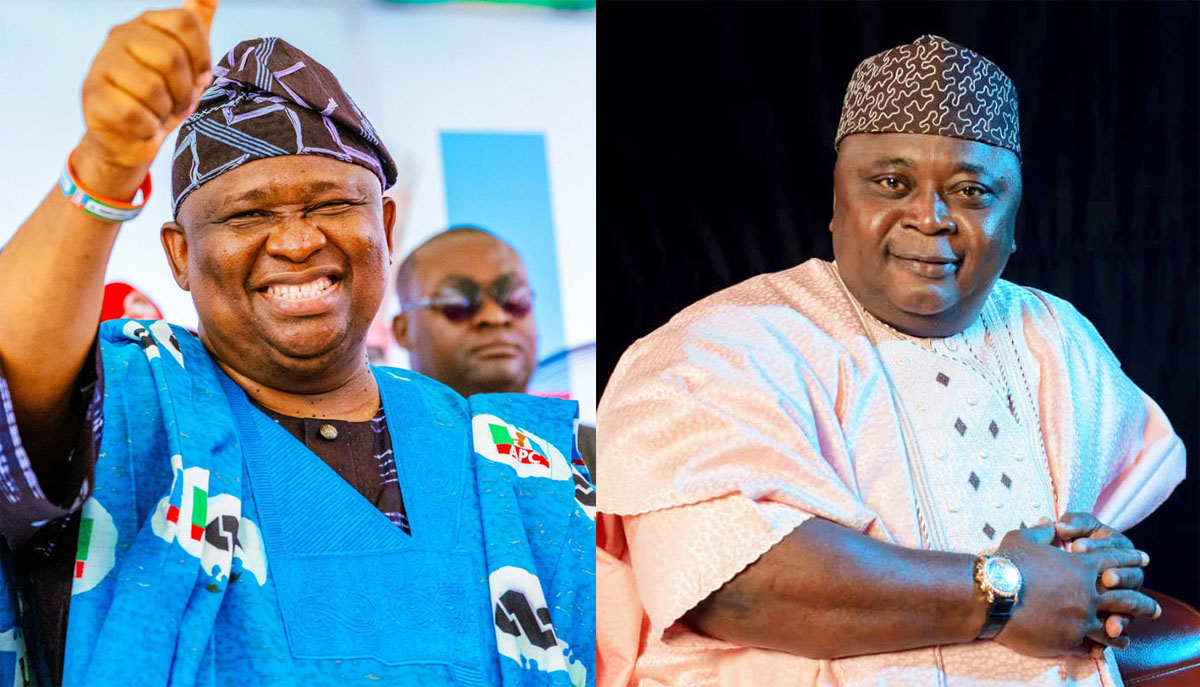
The All Progressives Congress (APC) Student Affairs Committee of the Ogun State 2027 Campaign Council has challenged the Peoples Democratic Party (PDP) governorship candidate, Ladi Adebutu, to present his personal record of public service and verifiable achievements ahead of the 2027 Ogun State governorship election.
The committee said the forthcoming Ogun 2027 governorship election should be centred on ideas, policies, measurable achievements and the capacity of the candidates to address the needs of residents rather than political rhetoric, personal attacks or distractions.
The challenge was contained in a statement issued on Saturday by the committee’s chairman, Comrade Samson Ajasa Adeyemi.
Adeyemi urged Adebutu to bring his record to the table and allow voters to assess what he has personally contributed to the development of Ogun State, particularly in areas affecting students, teachers, young people, artisans, traders and other residents.
According to the APC committee, the election should provide an opportunity for the candidates to explain their previous public service records, policy proposals and plans for the state.
The committee specifically highlighted the activities and interventions of the APC governorship candidate, Senator Solomon Olamilekan Adeola, popularly known as Yayi, as examples of what it described as measurable constituency and community interventions.
It claimed that 5,513 Ogun students benefited from the third edition of Adeola’s scholarship and bursary programme in July 2026.
READ ALSO:
- Akpabio Links Okowa’s APC Defection to EFCC Investigation
- Barau Sacks Aide Over ‘Abba Must Go’ Social Media Posts
- Niger Miners’ Deaths: FG Suspends 21 NSCDC Officers, Releases Names
The committee also cited what it said were 53 constituency projects covering areas including roads, education, healthcare, security and commerce during the third anniversary of Adeola’s tenure.
It further claimed that the Oloja Yayi Market Support Fund provided ₦750 million in direct grants to 10,000 traders across Ogun State’s three senatorial districts.
The APC group said such interventions should be subjected to public scrutiny and compared with the records and programmes of other candidates in the 2027 Ogun governorship race.
Adeyemi challenged Adebutu to similarly identify projects, programmes or other measurable interventions he had personally undertaken or facilitated for the people of Ogun State.
He said the committee was not interested in achievements associated with family background or inherited business interests, but wanted the PDP candidate to present his own record of public service and contributions.
The chairman said the challenge was particularly important because students and other young people needed to understand what each candidate had done previously and what they intended to do if elected governor.
The APC committee also called for a campaign focused on issues affecting education, human capital development, infrastructure, economic empowerment and employment opportunities.
The latest exchange is part of the emerging political contest ahead of the 2027 Ogun State governorship election, with Adeola representing the APC and Adebutu representing the PDP.
Questions surrounding political experience, development records, policy proposals and campaign messaging are expected to feature prominently as the election approaches.
The debate has also included arguments over the relevance of ancestry and political identity in the governorship contest. In a separate intervention, APC chieftain Kayode Oladele had urged political parties to focus their campaigns on candidates’ records, policies and programmes rather than ancestry.
Oladele argued that the constitutional qualifications for a governorship candidate do not include belonging to a particular ancestral group or part of a state, while urging political parties to present alternative policies and programmes for voters to assess.
The APC Student Affairs Committee similarly said Ogun residents should be presented with sufficient information to compare the candidates’ records, programmes and development proposals.
The committee’s position, however, represents the campaign council’s political assessment and claims, which remain subject to verification and comparison with the records and policy positions presented by other candidates and political parties.
With the Ogun 2027 election still ahead, the emerging campaign rhetoric is increasingly shifting towards questions of experience, previous performance, development interventions and the policy direction each candidate intends to pursue if elected.
Ogun 2027: APC Highlights Adeola’s Projects, Challenges Adebutu
Politics
Barau Sacks Aide Over ‘Abba Must Go’ Social Media Posts

Barau Sacks Aide Over ‘Abba Must Go’ Social Media Posts
Deputy President of the Senate, Senator Barau I. Jibrin, has terminated the appointment of his Special Legislative Aide, Umar Alhassan, popularly known as King Indara, following social media posts calling for the removal of Kano State Governor Abba Kabir Yusuf.
Alhassan, a popular Kano-based TikToker, was removed from his position with effect from September 18, 2026, according to a statement issued by Barau’s Special Assistant on Media and Publicity, Shitu Madaki Kunchi.
The statement said the decision followed social media posts by Alhassan containing the phrase “Abba Must Go”, which Barau’s office described as an act of indiscipline and disrespect towards the Kano governor.
According to the statement, the posts were considered contrary to the values of respect and decorum expected from the office of the Deputy Senate President.
Barau’s office also said the action was inconsistent with the principles of the All Progressives Congress (APC), the party to which both Barau and Governor Yusuf belong.
“Accordingly, we announce his removal from the position of Special Legislative Assistant (SLA) in the office of the Deputy President of the Senate as of September 18, 2026,” the statement said.
Alhassan had reportedly published the “Abba Must Go” message on Facebook on Friday, alongside other political comments concerning the political situation in Kano.
In another post following the termination of his appointment, Alhassan reportedly stated that Kano belongs to Rabiu Musa Kwankwaso, the former Kano governor and political figure associated with the Kwankwasiyya movement.
He also indicated that he remained a member of the APC, despite expressing support for Kwankwaso.
Barau, who represents Kano North Senatorial District, subsequently reaffirmed his commitment to the APC and called for support for the party across all levels.
The Deputy Senate President has been involved in efforts to strengthen the APC structure in Kano following Governor Yusuf’s move from the New Nigeria Peoples Party (NNPP) to the ruling party.
READ ALSO:
- Niger Miners’ Deaths: FG Suspends 21 NSCDC Officers, Releases Names
- Adeyanju Rejects Payment for Niger Miners’ Probe, Vows to Expose Any Cover-Up
- Kano TikToker Remanded Over Alleged Defamation of Politician
Yusuf joined the APC in January 2026 after resigning from the NNPP, the platform on which he won the 2023 Kano State governorship election.
The governor’s movement into the APC brought him into the same political party as Barau and other prominent Kano politicians, while also changing the political alignments surrounding the state ahead of the 2027 general elections.
Barau had previously been associated with political discussions surrounding the Kano governorship, but his office has more recently maintained support for the APC structure and Governor Yusuf’s position within the party.
The termination of Alhassan’s appointment, however, was specifically linked by Barau’s office to the aide’s social media activity and the language used in the posts.
There was no announcement of criminal proceedings against Alhassan in connection with the posts.
The development has attracted attention because Alhassan is a well-known social media personality in Kano and had served in a legislative support role in the office of one of the National Assembly’s senior presiding officers.
His removal also illustrates the political sensitivities surrounding public statements by political appointees and legislative aides, particularly when such statements appear to conflict with the positions of the officials or institutions they serve.
The controversy comes at a time when political activity is increasing in Kano ahead of the 2027 elections, with different political actors positioning themselves within the APC and other political platforms.
Governor Yusuf’s defection to the APC has also altered the relationship between him and his former political allies in the NNPP and the Kwankwasiyya movement.
Kwankwaso, who backed Yusuf’s 2023 governorship campaign, is now associated with the African Democratic Congress (ADC) as part of the opposition political realignment ahead of the 2027 elections.
Alhassan’s reported reference to Kwankwaso after losing his appointment has therefore added another dimension to the political discussion surrounding Kano, although his stated APC membership remains his own position.
For now, the immediate consequence of the controversy is the termination of Alhassan’s appointment as a Special Legislative Aide to the Deputy President of the Senate.
Barau’s office has reiterated its commitment to the APC, while Alhassan has continued to express his political views on social media.
The development is expected to generate further discussion within Kano’s political circles as parties, elected officials and their supporters prepare for the next electoral cycle.
Barau Sacks Aide Over ‘Abba Must Go’ Social Media Posts
-
 News2 days ago
ECOWAS Biometric Card Expands as Seven Countries Begin Rollout
-

 Business3 days ago
NCAA Moves Against Airlines Over Rising Flight Delays
-
 metro2 days ago
FG Suspends Niger NSCDC Commandant As 37 Suspected Illegal Miners Die In Custody
-

 Sports2 days ago
Ballon d’Or 2026: Mbappe Responds to Yamal’s Bold Claim
-
 International2 days ago
Ninth Body Discovered in South Africa: Nigeria Issues Urgent Safety Alert to Nationals
-

 Politics2 days ago
Toyin Abraham Rejects Lagos APC Campaign Council Inclusion
-

 International3 days ago
Kim Yo-jong: Only ‘Idiots’ Think North Korea Will Give Up Nuclear Weapons
-

 Entertainment3 days ago
Adunni Ade Reveals Christian Fans Unfollowed Her After Publicly Identifying as Muslim