

Business
Industry minister seeks N7.4bn approval for 83 capital projects

The Minister of Industry, Trade and Investment, Otunba Adeniyi Adebayo, has defended the ministry’s budget for 2021 before the Senate, requesting N7.4bn for 83 capital projects.
This was part of a total of N11.18bn the ministry is seeking an approval from the Senate for the 2021 budget.
Adebayo said the ministry’s budget proposal also contained a personnel cost of N3.02bn and overhead cost of N762.81m.
He told the Senate joint committees on commerce and industry that the ministry received only N2.9bn out of the N7.3bn appropriated for capital projects in 2020.
This, he said, was far below what it got in 2019 and 2018 fiscal years, which he gave as N3.5bn and N7.9bn respectively for capital projects.
He urged the committee to approve the sum of N7.3bn proposed for the 2021 budget, saying that the ministry had 83 capital initiatives, made up of 56 ongoing ones and 27 new projects.
The capital budget, he told the committees, would be directed at the industrial policy reform and enabling business environment and international investment engagement initiatives.
Adeniyi added that the fund would enable full activation of the private sector-led six special economic zones comprising of Lekki, Enyimba, Funtua, Ibom, Kano and Benue coupled with the establishment of at least one agro-processing zone in each senatorial district.
The minister said the ministry would facilitate credit access to 10 million MSMEs at single-digit rate and promote made-in-Nigeria products that would bring an increase in industrial productivity, employment generation and reduction in the import of foreign products.
Adeniyi listed other programmes to be funded through the capital budget to include the review of the Presidential Enabling Business Environment Council mandates and implementation of a four-year business environment transformation roadmap.
According to him, the ministry plan to revise and implement the National Industrial Revolution Plan; support Nigeria’s participation at the Expo 2020 from October 2021 – March 31, 2022; ensure ease of doing business and implement executive Orders.
He added that the ministry would implement a strategy towards implementing the government’s promise to take 100 million Nigerians out of poverty in the next 10 years.






Auto
NIWA, LASWA, SIFAX, Dangote Transport Lead Stakeholders for 2026 TCAN Summit
NIWA, LASWA, SIFAX, Dangote Transport Lead Stakeholders for 2026 TCAN Summit
The National Inland Waterways Authority (NIWA), Lagos State Waterways Authority (LASWA), SIFAX Logistics and Dangote Transport are among leading government agencies and private-sector operators that have confirmed participation in the 2026 Transportation Summit of the Transportation Correspondents Association of Nigeria (TCAN).
The summit, scheduled for September 24, 2026, at the Radisson Hotel, Ikeja, Lagos, will bring together policymakers, regulators, industry leaders, transport operators, development partners, academics and other stakeholders to examine how transportation and logistics can be leveraged to accelerate Nigeria’s economic growth.
Themed “Unlocking Nigeria’s Economic Growth Through Transportation Logistics,” the summit is expected to focus on critical issues affecting the efficiency, competitiveness and sustainability of Nigeria’s transportation and logistics ecosystem.
According to the TCAN Chairman, Tola Adenubi, discussions will centre on strategies for improving logistics infrastructure, strengthening policy implementation, enhancing safety and innovation, and promoting sustainable development across the sector.
He said the summit would examine the current state of Nigeria’s transportation logistics architecture, with particular attention to roads, waterways, rail and aviation.
“Participants are expected to identify bottlenecks affecting the seamless movement of cargo and passengers and examine how multimodal transportation integration can contribute to economic expansion,” Adenubi said.
He added that other key areas would include investment opportunities across the logistics and supply-chain ecosystem, digital transformation of the logistics value chain, infrastructure financing and public-private partnership opportunities.
Adenubi said stakeholders would also examine regulatory frameworks needed to optimise the transportation sector and develop policy recommendations capable of improving efficiency and strengthening Nigeria’s global competitiveness.
According to him, the participation of NIWA, LASWA, SIFAX Logistics and Dangote Transport underscores the growing commitment of both government agencies and private-sector operators to finding practical solutions to the challenges confronting Nigeria’s transportation industry.
The summit is also expected to provide a platform for government representatives to present ongoing reforms, infrastructure investments and policy initiatives aimed at improving intermodal connectivity, particularly the integration of waterways with road and rail transportation.
Adenubi said the participation of key government agencies and industry players would provide stakeholders with first-hand insights into the government’s transportation agenda while creating an avenue for meaningful dialogue among policymakers, operators and the media.
The 2026 TCAN Summit will feature keynote presentations from government officials and industry stakeholders, alongside networking sessions designed to strengthen collaboration and partnerships across the transportation and logistics value chain.
Discussions will cover critical challenges and opportunities in road, rail, maritime, aviation and multimodal transportation, with emphasis on how an integrated transport system can improve cargo movement, passenger mobility and economic productivity.
TCAN will also recognise individuals and organisations that have made significant contributions to the development of Nigeria’s transportation industry through its “Champion of Transport Industry Development” compendium.
The association said the summit is expected to generate practical recommendations for strengthening Nigeria’s logistics architecture and positioning transportation as a more powerful engine of economic growth.
Auto
EXEED to Storm Nigeria’s Premium Auto Market in December, courtesy of Versat

EXEED to Storm Nigeria’s Premium Auto Market in December, courtesy of Versat
Nigeria’s premium automotive market is set for a new entrant as Versat Automobile Limited prepares to introduce EXEED, the premium mobility brand of Chery Automobile, to the country in December 2026.
The arrival of EXEED is expected to further intensify competition in Nigeria’s fast-evolving premium vehicle segment, with the brand bringing together advanced technology, distinctive design and contemporary luxury under its global philosophy, “Born for More.”
According to Versat, EXEED is designed for consumers who seek more than conventional mobility and are driven by a desire for greater possibilities in life, career and personal achievement.
Drawing on Chery Automobile’s extensive research and development capabilities, the brand is positioned at the intersection of sophisticated design, intelligent technology and premium driving experience—qualities Versat believes align with the expectations of Nigeria’s increasingly discerning automotive consumers.
General Manager, Sales, Versat Automobile Limited, Christopher Irumudomon, described the planned entry as a significant development for the company and Nigeria’s premium automotive market.
“The arrival of EXEED represents an exciting new chapter for premium mobility in Nigeria,” Irumudomon said.
“We are looking forward to introducing Nigerians to a brand that challenges convention, embraces exploration, and is truly Born for More.”
Ahead of the December launch, Versat said it would unveil more details about EXEED, including its technology, design philosophy and performance capabilities, as anticipation builds towards the brand’s official Nigerian debut.
EXEED is Chery Automobile’s premium automotive marque, developed around intelligent technology, sophisticated design and an enhanced driving experience. Guided by its “Born for More” philosophy and Spirit of Exploration, the brand seeks to combine advanced automotive technologies with distinctive styling and a forward-looking approach to premium mobility.
The Nigerian launch also represents a new phase in Versat Automobile’s expansion in the local automotive market.
Established in 2024, the company commenced its Nigerian market operations in 2026 with C&C Trucks, focusing on performance, durability, quality, reliability and customer support.
With the introduction of EXEED, Versat is now positioning itself to play a more prominent role in Nigeria’s passenger vehicle market, particularly the growing premium segment.
Auto
CBN Governor, NADDC DG to Lead LCCI Debate on Vehicle Financing as Alternative to Fuel Subsidy
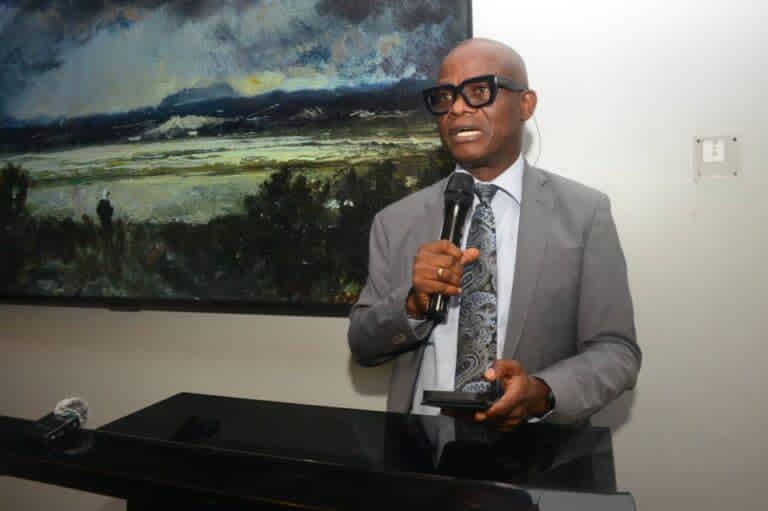
CBN Governor, NADDC DG to Lead LCCI Debate on Vehicle Financing as Alternative to Fuel Subsidy
The Governor of the Central Bank of Nigeria (CBN), Olayemi Cardoso, and the Director-General of the National Automotive Design and Development Council (NADDC), Joseph Osanipin, are among key stakeholders expected at a high-level symposium examining whether vehicle financing can provide a sustainable alternative to fuel subsidy as a tool for improving mobility in Nigeria.
Organised by the Auto Sectoral and Allied Group of the Lagos Chamber of Commerce and Industry (LCCI), the one-day symposium is scheduled for September 17, 2026, at the Henry Fajemirokun Hall, LCCI, Victoria Island, Lagos.
Themed “From Subsidy to Credit: Can Vehicle Financing Replace Fuel Subsidy as Nigeria’s Mobility Equalizer?”, the event will bring together stakeholders across the automotive, financial and transport sectors to examine how affordable credit can expand vehicle ownership, support fleet renewal and reduce the burden of rising transportation costs.
The organisers said the removal of fuel subsidy and its impact on transport costs had made it imperative to rethink how mobility could be made more affordable and sustainable.
Rather than relying largely on interventions aimed at keeping fuel prices low, the symposium will examine whether a robust vehicle-financing ecosystem can enable individuals, transport operators and small businesses to acquire vehicles through affordable and sustainable credit arrangements.
Discussions will focus on automotive lending, leasing, fleet renewal and the role of banks, development finance institutions and other financial players in expanding access to vehicle ownership.
The symposium is also expected to interrogate major barriers to automotive financing, including high interest rates, short loan tenures, foreign exchange pressures, high vehicle prices, credit risks and the limited availability of financing products tailored to Nigeria’s automotive market.
Chairman of the LCCI Auto Sectoral and Allied Group and Deputy Managing Director of R.T. Briscoe Nigeria Plc, Dr Femi Eghuaikhide, said the symposium was coming at a critical time when Nigeria needed to rethink how mobility could be made accessible to a wider population.
“The question before us is no longer simply how to make fuel cheaper, but how to make mobility more affordable and sustainable for Nigerians. Vehicle financing has the potential to become a powerful mobility equalizer if we can develop the right credit structures, realistic repayment terms and strong collaboration between government, financial institutions and automotive industry stakeholders.”
Eghuaikhide said the symposium would provide a platform for stakeholders to move beyond identifying the challenges and develop practical financing solutions capable of supporting vehicle ownership, public transportation and the growth of Nigeria’s automotive industry.
Also speaking, Chairman of the Symposium Organising Committee and Chief Operating Officer of Bras Motors Limited, Austin Akpovili, said the event was designed to generate practical and actionable solutions.
“We are bringing the right stakeholders to one table because mobility is not only an automotive issue; it is an economic issue. Our objective is to examine how access to affordable vehicle credit can transform the lives of individuals, transport operators and businesses, while creating a stronger and more sustainable automotive ecosystem for Nigeria.”
Akpovili said participants would also have the opportunity to examine existing financing models and identify innovative approaches to make vehicle acquisition accessible to a broader segment of the population.
The event is expected to attract automobile manufacturers and dealers, commercial banks, development finance institutions, leasing and insurance companies, transport operators, government agencies, policymakers and other stakeholders across the automotive value chain.
Beyond vehicle ownership, experts will examine how affordable financing could accelerate the renewal of Nigeria’s ageing vehicle fleet, improve public transportation and stimulate demand for locally assembled vehicles and locally manufactured automotive components.
The LCCI Auto Sectoral and Allied Group has traditionally used its annual symposium to bring government, business leaders, financial institutions and automotive stakeholders together to address critical issues confronting the industry.
With this year’s theme shifting the conversation “from subsidy to credit,” the symposium is expected to examine whether Nigeria can move from short-term consumption support to a sustainable financing model that promotes asset ownership, productivity and economic empowerment.
The organisers said recommendations from the symposium would be presented as possible policy and industry solutions for making vehicle financing a stronger component of Nigeria’s broader mobility and economic development strategy.
-

 Entertainment3 days ago
Veteran Nollywood Actor Taiwo Hassan ‘Ogogo’ Dies at 66 After Cancer Battle
-

 metro2 days ago
MUSCOYS Honours Pioneering Educationist with Commendation Award
-

 metro3 days ago
Lagos Moves to Tackle Housing Deficit, Inaugurates 2026 World Habitat Day Committee
-
 metro1 day ago
LASG Moves to Fix Ikotun Junction, Seeks Community Support
-
 metro3 days ago
2027: Over 500 Northern Muslim Clerics Endorse Tinubu for Second Term
-

 metro1 day ago
Traffic Alert: Lagos Announces Diversion as Oke-Afa Bridge Undergoes Rehabilitation
-

 metro1 day ago
Lagos-Ibadan Expressway crash: Seven killed, two injured in three-vehicle collision
-

 News2 days ago
Lagos Pensioners Draw Battle Line with Government Over Pension Enhancement
You must be logged in to post a comment Login