

metro
Auditor-General uncovers multi-billion naira ‘fraud’ in N/Assembly
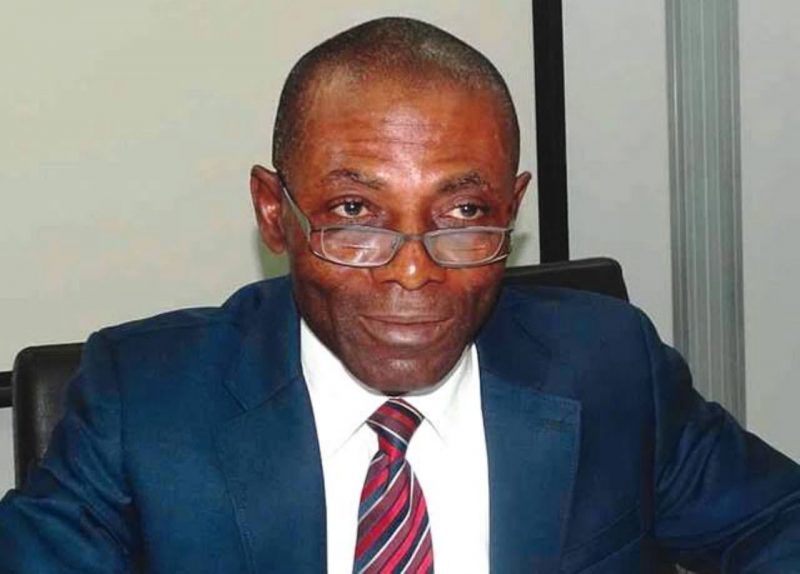
The office of the Auditor- General for the Federation (AuGF) in its 2019 Annual Audit Report has indicted the management of the National Assembly over how it spent funds running into billions of naira.
The AGF, Aghughu Adolphus, in the audit queries uncovered how over N8.5 billion from the funds released to the National Assembly were expended within the period under review without evidence.
The report, submitted to the Clerk to the National Assembly in August this year as required by the constitution, said the monies under scrutiny were not backed by vouchers and retirement documents.
The audit report uncovered various infractions by the House of Representatives, the Senate and the National Assembly Service Commission. The audit report is usually submitted to the National Assembly Public Accounts committees for investigation.
Daily Trust reports that for over a year, the Senate Public Accounts Committee has been investigating expenditures of federal government agencies from 2015 – 2018 based on a report by the Auditor- General for the Federation.
In June this year, the panel presented the report of its six months investigation on the Federation Account for the year 2015 to the plenary.
The committee’s Chairman, Senator Matthew Urhoghide (PDP, Edo), in his presentation, disclosed that 114 MDAs were queried in the 2015 audit report, out of which 59 had their queries sustained after the probe.
READ ALSO:
- Buhari directs minister to release doctors’ seized salaries, health workers’ wages
- FEC okays 20% pay rise for police
- Lagos diploma holder filmed jumping into lagoon, family searches for body
In the course of the investigation, Urhoghide said his panel observed across board, the incessant violation of extant rules by MDAs.
On several occasions, Senate President Ahmad Lawan and Senator Urhoghide had threatened erring MDAs with zero budgetary allocation.
However, the panel did not make public its findings on the audit queries raised against the spending of the National Assembly management, which manages the finances of the federal parliament.
Issues in Senate
The Auditor General’s report raised seven queries against the Senate’s financial records on issues bordering on unaudited payment vouchers, non-remittance of Value-Added Tax (VAT) and withholding tax (WHT) and non-remittance of recovered vehicle loans, among others.
The alleged financial infraction, according to the report, amounted to over three billion naira.
It said the sum of N219.6 million and N123.3 million as housing and vehicle loans, respectively, were deducted from senators’ salary arrears between July and December 2019.
In another query, the audit report said N176.2 million was deducted as Pay As You Earn (PAYE) from staff salaries; Value Added Tax (VAT) of N39.7 million from payment for services and withholding Tax (WHT) of N237.6 million from payment for services.
It, however, said there was no evidence to show that these amounts were remitted to the treasury and relevant tax authorities as required by law.
The report also said the sum of N1.7 billion was paid between February and December 2019 for the supply of vehicles and other office equipment through 17 payment vouchers but none of them was made available for audit examination.
According to the report, the sum of N657.7 million was paid for the supply of motor vehicles, motorcycles and other office equipment through 16 payment vouchers between July and December 2019.
None of the payment vouchers, it said, was cleared by the Internal Audit before pay as required by extant regulations.
The sum of N423 million was paid for the supply of utility vehicles and production of the National Assembly logo between August and November 2019 from the capital account, the audit report showed.
It added that no relevant supporting documents were attached to the payment vouchers to facilitate the validation of the payment.
Similarly, the audit report queried the National Assembly Service Commission on issues related to unretired cash advances and non-remittance of 1% stamp duty on contracts, to the tune of N33.6 million.
It said the sum of N31.9 million was granted as personal cash advances to fifty-nine (59) staff and that there was no evidence of the retirement of the advances.
It also observed that N276.7 million from 12 payments vouchers was made to contractors and service providers from the project account of the Commission. It, however, said N2.7 million representing 1% Stamp Duties was not deducted.
House of Reps
In the report relating to the House of Representatives, the Auditor-General uncovered how members spent over N5.5 billion at a different point in time but could not be accounted for.
According to the report, the expenditures ranged from running costs of some lawmakers to repairs and maintenance.
The report equally revealed that payments were made from salary accounts of the House of Representatives without payment vouchers as required by law.
The Auditor-General issued five queries to the Clerk to the National Assembly on infractions bordering on the utilisation of funds running into billions of naira.
In issue 1, the audit report observed the sum of N2,550,000,000 was granted to members as running costs between July and December 2019, but that there was no evidence to show what the funds were used for as there were no retirement documents despite requests.
According to the report, the said payments were made on a regional basis thus; North East – N187 million, South South – N272 million and South East – N442 million.
Others are North Central – N391 million, South West – N629 million and North West – N629 million.
“There was no evidence to show what the funds were used for and there were no retirement documents despite requests.
“The above anomalies could be attributed to weaknesses in the internal control system at the Federal House of Representatives of the National Assembly,” the report read.
The audit report directed the Clerk to the National Assembly to give reasons why running costs granted to members were not retired.
In the second issue, the report queried the Clerk over non-retirement of N258 million, which was granted as advances to 59 staff in the lower chamber of the National Assembly.
It also said that additional advances were granted to officers when they had not retired the previous ones.
The Auditor-General in the third issue queried cash advances amounting to N107.9 million granted for repairs and maintenance of unspecified quarters beyond the statutory limit.
It queried the granting of advances in excesses of N200,000 stipulated by extant laws and directed the Clerk to justify the action.
The report in its issue 4, queried the remittance of N1.5 billion without acknowledgement as required by extant laws.
According to the report, the sum of N1.5 was paid to revenue authorities between February and December 2019.
The report said the payment included “Pay As You Earn (PAYE) from six members, car loan recovery from five members, and housing loan recovered from six members.
The audit report also revealed that another N1.01 billion was discovered to have been paid from a salary account. The payments were made without the preparation of payment vouchers as required by extant regulations.
According to the report, this violates Paragraph 601 of the Financial Regulations, which says “All payment entries in the cash book/ account shall be vouched for on one of the prescribed treasury forms.
N/Assembly reacts
Reacting, spokesman of the Clerk to the National Assembly (CNA), Austen Adesoro, who spoke to our reporter on telephone about the allegations, said the report was 2019 findings and that most of the issues have been taken care of.
Speaking on the matter, the Executive Director, Civil Society Legislative Advocacy Centre (CISLAC) and Coordinator, Transparency International (TI) in Nigeria, Auwal Musa Rafsanjani, told Daily Trust that the development was unfortunate.
“It is unfortunate that the federal government, which claims to be fighting corruption its major governmental institutions are not complying with the laws of the federation to fighting corruption.
“The sad aspect of it is that the lawmakers that are supposed to be ensuring that the laws, regulations and policies of the government are adhered to are the ones not complying with the laws that they formulate for the nation.”
He said that there was no way the government could fight corruption when its major institutions appeared not to be in tandem with what they were doing to other agencies.
Daily Trust









metro
INTERPOL Operation Jackal IV: 58 Arrests in Global Crackdown on West African Crime Networks

INTERPOL Operation Jackal IV: 58 Arrests in Global Crackdown on West African Crime Networks
metro
30 Dead, Scores Abducted in Coordinated Mosque Attacks in Niger State
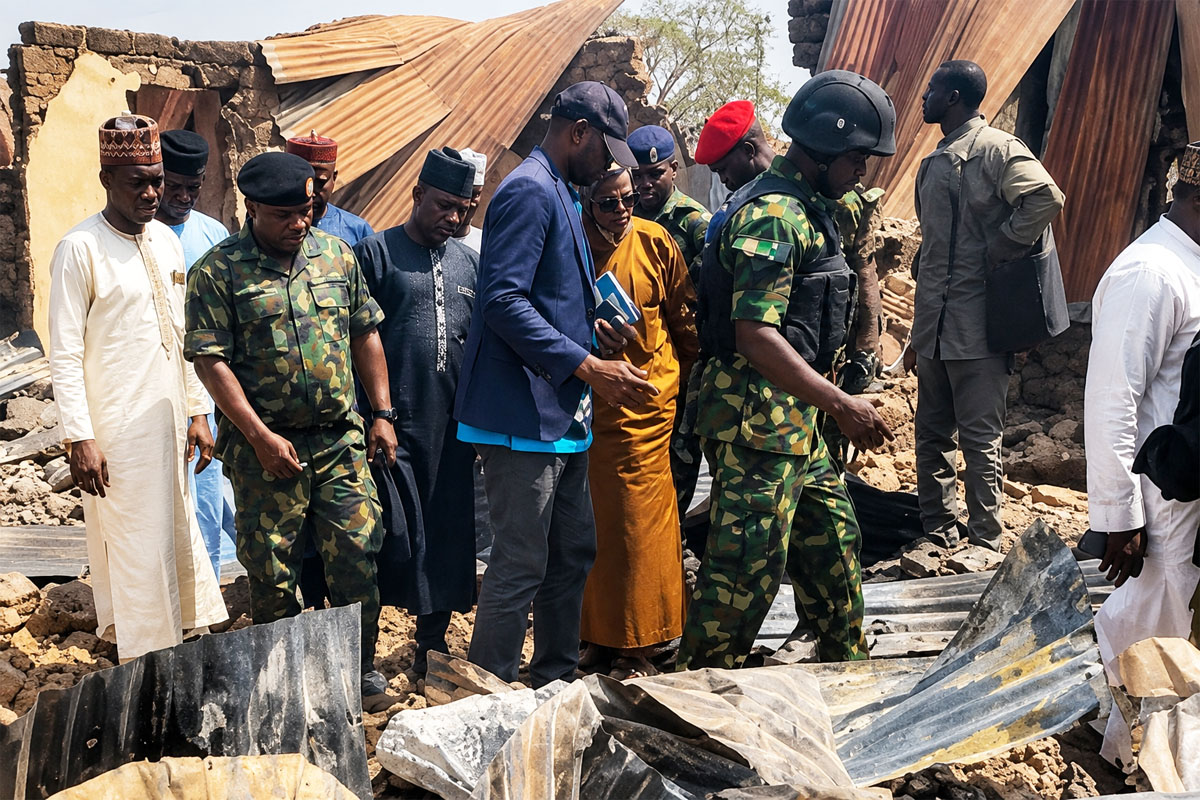
30 Dead, Scores Abducted in Coordinated Mosque Attacks in Niger State
A wave of coordinated terrorist attacks on four mosques in Niger State has left at least 30 people dead and more than 60 others abducted, in one of the deadliest assaults on religious worshippers in the region this year. The attacks, which took place on Friday, 21 August 2026, targeted communities in Borgu Local Government Area during the weekly Juma’at prayers, forcing hundreds of residents to flee their homes and sparking a major security response.
The simultaneous strikes occurred in the communities of Dekara, Kpenya, Sabon-Gida, and Gidan-Zana, also known locally as Gbezhin. Armed assailants surrounded the mosques as worshippers gathered for Friday prayers, rounding up men, young boys, and elderly villagers before marching them into nearby forests. According to local officials, many of the victims were killed while being forced through the dense bush, their bodies recovered by community members and buried over the weekend.
Confirming the death toll, the Chairman of Borgu Local Government Area, Mohammed Nasir Abdullahi, told Daily Trust on Monday that nearly half of those abducted had been killed by their captors. “From the records I have, those kidnapped were a little above 60. Those that were killed were close to 30,” he said. He also confirmed that properties, including the residence of the District Head of Dekara, Abubakar Umar, were set on fire during the attacks. The chairman added that the military had moved into the area and that calm had been restored, though he acknowledged that many residents had already fled to safer locations.
However, there are significant discrepancies in the number of people taken captive. While official figures put the number of abducted worshippers at just over 60, residents have told reporters that more than 60 people were taken from the Dekara central mosque alone, and at least 100 people from Gbezhin remained unaccounted for as of Sunday. A terrorist group has reportedly released a video claiming to hold about 500 hostages, including women and children, and urging relatives to identify their loved ones among those being held. Among those believed to be in captivity are the 90‑year‑old village head of Ka’ada, who had only recently been freed from a previous kidnapping, and the chief imam of the mosque.
READ ALSO:
- Law School Sanctions Best Ethics Student Over Attire in Circulated Photo
- Veteran Yoruba actor, Ijala master Alabi Ogundepo dies at 84
- US Intensifies Military Training for Nigerian Troops in Bauchi
In the aftermath of the attacks, fear has gripped the affected communities. Dozens of families have fled to the nearby town of New Bussa and some have crossed the border into the neighbouring Republic of Benin, following threats from the attackers that anyone remaining in the villages would be killed. A resident told Daily Trust that only a handful of people are still in Dekara, with most having abandoned their homes and livelihoods.
Security forces have launched a joint operation to track down the attackers and rescue those still in captivity. The police have confirmed that a coordinated effort involving the military and other security agencies is underway. However, rescue and security operations are facing serious obstacles. The rugged terrain and poor road networks in the area are hindering the movement of personnel, and residents have warned that improvised explosive devices have been planted along routes that security operatives would normally use. This comes just over a month after an army captain and two soldiers were killed by an IED explosion in the same local government area in July 2026.
Some residents have called on security agencies to adopt the same approach used in the recent rescue of more than 40 students and teachers in Oriire, who were freed after 56 days in captivity following a month‑long intelligence‑driven operation. That operation, according to Army spokesman Jonah Danjuma of the 2 Division in Ibadan, focused on identifying the masterminds behind the abduction and dismantling their network and hideouts within the Old Oyo National Park. Several arrests were reportedly made in Oyo State and other parts of the country, disrupting the group’s activities.
The attacks in Borgu are not an isolated incident. Residents have told reporters that seven out of the ten wards in the local government area are currently affected by insecurity, with hundreds of people, mostly farmers, displaced and dozens killed. The affected wards include Babanna, Kabe/Pissa, Konkoso, Shagunu, Dugga, Wawa and Malale. Since December 2025, more than a dozen villages in Anindita District and Babanna Area Development Council have been attacked and destroyed by terrorists, forcing entire communities to flee. One resident asked: “Contrary to the claim that normalcy has returned, our people cannot go to farms in Anindita, Babanna and Gada‑Oli axes. Schools are shut. Over 300,000 people are displaced. If normalcy exists, why are villages still empty and why is humanitarian aid yet to reach most IDPs?” The communities have called for military operations to clear terrorist enclaves within the Babanna Area Development Council, which they say are being used as staging grounds for attacks, as well as support for local vigilantes and humanitarian assistance for displaced farmers.
This latest violence follows a series of attacks in the region over the past year. In November 2025, terrorists kidnapped an unspecified number of travellers along the Wawa‑Lumma Road, intercepting two passenger vehicles and abducting all their occupants. In December 2025, a security outpost at Ibrahim Leteh village was destroyed and patrol vehicles vandalised. In January 2026, a police border patrol outpost at New Kalli village was attacked and burnt, just two days after dozens of traders and farmers were reportedly killed at Kasuwan Daji. More recently, on 18 June 2026, at least ten farmers, including traditional rulers, were killed in an attack on the Old Gangale community.
The international community has also responded. Amnesty International has urged Nigerian authorities to urgently secure the release of the abducted worshippers, warning of the growing threat posed by mass abductions across the country’s north. The organisation described the incident as particularly alarming because the victims were targeted while observing Friday prayers, and called on the government to address the broader wave of mass abductions targeting rural communities. Amnesty noted that at least 1,100 people were abducted between January and April 2026, and that available figures may significantly underestimate the actual scale of the problem. Victims of previous mass abductions, the organisation warned, had reported severe abuses including torture, starvation, sexual violence and amputation.
The Kpenya attack occurred barely a week after gunmen killed at least 32 people during Friday prayers at a mosque in the Ungushi community in Sokoto State, including the mosque’s imam. These incidents add to a worrying pattern of violence around the Borgu‑Kainji corridor, an area where authorities and security analysts have long raised concerns about armed groups operating around Kainji Lake National Park.
30 Dead, Scores Abducted in Coordinated Mosque Attacks in Niger State
metro
US Intensifies Military Training for Nigerian Troops in Bauchi
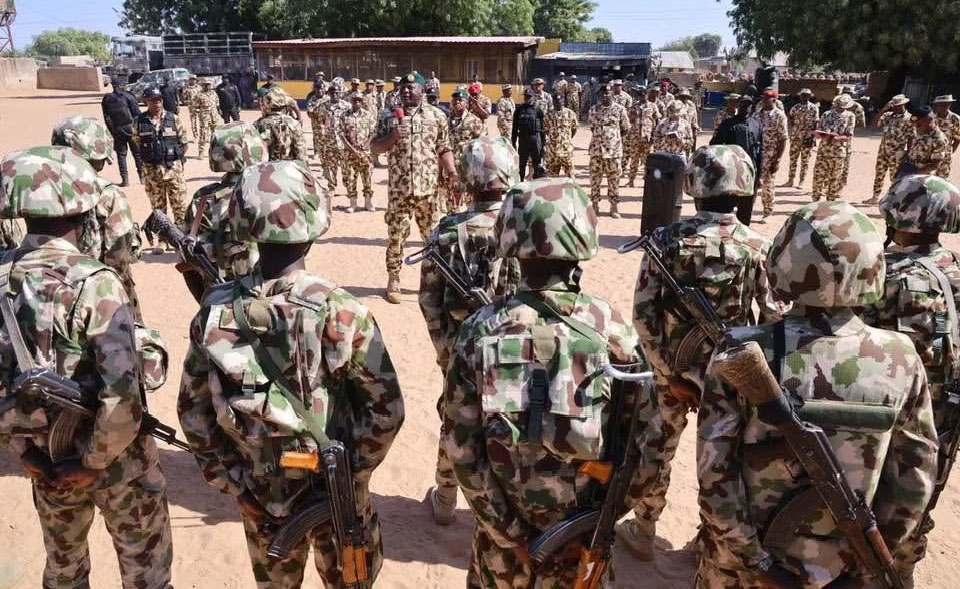
US Intensifies Military Training for Nigerian Troops in Bauchi
American forces have intensified military training for Nigerian troops in unmanned aircraft systems, combat casualty care, and other critical battlefield skills as part of a broader security cooperation mission aimed at strengthening Nigeria’s operational capacity against terrorism and other security threats.
The training is being conducted at Operating Location Bauchi in Bauchi State, with the United States Africa Command (AFRICOM) confirming that the exercises are designed to share military expertise, strengthen partner capacity, and build relationships between service members from both nations. According to AFRICOM, the programme covers Combat Lifesaver and Tactical Combat Casualty Care instruction, weapons familiarisation, camouflage, water treatment and testing, explosive ordnance disposal, small-unit tactics, and unmanned aircraft systems training. Captain Gabriel Feingold, a logistics officer assigned to the US Army Southern European Task Force, Africa, and operations officer at Operating Location Bauchi, explained that the training programme was developed based on areas Nigerian commanders identified as beneficial. “We bring them a list of several different training topics, and they select what they think would be most beneficial for them,” Feingold said.
READ ALSO:
- Awujale: Fusengbuwa Ruling House sues Abiodun, kingmakers over stalled selection
- “He Must Be Mad” — Oyedepo Slams Sheikh Jingir Over Claim Nigeria Is an Islamic Nation
- Two Killed, Three Officers Injured as Gunmen Attack Police Patrol in Osun
Unmanned aircraft systems generated particular interest among Nigerian forces, with Sergeant Mark Murphy, an intelligence analyst assigned to the 13th Combat Sustainment Support Battalion, leading approximately 10 members of the Nigerian Air Force Special Forces Regiment through the training. The session began with about 45 minutes of classroom instruction before the Nigerian personnel received hands-on training on operating the aircraft. Murphy also taught the participants techniques for employing unmanned aircraft systems and incorporating intelligence gathered through the platforms into military operations. “They were really excited with being able to get hands-on time with it,” Murphy said, adding that the Nigerian personnel expressed interest in receiving further training on the system.
Beyond technical and operational skills, the joint exercises have created opportunities for American and Nigerian service members to build relationships and improve interoperability. Feingold noted that the interactions were particularly valuable at the lower levels of both forces. “It helps build relationships between Soldiers and the partner force, especially at the lower levels,” he said. According to AFRICOM, US and Nigerian personnel also participate in basketball and volleyball when operational commitments and weather permit, providing additional opportunities to strengthen their relationship. Sergeant Murphy observed that the training made interaction easier, saying, “Now it’s a lot easier to interact with them. They come up, they say hi to me, they talk about the training that we did.”
The Bauchi training represents a continuation of the broader US-Nigeria security partnership. In July 2026, AFRICOM disclosed that the US had withdrawn most troops deployed to Nigeria for a specific counterterrorism operation, while retaining an intelligence-sharing and security cooperation arrangement with the Nigerian military. The US has approximately 200 military personnel and several MQ-9 Reaper drones at the Bauchi airbase for training, intelligence, and support functions in the fight against jihadist militants in northern Nigeria. Additional training opportunities are being developed at Operating Location Bauchi as both sides continue identifying areas where their personnel can share expertise and train together.
US Intensifies Military Training for Nigerian Troops in Bauchi
-
 metro2 days ago
Lagos Police arrest five suspected telecom vandals, recover truckload of iron rods
-

 Entertainment2 days ago
Veteran Nollywood Actor Taiwo Hassan ‘Ogogo’ Dies at 66 After Cancer Battle
-
 metro1 day ago
MUSCOYS Honours Pioneering Educationist with Commendation Award
-

 Politics2 days ago
Opposition Unity Cracks as Atiku, Obi, Kwankwaso Diverge on 2027 Strategy Against Tinubu
-

 metro2 days ago
Lagos Moves to Tackle Housing Deficit, Inaugurates 2026 World Habitat Day Committee
-
 metro2 days ago
2027: Over 500 Northern Muslim Clerics Endorse Tinubu for Second Term
-
 Politics2 days ago
2027: Alfindiki tackles Atiku over Tinubu’s FBI records
-
 News1 day ago
Lagos Pensioners Draw Battle Line with Government Over Pension Enhancement