

metro
Fuel scarcity bites harder in Abuja, panic buying in Lagos

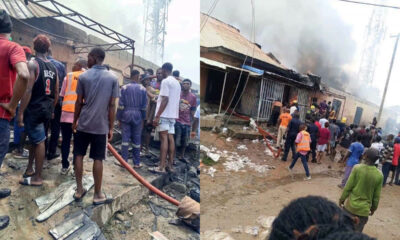
There is mounting anxiety in Abuja due to longer fuel queues as the petrol scarcity bites harder in the Nigeria’s capital.
This came on Monday just as motorists in some parts of Lagos, the nation’s commercial capital, resorted to panic buying of fuel as many filling stations on the Island were shut.
Long queues were also reported on the Lagos Island and a few other places in Lagos, giving rise to traffic congestion in the affected areas.
The Guardian reports that the panic began gradually at the weekend when unusual long queues of vehicles at various filling stations in Ikoyi, Victoria Island and Lekki were noticed as residents spent longer period trying to buy the Premium Motor Spirit (PMS popularly called petrol especially in the Lagos Island.
Many had attributed this to increased demand for fuel due to power outage following a fire incident that led to the shutdown of Nigeria’s largest power plant, Egbin, from the national grid, last week.
However, the long queues persisted on Monday morning despite improved power supply. There were long queues on Awolowo road in Ikoyi, which caused gridlock along the axis.
The situation was different on the mainland part of Lagos as queues were barely noticed at filling stations. This posed a challenge for motorists and commuters resuming their daily activities after the weekend break.
Most of the fuel stations visited in the metropolis claimed they were without supply. The few stations that had supply attracted long queues.
From Ojodu-Berger to Lekki, Gbagada, Alapere, Oshodi-Apapa axis, Ajah, Sangotedo, Mile-2, among others, long queues were sighted in filling stations, which in some stations spiraled into the major roads.
Many commuters along the Lekki-Epe Expressway, including Sangotedo and Victoria Garden City (VGC) axis had a hectic time in traffic. On the Island (Ikoyi, Victoria Island and Obalende axis), only a few stations had supply with manageable queues. It was the same situation along the Lagos-Ibadan Expressway.
But there were no queues at filling stations in Mushin, Isolo, Ejigbo, Ikotun and environs. The Guardian, yesterday, gathered that the flash petrol scarcity currently being experienced in Lagos is due to current effort by the Nigerian National Petroleum Company (NNPC) Limited to recall harmful imported petroleum products.
According to sources, most of the petrol imported into the country under the Direct Sale, Direct Purchase (DSDP) contract has a high content of methanol and ethanol, which are outside the official specification of Nigeria’s petrol. “This product is highly harmful to the market,” a source said.
A senior official in the downstream sector confirmed the development, adding that NNPC is currently doing a product tracing to contain the harmful implication in the market.
The fuel situation may be compounded in days to come should the Nigerian Association of Road Transport Owners (NARTO) make good its threat to down tools over rising price of diesel and operating cost.
It said in a statement on Monday that it would withdraw haulage service if the Federal Government failed to urgently address the rising cost of operation that its members were facing.
Top on the list, according to the union, is the ever-increasing cost of diesel, which petrol tankers run on and which is part of the determinants of freight charges. The cost of diesel presently is N430 per litre.
The association’s National President, Yusuf Lawal Othman, in a statement, said members would be advised to ground their haulage tankers if nothing was done to address the matter, describing the business environment as becoming unbearable. “Our people have parked their trucks and more people are going to park theirs,” he said.
While some states, including the Federal Capital Territory (FCT), has been struggling with fuel scarcity despite promises of sufficient petroleum products, Othman said the challenge could escalate across the country.
The association had earlier decried delay in the payment of about N45 billion bridging cost for diesel, demanding an increase in the transportation allowance factored into the pump price of petrol, but the continuation of subsidy payment on petrol meant that the freight cost would remain.
Decrying the prevailing situation, Othman said, “We will tell them (tanker drivers) to park if nothing is done because we can’t operate in such manner. Transporters, whose freight rate is fixed and regulated, cannot sustain the business if nothing is done.
“We can’t operate. We can’t work if nothing is done to increase the freight rate. The condition is unbearable because of the cost of diesel.”
He urged the Nigerian Midstream and Downstream Petroleum Regulatory Authority (NMDPRA) to urgently increase the freight rate to reflect the present cost of Automative Gas Oil (AGO) diesel and spare parts.
According to him, ex-depot cost of diesel soared to N401 per litre on Monday, adding that it might hit N420 per litre at the filling stations if nothing was done urgently.
The Guardian also reports that petrol sufficiency days and stock figures are receding, noting that the NNPC used to boast of 30 to 40- day stock sufficiency and about two billion metres, the record has dipped to 24.02-day sufficiency and about 1,345,338,930 litres stock of petrol.
Quoting from an official document titled: ‘Petroleum Products Stock & Days Sufficiency Report 27th January 2022,’ the from the NMDPRA, it states that Nigeria consumes between 54 million and 60 million litres of petrol daily.










metro
EFCC Wins ₦132m Money Laundering Case as Court Orders Forfeiture of Lagos Properties

The Economic and Financial Crimes Commission (EFCC) has secured the conviction of Lagos-based businessman Onatayo Pelumi over alleged money laundering involving approximately ₦132 million, with the Federal High Court in Lagos ordering the forfeiture of two properties and ₦8 million to the Federal Government.
Justice Osiagor of the Federal High Court, Lagos, convicted Pelumi on five counts relating to the retention of proceeds of unlawful activities in bank accounts maintained with Guaranty Trust Bank (GTBank) and Zenith Bank.
According to the EFCC, the charges covered various sums allegedly retained in the accounts between January 2023 and June 2026, despite the defendant’s knowledge that the funds were proceeds of unlawful activities.
The commission did not provide further details about the specific unlawful activities from which the money was allegedly derived.
In his judgment, Justice Osiagor sentenced Pelumi to three years’ imprisonment, with an option of a ₦300,000 fine, on the first count.
READ ALSO:
- Hardship: ACF Gives Tinubu Three Months to Deliver Relief, Demands Clear Timelines
- Adamawa Mourns as Fufore Loses Second Council Chairman in 18 Months
- Police Launch Manhunt After Fresh Attacks, Kidnappings Rock Four Nigerian States
For each of the remaining four counts, the court imposed five years’ imprisonment, with an option of a ₦300,000 fine per count.
However, the judge directed that all the prison terms run concurrently, meaning they are served at the same time rather than consecutively.
The court also ordered the forfeiture of two half-plots of land in Lagos and ₦8 million held in Pelumi’s Zenith Bank account to the Federal Government of Nigeria.
The properties covered by the forfeiture order are a half-plot of land at No. 23 Michael Ayorinde Street, Abule-Egba, and another half-plot at No. 1 Yisa Street, Meiran, both in Lagos State.
In addition to the prison sentences and forfeiture orders, Pelumi was directed to undertake seven days of community service.
The conviction followed prosecution by the EFCC’s Lagos Zonal Directorate 1 as part of its efforts to investigate and prosecute financial crimes involving the retention of funds linked to unlawful activities.
The case also highlights the commission’s use of asset-forfeiture proceedings to recover money and property connected to financial crime cases.
The EFCC did not disclose additional details about the source of the funds beyond the allegations contained in the five-count charge.
EFCC Wins ₦132m Money Laundering Case as Court Orders Forfeiture of Lagos Properties
metro
Hardship: ACF Gives Tinubu Three Months to Deliver Relief, Demands Clear Timelines
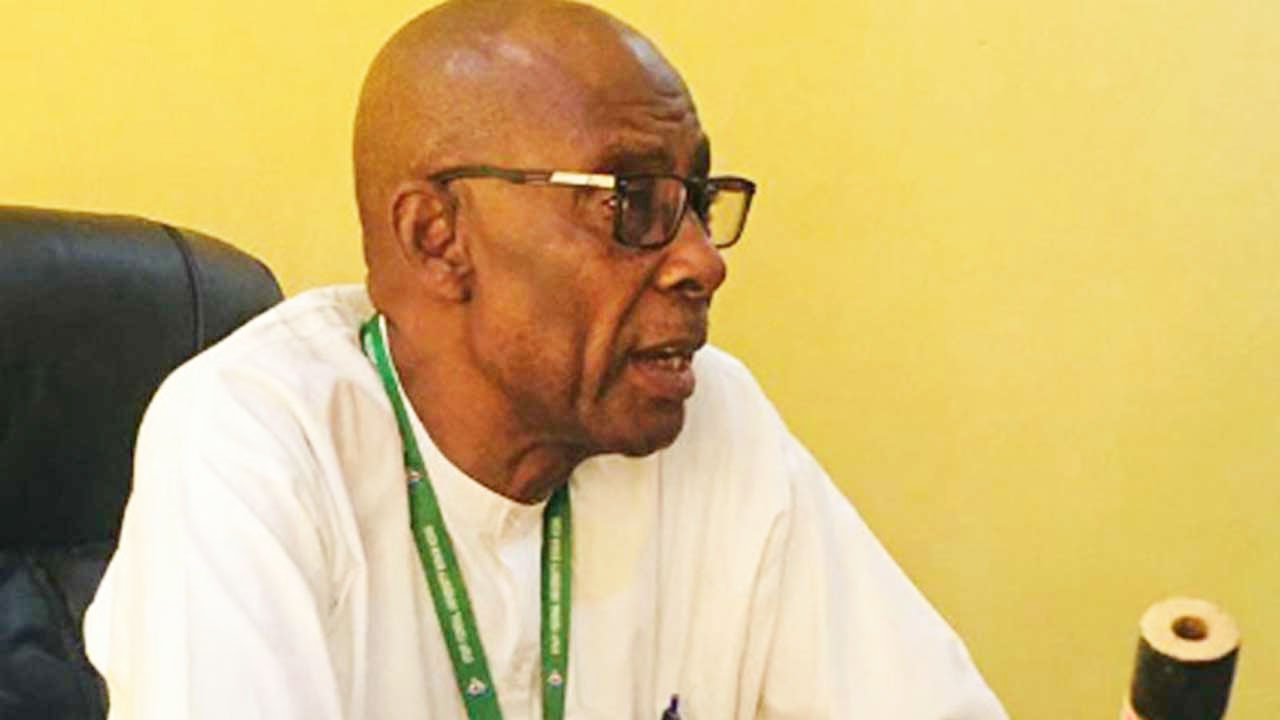
The Arewa Consultative Forum (ACF) has urged President Bola Ahmed Tinubu to introduce measures to ease the economic hardship facing Nigerians within three months, while demanding clear timelines and measurable targets for improving living conditions.
The forum said the Federal Government should move beyond repeated assurances that economic conditions would improve and provide specific commitments showing when Nigerians could begin to experience meaningful relief.
The ACF’s Publicity Secretary, Professor Tukur Mohammed-Baba, made the call during an interview with ARISE News on Thursday, October 8, 2026, according to media reports.
Mohammed-Baba said the administration needed to be more transparent about the effects of its economic reforms and acknowledge areas where the outcomes had fallen short of expectations.
He argued that government policies should be assessed not only by their stated objectives but also by their effects on households, businesses and the wider population.
The ACF spokesman cited the rising cost of living, declining purchasing power, increasing rents, higher transportation expenses and electricity bills as some of the pressures confronting Nigerians. He also identified poor road infrastructure and persistent insecurity as challenges affecting citizens’ welfare.
READ ALSO:
- Adamawa Mourns as Fufore Loses Second Council Chairman in 18 Months
- Police Launch Manhunt After Fresh Attacks, Kidnappings Rock Four Nigerian States
- Cross River Seals 58 Schools in Crackdown on Unapproved Education Centres
According to him, the government should explain how it intends to address these problems and establish clear benchmarks against which its performance can be measured.
Mohammed-Baba called on the Tinubu administration to outline what it expects to achieve within one, two and three years, arguing that measurable targets would enable Nigerians to assess progress rather than rely solely on official assurances.
He also urged the government to acknowledge the difficulties associated with its economic policies and communicate more openly with citizens about the challenges and expected outcomes.
The ACF spokesman maintained that the government should not expect Nigerians to endure prolonged hardship without a clear indication of when relief measures would take effect.
He said three months should be enough for the administration to introduce measures capable of reducing some of the immediate pressures on households, even if broader economic recovery would require more time.
The forum also called for greater accountability from political leaders, arguing that the sacrifices demanded of citizens should be matched by a commitment from public officials to responsible governance and improved service delivery.
Mohammed-Baba’s comments add to the ongoing debate over the impact of the Tinubu administration’s economic reforms, particularly the pressure that higher living costs have placed on households and small businesses.
The government has defended its reforms as necessary to address longstanding economic challenges. However, the ACF’s position underscores the need for clear communication about the expected benefits of the policies and practical measures to cushion their immediate effects.
On the 2027 general elections, Mohammed-Baba said the ACF would assess political parties and candidates based on their commitment to good governance, accountability, anti-corruption, equity and fairness.
He said the forum’s position would be guided by the quality of leadership and the ability of political actors to promote responsible governance rather than automatic support for any particular political party.
The ACF’s central demand is for the Federal Government to establish clear deadlines, measurable objectives and practical steps for reducing hardship, enabling Nigerians to judge progress by tangible improvements in their daily lives.
Hardship: ACF Gives Tinubu Three Months to Deliver Relief, Demands Clear Timelines
metro
Adamawa Mourns as Fufore Loses Second Council Chairman in 18 Months
Adamawa Mourns as Fufore Loses Second Council Chairman in 18 Months
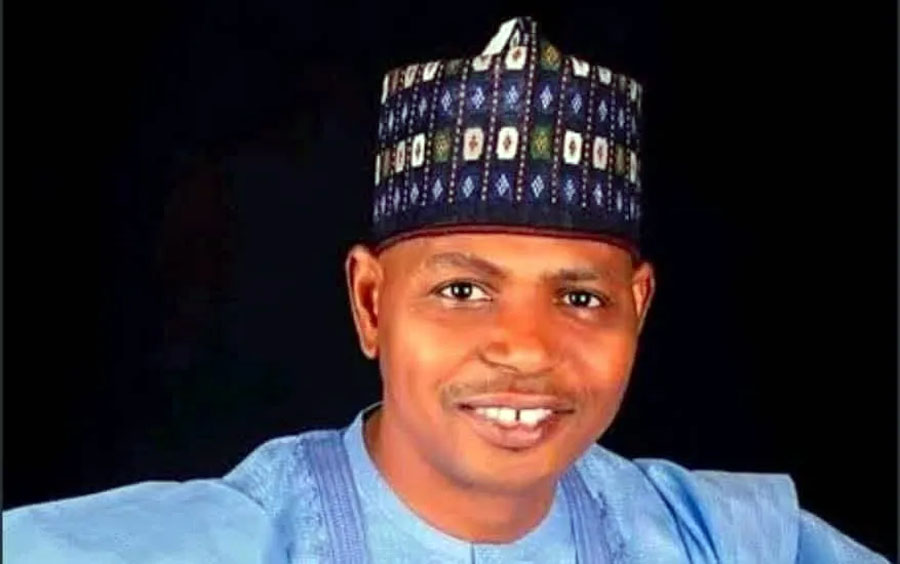
The Chairman of Fufore Local Government Area of Adamawa State, Dr Yahaya Sa’idu, has died less than three months after assuming office, in a development that has plunged the council and its residents into mourning.
Sa’idu reportedly died at a hospital in Kaduna following a brief illness. According to Ahmed B. Yusha’u, the council’s Information Officer, the chairman died at about 1 a.m. on Saturday, October 10, 2026.
His death came approximately 18 months after his predecessor, Shuaibu Babas, also died while serving as chairman of the council, making the latest development another significant loss for the Fufore community.
The news of Sa’idu’s death was confirmed in a condolence message by Aliyu Boya Wakili, the member of the House of Representatives representing Fufore/Song Federal Constituency.
Wakili expressed sadness over the death, describing it as a major loss to the people of Fufore and Adamawa State. He prayed for Allah to forgive the deceased’s shortcomings, accept his good deeds and grant him Aljannatul Firdaus.
He also extended condolences to the late chairman’s family, associates and constituents, urging them to find strength and comfort during the difficult period.
READ ALSO:
- Police Launch Manhunt After Fresh Attacks, Kidnappings Rock Four Nigerian States
- Cross River Seals 58 Schools in Crackdown on Unapproved Education Centres
- INEC Raises Alarm Over Fake APC Result Naming Okorocha, Seeks DSS, Police Probe
The Adamawa State chapter of the Association of Local Governments of Nigeria (ALGON) also mourned Sa’idu’s death. The association’s state chairman, Titus Obadiah, described him as a committed leader who served his community.
Obadiah sympathised with the bereaved family, friends, political associates and residents of Fufore, praying for comfort and strength for everyone affected by the loss.
The Adamawa State Police Command also expressed condolences to the deceased’s family, the Fufore community and the state government. The condolence message was signed by the command’s Police Public Relations Officer, SP Suleiman Yahaya Nguroje.
Other political figures who reportedly mourned Sa’idu included Senator Aminu Iya Abbas, representing Adamawa Central Senatorial District, and Ahmad Lawan, a senior special assistant on security to Governor Ahmadu Umaru Fintiri.
Sa’idu was sworn in as Fufore local government chairman on July 15, 2026, on the platform of the Peoples Democratic Party (PDP). His death occurred less than three months after he began his tenure.
His predecessor, Shuaibu Babas, died on April 23, 2025, while in office. Babas’s death was followed by a succession process that eventually led to his deputy, Peace Samson Audu, being sworn in as substantive chairman in May 2025.
The successive deaths have prompted fresh expressions of grief among political stakeholders and residents of Fufore, who are mourning the loss of two council leaders within approximately 18 months.
As tributes continue to emerge, details of Sa’idu’s funeral arrangements were yet to be formally confirmed in the reports available at the time of publication.
The circumstances surrounding his reported brief illness have not been publicly detailed beyond the information provided by the council’s Information Officer.
Adamawa Mourns as Fufore Loses Second Council Chairman in 18 Months
-
 metro3 days ago
[UPDATED] 20 NYSC Prospective Corps Members Freed After Seven Days in Captivity
-
 metro3 days ago
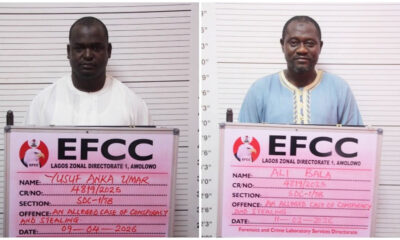
EFCC Re-Arraigns Two Over Alleged £110,000 Money Laundering, ₦500m Fraud
-

 Africa3 days ago
FBI Raids Ghana Scam Centre, Detains Over 130 in $10m Fraud Probe
-
metro2 days ago
How Parents Raised Millions to Free 20 Abducted NYSC Members
-

 News3 days ago
World Bank Raises Nigeria Growth Forecast, Demands More Jobs, Poverty Reduction
-

 Sports3 days ago
Ronaldo Pays Emotional Tribute to Messi After Argentina Farewell
-

 metro2 days ago
[UPDATED] Lagos Train Crash: 55-Year-Old Motorist Survives as Honda Car Is Wrecked at PWD Crossing
-

 metro3 days ago
NAF Crash: NYSC-Bound Graduate, Only Son, Among 25 Victims