

metro
Another building collapses in Lagos, three killed, others trapped + Photos

Three persons were confirmed dead and about four others including a security guard and construction workers were reportedly trapped on Saturday after a three-storey building under construction on Akanbi Crescent, in the Yaba area of Lagos collapsed.
It was learnt that a worker, identified only as Sunday, was rescued from the rubble.
The incident, which occurred around 3.30 pm, was coming barely three months after a 21-storey building in Ikoyi, owned by the late Managing Director, Fourscore Heights Limited, Femi Osibona, collapsed, trapping over 50 persons.
More than 40 persons, including Osibona, his personal assistant, Onyinye Enekwe, and friend, Wale Bob-Oseni, were killed.
 A preliminary report had blamed the Ikoyi incident on violation of the approved building plan initially designed as eight storeys and poor quality of concrete materials.
Some residents and eyewitnesses, who spoke to one of our correspondents on the Yaba building collapse, also fingered compromise in the quality of the materials.
Sunday, one of the survivors, explained that the building had shown signs of distress and he reported it to his boss. He said the boss told him and other workers to ignore the signs and keep working.
READ ALSO:
- Bad Petrol: Shortage worsens as filling stations run out of stock, close doors
- ASUU: I Don’t Believe In Strike – UNILORIN VC
- 19-month-old pupil flogged by teacher hospitalised, dies five days after
He stated, “Even today (Saturday), as we were working, the building was shaking, but our oga (boss) said we should continue (working). We even agreed that after today, we would not come back here again to work. I thank God for saving me from this mess, but my phone is still inside.”
A 16-year-old, who identified himself only as Shan, said he had gone to buy food for one of the construction workers and was about to enter when it suddenly collapsed.
He told Sunday PUNCH that about five people were still trapped in the rubble but two corpses were later recovered.
He said, “I went to buy food for someone that was inside. When I came back and wanted to go in, the building suddenly collapsed. Other people are inside there. They are up to four or five.. I thank God for my life.”
An eyewitness present, who spoke on condition of anonymity, said a part of the building had collapsed sometime last year.
He said, “This was similar to what happened last year when they started erecting the building. A section of the building caved in and destroyed some cars parked by the fence.

Two construction workers rescued from the rubbles receiving first aid
“The Lagos State Government was invited and they came, but I don’t know whether they told them to stop work or not. After a few weeks, work continued and nothing has been done by the authorities since then until today (Saturday) when the building just crumbled on the workers.”
Another eyewitness, who identified himself only as Samuel, said the incident happened so fast.
He stated, “I was upstairs so I could see as the building crumbled. Before then, I could hear some chatter from the building; probably by the workers. I am sure they are still under there. I just pray they are not dead by now because no substantial effort has been made to rescue them.”
Punch/Vanguard

metro
Osun Govt Sues EFCC, First Bank for ₦2 Billion Over Unlawful Account Freeze
Osun Govt Sues EFCC, First Bank for ₦2 Billion Over Unlawful Account Freeze
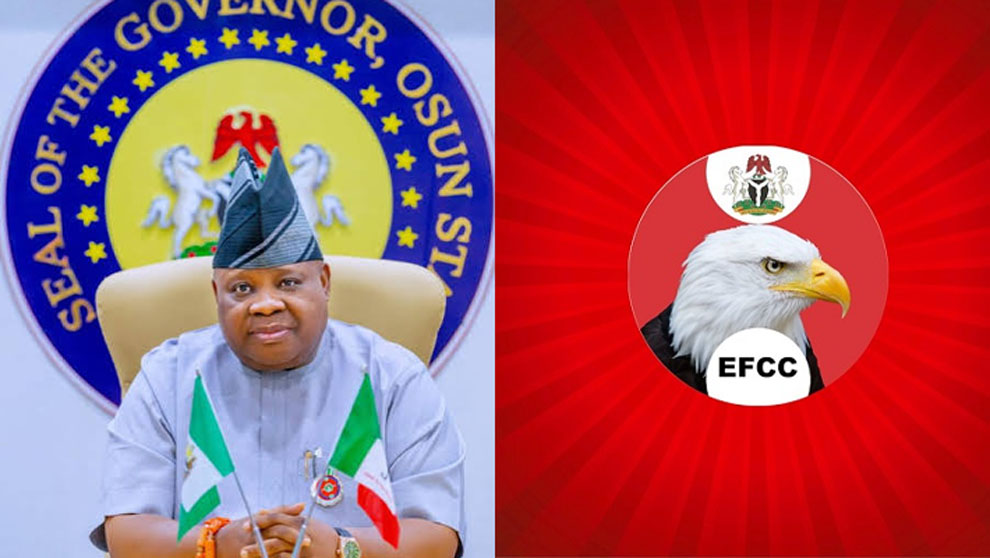
The Osun State Government has initiated legal proceedings against the Economic and Financial Crimes Commission (EFCC) and First Bank Nigeria Limited, demanding ₦2 billion in exemplary and aggravated damages over what it describes as the unlawful freezing of its statutory allocation account. The suit, filed at the Federal High Court in Abuja, challenges the anti-graft agency’s authority to place a Post-No-Debit restriction on the state’s account without first obtaining a court order. Governor Ademola Adeleke, the state’s Attorney-General, and the Accountant-General are listed as plaintiffs in the suit, marked FHC/ABJ/CS/1762/2026. The defendants are the EFCC, its Executive Chairman, and First Bank of Nigeria Limited. A legal team led by Prof. M. T. Adekilekun (SAN) is representing the state government.
The dispute centres on a letter dated August 5, 2026, signed by Assistant Commander Adenike Babalola on behalf of the EFCC’s Director of Investigation, which directed First Bank to place restrictions on Osun’s Federal Statutory Allocation Account (No. 2017170947). The state government argues that this directive was issued without any court order authorising the freeze and that the EFCC acted outside its statutory powers.
The plaintiffs are asking the Federal High Court to determine whether the EFCC possesses lawful authority to freeze, restrict, or otherwise interfere with a state government’s statutory allocation account without regard to due process. They contend that the EFCC’s action constitutes an “egregious act of executive lawlessness, an unlawful resort to self-help, and a flagrant abuse of statutory powers.” According to court documents, the state government argues that the EFCC’s directive violates several provisions of the 1999 Constitution, including sections on federalism, fair hearing, property rights, and revenue allocation. The plaintiffs also rely on the EFCC Establishment Act, 2004, and the Money Laundering (Prevention and Prohibition) Act, 2022, maintaining that these laws require the EFCC to obtain a specific court order before freezing a state government account—something they say did not happen in this case. The state also questioned whether First Bank could lawfully restrict access to the account solely on the basis of an administrative letter from the EFCC. The plaintiffs argue that the bank should not have complied with the directive without being served with a valid court order and that it breached the duty of care owed to the state government by denying it access to the statutory account.
READ ALSO:
- Trump Signs New Executive Orders Targeting Birthright Citizenship, ‘Birth Tourism’
- Trump rejects US munitions shortage reports, threatens alleged leakers
- Military uncovers identities of senior ISIS, ISWAP commanders operating around Lake Chad
Beyond a declaration that the freeze was unlawful and unconstitutional, the Osun Government is seeking several reliefs from the court. These include an order setting aside and nullifying the EFCC’s directive, an order mandating First Bank to immediately unfreeze the account and restore unrestricted access, a perpetual injunction restraining the EFCC from interfering with state accounts without due process, and a similar injunction preventing First Bank from complying with future restriction requests lacking court orders. The state is also seeking N2 billion in exemplary and aggravated damages for what it termed as “unlawful interference with public funds,” plus litigation costs. The state government maintained that the restriction was capable of disrupting salary payments, government programmes, and other constitutional obligations owed to residents.
The EFCC has defended its decision, stating that it has been investigating Osun State since March 2026 over alleged fraudulent handling of approximately N11 billion in Ecology Funds, Intervention Funds, and FAAC allocations. The commission claimed it observed suspicious transfers from the account into various corporate entities since August 2, 2026, and that its preventive mandate required it to protect public funds from being looted. EFCC Director of Public Affairs, Wilson Uwujaren, insisted that the action was not politically motivated or connected to the forthcoming governorship election in the state, stating that the EFCC “has always pointed out that it is non-partisan and non-sectarian but always working in the overall interests of Nigerians.” He argued that the EFCC possessed statutory powers under Section 34 of the EFCC Act and Section 7(6) of the Money Laundering (Prevention and Prohibition) Act, 2022, to place a temporary restriction on accounts for up to 72 hours, after which a court order would be required. The EFCC spokesman stressed that the restriction was a targeted measure on one account and did not constitute a blanket freeze on all of Osun State’s finances. He maintained that the Adeleke administration still had access to other government accounts and could continue its operations.
The controversy escalated when President Bola Tinubu publicly distanced himself from the timing of the account freeze, which came just days before Osun’s August 15 governorship election. In a personally signed statement, the President said he felt “deeply embarrassed, not by the EFCC’s exercise of its mandate backed by a court order, but by the timing of the agency’s action.” He directed the EFCC to approach the court to vacate the freezing order and discontinue all proceedings instituted against the Osun State Government. President Tinubu emphasised that “Osun State is only a few days away from its gubernatorial election. Therefore, nothing ought to be done to give an impression that the EFCC or indeed any other agency of the federal government is being used to interfere with the election.” He reaffirmed his commitment to allowing anti-corruption agencies to operate independently but stressed that the timing of the action necessitated his intervention.
Senior lawyers, including Senior Advocates of Nigeria (SANs), have faulted the EFCC’s action, insisting that the anti-graft agency lacks the constitutional and legal authority to freeze a state’s accounts without first obtaining a court order. Constitutional lawyer Prof. Konyinsola Ajayi, SAN, said the law is clear that bank accounts can only be frozen pursuant to a valid court order. Human rights lawyer Prof. Chidi Anselm Odinkalu maintained that “EFCC needs a court order to do that. It cannot be done lawfully as an administrative act.” The Human Rights Writers Association of Nigeria (HURIWA) also condemned the EFCC’s action, warning that democracy could be undermined where institutions with coercive powers are perceived as acting in a politically selective manner.
In summary, the Osun State Government is challenging the EFCC’s authority to freeze its statutory allocation account without a court order, seeking N2 billion in damages. The EFCC maintains its action was lawful and part of an ongoing N11 billion investigation. President Tinubu has intervened, directing the EFCC to vacate the freeze due to concerns about the timing ahead of the governorship election. No hearing date has been fixed for the suit.
Osun Govt Sues EFCC, First Bank for ₦2 Billion Over Unlawful Account Freeze
metro
Military uncovers identities of senior ISIS, ISWAP commanders operating around Lake Chad
Military uncovers identities of senior ISIS, ISWAP commanders operating around Lake Chad
The
has identified several senior ISIS and Islamic State West Africa Province (ISWAP) commanders operating around the Lake Chad Basin in northern Borno State following the forensic exploitation of intelligence materials recovered during a recent offensive operation.
The development was disclosed by the Acting Military Information Officer, Headquarters Joint Task Force (North East), Operation Hadin Kai, Capt. Mohammed Goni, in a statement issued in Maiduguri.
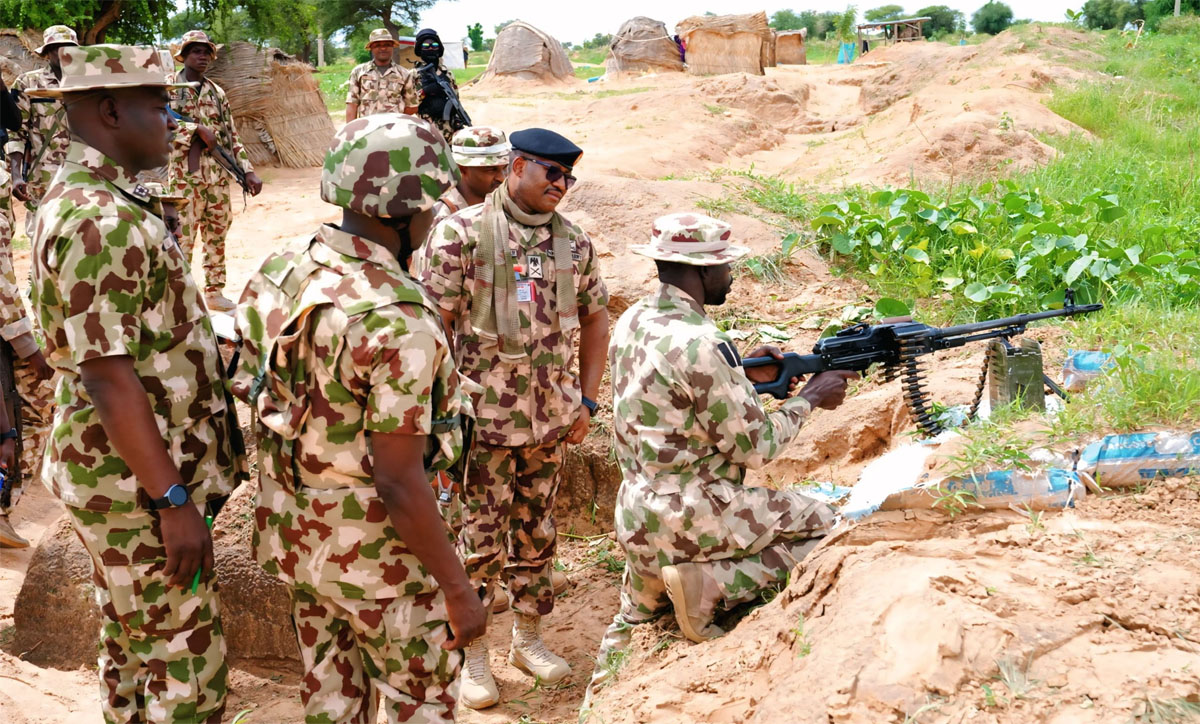
Goni said troops recovered several technical devices and other high-value intelligence materials during an operation targeting ISWAP fighters along the fringes of Lake Chad in Borno State.
Among the items recovered was a camcorder allegedly used by ISWAP members to record propaganda materials and document their operational activities.
According to the military, forensic analysis of the recovered devices produced actionable intelligence that enabled security forces to identify terrorist locations and uncover the identities of several senior ISWAP commanders operating within the Mangari–Metele–Dogon Chukun axis along the fringes of the Lake Chad Basin.
The identified areas are located in Abadam and Kukawa Local Government Areas of Borno State, a region that has remained an important operational theatre for insurgent groups because of its difficult terrain, waterways and proximity to the borders of Nigeria, Chad, Niger and Cameroon.
The military identified Abu Musa Al-Mangawi Baa Shuwa as the Wali, or governor, of ISIS West Africa Province. His deputy, Amirul Jaish Muhammad Jidda, popularly known as “The One-Handed Man”, was also identified, alongside Hamad Abu Hanifa, described by the military as the Amirul-Fiya of ISWAP.
READ ALSO:
- Nigeria’s first indigenous female neurosurgeon appointed medical director of US hospital
- Why Osimhen Turned Down Galatasaray’s Iconic No. 9 Jersey
- ICPC recommends prosecution of alleged fake PFIPC boss after Tinubu-ordered investigation
The military said Baa Shuwa remains its most wanted ISWAP leader operating within the Lake Chad Basin and announced a financial reward for anyone who provides credible and actionable information that directly leads to his arrest.
Authorities assured potential informants that information supplied would be treated with the highest level of confidentiality and that their identities would be protected in line with established security procedures.
The latest intelligence breakthrough comes amid sustained military operations aimed at disrupting ISIS and ISWAP networks in the North-East and preventing the groups from rebuilding their command structures, logistics networks and operational bases.
The development also follows a major Nigeria-US counter-terrorism operation in May that targeted senior ISIS leadership around the Lake Chad region. On May 16, a joint operation killed Abu-Bilal al-Minuki, whom US authorities described as a senior ISIS figure responsible for global operations, along with several of his associates.
The operation demonstrated the increasing role of intelligence-sharing and international cooperation in efforts to track senior terrorist commanders operating in the Lake Chad Basin.
The military has continued to rely on intelligence-led operations, air surveillance and ground offensives to disrupt insurgent networks across Borno State. The exploitation of recovered electronic devices is also expected to provide security agencies with further information about the movements, locations and networks of terrorist commanders.
The identification of Baa Shuwa and other senior commanders could therefore provide the Nigerian military with additional intelligence for ongoing operations aimed at degrading ISWAP’s leadership structure and disrupting its activities in the Lake Chad region.
The Lake Chad Basin, which encompasses parts of Nigeria, Chad, Niger and Cameroon, has faced prolonged insecurity from Boko Haram and ISIS-affiliated groups. The persistence of the insurgency has prompted regional governments and international partners to intensify cooperation on intelligence sharing, border security and counter-terrorism operations.
The military’s latest disclosure underscores the continuing importance of intelligence gathering in the fight against terrorism, particularly in remote areas where insurgent groups have historically exploited difficult terrain and cross-border movements to evade security forces.
While announcing the reward for information on Baa Shuwa, the military urged members of the public to provide credible information through appropriate security channels and avoid confronting suspected terrorists themselves.
Military uncovers identities of senior ISIS, ISWAP commanders operating around Lake Chad
metro
ICPC recommends prosecution of alleged fake PFIPC boss after Tinubu-ordered investigation
ICPC recommends prosecution of alleged fake PFIPC boss after Tinubu-ordered investigation
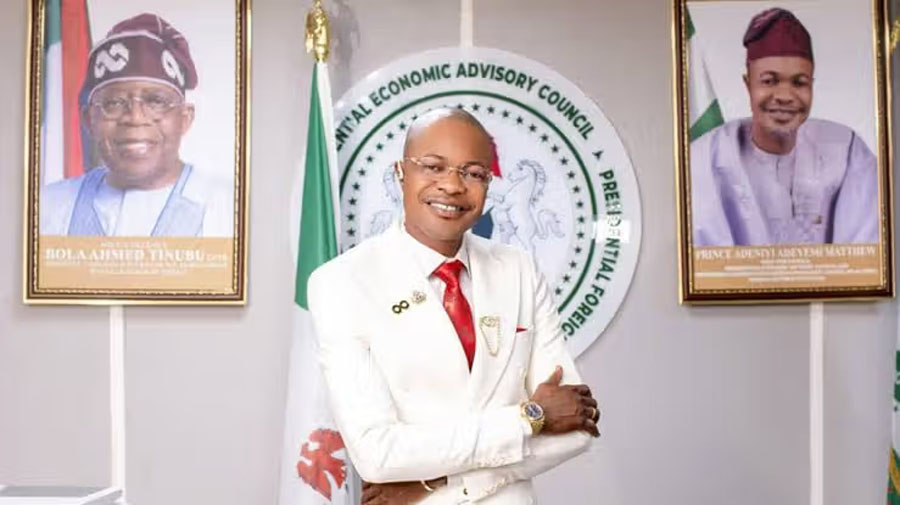
The Independent Corrupt Practices and Other Related Offences Commission (ICPC) has recommended the prosecution of Adeniyi Adeyemi Matthew, the alleged mastermind behind the controversial Presidential Foreign Investment Promotion Council (PFIPC), following an interim investigation ordered by President Bola Tinubu.
The recommendation comes exactly 30 days after President Tinubu, on July 7, 2026, directed the anti-corruption agency to investigate allegations surrounding the purported council and submit its findings within one month.
Presenting the interim report to the President at the Presidential Villa in Abuja on Thursday, ICPC Chairman, Dr. Musa Adamu Aliyu (SAN), said the investigation established that Adeyemi was never appointed by the Federal Government and that the so-called Presidential Foreign Investment Promotion Council (PFIPC) has no legal existence.
Briefing State House Correspondents after submitting the report, Aliyu disclosed that President Tinubu also directed the commission to make its findings public in the interest of transparency and accountability.
“As you may recall, on the 7th of July, Mr. President directed the ICPC to conduct an investigation into the fake Presidential Foreign Investment Promotion Council and submit a report within 30 days. Today, within the stipulated period, we have submitted an interim report based on our interactions with all stakeholders involved,” he said.
According to the ICPC chairman, investigations revealed that the appointment letter presented by Adeyemi was completely forged and did not originate from the Presidency. He added that the suspect allegedly produced several forged government documents, including a fake appointment letter and fabricated official records, to create the impression that he headed a legitimate presidential agency.
READ ALSO:
- Military Salary Hike Sparks Mixed Reactions as South-East Youths Weigh Enlistment
- Osun Account Freeze: EFCC Insists It Has 72-Hour Power Without Court Order
- Osun Election: ‘Prepare to Sign Your Uncle as Dancer’ — Uzodimma Fires Back at Davido
Aliyu further stated that the commission found that the PFIPC, which was also referred to in some documents as the Presidential Foreign Intervention Promotion Council, was never created by any Act of the National Assembly, executive order or any valid instrument of government. He said a purported Federal Government gazette cited to legitimise the organisation was also fake and did not pass through the legally prescribed process for government publications.
The commission said its investigation uncovered what it described as an elaborate network of fictitious government institutions allegedly created by Adeyemi. According to Aliyu, investigators discovered two additional organisations allegedly established by the suspect: the FCT Investment Promotion Agency (FIPA) and the Foreign Investment Promotion Agency/Public-Private Partnership (FIPA-PPP).
He explained that fake legislative instruments styled as enabling Acts were allegedly produced to support the creation of the organisations and were subsequently used to open bank accounts in their names. The ICPC chairman disclosed that investigators identified two commercial bank accounts allegedly opened to facilitate the activities of the fictitious agencies.
Aliyu also revealed that Adeyemi allegedly gained unlawful access to offices previously occupied by the defunct Presidential Economic Advisory Council (PEAC). According to him, the suspect used the premises to project the image of a legitimate government institution and allegedly appropriated the identity, facilities and operational instruments of the former council to lend credibility to the operation.
Despite the sophistication of the alleged scheme, the commission said investigators found no evidence that Federal Government funds were approved, released or paid to the fake PFIPC. Aliyu also absolved both the Presidency and the Central Bank of Nigeria (CBN) of any direct involvement, stating that investigators found no weaknesses within the two institutions that contributed to the alleged fraud. He maintained that the forged appointment letter did not originate from the Presidency.
Although the Presidency and the CBN were cleared, the ICPC identified significant institutional weaknesses across several Ministries, Departments and Agencies (MDAs), saying inadequate verification procedures, poor inter-agency coordination and weak internal controls created opportunities for the suspect to operate.
The agencies where lapses were identified include the Office of the Secretary to the Government of the Federation (SGF), the Office of the Head of the Civil Service of the Federation, the Office of the Accountant-General of the Federation, the Budget Office of the Federation and the National Information Technology Development Agency (NITDA). Aliyu said some public officers failed to carry out due diligence and comply with established operational procedures, describing the lapses as acts of omission and negligence.
Based on its findings, the commission recommended the immediate prosecution of Adeyemi. It also proposed administrative sanctions against public officers whose negligence allegedly enabled the activities of the fake agency, alongside institutional reforms aimed at strengthening internal controls across government institutions.
“Our recommendations are that Mr. Adeniyi Adeyemi should be prosecuted,” Aliyu said, adding that disciplinary measures should be taken against public officials whose actions or inaction facilitated the illegal operation.
The ICPC chairman stressed that the report submitted to President Tinubu is an interim report, noting that investigations are continuing to identify additional collaborators and strengthen the criminal case before charges are filed in court. He confirmed that Adeyemi has already been questioned by investigators and that his statements formed part of the evidence reviewed during the investigation.
Responding to questions on allegations involving about ₦400 million, Aliyu declined to provide details, saying the issue remains part of the ongoing criminal investigation.
He also disclosed that President Tinubu has not given a fresh deadline for the completion of the probe, while assuring Nigerians that the commission will continue its investigation and ensure that anyone found culpable is brought to justice in accordance with the law.
The findings represent one of the most significant outcomes of the Federal Government’s ongoing efforts to strengthen accountability in public institutions, improve governance standards and combat the use of forged government documents and fictitious agencies to deceive citizens, investors and public institutions.
ICPC recommends prosecution of alleged fake PFIPC boss after Tinubu-ordered investigation
-

 metro2 days ago
Troops arrest four suspected Boko Haram, ISWAP suppliers, intercept 20 relatives
-

 Opinion3 days ago
WHO WILL SPEAK FOR WASILAT? WHEN TRADITION BECOMES HUMILIATION, JUSTICE MUST SPEAK
-
 News2 days ago
Tinubu Meets Jim Ovia, NELFUND CEO at Aso Rock as Student Loans Hit ₦303bn
-
 Education2 days ago
BREAKING: 61.54% Pass Rate as WAEC Releases 2026 WASSCE Results – How to Check Results
-
 metro2 days ago
Police Probe AIG Jimoh Over VeryDarkMan’s Corruption Allegations
-

 metro2 days ago
Boat Operators Rescue Woman Who Jumped Into Lagos Lagoon From Carter Bridge
-

 metro2 days ago
N78 Million Solar Inverters, 410 Cattle, 10 Guns Recovered as Kaduna Police Arrest 25 Suspects
-
 metro2 days ago
Tinubu Approves Historic 30–80% Military Pay Rise, N924bn Annual Wage Bill