

News
Nigeria’s N993.38bn imports from Russia at risk over war

The value of Russia’s imports to Nigeria over 12 months period is estimated at N993.38bn, data from the National Bureau of Statistics have shown.
Specifically, the NBS statistics put the value of imports from Russia between the third quarter of 2020 and the corresponding period in 2021 at N993.38bn.
Russia is among Nigeria’s top 10 import trade partners between the third quarter of 2020 and the corresponding period in 2021. However, the N993.38bn trade is at risk as the Russia and Ukraine war persists.
Within the period under review, Nigeria imported four main items from Russia, namely durum wheat, herrings, blue whitings, and mackerel, according to the report.
In Q3 2020, durum wheat worth N46.56bn, mackerel worth N13.76bn, and blue whitings worth N1.57bn were imported from Russia.
During the quarter, Russia was the second leading exporter of durum wheat to Nigeria, the first for mackerel, and the third for blue whitings.
The foreign trade statistics document from the NBS further showed that the total imports from Russia were N154.21bn cumulatively, about 2.87 per cent of Nigeria’s import trade value for the period, with Russia being the seventh import trading partner for Nigeria.
Russia maintained its position as the seventh import trading partner for Nigeria in Q4 2020 with an import trade value of N162.62bn cumulatively, which was 2.74 per cent of the country’s total import trade value.
READ ALSO:
- Lari Williams’ death, colossal loss to Africa creative industry – AGN
- Confusion hits Russian troops as Google disables traffic maps in Ukraine
- Nigerian Parents Storm Russian Embassy In Abuja Over Plight Of Their Children In Ukraine
In Q4 2020, durum wheat worth N62.9bn, mackerel worth N2.27bn, and herrings worth N6.59bn were imported from Russia. Also, Nigeria imported N4.82bn vaccines for human medicine from Russia.
Russia was the top exporter of wheat to Nigeria, the second for herrings, and the third for mackerel in Q4, 2020. It was the fifth import trade partner for vaccines for human medicine.
By Q1 2021, Nigeria imported N15.8bn herrings and N37.20bn durum wheat from Russia. Russia was the top import trading partner for herrings and fourth for wheat.
Nigeria imported N27.23bn blue whitings and N4.18bn mackerel from Russia in Q2 2021. Russia was not mentioned among Nigeria’s top wheat providers for this quarter.
The foreign trade statistics document from the NBS further showed that the import from Russia was N284.36bn cumulatively, which was 4.09 per cent of the total import trade value, with Russia being the fifth import trading partner for Nigeria.
Russia dropped to the sixth import trading partner for Nigeria in Q3 2021 with an import trade value of N339.19bn cumulatively, which was 4.16 per cent of the total import trade value.
In Q3 2021, durum wheat worth N86.75bn and mackerel worth N30.69bn were imported from Russia.
Russia was the top importer of mackerel for Nigeria and second for durum wheat in this quarter.
A total of N232.41bn was spent on durum wheat imports from Russia, and N102.09bn on fishes, such as herrings, blue whitings, and mackerel.
Meanwhile, Nigeria’s import from Ukraine is also at risk as the crisis persists, the Punch has learnt.
According to the United Nations Comtrade Database on International trade in 2020, Nigeria spent $156.08m on imports from Ukraine. The database also showed that import from Russia was $1.24bn for that year.
Nigeria may be forced to shift attention to other countries for the import of commodities like cereals, mineral fuel, oil distillation products, fish, iron and steel, fertilizers, amongst others.
Experts predict inflation, others over import disruptions
Meanwhile, economic analysts and experts have said Nigerians may experience a further rise in inflation over possible disruption in the import of wheat, fish, and other commodities from Russia and Ukraine.
A professor of Economics and Public Policy at the University of Uyo, Akpan Ekpo, said if the conflict between Russia and Ukraine persists, Nigeria’s imports from the two countries may be affected.
He added that this would likely lead to inflation and more hardship for Nigerians.
He said, “If Nigeria can’t import wheat anymore or other products that we import from Russia due to sanctions, it is very likely like the prices of products made from wheat or with wheat will rise in the medium to long term. This of course will increase inflation and create more hardship for the average Nigerian.”
He stressed the need for the country to boost domestic wheat production to meet up with local consumption and export opportunities.
He said, “Definitely, the war will have negative impacts, economically. But with every crisis, there is always an opportunity.
“In this case, the upside for Nigeria is that we exploit this problem by intensifying our local wheat production so that we don’t depend on imports. If we do it rightly, we will not only be able to meet our local demands but we can boost our trade earnings by exporting wheat to countries that were dependent on Russia or Ukraine for their wheat.”
According to the President, Premium Bread-Makers of Nigeria, Emmanuel Onuorah, if the crisis persists, Nigeria may have to turn to other trade partners for the affected commodities.
He said, “Certainly. It will affect the wheat price and its availability. It will affect it because the international price of oil has spiked. You (Russia) can’t export anything because all the export channels are shut. The quantum that is coming from Russia will certainly impact wheat supply to Nigeria, but you know Nigeria does not only buy from Russia, but they also buy from Canada, they buy from the US, and from Brazil.”
Punch






News
EFCC Acted Lawfully in Freezing Osun Account – Falana

EFCC Acted Lawfully in Freezing Osun Account – Falana
Senior Advocate of Nigeria and human rights lawyer, Femi Falana, has declared that the Economic and Financial Crimes Commission (EFCC) did not act illegally by restricting the Osun State Government’s statutory allocation account. He cited landmark court judgments that affirm the anti-graft agency’s powers to investigate state finances, while also faulting President Bola Tinubu’s intervention on procedural grounds.
The controversy surrounding the EFCC’s decision to place a Post-No-Debit restriction on an Osun State Government account domiciled with First Bank has sparked intense debate across the country. The commission disclosed that the action was part of an ongoing investigation into the alleged fraudulent handling of approximately ₦11 billion in Ecology Funds, Intervention Funds, and Federation Account Allocation Committee (FAAC) allocations . According to the EFCC, investigators detected what it described as “precipitate and unwarranted movement of funds” from the account to various corporate entities beginning on August 2, 2026, prompting the need for swift intervention to prevent further diversion of public resources . The commission clarified that the restriction applied to only one account and was not a blanket freeze on all state government finances, a distinction that has been largely overlooked in public discourse surrounding the matter . The EFCC’s Director of Public Affairs, Wilson Uwujaren, defended the action, stating that the commission derived its powers from Section 34 of the EFCC Act and Section 7(6) of the Money Laundering (Prevention and Prohibition) Act, 2022 .
Falana made his declaration on Friday during an appearance on Channels Television’s Politics Today, wading into the controversy with a clear legal opinion that sought to clarify the legal basis for the EFCC’s action. The senior lawyer stated categorically that “as far as the law is concerned, the EFCC has not acted illegally” . He explained that under Nigerian law, the commission possesses the legal authority to freeze accounts belonging to the federal government, state governments, and local governments, provided it complies with the statutory requirement to obtain a court order within the prescribed period . According to Falana, the EFCC can impose a temporary restriction on an account for up to 72 hours without judicial authorisation, after which it must secure a court order to maintain the freeze . He maintained that the commission followed this legal framework in the Osun case, noting that the EFCC had indeed approached the Federal High Court, which “intervened based on information provided by the EFCC” . This judicial intervention, he argued, validated the EFCC’s actions under the existing legal framework, and the Osun State Government had appropriately challenged the legality and validity of the court order, rather than merely questioning the timing of the action .
READ ALSO:
- Osun election: Police pledge neutrality, warn against vote buying, violence
- VIDEO: Lagos Bridge Vandalism: 27 Arrested as Scavengers Strip Pillars of Iron Bars
- Ronaldo predicts Cristiano Jr. will be ‘bigger than me’, reveals biggest challenge
The legal history of the EFCC’s powers provides important context for understanding the current controversy, and Falana traced this history to demonstrate that the commission’s authority had been repeatedly affirmed by superior courts. He recalled that in 2019, the Federal High Court in Benue State had ruled that the commission lacked the authority to freeze the state government’s account and awarded N50 million in damages against the agency . However, he said the EFCC successfully appealed that decision, and in September 2022, the Court of Appeal overturned the lower court’s ruling, affirming the commission’s power to impose a Post-No-Debit restriction on a government account for up to 72 hours before obtaining a court order . “That remains the law in Nigeria today,” Falana said, emphasising that the Court of Appeal’s decision had not been overturned by any higher court and therefore remained binding on all lower courts and government agencies .
Beyond the Court of Appeal decision, Falana also referenced a 2024 Supreme Court judgment that further solidified the EFCC’s authority to investigate state finances. This judgment arose from a suit instituted by the Kogi State Government and joined by several other states, which challenged the authority of federal anti-corruption agencies to investigate state government finances . Falana stated that the apex court examined all relevant constitutional and statutory provisions and concluded that agencies including the EFCC, the Independent Corrupt Practices and Other Related Offences Commission (ICPC), and the Nigerian Financial Intelligence Unit (NFIU) have the power to probe accounts at the federal, state, and local government levels . He added that anyone dissatisfied with the existing legal framework should seek an amendment through the National Assembly rather than questioning the EFCC’s statutory mandate . “If Nigerians—those who are concerned—want the law changed, they can go to the National Assembly. But for now, as of today, EFCC has the power to freeze the account of any state and, in not more than 72 hours, has to go to court,” he said, making it clear that the legal question had been definitively settled .
The political dimension of the controversy emerged when President Bola Tinubu directed the EFCC to approach the court to vacate the order and discontinue the restriction, citing concerns about the timing so close to the August 15 Osun State governorship election . Tinubu stated that he was “deeply embarrassed” by the timing of the action, although he acknowledged the commission acted within its statutory powers by obtaining the court order . He said preserving public confidence in the integrity and credibility of the election informed his decision, a position that drew both support and criticism from various quarters . The President’s intervention raised questions about the appropriate limits of executive authority in relation to independent anti-corruption agencies, and whether such intervention could set a dangerous precedent for future investigations .
Falana, however, faulted President Tinubu’s intervention, arguing that the President ought to have respected the statutory independence of the EFCC and acted through the Attorney-General under Section 174 of the Constitution . He stated, “In intervening in the Osun State crisis, President Tinubu ought to have respected the independent status of the EFCC and the due process of law. As far as the law is concerned, the EFCC chairman is not at the beck and call of the President” . Falana noted that the Osun State Government had already taken legal steps to challenge the freezing order before Tinubu intervened, meaning the matter should have been resolved through the judicial process rather than through a direct presidential instruction to the anti-graft agency . He suggested that Tinubu could have directed the Attorney-General to take over the case under Section 174, with a view to withdrawing the case or not opposing the motion filed by the Osun State Government to vacate the ex parte order . Despite faulting the procedure, Falana appeared to welcome the eventual move towards restoring access to the state government’s funds, quoting William Shakespeare: “All is well that ends well” , indicating his pragmatic acceptance of the resolution while still criticising the process .
Looking beyond the immediate controversy, Falana also warned against establishing a precedent under which anti-corruption agencies would be expected to suspend investigations merely because an election is approaching . He argued that such an approach could provide governments with a window to move public funds without scrutiny during election periods, warning that “we must be very careful that we don’t give a dangerous impression that when elections are 10 days away, 20 days away, 30 days away, the anti-graft agencies must turn the other eye” . This warning reflects broader concerns about the integrity of electoral processes and the need for continued oversight of public finances, particularly during periods when governments may be tempted to use state resources for political purposes . Falana’s comments underscore the delicate balance between ensuring free and fair elections and maintaining robust anti-corruption enforcement, a balance that Nigerian authorities continue to navigate in practice .
EFCC Acted Lawfully in Freezing Osun Account – Falana
News
Osun election: Police pledge neutrality, warn against vote buying, violence
Osun election: Police pledge neutrality, warn against vote buying, violence
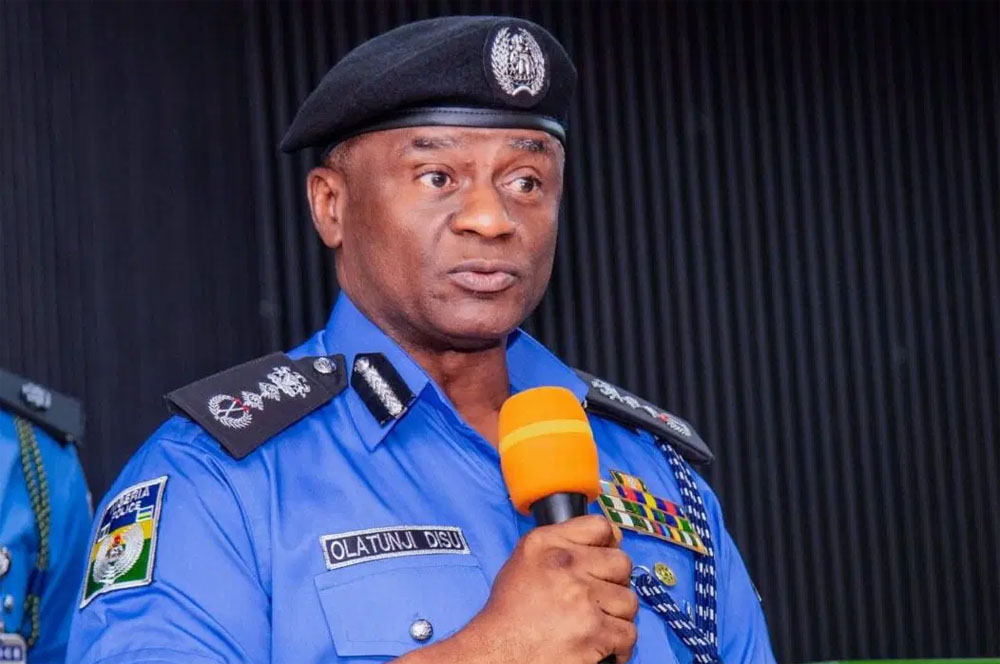
The Nigeria Police Force has assured residents of Osun State that it will remain neutral, professional and impartial during the August 15, 2026 governorship election, warning politicians, supporters and other stakeholders against vote buying, violence and electoral offences.
Inspector-General of Police Tunji Disu gave the assurance during a meeting with civil society organisations (CSOs) led by the Civil Society Legislative Advocacy Centre (CISLAC) in Abuja.
Disu said the police had no political interest in the outcome of the Osun governorship election, stressing that the force’s responsibility was to provide a secure environment where eligible voters could freely exercise their constitutional rights.
He said police officers deployed for election duties had been reminded of their constitutional obligation to enforce the law impartially and protect voters, candidates, electoral officials and other participants regardless of political affiliation.
“The Nigeria Police Force remains a professional, apolitical and impartial institution. We have no candidate, no political party and no vested interest in the outcome of the election other than ensuring that the lawful choice of the people prevails,” Disu said.
The IGP said adequate police personnel and operational assets had been deployed across the state, while intelligence gathering and threat assessments had been strengthened to identify and prevent potential security threats.
According to him, the police are also working with the Independent National Electoral Commission (INEC), the Inter-Agency Consultative Committee on Election Security (ICCES) and other relevant stakeholders to ensure effective coordination before, during and after the election.
Disu specifically warned that individuals involved in vote buying, voter intimidation, ballot-box snatching, political thuggery and other electoral offences would face the full weight of the law, irrespective of their political connections or status.
READ ALSO:
- VIDEO: Lagos Bridge Vandalism: 27 Arrested as Scavengers Strip Pillars of Iron Bars
- Ronaldo predicts Cristiano Jr. will be ‘bigger than me’, reveals biggest challenge
- ISWAP Overruns Rival JAS Enclave In Borno Following ₦40m Cash Theft
He also appealed to political parties and their supporters to conduct themselves peacefully, saying no political ambition should be allowed to result in the loss of lives or disruption of the electoral process.
The police chief urged eligible voters in Osun to participate in the election without fear and encouraged residents to report suspicious activities to security personnel.
The assurance comes amid increased attention on the security situation and the neutrality of law enforcement agencies ahead of the Osun 2026 governorship election.
Civil society organisations have continued to stress the importance of security agencies maintaining neutrality, particularly in view of concerns about electoral violence, voter intimidation and vote buying.
CISLAC Executive Director Auwal Rafsanjani said civil society organisations remained committed to working with security agencies and other stakeholders to promote a peaceful, credible and violence-free election.
Yiaga Africa Executive Director Samson Itodo also described the Osun governorship election as an important test for Nigeria’s electoral institutions ahead of the 2027 general election.
Itodo stressed that the neutrality and professionalism of security agencies would be crucial to strengthening public confidence in the electoral process.
Election-monitoring organisations have similarly identified security threats and voter inducement as issues requiring close attention ahead of the poll.
Yiaga Africa has announced the deployment of 332 observers across Osun State’s 30 local government areas and the state Area Office to monitor the election and provide independent assessments of the electoral process.
The organisation has urged political parties and candidates to prioritise peaceful campaigns and respect the rights of voters, while calling on security agencies to enforce electoral laws fairly.
INEC has also been intensifying preparations for the election, including measures aimed at strengthening election security and preventing violence.
The commission has said security personnel assigned to election duties would be required to take an oath of neutrality, reinforcing expectations that officers deployed for the exercise must perform their duties without favouring any candidate or political party.
The August 15 Osun governorship election is expected to attract significant attention as one of the major electoral exercises before the 2027 general election.
With concerns over vote buying, political violence, voter inducement and security neutrality, the conduct of security personnel and the ability of law enforcement agencies to respond impartially to electoral offences will be critical to the credibility of the poll.
For voters, political parties and civil society groups, the expectation is that all stakeholders will respect the rules, reject violence and allow eligible citizens to freely determine the next governor of Osun State.
Osun election: Police pledge neutrality, warn against vote buying, violence
News
School Shooting: 14-Year-Old Student Kills Grandparents, 6 at Nonthaburi School

-
 News3 days ago
Tinubu Meets Jim Ovia, NELFUND CEO at Aso Rock as Student Loans Hit ₦303bn
-
 Education3 days ago
BREAKING: 61.54% Pass Rate as WAEC Releases 2026 WASSCE Results – How to Check Results
-
 Politics3 days ago
Why I Rejected Tinubu, Buhari’s Offers to Join APC — Fayose
-

 Sports2 days ago
Super Falcons Thrash Egypt 6-2, Book WAFCON Quarter-Final Date with Cameroon
-
 Politics3 days ago
‘We’ll Meet at The Field’ – Amaechi Replies Tinubu, Vows to Match Ruling Party’s Campaign Tactics
-
 metro1 day ago
Osun Govt Sues EFCC, First Bank for ₦2 Billion Over Unlawful Account Freeze
-

 metro3 days ago
Adeleke challenges EFCC over freezing of Osun government account
-

 Business3 days ago
Zenith Bank confirms cyberattack, says customers’ contact information was accessed