

News
Tinubu Ends NNPCL Oil Revenue Deductions, Orders Full FAAC Remittance

Tinubu Ends NNPCL Oil Revenue Deductions, Orders Full FAAC Remittance
President Bola Ahmed Tinubu has signed a sweeping executive order mandating the direct remittance of all oil and gas revenues into the Federation Account Allocation Committee (Federation Account Allocation Committee), in what is regarded as one of the most significant fiscal reforms since the enactment of the Petroleum Industry Act (PIA).
The directive, announced by presidential spokesperson Bayo Onanuga, requires that all proceeds from royalty oil, tax oil, profit oil, and profit gas be paid in full into the federation account without deductions, before statutory distribution to the federal, state, and local governments.
A central element of the order strips Nigerian National Petroleum Company Limited (NNPCL) of its long-standing 30 per cent management fee on profit oil and profit gas, a deduction that has repeatedly drawn criticism for significantly reducing funds available for sharing among the three tiers of government. The presidency said the practice undermined constitutional revenue entitlements and weakened public finances.
In addition, the president directed that the 30 per cent Frontier Exploration Fund created under the PIA will no longer be retained or managed by NNPCL. Instead, all funds previously set aside under the arrangement will now flow directly into the federation account for FAAC distribution, altering the financing structure for frontier basin exploration activities.
READ ALSO:
- Lagos DSVA Confirms Mirabel Assault Happened in Ogun, Transfers Case
- Arsenal Blow Two-Goal Lead as Bottom Club Wolves Hold Gunners to 2–2 Draw
- Two Killed, Five Injured as Violence Erupts at APC Ward Congress in Ondo
The executive order also affects the handling of gas flare penalties. Payments into the Midstream and Downstream Gas Infrastructure Fund have been suspended, with all proceeds from gas flaring penalties now to be paid directly into the federation account. Officials said existing environmental remediation frameworks already cover such obligations, making the additional fund unnecessary.
According to the presidency, the reforms are aimed at blocking overlapping deductions, including management fees and profit retentions, which collectively divert more than two-thirds of potential oil and gas revenues before they reach FAAC. President Tinubu warned that shrinking net oil revenues pose serious risks to national budgeting, debt sustainability, and overall economic stability.
The president emphasised that the new framework will reposition NNPCL strictly as a commercially driven national oil company, removing quasi-fiscal responsibilities while strengthening transparency, accountability, and oversight in Nigeria’s oil and gas revenue management.
To ensure effective implementation, Tinubu approved the establishment of an inter-ministerial committee comprising senior officials from the economic management team, justice sector, and relevant regulatory agencies. The committee is expected to coordinate legal, financial, and operational steps required for immediate compliance.
The president also signalled plans for a broader review of the Petroleum Industry Act, indicating that further amendments may be pursued to address structural and fiscal concerns raised by stakeholders, particularly state governments.
With oil and gas revenues remaining central to Nigeria’s fiscal health, the executive order represents a decisive move to tighten revenue flows, strengthen FAAC allocations, and reinforce fiscal federalism across the country.
Tinubu Ends NNPCL Oil Revenue Deductions, Orders Full FAAC Remittance






News
NDLEA Arraigns Two Mexicans, Four Nigerians Over Secret Meth Lab in Oyo Forest
NDLEA Arraigns Two Mexicans, Four Nigerians Over Secret Meth Lab in Oyo Forest
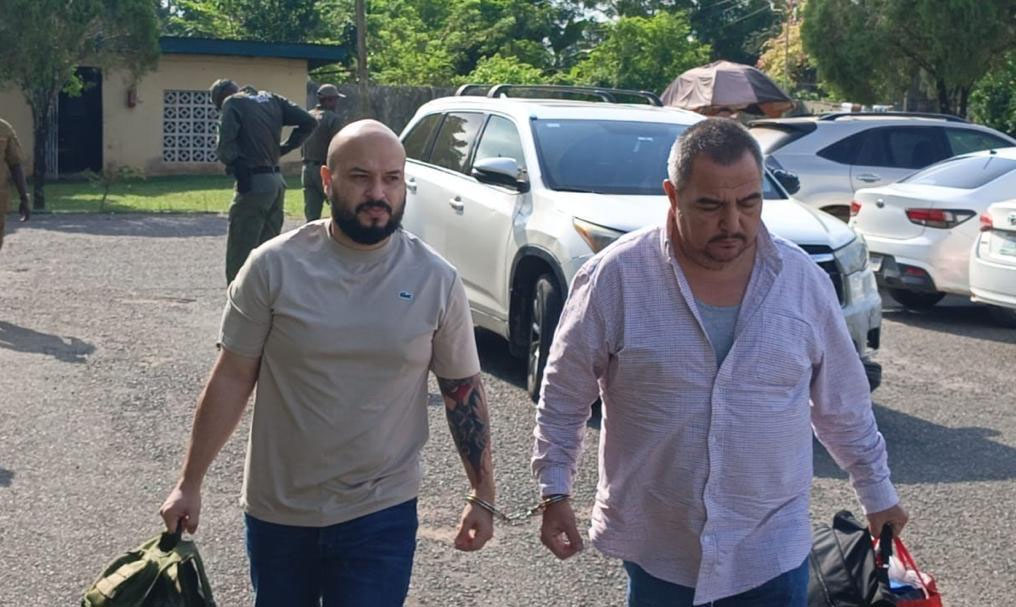
The National Drug Law Enforcement Agency (NDLEA) has arraigned two Mexican nationals and four Nigerians before the Federal High Court in Ibadan, Oyo State, over their alleged involvement in the establishment and operation of a clandestine methamphetamine laboratory in the state.
The six defendants were arraigned before Justice Nkeonye Evelyn Maha on a four-count charge bordering on conspiracy, the establishment of an illegal drug laboratory and the unlawful transportation and distribution of chemicals intended for the production of methamphetamine, a highly addictive psychotropic substance.
The defendants were identified as 56-year-old Mexican national Jose Villa Ochoa; another Mexican, 40-year-old Carrera Loaiza Arturo; and four Nigerians, Maxwell Uche Nevoh, 30; Olatunji Yusuf, 37; Bankole Akeem Owolabi, 45; and Ganiu Monsiu, 43.
According to the NDLEA, Ochoa and the four Nigerian defendants were arrested on June 17, 2026, in a forested area of Tapa village, Ibarapa North Local Government Area of Oyo State, where operatives uncovered the clandestine laboratory.
READ ALSO:
- Tinubu’s Visit: One Feared Dead, Several Injured as APC Women’s Bus Collides With Security Vehicle in Uyo
- ADC Leadership Crisis: Why Two Federal High Court Judgments Do Not Conflict – Obono-Obla
- 2027: Atiku Defies Court Ruling, Vows to Remain in Presidential Race
The second Mexican suspect, Arturo, was subsequently tracked down and arrested on August 19, 2026, while allegedly attempting to flee Nigeria through the Lagos airport.
The agency disclosed that the defendants were accused of conspiring to operate a drug trafficking organisation and establishing a secret laboratory for the production of methamphetamine between December 2025 and June 2026 at different locations in Lagos and Oyo states.
They were also accused of unlawfully transporting and distributing chemical substances for the manufacture of the prohibited drug, contrary to Section 20(1)(f) and punishable under Section 20(2)(a) of the NDLEA Act.
When the charges were read to them in a language they understood, all six defendants pleaded not guilty.
Following their pleas, Justice Maha ordered that they be remanded at the Correctional Centre in Ibadan pending the commencement of their trial.
The court subsequently fixed January 26, 27, 28 and 29, 2027, for the trial.
In a related development, the NDLEA disclosed that three other Mexican nationals and seven Nigerian collaborators arrested over the alleged operation of a similar clandestine methamphetamine laboratory in a forest hideout in Ogun State on May 16, 2026, had also been arraigned before a Federal High Court in Lagos.
The court reportedly rejected their bail application and ordered an accelerated hearing of the case.
The latest development underscores the NDLEA‘s ongoing efforts to dismantle suspected international drug trafficking networks and prevent Nigeria from becoming a hub for the illicit manufacture of dangerous narcotic substances.
The agency’s Director of Media and Advocacy, Femi Babafemi, announced the arraignment in a statement issued on Friday, November 6, 2026.
NDLEA Arraigns Two Mexicans, Four Nigerians Over Secret Meth Lab in Oyo Forest
News
Tinubu’s Visit: One Feared Dead, Several Injured as APC Women’s Bus Collides With Security Vehicle in Uyo
Tinubu’s Visit: One Feared Dead, Several Injured as APC Women’s Bus Collides With Security Vehicle in Uyo
UYO, Akwa Ibom State – A tragic road accident involving a bus conveying supporters of the All Progressives Congress (APC) has reportedly claimed one life and left several others injured in Uyo, Akwa Ibom State.
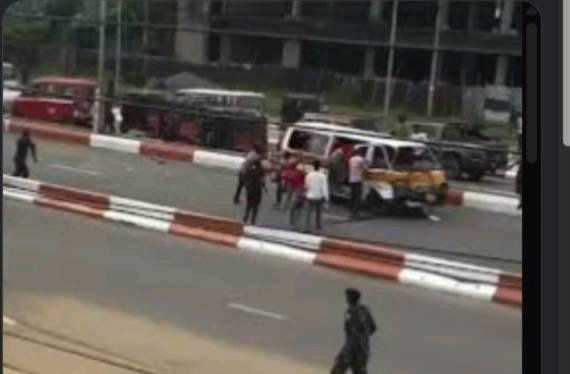
The accident occurred on Friday, November 6, when the bus, reportedly conveying APC women to participate in activities marking President Bola Ahmed Tinubu’s visit to the state, collided with a security vehicle along Oron Road.
The incident happened amid heightened security arrangements for the President’s visit to Akwa Ibom, where he was scheduled to commission several projects executed by Governor Umo Eno’s administration and attend political activities.
According to reports, the bus, identified as belonging to the Akwa Ibom State Transport Corporation (AKTC), was conveying the women towards the reception venue when it collided with a Toyota Hilux security vehicle.
The impact reportedly left the bus badly damaged, triggering panic as passers-by, motorists and security personnel rushed to assist the victims.
A video circulating on social media showed the wreckage of the bus at the accident scene, with people gathering around the damaged vehicle as rescue efforts continued.
The injured victims were reportedly evacuated and taken to hospitals in Uyo for medical attention.
The Guardian reported that one person had died in the accident, while several others sustained injuries. However, another local media report said no death had been confirmed as of the time of its publication.
The exact casualty figure and the identities of the victims had yet to be officially established.
The accident has raised concerns about the safety of transportation arrangements for political supporters mobilised to participate in high-profile presidential events.
President Tinubu arrived in Akwa Ibom on Friday as part of a two-state visit to Akwa Ibom and Rivers states. His itinerary included the inauguration of major infrastructure projects and engagement with political stakeholders.
As of the time of filing this report, further details about the circumstances surrounding the collision and the condition of the injured victims were still emerging.
Tinubu’s Visit: One Feared Dead, Several Injured as APC Women’s Bus Collides With Security Vehicle in Uyo
News
Sex Trafficking: ‘They Took Us To Native Doctor, Shaved Our Private Parts Before Leaving Edo’ – Survivor

Sex Trafficking: ‘They Took Us To Native Doctor, Shaved Our Private Parts Before Leaving Edo’ – Survivor
A survivor of human trafficking, Piana Shua Kimari, has recounted how she was subjected to disturbing traditional rituals before being trafficked out of Nigeria at the age of 15.
Kimari, who shared her experience during a media appearance, disclosed that she and other young girls were taken to a traditional practitioner in Ekpoma, Edo State, where parts of their bodies were shaved before they were transported out of the country.
Recounting the frightening experience, she said the traffickers subjected them to the rituals before leaving Ekpoma.
“Before we left Ekpoma in Edo State, they took us to a powerful native doctor. They shaved our armpits, private parts and head hair,” she recalled.
Her revelation has brought renewed attention to the disturbing methods allegedly employed by human trafficking syndicates to recruit, intimidate and control vulnerable young women and girls.
The practice of subjecting trafficking victims to traditional oaths and rituals is a recognised method of psychological intimidation used by some trafficking networks, particularly in cases involving cross-border sexual exploitation.
In some instances, victims are made to believe that revealing the identities of their traffickers, escaping or refusing to repay alleged trafficking debts could expose them or their families to spiritual attacks, madness or death.
Such threats often leave victims traumatised and afraid to seek help, even when they have opportunities to escape.
Kimari further recounted how their journey took them beyond Nigeria, with movements through areas around the Seme border and towards Mali, before she fully understood the dangerous situation she had found herself in.
According to her account, what initially appeared to be an opportunity turned into a nightmare when she realised she had fallen into the hands of human traffickers.
Her experience highlights the vulnerability of young girls to trafficking networks that exploit poverty, unemployment, deception and the desire for better opportunities abroad.
Nigeria, particularly Edo State, has long been identified as an important source area for victims of human trafficking, with some victims recruited and transported through international routes for sexual and other forms of exploitation.
The survivor’s account also underscores the importance of community awareness, early intervention and effective collaboration among security agencies, anti-trafficking organisations and relevant authorities.
There are growing calls for stronger efforts to identify and prosecute individuals involved in trafficking networks, including recruiters, transporters and collaborators who facilitate the exploitation of vulnerable persons.
Beyond rescuing victims, human rights advocates have consistently stressed the need for rehabilitation, psychological support, vocational training and reintegration programmes to help survivors rebuild their lives.
Kimari’s testimony serves as another reminder of the dangers confronting vulnerable Nigerian girls and the need for families and communities to remain vigilant against deceptive offers of overseas employment and travel opportunities.
Sex Trafficking: ‘They Took Us To Native Doctor, Shaved Our Private Parts Before Leaving Edo’ – Survivor
-

 News3 days ago
Omoda and Jaecoo Race Past 1.4m Sales, Expand Push into AI, Electrification
-

 International3 days ago
Abdul El-Sayed, Seven Other Muslims Make History In US Midterm Elections
-

 metro2 days ago
₦50,000 Relief Fund: FG Reveals Criteria for Selecting Beneficiaries
-
 News2 days ago
Sultan Honours MURIC Founder Ishaq Akintola for Decades of Religious Rights Advocacy
-
 News1 day ago
ADC Heads to Appeal, Insists Mark, Aregbesola Remain Party Leaders Despite Court Ruling
-

 Politics2 days ago
Trouble in ADC as Momodu, South-West Leaders Raise Alarm Over Atiku Campaign
-

 Business3 days ago
EFCC, NMDPRA Raid Chinese-Linked Illegal Refinery in Ogun, Uncover 90,000-Litre Underground Tanks
-

 metro1 day ago
NNPCL Slashes Petrol Price By Up To ₦80, Sells At ₦1,325 Per Litre In Abuja