

News
NNPC projects $1tn loss in global oil production by December

The Nigerian National Petroleum Corporation has estimated global losses from exploration and production activities due to slowing demand for crude oil amid the COVID-19 pandemic will hit about $1 trillion by the end of 2020.
Group Managing Director of the corporation, Mallam Mele Kyari, who stated this on Tuesday at the Nigerian Association of Petroleum Explorationists (NAPE) 2020 Conference, also reiterated the plan of the NNPC to reduce production cost per barrel to $10 by 2021.
The theme of the conference held in Lagos was “Accelerating Growth in Nigeria’s Hydrocarbon Reserves: Emerging Concepts, Challenges and Opportunities.”
He said the NNPC had slashed its cost per unit to between 20 per cent and 30 per cent and would reach the projected target next year.
He said, “We are in challenging times. What COVID-19 did to the oil industry is monumental. It has done a lot of collateral damage to the rest of the industry, entertainment and everything you can think off.
“Of course, the collateral cost to the industry we expect is about $1tn of loss for E&P across the globe.
“There’s an extreme decline in demand for oil and of course other losses through the year which is fatal for the business.
“But businesses must adjust and do things differently. We have pulled down cost and increased revenue and we are focusing more on reducing cost and optimising costs where we are not able to cut costs.
“We are investing in gas because we have seen the resilience of gas and that has taught us that gas will be the future of transition fuel and a great player in the future scenario. We are a gas country with over 600tcf with proven reserves of 203 trillion CF. We have done very little on that. The PIB will be the solution to this.”
Kyari said the only way to survive the difficult situation was to cut or optimise production costs and increase revenue.
Vice President, Prof. Yemi Osinbajo, who also attended the event, said the Federal Government was targeting the growth of the country’s crude oil reserves, currently at about 36 billion barrels to 40 billion and achieve a daily production of three million barrels.
Kyari, in his virtual presentation from Abuja, explained that with over 203 trillion cubic feet of gas, the Petroleum Industry Bill (PIB) when passed into law, would unlock the huge potential in the country.
According to him, without a clear fiscal environment and incentives in place, no one will invest in the sector, adding that by the time the PIB is ready next year, there will be renewed vigour in the industry, especially on the gas side.
He stated that despite the conversations surrounding the extinction of hydrocarbons, crude oil will continue to be relevant in the next 20 to 40 years.
He added that only very efficient companies producing at cheapest cost and getting to the market early would survive.
Kyari expressed delight at the discovery of oil in the frontier basin, particularly in the Benue trough.
He said it would significantly change the dynamics of production in the country, including the expansion of the country’s reserves.
He said, “Times are tough but the opportunities are all there. As a company, we have a target in the upstream and we know that $10 is possible in the industry. A lot is going on in terms of sharing resources, reducing contracting circle etc. We have seen a cost reduction of 20 to 30 per cent and overall at the end of 2021, we will see the $10 unit production cost.
“There are areas where it’s being done for less than $10 and unless we do this, we will not be competitive. The advantage we have is the quality of oil we have and we are one of the most extreme area in terms of distribution, so we have to pull the cost down, otherwise, we will produce oil and not find anyone to buy because you cannot cover the cost ultimately.”
Osinbajo, represented by the Minister of State, Petroleum, Chief Timipre Sylva, explained that though renewable energy remained the future of energy transition, hydrocarbons would remain the dominant source of energy in the immediate future.
He expressed optimism that a single-digit unit cost of production was achievable, provided the entire industry could work together to achieve the set target.
He said, “There’s no gainsaying that the growth of some countries depends on energy availability and utilisation, especially on crude oil and increasingly on natural gas.
“Renewable energy is becoming a cheaper form of energy and response to climate and reduced dependence on hydrocarbons over the next century seems to be inevitable. That notwithstanding, technology and discussions to date suggest that hydrocarbons will remain the dominant source of energy in the immediate future.
“The increased level of uncertainty in oil and gas demand and the emerging technologies on alternative energy have become important elements in making decisions on optimal exploitation of petroleum resources.
“This is more critical now that abundance of hydrocarbons is being discovered in the most unconventional places of the world. I suggest that our discussion should include but not limited to provision of secure energy supplies.”
The vice president stated that the OPEC production curtailments had resulted in lower revenue for the government, adding that it is now imperative for Nigeria to achieve a single-digit cost of production.
“Another key mandate is the growth of the country’s reserves to 40 billion barrels of crude oil as well as the production capacity of three million barrels of crude oil per day. We are fully committed to this mandate, notwithstanding the curtailment.
“We have the assurance that the curtailment will soon be over as the world economy improves. To grow our reserves, we have proposed fiscal incentives that will attract investments in the PIB,” he stated.









News
2027 POLLS: ‘INEC, You Must Explain!’ — Fresh Questions Over Alleged IReV Results ‘Cleanup’
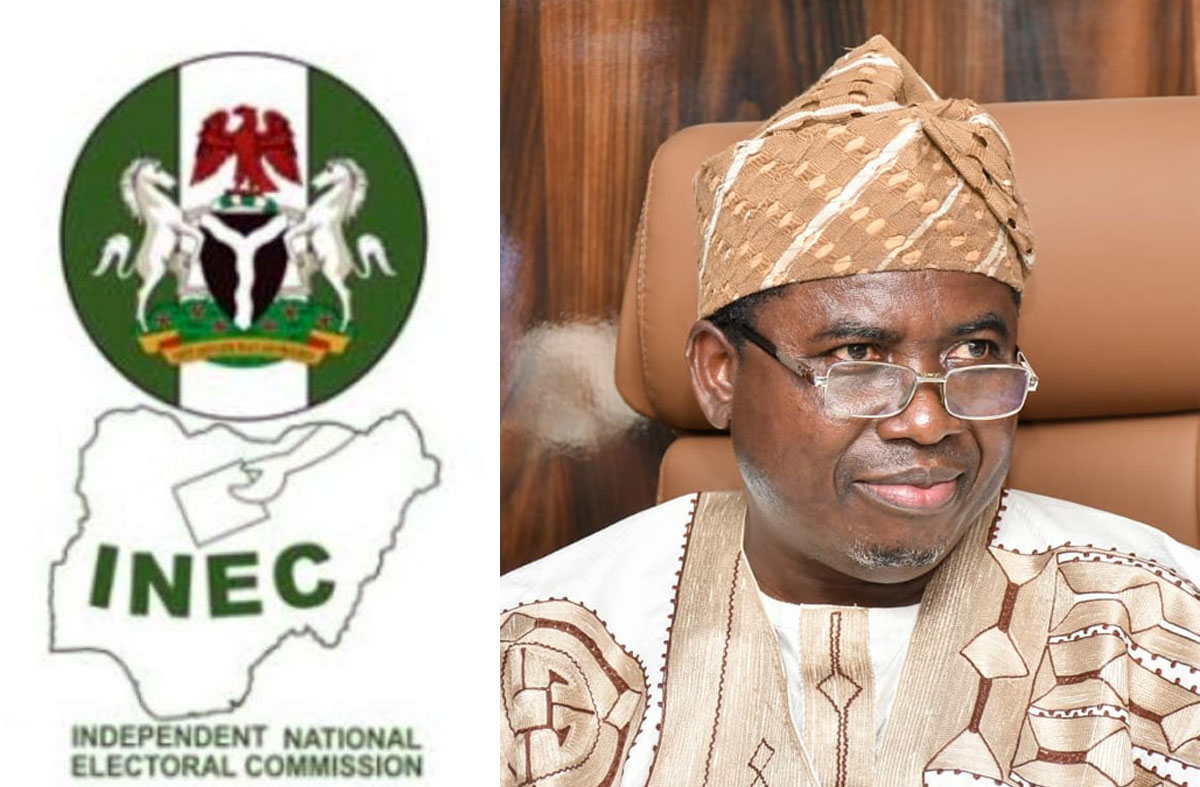
2027 POLLS: ‘INEC, You Must Explain!’ — Fresh Questions Over Alleged IReV Results ‘Cleanup’
ABUJA — Fresh concerns have emerged over the integrity of Nigeria’s electoral technology ahead of the 2027 general elections, following questions surrounding the preservation of election-result records and metadata on the Independent National Electoral Commission’s (INEC) Result Viewing Portal (IReV).
The controversy has brought renewed attention to the demand for transparency from electoral authorities, particularly over allegations that changes to uploaded election result records could make it difficult for Nigerians to independently verify the circumstances surrounding their transmission.
Broadcast journalist and Channels Television anchor, Seun Okinbaloye, has been associated with the growing public debate over INEC’s preparedness for the 2027 elections, amid mounting concerns about the credibility of the electoral process.
The central question confronting the commission is whether Nigerians can be assured that every result uploaded to its portal, together with the digital information attached to it, will remain accessible and verifiable.
CONTROVERSY OVER IReV METADATA
The latest concerns gained prominence during a stakeholder roundtable on election results tabulation organised by Yiaga Africa in Abuja on November 17, 2026.
At the meeting, a participant representing MundX Analytics, an election-observation technology platform, questioned INEC about its plans to preserve the metadata attached to polling-unit results uploaded to IReV during the 2027 general elections.
Metadata contains important digital information about uploaded documents, including the time of upload, the device used and the location from which the result was transmitted.
The participant reportedly raised concerns that deleting or altering such information could make it difficult for independent observers to establish when, where and how election results were uploaded.
He cited findings from an examination of results uploaded during previous elections, which allegedly identified instances of result sheets uploaded as early as 5 a.m. on election day, as well as multiple results uploaded using the same mobile device.
Such findings, according to the participant, raised questions about the circumstances surrounding the uploading of some election results and reinforced the need for an independently verifiable digital audit trail.
INEC GIVES ASSURANCE
Responding to the concerns, INEC’s Director of Information and Communication Technology, Lawrence Bayode, assured participants that the commission would preserve the metadata attached to election results uploaded to IReV during the 2027 elections.
“I can assure you those metadata will remain intact,” Bayode reportedly said.
He, however, explained that he could not speak for previous elections, adding that the commission still had metadata relating to elections conducted in the Federal Capital Territory, Ekiti and Osun states.
According to him, the results uploaded during those elections showed greater consistency, with no discrepancies identified on the portal.
The assurance is significant because metadata can provide independent observers with information needed to investigate suspicious upload patterns and establish the history of electronic election records.
WHAT THE 2026 ELECTORAL ACT SAYS
The controversy is particularly important given the provisions of the Electoral Act 2026, which introduced a clearer statutory requirement for electronic transmission of polling-unit results.
Section 60(3) of the new legislation provides that presiding officers shall electronically transmit results from polling units to the IReV portal after the prescribed Form EC8A has been signed and stamped, and countersigned by candidates or their polling agents where available.
The provision also states that where electronic transmission becomes impossible because of communication failure, the signed Form EC8A shall remain the primary source for the collation and declaration of results.
This makes the preservation and accessibility of uploaded election records particularly important as political parties, observers and members of the public prepare to scrutinise the electoral process.
FRESH QUESTIONS AHEAD OF 2027
The growing debate over IReV comes amid other concerns about INEC’s technological preparedness for the next general elections.
At the same stakeholder engagement, INEC disclosed that it had yet to develop and test the infrastructure required to publish results from ward, local government and state collation levels on IReV ahead of the 2027 elections.
The commission’s ICT director said the platform currently provides access to polling-unit results but does not yet have the necessary system for publishing results from subsequent levels of collation.
Democracy advocates have argued that extending electronic publication to these stages would improve transparency and make it easier to identify discrepancies between polling-unit results and figures recorded during collation.
With the 2027 elections approaching, Nigerians are increasingly demanding clear explanations about how INEC manages, stores, verifies and protects electronic election records.
For many stakeholders, the issue goes beyond uploading result sheets. It is also about ensuring that the original records and their digital histories remain available for independent examination whenever questions arise.
INEC’s assurance that metadata will remain intact is therefore an important commitment that Nigerians will expect the commission to demonstrate through transparent procedures and verifiable safeguards.
2027 POLLS: ‘INEC, You Must Explain!’ — Fresh Questions Over Alleged IReV Results ‘Cleanup’
News
How I Linked Wike With Tinubu After His Son’s Death – Donu Kogbara Reveals

How I Linked Wike With Tinubu After His Son’s Death – Donu Kogbara Reveals
Veteran Nigerian journalist and public affairs commentator, Donu Kogbara, has revealed how she helped facilitate a meeting between President Bola Ahmed Tinubu and the Minister of the Federal Capital Territory (FCT), Nyesom Wike, in London several years before the 2023 general election.
Kogbara made the revelation during an appearance on Channels Television’s Inside Sources, where she recounted how a personal tragedy involving Tinubu unexpectedly brought the two influential politicians together.
According to the veteran journalist, the encounter took place around 2018 or 2019, when Wike was still the governor of Rivers State and had travelled to London for an engagement at Chatham House.
Kogbara explained that she was also in London when news emerged that Tinubu had lost his son. Moved by the development, Wike reportedly expressed a desire to visit the former Lagos State governor and personally offer his condolences.
However, because the two politicians did not have an established direct relationship at the time, arrangements had to be made through an intermediary.
Kogbara said she took the initiative by contacting a senior aide to Tinubu, who subsequently facilitated the meeting between the two men.
She recalled that the encounter was cordial, explaining that her intervention was simply to help Wike convey his condolences following the bereavement.
The journalist, however, clarified that she could not say with certainty whether it was their very first encounter, as she was unaware of any possible earlier meeting between them.
READ ALSO:
- Gombe: Three Killed, 13 Injured as Alleged Military Shooting Sparks Outcry
- Jimmy Odukoya Sues Sister, Church Trustees Over Removal as Senior Pastor
- UNILAG Gets 10 CNG Buses as FG Expands Campus Transport Scheme to 60 Institutions
Interestingly, Kogbara admitted that she never imagined the significance the encounter might eventually assume in Nigerian politics, particularly given the subsequent relationship between both men and the political developments in Rivers State.
She suggested that the connection formed around that period was relevant to understanding the political dynamics that later emerged between Wike and Tinubu.
The revelation offers additional insight into the political contacts that preceded the dramatic realignment of forces ahead of the 2023 presidential election.
In August 2022, Tinubu, then the presidential candidate of the All Progressives Congress (APC), held a widely reported meeting with Wike and some governors of the opposition Peoples Democratic Party (PDP) in London. The meeting came amid the deepening crisis within the PDP following Wike’s disagreement with the party’s presidential candidate, Atiku Abubakar, over the party’s leadership and choice of running mate.
Wike subsequently became a key political figure in the events surrounding the 2023 presidential election. Despite remaining in the PDP, he openly supported Tinubu’s emergence and was later appointed Minister of the Federal Capital Territory.
During the same television appearance, Kogbara also criticised aspects of the Tinubu administration, describing the President’s governing approach as imperial. She particularly questioned the decision to restore Nigeria’s former national anthem, arguing that such a major national decision required broader consultation.
Her comments have renewed attention on the relationship between Tinubu and Wike, as well as the political circumstances surrounding the minister’s eventual alignment with the President.
How I Linked Wike With Tinubu After His Son’s Death – Donu Kogbara Reveals
News
Nigeria Moves to End Passport Imports, Begins $70m Local Production Plant
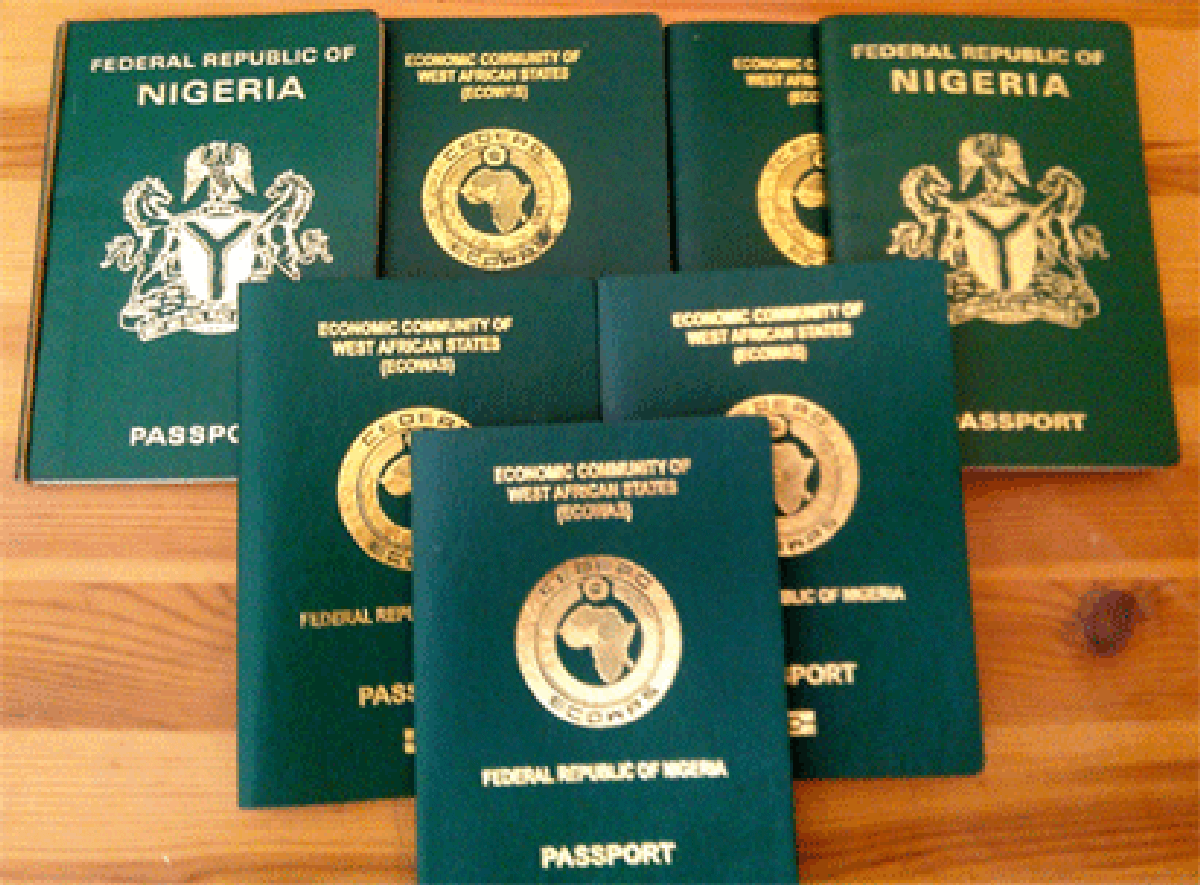
Nigeria Moves to End Passport Imports, Begins $70m Local Production Plant
The Federal Government has taken a major step towards ending Nigeria’s dependence on imported international passport booklets, with the commencement of construction of a $70m manufacturing facility in Abuja expected to produce six million electronic passport booklets annually from May 2027.
The facility, which will be the country’s first electronic passport booklet manufacturing plant, is also being positioned as a regional production hub capable of supplying other West African countries and serving the wider Economic Community of West African States market.
Minister of Interior, Olubunmi Tunji-Ojo, disclosed this on Friday during the groundbreaking ceremony for the National Passport Booklet Manufacturing Centre at the headquarters of the Nigeria Immigration Service in Abuja.
He said the facility would initially have an annual production capacity of six million booklets, with plans to expand it to 10 million, significantly exceeding Nigeria’s estimated annual requirement of between 1.8 million and two million passports.
“The requirement of Nigeria is roughly between 1.8 to 2 million passports a year, but by May, we will have the capacity for six million passports a year in production, which we are going to scale to 10 million booklets a year,” the minister said.
The groundbreaking ceremony was performed by the Chairman of the Senate Committee on Interior, Senator Adams Oshiomhole.
Tunji-Ojo said the manufacturing complex would occupy 1.1 hectares, operate off-grid and deploy artificial intelligence in its operations.
He described the project as a significant milestone in Nigeria’s technological and industrial development, noting that its completion would position the country as the first in West Africa to manufacture electronic passport booklets locally.
According to the minister, only three African countries — South Africa, Ethiopia and Algeria — currently manufacture passports within their borders. He, however, noted that Ethiopia was the only one among them with the capacity to manufacture electronic passports.
Beyond meeting domestic demand, he said the Federal Government and its technology partner, Iris Smart, were developing the facility to serve the ECOWAS market and potentially export passport booklets to other countries.
“What we and our partners, Iris Smart, are doing is to build a passport facility that will be able to service ECOWAS and even be able to export to other countries,” he said.
On the financial structure, the minister disclosed that the $70m investment would be fully funded by the private-sector partner, without direct government funding.
“This project is about $70m without a dime from government,” he said, describing Iris Smart as a wholly Nigerian company.
Tunji-Ojo explained that although Iris Smart secured an electronic passport contract in 2003 under the administration of former President Olusegun Obasanjo, the company had continued to import passport booklets instead of manufacturing them locally.
He said he challenged the arrangement upon assuming office, insisting that Nigeria could no longer continue to support manufacturing jobs and industrial activities in other countries while neglecting opportunities at home.
“We said we cannot be aiding employment in other countries and be creating unemployment in our own country,” he said.
The minister recalled a heated exchange with the company over the continued importation of the booklets, saying he insisted that the existing contract should translate into local manufacturing capacity.
According to him, the company subsequently invested more than $5m in a production centre and is now committing approximately $70m to the new manufacturing complex.
He added that the Federal Government had also prioritised technology transfer and local capacity development to ensure that Nigerian officials would independently operate the facility.
“We have invested in knowledge transfer so that at no time will any vendor be able to hold the government of Nigeria to ransom on anything,” he said.
The Comptroller-General of the Nigeria Immigration Service, Kemi Nana Nandap, described the project as the completion of a major phase of reforms aimed at establishing Nigeria’s control over the entire passport production chain.
She recalled that the Service completed its Centralised Passport Personalisation Centre in September 2025, enabling it to personalise passports locally and securely embed citizens’ details in the booklets.
“Today, we can personalise passports here in Nigeria, and we can securely place each citizen’s details into these booklets. Now we are taking the next bold step. We are building the capacity to manufacture these booklets themselves within our country,” she said.
Nandap noted that Nigerians had experienced passport booklet shortages and prolonged waiting periods, stressing that local manufacturing would strengthen the country’s ability to maintain a reliable and efficient passport administration system.
“A nation cannot run a dependable passport system without control over the critical parts of its own supply chain,” she said.
She added that the success of the initiative would ultimately be measured by the quality of institutions established, the standards maintained and the benefits delivered to Nigerians.
Also speaking, Oshiomhole described the project as a practical demonstration of President Bola Tinubu’s Renewed Hope Agenda, particularly its emphasis on local production, employment generation and economic self-reliance.
“We are now going to say Nigerian passports are manufactured in Nigeria, produced in Nigeria and issued by Nigeria for the benefit of Nigerians,” he said.
The former Edo State governor expressed optimism that the facility would be completed and commissioned by May 2027, describing the proposed timeline as an early achievement in the administration’s reform programme.
He also highlighted the employment opportunities expected from the project, arguing that manufacturing creates more sustainable industrial jobs than dependence on imported products and services.
“Those jobs will not come from services; they will come from manufacturing, and this is one,” he said.
Oshiomhole further expressed confidence in the Immigration Service’s capacity to manage passport production locally, stressing the importance of ensuring that the country’s passport system remains firmly under Nigerian control.
Editorial note: I have used May 2027 rather than simply May to make the timeline clear, given the November 20, 2026 date of the announcement. I have also retained the key financial, production-capacity and ECOWAS export details because they give the story a stronger industrial and economic significance.
One important point for publication: the $70m investment, the company’s Nigerian ownership and the claim about African countries manufacturing e-passports should be independently verified if possible.
-
 metro3 days ago
FG’s ₦100,000 Family Grant: Eligibility, How to Apply and Payment Procedure Revealed
-
 Sports3 days ago
Ex-Super Eagles Captain Segun Odegbami Survives Death as Three Assailants Machete Him in Abeokuta Home
-

 metro3 days ago
Cleveland Girl, 11, Gets 7-Year Juvenile Sentence Over Rape, Attempted Murder of 5-Year-Old
-

 metro2 days ago
Hoodlums Descend on Tinubu’s Praise Singer Rarara at Abuja Mosque, Tear His Clothes
-

 metro3 days ago
Honesty Cost Lagos Taxi Driver His Job, Marriage After Returning ₦21,000 Passenger Left in His Cab
-

 metro3 days ago
Bandits Storm Rival Kidnappers’ Hideout, Free Abducted Victims in Shocking Video
-

 metro21 hours ago
Chibok Girl Escapes After Eight Years in Boko Haram Captivity, Reveals 20 Classmates Still Held
-

 Politics3 days ago
Tinubu Personally Asked Me to Fight Governor’s Impeachment, Warned Democracy Could Collapse – Olanipekun
You must be logged in to post a comment Login