

International
Shelling near Ukraine nuclear plant fuels disaster fears; Russia pounds Donbas

KYIV (Reuters) – Russian forces have pounded Ukrainian towns across the river from the Zaporizhzhia nuclear power plant, officials said, while reports of shelling around the facility fuelled fears of a radiation disaster.
Captured by Russian troops in March but run by Ukrainian staff, Zaporizhzhia, Europe’s largest nuclear power plant, has been a major hotspot in the six-month conflict with both sides trading blame for recent shelling near the plant.
Russian forces fired at Enerhodar, the city where the plant is located, the chief of staff of Ukraine’s president, Volodymyr Zelenskiy, said late on Sunday on his Telegram channel alongside a video of fire fighters dousing burning cars.
“They provoke and try to blackmail the world,” chief of staff Andriy Yermak said.
Russian forces also kept up their shelling in the Donbas, Ukraine’s industrial heartland in the east, officials there said.
Zelenskiy, in his nightly address on Sunday, vowed “the occupiers will feel their consequences – in the further actions of our defenders”.
“No terrorist will be left without an answer for attacks on our cities. Zaporizhzhia, Orykhiv, Kharkiv, Donbas – they will receive an answer for all of them,” he said.
Since Russian troops poured over the Ukrainian border in February in what Russian President Vladimir Putin termed a “special military operation,” the conflict has settled into a war of attrition fought primarily in the east and south of Ukraine.
READ ALSO:
- TASUED Suspends HOD Wanted By ICPC Over Sex-For-Marks
- Man arraigned for punching LASTMAwoman, touching breast
- Kaduna School Graduates 82 Qur’an Memorisers
The U.S. State Department said on Sunday that Russia did not want to acknowledge the grave radiological risk at the south Ukraine plant and had blocked a draft agreement on nuclear non-proliferation because it mentioned such risk.
The United Nations and Ukraine have called for a withdrawal of military equipment and personnel from the plant to ensure it is not a target.
However, Russia’s defence ministry reported more Ukrainian shelling at the plant over the weekend.
Nine shells fired by the Ukrainian artillery landed in the plant’s grounds, Russian Defence Ministry spokesman Igor Konashenkov said.
“At present, full-time technical personnel are monitoring the technical condition of the nuclear plant and ensuring its operation. The radiation situation in the area of the nuclear power plant remains normal,” he said in a statement.
As fears mount of a nuclear accident in a country still haunted by the Chernobyl disaster, Zaporizhzhia authorities are handing out iodine tablets and teaching residents how to use them in case of a radiation leak.
Ukrainian nuclear company Energoatom said it had no new information about attacks on the plant and Reuters could not verify the accounts.
Regional governor Oleksandr Starukh said on Telegram on Sunday that Russian forces struck residential buildings in the main city of Zaporizhzhia, about a two-hour drive from the plant, and the town of Orikhiv further east.
Ukraine’s military reported shelling of nine more towns in the area on the opposite side of the Dnipro river, while the Russian state news agency cited authorities as saying they had downed a Ukrainian drone which planned to attack the nuclear-waste storage facility at the plant.
READ ALSO:
- 10 states in Nigeria have higher GDP than some African countries – Osinbajo
- NDLEA foils attempt to export tramadol, arrests 8
- Ogun bags best performing state award in RI, Covid-19 vaccination
The International Atomic Energy Agency is waiting for clearance for its officials to visit the plant, which the head of the U.N. nuclear watchdog has said should be “very, very close”. Two of the plant’s reactors were cut off from the electrical grid last week due to shelling.
PUSH FOR SANCTIONS
Russia’s Feb. 24 invasion of Ukraine touched off Europe’s most devastating conflict since World War Two.
Thousands of people have been killed, millions displaced and cities blasted to ruins. The war has also threatened the global economy with an energy and food supply crisis.
Russian shelling has displaced more civilians in the east, where three quarters of the population has fled the front-line region of Donetsk, the regional governor has said.
Ukrainian police said Russian forces shelled five areas in Donetsk on Sunday.
The United States and its allies have imposed sweeping sanctions on Russia for its invasion and sent billions of dollars in security assistance to the Ukrainian government.
Russia has said sanctions will never make it change its position on Ukraine and Western arms supplies only drag out the conflict.
Ukrainian Foreign Minister Dmytro Kuleba will travel to Sweden and Czech Republic this week and push for more sanctions on Russia, including an EU-wide visa ban for Russians.
European Union foreign ministers meeting this week are unlikely to unanimously back a visa ban on all Russians, EU foreign policy chief told Austria’s ORF TV.
Reuters











International
School Turns Death Trap as Roof Collapse Claims 22 Lives
School Turns Death Trap as Roof Collapse Claims 22 Lives
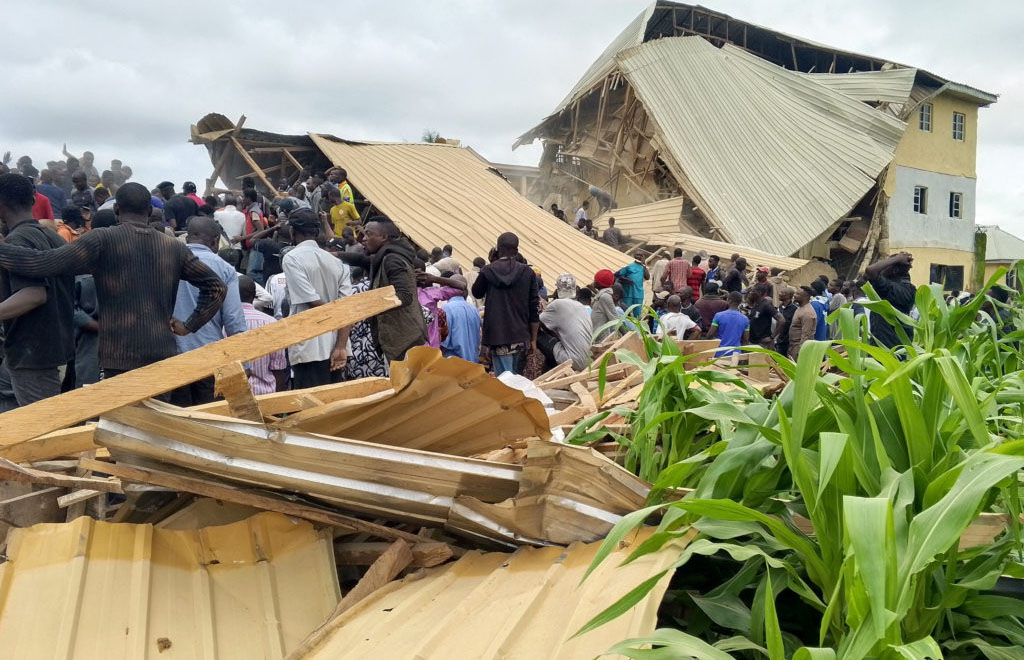
At least 21 children and a teacher have been killed after the roof of a private school collapsed in Peshawar, north-western Pakistan, triggering an emergency rescue operation as authorities searched for people feared trapped beneath the rubble.
The incident occurred on Thursday, October 15, 2026, in the Dir Colony area of Peshawar, the capital of Khyber Pakhtunkhwa province. The victims were pupils attending the school when the roof gave way, according to reports citing local officials and hospital authorities.
More than 40 people were reportedly injured in the collapse, with several taken to hospital for treatment. Some of the injured were said to be in critical condition, raising concerns that the death toll could increase as rescue efforts continued.
Mohammad Asim, a spokesperson for Lady Reading Hospital, confirmed that children and a teacher were brought to the facility after the incident. Early reports said the children killed were all aged 13 or younger.
Emergency responders, including personnel from Rescue 1122, were deployed to the scene to remove debris, search for survivors and transport injured pupils to medical facilities. Rescue workers continued to check the wreckage for anyone who might still be trapped beneath the collapsed structure.
READ ALSO:
- Outrage as Residents Scoop Groundnut Oil From Lagos Tanker Crash Scene
- Shettima Attacks Atiku Over Tinubu Remarks, Questions Subsidy Plan
- 2027: We Know How to Stop Tinubu From Getting Second Term – Momodu
The cause of the collapse had not been established at the time of reporting. Authorities are expected to investigate the circumstances surrounding the incident, including the condition of the school building and whether construction and safety standards were observed.
Pakistan’s Prime Minister, Shehbaz Sharif, expressed sorrow over the loss of lives and extended condolences to the bereaved families. He also prayed for the strength of the families affected by the tragedy.
The disaster has renewed concerns about building safety and construction standards in Pakistan, where structural collapses have repeatedly caused deaths and injuries. Poor construction materials and weak enforcement of safety regulations have been cited in reports on previous incidents, although the cause of the Peshawar collapse remains unconfirmed.
In June 2026, a roof collapse at a tutoring centre in Lahore killed at least 14 children. The recurring incidents have intensified calls for stricter inspections of educational facilities and stronger enforcement of building regulations to protect pupils and school staff.
Authorities are expected to establish what caused the latest collapse and determine whether any safety breaches contributed to the tragedy.
School Turns Death Trap as Roof Collapse Claims 22 Lives
International
Nigeria Secures UN Human Rights Council Seat With 172 Votes
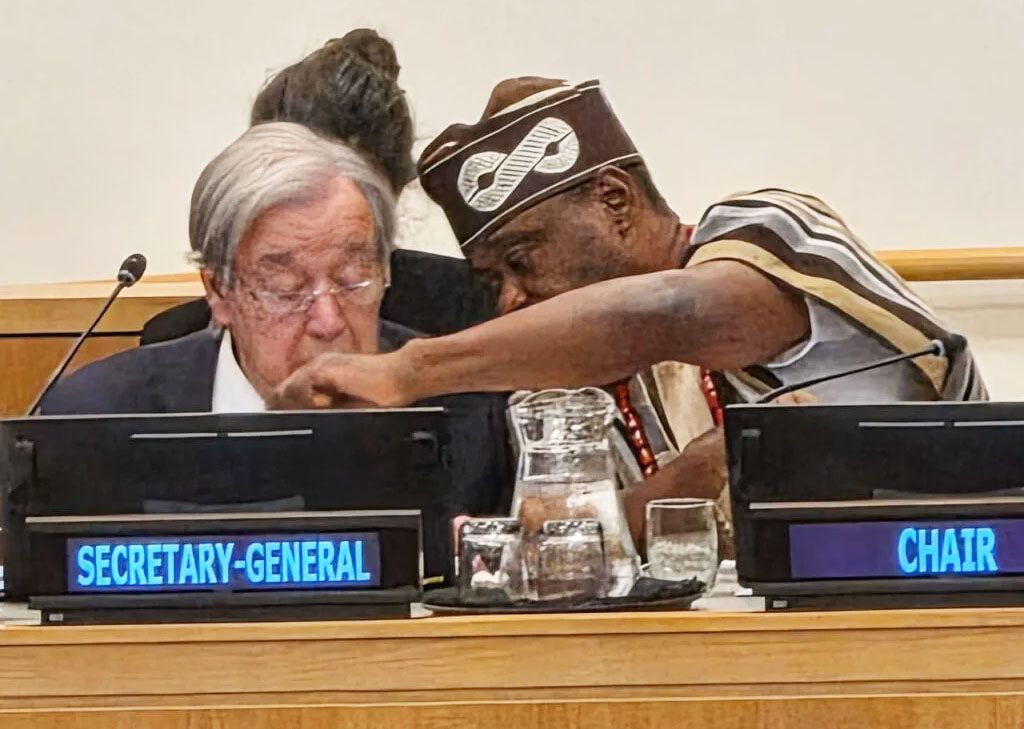
Nigeria has secured a seat on the United Nations Human Rights Council (UNHRC) after receiving 172 votes in an election by the UN General Assembly, earning the country a three-year term on the international body responsible for promoting and protecting human rights worldwide.
The election was held on Tuesday, October 13, 2026, at the United Nations headquarters in New York. Nigeria will serve on the 47-member council from January 1, 2027, to December 31, 2029.
Nigeria was among 15 countries elected to the council for the new term. The other successful candidates included Zambia, Ghana, Burundi, Brazil, the Dominican Republic, Uruguay, Germany, Ireland, Japan, Jordan, Kuwait, Nepal, Moldova and Ukraine.
Among the African candidates, Zambia received 177 votes, Ghana secured 173, Nigeria obtained 172, while Burundi received 160 votes.
The election gives Nigeria an opportunity to participate in international deliberations on human rights standards, alleged violations and measures aimed at improving the protection of fundamental freedoms across the world.
However, the process has attracted criticism from human rights organisations because the election was uncontested. Regional groups nominated exactly as many candidates as there were available seats, meaning there was no competitive ballot among rival candidates within the respective groups.
The UN Human Rights Council is an intergovernmental body based in Geneva, Switzerland. Established in 2006, it is mandated to address human rights violations, promote respect for fundamental freedoms and make recommendations to governments and the international community.
READ ALSO:
- Houthi Missile Targeting Riyadh Shot Down as Debris Injures Four, Damages 15 Homes
- Outrage as Israeli Settlers Torch Mosque, Burn Vehicle in Occupied West Bank
- Attempted Suicide: ‘If You Survive, We’ll Jail You’ – Akpabio
The council comprises 47 member states elected by the UN General Assembly through a secret ballot. Its seats are allocated among five regional groups to ensure geographical representation, and members serve staggered three-year terms.
The body examines human rights situations in individual countries, conducts its Universal Periodic Review of UN member states and considers complaints and reports concerning alleged abuses. It can also appoint independent experts, establish commissions of inquiry and authorise fact-finding missions to investigate serious allegations.
Although the council plays an important role in international human rights oversight, it does not operate as a criminal court and cannot independently impose criminal sentences on individuals accused of abuses.
Nigeria’s election comes amid continuing international scrutiny of human rights conditions in several countries, including concerns about police conduct, accountability, freedom of expression and the treatment of vulnerable groups.
The selection of countries with contested human rights records has been criticised by advocacy organisations, which argue that uncontested elections can weaken accountability and reduce pressure on candidates to demonstrate their commitment to protecting fundamental rights.
The criticism has also raised questions about how elected countries will use their positions on the council to address allegations of abuses and support international human rights standards.
For Nigeria, membership offers a platform to contribute to debates on issues such as unlawful killings, torture, discrimination, the rights of women and children, freedom of expression and the protection of civilians during armed conflicts.
The country will also be expected to participate in council sessions, consider resolutions and engage with other member states on international human rights concerns.
Nigeria’s three-year membership begins in January 2027. Its performance on the council will be watched alongside its domestic human rights record, including how authorities address allegations of misconduct and strengthen accountability and protection for citizens.
The election is therefore both a diplomatic achievement for Nigeria and an opportunity for the country to demonstrate its commitment to the principles the council was established to uphold.
Nigeria Secures UN Human Rights Council Seat With 172 Votes
International
Houthi Missile Targeting Riyadh Shot Down as Debris Injures Four, Damages 15 Homes

Houthi Missile Targeting Riyadh Shot Down as Debris Injures Four, Damages 15 Homes
Saudi Arabia’s air defences have intercepted and destroyed a Houthi ballistic missile targeting Riyadh, as debris from earlier missile interceptions injured four people and damaged about 15 residential homes in the Saudi capital.
The developments were announced on Wednesday, October 14, 2026, amid escalating attacks involving Saudi Arabia and Yemen’s Houthi armed group.
Major General Turki Al-Maliki, spokesman for the Saudi-led coalition supporting Yemen’s internationally recognised government, confirmed that a ballistic missile launched towards Riyadh had been intercepted and destroyed.
Saudi authorities subsequently lifted danger warnings issued for Riyadh and Al-Kharj Governorate through the country’s National Early Warning Platform, indicating that the immediate threat covered by those alerts had passed.
The missile interception came after loud explosions were heard over Riyadh late on Tuesday as Saudi air defences engaged incoming aerial threats.
According to the Saudi Civil Defence, debris from two previously intercepted cruise missiles fell on residential areas, injuring four people and causing material damage to approximately 15 homes.
The injured comprised two women, a man and a child. Authorities said the debris caused limited damage to the affected properties, while images released by Saudi officials showed damage inside residential buildings.
READ ALSO:
- Outrage as Israeli Settlers Torch Mosque, Burn Vehicle in Occupied West Bank
- Attempted Suicide: ‘If You Survive, We’ll Jail You’ – Akpabio
- Yamal Inspires Barcelona Comeback to Sink Osimhen’s Galatasaray
Emergency services responded to the incident, and the relevant authorities implemented established safety procedures. The four injuries were attributed to falling missile fragments rather than a direct impact from the intercepted missiles.
The latest interception was part of a broader series of missile and drone attacks targeting Saudi Arabia. The Saudi-led coalition reported intercepting threats over Riyadh and other parts of the kingdom, including Dhahran and Al-Kharj.
Saudi officials also reported that three drones had been destroyed north of Riyadh on Tuesday.
In a separate incident, Saudi Arabia’s Energy Ministry confirmed that an administrative building belonging to state-owned oil giant Saudi Aramco in Dhahran, in the kingdom’s Eastern Province, was struck on Tuesday evening, causing what authorities described as a limited fire.
The ministry said there were no casualties from the fire. Reports indicated that the building was part of the Aramco headquarters complex, which houses offices associated with the company’s extensive oil and energy operations.
The Houthis have claimed attacks against Saudi strategic and energy facilities, including Aramco installations and King Khalid International Airport in Riyadh. The latest developments have raised further concerns about the security of civilian areas and critical infrastructure across the kingdom.
Saudi Arabia has vowed to respond to attacks against its territory. The Saudi Cabinet, chaired by Crown Prince Mohammed bin Salman, condemned the attacks and reaffirmed the kingdom’s commitment to protecting its security and freedom of navigation in the Red Sea and the Bab al-Mandab Strait.
The renewed confrontation has also prompted military action by the Saudi-led coalition in Yemen. On Tuesday, the coalition announced operations targeting facilities it said were being used to support Houthi attacks. It issued warnings urging civilians to stay away from designated locations.
The Houthis, who control Yemen’s capital, Sanaa, have said their attacks are retaliation for Saudi military operations against them. The conflict has intensified after years of intermittent fighting and has increased concerns about the potential impact on regional stability, energy supplies and international shipping.
The latest missile interception in Riyadh underscores the continuing threat posed by missiles and drones in the conflict. Although the ballistic missile targeting the capital was destroyed, falling debris from earlier interceptions demonstrated the risks to residents even when air defences successfully engage incoming weapons.
Saudi authorities have not reported further casualties from the latest ballistic missile interception. The situation remains tense as the kingdom continues to monitor and respond to incoming aerial threats.
Houthi Missile Targeting Riyadh Shot Down as Debris Injures Four, Damages 15 Homes
-

 metro2 days ago
Money Rituals: Four Arrested in Kwara Over Suspected Human Parts
-

 News2 days ago
2027 Elections: INEC Reveals Why Pantami, Adebutu, Others Were Excluded
-

 metro2 days ago
Osogbo Cultism Crackdown: Six Suspects Arrested as Police Recover Drugs, Charms
-

 metro8 hours ago
₦130m Toyota Tundra Wrecked: Lagos Dealer Questions Police Over Suspect’s Release
-

 Politics3 days ago
2027: Tompolo Unveils 57 Tinubu Campaign Vehicles, Warns Lagosians Against 2023 Repeat
-

 Politics2 days ago
2027: Adeleke’s Camp Promises 1.5 Million Votes for Tinubu in Osun
-

 Politics2 days ago
APC Expands Tinubu’s Campaign Council, Names Wike, Adeleke, Soludo
-

 metro2 days ago
IPOB Denies Monday Sit-at-Home Return, Challenges Police to Produce Evidence