

International
Trump Mar-a-Lago home searched over ‘likely’ efforts to hide files, DoJ says

The FBI searched Donald Trump’s Mar-a-Lago resort in Florida after it obtained evidence there was probably an effort to conceal classified documents in defiance of a grand jury subpoena and despite Trump’s lawyers suggesting otherwise, the Department of Justice said in a court filing late on Tuesday night.
The filing, opposing Trump’s request for an independent review of materials seized, amounted to the most detailed picture of potential obstruction of justice yet outlined by the DoJ.
“Efforts were likely taken to obstruct the government’s investigation,” the filing alleged.
Among new revelations in the 36-page filing were that agents recovered three classified documents from desks in Trump’s office and additional classified files from a storage room, contrary to what Trump’s lawyers indicated.
The DoJ suggested the effort to conceal documents started on 3 June, as Trump’s representatives produced a single legal envelope, double-taped, in response to a subpoena for materials removed from the White House.
The file was given to Jay Bratt, the chief DoJ counter-intelligence official, by a Trump lawyer and his records custodian, who signed a letter certifying a “diligent search” had been conducted and all documents responsive to the subpoena were being returned.
The lawyer also told Bratt all records in the envelope had come from one storage room, that there were no other records elsewhere at Mar-a-Lago, and that all boxes brought from the White House had been searched, the DoJ said.
READ ALSO:
- Katsina Records 57 Cases of Monkeypox, Cholera
- Protests As Over 80 Houses Are Demolished In Edo Community
- Visiting Jonathan to seek support shows you are shameless, Niger Delta activist blasts Tinubu
A copy of the letter reproduced in the filing redacted the custodian’s name. Two sources familiar with the matter identified the custodian as Christina Bobb, a member of Trump’s legal team.
According to the filing, the FBI uncovered evidence through multiple sources that classified documents remained at Mar-a-Lago in defiance of the subpoena, and that other records were “likely” removed from the storage room and concealed.
The DoJ said the evidence – details of which were redacted in an affidavit unsealed last week – allowed it to obtain a warrant to enter Mar-a-Lago, where FBI agents found more classified documents in Trump’s office.
“The government seized 33 items of evidence, mostly boxes,” the filing said. “Three classified documents that were not located in boxes, but rather were located in the desks in the ‘45 Office’ were also seized.”
In an exhibit resembling how the justice department would show the results of a drug bust, the filing included a photo of retrieved documents emblazoned with classification markings including “top secret” and “secret” designations.
The DoJ said the documents collected most recently included “sensitive compartmented information”, while other documents were so sensitive that counterintelligence agents reviewing them needed additional security clearances.
The filing said: “That the FBI recovered twice as many documents with classification markings as the ‘diligent search’ that the former president’s counsel and other representatives had weeks to perform, calls into serious question the representations made in the 3 June certification.”
Trump responded on Wednesday with a post on his social media platform, alleging without evidence that the photo of documents was staged and that the documents were supposedly declassified.
“Terrible the way the FBI, during the Raid of Mar-a-Lago, threw documents haphazardly all over the floor (perhaps pretending it was me that did it!), and then started taking pictures of them for the public to see,” Trump said. “Thought they wanted them kept Secret? Lucky I Declassified!”
Trump and allies have insisted he issued some sort of a standing order when he was president that any materials he took to the White House residence were declassified. He has produced no paperwork that might confirm that claim.
READ ALSO:
- 115 Killed, 73,379 Displaced As Floods Hit 22 States, FCT
- Those Calling For My Resignation Are Kids, Ayu Bombs Wike’s Camp
- Osinbajo leaves for US seeking global energy support
In a subsequent post, Trump wrote: “Whatever happened to NUCLEAR, a word that was leaked early on by the FBI/DOJ to the Fake News Media!” – a reference to a news report that the FBI sought materials relating to nuclear weapons.
The justice department appears to have asked Trump representatives in the June subpoena to return documents marked as “S/FRD”, short for “Secret/Formerly Restricted Data”, a control relating to nuclear weapons information designated by the Atomic Energy Act.
Trump has never addressed the central question of why he had classified documents at Mar-a-Lago, why they were in his private office, and why the documents were not surrendered when he was subpoenaed in June.
On Wednesday morning, Liz Cheney, the Wyoming Republican who is vice-chair of the House January 6 committee and a leading Trump critic, tweeted the picture of documents on the floor at Mar-a-Lago and condemned “yet more indefensible conduct by Donald Trump”.
Adam Schiff, the California Democrat who chairs the House intelligence committee, said: “The government’s brief is devastating. The legal arguments are compelling, but what is most striking are the facts outlining how the former president and his team knowingly put our national security at risk.”
In the DoJ filing, after painting an extraordinary portrait of the hurdles the DoJ had to overcome to recover documents that belong to the government, prosecutors argued Trump had no basis to seek the appointment of a so-called special master to review the files.
The request fails, the filing argued, because Trump is attempting to use the potential for executive privilege to withhold documents from the executive branch – which the supreme court decided in Nixon v GSA did not hold.
The DoJ added that even if Trump could successfully assert executive privilege, it would not apply because the documents marked classified were seized as part of a criminal investigation into the handling of the documents themselves.
Trump is expected to press on with his request for a special master and to obtain a more detailed list of materials taken, a source close to his legal team said, also disputing that the DoJ filing raised the likelihood of an obstruction charge.
On Tuesday morning, Trump added a third lawyer, the former Florida solicitor general Christopher Kise, to his legal team, said two sources with direct knowledge of the matter.








International
Trump Bans CNN, MS NOW, Politico From White House Over ‘Fake News’
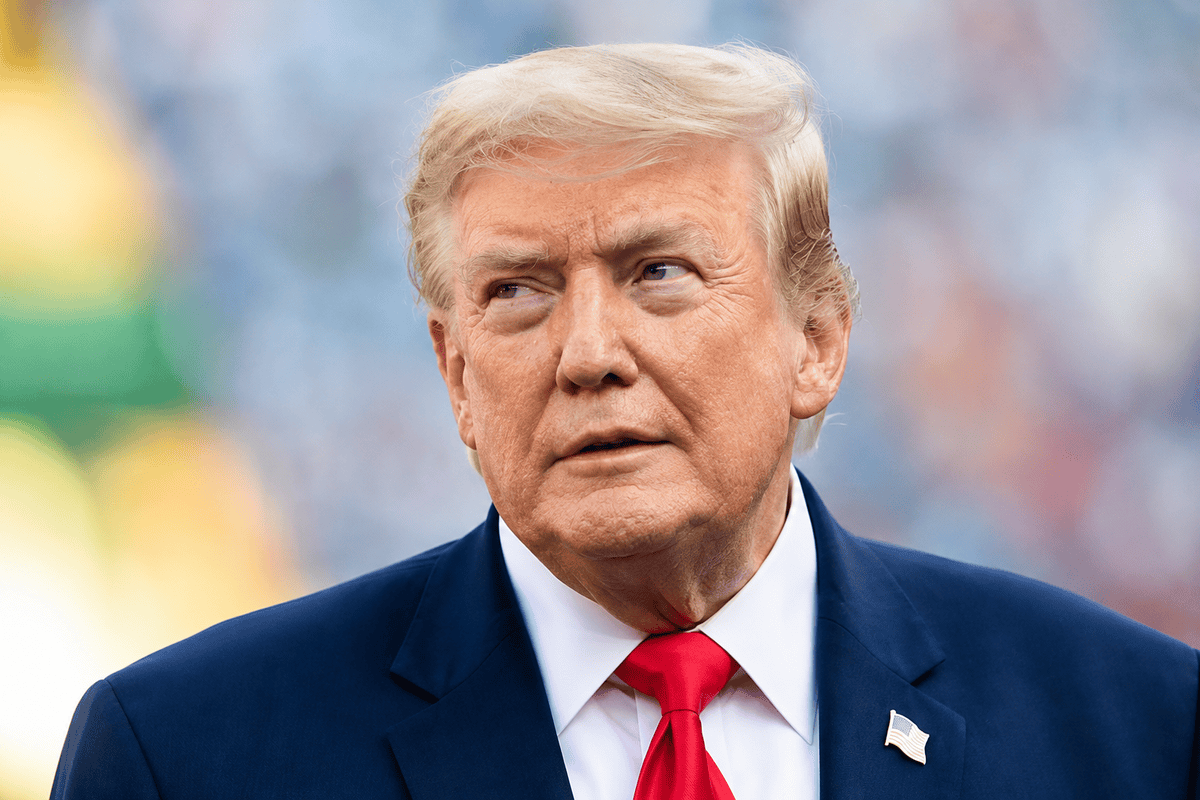
Trump Bans CNN, MS NOW, Politico From White House Over ‘Fake News’
WASHINGTON — United States President Donald Trump has announced restrictions barring CNN, MS NOW and Politico from the White House, accusing the three media organisations of repeatedly publishing what he described as “fake news” about his administration.
Trump announced the decision on Friday, September 18, 2026, in a post on his Truth Social platform, declaring that the restrictions were effective immediately.
The president accused the organisations of reporting what he called “fiction and lies” about him, his administration and the United States, while warning that other media outlets could also face similar restrictions.
The announcement has opened another confrontation between the Trump administration and the American media, with press-freedom advocates and journalists raising questions about the constitutional limits of presidential control over access to the White House.
The dispute also escalated on Saturday after journalists working for MS NOW were denied entry to the White House grounds, providing the clearest indication that the administration had begun enforcing at least part of Trump’s announced restrictions.
Trump, speaking to reporters in the Oval Office after making the announcement, defended the decision and said the three organisations had engaged in what he regarded as deliberately negative coverage of his administration.
“They’re fake news,” Trump said when asked about the decision, adding that other media organisations could also be affected if they continued with what he described as unfair reporting.
Trump did not identify a single report that prompted the action. Instead, he pointed to what he characterised as the organisations’ overall coverage of his presidency.
He also criticised other major American news organisations, including The New York Times and The Washington Post, suggesting that additional outlets could face restrictions.
However, no ban on either newspaper was immediately announced.
The White House action initially created uncertainty because journalists from the three targeted organisations remained on the White House grounds after Trump’s announcement on Friday.
READ ALSO:
- Jetour Unleashes F700 Hybrid Pickup as Abuja Experience Begins Tuesday
- “She Wanted to Stay Single”: Rema Opens Up About Rejection That Inspired Hit Song ‘Oh No’
- Ronaldo Included in Portugal’s Nations League Squad as Jorge Jesus Begins New Era
CNN journalists were still working from the network’s White House workspace, while CNN also had personnel involved in the television pool covering Vice President JD Vance.
The situation changed on Saturday when MS NOW journalists were denied access to the White House grounds.
The development raised fresh questions about whether the administration intended to apply the restrictions to physical access, press credentials, White House workspaces, presidential events and media pools, or all forms of coverage from the presidential complex.
It was not immediately clear whether CNN journalists had also been denied entry on Saturday, while Politico journalists are generally not based at the White House during weekends.
Trump was spending the weekend at Camp David, the presidential retreat in Maryland.
The president’s action has drawn a strong response from the affected organisations.
CNN rejected the move and said it stood behind its White House reporting team. The network maintained that journalists should be able to report from the White House without government interference and indicated that it would challenge any formal restriction that violated its constitutional protections.
Politico also rejected the president’s allegations and said it would continue covering the Trump administration and future administrations.
The organisation said it would defend its First Amendment rights against attempts to restrict its access to government officials and presidential activities.
MS NOW also condemned the restriction after its journalists were denied entry, saying it would pursue available measures to protect its constitutional rights and the public’s access to information about government activities.
The White House Correspondents’ Association also criticised the administration’s decision.
The association argued that freedom of the press should not depend on whether a president agrees with the coverage produced by a particular news organisation or approves of questions asked by its journalists.
The controversy has also attracted the attention of major press-freedom organisations, which have warned that excluding news organisations because of dissatisfaction with their reporting could raise serious constitutional questions.
The First Amendment protects freedom of the press in the United States, although the government also has authority to regulate access to secure government facilities.
The central legal question is therefore likely to concern whether the White House can selectively exclude particular news organisations because the administration objects to their reporting or perceived editorial position.
The latest dispute follows an earlier confrontation between the Trump administration and the Associated Press over White House access.
In 2025, the White House restricted AP journalists from certain presidential events after the news organisation declined to adopt Trump’s preferred name, “Gulf of America”, for the body of water traditionally known as the Gulf of Mexico.
The AP challenged the restrictions in court, turning the dispute into a wider legal battle over presidential control of press access.
Trump has also had a previous major confrontation with CNN over White House access.
During his first presidency, the White House revoked CNN correspondent Jim Acosta’s press credentials following a contentious exchange between Acosta and Trump at a November 2018 press conference.
CNN challenged the decision in court, and a federal judge temporarily ordered the restoration of Acosta’s access. The White House later restored his credentials permanently.
The latest dispute is therefore occurring against the background of several years of tension between Trump and major American news organisations.
Trump has repeatedly criticised media outlets whose reporting he considers unfair or inaccurate, while journalists and press-freedom groups have argued that government officials should not determine access to the presidency according to whether they approve of news coverage.
Another issue raised by Trump’s latest announcement is the absence of specific reports identified by the president as the basis for the restrictions.
Rather than pointing to one article or broadcast, Trump referred broadly to what he described as the organisations’ continued publication of negative and false reports.
The president also raised the issue of government spending on Politico subscriptions while defending his decision.
Politico has rejected suggestions that its government subscriptions amounted to improper financial support, arguing that such claims were misleading.
Trump’s warning that other media organisations could also be targeted has added another dimension to the dispute.
The president has suggested that additional outlets could be excluded from the White House if he believes they continue to engage in what he considers unfair reporting.
That possibility has heightened concerns among journalists about the future of White House press access and whether the administration could establish different levels of access for media organisations based on their editorial coverage.
The immediate focus, however, is on how the restrictions against CNN, MS NOW and Politico will be implemented.
Questions remain over whether the administration will issue formal rules covering press credentials, presidential events, White House workspaces and press pools.
The organisations affected have indicated that they intend to continue covering the Trump administration and defend their rights to do so.
The confrontation could consequently develop into another major legal battle over the relationship between the White House and the American press, with the outcome potentially affecting how journalists gain access to the presidency.
For now, the denial of entry to MS NOW journalists represents a significant development from Friday’s announcement, when the precise scope of the proposed ban remained unclear.
The unfolding dispute places White House press access, media freedom and First Amendment protections at the centre of another major confrontation between President Trump and the American news media.
Trump Bans CNN, MS NOW, Politico From White House Over ‘Fake News’
International
Asian Games Organisers Apologise After Blunder Broadcasts North Korean Anthem for South Korea

Asian Games Organisers Apologise After Blunder Broadcasts North Korean Anthem for South Korea
A mistaken stadium audio track following South Korea’s 5-0 hockey win over Bangladesh triggers protests amid wider logistical issues in Japan.
Organisers of the Asian Games in Japan issued a formal apology on Friday after mistakenly playing the North Korean national anthem for South Korea’s men’s hockey team.
The embarrassing mix-up occurred shortly after South Korea secured a commanding 5-0 victory over Bangladesh, leaving players standing perplexed on the pitch as the wrong national anthem echoed through the stadium speakers.
Following the initial blunder, venue operators played the national anthem of Bangladesh before finally broadcasting South Korea’s proper anthem, prompting a stadium announcer to issue an immediate apology over the public address system.
However, South Korea coach Min Tae-seok condemned the oversight as an inexcusable operational failure. Min stated that while tournament officials blamed an individual operator for selecting the wrong audio file, an international competition must never tolerate errors of such sensitive political magnitude.
Furthermore, the anthem blunder compounds wider operational difficulties facing Japanese host venues ahead of Saturday’s official opening ceremony. Several delegations have voiced strong frustration over logistical arrangements, with visiting teams reporting airport delays lasting up to six hours.
In addition, members of South Korea’s basketball squad published videos showing water pouring from broken pipes into their athlete village rooms, intensifying pressure on local organisers to resolve village infrastructure and technical coordination before mainstream competitions begin.
Asian Games Organisers Apologise After Blunder Broadcasts North Korean Anthem for South Korea
International
BREAKING: Bloodbath at Pakistan Mosque as Suicide Blast Kills 21, Injures 103
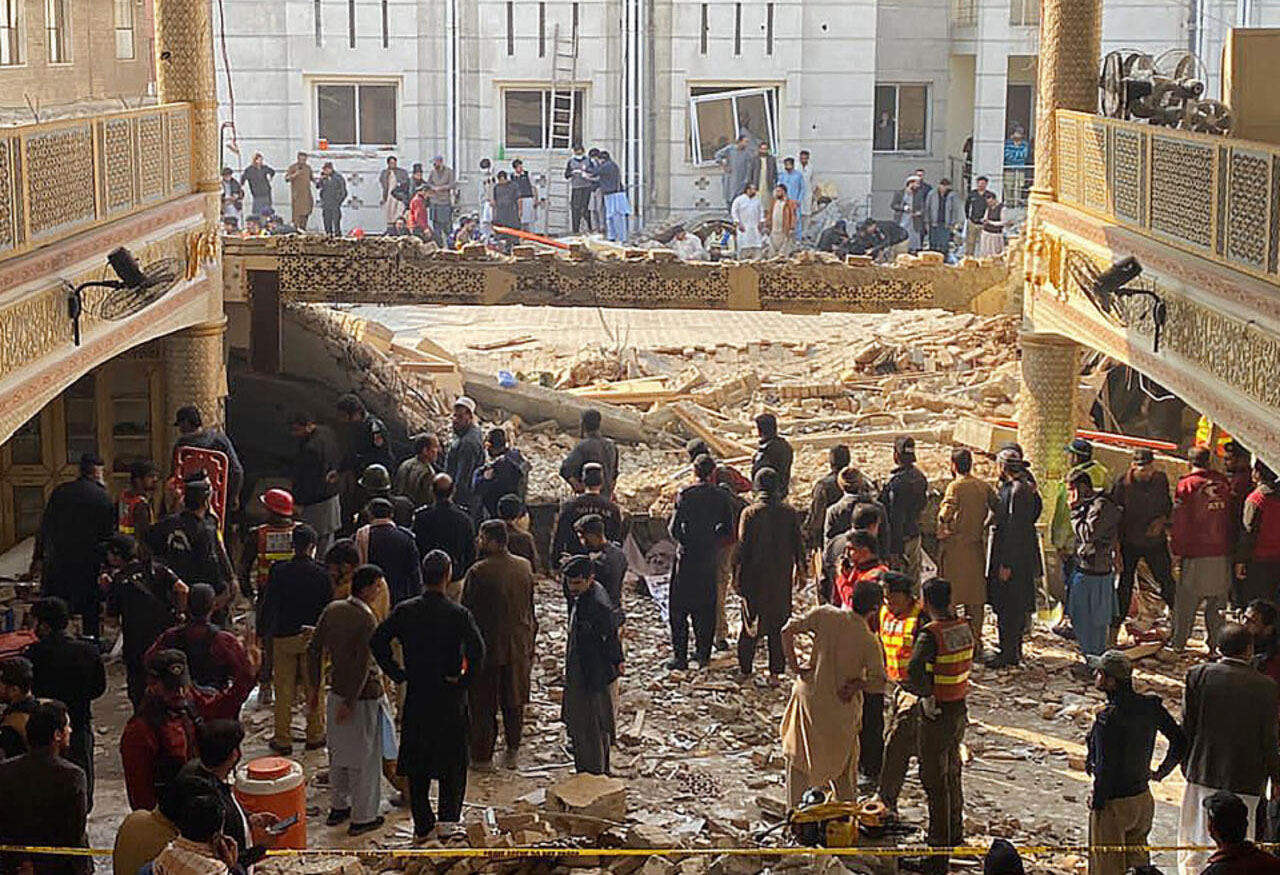
BREAKING: Bloodbath at Pakistan Mosque as Suicide Blast Kills 21, Injures 103
KOHAT, Pakistan — Friday prayers turned into a scene of horror in Pakistan on Friday as a powerful suicide attack ripped through a mosque inside a police compound in Kohat, leaving at least 21 people dead and 103 others injured.
The devastating attack, which struck the Old Police Lines in Kohat, Khyber Pakhtunkhwa province, claimed the lives of 15 police personnel and six civilians, while 73 policemen and 30 civilians were injured, according to health officials.
The attack occurred at about 1:20pm local time, when worshippers had gathered for the weekly Friday prayers at the mosque located inside the heavily guarded Police Lines compound.
Eyewitness accounts and initial reports described scenes of panic as a massive explosion tore through the facility, sending debris flying and trapping victims beneath damaged sections of the mosque and surrounding buildings.
According to Khyber Pakhtunkhwa Inspector-General of Police Zulfiqar Hamid, an explosives-laden vehicle was rammed into the gate of the old Police Lines before detonating, unleashing the devastating blast.
The explosion caused extensive damage to the police facility and mosque, with parts of the structure collapsing as worshippers and police officers were caught in the blast.
But the nightmare did not end with the explosion.
As rescue workers rushed to evacuate the wounded, gunfire erupted inside the compound after armed militants reportedly attempted to force their way deeper into the police facility.
A further suicide explosion was also reported near the Special Branch building during the ensuing confrontation between the attackers and security forces.
READ ALSO:
- Xenophobia: FG Brings 33 More Nigerians Home From South Africa
- Falconets Thrash England 3-0, Face Colombia in U-20 World Cup Quarter-Finals
- Replace Fuel Subsidy With Vehicle Credit to Drive Mobility, Jobs,LCCI, Ilekuba tell FG
Police said seven armed attackers had entered the compound following the initial assault, triggering a fierce firefight involving police and Counter-Terrorism Department personnel.
Security forces eventually killed the attackers, including a suicide bomber and a sniper, as they battled to regain control of the compound.
The scale of the casualties overwhelmed medical facilities in Kohat, forcing the District Headquarters Hospital to declare an emergency.
Ambulances raced to the scene as doctors and medical workers treated scores of victims suffering blast injuries, gunshot wounds and injuries caused by collapsing structures.
Health authorities put the number of injured at 103, with 73 police personnel and 30 civilians among those receiving treatment.
Some of the wounded were reportedly in critical condition, while rescue teams continued searching the damaged compound for possible survivors trapped under debris.
The heavy police casualties were attributed to the location and timing of the attack, with officers among those gathered inside the mosque for Friday prayers.
Among those reportedly killed were SP Traffic Akbar Shinwari and Dr Israel Orakzai, head of the children’s department at DHQ KDA Kohat, according to Pakistani media reports.
Security forces subsequently cordoned off the area and restricted movement around the Police Lines as investigators began examining the scene and searching for explosives or possible accomplices.
The Kohat-Hangu Road was also closed temporarily as security and rescue operations continued.
The attack triggered widespread outrage across Pakistan, with President Asif Ali Zardari and Prime Minister Shehbaz Sharif condemning the bombing and mourning the victims.
Sharif directed authorities to ensure that the injured received immediate and adequate medical treatment while security agencies were ordered to investigate the attack.
Khyber Pakhtunkhwa Chief Minister Sohail Afridi also condemned the assault and directed officials to mobilise available resources for the treatment of the wounded.
Interior Minister Mohsin Naqvi expressed solidarity with the families of those killed and injured, as condemnation poured in from within and outside Pakistan.
Countries including Saudi Arabia, the United Kingdom, Russia, Poland, Australia and Jordan also condemned the attack and expressed sympathy with the victims and their families.
The Kohat bombing comes against the backdrop of an escalating militant threat in Khyber Pakhtunkhwa, one of Pakistan’s most violence-prone regions.
The province, which shares a border with Afghanistan, has witnessed repeated attacks targeting police, soldiers and civilians.
The latest bloodshed also came shortly after a roadside bombing in neighbouring Hangu district reportedly killed six soldiers, further raising security concerns in the region.
Pakistan has repeatedly accused militants linked to the Tehrik-e-Taliban Pakistan (TTP) of using hideouts in Afghanistan to launch attacks inside Pakistan. Afghanistan’s Taliban authorities have consistently rejected allegations that they permit their territory to be used for attacks against Pakistan.
Responsibility for the Kohat attack remained disputed in the immediate aftermath.
While later reports attributed a claim to a faction associated with the TTP, other reports said the TTP denied involvement. Security authorities have therefore continued investigations to establish the identity of those behind the attack and determine whether others assisted the attackers.
The deadly incident has also drawn painful memories of the January 2023 Police Lines mosque bombing in Peshawar, in which more than 100 people, mostly police officers, were killed.
For residents of Kohat, Friday’s attack once again turned a place of worship into a battlefield, leaving families searching for loved ones and hospitals struggling to cope with the influx of casualties.
As security agencies combed through the wreckage and investigators worked to establish the circumstances surrounding the assault, the death toll and number of injured remained subject to further updates.
At least 21 people are confirmed dead and 103 injured in the latest official figures, with fears that the casualty figures could change as authorities complete rescue and medical operations.
BREAKING: Bloodbath at Pakistan Mosque as Suicide Blast Kills 21, Injures 103
-
 News2 days ago
ECOWAS Biometric Card Expands as Seven Countries Begin Rollout
-

 Sports2 days ago
Ballon d’Or 2026: Mbappe Responds to Yamal’s Bold Claim
-
 metro2 days ago
FG Suspends Niger NSCDC Commandant As 37 Suspected Illegal Miners Die In Custody
-
 Politics2 days ago
Toyin Abraham Rejects Lagos APC Campaign Council Inclusion
-
 International2 days ago
Ninth Body Discovered in South Africa: Nigeria Issues Urgent Safety Alert to Nationals
-

 Politics2 days ago
2027: Sowore Says He’d Rather Die Than Travel Abroad For Medical Treatment
-
 metro1 day ago
Niger Miners’ Deaths: Families Demand Compensation, Justice for Victims
-

 Sports2 days ago
Falconets Thrash England 3-0, Face Colombia in U-20 World Cup Quarter-Finals