

Education
Half Salary: Fresh Strike Looms As ASUU NEC Meets Monday

Members of the National Executive Council of the Academic Staff Union of Universities will on Monday hold a crucial meeting to decide on whether to go on a fresh strike or not, Daily Trust can confirm.
The decision to convene the emergency NEC meeting, which is to be held at the ASUU National Secretariat on the University of Abuja campus, is coming on the heels of October salary cut received by members of the union.
A NEC member, who does not want his name in print, told our correspondent that members of the union across all the branches were disappointed about the action of Minister of Labour and Employment, Chris Ngige.
The official said their members had it on good authority that it was the minister who wrote to the necessary quarters, directing them not to fully pay October salary to lecturers.
“I can confirm that, ASUU NEC will meet on Monday, November 7, to take a decision on strike action or not. This is an aftermath of half-salary paid by the Nigerian govt.
“Branches say they are disappointed in the FG. The union should have a decision on the same day,” he told Daily Trust on the phone.
READ ALSO:
- Hackers steal $11m from Nigeria, others
- Troops Kill 3 B/Haram Fighters, Recover Weapons In Borno
- Post-UTME: Unilorin announces date for commencement of registration
- NDLEA Made No Request To Buy Sniffer Dogs In 2023 Budget
President of the union, Prof. Emmanuel Osodeke could not be reached for comments as at when filing this report.
ASUU had called off an eight-month strike on October 14, following court rulings and the intervention of the Speaker of the House of Representatives, Hon Femi Gbajabiamila.
Another NEC member said the most “worrisome” part of the whole thing was the payment of salary backlogs to medical lecturers in the universities while other teachers in other discipline were neglected.
In reaction via a statement issued on Saturday, Ngige dismissed ASUU members’ allegations on selective treatment.
He described the allegation as grossly “inaccurate, misleading and barefaced distortion of facts”, pointing out that members of ASUU were paid their October salary pro-rata, and not half salary.
He said the pro-rata was done because they cannot be paid for work not done.
The minister maintained that he never directed the Accountant-General of the Federation to pay the university lecturers half salary.
“Following the ruling of the Court of Appeal, which upheld the order of the National Industrial Court of Nigeria (NICN), asking ASUU to go back to work, the leadership of the union wrote to the Minister, informing him that they have suspended the strike.
“The Federal Ministry of Education wrote to him in a similar vein and our labour inspectors in various states also confirmed that they have resumed work.
“So, the minister wrote to the Federal Ministry of Finance, Budget and Planning, directing that their salaries should be restored.
“They were paid in pro-rata to the number of days that they worked in October, counting from the day that they suspended their industrial action. Pro-rata was done because you cannot pay them for work not done. Everybody’s hands are tied,” he said.
The minister equally faulted a statement by the Chairperson of ASUU, Usman Danfodiyo University Sokoto (UDUS) branch, Muhammad N. Al-Mustapha, accusing him of biased payment of salaries to selected professional members of the union.
He added, “Those obviously being referred to by the UDUS ASUU chairperson were members of the Medical and Dental Consultants Association (MDCAN) who abstained from the eight-month strike of ASUU because they abhorred the incessant strikes by the union and its grave effects on medical education in Nigeria and production of more medical doctors.
“Accusing the Honourable Minister of Labour and Employment, Sen. Chris Ngige, of biased payment of salaries to selected professional members of ASUU is a barefaced distortion of facts. Mustapha said he received information that a segment of the staff in the College of Health Sciences (CHS) has been paid seven months of their withheld salaries from March to September, due to a letter written to the Minister of Finance, instructing the exemption of the under-listed staff on the application of ‘No Work, No Pay’ rule
“To set the records straight, the medical lecturers who are being referred to by the Chairperson of ASUU UDUS branch, abstained from the eight-month strike of ASUU. This has been corroborated in a press statement by the Chairman, MDCAN UdUS, Dr B. Jubrin and Secretary, Dr I. G Ango, on Friday, November 4, 2022.”
Daily Trust





Education
25 Universities, Teaching Hospitals Get Solar Power Under REA Programme

25 Universities, Teaching Hospitals Get Solar Power Under REA Programme
Twenty-five federal tertiary institutions have been connected to solar electricity under the Rural Electrification Agency’s (REA) Energizing Education Programme.
The REA Managing Director, Abba Aliyu, disclosed this during the commissioning of a 3MW captive solar hybrid power project at Yakubu Gowon University, Abuja.
According to Aliyu, the programme covers 22 federal universities and three affiliated teaching hospitals and has deployed more than 100MW of clean energy.
He said the initiative now benefits over 300,000 students and 50,000 academic and administrative staff.
Aliyu added that the new 3MW facility would power key university facilities, including lecture halls, laboratories, ICT systems, administrative buildings and campus lighting.
Meanwhile, Minister of Power Joseph O. Tegbe said reliable electricity was essential to supporting teaching, research, healthcare and digital services in universities.
He stressed that the long-term performance of the solar projects would be more important than their commissioning.
Vice-Chancellor of Yakubu Gowon University, Prof. Hakeem Babatunde Fawehinmi, also said dependable electricity was critical to the institution’s academic and research activities.
25 Universities, Teaching Hospitals Get Solar Power Under REA Programme
Education
Niger State Urges Local Communities to Protect Newly Completed Public Schools
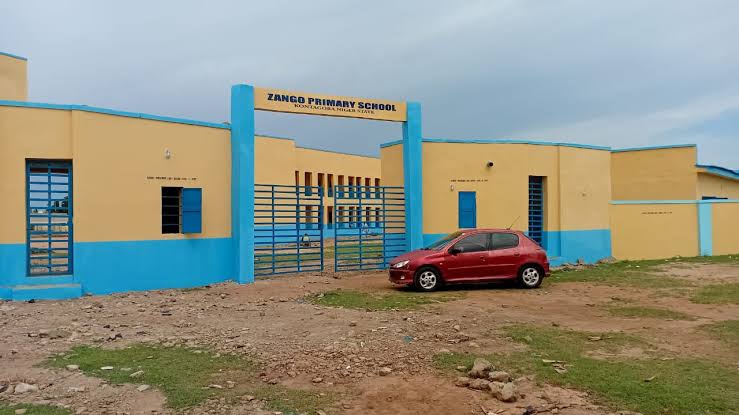
Niger State Urges Local Communities to Protect Newly Completed Public Schools
Basic education officials deliver modern classrooms to help children learn safely, kicking off an ambitious statewide renovation drive.
State education leaders in Niger State are calling on neighborhood residents and parent groups to take good care of newly renovated primary schools.
On Wednesday, the head of the Niger State Universal Basic Education Board, Dr. Ibrahim A. Liman, reminded communities that public classrooms belong to everyone, warning that state funding can only make a lasting difference when local people watch over these shared spaces.
To prepare for handing over the keys, board officials visited Zango Primary School in Kontagora and Richard Lander Primary School in New Bussa. These two locations are the first to finish out of seven model schools currently under construction.
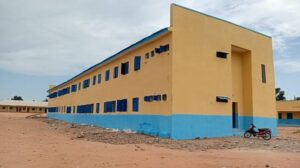
During their visits, team members inspected classrooms to make sure builders followed high safety standards, while encouraging neighbors to keep the grounds secure, tidy, and ready for pupils.
Furthermore, state officials explained that these building projects are part of a larger plan to improve early education across every community. Alongside these new classrooms, the board is starting repair work on about 400 primary schools throughout the state.
In addition to fixing desks and roofs, authorities are upgrading classroom teaching tools and supporting teachers. As a result, children across all backgrounds will have safe, welcoming spaces to learn and grow together.
Niger State Urges Local Communities to Protect Newly Completed Public Schools
Education
LASU, LASUED, LASUSTECH Shut as ASUU Begins Indefinite Strike
LASU, LASUED, LASUSTECH Shut as ASUU Begins Indefinite Strike
Students at three Lagos State-owned universities are facing an indefinite interruption of academic activities after ASUU declared a strike over unresolved demands.
LASU, LASUED and LASUSTECH are affected by the industrial action announced by the union’s Joint Campus Group.
ASUU said it had given the Lagos State Government 14 days from August 31 to address its concerns. According to the union, the deadline expired without a concrete plan or meaningful dialogue.
The union had also issued a final warning on September 10, but said the September 13 deadline passed without talks.
Its main demand is for Lagos State to domesticate and implement the December 2025 Federal Government-ASUU agreement across the three institutions.
ASUU also wants the implementation of welfare provisions, including the Consolidated Academic Tools Allowance for serving and retired academic staff.
The union said the strike would continue until negotiations produce a satisfactory outcome. It also urged students and parents to remain calm.
While the dispute has led to a fresh shutdown in Lagos, another ASUU branch has suspended its strike in Plateau State.
The Plateau State University branch reached an agreement with the state government on issues including the 2025 agreement, outstanding arrears, staff accommodation and other demands. Members are expected to return to academic activities from midnight on September 16.
Meanwhile, ASUU at Taraba State University has issued a fresh 14-day ultimatum to the Taraba State Government. The notice runs from September 14 to September 28 and concerns outstanding provisions of the 2025 Federal Government-ASUU agreement.
LASU, LASUED, LASUSTECH Shut as ASUU Begins Indefinite Strike
-
 Politics3 days ago
2027: Northern Lecturers Back Tinubu, ASUU Disowns Endorsement
-

 metro3 days ago
Police Arrest Mother Over Alleged Brutal Abuse of 7-Year-Old Girl in Anambra
-

 Sports2 days ago
‘I Was Never the Chosen One’ — Dembele Responds to Mbappe
-

 International1 day ago
Islamic Council Condemns Attempted Attack on Holy City of Mecca
-

 Education2 days ago
JAMB Moves 2027 UTME Time — Here’s What Candidates Need To Know
-

 metro2 days ago
Lagos Power Outage: Ikeja Electric Blames TCN as Businesses, Homes Groan
-
 News1 day ago
Keep Politics Out of My Office — Ogbomoso Grand Chief Imam Warns Politicians, Bloggers
-
 Politics2 days ago
2027: APC Governors Reject Wike’s Rainbow Coalition, Insist on Party Loyalty