

Education
Half salary: Your concerns are being addressed, Gbajabiamila tells ASUU
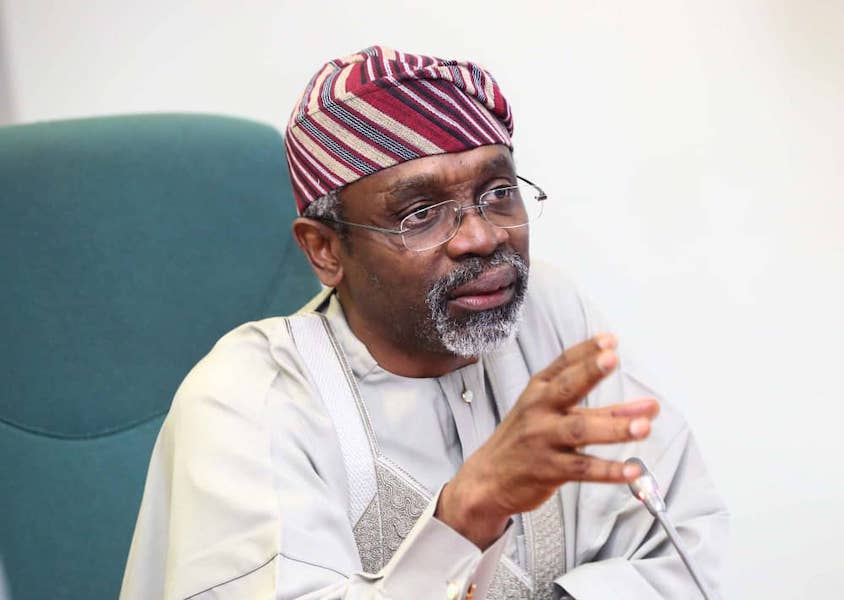
Speaker of the House of Representatives, Femi Gbajabiamila, has advised members of the Academic Staff Union of Universities (ASUU) to remain calm over their claim of half salary payment by the Federal Government.
In a statement he personally signed in Abuja on Monday, the Speaker said efforts to find lasting solutions to the concerns frequently raised by ASUU were ongoing.
There are fears that a fresh strike may be looming with ASUU executive council going into a closed-door meeting today to look at the half salary paid to their members in the month of October by the Federal Government.
Gbajabiamila said President Muhammadu Buhari had indicated interest to wade into the latest concerns raised by the union.
“When the ASUU called off its industrial action three weeks ago, it meant that academic activities could resume in our nation’s public universities,” he said.
He said the executive and the House of Reps had worked to address the issues that led to the strike, adding that the House was working on the 2023 Appropriations Bill.
This, according to him, includes N170 billion to provide a level of increment in the welfare package of university lecturers.
He said the bill included an additional N300 billion revitalization fund to improve the infrastructure and operations of the federal universities.
Furthermore, the House of Reps has convened the Accountant-General of the Federation (AGF), ASUU and other stakeholders to facilitate the adoption of elements of the University Transparency and Accountability Solution (UTAS) into the Integrated Payroll and Personnel Information System (IPPIS),” he said.
He said the effort was being supervised by the Chairman of the House Committee on Tertiary Education, Aminu Suleiman.
Gbajabiamila, however, noted that the position taken by the executive that it was not obligated to pay salaries to lecturers for the time spent on strike was premised on the law.
He said the decision was also premised on the government’s legitimate interest in preventing moral hazard and discouraging disruptive industrial actions.
The Speaker said that intervention had been made to explore the possibility of partial payments to the lecturers, adding that it looked forward to a favourable consideration by the President.
He said Buhari had manifested his desire for what was prudent and necessary to resolve all outstanding issues.
Gbajabiamila said the House was convening a national summit on Tertiary Education Reform, adding that it had called for papers and memoranda from members of the public.
He said submissions received as well as expert presentations at the summit would inform the policy recommendations and actions.







Education
Oluwo Urges Youths to Pair Degrees with Skills, Commends Westland University’s Excellence

Oluwo Urges Youths to Pair Degrees with Skills, Commends Westland University’s Excellence
- Monarch describes institution as one of Nigeria’s leading private universities, calls for skills-based education to tackle unemployment as he tasks wealthy Nigerians to invest in youth development
The Oluwo of Iwoland and Chancellor of Westland University, Iwo, Oba Abdulrosheed Adewale Akanbi, has described Westland University as one of Nigeria’s leading private universities, attributing its growing academic excellence to the dedication, passion, and teamwork of its management and workforce, while urging Nigerian youths to complement their academic degrees with vocational and entrepreneurial skills for career success and self-reliance .
The monarch made the remarks on Wednesday during an official visit to the institution in Iwo, Osun State, where he commended the university’s Governing Council, management, lecturers, and other members of staff for maintaining high academic standards and producing graduates with impressive academic performances . He expressed satisfaction with the quality of graduates produced by the institution, noting that the impressive number of students graduating with distinctions reflects the university’s commitment to academic excellence and its determination to produce well-rounded graduates capable of making meaningful contributions to society .
Although the university may not yet enjoy widespread national recognition, Oba Akanbi said its achievements have positioned it among Nigeria’s best institutions of higher learning, with the capacity to compete favourably on the global stage and attract students from across the country and beyond . “I am proud of this university because our students are graduating with distinctions. The lecturers, departments, Chairman of the Governing Council and everyone involved are doing an excellent job. Westland University is one of the best universities in Nigeria, and I believe it has what it takes to stand among the best in the world,” the Oluwo said, emphasizing that the institution’s trajectory points toward even greater achievements in the coming years .
READ ALSO:
- Troops, Hunters Arrest Five Suspected Kidnappers, Seize Weapons in Yobe
- “No Governor Has Such Power” – MC Oluomo Fires Back at Gov Adeleke Over Osun NURTW Ban
- Police Detain 4 Officers Over Viral Ethnic Profiling Video on Lagos–Benin Expressway
The monarch attributed the institution’s success to the spirit of unity and commitment among members of staff, describing the university community as one family working towards a common goal of producing graduates who are not only academically sound but also equipped with the practical skills needed to thrive in today’s competitive environment . He urged Nigerians to approach their various professions with dedication, patience, and integrity, stressing that genuine commitment to service remains the foundation of success in both the public and private sectors, and linking the same spirit of excellence to Westland University’s steady progress and rising profile .
Speaking on youth empowerment and unemployment, Oba Akanbi emphasised that academic qualifications alone are no longer sufficient in today’s competitive world, urging students and graduates to complement their certificates with vocational and entrepreneurial skills that would enable them to become employers of labour rather than job seekers . According to him, practical knowledge has become indispensable for career success and self-reliance, as employers increasingly value both academic credentials and practical competence in an era of rapid technological change and economic uncertainty .
“Degrees are important, but skills acquisition is equally important. Even after obtaining a degree or a master’s qualification, practical experience remains essential. Life is not only about theory; practical skills are indispensable,” he added, urging educational institutions to integrate vocational training into their curricula to prepare students for the realities of the job market . The Oluwo also tasked wealthy Nigerians to channel more resources into education and vocational development of young people rather than spending lavishly on luxury and extravagant social events that have little or no lasting impact on national development . “People should invest in education instead of spending hundreds of millions on luxury and parties that have little or no lasting impact. If we truly desire national development, we must invest in our young people because they are the future of this country,” he said, calling on the affluent to see youth education as a patriotic duty and a strategic investment in Nigeria’s future .
Also speaking during the visit, the Vice President of Westland University, Chief Dr Mrs Esther Adepoju, encouraged Nigerian youths to embrace education as a pathway to personal development and national advancement, stating that education instils discipline, builds character, and promotes integrity while discouraging involvement in criminal activities and other social vices that have become prevalent among young people . “Education may not automatically make one wealthy, but it liberates. An educated person understands the value of integrity and is less likely to engage in criminal acts that could destroy their future. Our youths should reject social vices and embrace education for a better tomorrow,” she said, emphasizing the transformative power of education in shaping responsible citizens and future leaders .
Chairman of the University’s Governing Council, Professor Oyekunle Oyelami of the University of Lagos, also underscored the importance of combining academic learning with practical skills, explaining that members of the Governing Council, drawn from different universities across the country, were committed to supporting the institution’s growth through voluntary service, mentorship, and academic guidance . Professor Oyelami noted that universities have three fundamental responsibilities—teaching, research, and community service—adding that academics must continually contribute to societal development by producing knowledge that addresses real-world challenges and preparing students to become agents of positive change in their communities .
“Our responsibility is to ensure that Westland University becomes one of the highest-ranking universities in the world. The facilities here are world-class and compare favourably with those of many universities within and outside Nigeria. We invite young people across Nigeria and beyond to choose Westland University as a place where they can receive quality education, acquire practical skills and develop the capacity to make meaningful contributions to humanity,” he said, inviting prospective students to take advantage of the institution’s world-class facilities and commitment to holistic education . The Oluwo’s latest call aligns with his long-standing commitment to youth empowerment and vocational development, as he had in April 2024 empowered youths in Iwoland with a multi-million naira cash gift aimed at promoting vocational skills and business development among young people who had completed apprenticeships in their respective crafts, expressing hope in the ability of the beneficiaries to multiply the grant in their various investments .
Oluwo Urges Youths to Pair Degrees with Skills, Commends Westland University’s Excellence
Education
FG begins JAMB registration for NCE, non-tech agricultural programmes without UTME

FG begins JAMB registration for NCE, non-tech agricultural programmes without UTME
The Federal Government (FG) has officially commenced registration for candidates seeking admission into Nigeria Certificate in Education (NCE) programmes in Colleges of Education and non-technological agricultural programmes in polytechnics without requiring them to sit for the Unified Tertiary Matriculation Examination (UTME).
The initiative, being implemented by the Joint Admissions and Matriculation Board (JAMB), forms part of ongoing reforms aimed at expanding access to tertiary education, increasing enrolment in teacher education and agriculture-related courses, and addressing the shortage of skilled manpower in the education and agricultural sectors.
In a statement issued by JAMB’s Acting Director of Public Affairs and Protocol, Dr Fabian Benjamin, the Board said eligible candidates can now register at any Institutional Professional Registration Centre (IPRC) located in Colleges of Education or any JAMB Professional Registration Centre (PRC) across Nigeria.
According to the Board, the registration exercise follows the Federal Government’s policy exempting candidates seeking admission into NCE and non-technological agricultural programmes from writing the annual UTME. JAMB explained that although candidates are no longer required to sit the entrance examination, admissions will continue to be regulated through a structured process to ensure that only qualified applicants are admitted.
To qualify for registration, candidates must possess the required O’Level credits for their chosen programme. Applicants are expected to visit any designated IPRC or JAMB PRC with their credentials to complete the registration process. The Board noted that admissions under the new arrangement will still be processed through the Central Admissions Processing System (CAPS), JAMB’s online admission platform designed to promote transparency, accountability and merit in tertiary institution admissions.
READ ALSO:
- Nigeria Customs debunks fake recruitment update, warns job seekers
- Dangote Refinery resumes naira petrol sales, fixes gantry price at ₦1,215 per litre
- ICPC uncovers 908 suspected ghost workers in Police, other federal agencies, recovers ₦942m
JAMB also announced that candidates who participated in the 2026 UTME but have decided to pursue NCE or non-technological agricultural programmes can convert their applications at any approved registration centre without paying any additional fee. The Board described the provision as an opportunity for candidates to pursue alternative academic pathways without being financially disadvantaged.
As part of the implementation, JAMB has introduced new admission procedures for the 2026/2027 academic session. Under the revised framework, admission into Colleges of Education will be through the NCE route, while candidates applying under the policy must undergo verification of their O’Level results through the appropriate examination bodies before admission is processed. The Board also stated that candidates will only be processed under one admission category at a time, a measure intended to simplify admissions and prevent multiple applications across different admission routes.
The Federal Government introduced the policy to improve access to teacher education and agriculture-related programmes, two sectors regarded as vital to Nigeria’s long-term economic development, food security and human capital development. Education authorities believe removing the UTME requirement for these programmes will encourage more qualified candidates to enrol in Colleges of Education and agricultural institutions while maintaining academic standards through JAMB’s admission screening process.
JAMB advised interested candidates to visit the nearest approved IPRC or JAMB PRC to complete their registration as early as possible and avoid unnecessary delays. The Board reaffirmed its commitment to ensuring a transparent, merit-based admission process while supporting the Federal Government’s efforts to strengthen Nigeria’s education system and agricultural workforce.
If you’re publishing on Newstrends.ng, this version is optimized for Google News, with a single SEO-friendly headline, natural keyword placement, and improved readability.
FG begins JAMB registration for NCE, non-tech agricultural programmes without UTME
Education
High graduation fees spark outrage among parents, guardians

High graduation fees spark outrage among parents, guardians
The growing cost of graduation fees in Nigerian schools has sparked widespread criticism from parents, guardians and education stakeholders, with many describing the trend as an unfair financial burden at a time when families are grappling with rising inflation and the high cost of living.
Across the country, parents have raised concerns over what they describe as excessive charges imposed by both private and public schools for end-of-session graduation and valedictory ceremonies. The fees, which vary widely depending on the school, often cover graduation gowns, certificates, photographs, entertainment, refreshments, souvenirs, decorations and venue logistics.
Many parents argue that the combined cost of these charges now rivals or even exceeds a full term’s tuition in some schools, making it increasingly difficult for low- and middle-income families to participate in ceremonies marking important educational milestones.
Some parents also allege that graduation payments are presented as compulsory, leaving families with little choice but to pay to prevent their children from being excluded from the celebrations alongside their classmates.
The concerns come as Nigeria continues to experience rising inflation, increasing transportation costs and higher prices for goods and services, all of which have placed significant pressure on household incomes. For many families, paying school fees, purchasing textbooks and uniforms, and meeting other educational expenses have already stretched their finances.
READ ALSO:
- NNPCL delivered less than 25% of expected crude under naira-for-crude programme — Dangote
- Ebonyi moves to cap estate agents’ fees, regulate house rent
- Gaza celebrates Spain’s World Cup victory as Palestinians hail La Roja in emotional scenes
Education advocates have warned that the increasing commercialisation of school graduation ceremonies risks shifting attention away from academic achievement to lavish celebrations. They argue that graduation events should remain modest, inclusive and centred on recognising pupils’ educational progress rather than becoming expensive social occasions.
Stakeholders also caution that excessive graduation fees could widen inequality among pupils, as children whose parents cannot afford the charges may miss out on activities that celebrate years of academic effort and personal development.
Some school administrators have defended the charges, explaining that the cost of organising graduation ceremonies has increased due to inflation and the rising prices of event venues, customised graduation gowns, decorations, catering services, security, electricity and professional photography.
According to school proprietors, many graduation ceremonies are designed to create memorable experiences for pupils and their families while showcasing students’ achievements. They argue that the fees reflect the actual cost of organising quality events rather than an attempt to exploit parents.
However, consumer rights groups have called for greater transparency in the way schools determine graduation charges. They urged school management to provide detailed breakdowns of all fees and avoid imposing hidden or unnecessary levies on parents.
Education experts have also urged schools to adopt more affordable approaches by organising simple graduation ceremonies within school premises instead of expensive off-campus events that significantly increase costs.
They further called on state ministries of education and relevant regulatory agencies to develop guidelines that would prevent excessive graduation charges while allowing schools to celebrate students’ achievements in a dignified and affordable manner.
Parents’ associations have similarly appealed to school owners to consider the prevailing economic realities when fixing graduation fees, stressing that no child should be denied the opportunity to celebrate an academic milestone because of financial constraints.
As the debate continues, stakeholders agree that graduation ceremonies remain an important tradition in Nigeria’s education system. However, many insist that celebrations should reflect moderation, inclusiveness and affordability so that every graduating pupil can participate without placing unnecessary financial pressure on families.
High graduation fees spark outrage among parents, guardians
-
 Politics2 days ago
Presidency, Obasanjo attack Atiku over US lobbying, reopen decades-old loyalty dispute
-

 Opinion2 days ago
Osun election: Àtàọ́ja should stop running joro-jara-joro
-

 Entertainment2 days ago
“Don’t Let Me Die”: Veteran Nollywood Actress Ngozi Nwosu Begs for ₦30m Surgery Fund
-

 Business2 days ago
Dollar to Naira Exchange Rate Today: Naira Holds Steady as Fuel Importer Demand Mounts
-
 Politics2 days ago
Atiku denies Obasanjo’s N5m bribery claim, links accusation to 2027 presidential race
-

 metro3 days ago
Trackers, Profiling as FG Unveils Special Guards to Secure Coastal Highway
-
 metro1 day ago
PFICP scandal: How ₦1.3bn ‘fake agency’ traced to Buhari’s government entered 2026 budget
-

 Education2 days ago
Oluwo Urges Youths to Pair Degrees with Skills, Commends Westland University’s Excellence