

News
DHQ releases identities of 19 terrorist commanders, places N5m bounty on each

The Defence Headquarters has released identities of 19 terrorist commanders said to be wrecking havoc in the North-East, North-West and North-Central zones of the country.
The DHQ said it would give N5m bounty to anyone with information in how the terrorists could be captured, urging the public to contact 09135904467.
It said the development became necessary in order to sustain the tempo in clearing the adversaries, adding that it was in its bid to completely restore peace to the country.
The names of the wanted terrorists as released by the Director, Defence Information, Maj.-Gen. Jimmy Akpor, are as follows:
SANI DANGOTE – ORIGIN: Dumbarum Village. Zurmi LGA of Zamfara State.
BELLO TURJI GUDDA – ORIGIN: FAKAI Village of Zamfara State.
LEKO – ORIGIN: MOZOJ VIllage, Mutazu LSA of Katsina State.
DOGO NAHALI – ORIGIN: YAR TSAMIYAR JNO Village. Kankara LGA of Katsina State
HALILU SUBUBU – ORIGIN: SUBUBU Village in MARADUN LGA of Zamfara State.
NAGONA – ORIGIN: ANGWAN GALADIMA in ISA LOA of Sokoto State.
NASANDA – ORIGIN: Kwashabawa, Village in Zurmi LGA of Zamara State.
ISIYA KWASHEN GARWA – ORIGIN: KAMFANIN Daudawa Village of Faskari, Katsina State.
ALI KACHALLA aka ALI KAWAJE – ORIGIN: KUYAMBARA VILLAGE in Danaadau MARU LGA of Zamfara State.
ABU RADDE – ORIGIN: VARANDA Village in Batsari LGA Katsina State.
DAN-DA – ORIGIN: VARANDA Village in Batsari LGA of Katsina State.
SANI GURGU – ORIGIN: VARANDA Village in Batsari LGA of Katsina State.
UMARU DAN NIGERIA – ORIGIN: RAFI VIllage. MADA District in GUSAULGA of
NAGALA – ORIGIN: MARU LGA of Zamfara State.
ALHAJI ADO ALIERO – ORIGIN: YANKUZO Village Tsafe LGA of Zamfara State.
MONORE – ORIGIN: YANTUMAKI Village, Dan LGA of Katona State.
GWASKA DANKARAMI – ORIGIN: SHAMUSHELE Village in Zuri LGA of Zamfara State.
BALERI – ORIGIN: SHINKAFI LGA of Zamfera State.
MAMUDU TAINANGE – ORIGIN VARANDA Village in Batsari LGA of Katsina State.

Bello Turji







News
Nigeria’s first indigenous female neurosurgeon appointed medical director of US hospital

Nigeria’s first indigenous female neurosurgeon appointed medical director of US hospital
Nigeria’s first indigenous female neurosurgeon, Dr. Salamat Ahuoiza Aliu-Ibrahim, has achieved another major career milestone after being appointed Medical Director of a children’s hospital in the United States, earning widespread commendation from the Nigerians in Diaspora Commission (NiDCOM) and the medical community.
The appointment further strengthens Dr. Aliu-Ibrahim’s reputation as one of Nigeria’s pioneering medical professionals and highlights the growing impact of Nigerian healthcare experts on the global stage.
The development was announced on Thursday in a statement issued by NiDCOM through its Director of Media, Public Relations and Protocols Unit, Abdur-Rahman Balogun.
Reacting to the appointment, NiDCOM Chairman/Chief Executive Officer, Abike Dabiri-Erewa, described it as another remarkable achievement for Nigerians living abroad and a testament to the outstanding contributions of Nigerian professionals across the world.
She said Dr. Aliu-Ibrahim’s emergence as Medical Director reflects the excellence, resilience and professionalism that continue to distinguish Nigerians in the diaspora in various sectors.
According to Dabiri-Erewa, the appointment demonstrates that excellence transcends gender, race and religion while serving as an inspiration to young Nigerians—especially girls aspiring to pursue careers in medicine, science and other highly specialised professions.
She noted that Aliu-Ibrahim’s success also dispels stereotypes surrounding Muslim women and reinforces the message that faith and professional excellence can coexist.
READ ALSO:
- Military Salary Hike Sparks Mixed Reactions as South-East Youths Weigh Enlistment
- Osun Account Freeze: EFCC Insists It Has 72-Hour Power Without Court Order
- Osun Election: ‘Prepare to Sign Your Uncle as Dancer’ — Uzodimma Fires Back at Davido
“Dr. Salamat Aliu-Ibrahim’s appointment is yet another reminder that Muslim women cover their hair, not their brains,” Dabiri-Erewa said.
“Her remarkable achievement demonstrates that faith and excellence are not mutually exclusive. She has become a beacon of hope and inspiration for countless young girls across Nigeria and beyond.”
Dr. Aliu-Ibrahim made history as Nigeria’s first indigenous female neurosurgeon after completing her neurosurgical residency at the National Hospital, Abuja, becoming one of the country’s foremost pioneers in one of medicine’s most demanding specialties.
After relocating to the United States, she faced the challenge of securing a neurosurgery residency position under the American medical training system. Rather than abandon her medical career, she retrained in paediatrics and successfully established herself as a paediatrician.
Her resilience and determination have since earned her leadership responsibilities within the American healthcare system, culminating in her appointment as Medical Director of a children’s hospital.
Medical experts say her career journey reflects exceptional adaptability and commitment to patient care, demonstrating that professional success often requires resilience, continuous learning and the willingness to embrace new opportunities.
While celebrating the appointment, Dabiri-Erewa also expressed concern over the continued migration of highly skilled Nigerian healthcare professionals abroad in search of better career opportunities.
She acknowledged that Nigerians in the diaspora continue to make invaluable contributions to healthcare, research, innovation and public service across the world, but warned that the persistent migration of experienced doctors and other medical personnel continues to pose challenges for Nigeria’s healthcare sector.
According to her, addressing issues relating to remuneration, welfare, working conditions and career development for healthcare workers remains essential to reducing the country’s brain drain.
She stressed that creating an enabling environment for medical professionals would encourage more experts to remain in Nigeria while strengthening the country’s healthcare system and improving service delivery.
Dabiri-Erewa commended Dr. Aliu-Ibrahim for projecting Nigeria positively through excellence, dedication and professionalism, expressing confidence that she would continue to make significant contributions to healthcare in her new leadership role.
She also reaffirmed NiDCOM‘s commitment to recognising and celebrating Nigerians in the diaspora whose outstanding achievements continue to enhance the country’s global image and inspire future generations.
Dr. Aliu-Ibrahim’s appointment adds to the growing list of Nigerian professionals occupying strategic leadership positions in healthcare institutions across the world, underscoring the country’s reputation for producing highly skilled medical experts who continue to excel internationally.
Nigeria’s first indigenous female neurosurgeon appointed medical director of US hospital
News
Military Salary Hike Sparks Mixed Reactions as South-East Youths Weigh Enlistment
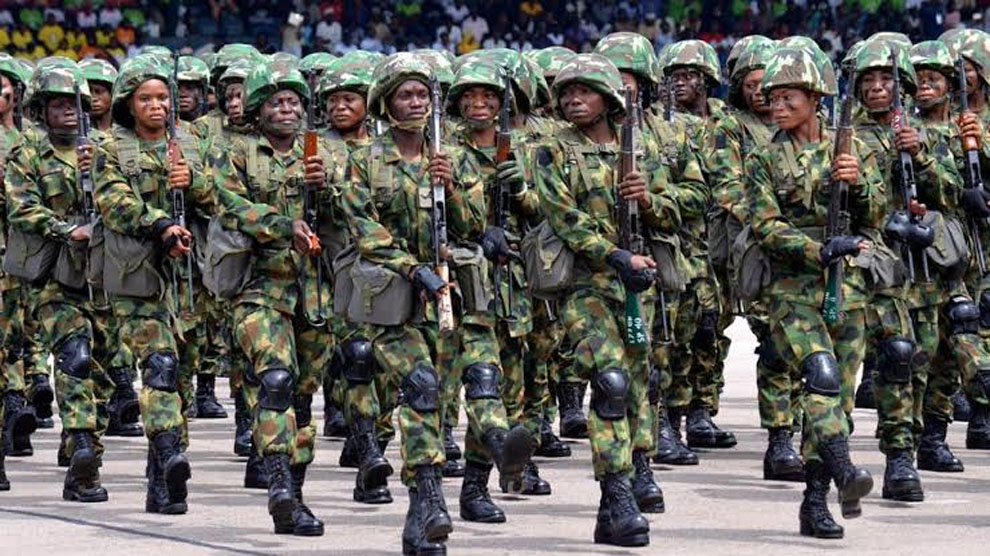
Military Salary Hike Sparks Mixed Reactions as South-East Youths Weigh Enlistment
Young men in Nigeria’s South-East are reconsidering military enlistment following President Bola Tinubu’s approval of an 80% salary increase for junior ranks, though deep-seated distrust and historical grievances continue to shape attitudes toward service in the region. The Federal Government approved a salary increment of between 30 and 80 per cent for personnel of the Nigerian Armed Forces, effective September 1, 2026. The decision increased the annual wage bill of the forces from N660 billion to N924 billion, adding N264 billion in personnel expenditure. Approximately 250,000 officers and soldiers will benefit from the new pay structure. Under the new salary structure, junior personnel from Private to Staff Sergeant will receive the highest adjustment of 80 per cent. Middle-level personnel and non-commissioned officers, from Warrant Officer to Colonel, will enjoy a 50 per cent increase, while officers above the rank of Colonel will receive a 30 per cent salary increase. The government also approved the recruitment of 28,000 new personnel into the armed forces and the creation of additional military divisions, as part of the Strategic Force Expansion Initiative aimed at strengthening operational capacity against terrorism, insurgency, banditry, kidnapping and other security threats.
While some young men in the region view the salary increase as an incentive to enlist, others remain reluctant due to concerns about career prospects, safety and the legacy of past military actions. Stephen Ezike, a bucket hawker from Okpoto in Ebonyi State, said he never wanted to join the military because his uncle retired without building a house. “He kept complaining that the injury he sustained in active service did not allow him to serve at war fronts where he could have gotten better allowances. My uncle currently works as a security man at a private university. He struggles to train his children. I hawk buckets, but I have built a house. I don’t want a job that I don’t know when I will die or not, and no guarantee that my children will go to school if I die early.” Ebubeagu Okoye, who sells used shoes, said with the increment, he would like to join the military. “Joining may not even be easy as such because there will be competition. Unemployment is much. Many will like to join. Because of the activities of bandits, the need for more recruitment has arisen. I will join because I’m a patriotic Nigerian. Let them also make entrance to the Nigerian Defence Academy easy for everybody. Rich men’s children go through NDA, and become officers. Ordinary Nigerians start as privates. That should stop if the military career is all about patriotism.” Mrs Dorothy Ekwueme said she would like her son to join, referring to two brothers who are Major Generals in the military. “These brothers are doing fine; we respect them. I like my son to become a soldier. But I don’t want my son to go to war. The way soldiers die makes me sad. Before, any place a soldier is attacked would be in trouble. Today, even Generals die carelessly.”
READ ALSO:
- Osun Account Freeze: EFCC Insists It Has 72-Hour Power Without Court Order
- Osun Election: ‘Prepare to Sign Your Uncle as Dancer’ — Uzodimma Fires Back at Davido
- Abuja Earth Tremor: Minister Orders Hourly Monitoring, Assures Residents of Safety
Military authorities have repeatedly expressed concern over low enlistment in the South-East. Chief of Army Staff Lieutenant General Waidi Shaibu, speaking at the passing-out parade of 2,989 recruits at the Amasiri-Edda Depot, directly appealed to Ndigbo to embrace military service. “To Ndi-Igbo, I wish to urge you to encourage your youths to take up their rightful place in the defence of our fatherland. For some time now, the recruitment quota for this zone has not been fully utilised. That should not continue. Military service is not just a career but an honourable endeavour of patriotism, leadership, and national contribution.” COAS Olufemi Oluyede, during an engagement with stakeholders in Umuahia, Abia State, similarly warned that when allocated slots are left vacant, they are eventually taken up by qualified applicants from other parts of the country, reducing the region’s representation in the Nigerian Army. The Nigerian Army has intensified its recruitment sensitisation campaign in the region, establishing the Amasiri-Edda Recruit Training Depot in Ebonyi State – the Army’s third training depot nationwide and the first in the South-East. The depot became operational on November 25, 2025. The Ebonyi graduates are part of the first batch of 14,000 out of 28,000 new soldiers approved by President Tinubu under the Federal Government’s Armed Forces Expansion Initiative.
A retired Assistant Commandant General of the Nigerian Security and Civil Defence Corps, Mr Edwin Ugwuja, said the increment would boost enlistment of South-East youths in the military. According to him, their aversion to the military stemmed from poor remuneration. “These youths understand the tenets of businesses. With the popular Igbo apprenticeship system, the young ones get established within some years. They will feel more comfortable to answer their own bosses than undergoing military assignments. But apart from serving your country as patriots, the military serves as an employment platform. The increment will boost the morale of the personnel and strength of troops who are fighting banditry and insurgency.” Dr Obi Eze, an industrial psychologist, called for more sensitisation to encourage Igbo youths to join the military. “Some parents still recollect the episodes of the Biafran War. Some young ones read negative literature of the war. They need to be informed that the military is a noble profession, established as a patriotic institution to preserve Nigeria’s unity. Check it, there are many children of senior military officers in the military. If it were a bad career, you wouldn’t have seen them there.”
Aloy Ejimakor, Special Counsel to detained IPOB leader Nnamdi Kanu, has argued that the reluctance of Igbo youths to enlist stems from distrust of the military rather than a lack of courage. “The reluctance of Igbo youths to enlist in the Nigerian armed forces is not a deficit of valour, but a calculated refusal to serve an institution they deeply mistrust. Historically and presently, Ndigbo face systematic marginalisation within an ethnically unbalanced leadership structure in Nigeria’s security services.” Ejimakor pointed to the anti-Igbo killings by soldiers in Northern Nigeria in 1967 as an “unhealed wound” that has been “constantly reopened” by more recent incidents. He also noted that South-East youths are unsettled by the integration of “repentant” Boko Haram fighters into the military.
The Labour Party and the Obidient Movement have questioned the motive behind the salary increase, despite acknowledging its benefits. The National Publicity Secretary of the Labour Party, Ken Asogwa, described the decision as overdue but suggested it was politically motivated. “It looks like it’s a political move done to score some political points.” However, Senator Orji Uzor Kalu praised the salary increase, describing it as a timely intervention that reflects the Federal Government’s commitment to improving the welfare of military personnel. Defence Minister General Christopher Musa (rtd) also expressed gratitude to the President, describing the move as a major boost to troop morale.
Military Salary Hike Sparks Mixed Reactions as South-East Youths Weigh Enlistment
News
Tinubu Orders EFCC to Unfreeze Osun Govt Accounts, Says Timing ‘Embarrassing’
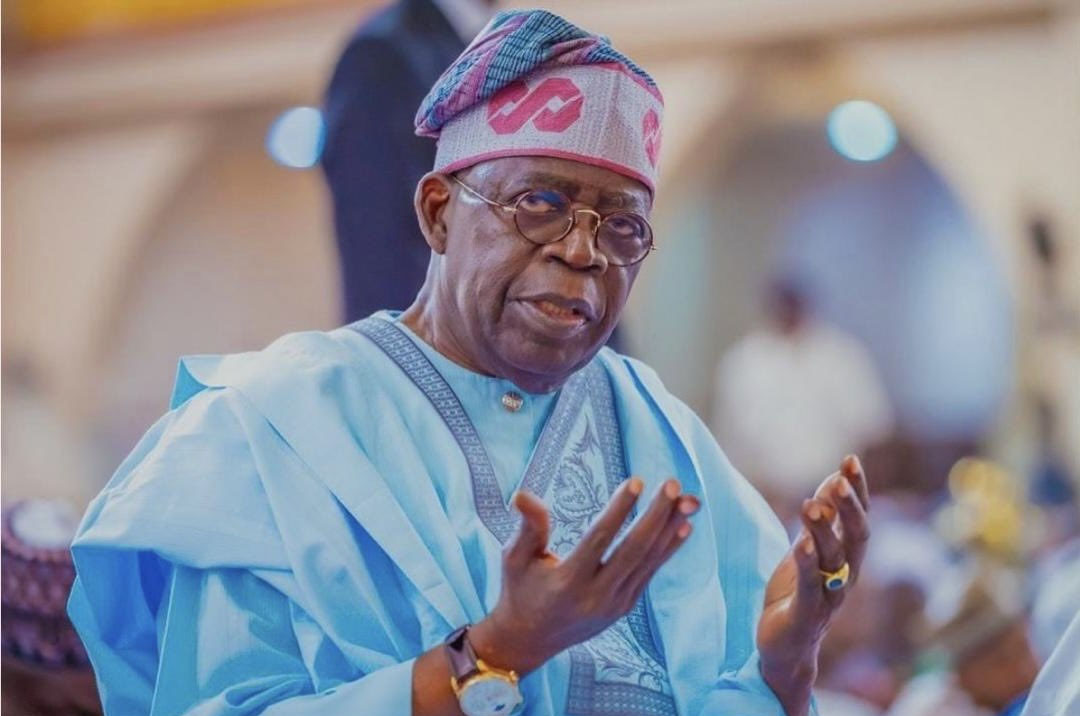
Tinubu Orders EFCC to Unfreeze Osun Govt Accounts, Says Timing ‘Embarrassing’
President Bola Ahmed Tinubu has directed the Economic and Financial Crimes Commission (EFCC) to immediately vacate the court order freezing the bank accounts of the Osun State Government, describing the timing of the action as “deeply embarrassing” and capable of undermining confidence in the state’s forthcoming governorship election.
In a personally signed statement issued on Thursday, the President said he became aware that the EFCC had obtained a court order on August 5, 2026, freezing the accounts of the Osun State Government. While he did not question the EFCC’s legal powers or operational independence, he expressed strong reservations about the timing of the action. “I must state that I feel deeply embarrassed not by the EFCC’s exercise of its mandate backed by a court order, but by the timing of the agency’s action,” Tinubu said. He explained that every action taken by a federal institution is often attributed to him as President, regardless of whether he had prior knowledge of such action.
The President reaffirmed his long-standing policy of allowing anti-corruption agencies and other law enforcement institutions to operate independently, professionally and without political interference. “Since assuming office, I have consistently maintained that anti-corruption and law enforcement agencies must be allowed to discharge their statutory responsibilities independently, professionally, without fear or favour, or political interference,” Tinubu said. He noted that he had deliberately refrained from directing or interfering in the operational activities of the EFCC and other investigative agencies because he believes that strong democratic institutions operating within the rule of law are essential to good governance.
READ ALSO:
- Osun Account Freeze: Atiku Accuses Tinubu of Weaponising State Institutions Against Opposition
- Former Finance Minister Kemi Adeosun Loses Husband, Niyi Adeosun
- 176 Kwara Abductees Regain Freedom After Six Months in Captivity
Tinubu explained that although he was yet to receive a full briefing on the circumstances that prompted the EFCC to seek the court order, the proximity of the action to the Osun governorship election necessitated presidential intervention. “Osun State is only a few days away from its gubernatorial election. Therefore, nothing ought to be done to give an impression that the EFCC or indeed any other agency of the federal government is being used to interfere with the election,” the President stated. He said preserving public confidence in the integrity, credibility and fairness of the democratic process outweighed every other consideration. “Based on the foregoing premise, I am duty-bound to issue a directive on this issue in consonance with the overriding public interest in preserving public confidence and the integrity, credibility, and fairness of our democratic process,” Tinubu added.
The EFCC had earlier defended its decision to freeze the account, stating that the action was triggered by suspicious movement of funds amid an ongoing investigation into the alleged fraudulent handling of about N11 billion in Ecology Funds, Intervention Funds, and Federal Account Allocation Committee (FAAC) allocations. The commission’s Director of Public Affairs, Wilson Uwujaren, explained that the restriction was placed on a single account, not all accounts of the Osun State Government. He noted that the EFCC has the legal authority under Section 34 of the EFCC Act and Section 7, Subsection 6 of the Money Laundering (Prohibition) Act 2022 to impose a temporary restriction for up to 72 hours before seeking a court order. “The restriction order can last within 72 hours before we can come with a court order if we need to provide a court order,” Uwujaren said. He maintained that the action was not politically motivated despite the timing ahead of the Osun governorship election.
The President ordered the anti-graft agency to immediately return to court to vacate the freezing order and discontinue all proceedings instituted against the Osun State Government in relation to the matter. “Accordingly, I have directed the EFCC to immediately proceed to the court to vacate the order and discontinue whatever action it has instituted against the Osun State Government in this regard,” the President said. The directive follows widespread reactions to the freezing of the Osun State Government’s accounts, with opposition parties, lawyers and civil society organisations expressing concern that the move could affect governance and raise questions about political interference ahead of the governorship election. The Osun State governorship election is scheduled to hold on August 15, 2026, making the controversy over the account freeze a major issue in the political landscape of the state.
Tinubu Orders EFCC to Unfreeze Osun Govt Accounts, Says Timing ‘Embarrassing’
-

 metro2 days ago
Troops arrest four suspected Boko Haram, ISWAP suppliers, intercept 20 relatives
-

 Opinion2 days ago
WHO WILL SPEAK FOR WASILAT? WHEN TRADITION BECOMES HUMILIATION, JUSTICE MUST SPEAK
-
 News2 days ago
Tinubu Meets Jim Ovia, NELFUND CEO at Aso Rock as Student Loans Hit ₦303bn
-
metro3 days ago
TikToker undergoes cleansing after filming Oloolu procession in Ibadan
-
 Education2 days ago
BREAKING: 61.54% Pass Rate as WAEC Releases 2026 WASSCE Results – How to Check Results
-
 metro2 days ago
Police Probe AIG Jimoh Over VeryDarkMan’s Corruption Allegations
-

 metro2 days ago
N78 Million Solar Inverters, 410 Cattle, 10 Guns Recovered as Kaduna Police Arrest 25 Suspects
-

 metro2 days ago
Boat Operators Rescue Woman Who Jumped Into Lagos Lagoon From Carter Bridge