

metro
FG goes after identified terrorists’ financiers, assets

The Federal Government has commenced moves to confiscate the assets of identified terrorism financiers and their associates in line with international counter-terrorism recommendations.
Sunday PUNCH reliably gathered that security and intelligence agencies were scouting for the physical assets, including companies and bank accounts of individuals and groups indicted for terrorism in the country.
Already, 18 persons, entities and companies have been added to the Nigeria Sanctions List under the supervision of the Nigeria Sanctions Committee, a multi-agency panel created by the Terrorism (Prevention and Prohibition) Act, 2022.
The groups include the Indigenous People of Biafra, Boko Haram, Islamic State West Africa Province, Ansarul Muslimina Fi Biladis Sudan, the Yan Bindiga and Yan Ta’adda terrorist groups and 13 persons convicted for financing Boko Haram.
IPOB’s major source of funding has been attributed to contributions from Diaspora members and sympathisers through dedicated online platforms and overseas-based bank accounts, while the other entities are believed to fund their activities through ransoms from kidnappings, cattle rustling, robberies and illegal tax on communities under their control.
The 16-member sanctions committee is chaired by the Minister of Justice and Attorney-General of the Federation, Abubakar Malami, SAN.
READ ALSO:
- 2023: Don’t allow Nigeria to fall into wrong hands – Fayemi warns
- Tinubu: Social media gives me high blood pressure, I’ve stopped going there
- Amaechi left indelible mark in railways, we’ll continue, says Sambo
Other members include the ministers of finance, foreign affairs and interior, as well as the National Security Adviser; the Director-General, Department of State Services; Governor, Central Bank of Nigeria; Inspector-General of Police; and the Chairman, Economic and Financial Crimes Commission.
Also on the committee are the Chairman, Independent Corrupt Practices and Other Related Offences Commission; Chairman, National Drug Law Enforcement Agency; Chairman, Federal Inland Revenue Service; Director-General, National Intelligence Agency; representative of the Chief of Defence Staff; Director-General, National Agency for the Prohibition of Trafficking in Persons and other Related Offences; the Director of the Nigeria Financial Intelligence Unit as secretary; and any other relevant person or institution that the President may incorporate into it.
Among others, the committee has powers to formulate and provide general policy guidelines on designations made under sections 49, 53 and 54 of the Terrorism (Prevention and Prohibition) Act, 2022 and advise on the effective implementation of the United Nations Security Council resolutions related to terrorism financing and proliferation financing, and allied instruments of the African Union and the Economic Community of West African States.
It can also recommend to the AGF appropriate sanctions including travel ban, freezing of funds, assets seizure, and other economic interests of persons and entities designated under the United Nations Consolidated List or under the Nigeria List.
Our correspondent had reported that the regime of the President, Major General Muhammadu Buhari (retd.), had earlier been indicted by the ECOWAS financial intelligence agency, the Inter-Governmental Action Group against Money Laundering in West Africa, for not going after the assets of convicted terrorists.
In response to the development, the government, it was learnt, had identified 96 financiers of terrorism, including 424 associates/supporters of the financiers, whose assets would be confiscated after due legal process had been concluded.
The Minister of Information and Culture, Lai Mohammed, disclosed in February that the intelligence agencies had unmasked 123 companies and 33 Bureaux De Change linked with terrorism.
Sunday PUNCH gathered that a massive search and freeze campaign for all the assets of terrorists and terrorism sponsors was ongoing.
Giving an update on the initiative on Thursday, a senior Justice ministry official stated, “At the last sitting of the Sanctions Committee last week, we identified several assets belonging to the terrorists and their sponsors, but we have not started seizing the assets; we are working on that. We will get court orders to freeze and forfeit the assets.
READ ALSO:
- Just in: Ex-Transportation minister Rotimi Amaechi bags degree in law (with photos)
- 2023: INEC preparing for possible rerun elections
- Seven terrorists killed in Niger, 18 hoodlums arrested
“We are still looking at companies that have terrorism financing elements; once we have identified that and of course investigations will have to identify those that have assets. We will then file ex parte motions, but we have not got there yet.
“However, we have identified the assets of six groups/entities and we are tracing other properties and companies owned by these people. In fact, the bulk of them were tried and convicted. All their accounts have been frozen, but we have not traced their physical assets. Those are the details we are working on; our investigators are tracing their physical assets.”
The director disclosed that 13 convicted sponsors of Boko Haram had been added to the Nigeria Sanctions List, a master list of all persons and institutions blacklisted for terrorism.
Those newly added to the sanctions list are Abdurrahaman Ado, Bashir Yusuf, Ibrahim Alhassan, Muhammad Isah, Salihu Adamu, Surajo Mohammad, Fannami Bukar, Muhammed Musa, Sahabi Ismail, Mohammed Buba, Alin Yar Yaya General Enterprises, K. Are Nigeria Limited and Suhailah Bashir General Enterprises.
The first six alleged sponsors of Boko Haram and the three enterprises were tried and convicted in 2020 by the Abu Dhabi Federal Court of Appeal for transferring $782,000 from the United Arab Emirates to the insurgents.
A joint terrorism financing investigation between 2019 and 2021 established a link between one of the convicted terrorist financiers and the insurgents. The convict, who dealt in gold from artisanal mining in the North-West and North-Central, was said to have moved N560m.
Alin Yar Yaya General Enterprises was linked with Yusuf, who is serving a 10-year jail term in Abu Dhabi.
The company, whose address was given as No. 2 Danladi Auyo House, Wapa, Fagge Local Government Area, Kano, was registered on April 15, 2016.
- Are Nigeria Limited, registered on September 19, 2019, was promoted by Surajo Muhammad, who is serving a life imprisonment in Abdu Dhabi for financing Boko Haram from Dubai.
Suhailah Bashir General Enterprises, registered on November 28, 2016, was linked to Yusuf, who is serving 10 years in UAE for collaborating with Boko Haram.
Both Yaya and Bashir Enterprises were added to the sanctions list on November 8, 2022.
On July 5, 2022, the sanctions committee added six other entities namely Jamaátu Ahlis Sunna Liddaáwati Wal-Jihad (Boko Haram), Islamic State West Africa Province, Ansarul Muslimina Fi Biladis Sudan, the Indigenous People of Biafra, Yan Bindiga and Yan Ta’adda terrorist groups.
READ ALSO:
- Buhari lauds Wike, commissions Port Harcourt Law School Complex
- Humanitarian worker gunned down by errant soldier identified
- Stop trying to destroy my image, nollywood actor Hanks Anuku breaks silence over viral video
Yan Bindiga and Yan Ta’adda are bandit organisations declared terrorist groups on November 25, 2021, by the Federal High Court, Abuja.
The groups’ activities started several years ago in Zamfara, Katsina, Kebbi, Kaduna and Sokoto states and they were said to have partnered with the Islamic State in the Greater Sahara, Boko Haram, Jama’at Nasr al-Islam wal Muslimin and Al-Qaeda in the Islamic Maghreb in carrying out major attacks aimed at raising terrorist financing within the bandits’ areas of influence.
In 2021, a total of 2,883 attacks were carried out by the groups, of which 51 were attacks on troops, while others were carried out on communities and commuters.
The sanctions committee in a notice to the Security and Exchange Commission dated November 10, 2022, said all capital market operators were required to immediately identify and freeze, without prior notice, all funds, assets and any other economic resources belonging to the designated persons and entities in their possession and report same to the secretariat of the Nigeria Sanctions Committee.
The operators were also directed to report to the secretariat any assets frozen or actions taken in compliance with the designation, including attempted transactions, pursuant to the provisions of Section 54 of the Terrorism (Prevention and Prohibition) Act, 2022.
The capital market operators were also expected to immediately file a suspicious transactions report to the Nigeria Financial Intelligence Unit for further analysis on the financial activities of such an individual or entity; and equally make a suspicious transactions report to the NFIU, all cases of name-matching in financial transactions prior to or after receipt of the sanctions list.
READ ALSO:
- Several houses, worship centre razed in Benin
- Court exonerates ex-SGF Bachir Lawal over N544m grass-cutting fraud, EFCC vows to appeal
- Man arrested for alleged serial rape of girl 14 in Kebbi
The market operators were subsequently prohibited from dealings with the designated persons and entities and to continue to check for transactions relating to the designated person or entity and the actions to be taken if funds or other assets or suspect transactions were discovered.
“Note that this freezing obligation extends to all funds or other assets that are owned or controlled by the designated person or entity, and not just those that can be tied to a particular act, plot, or threat of terrorism or terrorism financing; those funds or other assets that are wholly or jointly owned or controlled directly or indirectly by designated persons or entities,” the notice read.
The search and freeze campaign involved all national enforcement agencies and the regulated private sector entities with specific mandate to immediately track, discover and freeze all funds, physical and financial assets, businesses, organisations and all other related entities to the terrorism sponsors.







metro
Lagos Club Robbery: Police Arrest Suspect After N5m Bounty
Lagos Club Robbery: Police Arrest Suspect After N5m Bounty
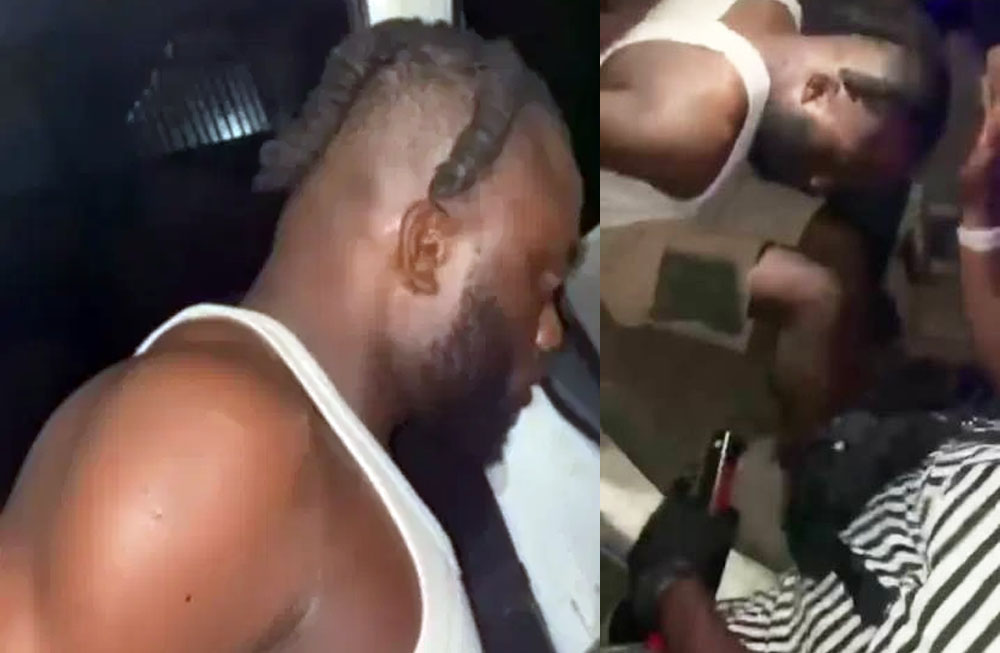
The Lagos State Police Command has arrested a suspected member of the gang that allegedly robbed clubgoers outside Ghost and Spirits Lounge on Ekoro Road, Abule Egba, Lagos.
The suspect was reportedly identified from video footage of the incident, which showed several people being attacked outside the entertainment venue in the early hours of the morning.
The Lagos club robbery reportedly occurred at about 4am on Saturday after some customers had left the lounge and gathered around their vehicles.
Footage from the scene showed several clubgoers sitting around a vehicle when the suspected robbers approached.
READ ALSO:
- Five Arrested Near US-Used RAF Fairford in UK Terror Probe
- Kano Upgrades Five PHCs to General Hospitals, Begins Assessment
- Iran Claims Capture of Second US Underwater Drone in Strait of Hormuz
One of the suspects, reportedly dressed in a green shirt and cap, appeared to move among the people before allegedly targeting one of the victims.
Another member of the group was reportedly seen in an SUV parked across the road before a gunshot was fired, causing some of the people at the scene to run for safety.
The suspect in the green shirt was then allegedly seen taking a wristwatch from one of the victims, while other members of the group reportedly collected valuables before escaping in their vehicle.
Following the incident, the management of the lounge announced a N5 million reward for information leading to the arrest of the perpetrators.
The reward and subsequent investigation helped the police identify and track one of the suspects, who was eventually arrested.
A police source said the suspect was in custody and being interrogated, with investigators seeking information that could lead to the arrest of the other alleged members of the gang.
The Lagos Police Command has also intensified efforts to locate the remaining suspects, who are reportedly still at large.
The incident has raised concerns among residents and nightlife customers in Abule Egba, particularly over the security of people leaving entertainment venues during the early hours.
Police authorities have urged residents with useful information about the suspects or the robbery to assist the investigation.
The arrested suspect remains presumed innocent unless proven guilty in court, while investigations continue into the alleged robbery and the identities and whereabouts of the other suspects.
Lagos Club Robbery: Police Arrest Suspect After N5m Bounty
metro
Passenger Dies After Jumping From Moving Bus In Lagos
Passenger Dies After Jumping From Moving Bus In Lagos
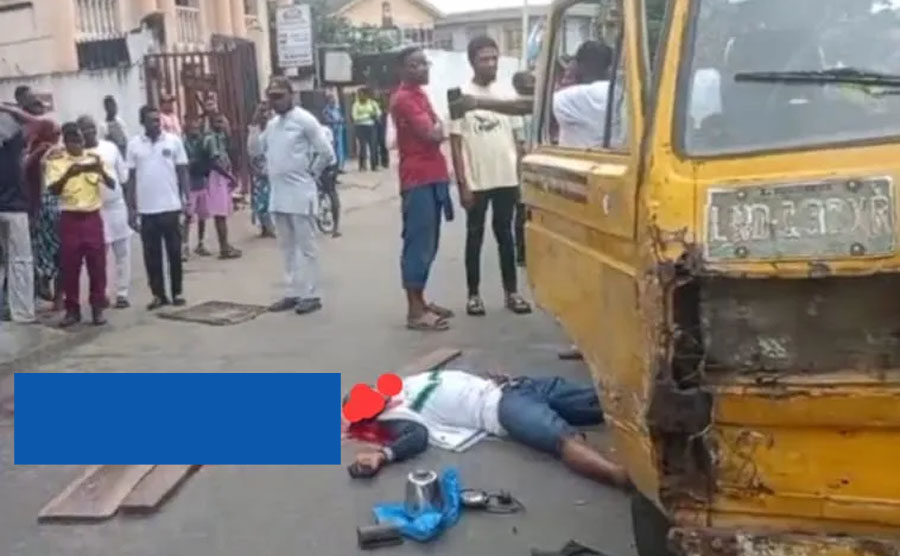
A passenger has died after jumping from a moving commercial bus at Ogunlana Junction, inward Ojuelegba, in the Surulere area of Lagos.
The incident involved a Volkswagen commercial bus with registration number LND 130 XR, which reportedly crashed into a median pole around the Fallout area of Surulere.
The Lagos State Traffic Management Authority (LASTMA) said preliminary security reports indicated that the driver was allegedly under the influence of alcohol and had been driving recklessly shortly before the crash.
According to the agency, motorists approaching the bus from behind had to exercise caution to avoid colliding with the vehicle as it reportedly moved erratically.
Amid the incident, a male passenger reportedly jumped from the moving bus, apparently attempting to escape from the uncontrolled vehicle. He sustained serious injuries after hitting the ground and later died from his injuries.
LASTMA officials conducting routine traffic surveillance along the Ojuelegba axis responded to the scene after noticing the crash. They secured the area, managed traffic and removed the damaged bus and the deceased passenger from the carriageway to reduce the risk of a secondary collision.
READ ALSO:
- Five Arrested Near US-Used RAF Fairford in UK Terror Probe
- Kano Upgrades Five PHCs to General Hospitals, Begins Assessment
- Iran Claims Capture of Second US Underwater Drone in Strait of Hormuz
Police officers from the Area C Police Division, Ojuelegba, provided security at the scene, while officials of the State Emergency Management Agency evacuated the remains of the deceased.
LASTMA General Manager, Olalekan Bakare-Oki, described the incident as a reminder of the dangers associated with driving under the influence of alcohol, reckless driving and operating vehicles that may not be mechanically fit for the road.
Bakare-Oki urged commercial and private motorists to conduct comprehensive checks on their vehicles before every journey, with particular attention to the braking system, tyres, steering mechanism and other critical safety components.
He also commiserated with the family of the deceased and reaffirmed LASTMA‘s commitment to responding promptly to road crashes, managing traffic and clearing accident scenes.
The agency urged motorists and other road users to report accidents, vehicle breakdowns and other traffic obstructions through its toll-free short code, 3367.
Passenger Dies After Jumping From Moving Bus In Lagos
metro
Kubwa Explosion: Vehicle Crashes Into Gas Outlet, Damages Nine Shops
Kubwa Explosion: Vehicle Crashes Into Gas Outlet, Damages Nine Shops
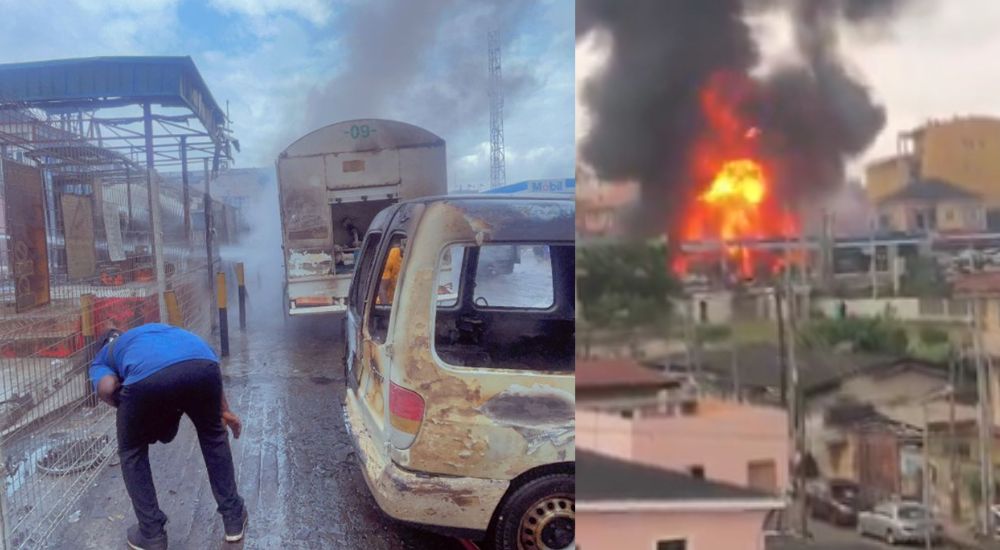
Panic broke out in Kubwa, Abuja, on Sunday morning after a gas explosion rocked the Liberty Junction area, following a vehicle crash into a roadside gas retail outlet.
The incident occurred at about 6:15 a.m., sending a powerful blast through the area and causing nearby buildings to shake, while thick smoke and flames rose from the affected facility.
The vehicle reportedly veered off the road and crashed into the gas outlet, triggering the explosion and subsequent fire.
The impact affected several businesses around the junction, with reports indicating that nine shops were damaged or destroyed by the ensuing fire.
A nearby police traffic post was also reportedly uprooted by the force of the explosion, while other structures and sections of the surrounding area were damaged.
The vehicle involved in the crash was badly burnt in the incident. Emergency responders, however, reportedly rescued the driver and a child from the wreckage.
The injured driver was taken to a medical facility for treatment, while emergency personnel worked to prevent the fire from spreading to other shops and properties in the densely populated area.
READ ALSO:
- Newlywed Arrested After Allegedly Excreting 72 Cocaine Wraps at Enugu Airport
- Bauchi Police Arrest Four Over Alleged Gun-Making, Rape
- Tinubu to Nigerians: We Are Correcting Past Mistakes, Give Us More Time
The explosion triggered panic among residents and commuters, with people reportedly rushing away from the scene as the fire continued to burn.
Emergency response agencies, including the Federal Fire Service, FCT Fire Service, National Emergency Management Agency (NEMA), Nigeria Security and Civil Defence Corps (NSCDC) and the Nigeria Police Force, were deployed to the scene.
Firefighters battled the flames for hours before the situation was brought under control.
The incident also caused significant traffic disruption around Liberty Junction and the Kubwa axis, as motorists slowed down and emergency responders worked at the scene.
Security personnel subsequently moved people away from the immediate area and helped manage traffic while the damaged vehicle and other debris were cleared.
Initial reports did not indicate a confirmed death from the explosion, although the driver was reported to have sustained injuries.
Authorities had yet to provide a detailed official account explaining why the vehicle veered off the road or confirming the full extent of the damage and injuries as of the time of reporting.
The incident has again drawn attention to safety concerns surrounding gas outlets located close to busy roads, shops and residential areas, particularly in densely populated parts of the Federal Capital Territory.
Further assessment by relevant authorities is expected to establish the precise circumstances of the crash, the extent of the property damage and whether any safety breaches contributed to the incident.
Kubwa Explosion: Vehicle Crashes Into Gas Outlet, Damages Nine Shops
-

 News3 days ago
Anambra Releases ₦473m Salary Arrears Document as Obi’s Debt Claim Sparks Fresh Dispute
-
 News2 days ago
Keyamo: ₦70,000 Minimum Wage No Longer Enough as Cost of Living Soars
-
 metro3 days ago
EFCC Chairman Raises Alarm Over Alleged Theft of Nigeria’s Public Funds
-
 Sports2 days ago
AFCON 2027 Qualifier: Nigeria Fight Back to Beat Madagascar 2-1 in Uyo
-
 Politics3 days ago
2027: Otti Explains Why He Supports Tinubu Despite Remaining in Labour Party
-
 metro3 days ago
Umahi Announces First Niger Bridge Reopening Next Week, Orders Tinubu Pictures
-

 metro3 days ago
Anambra Police Arrest 25-Year-Old Suspect Linked to 2023 Kidnap, Murder
-

 Entertainment2 days ago
Jetour Takes Adventure Beyond the Road, Brings Solar-powered Borehole to Ibeju-Lekki community