

metro
Obi’s supporters made me waste $4,000 investigating Tinubu – Reno Omokri
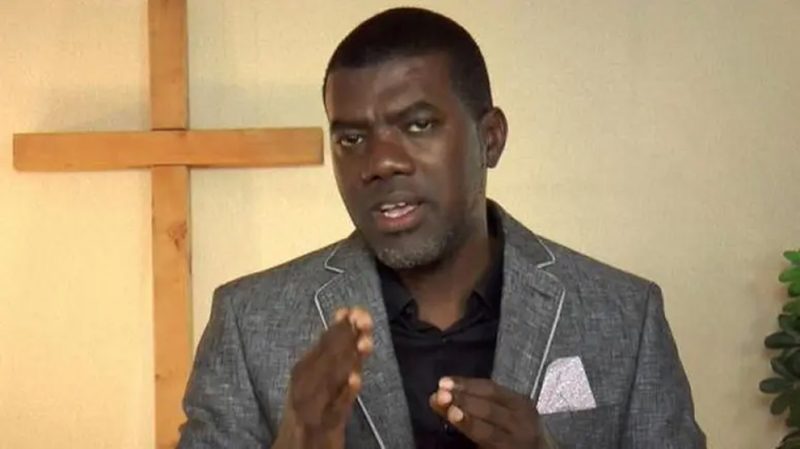
Former presidential aide, Reno Omokri said he regrets that he wasted $4,000 just to investigate if the APC’s presidential candidate, Asiwaju Bola Tinubu attended Chicago State University only to find out that it is true.
He lamented that he listened to the lies of supporters of the Labour Party’s presidential candidate, Peter Obi, that Tinubu did not attend the university.
“Soludo was right about them. They are a mob. They have no head, and as such, can’t reason. And that Tinubu did not attend Chicago State University is an obvious lie. I should know. I believed the lie and wasted $4000 plus flying to Chicago to investigate in person!
READ ALSO:
- “I Slept With My Pastor Too”: Married Mum of 2 Defends Viral Pregnant Woman, Slams those Insulting Her
- How husband caught pregnant wife in bed with pastor
- Terrorists abduct two medical doctors in Calabar, demand N100m ransom
“Believing that Tinubu did not graduate from Chicago State University is like believing Buhari has been cloned, or replaced by a Sudanese named Jibrin. No wonder the same set of people believe both lies. He graduated from Chicago State University,” Omokri said in series of tweets on Saturday.
Omokri added that Tinubu is actually a better leader than Obi, when one took into account what he achieved in Lagos as Governor.
He said “Obi is not even a leader. He is a trader. He will trade away Obidients for profit! however, it is not true that Tinubu did not attend Chicago State University. I physically went to Chicago. He attended and graduated. Tinubu was actually quite intelligent and studious, according to them.”












metro
DSS, Vigilantes Ambush, Kill Notorious Bandit Kingpin Idi Abasu Aiki, Over 60 Fighters in Katsina

DSS, Vigilantes Ambush, Kill Notorious Bandit Kingpin Idi Abasu Aiki, Over 60 Fighters in Katsina
In a major victory against banditry in Nigeria’s North-West, the Department of State Services (DSS) and community vigilantes have eliminated wanted kingpin Idi Abasu Aiki and more than 60 of his fighters in a well-coordinated operation in Bakori Local Government Area, Katsina State.
The Department of State Services (DSS), supported by members of the Katsina State Community Vigilantes and specially trained hunters, has dealt a devastating blow to banditry in Nigeria’s North-West region, reportedly killing more than 60 suspected bandits, including the notorious kingpin Idi Abasu Aiki, during a coordinated security operation in Bakori Local Government Area of Katsina State. The operation, which unfolded over the past few days, marks one of the most significant successes against banditry in recent months and represents a major setback for criminal networks operating across Katsina and Zamfara states.
Security sources revealed that the operation was launched following credible intelligence indicating that a large group of heavily armed bandits, numbering more than 200, was mobilising for an attack on local communities. The group, led by the wanted kingpin Idi Abasu Aiki and reinforced by fighters from the Ado Aleru gang in neighbouring Zamfara State, stormed Guga village in Bakori LGA with the intention of attacking communities they believed had been supporting local security outfits protecting surrounding villages. The planned assault was believed to be a reprisal for heavy losses the bandits had suffered earlier in the month during a confrontation with local hunters at Dawan Laila village, also in Bakori LGA. The attackers intended to dismantle the community’s defence structure before extending their offensive to neighbouring settlements. However, unknown to the bandits, the DSS had developed water-tight intelligence plans and had prepositioned operatives and supporting vigilantes to intercept the attackers. One source explained, “The over 200 armed bandits literally walked into a trap. Over 60 of them, including Idi Abasu Aiki and 14 of their top commanders, didn’t come out of that trap alive.”
READ ALSO:
- 475 Police Officers Recalled After Controversial Retirement, Ordered for Mandatory Induction
- Oloyede clears air on JAMB’s ₦36m ‘snake swallowed money’ controversy
- MURIC Hails Oloyede as ‘Game Changer,’ Says He Proved Muslims Can Excel in Public Office
While the operation was a major success in neutralising a significant threat, it came at a cost. Four members of the Katsina State Community Vigilantes and the local hunters who supported the DSS lost their lives during the exchange of gunfire. Their sacrifice has been acknowledged by security sources who described them as heroes in the fight against banditry. Following the confrontation, security personnel carried out extensive clearance operations in the area to recover weapons, ammunition, and other items abandoned by the fleeing bandits. The exact number of casualties on the bandits’ side could not be independently verified as of the time of filing this report, but sources insist that over 60 fighters were eliminated.
Idi Abasu Aiki was a notorious bandit leader believed to be responsible for orchestrating numerous attacks across Katsina and Zamfara states. He had been on the wanted list of security agencies for years and was known for his ruthlessness and ability to coordinate large-scale attacks on vulnerable communities. The success of this operation comes after earlier military efforts in the region, which had reportedly targeted his network and family members. Previous reports indicated that troops had killed his younger brother, Anaruwa, who was also identified as a bandit kingpin, in a separate operation in Zamfara State. The elimination of Aiki represents a significant victory in ongoing efforts to dismantle banditry networks in the North-West.
The successful operation in Bakori LGA sends a strong message to bandits operating in the North-West that security forces are capable of gathering intelligence and mounting effective responses to threats. It also highlights the critical role played by community vigilantes and local hunters in complementing the efforts of formal security agencies. Authorities had yet to issue an official statement on the operation as of the time of filing this report. However, security sources indicate that operations are ongoing to track down fleeing bandits and prevent any further attacks on communities in the area.
DSS, Vigilantes Ambush, Kill Notorious Bandit Kingpin Idi Abasu Aiki, Over 60 Fighters in Katsina
metro
MURIC Hails Oloyede as ‘Game Changer,’ Says He Proved Muslims Can Excel in Public Office

MURIC Hails Oloyede as ‘Game Changer,’ Says He Proved Muslims Can Excel in Public Office
A civil society organisation, the Muslim Rights Concern (MURIC), has described the immediate past Registrar of the Joint Admissions and Matriculation Board (JAMB), Professor Ishaq Oloyede, as a “game changer” and a “moral compass,” asserting that his ten-year tenure has debunked the myth of Muslim incompetence in public office.
In a press release issued on Monday, MURIC’s Executive Director, Professor Ishaq Akintola, declared that Oloyede’s performance at the helm of JAMB stands as a living proof of Muslim resilience, idealism, and intellectualism in Nigeria. The statement comes as Professor Oloyede concluded his national assignment on Friday, 31st July, 2026, after a decade of service.
Professor Akintola argued that Oloyede’s success has dismantled a long-standing narrative used to justify the marginalisation of Muslims, particularly in the southern part of the country.
“Oloyede broke the myth of the nonavailability or scarcity of qualified Muslims for public offices, an excuse used by those who deliberately marginalise Muslims, particularly in the southern part of Nigeria,” the statement read in part .
READ ALSO:
- Peller, Jarvis’ Glamorous Lagos Wedding: N400m Mansion, $20,000 Gift, Over 50,000 Virtual Guests
- INEC publishes Tinubu, Shettima’s credentials for public scrutiny ahead of 2027 election
- Policy Bottlenecks Threaten Nigeria’s Clean Mobility Drive, LCCI Warns
Without saying so directly, the rights group stated that the former JAMB boss effectively “debunked the misconception that Muslims are uneducated, unskilled and incompetent.” Professor Akintola further noted that Oloyede has proved wrong those who habitually pick only Christians for public and professional appointments, even in areas where Muslims constitute the majority.
The group lauded the former Registrar’s track record, referencing his previous role as Vice-Chancellor of the University of Ilorin, where he was also credited with pioneering reforms that expanded access to education .
“Today, due to the high level performance of Professor Ishaq Oloyede both at the University of Ilorin where he was a former vice chancellor and later at JAMB, Nigerian Muslims can beat their chests,” the statement added.
MURIC further asserted that JAMB would never be the same again following Oloyede’s tenure, which was marked by groundbreaking reforms, enhanced transparency, and accountability in the admission process .
The organisation concluded by congratulating the scholar and wishing him a life filled with bliss in his post-JAMB experience.
MURIC Hails Oloyede as ‘Game Changer,’ Says He Proved Muslims Can Excel in Public Office
metro
Peller, Jarvis’ Glamorous Lagos Wedding: N400m Mansion, $20,000 Gift, Over 50,000 Virtual Guests
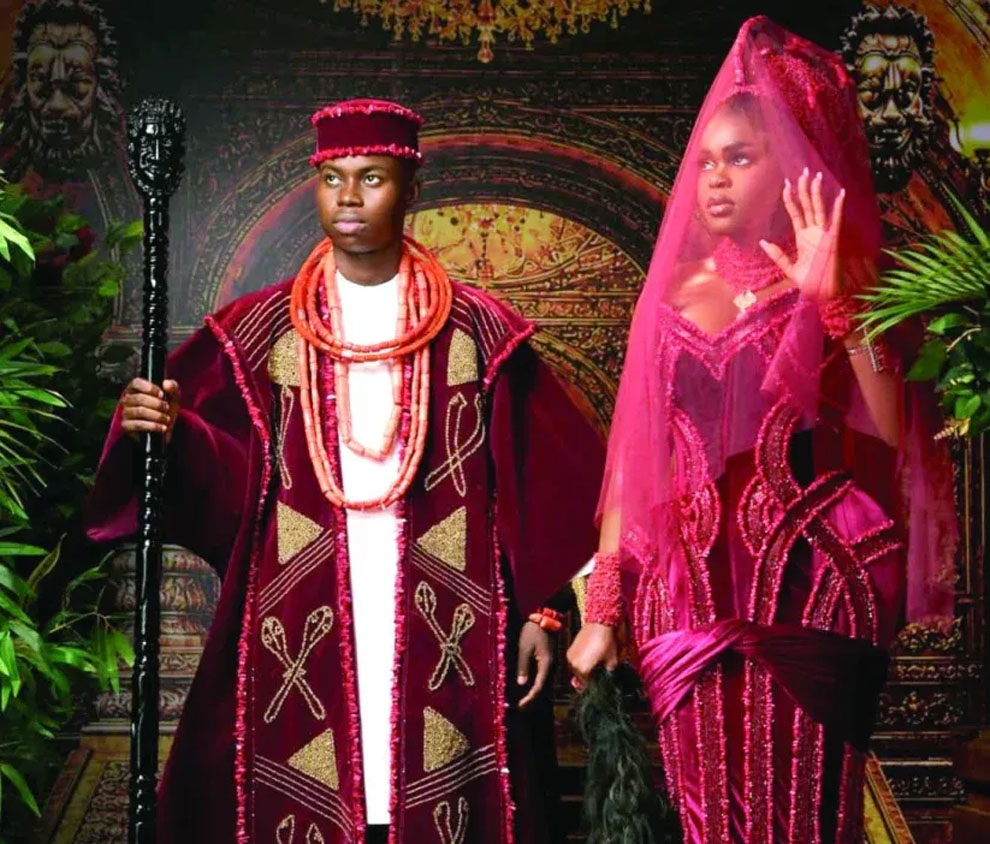
Peller, Jarvis’ Glamorous Lagos Wedding: N400m Mansion, $20,000 Gift, Over 50,000 Virtual Guests
- Nigeria’s favourite TikTok couple, Habeeb “Peller” Hamzat and Elizabeth “Jarvis” Amadou, have officially tied the knot in a spectacular Lagos ceremony that blended celebrity glamour, jaw-dropping generosity, and digital-age storytelling. The #JP2026 wedding has become one of the most talked-about entertainment events of the year.
Peller and Jarvis have built their relationship in the public eye, sharing their journey through livestreams, collaborative content, and regular appearances that endeared them to millions of followers. Their wedding was the culmination of a series of pre-wedding celebrations that began with a romantic proposal at the La Palm Royal Beach Hotel in Ghana in June 2026. The couple then honoured their cultural roots with a traditional marriage ceremony in Benin City, followed by a civil wedding in Lagos on July 29. Saturday’s grand white wedding brought together family, friends, and fans to witness the union of two of Nigeria’s most influential digital creators. The bride and groom dazzled in their wedding attire, with Peller donning an elaborate Edo-inspired outfit that paid homage to his heritage, while Jarvis complemented him in a breathtaking bridal ensemble that quickly became the talk of social media.
One of the most remarkable aspects of the #JP2026 celebration was the extraordinary generosity shown by well-wishers, with gifts arriving even before the wedding day. Ahead of the ceremony, businessman and socialite Pascal Okechukwu, popularly known as Cubana Chief Priest, donated N10 million in support of the wedding. His contribution set the tone for the lavish celebrations to come. American entrepreneur and renowned TikTok benefactor Gregory Pizarro Jr. made the journey to Lagos specifically for the occasion. During a meeting with Peller at his hotel, he presented the groom with a cash gift of $20,000, demonstrating the global reach of the couple’s influence. Chief Executive Officer of Promiseland Estate, Lawrence Emmanuel, gifted the couple a plot of land in Abuja valued at N150 million, providing them with a valuable asset in the nation’s capital.
However, the biggest surprise of the day came during the wedding reception when real estate entrepreneur King Ochacho, speaking on behalf of his family, announced the gift of a fully furnished luxury mansion in the upscale Life Camp district of Abuja. The property is reportedly valued at an astonishing N400 million. Presenting the gift, King Ochacho explained his motivation: “I and my family left everything we are doing in Abuja just to come through for Peller because he is an inspiration to this generation.” He added that after consultations with his sons, they decided, “We want Peller to be staying close to Palace Seven,” noting that houses in that area are worth no less than N400 million.
READ ALSO:
- INEC publishes Tinubu, Shettima’s credentials for public scrutiny ahead of 2027 election
- Policy Bottlenecks Threaten Nigeria’s Clean Mobility Drive, LCCI Warns
- Troops arrest three suspects over killing of soldier in Imo ambush, recover stolen rifles
The ceremony attracted a who’s who of Nigeria’s entertainment and social media scene. The extensive guest list read like a roll call of the nation’s most influential personalities. The film industry was well represented by Iyabo Ojo, Eniola Badmus, Moyo Lawal, Jigan Baba Oja, and Foluke Daramola, adding their star power to the celebration. The music industry showed up in full force with Zinoleesky, Seun Kuti, Femi Kuti, Tanzanian singer Juma Jux, and Fuji musician Sule Alao Malaika, who kept guests entertained with electrifying performances. The digital space was represented by Nons Miraj, Papaya Ex, Cute Abiola, Isbae U, Aunty Ramota, Geh Geh, and countless others who have built their careers alongside Peller and Jarvis. Cubana Chief Priest, Daddy Freeze, Pretty Mike, and Soso Soberekon were among the distinguished guests, along with Gregory Pizarro Jr., who made the trip from the United States specifically for the wedding.
Staying true to their reputation as digital content creators, Peller and Jarvis made history by streaming the wedding live across YouTube and Twitch. The livestream attracted over 50,000 virtual guests, who flooded the comment sections with well wishes from every corner of the globe. The decision to broadcast such an intimate moment demonstrated the couple’s commitment to their fans and their understanding of modern celebrity culture. Viewers from North America, Europe, Africa, and Asia tuned in to witness the event in real-time.
The wedding venue was nothing short of spectacular, featuring luxury automobiles on display that showcased the couple’s taste for fine things, coordinated aso-ebi attire that created a visually stunning sea of colours, a competition with a reported N5 million prize for the best-dressed attendee, and live Fuji music performances by Sule Alao Malaika that kept the energy high throughout the celebration.
One of the most talked-about moments of the wedding was the appearance of content creator Emmanuel Obruste, better known as GehGeh, as one of Peller’s groomsmen. GehGeh made a grand entrance in a Mercedes-Benz G-Wagon, and videos of him dancing with the other groomsmen quickly went viral across social media platforms. His enthusiastic participation surprised many because he had previously been a vocal critic of Peller’s decision to marry. In a past interview, GehGeh argued that financial success was not the sole basis for marriage, stressing that Peller was “still growing as a child” and needed to be ready “mentally, physically, emotionally, and spiritually.” The irony of his role at the ceremony sparked mixed reactions online, with some praising him for supporting his friend despite their differences, while others questioned his previous stance. Regardless, his presence added another layer of intrigue to the high-profile event.
The Peller and Jarvis wedding represents more than just a celebrity union; it signals the mainstream acceptance of digital creators as cultural icons. A generation ago, social media influencers were dismissed as passing fads, but the #JP2026 celebration demonstrates that content creators now command the same respect, influence, and wealth as traditional celebrities. The sheer value of the gifts received—totalling hundreds of millions of naira—reflects the economic power of the creator economy and the willingness of business leaders to align themselves with digital influencers.
The wedding generated massive engagement across digital platforms, with the hashtag #JP2026 trending on multiple social media networks. Fans expressed their joy, congratulations, and even envy at the couple’s good fortune. Many commentators noted that Peller and Jarvis have achieved in a short time what takes others decades, while others praised them for staying grounded despite their success. The couple has promised to continue sharing their journey with fans, hinting at future content that will document their married life.
As Nigeria’s most talked-about celebrity couple begins their new chapter, fans are eager to see what comes next. Will they expand their content empire? Will they venture into other business pursuits? One thing is certain: Peller and Jarvis have proven that with talent, dedication, and the right connections, the digital world can open doors to unimaginable success. The #JP2026 wedding has set a new standard for celebrity weddings in Nigeria, blending traditional values, modern influence, and extraordinary generosity into an event that will be remembered for years to come.
Peller, Jarvis’ Glamorous Lagos Wedding: N400m Mansion, $20,000 Gift, Over 50,000 Virtual Guests
-

 Education2 days ago
ICYMI: Court orders JAMB, CBT centre to pay ₦10m over forced removal of candidate’s hijab during UTME
-

 metro3 days ago
Ansar-Ud-Deen Society to Commission New National Headquarters Saturday, Tinubu Expected as Special Guest
-

 metro3 days ago
2027 Hajj: NAHCON Sets N5m Minimum Deposit, Opens Registration for 2028-2030 Seasons
-

 Education3 days ago
Segun Aina assumes office as JAMB registrar, vows to protect examination integrity
-

 Entertainment3 days ago
Tyla drops Lagos from A*POP World Tour amid boycott calls, concert threats
-

 Opinion3 days ago
Stop, CBN! The baby is in the bathwater
-

 Education2 days ago
Oyo Muslim Leaders Receive Saudi Delegation, Intensify Drive for Muslim College of Nursing
-

 News3 days ago
FG to phase out electricity subsidy from 2027 as power sector debts rise