

metro
Fuel shortage persists despite DSS threat, transport fares rise

Despite the 48-hour deadline and threat by the Department of Security Services to clamp down on those behind the latest fuel crisis, the situation has not really abated.
Fuel shortage has persisted in many states including Lagos and Abuja. Transport fares in Lagos and environs, on Monday went up by more than 100 per cent, as the Nigerian National Petroleum Company Limited, NNPCL, and oil marketers battle to find a lasting solution to the crisis.
Petroleum Products Retail Outlets Owners Association of Nigeria has faulted the 48-hour ultimatum by the DSS that oil marketers should make petrol available for Nigerians.
Vanguard in a new report says that some of the areas visited confirmed the hike in transport fares.
For instance, from Badagry to Mile 2, which cost N400 or N500 before, now costs N1000. Agbara (Ogun State) to Mile 2, which used to be between N300 and N400, now costs N700.
From First Gate, popularly called Igboelerin Junction, on the LASU-Igando road, to Iyana Ipaja, which used to be N300 before, now costs N500, whereas Igando to Iyana Ipaja, which used to be N200, now costs N500. Igando to Egbeda, which was N150, now costs between N300 and N400.
From Igando to First Gate, which was N100 before the hike, is now between N200 and N300. Igando to Iyana Oba that was between N100 and N150, is now between N300 and N500 depending on the situation on the road.
READ ALSO:
- JAMB announces deadline for registration into CAPS, IBASS
- Forged NYSC Certificate: Police Invite NSITF MD
- Withdrawal limits: Gbajabiamila faults Emefiele as PoS operators, Falana head for court
Findings from other routes in the metropolis showed that from Egbeda to Oshodi, which cost between N200 and N300 now goes for between N500 and N600 and during peak periods, it goes to N700, just as Egbeda to Ikeja, which used to be between N200 and N300 is now N500.
From Cele Along to Ikotun, which used to cost N150 is now between N500 and N600 subject to the number of crowd waiting for bus at the bus stop.
From Cele to Gate, which cost between N100 and N150 now goes for between N200 and N300.
Commercial drivers in Lagos State have completely phased out N50 and N100 fares, as no distance no matter how short is less than N200.
Findings in Ajah area of the state showed that from Ajah to CMS, which used to be N400 or even N300 sometimes, is now N1000 flat.
From CMS to Mile 2, which used to be between N200 and N400 now goes for between N700 and N100, while between Mile 2 and Vangaurd Media Ltd, which used to be N100 is now N200.
PETROAN Chairman, System 2E, Eastern Zone, Sunny Nkpe, made this known on Channels Television’s Sunrise Daily programme.
He said until the secret police go after the cartel operating among private depot owners hoarding the essential commodity, fuel scarcity and long queues will persist.
“Let me make it categorically clear here, there is no amount of threat by DSS that is going to change anything. If it must change, they must start from the source, they should go to the private depot operators to find out where for now we are getting products from.
“Until the cartel or cabal in that area is handled or taken care of, we can never get any reduction or fairness in the distribution of the product,” Nkpe added.
He said there has not been a drop of petrol allocation to the Port Harcourt depot in the last six months.
A former President of the Trade Union Congress, TUC, Peter Esele, who was also a guest on the programme alongside Nkpe, said the DSS must have been privy to a vital piece of information within the supply value chain to have issued the ultimatum.
“For DSS to come out and issue an ultimatum, the DSS must be privy to some information. Everyone must focus on the DSS to come out with its results within 48 hours or else, DSS may also be a player in the game.
“DSS must tell Nigerians its findings within 48 hours and whoever is behind this should be prosecuted because there are enough products in this country for everybody to get petrol,” he said.
The DSS had on Thursday directed oil marketers and NNPC Limited to resolve the fuel crisis biting Nigerians, saying failure to comply would make the agency activate its operations across the country.
Meanwhile, the Major Oil Marketers Association of Nigeria, MOMAN, has implored the Federal Government to consider a full deregulation of the petroleum downstream sector in phases.
Its Chairman, Mr Oluwole Adeosun, made the call at a web training for energy journalists, yesterday, in Lagos.
Adeosun said: “We envisage a rise in demand during the yuletide season and we are prepared to work round the clock to keep our stations running.
“If the country wishes to implement a subsidy, it must be in areas targeted to help those it should help. Such areas are agriculture and transportation, to reduce food price, and inflation and generate more jobs for Nigerians.
“In tandem, we must find a way to liberalise supply. We must bring transparency and competition into supply to ensure steady and more efficient supply at optimum prices.
“Imported products must compete with locally refined products to find a meeting point between the need for local refining and competitively low but cost recovered prices for Nigerians for sustainability.
“The dialogue with the Nigerian people needs to begin to identify, negotiate and agree on these areas and begin implementation to save the downstream industry.
“The industry has been in degradation free fall due to a lack of investment to maintain, renew and grow assets and facilities such as refineries, pipelines, depots, trucks and modern filling stations,” he said.
“Neither the new refineries nor the refurbished refineries will survive with the refining margins at current pump prices.”











metro
Certificate Scandal: UNN, NYSC Disown Uche Nnaji’s Certificates, ICPC Witness Tells Court
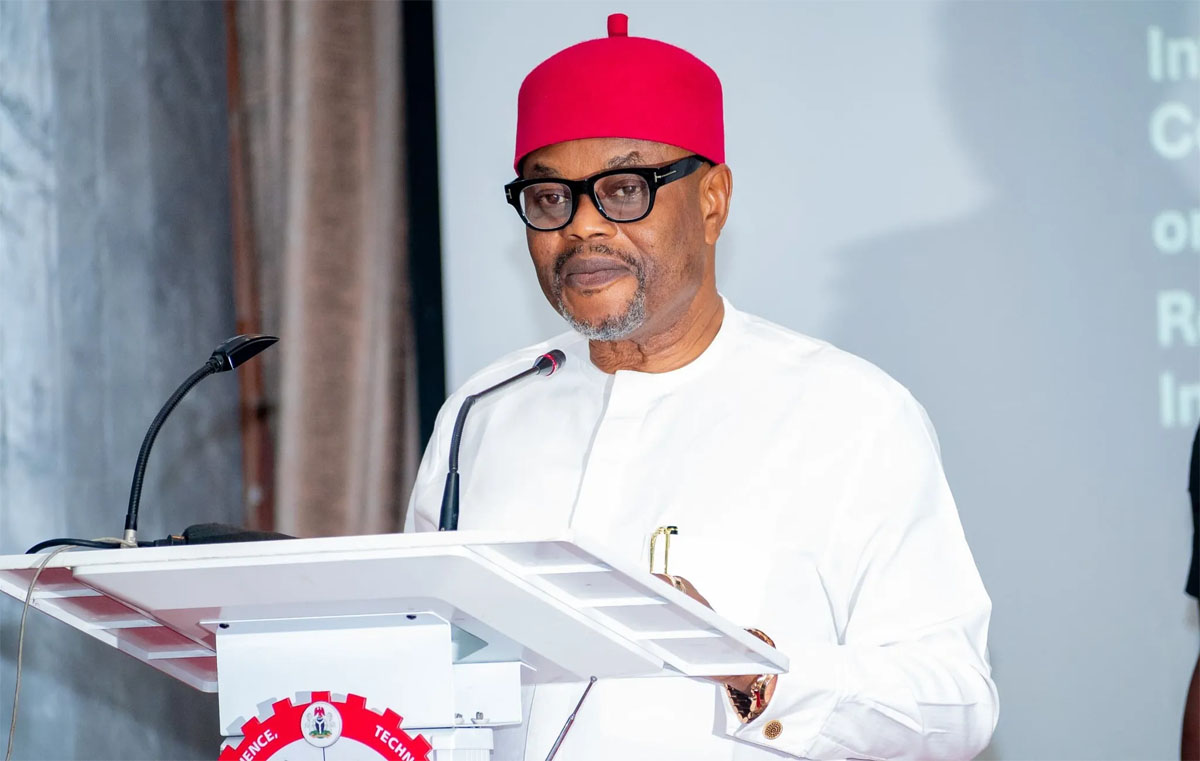
The University of Nigeria, Nsukka (UNN) and the National Youth Service Corps (NYSC) have denied issuing certificates allegedly presented by former Minister of Innovation, Science and Technology, Uche Nnaji, an investigator with the Independent Corrupt Practices and Other Related Offences Commission (ICPC) has told the Federal High Court in Abuja.
The disclosure was made on Monday, October 26, 2026, when Superintendent of Police Yakubu Ibrahim testified as the first prosecution witness in Nnaji’s trial over alleged certificate forgery, fraud, corruption and providing false information.
Ibrahim, who was led in evidence by the ICPC’s prosecuting counsel, J.A. Mumini, a Senior Advocate of Nigeria, told Justice Joyce Abdulmalik that the commission launched an investigation after receiving two separate petitions alleging that Nnaji presented questionable academic and national service certificates during his ministerial screening in 2023.
According to the witness, the investigation team sought documents from the National Assembly, the Office of the Secretary to the Government of the Federation (SGF), UNN and the NYSC to establish the authenticity of the certificates attributed to the former minister.
He said the Clerk of the Senate forwarded Nnaji’s Bachelor of Science certificate in Microbiology and Biochemistry, alongside his NYSC discharge certificate, to the commission for verification.
Ibrahim testified that the NYSC responded that it did not issue the discharge certificate presented in Nnaji’s name. He added that UNN similarly denied issuing the degree certificate attributed to the former minister.
The investigator said the university also supplied academic records relating to Nnaji’s studies, including a withdrawal notice dated November 7, 1984, concerning a course in General Microbiology.
According to his testimony, UNN explained that its academic regulations required students to obtain the prescribed grades and that students who failed to meet the requirements after four attempts would not qualify for a degree.
READ ALSO:
- Man, Teenage Girl Found Dead in Toyota Corolla as Police Begin Investigation
- EFCC Busts Four Illegal Lithium Plants in Ogun, Arrests 14 Chinese Nationals
- Yamal Makes History With Third Consecutive Young Player Award at 2026 Ballon d’Or
Ibrahim said the university’s records indicated that Nnaji failed at two stages and did not sit an examination at another stage for medical reasons. He added that the correspondence showed that Nnaji subsequently sat a supplementary examination for which he had not registered.
However, during cross-examination, Nnaji’s counsel, Wole Olanipekun, a Senior Advocate of Nigeria, drew the witness’s attention to another letter dated March 18, 1985, which he said rescinded the earlier withdrawal notice.
Ibrahim acknowledged the letter and confirmed that the original notice concerned General Microbiology. The exchange brought the university’s academic correspondence into focus during the proceedings.
The witness also admitted that he did not personally visit UNN during the investigation. He said, however, that members of the investigating team interviewed the university’s registrar.
When asked whether investigators established where the allegedly forged certificates were produced, Ibrahim said he did not know.
He further explained that the commission did not establish where Nnaji completed his national service because the NYSC had denied issuing the certificate in question.
“The NYSC said the certificate was not issued by it, which was why we didn’t inquire where he served,” the witness told the court.
Ibrahim also gave details of the steps taken to invite Nnaji for questioning. He said investigators could not initially locate the former minister’s address and subsequently sent an invitation to his email address and WhatsApp number.
According to the witness, Nnaji did not honour the invitation, prompting the ICPC to liaise with the Department of State Services (DSS). He said the former minister was arrested on July 1, 2026, and made statements to investigators on July 1 and 2.
The ICPC had earlier confirmed that Nnaji was arrested at the Nnamdi Azikiwe International Airport in Abuja, following a court order authorising his arrest for investigation into the allegations.
The investigator further told the court that the commission obtained documents from the SGF’s office, including a payslip, which prompted it to request the former minister’s bank statement.
He said the bank statement showed that Nnaji received approximately ₦29.58 million in salaries and allowances while serving as minister before his resignation.
The payments form part of the wider allegations in the case. The ICPC accuses Nnaji of receiving the money under circumstances it alleges involved unlawful proceeds and of using his position to confer a corrupt advantage on himself.
The six-count charge also includes allegations that he knowingly presented and used purportedly forged UNN and NYSC certificates as genuine documents.
Nnaji was arraigned before the Federal High Court in Abuja on July 13, 2026, and pleaded not guilty to all six counts. The court granted him bail in the sum of ₦20 million, subject to conditions, including the surrender of his international passport.
In September, Justice Abdulmalik temporarily released the passport to enable him to travel abroad for medical treatment, while the case remained pending.
During the latest proceedings, the prosecution tendered correspondence between the ICPC and the relevant institutions and government offices. The defence reserved its right to challenge the admissibility of the documents at the appropriate stage, and the court admitted them subject to the judge’s ruling that objections could be considered during final addresses.
At the conclusion of the cross-examination, the prosecution did not re-examine Ibrahim, and the judge discharged him as a witness.
The trial was adjourned for continuation, with reports indicating November as the next hearing period.
The case follows earlier reporting on questions surrounding Nnaji’s academic credentials, which drew public attention before his resignation as minister in 2025. The current proceedings are intended to determine the criminal allegations brought by the ICPC.
Nnaji remains entitled to the presumption of innocence unless and until the court establishes his guilt. The testimony presented so far represents evidence from the prosecution’s investigation, and the court has yet to deliver a final judgment on the charges.
Certificate Scandal: UNN, NYSC Disown Uche Nnaji’s Certificates, ICPC Witness Tells Court
metro
Man, Teenage Girl Found Dead in Toyota Corolla as Police Begin Investigation

Man, Teenage Girl Found Dead in Toyota Corolla as Police Begin Investigation
The Rivers State Police Command has launched an investigation into the deaths of a man and a teenage girl whose bodies were discovered inside a Toyota Corolla in Mgboushimini community, Obio/Akpor Local Government Area of the state.
The incident was confirmed on Monday by the police spokesperson, ASP Blessing Agabe, who said the command had commenced an investigation to establish the circumstances surrounding the deaths and determine their causes.
Agabe confirmed the development in a text message but did not provide further details about the identities of the deceased or the events leading to their deaths.
The discovery has generated concern in the community, with reports suggesting that the circumstances surrounding the incident may involve a relationship dispute. However, the police have not confirmed any link between the alleged dispute and the deaths.
READ ALSO:
- EFCC Busts Four Illegal Lithium Plants in Ogun, Arrests 14 Chinese Nationals
- Yamal Makes History With Third Consecutive Young Player Award at 2026 Ballon d’Or
- KANE ENDS 25-YEAR WAIT! England Captain Wins 2026 Ballon d’Or After Stunning 73-Goal Season
According to reports, the deceased man’s wife was pregnant and had allegedly confronted the teenage girl over a reported relationship with her husband. The couple were also said to have completed their traditional marriage rites and were preparing for their white wedding, reportedly scheduled for November 2026.
These details have yet to be independently confirmed by the police, and no conclusion has been announced regarding the cause of death or whether any criminal act was involved.
The investigation is expected to establish what happened before the bodies were discovered and determine the circumstances in which the two died.
As of Tuesday, October 27, 2026, the Rivers State Police Command had not publicly disclosed further findings in the case.
The case remains under investigation, and the circumstances surrounding the deaths remain unclear.
Man, Teenage Girl Found Dead in Toyota Corolla as Police Begin Investigation
metro
EFCC Busts Four Illegal Lithium Plants in Ogun, Arrests 14 Chinese Nationals
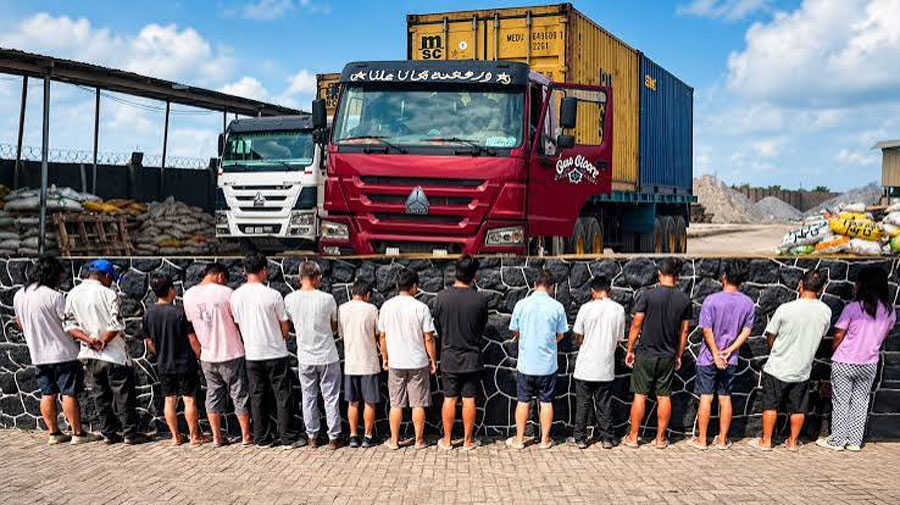
The Economic and Financial Crimes Commission (EFCC) has arrested 14 Chinese nationals and one Nigerian during raids on four suspected illegal lithium-processing plants in Ogere, Ogun State.
The suspects were arrested on Friday, October 23, 2026, by operatives of the commission’s Lagos Zonal Directorate 2 following intelligence gathering and surveillance.
The EFCC announced the arrests on Monday, October 26, saying the operation targeted four facilities allegedly involved in illegal lithium-processing activities.
Items recovered during the operation included bags of lithium-bearing rocks, 18 mobile devices, four laptop computers, two decoders, a television remote control and a trailer truck.
READ ALSO:
- KANE ENDS 25-YEAR WAIT! England Captain Wins 2026 Ballon d’Or After Stunning 73-Goal Season
- Oyo Govt Draws Battle Line With Soun, Rejects Suspension of Ogbomoso Balogun
- Car of the Year, other top honours up for grabs as NAJA Awards race begins
The commission did not disclose the identities of the suspects or the quantity of lithium recovered. It also did not provide specific details of the alleged licensing or regulatory violations involving the facilities.
The EFCC said the suspects would be charged to court after investigations had been concluded.
The arrests come amid increased attention on Nigeria’s solid minerals sector, as the government seeks to develop mineral resources and strengthen regulation of mining and processing activities.
Lithium is a key mineral used in rechargeable batteries for electric vehicles, mobile phones, laptops and energy-storage systems. Growing demand for battery materials has increased interest in lithium deposits and processing opportunities in Nigeria.
However, authorities have repeatedly raised concerns about unauthorised mineral operations and the need to ensure that mineral resources are exploited in accordance with applicable laws.
The latest case remains under investigation, and the suspects have not been convicted of any offence.
The outcome of the investigation is expected to determine the next legal steps against the 15 suspects and clarify the circumstances surrounding the operations of the four facilities.
EFCC Busts Four Illegal Lithium Plants in Ogun, Arrests 14 Chinese Nationals
-
 Politics2 days ago
2027: APGA Chairman Says South-East Must Back Tinubu to Secure Igbo Presidency
-

 Entertainment2 days ago
Tope Alabi Threatens Pastor With Lawsuit Over Toluwanisings’ Death Claims
-

 International2 days ago
France Deploys 70,000 Police as Cost-of-Living Protests Intensify
-
 metro2 hours ago
Cancelled Wedding: Man Sues Ex-Fiancée’s Father Over Unpaid ₦70,000 Dowry
-

 metro2 days ago
Borno: Troops Kill 15 Terrorists in Midnight Air Strike
-

 Auto2 hours ago
Car of the Year, other top honours up for grabs as NAJA Awards race begins
-

 Politics2 days ago
Atiku Condemns Attack on Edo Comedian Over Refusal to Support Tinubu
-
 metro3 days ago
Tinubu Support or Mosque Dispute? Bauchi Residents, NUJ Challenge ‘Imam’s Removal’ Report