

News
Agbakoba tackles EFCC, insists it cannot prosecute state govt matters

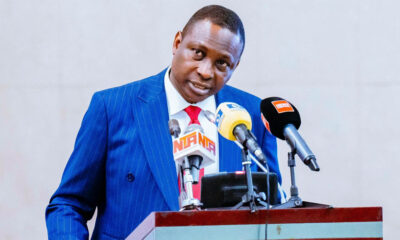
A former President of the Nigerian Bar Association, Olisa Agbakoba, a senior advocate of Nigeria (SAN), says the Economic and Financial Crimes Commission (EFCC) is not empowered to handle matters under the jurisdiction of state governments.
He also expressed the view that the functions of anti-graft agency are not different from the duties of the police special fraud unit.
Agbakoba said this on Thursday during a media briefing in Lagos state.
The senior advocate said since the EFCC is an agency of the Federal Government, it does not have the powers to prosecute offences under the purview of state governments.
“The question would be: If the EFCC is created by the Federal Government, can it then prosecute state offences?” he asked.
Agbakoba said, “The Supreme Court, in many of its decisions, has held that federalism means two autonomous and independent governments, and if that is correct, the EFCC does not have the right to go to the state and examine their accounts.
“Anybody can read section 46 of the EFCC Act and Section 36(12) of the 1999 Constitution. Section 36(12) states that all offences must be defined and when you now read Section 46, you ask yourself if it complies with Section 36(12) because it does not.
“So, part of the prayers I would seek in court is that EFCC ought not to exist in the first place because it is not a branch of the police and that the job done by the EFCC is the same one being done by the Police Special Fraud Unit.
“My other prayer would be whether the national assembly can make laws for the federation and to what extent can the national assembly, which is an arm of the federal government, make laws authorising a federal agency to exercise powers as if it were a state agency.
“So, all these contradictions should make the presidential candidates tell Nigerians what they are going to do about the constitution because it is defective.”
Speaking further, the lawyer said he has nothing personal against the anti-graft agency and that he is ready to engage Abdulrasheed Bawa, the agency’s chairperson, on the issue.
Over the past weeks, EFCC and Agbakoba have been at loggerheads over an alleged fraud case linked to Ali Bello, identified as a nephew of Yahaya Bello, governor of Kogi.
On December 15, EFCC arraigned Ali Bello and one Dauda Suleiman on a 10-count charge bordering on alleged misappropriation and money laundering.
The anti-graft body claimed the duo, alongside one Abdulsalami Hudu, a cashier at the Kogi state house who is now at large, withdrew N10.2 billion from the state’s treasury for personal use.
Agbakoba said the EFCC has no constitutional right to probe how a state spends its money, adding that only the Independent Corrupt Practices and Other Related Offences Commission (ICPC) and state assemblies have the responsibility to probe state expenditure.
Responding to Agbakoba’s comment, EFCC said the SAN is casting aspersion on the commission’s commitment to tackling corruption.








News
NLC Backs ₦500 Petrol Demand, Workers Propose ₦500,000 Salary
NLC Backs ₦500 Petrol Demand, Workers Propose ₦500,000 Salary
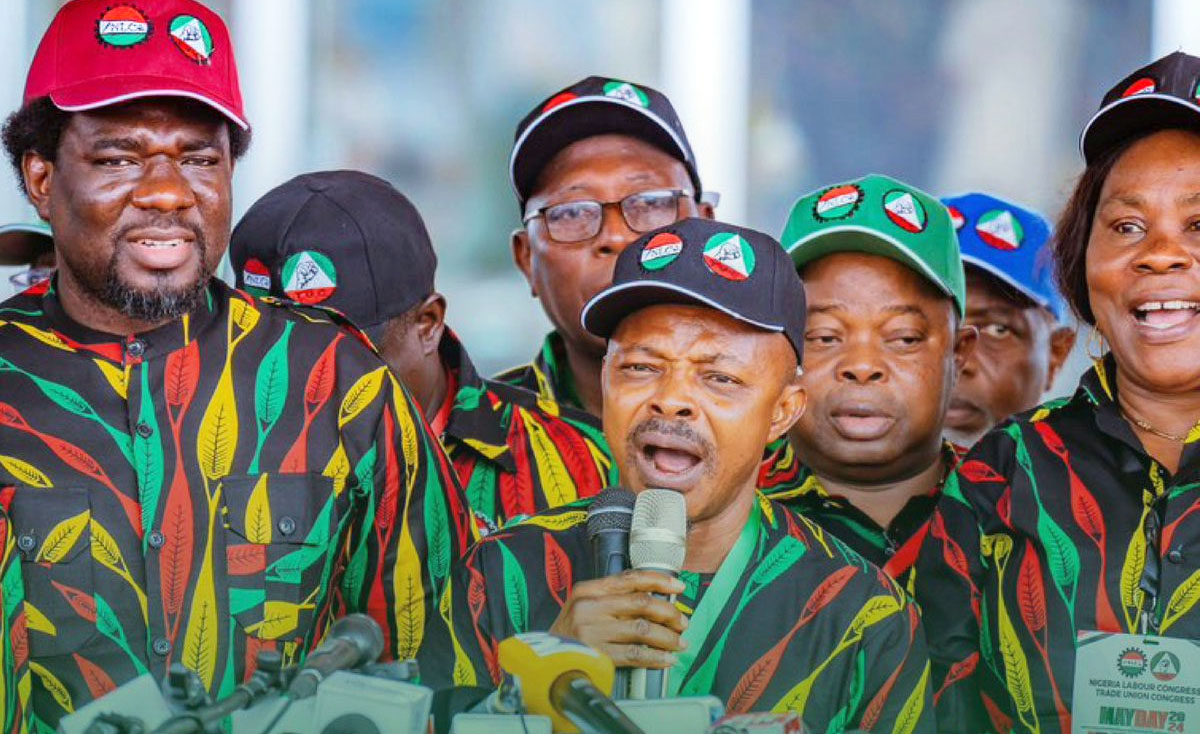
The Nigeria Labour Congress (NLC) has backed demands by public-sector workers for the Federal Government to reduce the price of petrol to ₦500 per litre, while the workers have proposed a minimum monthly salary of ₦500,000 for Grade Level 01, Step 1 officers under a new public-service salary structure.
The demands were contained in a letter by the Trade Union Side of the Joint National Public Service Negotiating Council (JNPSNC) to President Bola Ahmed Tinubu, amid renewed concerns over rising fuel prices and the worsening cost-of-living crisis.
The workers gave the Federal Government until September 30, 2026, to respond to their demands, which cover petrol prices, wage awards, salary reviews and negotiations for a new wage structure.
The JNPSNC called for an intervention capable of bringing the petrol pump price down to ₦500 per litre, arguing that the rising cost of fuel has significantly increased transportation expenses and contributed to higher prices of food and other essential goods and services.
The demand comes amid another increase in petrol prices in Nigeria, with pump prices rising in several parts of the country following higher crude oil prices in the international market.
The labour movement has argued that the impact of rising fuel costs extends beyond motorists, as increased transportation and energy expenses raise the cost of moving agricultural produce, manufacturing goods and other commodities.
The NLC has therefore called for measures to cushion workers and households from the effects of the latest price increases.
On wages, the JNPSNC proposed a new salary structure under which a Grade Level 01, Step 1 public servant would earn ₦500,000 monthly.
The figure is important because it is a proposal by the workers, not an approved national minimum wage.
The proposed ₦500,000 salary is also specifically linked to the public-service salary structure being sought by the JNPSNC ahead of January 2027. It should not be presented as though the Federal Government has agreed to increase Nigeria’s statutory national minimum wage to ₦500,000.
READ ALSO:
- UK Student Visa: 63 Countries Exempt From Proof of Funds, Nigeria Excluded
- Lagos Intensifies Surveillance as Adulterated Palm Oil Raises Food Safety Concerns
- Saudi Arabia Rejects Nigeria’s Request for More 2027 Hajj Slots
Nigeria’s current statutory national minimum wage remains ₦70,000 per month, following the 2024 wage agreement and legislation.
The workers are seeking negotiations for a new wage structure while also asking for an immediate Wage Award for employees at the Federal, State and Local Government levels as a short-term response to current economic pressures.
The proposed wage award is separate from the longer-term salary review and any future agreement on the national minimum wage.
The JNPSNC wants the National Salaries, Incomes and Wages Commission (NSIWC) to begin discussions with labour representatives and other stakeholders on the proposed wage award and salary adjustments.
The workers said rising inflation, transportation costs, food prices, housing expenses, healthcare costs and education fees had reduced the purchasing power of existing salaries.
They also called for salaries and allowances across the public service to be reviewed upward and for future salary adjustments to take inflation into account.
According to the workers, linking periodic salary reviews to inflation would help prevent employees’ earnings from losing substantial purchasing power between major wage negotiations.
The labour side also demanded subsidised transportation and affordable housing for public servants as part of measures to ease the pressure on workers.
On the petroleum sector, the workers backed calls for greater availability of crude oil in naira to local refineries, arguing that increased domestic refining and local crude supply could reduce exposure to international oil-market shocks.
The NLC has previously advocated measures to strengthen local refining and improve domestic energy security as part of efforts to reduce pressure on consumers.
The workers also rejected the idea of relying mainly on food palliatives to address the hardship, arguing that temporary relief does not adequately compensate for the loss of purchasing power caused by higher transportation and living costs.
They instead called for measures that would address the underlying drivers of the rising cost of living.
The latest demands come as the downstream petroleum market faces renewed price pressure despite increased domestic refining capacity.
Higher international crude prices have raised input costs for refiners, contributing to increases in the wholesale and retail prices of petrol.
The development has renewed debate over how much protection Nigeria’s expanding domestic refining capacity can provide against global oil-price movements.
For organised labour, however, the immediate concern is the effect of higher fuel prices on workers and households.
The JNPSNC expects the Federal Government to respond to its demands by September 30, while also looking ahead to negotiations for a new salary and wage framework from January 2027.
The council has indicated that it expects the President’s forthcoming Independence Day address to address some of the concerns raised by workers.
The proposed ₦500,000 salary therefore remains a labour demand awaiting negotiation and possible government consideration. It is not the current national minimum wage and does not mean that all Nigerian workers are automatically entitled to ₦500,000 monthly.
Similarly, the proposed ₦500 petrol price is a demand for government intervention and does not represent the current regulated or prevailing pump price across Nigeria.
The labour demands reflect growing pressure from organised workers for government action as households and businesses contend with higher fuel prices, transportation costs and living expenses.
NLC Backs ₦500 Petrol Demand, Workers Propose ₦500,000 Salary
News
MURIC Warns FG: Any Move Against Atiku Now Lacks Tact
MURIC Warns FG: Any Move Against Atiku Now Lacks Tact
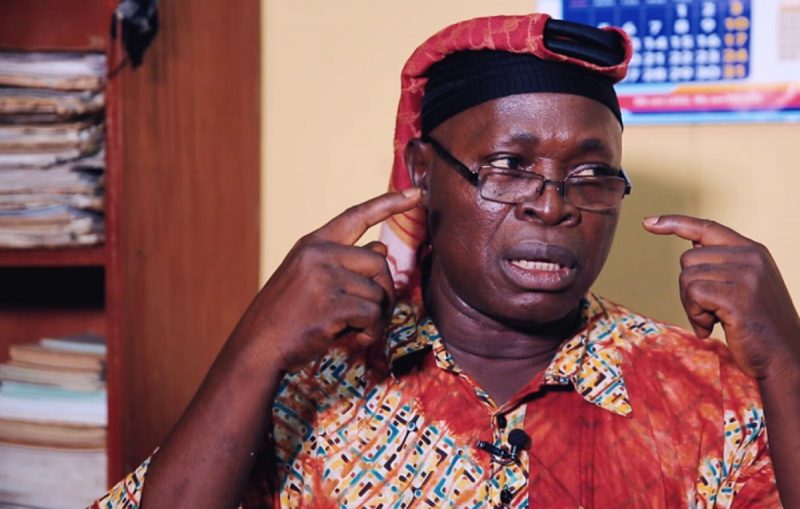
The Muslim Rights Concern (MURIC) has warned the Federal Government against any move to arrest, interrogate or otherwise take action against former Vice-President Atiku Abubakar over a fresh petition before the Economic and Financial Crimes Commission, saying such a step at this time could send the wrong signal to Nigerians.
The warning came as the controversy over a renewed call for the EFCC to investigate allegations dating back to Atiku’s tenure as Vice-President intensified, with opposition figures and the petitioner trading sharply different arguments over the matter.
In a statement issued on Tuesday, September 22, 2026, MURIC Founder and Executive Director, Professor Ishaq Akintola, said the government should exercise caution, particularly with the 2027 general elections approaching.
According to MURIC, the renewed allegations have assumed greater sensitivity because Atiku is now the presidential candidate of the African Democratic Congress and a leading opposition figure.
“We warn that such an attempt at this point in time will send the wrong signal to Nigerians,” the group said, adding that with the 2027 elections “at the doorsteps,” the Federal Government should carefully consider the consequences of any action against the former Vice-President.
MURIC described any such move as lacking tact and “short” of emotional intelligence, while urging the government to avoid conduct that could create the impression that state institutions were being used against political opponents.
The organisation also warned against what it described as a damaging “body language” capable of portraying Nigeria as a “banana republic.”
MURIC said that although the country had already lost some ethical ground, its democratic values and norms remained important safeguards that should not be compromised.
“Our corporate image in the global community is sinking fast,” the group added.
READ ALSO:
- JAMB Allows Candidates to Change Lost SIM, Email Addresses
- How Nigerians Can Get Federal High Court Affidavit Online Without Visiting Court
- Plateau Violence: Several Killed as Fresh Attacks Trigger Mass Exodus
The statement followed renewed controversy over a petition by former House of Representatives member, Ehiozuwa Agbonayinma, asking the EFCC to revisit allegations concerning Atiku’s activities while he was Vice-President.
Reports indicate that the petition relates to allegations investigated by the EFCC between 2005 and 2006. Agbonayinma reportedly gave the anti-graft agency a 14-day ultimatum to act and threatened legal action if the commission failed to respond.
Former Senator Dino Melaye has strongly opposed the renewed petition, describing it as an attempt to “resurrect the dead.” Melaye argued that the matter had previously been dealt with and questioned the basis for bringing it back almost two decades later.
The dispute, however, has escalated beyond the original petition, with Agbonayinma hitting back at Melaye and challenging him to produce documentary evidence for his claim that the allegations had been investigated and dismissed.
In a statement reported on September 20, Agbonayinma insisted that he was asking the EFCC to perform its statutory responsibility and argued that the substance of the allegations should be addressed rather than his personality or political affiliation.
“You cannot defend Atiku Abubakar from an EFCC petition by attacking me,” Agbonayinma was quoted as saying, while urging the anti-graft agency to determine whether the allegations warranted further investigation.
The renewed controversy has also brought attention to the distinction between a petition seeking investigation and a finding of criminal guilt. The existence of a petition does not, by itself, establish that the person named in it committed an offence.
There is also a historical legal dimension to the allegations. Reports on the previous proceedings state that a Lagos State High Court set aside an EFCC administrative indictment against Atiku in December 2006, while no criminal conviction against him resulted from the allegations.
Atiku has continued to deny wrongdoing and has challenged anyone with credible evidence against him to present it through the appropriate legal channels.
Meanwhile, there was no confirmed announcement from the EFCC, as of the latest reports reviewed, that it had arrested Atiku or formally invited him over the fresh petition. A separate and more recent EFCC investigation reported on September 20 concerns individuals connected to allegations surrounding the Mambilla Power Project, which is distinct from the 2005–2006 allegations at the centre of the present political dispute.
The MURIC intervention has therefore added a fresh dimension to an increasingly heated political controversy, with the organisation urging the Federal Government to exercise restraint and protect public confidence in Nigeria’s democratic institutions.
With the 2027 elections approaching, the dispute over the renewed EFCC petition is expected to remain a significant political issue, particularly if the anti-graft agency decides to take further steps.
For MURIC, however, the timing of any action is crucial. The organisation wants the Federal Government to ensure that whatever steps are taken by law-enforcement agencies are grounded in due process and do not create the perception of political persecution.
The group’s central warning is that Nigeria must guard its democratic reputation and avoid actions that could further erode public confidence in its institutions at a particularly sensitive period in the nation’s political calendar.
MURIC Warns FG: Any Move Against Atiku Now Lacks Tact
News
NiMet Predicts Thunderstorms, Rain Across Nigeria Till Wednesday
NiMet Predicts Thunderstorms, Rain Across Nigeria Till Wednesday
The Nigerian Meteorological Agency (NiMet) has predicted thunderstorms and rainfall across several parts of Nigeria from Monday to Wednesday.
The agency, in its weather outlook released on Sunday, also warned that strong winds could occur ahead of thunderstorms in some areas.
For Monday, NiMet expects thunderstorms and light rain over parts of Taraba and Kebbi during the morning. Later in the day, moderate rainfall is expected across several areas in the North-East, Kaduna, Taraba and Kebbi.
In the North-Central region, parts of Niger State could experience thunderstorms and light rain in the morning, while most parts of the region may record thunderstorms with moderate rainfall by afternoon or evening.
The southern states are also expected to experience wet conditions. NiMet forecasts cloudy skies in the morning, with isolated thunderstorms and light rain over parts of Bayelsa, Rivers, Akwa Ibom and Cross River. More thunderstorms and light rain are expected later in the day.
Tuesday and Wednesday Forecast
On Tuesday, the northern region is expected to have patches of cloud in the morning, with thunderstorms and light rain possible in parts of Taraba.
By afternoon or evening, most parts of the region could experience thunderstorms accompanied by moderate rain.
In the North-Central, parts of the Federal Capital Territory, Niger, Nasarawa and Plateau states are expected to receive thunderstorms and moderate rainfall later in the day.
Southern areas, including parts of Ebonyi, Enugu, Abia and the South-South, may also experience thunderstorms and light rain.
NiMet expects more widespread rainfall on Wednesday, particularly across northern and North-Central states. Borno, Bauchi, Gombe, Kaduna, Adamawa and Taraba are among the areas listed for morning thunderstorms and moderate rain.
The agency also forecasts thunderstorms and moderate rainfall across much of the South later on Wednesday.
NiMet advised residents to secure loose objects and take precautions against strong winds. Motorists were urged to avoid driving during heavy rainfall, while residents were advised to disconnect electrical appliances during thunderstorms and stay away from tall trees.
Airline operators were also advised to obtain airport-specific weather information when planning flights.
NiMet Predicts Thunderstorms, Rain Across Nigeria Till Wednesday
-
 International2 days ago
18 Suspects Transferred to US Over 2021 Killing of Haitian President Moïse
-
 News2 days ago
NiMet Predicts Thunderstorms, Rain Across Nigeria Till Wednesday
-

 Politics2 days ago
‘Join the Hunt’ — Soludo Urges Igbos to Strategically Align Ahead of 2027
-

 Sports2 days ago
Messi Fires Stunning 75th Career Free-Kick to Reach 930 Goals in Inter Miami Draw
-
 metro2 days ago
My Heart Has Always Been Home With You — Tinubu’s Powerful Message to Oluremi at 66
-
 News2 days ago
Working People United Celebrates Oluremi Tinubu at 66, Commends Her Humanitarian Efforts
-
 News1 day ago
NLC Backs ₦500 Petrol Demand, Workers Propose ₦500,000 Salary
-

 Auto2 days ago
Jetour T1 Storms Abuja as Automaker Accelerates Nigeria Expansion