

metro
Coup Allegation: Your ‘regret’ not enough, apologise to Atiku, Military – Shaibu to Fani-Kayode

The Director of Special Projects and New media of the Tinubu/Shettima Presidential Campaign Council, Femi Fani-Kayode has been asked to tender an unreserved public apology to the presidential candidate of the Peoples Democratic Party (PDP), former Vice President Atiku Abubakar and the Nigeria Military.
According to the Special Assistant, Public Communication to Atiku, Phrank Shaibu, this is to ensure that Fani-Kayode is truly remorseful of his self-confessed lie that Atiku met with army generals with the aim of executing a coup against the democratically elected government of President Muhammadu Buhari.
Recall that the Department of State Services (DSS) had on Monday grilled Fani-Kayode for six hours following a series of tweets wherein he claimed that Atiku had met with some army generals in a bid to perpetrate a coup.
READ ALSO:
- Ogun governor threatens to shut down banks rejecting old naira notes
- Naira Scarcity: President’s silence is inglorious – Right group
- I’ll be hard on criminals, their networks, deviant policemen —New Lagos CP vows
After his release by the DSS, Fani-Kayode stated at a press conference that he regretted making the comments and he would guard his statements in the future.
But in a statement to Naija News, Shaibu said Fani-Kayode’s “regret” was not enough without a public apology issued to Atiku and the military.
He said, “Fani-Kayode’s regret is a step in the right direction, but this is not sufficient. Who exactly is he apologising to? He needs to be specific. He needs to apologise to Waziri Atiku Abubakar for trying to impugn his character. He also needs to apologise to the military for denigrating that revered institution.
“Fani-Kayode is a former minister of the Federal Republic of Nigeria with over two million followers across social media platforms. He is a lawyer and ought to understand the implication of libel. Apart from the criminal aspect of his tweets, he has also committed defamation and thus must be made to apologise for his inane insinuations.”
Criminal Defamation
He demanded that Fani-Kayode’s public apology to Atiku should be published in three newspapers, including The Nation and their online editions for seven days consecutively beginning from Wednesday, 15 February, 2023.
Shaibu said Fani-Kayode has a penchant for making specious allegations but has been treated like a sacred cow for too long, which has emboldened him over the years.
Atiku’s aide served notice that if Fani-Kayode fails to tender a public apology for criminally defaming Atiku, he may need to offer explanation in the court of law.
“There should be a fine line between political propaganda and crime. When a person in the calibre of a former minister is unable to differentiate between the two, it becomes worrisome. His allegation of a planned coup should not be taken lightly. Such juvenile drivel must not be tolerated, not even in the name of politics,” Shaibu added.










metro
How Nigerians Can Get Federal High Court Affidavit Online Without Visiting Court

How Nigerians Can Get Federal High Court Affidavit Online Without Visiting Court
Nigerians can now apply for and obtain eligible Federal High Court affidavits online without necessarily visiting a court premises, through the court’s Electronic Court Management System (ECMS) e-Affidavit Portal.
The digital service allows applicants to create an account, complete an affidavit application, upload required documents, make payment and, after the application has been processed, download the completed electronic affidavit.
The Federal High Court of Nigeria introduced the e-Affidavit service as part of its efforts to make access to court services easier and reduce the need for physical visits for eligible affidavit applications.
The service covers several common affidavit needs, including change of name, correction of name, declaration of age, correction of date of birth, loss of documents, change of signature, next of kin, marriage-related declarations, banking matters and general-purpose affidavits.
However, applicants should note that the exact requirements and oath-taking procedure can vary depending on the type of affidavit and the relevant Federal High Court division.
How to Get a Federal High Court Affidavit Online
Applicants can follow these steps:
1. Create an account
Visit the official Federal High Court e-Affidavit portal and create an account.
Applicants will be required to provide basic personal information, including their name, telephone number, date of birth and email address, and create a password.
The email address and other details supplied should be accurate because they may be used for communication about the application.
2. Log in and complete your profile
After registration, log into the portal and complete the required applicant profile.
The system may request information including residential address, occupation, town, state and country of origin, gender, religion and date of birth.
Applicants should ensure that the information supplied is accurate and consistent with their identification documents.
3. Select the type of affidavit
Select the e-Affidavit option and choose the type of affidavit required.
Depending on the available categories, applicants may apply for documents relating to change of name, declaration of age, correction of date of birth, loss of documents, change of signature, next of kin, marriage, banking and other general declarations.
4. Select the Federal High Court division
Choose the appropriate Federal High Court division for the application.
READ ALSO:
- Plateau Violence: Several Killed as Fresh Attacks Trigger Mass Exodus
- Lagos Mechanic Lured With Mercedes Repair Job, Hacked to Death in Bush
- Working People United Celebrates Oluremi Tinubu at 66, Commends Her Humanitarian Efforts
Applicants should take care when selecting the division because the relevant court location may affect how the application is processed and whether additional steps are required.
5. Complete the affidavit form
Fill in the electronic form with the information required for the particular affidavit.
For example, someone applying for an affidavit concerning correction of date of birth may be asked to provide the incorrect date, the correct date and the reason for the correction.
Applicants should ensure that names, dates and other details are correctly entered before moving to the next stage.
6. Upload the required documents
Upload the documents requested by the portal.
These may include a recent passport photograph, valid means of identification and signature, depending on the type of affidavit.
Acceptable identification may include documents such as a National Identification Number (NIN) document, international passport, driver’s licence or voter’s card, subject to the requirements displayed on the portal.
Applicants should ensure that uploaded files meet the portal’s size and format requirements.
7. Preview and check the application
Before submitting the application, use the preview function to carefully review all the information supplied.
Check the spelling of names, dates of birth, addresses, identification details, selected affidavit type and court division.
This stage is important because an error submitted on an affidavit application could affect the final document.
8. Accept the terms and submit
After reviewing the application, accept the relevant terms and conditions and provide the required consent for processing of personal information.
The application can then be submitted through the portal.
9. Pay the applicable fee
Proceed to payment after submitting the application.
The portal provides electronic payment options, including Paystack and Remita.
The applicable fee depends on the affidavit or service selected. Applicants should therefore rely on the amount displayed on the official portal at the time of application rather than unofficial fee figures circulating online.
The court’s portal states that payments are final, non-refundable and non-transferable.
10. Complete the oath-taking requirement
After payment, the application goes through the court’s processing and verification procedure.
Depending on the affidavit and the relevant court division, the applicant may be required to complete an oath-taking process.
READ ALSO:
- ‘Join the Hunt’ — Soludo Urges Igbos to Strategically Align Ahead of 2027
- 18 Suspects Transferred to US Over 2021 Killing of Haitian President Moïse
- My Heart Has Always Been Home With You — Tinubu’s Powerful Message to Oluremi at 66
The Federal High Court’s information on the e-Affidavit system indicates that oath-taking arrangements can vary by division and may involve a virtual or physical process.
Applicants should therefore follow any specific instruction issued for their application rather than assume that every affidavit can be completed entirely online.
11. Monitor the application
Applicants should regularly check their account and registered email address for updates.
The court may query an application and request additional information or documents.
Where an application is queried, applicants are required to respond within the stipulated period. The portal indicates a 72-hour period for responding to queries.
Failure to respond or complete a required payment within the prescribed period may result in the application being deleted, requiring the applicant to start the process again.
12. Download the completed affidavit
Once the application has been approved and the affidavit completed, the applicant can download the electronic affidavit through the portal.
A copy is also sent to the applicant’s registered email address.
The electronically issued affidavit contains verification features, including a unique barcode and reference number, which can be used to confirm its authenticity.
Important Things Applicants Should Know
Applicants should carefully check their information before making payment because the court states that payments are not refundable or transferable.
They should also keep their application reference details and the electronic copy of the completed affidavit in a secure location.
An affidavit should not be altered after it has been issued. The court warns that falsifying, altering or misusing an affidavit is a criminal offence and may have legal consequences.
Applicants should also understand that an e-Affidavit does not automatically replace every affidavit required in a legal proceeding. Where an affidavit is being prepared for a specific court case or legal transaction, the applicant may need additional legal guidance.
Anyone uncertain about the appropriate affidavit, wording, supporting documents or court division should consider consulting a qualified legal practitioner before submitting the application.
The Federal High Court’s e-Affidavit platform is designed to make the process of obtaining eligible affidavits more convenient by allowing applicants to complete significant parts of the process electronically.
For applicants whose particular affidavit qualifies for the online service, the process can therefore be handled through the portal from registration and application to payment, processing and electronic retrieval, subject to any oath-taking or other requirement imposed by the relevant court division.
How Nigerians Can Get Federal High Court Affidavit Online Without Visiting Court
metro
Plateau Violence: Several Killed as Fresh Attacks Trigger Mass Exodus

Plateau Violence: Several Killed as Fresh Attacks Trigger Mass Exodus
Fresh violence in Plateau State has left several people dead in separate attacks across Mangu, Barkin Ladi and Riyom, with renewed gunfire forcing women and children to leave parts of Barkin Ladi for safer locations.
The latest wave of violence began with an attack on a vegetable market in Mangu Local Government Area, where gunmen opened fire on a vehicle leaving the market on Friday night.
The attack, which occurred at about 8 p.m. as traders and buyers were preparing to close for the day, triggered panic and a stampede as people fled in different directions.
Three people — two women and a young man — were reportedly killed, while several others sustained injuries. Those with serious injuries were taken to the Jos University Teaching Hospital (JUTH) for treatment.
However, another report put the death toll from the market attack at five, leaving some uncertainty over the final casualty figure.
The attack came amid heightened security concerns in Mangu, where several communities have experienced deadly attacks in recent weeks.
The situation worsened in Barkin Ladi Local Government Area, where residents of Dorowa Bubuje reported hearing sustained gunfire from the direction of Kantoma.
READ ALSO:
- Lagos Mechanic Lured With Mercedes Repair Job, Hacked to Death in Bush
- Working People United Celebrates Oluremi Tinubu at 66, Commends Her Humanitarian Efforts
- ‘Join the Hunt’ — Soludo Urges Igbos to Strategically Align Ahead of 2027
The gunfire created panic and prompted the evacuation of women and children from vulnerable parts of the community.
Residents reportedly began moving away from areas considered exposed to possible attacks, while security personnel were deployed to the community.
The fresh tension followed another series of deadly attacks reported in Barkin Ladi and neighbouring Riyom between Saturday night and Sunday morning.
Five passengers travelling to Gana-Ropp in Barkin Ladi were reportedly attacked on Saturday night. The victims were said to be travelling as labourers, with five bodies later recovered from the area.
Two other people, including a pastor, were reportedly killed while travelling to church at Dorowa Babuje on Sunday morning.
A woman was also reportedly killed at Baten Wereng in Riyom Local Government Area, while another person was killed at Ratyidi in Fan District.
Several cattle were also reportedly killed or stolen around Dorowa Maranba and the Kantoma axis, further increasing tensions in the affected communities.
The latest incidents came against the background of a series of attacks in Plateau in which both farmers and herders have suffered casualties.
Earlier in September, community leaders reported that three herders were killed and about 50 cattle were shot dead during an attack on a grazing area in Aloghom, Mangu LGA.
Another herder and 18 cattle were reportedly killed in a separate incident around Nyerwe in Barkin Ladi.
Security forces have continued operations in the affected areas.
The Nigerian Army previously reported the arrest of three suspects following the killing of 17-year-old Peter Gyang at Kafi-Abu village in Barkin Ladi.
The suspects were arrested during a military operation in an area believed to have been used by the attackers. Their alleged involvement, however, remained subject to investigation.
The Army’s General Officer Commanding, 3 Division, Maj. Gen. Williams Dangana, also visited communities affected by the violence and appealed to residents to remain calm and avoid retaliatory attacks.
Another separate attack was reported around Kassa in Barkin Ladi, where five Fulani men were reportedly killed after their vehicle came under attack while they were travelling towards a cattle market in Jos South.
The victims were identified as Buhari Yusuf, Aminu Ahmad, Nasiru Abdullahi, Gambo Abubakar and Muhammad Abdul Rahman.
A Fulani association alleged that the vehicle was ambushed by people it described as Berom militias and called for an investigation by the Federal Government, Plateau State Government and security agencies.
The association also appealed to members of the Fulani community to remain calm and avoid retaliation.
The allegation concerning the identity of the attackers in the Kassa incident has not been independently established by security authorities.
The separate attacks have highlighted the continuing cycle of communal violence in Plateau State, where longstanding tensions involving land, farming, grazing, communal disputes and reprisals have repeatedly resulted in deaths and displacement.
Community representatives have called for stronger and sustained security deployments, while security agencies have urged residents to provide credible information and avoid taking the law into their own hands.
With residents fleeing some affected areas, the immediate concern remains the protection of civilians and prevention of further attacks or retaliatory violence.
Authorities are expected to investigate the separate incidents, identify those responsible and strengthen security around communities considered vulnerable to further violence in Plateau State.
Plateau Violence: Several Killed as Fresh Attacks Trigger Mass Exodus
metro
Lagos Mechanic Lured With Mercedes Repair Job, Hacked to Death in Bush

Lagos Mechanic Lured With Mercedes Repair Job, Hacked to Death in Bush
A mechanic identified as Samson has allegedly been lured to his death in the Abijo area of Ibeju-Lekki, Lagos State, after receiving a request to repair a Mercedes-Benz.
The incident reportedly occurred on Tuesday, September 15, after Samson, who operated a mechanic workshop around Warike Estate, left his workshop to attend to the vehicle repair request.
According to reports, the mechanic was contacted by people who claimed they needed his services to fix a Mercedes-Benz. He reportedly travelled to the location expecting to carry out a routine repair job.
However, he was allegedly taken into a nearby bush after arriving at the location, where he was reportedly hacked to death.
The circumstances surrounding the incident have raised concerns because Samson was said to have left his regular workplace in response to what appeared to be an ordinary request for his professional services.
The Lagos State Police Command confirmed that the matter had been reported and said an investigation was underway.
Lagos Police Public Relations Officer, Abimbola Adebisi, said Samson’s family initially reported that they could no longer account for his whereabouts.
Following the report, detectives visited his apartment as part of efforts to establish his movements and determine what happened to him.
The police also began efforts to track Samson’s mobile phone, hoping that the location data and other evidence could help investigators reconstruct his movements after he left for the supposed repair job.
A police source said the investigation was aimed at establishing the circumstances surrounding the incident and identifying those responsible.
READ ALSO:
- Working People United Celebrates Oluremi Tinubu at 66, Commends Her Humanitarian Efforts
- ‘Join the Hunt’ — Soludo Urges Igbos to Strategically Align Ahead of 2027
- 18 Suspects Transferred to US Over 2021 Killing of Haitian President Moïse
The source also indicated that suspected cult members were believed to be connected with the attack.
However, the alleged cult connection and the motive for the killing have not been conclusively established by the police.
An anti-cultism advocacy platform separately alleged that Samson’s death could have been linked to an earlier cult-related killing in the Ibeju-Lekki area.
The platform claimed that a man identified as Ola Sheu, whom it described as a member of the Eiye confraternity, was killed around Adeba Bus Stop in Lakowe, Ibeju-Lekki, on September 9.
It further alleged that Sheu was killed by members of the NBM, also known as Aye, and that Samson was subsequently targeted in what may have been a retaliatory attack.
According to the advocacy platform, a graduation photograph allegedly showing Samson wearing a beret associated with the Aye group was circulated and may have exposed him to people involved in the alleged cult rivalry.
The claim remains an allegation and has not been independently established as the motive for Samson’s disappearance or reported death.
Police investigators are expected to establish whether the Mercedes-Benz repair request was genuine, who contacted Samson, where he was taken after arriving at the location and who was responsible for the alleged attack.
They are also expected to determine whether the incident was connected to the alleged cult dispute or resulted from another motive.
The case has also drawn attention to the security risks faced by mechanics, artisans and other service providers who respond to jobs at unfamiliar locations.
Such workers often travel alone to customers’ homes, workshops, roadside locations or other places to provide services, making it difficult for relatives or colleagues to immediately know where they are when something goes wrong.
For now, no suspect has been publicly identified by the police in connection with the incident.
The investigation remains ongoing as detectives work to establish the full circumstances surrounding Samson’s disappearance and reported killing and determine who was behind the attack.
Further information from the police is expected as the investigation progresses.
Lagos Mechanic Lured With Mercedes Repair Job, Hacked to Death in Bush
-

 International3 days ago
BREAKING: Bloodbath at Pakistan Mosque as Suicide Blast Kills 21, Injures 103
-

 Politics3 days ago
Yayi Ancestry Row: Stepmother Sets Record Straight as Legal Battle Looms
-

 metro3 days ago
Tinubu Orders Full Probe Into 37 Miners’ Deaths in NSCDC Custody
-

 metro2 days ago
Niger Miners’ Deaths: Families Demand Compensation, Justice for Victims
-

 Sports3 days ago
Falconets Thrash England 3-0, Face Colombia in U-20 World Cup Quarter-Finals
-

 Auto3 days ago
Replace Fuel Subsidy With Vehicle Credit to Drive Mobility, Jobs,LCCI, Ilekuba tell FG
-

 metro2 days ago
Mambilla: ICC Raises Questions Over $500,000 Payment to Atiku’s Former Wife
-
 metro3 days ago
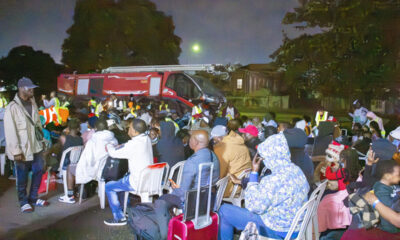
Xenophobia: FG Brings 33 More Nigerians Home From South Africa