

metro
Soyinka rebukes ‘Obidients’ movement over attacks on him
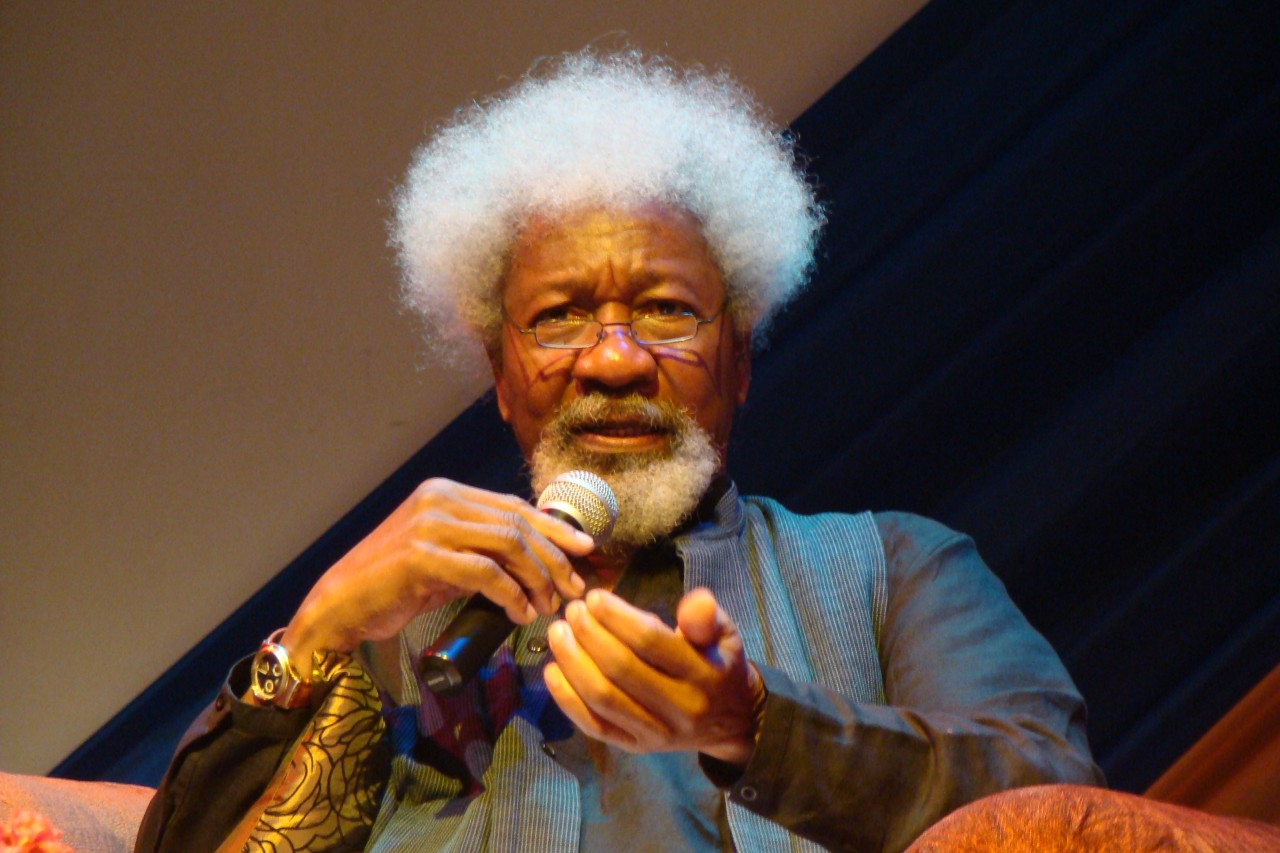
Soyinka rebukes ‘Obidients’ movement over attacks on him
NOBEL Laureate, Prof Wole Soyinka has frowned at the barrage of attacks on him by the Labour Party, LP supporters, called the ‘Obidients’ movement, for condemning the comments of the party’s vice presidential candidate, Datti Baba-Ahmed in an interview on Channels television.
Baba-Ahmed had, during the interview warned against swearing in the President-elect, Asiwaju Bola Tinubu on May 29 saying he did not meet the constitutional requirement.
In his reaction, Soyinka described Baba-Ahmed’s statement as sowing seeds of fascism and generating a climate of fear.
This prompted members of the ‘Obidient’ movement to call him names on social media platforms.
The Nobel Laureate, in a statement on Friday, titled: “Fascism on Course,” said:
“It would appear that a record discharge of toxic sludge from our notorious smut factory is currently clogging the streets and sewers of the Republic of Liars. It goes to prove the point that provoked the avalanche EXACTLY!
“The seeds of incipient fascism in the political arena have evidently matured. A climate of fear is being generated. The refusal to entertain corrective criticism, even differing perspectives of the same position has become a badge of honour and certificate of commitment. What is at stake, ultimately is – Truth, and at a most elementary level of social regulation: when you are party to a conflict, you do not attempt to intimidate the arbiter, attempt to dictate the outcome, or impugn, without credible cause, his or her neutrality even before the hearing has commenced. That is a ground rule of just proceeding. Short of this, Truth remains permanently elusive.
READ ALSO:
- Gambian pastor absconds with worshippers’ 52 phones, money after Ibadan crusade
- Panic in Zamfara as bandits kidnap 80 children, two female undergraduates
- Just in: Gunmen pound Nasarawa community, abduct ex-deputy governor
“The ensuing cacophony has been truly bewildering. It strikes me as a possible ploy to smother recent provocations by other, far more trenchant issues, such as revelations of declarations of a religious war. If so, let it be known that I have long declared war against religious fundamentalism, the nature of which justifies the butchery, kidnapping and enslavement of students in the name of religion. That aspirant’s alleged gaffe cuts no ice with me.
Far more alarming was the grotesque fantasy of the Chief Justice of the Supreme Court disguised as a wheelchair, zooming off into space to a secret meeting with other parties of the conflict. On its own, that is sufficiently scary. Swiftly followed thereafter by a television tirade of intimidation, it strikes one as more than the mere antics of the mentally deranged. The tactics are familiar: ridicule, incriminate, then intimidate. Objective: undermine the structure of justice. Just as a reminder: this writer was not being rhetorical when he declared, on exiting prison detention: Justice is the first condition of humanity.
“The instigating contest – Nigerian Democracy 2023 – has witnessed much that is innovative – largely in the retrogressive vein. Violence and ethnic profiling. “Spiritual” warfare in the shape of sacrificial rams to keep “disloyal” communities under restraint – in short, intimidation yet again! Easily overlooked however are those missives of violence directed against dissenting voices, real or suspect. Such, for instance, were the virulent attacks and threats to the musician Seun Kuti, his family and the iconic music Shrine.
His crime consisted of nothing more than declaring the name “Obidient” derogatory to his sense of civic dignity and activist history. Such beginnings – and instances are numerous – have culminated in the open intimidation of the Court of Last Resort, even before proceedings have begun. By the way, I do agree with Seun Kuti; ‘Obidients’ is one of the most repulsive, off-putting concoctions I ever encountered in any political arena. Some love it, however, and this is what freedom is about. Choice.
Taste. Free emotions. By contrast, I have no quarrel with “Yes Daddy”. Roman Catholics are used to saying “Yes, Father”. Secularists say “Enh, Baba”. The context and content are what matters, and lies – where established – raise bothersome issues such as Integrity Deficiency.
“Let us remind ourselves of the following: in any adjudication, society finds it unacceptable that a party to the disputed resort to influencing tactics by extra-judicial means – such as bribery. Intimidation and threats are merely the obverse complements of material inducement. Those who fail to appreciate this are entirely free to their existence in an illusory world.
READ ALSO:
- Financial resources, grassroots support aided Tinubu victory – American observer
- Nigerian pilgrims to pay N3m each for 2023 hajj
- Smoke out killers of 46 Benue people, gov-elect tells security agents
“We shall add the following pointer for this particular electoral tussle – the news may be unpleasant, but here it comes. Quite a few pundits have set out in some impressive – not necessarily persuasive – detail the- possibility that the complainants in this presidential election are not as strongly planted on the victory podium as they presume – see, for instance – Ambassador Haastrup’s fascinating analysis in Newspeak etc. April 6.
Right or wrong? That is not the issue. What the nation needs to know right now is if you are planning to send assassins after such negative analysts.! Coming to terms with an unpalatable projected eventuality – sorry – possible eventuality, counsels deep reflection, not demonization of the bearer of sour news. For the seriously committed, it requires pulling back the horns a little in order to regroup, rethink and resurge. Democracy is sometimes a long haul.
Some of us have been at it for quite a while
“I am well aware that the foregoing is a further invitation for more nauseous bilge from the besotted. Please, be my guest. It is, after all, one of those special seasons of convergence of two seasons of self-flagellation. Fasting makes bearers of constricted minds even more light-headed. Delusions fill the vacuum.
“Oh yes, could these rabid parochial minds of easy excitation also kindly stop flattering themselves that one’s energies are consecrated solely to the nation space known as `Nigeria? The whines of “silence” are relative to the reading scope and world knowledge of idle complainants as well as their grasp of the chain of continuity. I choose my methods of intervention without the permission of social media border patrols, so where you find a gap, just pick up the baton where it last deposited and stop whining and belly-aching – “he stopped talking all this while, why now?” etc ad nauseum . Flat, easy disposable lies that gain traction by repetition. However, even more importantly, they remain irrelevant to the rights and wrongs of ongoing material issues. Sadly, these virtue vigilantes succeed with the ignorant and susceptible – especially among the younger, confused generation.
The consequence is that the nation is plagued by fake CVs compiled by all kinds of amateur commentators, still wet behind the ears, who have too few truths to build on before they are corralled into positions of No-Retreat. Nowhere has this been more evident than in the effrontery of attempts to place the present contention on the same podium as the twenty-year-old anti-Abacha struggle! This gross abuse of historic licence actually provides smug satisfaction for rookie activists. I advise them to seek out the school of survivors where pertinent lessons still exist for those with sufficient humility to LEARN before MOUTHING! Otherwise, their world of false mythologies will collapse under their feet, and leave them dangling in the void.
READ ALSO:
- 2023 Election results: Politicians can no longer underrate voters – Buhari
- FIFA rankings: Babangida disappointed as Nigeria slips to sixth in Africa, 40th globally
- NDLEA extends deadline for recruitment application
- Bill seeking 5-year mandatory practice in Nigeria for Nigerian-trained doctors passed 2nd reading
“May I seize this opportunity, by the way, to condemn the sanctions imposed on CHANNELS Television which anchored the performance of the LP candidate. As stated, I watched the programme keenly – saw the valiant efforts of the interviewer to ensure a fair hearing. I fail to understand just where the station could be faulted, except a disposition for injustice. To sustain that penalty is to give joy to others who turn the Internet into a soakaway for their rancid emissions, yet feel that others should be silenced.
If CHANNELS feel up to it, I offer myself willing to engage Mr Datti – or any nominee of his – on its platform on this very bone of contention – one-on-one – without the malodorous intervention of media trolls, and with the same interviewer as mediator. That should be taken as a serious offer.
“Project NIGERIA, I must confess, has become near terminally soul-searing. Do I still believe in it? I am no longer certain but – first, we must rid ourselves of the tyranny of the ignorant and the opportunism of time servers. In any case, there is not much else to engage one on a foundation of ownership stakes. There is of course, always the possibility of a Revolution, with a clarity of purpose and acceptance of all attendant risks, including costly errors. Revolutions are not however based on the impetus of speculative power entitlement.
No matter, until that moment, the structures that ensure just and equitable cohabitation must be protected from partisan appropriation – be it from material inducement, fake news, or verbal terrorism – the last being the contribution of one who is positioned to assume co-leadership of the nation, no less. Revolution is not about lining up behind the nearest available symbol. When a symbol does emerge, however, we are still obliged to examine every aspect of what is fortuitously on offer and continue to guard our freedoms every inch of the way.
“Before I take myself off for – well, next port of call – the final word goes to a favourite maverick, propagated even as he matched his words by action. I suspect that in this instance we find ourselves on opposite sides of the strategic fence – that is democracy. This now coopted watchword of his formulation remains apt, and applicable to all who strive for authentic social transformation: Your mumu don do!
Soyinka rebukes ‘Obidients’ movement over attacks on him





metro
State Police Reform: FG Invites Nigerians to Submit Policy Proposals as Draft Bill Nears September Deadline
State Police Reform: FG Invites Nigerians to Submit Policy Proposals as Draft Bill Nears September Deadline
The Presidential Working Group on State Policing has opened a two-week public submission window for memoranda and policy proposals, setting the stage for a landmark legal framework that could redefine security architecture across Nigeria.
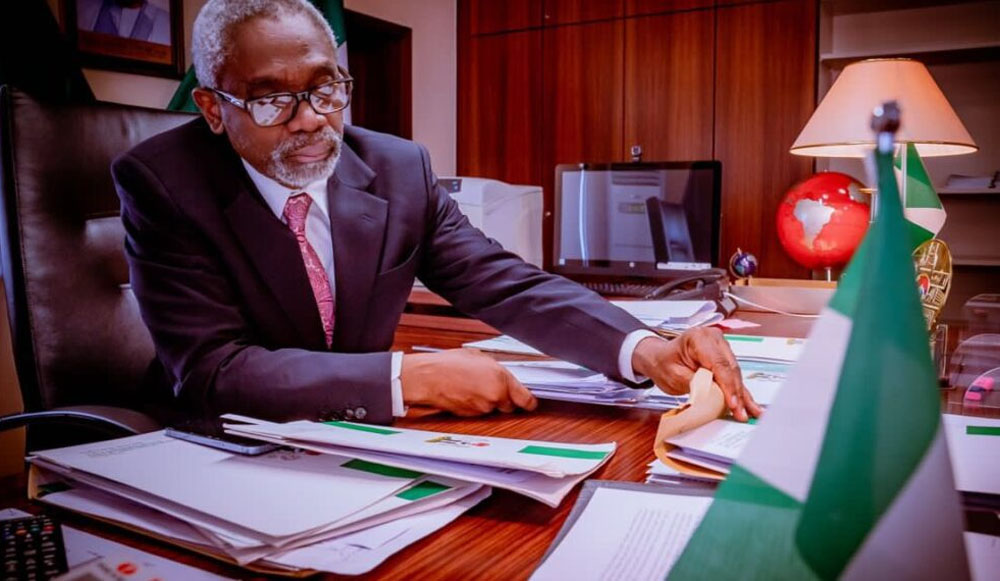
The Federal Government has officially called on Nigerians at home and in the diaspora, civil society organisations, security agencies, academics, professional bodies, and sub-national governments to contribute to the drafting of the proposed National Policing Bill, which seeks to establish a legal and operational framework for state police in Nigeria. The call was made public on Monday by Femi Gbajabiamila, Chief of Staff to the President and Chairman of the Presidential Working Group on the National Policing Bill, following a high-level meeting at the State House, Abuja. The announcement was contained in a statement issued by the Presidential spokesperson, Bayo Onanuga, who confirmed that all submissions will be reviewed and integrated into the draft bill, which will then be subject to further national consultation before being finalised and sent to the National Assembly. The development comes weeks after the National Assembly passed the bill following its transmission by President Bola Tinubu, signalling strong political will to actualise one of the most debated governance reforms in Nigeria’s recent history.
This public consultation exercise is critical because the Working Group is currently reviewing the Police Act 2020, the Police Service Commission framework, police regulations, and other relevant laws to develop a modern, effective, and accountable policing system. The proposed framework is expected to set national minimum standards for policing across all states, define state readiness and certification requirements before any state can operate its own police service, and clarify jurisdictional responsibilities between federal and state police forces. Additionally, the bill will ensure independent oversight and safeguard human rights, guarantee sustainable funding and financial accountability, and prevent the use of state police as a tool for political persecution – a concern earlier raised by the Attorney-General of the Federation, Lateef Fagbemi, who stressed that the legislation is designed to protect citizens from potential abuses of power at the sub-national level.
READ ALSO:
- Biafra Civil War: Gowon says Igbo bank depositors were fully paid, defends Awolowo over £20 policy
- How 15-year-old allegedly staged his own kidnapping to extort N200,000 from father
- TikToker undergoes cleansing after filming Oloolu procession in Ibadan
Nigerians have until August 13, 2026, to submit their memoranda and policy proposals through the dedicated portal at www.nationalpolicingbill.com, marking the close of a two-week submission window. The Presidential Working Group has adopted a seven-week, milestone-driven work programme running from July 27 to September 14, 2026, with the draft Executive Bill scheduled for presentation to President Bola Tinubu on September 3, 2026. Following this, national consultations will be held on the completed draft before it is finalised and transmitted to the National Assembly. All Nigerians, including professionals, academics, security experts, state and local governments, and civil society groups, are encouraged to participate in this historic policy-shaping process.
The new policing framework will impose strict operational readiness requirements on any state seeking to establish its own police service. According to Gbajabiamila, a proposed State Police Service must demonstrate credible arrangements in recruitment and vetting processes, training and capacity development, pay, pensions and welfare, equipment and logistics, custody and detention standards, complaints and discipline mechanisms, data management and reporting, firearms control and regulation, independent oversight bodies, and financial sustainability plans before it begins policing. These stringent criteria are designed to ensure that only states with the institutional capacity and financial resilience can operate their own police forces, thereby preventing a patchwork of poorly equipped or unaccountable state-level security services.
The Nigeria Governors’ Forum, represented by Ogun State Governor Dapo Abiodun, has described the state police initiative as one of the defining reforms of President Tinubu’s administration, expressing the forum’s commitment to ensuring the success of the policy. The Working Group is also considering recommending federal grants to assist states with limited financial capacity in establishing their police services, acknowledging the fiscal disparities among the 36 states. States that are not yet ready to establish their own service will continue to rely on the Nigeria Police Force until they meet the required standards, ensuring that no state is left without adequate security coverage during the transition period.
The final submission to the President will go beyond a conventional bill and is expected to include schedules and explanatory memoranda, a legal audit of existing policing laws, a state readiness framework, a fiscal and implementation note, and a risk register with transition arrangements. This comprehensive approach is designed to ensure that the reform is defensible, auditable, and capable of implementation across Nigeria’s diverse states, addressing everything from constitutional alignment to practical logistics on the ground.
The government has emphasised that this is a people-driven process, and by inviting input from all segments of society – including ordinary citizens, diaspora communities, and professional bodies – the Working Group aims to build a policing system that reflects the aspirations and realities of all Nigerians. As a senior official close to the Working Group noted, this is not just a government bill but a national project in which every Nigerian has a stake in how they are policed. Interested individuals and organisations are encouraged to visit www.nationalpolicingbill.com before August 13, 2026, to submit their memoranda and policy proposals, with all submissions to be reviewed and incorporated into the draft bill ahead of further national consultations.
State Police Reform: FG Invites Nigerians to Submit Policy Proposals as Draft Bill Nears September Deadline
metro
Biafra Civil War: Gowon says Igbo bank depositors were fully paid, defends Awolowo over £20 policy
Biafra Civil War: Gowon says Igbo bank depositors were fully paid, defends Awolowo over £20 policy
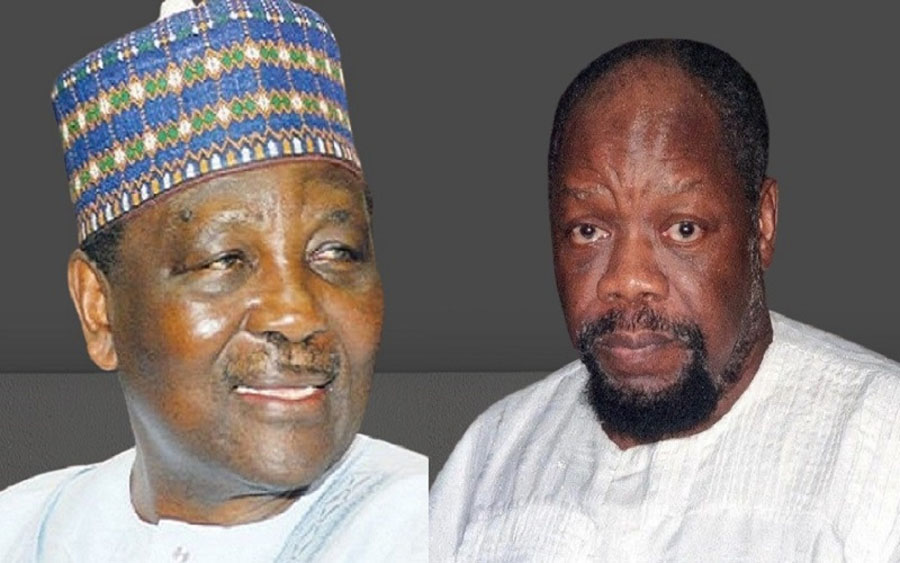
Former Nigerian Head of State, General Yakubu Gowon (retd.), has defended the late Chief Obafemi Awolowo against long-standing criticism over the controversial post-civil war £20 policy, saying the decision was taken collectively by the Federal Government and was not Awolowo’s personal policy.
Gowon also stated that people from the former Biafran territory who could provide evidence that they had money in Nigerian banks before or during the Nigerian Civil War received the full value of their deposits, including accrued interest.
The former Head of State made the clarification in his memoir, My Life of Duty and Allegiance, where he revisited the circumstances surrounding the currency policy introduced after the end of the civil war in January 1970.
The £20 policy has remained a subject of public debate for decades, with critics accusing Awolowo, who served as Federal Commissioner for Finance during the war, of restricting people from the former Biafran territory to a flat payment of £20, regardless of the amount they had held before the conflict.
However, Gowon said Awolowo had been unfairly blamed for a policy that was approved by the Federal Government after consultations and consideration of the economic challenges facing Nigeria at the end of the war.
According to Gowon, the Central Bank of Nigeria established a panel to examine the possible consequences of converting the Biafran pound into Nigerian currency.
He explained that the exercise was difficult because the Biafran currency was not recognised by the Federal Government as legal tender during the war.
Gowon said the large volume of Biafran currency in circulation also created concerns that exchanging all the notes at the same value as the Nigerian pound could have caused serious economic disruption.
READ ALSO:
- How 15-year-old allegedly staged his own kidnapping to extort N200,000 from father
- TikToker undergoes cleansing after filming Oloolu procession in Ibadan
- NiDCOM confirms release of Nigerian girls detained in Mauritius
Economic advisers subsequently recommended that the Federal Government provide a uniform payment of about £20 to each adult from the former Biafran territory, regardless of the quantity of Biafran currency presented.
“We agreed to the proposal and made it our official policy,” Gowon wrote, adding that the government faced major difficulties in determining the volume of Biafran currency in circulation and establishing a practical basis for converting it.
He maintained that the decision was made by the Federal Government and should not be attributed solely to Awolowo.
Gowon further stated that people who had left Nigeria but could provide proof that they held funds in Nigerian banks received the full value of their deposits, including interest, in Nigerian currency.
“Everyone who left Nigeria but had proof that they had money in Nigerian banks got the full amount of their money plus the interest it earned, all in Nigerian currency,” he said.
The former military leader argued that adopting a different approach could have created significant economic and administrative challenges during Nigeria’s post-war recovery.
The Nigerian Civil War, also known as the Biafra War, began in 1967 and ended in January 1970 following the surrender of Biafran forces.
After the war, Gowon declared a policy of “no victor, no vanquished” and introduced the Reconciliation, Reconstruction and Rehabilitation programme, widely known as the 3Rs.
The programme was designed to promote national unity, rebuild war-affected communities and support the reintegration of the former Eastern Region into Nigeria.
Despite the government’s post-war reconciliation agenda, the £20 policy remains one of the most debated aspects of Nigeria’s post-civil war history.
Critics have argued that the policy caused financial hardship for many people in the former Biafran territory, particularly those who lost access to savings, could not provide documentation for their bank deposits or were unable to recover the value of assets affected by the war.
Some historians and commentators have also questioned whether the post-war reconstruction and rehabilitation programmes adequately addressed the economic losses and long-term effects experienced by communities affected by the conflict.
Gowon’s account has renewed public discussion about the Biafra Civil War, the post-war currency policy and Awolowo’s role in the Federal Military Government.
While Gowon maintains that verified Nigerian bank deposits were fully repaid with interest and that Awolowo should not be held personally responsible for the £20 policy, the issue continues to generate debate over post-war justice, economic recovery, historical memory and national reconciliation.
Biafra Civil War: Gowon says Igbo bank depositors were fully paid, defends Awolowo over £20 policy
metro
How 15-year-old allegedly staged his own kidnapping to extort N200,000 from father

The Niger State Police Command has arrested a 15-year-old boy who allegedly staged his own kidnapping in an attempt to extort N200,000 from his father in Suleja.
The teenager was arrested alongside a 17-year-old alleged accomplice after police traced him to a hotel in Suleja, days after his family reported him missing.
The spokesperson for the Niger State Police Command, SP Wasiu Abiodun, disclosed the development in a statement issued on Monday.
According to the police, the 15-year-old left home after attending church on July 20, 2026, but failed to return, prompting concern among his family members.
The following day, the family reportedly received a telephone call from someone who claimed that the teenager had been kidnapped and demanded a ransom of N200,000 for his release.
The matter was subsequently reported at the B Division of the Nigeria Police Force in Suleja, leading to the launch of an investigation.
Police detectives reportedly acted on credible intelligence and traced the teenager to a hotel in Suleja on July 25, where he was found with the 17-year-old.
“On receipt of the information, police operatives of the division commenced an investigation and, acting on credible intelligence, the said Kelvin was found at a hotel in Suleja on July 25, 2026, with his accomplice,” the police spokesperson said.
According to the command, the two teenagers allegedly confessed during questioning that they planned the incident to obtain N200,000 from the boy’s father.
READ ALSO:
- TikToker undergoes cleansing after filming Oloolu procession in Ibadan
- NiDCOM confirms release of Nigerian girls detained in Mauritius
- Power Struggle Threatens Peter Obi-Kwankwaso Alliance Ahead of 2027 Polls
The police said the money was to be shared between them after the ransom had been paid.
“The suspects confessed that they planned to extort the sum of N200,000 from Kelvin’s father, after which they would share the proceeds of the crime,” Abiodun said.
The police said the alleged plan was uncovered before the family paid the requested ransom.
Both teenagers are currently in the custody of the State Criminal Investigation Department, SCID, in Minna, where further investigations are ongoing.
The command said the suspects would be taken through the appropriate legal process after the investigation had been concluded.
The incident has renewed concerns over staged kidnapping, particularly the emotional and financial impact such incidents can have on families.
Security experts have repeatedly warned that fake kidnapping claims can cause panic, place families under severe emotional pressure and divert police resources from genuine cases involving missing or abducted persons.
The case also highlights the importance of reporting suspected kidnappings promptly to security agencies and allowing investigators to handle ransom demands and related threats.
Residents have been encouraged to provide timely and credible information that could help security agencies prevent crime and respond quickly to reports involving missing persons.
The Niger State Police Command said investigations into the alleged self-kidnapping plot were continuing.
How 15-year-old allegedly staged his own kidnapping to extort N200,000 from father
-
 News1 day ago
Oloyede clears air on JAMB’s ₦36m ‘snake swallowed money’ controversy
-
 News1 day ago
475 Police Officers Recalled After Controversial Retirement, Ordered for Mandatory Induction
-

 metro1 day ago
MURIC Hails Oloyede as ‘Game Changer,’ Says He Proved Muslims Can Excel in Public Office
-

 Auto1 day ago
Lanre Shittu Motors Leads Drive to Steer Lagos Students Away from Crime, Donates books to public Schools
-

 Sports1 day ago
Nigeria Shines in Commonwealth Games, Tops Africa with 10 Gold Medals
-
 Auto1 day ago
FRSC Boss: Tinubu’s CNG, EV Drive Creating Jobs, Attracting Investment
-
 metro1 day ago
DSS, Vigilantes Ambush, Kill Notorious Bandit Kingpin Idi Abasu Aiki, Over 60 Fighters in Katsina
-
 metro2 days ago
Peller, Jarvis’ Glamorous Lagos Wedding: N400m Mansion, $20,000 Gift, Over 50,000 Virtual Guests