

Sports
Amusan sets new record, wins 100m hurdles at Silesia Diamond League

Amusan sets new record, wins 100m hurdles at Silesia Diamond League
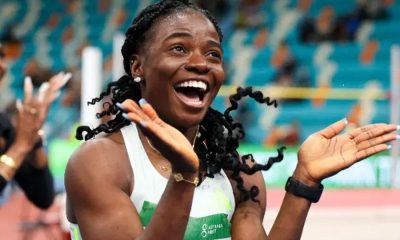
World Record holder, Tobi Amusan, has won the Silesia Diamond League Women’s 100m Hurdles, breaking the meet record after finishing the race at 12.34 seconds.
American Kendra Harrison came a close second after Amusan caught up with her in a nail-biting race to the finish line.
READ ALSO:
- Avoid ASSU strike during your tenure, MSSN tells Tinubu
- Abdullahi Adamu quits as APC national chairman
- Military alone can’t end North-East security crisis – Shettima
- Victory Gbakara wins N100m Nigerian Idol Season 8 prize
Newly-crowned US champion Nia Ali came third in 12.38s, while Jamaican champion Megan Tapper finished fourth ahead of her compatriot Danielle Williams in fifth.
It was the fastest time this season for the Nigeria sprint icon, equalling Jasmine Camacho-Quinn’s MR.
The record catapults her to the top of the Diamond League standings where she is seven points ahead of Camacho-Quinn, who for the first time, didn’t feature in a Diamond League meet this season.
Recall Amusan recently won the Diamond League meeting in Stockholm which makes her victory in Silesia, her second consecutive Diamond.
Amusan sets new record, wins 100m hurdles at Silesia Diamond League



Sports
Man City Chairman Breaks Silence After Club Found Guilty Of 114 Charges
Man City Chairman Breaks Silence After Club Found Guilty Of 114 Charges
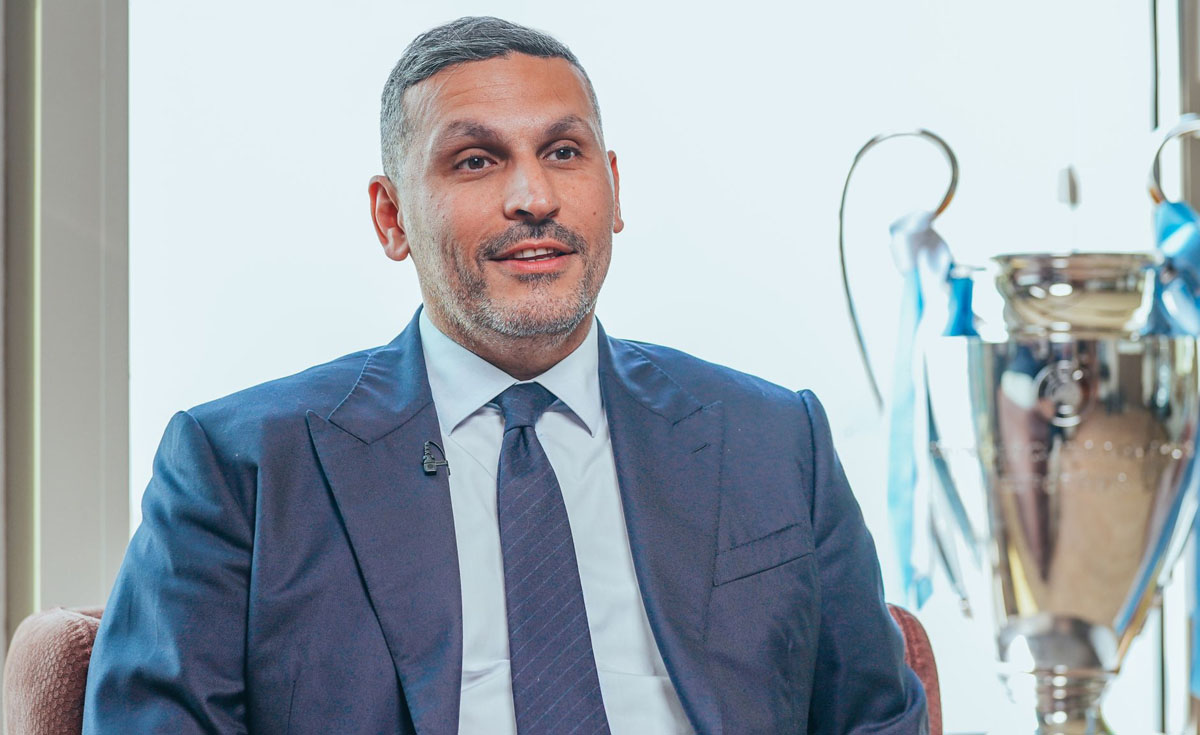
Manchester City chairman Khaldoon Al Mubarak has broken his silence following reports that an independent commission found the club guilty of 114 of 115 alleged breaches of Premier League financial rules, in a development that could have significant implications for the English champions.
The reported findings represent a major development in the Manchester City financial charges case, which has been ongoing since the Premier League referred the matter to an independent commission in February 2023.
The Premier League has not officially published the commission’s full findings and has declined to comment on the reported outcome because of the confidential nature of the proceedings. Manchester City has also maintained that significant elements of the process remain outstanding.
The allegations cover the period from the 2009-10 season to 2022-23 and include claims that the club failed to provide accurate financial information, particularly regarding revenue and expenditure, as well as allegations concerning payments to players and managers and compliance with UEFA financial regulations and the Premier League’s Profitability and Sustainability Rules (PSR).
The independent hearing began on September 16, 2024, and concluded on December 6, 2024, after almost three months of proceedings before a three-member independent commission.
Manchester City has consistently denied wrongdoing and is expected to challenge the commission’s findings through the available appeal process.
Al Mubarak has sought to reassure supporters, maintaining the club’s confidence in its position and indicating that Manchester City remains focused on establishing its case through the appropriate legal process.
READ ALSO:
- Unexplained Wealth: Obasanjo, Osinbajo, Others for Shittu’s Book Launch
- MURIC Blasts Nigeria Over UNGA Stance on Palestine, Netanyahu
- Why I Accept My Daughters’ Same-Sex Relationships — Charly Boy
No sporting or financial punishment has been announced following the reported findings. Consequently, reports that Manchester City has already been relegated, deducted points or stripped of Premier League titles would be premature.
Any sanction would depend on the commission’s formal decision and subsequent proceedings. The scale of any potential penalty could also become a subject of appeal.
The case has attracted particular attention because the allegations span more than a decade and cover several categories of financial regulations. Manchester City has won eight Premier League titles since Sheikh Mansour’s Abu Dhabi United Group acquired the club in 2008, in addition to the Champions League, FA Cups and League Cups.
Several of the club’s most successful seasons fall within the period covered by the allegations. However, there has been no announcement that any titles or trophies will be removed.
Former City midfielder Rodri, now with Barcelona, has also expressed continued trust in the club’s position, recalling Manchester City’s longstanding assertion that it complied with the relevant rules.
The Premier League case is separate from Manchester City’s previous dispute with UEFA.
In 2020, UEFA imposed a two-year Champions League ban on City after finding that the club had overstated sponsorship revenue between 2012 and 2016. Manchester City appealed to the Court of Arbitration for Sport (CAS), which overturned the Champions League ban and reduced the associated fine.
The latest development therefore moves the Premier League case into its next legal stage, with the detailed commission findings, any eventual sanction and the outcome of the appeal still to be determined.
Man City Chairman Breaks Silence After Club Found Guilty Of 114 Charges
Sports
AFCON 2027 Qualifier: Nigeria Fight Back to Beat Madagascar 2-1 in Uyo
AFCON 2027 Qualifier: Nigeria Fight Back to Beat Madagascar 2-1 in Uyo
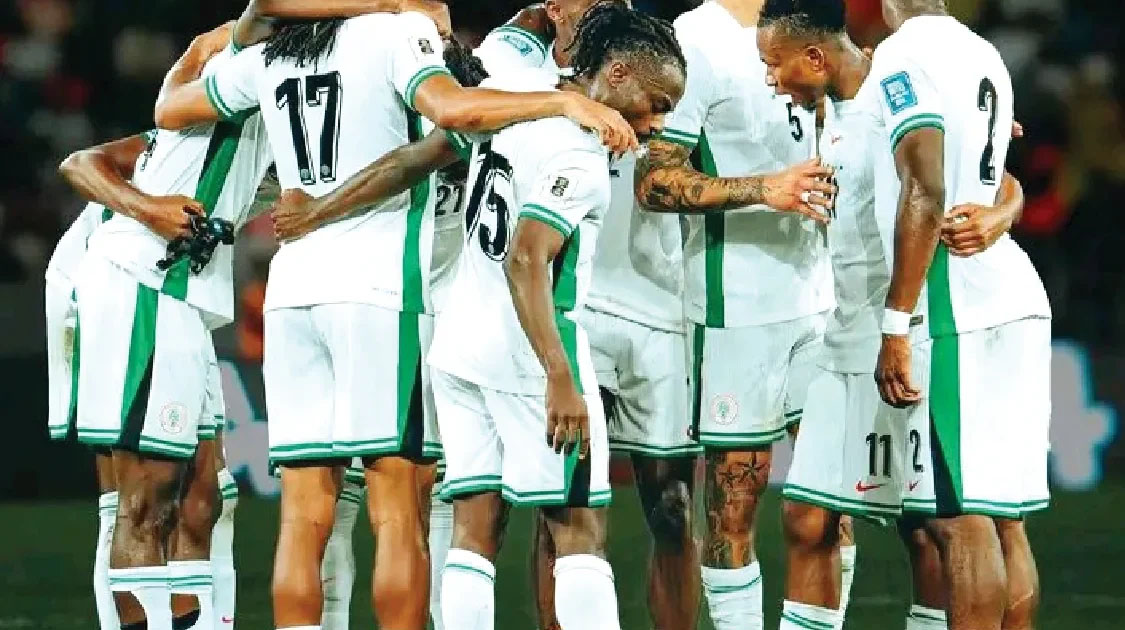
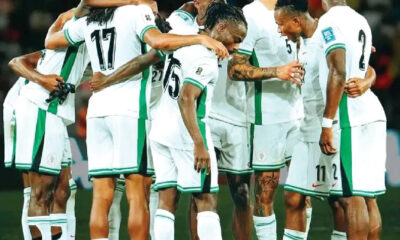
Nigeria’s Super Eagles opened their 2027 Africa Cup of Nations (AFCON) qualifying campaign with a 2-1 victory over Madagascar at the Godswill Akpabio International Stadium in Uyo, Akwa Ibom State.
Madagascar took an early lead in the 16th minute through Ehsan Kari, but Nigeria responded through debutants George Ilenikhena and Moses Usor to secure all three points.
Kari headed Madagascar ahead after the visitors executed a short-corner routine, leaving Nigeria with an early deficit to overcome.
The Super Eagles struggled to create clear opportunities for much of the opening period despite enjoying possession. Their persistence eventually paid off in first-half stoppage time when George Ilenikhena, making his senior international debut, converted a chance created by Alex Iwobi to level the score.
READ ALSO:
- Anambra Police Arrest 25-Year-Old Suspect Linked to 2023 Kidnap, Murder
- 2027: Otti Explains Why He Supports Tinubu Despite Remaining in Labour Party
- EFCC Chairman Raises Alarm Over Alleged Theft of Nigeria’s Public Funds
Nigeria returned from the break with greater attacking intent and took the lead in the 65th minute.
Moses Usor, another debutant, received the ball on the right, drove towards the Madagascar penalty area and moved past defenders before cutting inside and firing a low left-footed shot into the net.
Madagascar pressed for an equaliser in the closing stages, but Nigeria held on to claim victory in its opening AFCON 2027 qualifier.
The result gives head coach Éric Chelle three points from his first competitive assignment with the Super Eagles, although Nigeria will have areas to address before the next fixture, particularly after conceding early and creating limited chances in the first half.
The victory also gives Nigeria an important early advantage in Group L. Guinea-Bissau defeated Tanzania 2-0 in the other group match, while Tanzania is one of the co-hosts of the 2027 AFCON tournament alongside Kenya and Uganda.
Nigeria will face Guinea-Bissau away on September 29 in its second Group L fixture.
For Ilenikhena and Usor, the match provided an impressive introduction to senior international football, with both players finding the net on their Super Eagles debuts.
Nigeria will now seek another positive result against Guinea-Bissau as the AFCON 2027 qualification race gathers momentum.
AFCON 2027 Qualifier: Nigeria Fight Back to Beat Madagascar 2-1 in Uyo
Sports
Former Super Eagles Captain Troost-Ekong Embraces Islam, Recites Shahadah in Doha
Former Super Eagles Captain Troost-Ekong Embraces Islam, Recites Shahadah in Doha
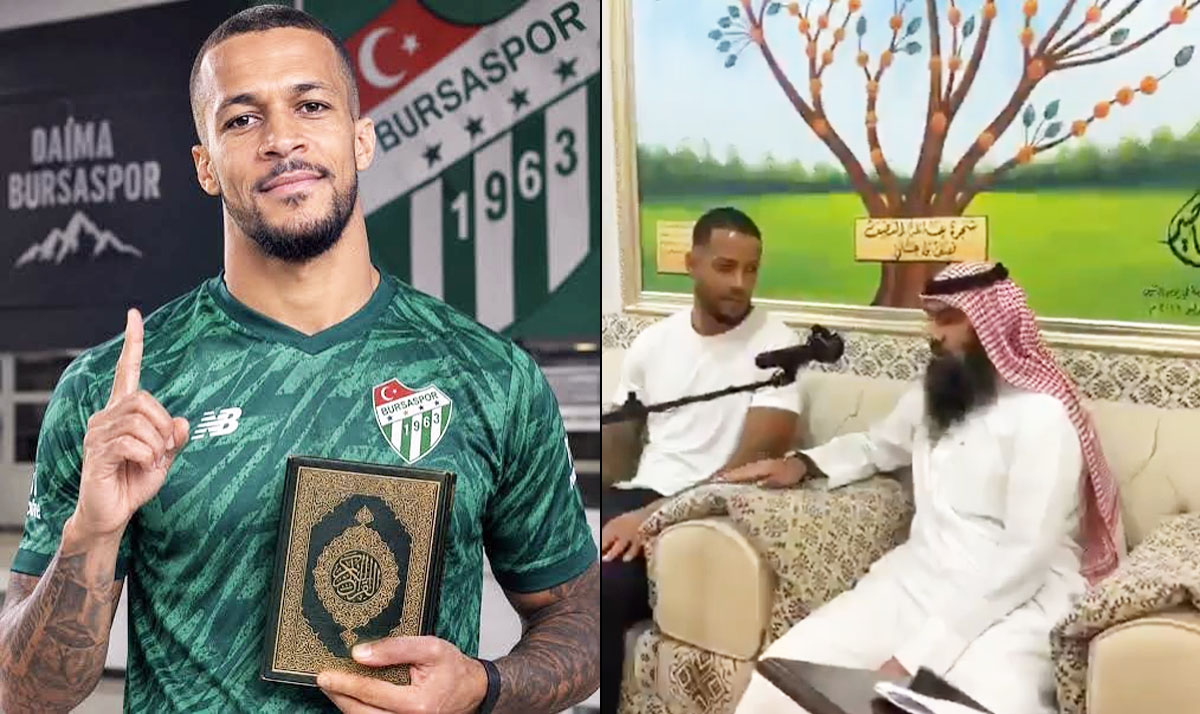
Former Super Eagles captain William Troost-Ekong has embraced Islam after reciting the Shahadah, the Islamic declaration of faith, in Doha, Qatar.
The development was reported on Wednesday, September 23, 2026, after a video emerged showing the 33-year-old Nigerian defender reciting the two testimonies of faith in Arabic.
Qatari newspaper Al-Arab first reported that Troost-Ekong had announced his conversion to Islam while in Doha, where he currently plays for Qatar Stars League club Al-Ahli. The footage subsequently circulated widely on social media and attracted reactions from football fans and Muslim communities.
In the video, Troost-Ekong is seen reciting the Shahadah with the guidance of Sheikh Mansour bin Nasser Al-Khalidi. Al Jazeera reported that the former Nigeria captain expressed a desire to read more and deepen his understanding of Islam.
Al-Khalidi also said Muslim friends around Troost-Ekong at his club had helped introduce him to Islam and influenced his interest in the faith. However, these details were reported by the cleric and have not been separately explained by Troost-Ekong himself.
READ ALSO:
- Milei Slams UN as ‘Useless’ Over Falklands Dispute
- Lagos Arrests Man Over Viral Video of Toddler Being Flogged
- Kwara Police Deny Shooting Motorcyclist at Oyun Bridge, Explain Viral Video
The Shahadah is the declaration of faith in Islam, affirming the oneness of Allah and the prophethood of Muhammad. Its recitation is regarded as the central declaration through which a person enters the Islamic faith.
International Muslim scholar Dr Muhammad Salah also shared footage of Troost-Ekong reciting the Shahadah on his verified Facebook page, welcoming the former Super Eagles captain’s reported conversion. Other media outlets in Nigeria and abroad subsequently reported the development.
Troost-Ekong currently plays for Al-Ahli SC in Doha. He joined the Qatar-based club in January 2026 after leaving Saudi Arabian side Al-Kholood, signing a one-and-a-half-year contract. He had moved to Saudi Arabia in 2024 following his spell with Greek club PAOK.
The defender has built a career across several European and Middle Eastern leagues, with previous spells at clubs including Udinese, Watford, Salernitana and PAOK. His move to Qatar marked another stage in a professional career that has taken him through the Netherlands, Belgium, Norway, Turkey, Italy, England, Greece, Saudi Arabia and Qatar.
Troost-Ekong also enjoyed a decade-long international career with Nigeria. He made his Super Eagles debut in 2015 and went on to earn 83 senior caps and score eight goals before announcing his retirement from international football in December 2025.
He represented Nigeria at the 2018 FIFA World Cup, the Olympic Games and several Africa Cup of Nations tournaments. He was a key member of the Super Eagles squad that reached the final of the 2023 AFCON in Côte d’Ivoire.
Troost-Ekong scored three goals during that tournament, including in the final against the host nation, and was named Player of the Tournament. His performances made him one of the standout defenders of the competition.
Born in the Netherlands to a Nigerian father and Dutch mother, Troost-Ekong developed through youth football in England before beginning his senior career with FC Groningen in the Netherlands. He later represented several clubs across Europe before moving to the Middle East.
His reported conversion to Islam in Qatar has generated significant interest in Nigeria and beyond, particularly because of his profile as a former national-team captain.
While the video documents his recitation of the Shahadah, the precise circumstances surrounding his decision have largely been reported through accounts from Muslim clerics and media outlets. Troost-Ekong himself has not issued a detailed public statement explaining his personal journey or decision beyond what is shown in the video.
The development marks a new personal chapter for the former Super Eagles captain, who continues his professional football career with Al-Ahli in Qatar after ending his international career.
Former Super Eagles Captain Troost-Ekong Embraces Islam, Recites Shahadah in Doha
-

 News2 days ago
Anambra Releases ₦473m Salary Arrears Document as Obi’s Debt Claim Sparks Fresh Dispute
-

 News2 days ago
Keyamo: ₦70,000 Minimum Wage No Longer Enough as Cost of Living Soars
-
 metro2 days ago
EFCC Chairman Raises Alarm Over Alleged Theft of Nigeria’s Public Funds
-
 Sports1 day ago
AFCON 2027 Qualifier: Nigeria Fight Back to Beat Madagascar 2-1 in Uyo
-
 Politics2 days ago
2027: Otti Explains Why He Supports Tinubu Despite Remaining in Labour Party
-

 Entertainment2 days ago
Jetour Takes Adventure Beyond the Road, Brings Solar-powered Borehole to Ibeju-Lekki community
-
 metro1 day ago
Viral Anti-Obi Video: Lagos Police Move Against Inspector Osumah Frank
-
 metro2 days ago
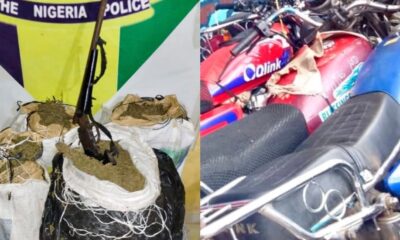
Abia Police Arrest 20-Year-Old, Recover Gun, Suspected Cannabis, Three Motorcycles