
International
New York appeals court reinstates gag order against Donald Trump in civil fraud trial

New York appeals court reinstates gag order against Donald Trump in civil fraud trial
A New York appeals court has reinstated a gag order prohibiting former US President Donald Trump and his attorneys from making public statements about the courtroom staff in the ongoing $250 million civil fraud trial.
Judge Arthur Engoron originally issued the order barring Trump from making public statements about his court’s staff after Trump made numerous comments about a clerk, who Trump says is biased against him.
Hundreds of threats against Engoron and the law clerk were made public last week. Engoron’s clerk has received 20 to 30 calls per day to her personal cell phone and 30 to 50 messages daily on social media platforms and two personal email addresses, according to court papers.
“Now, upon reading and filing the papers with respect to the motion, and due deliberation having been had thereon, It is ordered that the motion is denied; the interim relief granted by order of a Justice of this Court, dated November 16, 2023, is hereby vacated,” the latest appellate ruling says.
The appeals court paused the gag order earlier this November, but on Thursday, November 30, said it should be restored while the official appeal is pending.
READ ALSO:
- RCCG pastor to be crowned Soun of Ogbomosho December 19
- Explosion rocks Gaza, Israel intercepts rocket as truce ‘expires’
- How Visa flagged Naira Marley’s credit card for fraud – Witness tells court
During a break in the trial Thursday morning, Engoron announced the appeals court ruling reinstating the gag order.
“I intend to enforce the gag orders rigorously and vigorously. I want to make sure that counsel informs their clients of the fact that the stay was vacated,” the judge said.
“It is a tragic day for the rule of law, but we’re aware,” Trump’s attorney Chris Kise said.
“It is what it is,” Engoron responded.
The $250 million lawsuit was brought by the New York attorney general’s office and alleges that Trump and his co-defendants committed repeated fraud in inflating assets on financial statements to get better terms on commercial real estate loans and insurance policies. Engoron already ruled the former president is liable for fraud and he’s considering how much the Trumps will have to pay in damages.
Trump had urged the appeals court on Monday to continue to block the gag order, saying that threats to the judge and his law clerk do not “justify” limiting the former president’s constitutional right to defend himself.
New York appeals court reinstates gag order against Donald Trump in civil fraud trial







International
Starmer Faces Parliamentary ‘Judgment Day’ Over Security Clearance Scandal

Starmer Faces Parliamentary ‘Judgment Day’ Over Security Clearance Scandal
Downing Street has moved to firmly back UK Prime Minister Keir Starmer as he prepares for a decisive parliamentary showdown described by officials as his “judgment day,” amid growing political pressure over the controversial appointment and vetting of former diplomat Peter Mandelson.
The crisis centres on revelations that serious concerns were raised during security clearance checks linked to Mandelson’s appointment as Britain’s ambassador to the United States—concerns that were allegedly not fully addressed before the decision was finalised. The unfolding row has triggered questions about accountability at the highest levels of government and whether critical information was withheld or overlooked within No. 10.
According to multiple UK media reports, including ITV News and The Standard, Downing Street has now closed ranks around Starmer, insisting he was not made aware of the full details of the failed vetting process at the time key decisions were taken. The Prime Minister has described the situation as “unforgivable,” adding that he only learned the extent of the issues recently.
However, the controversy has intensified after suggestions that senior civil servants, including figures close to the decision-making process, may have been aware of the vetting complications earlier than previously acknowledged. This has deepened scrutiny of how information was handled inside government and raised questions about whether proper escalation procedures were followed.
At the centre of the political storm is Olly Robbins, a senior civil servant who is expected to appear before Members of Parliament in an upcoming parliamentary hearing. His testimony is anticipated to be critical in establishing a timeline of events—specifically who knew what, and when. The hearing is expected to form part of what opposition figures are calling a “full accountability test” for the Prime Minister’s administration.
Inside government, officials have sought to contain the fallout. Downing Street has defended Starmer’s leadership, arguing that swift corrective action was taken once concerns became clear, including personnel changes and internal reviews of vetting procedures. Aides have also emphasised that the Prime Minister acted decisively once new information came to light, framing the issue as a systemic failure rather than personal negligence.
Despite this defence, political pressure is mounting. Opposition parties have demanded greater transparency and accountability, with some lawmakers questioning whether the Prime Minister should have been informed earlier. Critics argue that the scandal reflects broader weaknesses in government oversight and communication between civil service structures and political leadership.
Within the ruling Labour Party, unease has also begun to surface, although most senior figures have publicly maintained support for Starmer. Privately, however, there is concern about the potential political damage if the issue continues to escalate, particularly with key electoral cycles approaching.
The controversy has also revived wider debate about vetting procedures for senior diplomatic and governmental appointments. Security experts and former officials have warned that any breakdown in clearance processes can have serious implications for national security and international trust.
Starmer is expected to address Parliament directly in the coming days, where he will face detailed questioning over what was known inside Downing Street and how the situation was handled once concerns emerged. The session is expected to be one of the most politically sensitive moments of his premiership so far.
For now, Downing Street’s strategy appears focused on containment—reinforcing support for the Prime Minister while shifting attention toward procedural failings rather than leadership accountability. Whether that approach holds will likely depend on the outcome of parliamentary testimony and the political reaction that follows.
As one senior political source put it, the coming days will determine whether the government successfully stabilises the crisis or whether it deepens into a broader test of Starmer’s authority.
Starmer Faces Parliamentary ‘Judgment Day’ Over Security Clearance Scandal
International
Iran Detains 127 Over Alleged Espionage, Sabotage After Ceasefire
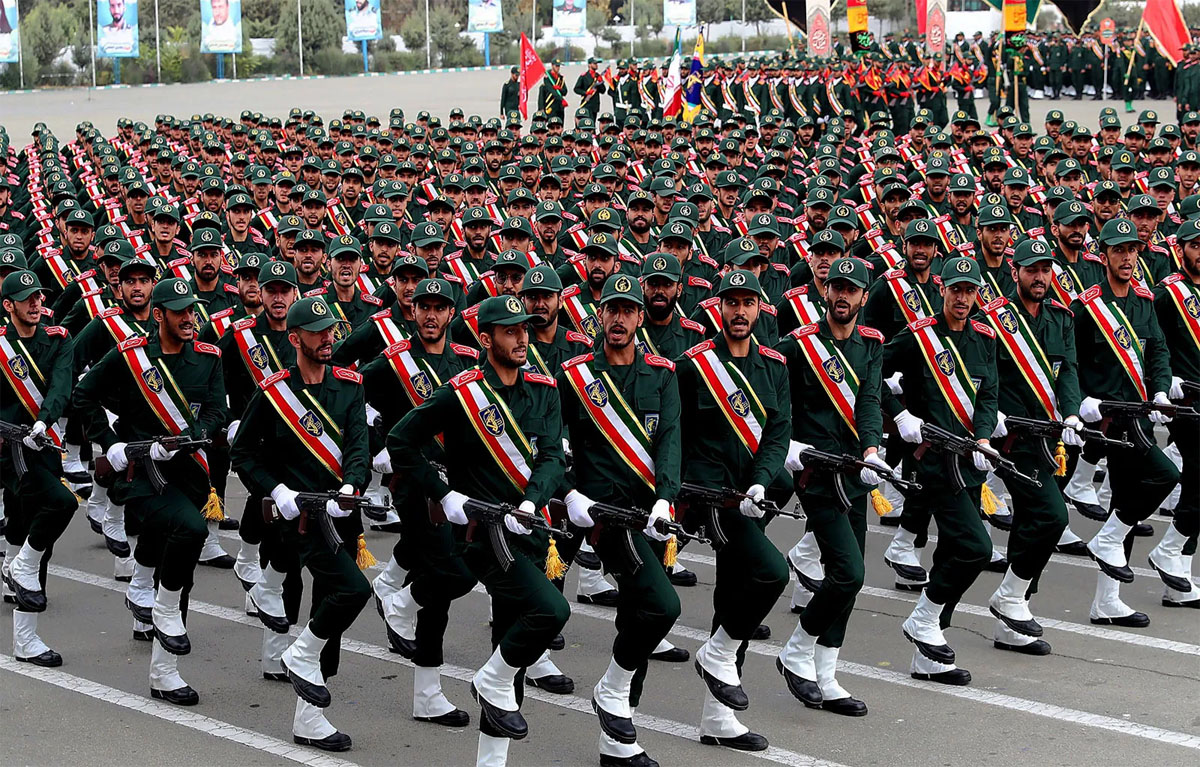
Iran Detains 127 Over Alleged Espionage, Sabotage After Ceasefire
Iran’s arrest of 127 individuals on security-related allegations highlights a broader pattern of heightened internal vigilance following periods of external conflict and fragile ceasefires.
The operation, led by the Islamic Revolutionary Guard Corps (IRGC) intelligence unit, reflects Tehran’s long-standing strategy of tightening domestic security whenever it perceives increased foreign threats. By targeting individuals accused of espionage, sabotage planning, and links to foreign intelligence agencies, authorities appear to be sending a strong signal about deterrence and control.
The geographic spread of the arrests—across East Azerbaijan, Mazandaran, and Kerman provinces—suggests that Iranian security agencies are concerned about potential nationwide infiltration rather than isolated incidents. These regions are strategically significant: Mazandaran lies along the Caspian Sea with economic and logistical importance, while Kerman has historically been sensitive due to its size and location.
Accusations of collaboration with foreign actors such as the United States, the United Kingdom, and Israel fit into Iran’s broader narrative of external interference. Such claims are frequently used by officials to justify intensified surveillance and enforcement measures, particularly after military escalations.
The timing is also critical. Coming shortly after a ceasefire linked to regional hostilities, the arrests indicate that Iran is not easing its defensive posture. Instead, the government appears to be consolidating control internally to prevent any perceived exploitation of the pause in conflict.
Additionally, recent legal adjustments increasing penalties for espionage-related offenses point to a more hardline approach. These measures may serve both as a deterrent and as a tool for reinforcing state authority during uncertain geopolitical conditions.
However, such crackdowns often draw scrutiny from international observers and human rights organizations, which question the transparency of such arrests and the potential for political motivations behind security charges.
Overall, the development underscores a key dynamic in Iran’s governance: external tensions are frequently mirrored by internal security actions, with authorities prioritizing stability and control during periods of geopolitical uncertainty.
Iran Detains 127 Over Alleged Espionage, Sabotage After Ceasefire
International
Alexander Lukashenko: Trump’s Iran Moves Show US Not as Powerful as Claimed
Alexander Lukashenko: Trump’s Iran Moves Show US Not as Powerful as Claimed
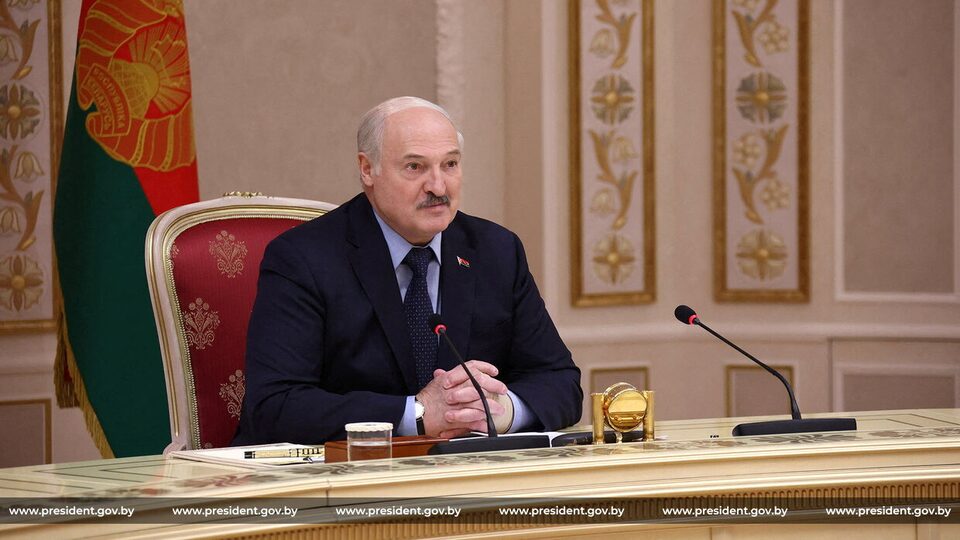
Minsk — Belarusian President, Alexander Lukashenko, has said the actions of the United States in its ongoing confrontation with Iran demonstrate that Washington is not as powerful as it portrays itself on the global stage. Speaking against the backdrop of rising tensions, Lukashenko argued that the approach taken by former U.S. President, Donald Trump, failed to deliver decisive results, instead exposing the limits of American influence.
According to him, recent developments reveal that even the world’s most powerful military cannot always impose its will, especially when faced with determined resistance. He maintained that the situation underscores the growing complexity of global conflicts, where smaller or regional powers are increasingly capable of pushing back against major nations. Lukashenko stressed that the events surrounding Iran highlight what he described as shortcomings in Washington’s strategy.
The remarks come amid heightened geopolitical strain involving military posturing, economic sanctions, and ongoing negotiations between Washington and Tehran. The Trump administration has maintained a hardline stance on Iran, combining threats of force with diplomatic overtures aimed at compelling Tehran to agree to stricter terms on its nuclear and regional policies. However, Iran has continued to resist what it calls “maximalist demands,” insisting on its sovereignty and warning against external pressure.
Analysts say Lukashenko’s comments go beyond the immediate crisis, reflecting a broader narrative among countries that challenge U.S. influence. By highlighting perceived weaknesses in Washington’s approach, the Belarusian leader appears to reinforce the argument that global power dynamics are gradually shifting. His position aligns with nations that have historically opposed U.S. foreign policy, particularly in the Middle East.
Observers note that the Iran situation is increasingly being viewed as a test of influence among global powers, with outcomes that could have far-reaching implications. While the United States remains a dominant military and economic force, critics argue that its ability to dictate outcomes unilaterally may be diminishing in certain regions. For Lukashenko, the ongoing standoff serves as a clear example of this evolving balance, where resistance from nations like Iran can complicate even the most assertive strategies.
As tensions persist, Lukashenko’s remarks add to a growing chorus of voices questioning the extent of U.S. global dominance. Whether current developments will significantly alter the balance of power remains uncertain, but the Iran crisis continues to fuel debate over influence, sovereignty, and the future of international relations.
Alexander Lukashenko: Trump’s Iran Moves Show US Not as Powerful as Claimed

-
 metro3 days ago
UNILAG Lecturer Sexual Assault Trial: Student Testifies in Lagos Court
-

 Education23 hours ago
JAMB Releases First Batch of 2026 UTME Results for 632,788 Candidates
-

 metro3 days ago
Grandfather in police net for impregnating granddaughter
-

 metro2 days ago
Power Supply Drops in Lagos as Transmission Faults Trigger Load Shedding
-

 Education2 days ago
FG Ends Physical Certificate Verification as Process Goes Fully Digital
-

 International3 days ago
US Senate Rejects Measure to Limit Trump’s Iran Military Powers
-

 International2 days ago
Iran Declares Strait of Hormuz Fully Open
-

 News3 days ago
Atiku, Obi, Kwankwaso Camps Clash as ADC Grapples with Leadership Dispute