

International
Israel expands Gaza ground offensive

Israel expands Gaza ground offensive
The Israeli military said Sunday its ground offensive had expanded to every part of Gaza, and it ordered more evacuations in the crowded south while vowing that operations there against Hamas would carry “no less strength” than its shattering ones in the north.
Heavy bombardment followed evacuation orders, and Palestinians said they were running out of places to go in the sealed-off territory bordering Israel and Egypt. Many of Gaza’s 2.3 million people are crammed into the south after Israel ordered civilians to leave the north in the early days of the war, which was sparked by the Oct. 7 Hamas-led attack in Israel that killed about 1,200, mostly civilians.
The United Nations estimates that 1.8 million Palestinians in Gaza have been displaced. Nearly 958,000 of them are in 99 U.N. facilities in the south, said Juliette Toma, director of communications at the U.N. agency for Palestinian refugees.
After dark, gunfire and shelling were heard in the central town of Deir al-Balah as flares lit the sky. In Gaza’s second-largest city of Khan Younis, Israeli drones buzzed overhead. U.N. human rights chief Volker Türk urged an end to the war, saying civilian suffering was “too much to bear.”
The Health Ministry in Hamas-run Gaza said the number of people killed there since Oct. 7 has surpassed 15,500, with more than 41,000 wounded. The ministry does not differentiate between civilian and combatant deaths, but said 70% of the dead were women and children.
READ ALSO:
- Japa: US Embassy interviews over 150,000 Nigerians for visas in 2023
- Nigerian sentenced in the US over N307m fraud
- Tinubu under fire over 1,411 Nigerian delegates to COP28 Dubai
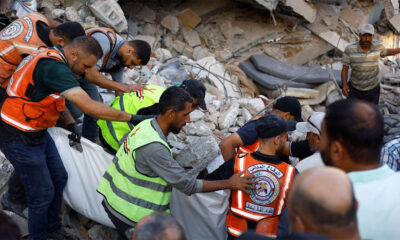
A Health Ministry spokesman asserted that hundreds had been killed or wounded since a weeklong cease-fire ended Friday. “The majority of victims are still under the rubble,” Ashraf al-Qidra said.
Fears of a wider conflict intensified. A U.S. warship and multiple commercial ships responded to distress signals from container ships in the Red Sea, the Pentagon said. Yemen’s Iran-backed Houthi rebels claimed attacks on two ships they described as being linked to Israel but did not acknowledge targeting a U.S. vessel.
Hopes for another temporary truce in Gaza were fading. The cease-fire facilitated the release of dozens of the roughly 240 Gaza-held Israeli and foreign hostages in exchange for Palestinians imprisoned by Israel. But Israel has called its negotiators home and Prime Minister Benjamin Netanyahu says the war will continue until “all its goals” are achieved. One is to remove Hamas from power in Gaza.
Senior Hamas official Osama Hamdan said resuming talks with Israel on further exchanges must be tied to a permanent cease-fire.
White House National Security Council spokesman John Kirby told “Face the Nation” on CBS News that the U.S. is “trying to work hour by hour to see if we can get this pause reinstated and get those hostages out.”
“While the pause has been lifted, and no hostage exchanges are going on, what is still going on, importantly, is humanitarian assistance getting in, including fuel, which is critical,” Kirby added.
Israel’s military widened evacuation orders in and around Khan Younis in the south, telling residents of at least five more areas to leave. Residents said the military dropped leaflets calling Khan Younis “a dangerous combat zone” and ordering them to move to the border city of Rafah or a coastal area in the southwest.
But Halima Abdel-Rahman, a widow and mother of four, said she won’t heed such orders anymore. She fled her home in October to an area outside Khan Younis, where she stays with relatives.
“The occupation tells you to go to this area, then they bomb it,” she said by phone. “The reality is that no place is safe in Gaza. They kill people in the north. They kill people in the south.”
READ ALSO:
- APC secures total victory in Ekiti council poll
- ‘Tinubu won’t tolerate killer herders’ – Sunday Igboho tells Miyetti Allah
- Israel expands Gaza ground offensive
- Japa: US Embassy interviews over 150,000 Nigerians for visas in 2023
The United States, Israel’s closest ally, has urged Israel to avoid significant new mass displacement and do more to protect civilians. U.S. Vice President Kamala Harris told Egypt’s president that “under no circumstances” would the U.S. permit the forced relocation of Palestinians from Gaza or the West Bank, an ongoing siege of Gaza or the redrawing of its borders.
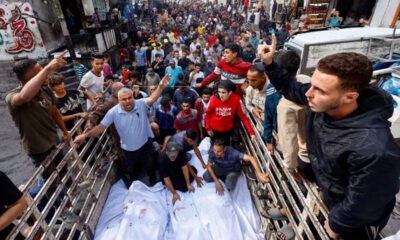
On the ground in Gaza, there was fear and mourning. Outside a Gaza City hospital, a dust-covered boy named Saaed Khalid Shehta dropped to his knees beside the bloodied body of his little brother Mohammad, one of several bodies laid out after people said their street was hit by airstrikes. He kissed him.
“You bury me with him!” the boy cried. A health worker at Al-Ahli Baptist Hospital said more than 15 children were killed.
Israel’s military said its fighter jets and helicopters struck targets in Gaza including “tunnel shafts, command centers and weapons storage facilities.” It acknowledged “extensive aerial attacks in the Khan Younis area.”
The bodies of 31 people killed in bombardment of central Gaza were taken to the Al-Aqsa hospital in Deir al-Balah, said Omar al-Darawi, a hospital administrative employee. One woman wept, cradling a child’s body. Another carried the body of a baby. Later, hospital workers reported 11 more dead after another airstrike. Bloodied survivors included a child carried in on a mattress.
Outside a hospital morgue in Khan Younis, resident Samy al-Najeila carried the body of a child. He said his sons had been preparing to evacuate their home, “but the occupation didn’t give us any time. The three-floor building was destroyed completely, the whole block was totally destroyed.” He said six of the bodies were his relatives.
“Five people are still under the rubble,” he said. “God help us.”
In a video from the same crowded al-Nasser hospital, UNICEF spokesperson James Elder said: “I feel like I’m almost failing in my ability to convey the endless killing of children here.”
Israel says it does not target civilians and has taken measures to protect them, including its evacuation orders. In addition to leaflets, the military has used phone calls and radio and TV broadcasts to urge people to move from specific areas.
Israel says it targets Hamas operatives and blames civilian casualties on the militants, accusing them of operating in residential neighborhoods. It claims to have killed thousands of militants, without providing evidence. Israel says at least 78 of its soldiers have been killed.
READ ALSO:
- Nigerian sentenced in the US over N307m fraud
- Tinubu under fire over 1,411 Nigerian delegates to COP28 Dubai
- Bush burning responsible for fire incident at FRCN, Kaduna — Official
Kirby said that the U.S. is in discussion with Israel “about being careful, precise and deliberate in their targeting and trying to minimize civilian casualties to the maximum extent possible.”
“I think it’s also important for people to remember what they’re up against here. Hamas deliberately shelters themselves inside residential buildings, hospitals and schools,” Kirby said when asked by “Face the Nation” host Margaret Brennan if the White House has established “red lines” in the terms of U.S. military aid to Israel.
“It’s an added burden that Israel has as a modern military, we recognize that, but it’s also a very difficult burden and obstacle for them to overcome,” Kirby said.
The widening offensive likely will further complicate humanitarian aid to Gaza. Wael Abu Omar, a spokesman for the Palestinian Crossings Authority, said 100 aid trucks entered Sunday, but U.N. agencies have said 500 trucks per day on average entered before the war.
The renewed hostilities also heightened concerns for the 137 hostages the Israeli military believes are still being held by Hamas. During the recent truce, 105 hostages were freed, and Israel released 240 Palestinian prisoners. Most of those released by both sides were women and children.
Elsewhere in the region, Lebanon’s militant Hezbollah group said it struck Israeli positions near the tense Lebanon-Israel border. Eight soldiers and three civilians were wounded by Hezbollah fire in the area of Beit Hillel, army radio reported. The military said its artillery struck sources of fire from Lebanon and its fighter jets struck other Hezbollah targets.
Iraqi militants with the Iran-backed umbrella group the Islamic Resistance in Iraq said they struck the Kharab al-Jir U.S. military base in Syria with rockets. A U.S. military official, speaking on condition of anonymity in line with regulations, said rockets hit Rumalyn Landing Zone in Syria but there were no reports of casualties or damage.
Later Sunday, officials with Iranian-backed militias in Iraq said five militia members were killed in an airstrike blamed on the U.S. near Kirkuk. The officials spoke on condition of anonymity because they were not authorized to comment publicly. U.S. military officials could not immediately be reached for comment. for comment.
Israel expands Gaza ground offensive
cbsnews






International
Ninth Body Discovered in South Africa: Nigeria Issues Urgent Safety Alert to Nationals
Ninth Body Discovered in South Africa: Nigeria Issues Urgent Safety Alert to Nationals
Police cordon off Kempton Park and post a $56,000 combined bounty as the Nigerian Consulate warns citizens to exercise heightened vigilance.
South African police recovered the body of a ninth woman on Thursday along a roadside in Dawn Park, intensifying public alarm and prompting the Nigerian Consulate-General in Johannesburg to issue an emergency safety advisory to its citizens.
In response to the discoveries, law enforcement teams placed Kempton Park in the Ekurhuleni municipality under lockdown and established roadblocks to inspect vehicles and restrict suspect movement.
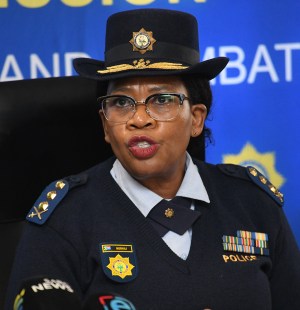
Deputy Police Chief Tebello Mosikili declared during a press conference that authorities will deploy specialized investigative units to track down those responsible.
To accelerate breakthroughs, police offered a 400,000 rand ($25,000) reward for credible tips, while South Africa’s Democratic Alliance provided an additional $31,000, establishing a combined bounty of $56,000.
Detectives are now evaluating forensic evidence to determine whether one perpetrator committed the murders or whether independent offenders copied earlier attacks.
Meanwhile, the Nigerian Consulate-General urged Nigerian residents, especially women and young people who commute, exercise, or study around Ekurhuleni, to take deliberate personal precautions.
The mission advised community members to travel in groups, stay clear of isolated trails, and share real-time travel details with trusted family members.
Furthermore, diplomatic officials emphasized that safety precautions must not shift the burden of crime prevention onto women, calling on South African authorities to ensure thorough investigations and justice for every victim.
Ninth Body Discovered in South Africa: Nigeria Issues Urgent Safety Alert to Nationals
Health
Fiji Declares National HIV Emergency as Diagnoses Surge Sixteenfold
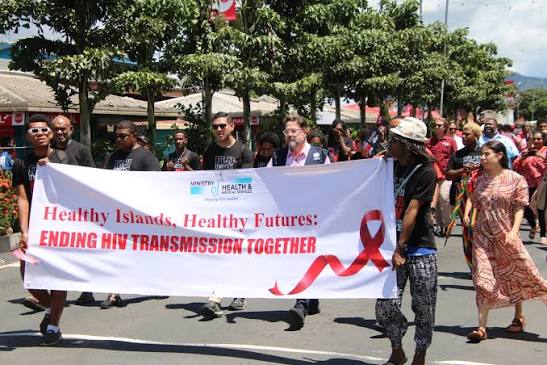
Fiji Declares National HIV Emergency as Diagnoses Surge Sixteenfold
Authorities launch a multi-agency public health campaign to expand free testing, treatment, and harm-reduction services
Fiji has announced a nationwide health response to address a significant rise in HIV cases and ensure that all residents can access essential medical care.
On Wednesday, Health Minister Dr. Atonio Lalabalavu shared the emergency declaration, explaining that national agencies are joining forces to provide rapid medical support, expand testing, and protect community well-being across the islands.
Official reports indicate that about one in every 60 adults in Fiji currently lives with HIV, following an increase in new infections over recent years. Health specialists explain that the virus spreads primarily through intimate sexual contact and shared needles among individuals using illicit substances.
Additionally, routine screenings revealed that two out of every 100 expecting mothers carry the virus, highlighting an urgent need for early maternal healthcare to protect newborns from infection.
To safeguard public health, authorities are delivering free daily treatments, distributing protective preventive medications, and setting up clean needle programs to stop infections before they start.
Furthermore, global partners, including Australia, New Zealand, India, and United Nations health bodies are providing financial resources and medical supplies to back the local effort.
By encouraging open community conversations and delivering accessible healthcare without judgment, health workers aim to ensure that everyone receives the care and dignity they deserve.
Fiji Declares National HIV Emergency as Diagnoses Surge Sixteenfold
International
Kim Yo-jong: Only ‘Idiots’ Think North Korea Will Give Up Nuclear Weapons

-

 International2 days ago
Islamic Council Condemns Attempted Attack on Holy City of Mecca
-

 metro3 days ago
Lagos Power Outage: Ikeja Electric Blames TCN as Businesses, Homes Groan
-
 News2 days ago
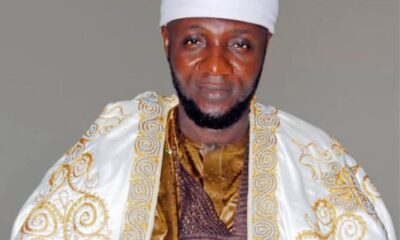
Keep Politics Out of My Office — Ogbomoso Grand Chief Imam Warns Politicians, Bloggers
-

 metro2 days ago
Niger Mosque Abductions: Terrorists Execute 30 of 500 Captive Muslim Worshippers
-

 Entertainment2 days ago
BREAKING: Olu Jacobs Dies at 84, Atiku Mourns Cultural Icon
-

 International3 days ago
US Court Blocks Trump Visa Rule Limiting Stay of Foreign Students, Journalists
-

 metro3 days ago
A Son Wouldn’t Have Done Better — Dangote Speaks on Daughters, Succession
-
 metro3 days ago
Fatal NURTW Leadership Clash in Osun Leaves Two Dead; State Orders Park Shut Down