

metro
Death toll rises to three in Lagos building collapse
Death toll rises to three in Lagos building collapse
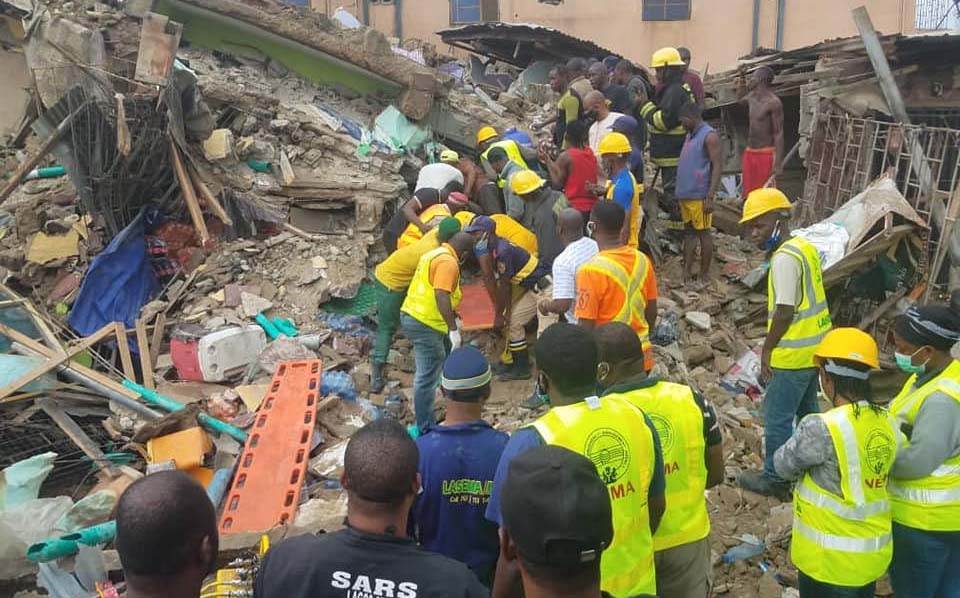
The death toll from the building collapse at Ebute Meta, Lagos State, has increased to three.
The building collapsed on Friday morning, Dec. 22, on Herbert Marculley Way, Ebute Meta.
Mr Ibrahim Farinloye, the territorial coordinator of the National Emergency Management Agency, confirmed the death toll to newsmen in Lagos.
The body of a 12-year-old boy and the bodies of two adults —a male and a female— were recovered from the rubble of the two-storey building.
READ ALSO:
- Rivers crisis : Pro-Fubara rally grounds Port Harcourt
- Hoodlums attack, loot bus carrying Christmas gifts for Ibadan Mogajis
- ABC Transport implements 50% reduction in ticket price
Farinloye added that the Lagos Building Control Agency had issued an evacuation notice several times on the building, and all the original occupants had packed out.
“According to accounts of residents, before the collapse, a dog, which the people in the collapsed building had been taking care of, got to the building and started barking in a sorrowful manner and refused to eat or enter the building.
“No sooner had the dog left than the building came down,” Farinloye said.
He added that search and rescue operations were ongoing.
Death toll rises to three in Lagos building collapse









metro
Kubwa Explosion: Vehicle Crashes Into Gas Outlet, Damages Nine Shops
Kubwa Explosion: Vehicle Crashes Into Gas Outlet, Damages Nine Shops
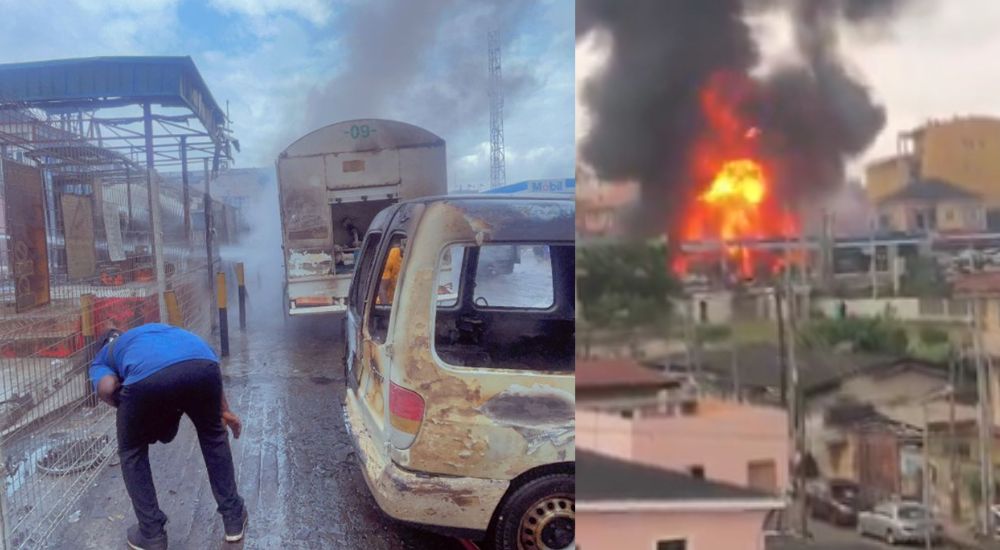
Panic broke out in Kubwa, Abuja, on Sunday morning after a gas explosion rocked the Liberty Junction area, following a vehicle crash into a roadside gas retail outlet.
The incident occurred at about 6:15 a.m., sending a powerful blast through the area and causing nearby buildings to shake, while thick smoke and flames rose from the affected facility.
The vehicle reportedly veered off the road and crashed into the gas outlet, triggering the explosion and subsequent fire.
The impact affected several businesses around the junction, with reports indicating that nine shops were damaged or destroyed by the ensuing fire.
A nearby police traffic post was also reportedly uprooted by the force of the explosion, while other structures and sections of the surrounding area were damaged.
The vehicle involved in the crash was badly burnt in the incident. Emergency responders, however, reportedly rescued the driver and a child from the wreckage.
The injured driver was taken to a medical facility for treatment, while emergency personnel worked to prevent the fire from spreading to other shops and properties in the densely populated area.
READ ALSO:
- Newlywed Arrested After Allegedly Excreting 72 Cocaine Wraps at Enugu Airport
- Bauchi Police Arrest Four Over Alleged Gun-Making, Rape
- Tinubu to Nigerians: We Are Correcting Past Mistakes, Give Us More Time
The explosion triggered panic among residents and commuters, with people reportedly rushing away from the scene as the fire continued to burn.
Emergency response agencies, including the Federal Fire Service, FCT Fire Service, National Emergency Management Agency (NEMA), Nigeria Security and Civil Defence Corps (NSCDC) and the Nigeria Police Force, were deployed to the scene.
Firefighters battled the flames for hours before the situation was brought under control.
The incident also caused significant traffic disruption around Liberty Junction and the Kubwa axis, as motorists slowed down and emergency responders worked at the scene.
Security personnel subsequently moved people away from the immediate area and helped manage traffic while the damaged vehicle and other debris were cleared.
Initial reports did not indicate a confirmed death from the explosion, although the driver was reported to have sustained injuries.
Authorities had yet to provide a detailed official account explaining why the vehicle veered off the road or confirming the full extent of the damage and injuries as of the time of reporting.
The incident has again drawn attention to safety concerns surrounding gas outlets located close to busy roads, shops and residential areas, particularly in densely populated parts of the Federal Capital Territory.
Further assessment by relevant authorities is expected to establish the precise circumstances of the crash, the extent of the property damage and whether any safety breaches contributed to the incident.
Kubwa Explosion: Vehicle Crashes Into Gas Outlet, Damages Nine Shops
metro
Newlywed Arrested After Allegedly Excreting 72 Cocaine Wraps at Enugu Airport

Newlywed Arrested After Allegedly Excreting 72 Cocaine Wraps at Enugu Airport
Operatives of the National Drug Law Enforcement Agency (NDLEA) arrested a 53-year-old Nigerian passenger at the Akanu Ibiam International Airport, Enugu, after he allegedly ingested 72 wraps of cocaine weighing 1.253 kilogrammes.
The suspect, identified as Lovely Chukwulobelu, was arrested on December 3, 2021, during the outward screening of passengers travelling on an Ethiopian Airlines flight from Enugu to Rome, Italy, via Addis Ababa, Ethiopia.
According to the NDLEA, the suspect was detected during the airport’s screening process after operatives suspected that he had ingested drug pellets.
He was subsequently placed under observation, during which the 72 wraps of cocaine were recovered after he excreted them.
The total weight of the recovered cocaine was put at 1.253kg, according to the anti-narcotics agency.
During questioning, Charley allegedly told NDLEA officials that he was expected to receive €4,000 after successfully delivering the drugs in Italy.
The suspect reportedly told investigators that he had been living in Italy for more than 20 years and attributed his alleged involvement in the drug trade to the downturn in his business during the COVID-19 pandemic.
READ ALSO:
- Tinubu to Nigerians: We Are Correcting Past Mistakes, Give Us More Time
- Fake Agency Scandal: Gbajabiamila Says He Never Betrayed Tinubu’s Trust
- Deputy Director’s Death: NLC Shuts Delta Secretariat, Begins Indefinite Strike
The arrest formed part of a wider series of drug-trafficking interceptions reported by the NDLEA at Nigerian airports and other locations at the time.
At the same period, the agency reported the arrest of another Nigerian passenger, Uzoh Ndubuisi Johnson, who allegedly arrived at the Enugu airport from Brazil through Addis Ababa with 6.7kg of cocaine concealed in clothes.
The NDLEA also reported the arrest of John Kadja, a 25-year-old passenger of Ghanaian and Nigerian parentage, at the Nnamdi Azikiwe International Airport, Abuja, with 2kg of methamphetamine allegedly concealed in the false bottom of his luggage.
The agency said the arrests demonstrated the methods being used by suspected drug traffickers to move illicit substances through Nigeria’s international airports.
The then Chairman and Chief Executive Officer of the NDLEA, Brig. Gen. Mohamed Buba Marwa (retd.), commended officers involved in the interceptions and urged them to remain vigilant in efforts to prevent the trafficking of illicit drugs.
The agency has continued to deploy passenger profiling, luggage searches, body scanning and other screening measures at international airports to detect attempts to move cocaine and other illicit drugs across Nigeria’s borders.
The Enugu case also illustrates one of the methods used by suspected traffickers, in which drug pellets are allegedly swallowed before a passenger boards a flight and later recovered under controlled observation.
The allegation against Charley was made by the NDLEA, and the reported arrest and drug recovery do not by themselves constitute a conviction. Any criminal liability would ultimately be determined through the appropriate judicial process.
Newlywed Arrested After Allegedly Excreting 72 Cocaine Wraps at Enugu Airport
metro
Bauchi Police Arrest Four Over Alleged Gun-Making, Rape

Bauchi Police Arrest Four Over Alleged Gun-Making, Rape
The Bauchi State Police Command has arrested four suspects in two separate cases involving alleged illegal firearm possession and fabrication and the alleged rape of a 50-year-old woman in the state.
The arrests involved three suspects in Misau Local Government Area, who were allegedly linked to the fabrication and possession of locally made firearms, and a 26-year-old man arrested in Gamawa Local Government Area over an alleged sexual offence.
In the firearm case, police operatives attached to the Misau Division reportedly intercepted Abubakar Ahmad, 30, also known as Tino, on September 25, 2026, while on duty at Chief Magistrate Court 1, Misau.
According to the police, Ahmad was found in possession of a locally fabricated pistol loaded with a live cartridge and was allegedly attempting to hand the weapon over to Tijjani Yakubu, 35, of the same address.
Yakubu was already being held at a correctional centre over allegations of criminal conspiracy, theft and receiving stolen property, police said.
During preliminary investigation, Yakubu allegedly admitted ownership of the firearm and told investigators that he had given it to Ahmad for safekeeping.
READ ALSO:
- Tinubu to Nigerians: We Are Correcting Past Mistakes, Give Us More Time
- Fake Agency Scandal: Gbajabiamila Says He Never Betrayed Tinubu’s Trust
- Deputy Director’s Death: NLC Shuts Delta Secretariat, Begins Indefinite Strike
He also allegedly identified Bappah Kawu, 48, a welder from Tashar Masu in Misau, as the person who supplied the weapon.
Police subsequently arrested Kawu, who allegedly admitted that he fabricated and sold the pistol to Yakubu for ₦30,000.
A search of Kawu’s workshop reportedly led to the recovery of two locally made Dane guns and tools allegedly used for firearm fabrication, including a hacksaw, files and long iron pipes.
The three suspects were taken into custody, while the firearm case was transferred to the State Criminal Investigation Department (SCID), Bauchi, for further investigation.
In a separate incident in Gamawa Local Government Area, police arrested Lukman Alhaji Nasiru, 26, of Garin Malam Village over the alleged rape of a 50-year-old woman.
Police said the alleged incident occurred on September 22, 2026, at about 12:15 p.m., when Nasiru allegedly lured the woman to an isolated area on the outskirts of Garin Malam.
The police alleged that the suspect had unlawful sexual intercourse with the woman.
The woman’s 40-year-old younger brother, who resides in Gauya Village in Jakusko Local Government Area of Yobe State, reportedly lodged a complaint at the Gamawa Divisional Police Headquarters on September 25.
Following the complaint, police arrested Nasiru and took both the suspect and the woman to General Hospital, Gamawa, for medical examination as investigations continued.
Police did not disclose further details of the medical examination.
The Bauchi Police Command said the separate investigations were ongoing, while Commissioner of Police Sani-Omolori Aliyu reiterated the command’s position against illegal firearms and sexual offences.
The commissioner also urged members of the public to provide timely and credible information to the police to assist investigations and prevent criminal activities.
The latest arrests form part of the command’s broader operations against crime in Bauchi State. The command had earlier reported the arrest of 29 suspects in September over various offences, including kidnapping, armed robbery, sexual assault, drug-related offences, vandalism and theft.
The allegations against the four suspects have not been established in court, and investigations into the cases are continuing.
Bauchi Police Arrest Four Over Alleged Gun-Making, Rape
-

 News2 days ago
Anambra Releases ₦473m Salary Arrears Document as Obi’s Debt Claim Sparks Fresh Dispute
-

 News2 days ago
Keyamo: ₦70,000 Minimum Wage No Longer Enough as Cost of Living Soars
-
 metro2 days ago
EFCC Chairman Raises Alarm Over Alleged Theft of Nigeria’s Public Funds
-

 Sports1 day ago
AFCON 2027 Qualifier: Nigeria Fight Back to Beat Madagascar 2-1 in Uyo
-
 Politics2 days ago
2027: Otti Explains Why He Supports Tinubu Despite Remaining in Labour Party
-

 Entertainment2 days ago
Jetour Takes Adventure Beyond the Road, Brings Solar-powered Borehole to Ibeju-Lekki community
-

 metro1 day ago
Viral Anti-Obi Video: Lagos Police Move Against Inspector Osumah Frank
-
 metro2 days ago
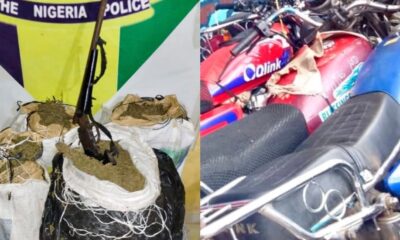
Abia Police Arrest 20-Year-Old, Recover Gun, Suspected Cannabis, Three Motorcycles