

Business
Demand pressures: Official exchange rate settles at N1571.31/$1 as intra-day hits N1851/$1
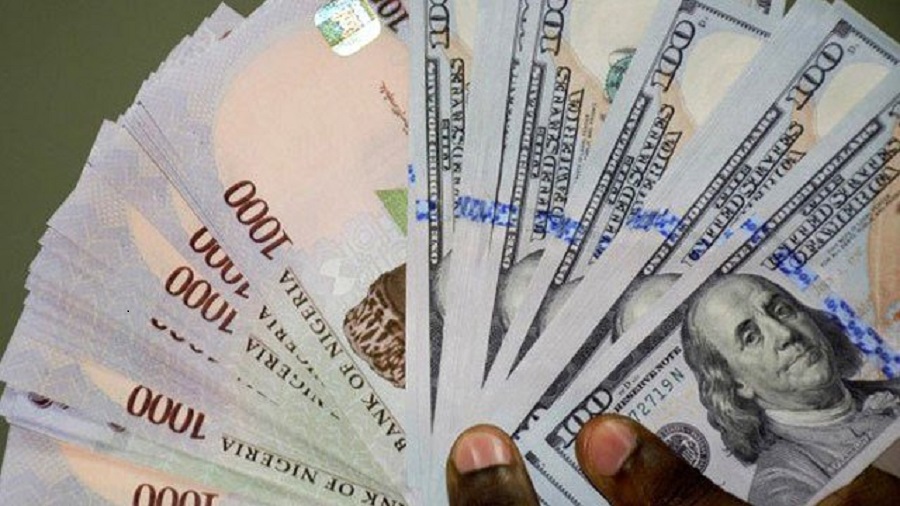
Demand pressures: Official exchange rate settles at N1571.31/$1 as intra-day hits N1851/$1
The official exchange rate experienced a notable decline of 2.97%, settling at N1571.31 per US dollar, while intraday trading reached a peak of N1851 against the dollar on Thursday, February 22nd, 2024.
This surge coincided with increased demand pressure, further exacerbating the depreciation trend of Nigeria’s currency, evident in the negative trajectory observed in the activities of the black market.
Despite the Central Bank of Nigeria (CBN) implementing various policies aimed at bolstering the supply of foreign exchange, challenges persist in this regard.
Data from the Nigeria Autonomous Foreign Exchange Market (NAFEM), where forex is officially traded, reveals a depreciation of the domestic currency by 2.97%, concluding the business day at N1,571.31 to a dollar.
- This represents an N46.73 gain or a 2.97% increase in the local currency compared to the N1,571.31 closed on Wednesday.
- The intraday high recorded a N1851/$1, while the intraday low was N1300/$1, representing a wide spread of N551/$1.
- According to data obtained from the official NAFEM window, forex turnover at the close of the trading was $192.25 million, representing a 11.68% increase compared to the previous day.
READ ALSO:
- Gombe State government unveils 523 ghost workers, saves N1.5 billion
- Police arrest officers who ‘stole’ over N30m from Abuja resident
- FG approves 2 more private universities, total reaches 149
- However, the Naira depreciated against dollar in the parallel forex market, where forex is unofficially traded, with the exchange rate quoted at N1,880/$1, reflecting a 2.66% decrease from the N1,830 rate it closed at the previous day.
- Additionally, the Naira weakened against the Euro by 5.36%, closing at N1960/EUR1 compared to N1720/EUR1 reported the previous day.
- The Great British Pound (GBP) closed at £1/N2260, a decline from £1/N2,210 recorded the previous day, this marks a notable decrease of 2.21% compared to the rate recorded the previous day.
Financial analysts are advocating for a re-evaluation of policies to safeguard the Nigerian Naira amid escalating forex rates, despite efforts by the Central Bank of Nigeria (CBN) to stabilize its value.
The recent decline in the Naira’s value across official and parallel markets has prompted suggestions from financial experts to mitigate currency volatility and prevent further depreciation.
The CBN had announced a series of measures aimed at enhancing transparency and stability in the foreign exchange market while addressing malpractices.
However, while the analysts acknowledge the positive aspects of the CBN’s recent policies aimed at managing pressures in the foreign exchange market, they highlight that these measures fail to directly address the fundamental issue of limited supply.
Analysts interviewed by Nairametrics in response to the Naira’s sharp decline following exchange rate harmonization propose reassessing the government’s foreign exchange management strategy.
They advocate for shifting towards a managed float system to allow flexibility in implementing initiatives to bolster foreign exchange reserves, such as boosting oil production, enhancing agricultural exports, and incentivizing foreign remittances.
Demand pressures: Official exchange rate settles at N1571.31/$1 as intra-day hits N1851/$1






Business
Nigerians Pay N44 Extra Per Litre as Retailers Defy Falling Depot Prices – Full Report

Auto
Abuja Roars to Life as Jetour X50 Headlines Three-Day Motoring Experience
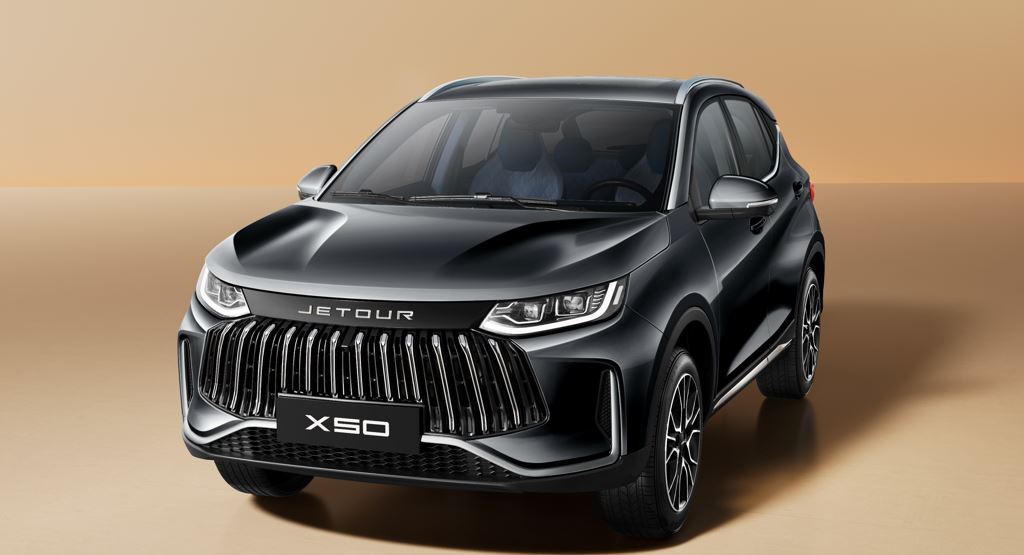
Abuja Roars to Life as Jetour X50 Headlines Three-Day Motoring Experience
Abuja is gearing up for a major motoring spectacle as Jetour Nigeria brings its fast-growing brand experience to the Federal Capital Territory, with the stylish Jetour X50 set to take centre stage in a three-day showcase of performance, technology and automotive innovation.
Scheduled for September 22 to 24, 2026, the Jetour Experience Abuja will move beyond the conventional vehicle exhibition, giving motorists and prospective buyers the opportunity to test-drive the X50, interact with automotive specialists and experience a range of entertainment and interactive activities.
The Abuja activation follows the strong reception recorded during Jetour Nigeria’s recent Lagos experience and forms part of the automaker’s strategy to deepen customer engagement while expanding its footprint across Nigeria.
Backed by an expanding authorised dealer network comprising Elizade Nigeria Limited, Mandilas Autos, Germaine Auto Centre, Kojo Motors, R.T. Briscoe, Tab Autos and New Era AutoVehicle Services, Jetour is also strengthening access to vehicle sales, after-sales support, genuine spare parts and certified technical services nationwide.
At the heart of the Abuja experience will be the Jetour X50, a compact SUV designed to combine contemporary styling, performance and a technology-rich driving environment.
Powered by a 1.5-litre turbocharged engine paired with a dual-clutch transmission, the X50 has positioned itself as a strong contender in Nigeria’s competitive compact SUV segment.
Jetour has equipped the model with a range of premium features, including a 360-degree camera, Blind Spot Detection, 10.5-inch infotainment system with Apple CarPlay and Android Auto, wireless charging and leather upholstery.
The combination of technology, comfort and performance is part of Jetour’s strategy of offering premium motoring features at competitive price points.
The Abuja event also highlights Jetour’s aggressive expansion strategy in Nigeria, following the brand’s recognition with industry accolades including Fastest Growing Auto Brand and Auto Brand of the Year.
With its expanding dealer network providing nationwide sales and after-sales support, Jetour is seeking to deepen customer engagement while making its vehicles and ownership services more accessible to motorists across the country.
As Abuja prepares to welcome the Jetour Experience, the three-day activation is expected to provide motorists with an opportunity to see, feel and drive the X50 while experiencing first-hand what is driving the brand’s growing appeal in Nigeria.
Business
Dangote Refinery Sets ₦525 Per Share for Landmark IPO
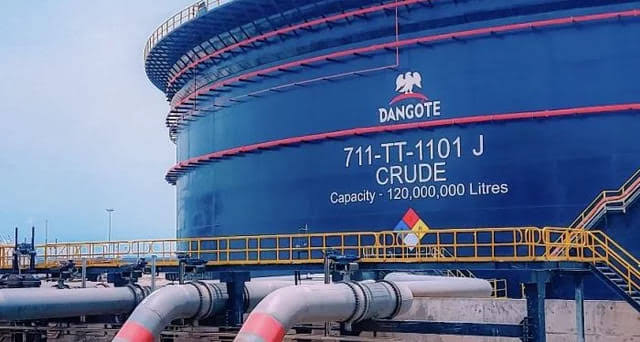
For ₦5,250, Nigerians could soon own a piece of the refinery that has reshaped the country’s fuel market.
-

 metro2 days ago
El-Rufai Demands ₦10bn from Defence Minister Over Southern Kaduna Killings Allegation
-

 Politics2 days ago
Why Did Peter Obi Attend Seyi Makinde’s Campaign Launch? Here’s What He Said
-

 News2 days ago
Lagos Moves to Slash Agency Fees, Curb Rent Hikes With New Tenancy Bill
-

 metro3 days ago
Oyoland Grand Chief Imam Celebrates Dr Sharafudeen Raji for Service to Islam
-

 metro2 days ago
Catholic priest leaves priesthood, weds Kenyan woman after 12 years in Kenya
-

 metro2 days ago
Osun Police Arrest Woman After Vigilante Member Dies During Sexual Encounter in Ile-Ife
-

 Politics2 days ago
JUST IN: Tension in Benue as Suspected Thugs Attack Peter Obi’s Convoy, Block Access
-

 metro2 days ago
No US Case Against Tinubu, Family Enjoy Unimpeded Transit for UNGA — Ambassador Ibrahim