

Business
Forex reforms: FG says naira already stabilizing, will go after saboteurs undermining the currency

Forex reforms: FG says naira already stabilizing, will go after saboteurs undermining the currency
The Federal Government has insisted that the ongoing reforms in the foreign exchange market is beginning to yield results, with the naira stabilizing and the forex market experiencing surge of inflows.
The government stated that it has directed relevant regulatory and enforcement agencies to deal with speculators and other unscrupulous players within and outside the country who are engaged in malpractices capable of undermining the naira.
This disclosure is contained in a press statement issued by the Minister of Information and National Orientation, Mohammed Idris, on Friday, February 23, 2024.
Mohammed in the statement said that the latest figure from the National Bureau of Statistics (NBS) showed that capital importation into Nigeria increased by over 66% in Q4 2023 when compared with the previous quarter.
He also noted that the new reforms have led to an inflow of $1.8 billion into the foreign exchange market last week.
CBN proactive, forex market stabilizing
The statement partly reads, ‘’The CBN has been proactive, initiating a comprehensive strategy to enhance liquidity in the forex market.
In addition to unifying the rates, the bank has also cleared a significant amount of outstanding Forex obligations, and outlined new operational mechanisms for commercial banks, Bureau De Change (BDC) operators and International Money Transfer Operators (IMTOs).
READ ALSO:
- Kwara man dies while rescuing son from well
- ‘Electricity is not free’ – Adelabu orders DisCo to publish names of debtors
- U.S, China propose to fund 2 railway projects in Zambia
‘’It is heart-warming to note that we are starting to see the results. Indeed, the naira is stabilizing, and the foreign exchange market is seeing a surge of inflows.
The latest NBS figures show that capital importation into Nigeria rose by over 66 percent in Q4 2023, compared with the preceding quarter.
The CBN Governor has also highlighted the fact that $1.8 billion flowed into the forex market last week, on the back of the new reforms.’’
Government going after saboteurs, speculators
- The minister added, ‘’Sadly, as with any effort to reform and sanitise a system entrenched in long-term malpractice, the CBN’s efforts have been met with ferocious resistance from speculators and other unscrupulous players within and outside our country, who profit from dysfunction and opacity.
- ‘’To tackle this, regulatory and enforcement agencies of government have been working round the clock in the past few days, joining forces to address these efforts at undermining the reforms. That strategic alliance has led to the intelligence-led identification, investigation and sanctioning of individuals and organizations involved in illegal activities and sabotage within the forex market.
- ‘’Relevant regulatory and security agencies have been directed to remain vigilant to ensure that malpractices capable of undermining our currency are averted and that those engaged in these acts are brought to book. The government will not allow its efforts to be jeopardised.
- ‘’The emerging stability of the naira is in the interest of all Nigerians.”
Government to take further steps
The minister assured that the Federal Government will continue to take further steps to stabilize the naira and safeguard the economy.
- He said, ‘’Nigerians should rest assured that the government will continue to take further steps to stabilize the naira and safeguard our economy.
- ‘’We will continue to seek the patience and understanding of Nigerians as we push through these difficult times, into a season of abundant benefits and truly renewed Hope. As the President never fails to emphasize, these headwinds we are facing are only temporary, and, collectively, we will surely overcome.
- ‘’The President and his team are and will remain resolutely committed and focused on the task of bringing immediate relief and enduring prosperity to all Nigerians.’’
Forex reforms: FG says naira already stabilizing, will go after saboteurs undermining the currency






Auto
Abuja Demand Rises as Jetour Brings X70 Plus Experience to FCT
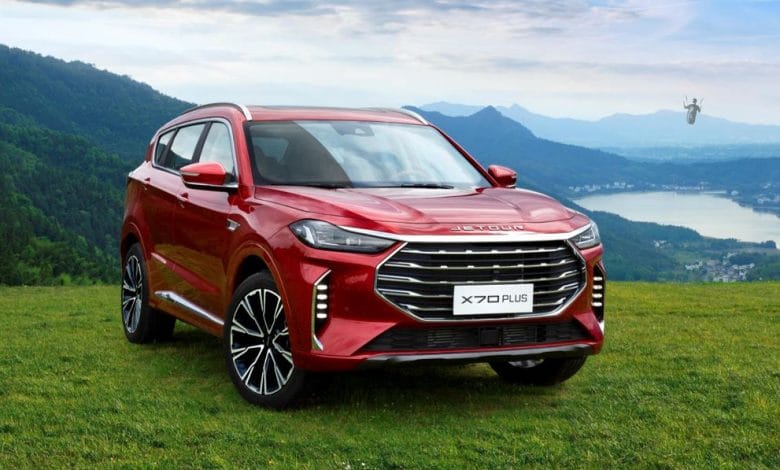
Abuja Demand Rises as Jetour Brings X70 Plus Experience to FCT
Jetour Nigeria is taking its seven-seater X70 Plus SUV to Abuja as rising interest from motorists in the Federal Capital Territory and neighbouring states fuels the brand’s latest push to deepen its presence across Nigeria.
The X70 Plus will headline the Jetour Experience Abuja, holding from September 22 to 24 at Maha Event Centre, Area 8, Garki, following the strong response recorded during the Lagos edition, where motorists turned out for test drives and made enquiries about Jetour models.
The Abuja activation is designed to give prospective buyers direct access to the X70 Plus and other models, with opportunities to test-drive the vehicles, engage product specialists and experience their technology, safety and comfort features.
The X70 Plus is positioned as a family-oriented SUV, offering seven-seat capacity and a range of features targeted at customers seeking comfort, technology and practicality.
The SUV is available with 1.5-litre and 1.6-litre turbocharged engine options, with outputs of up to 145kW and 290Nm of torque, paired with a dual-clutch automatic transmission.
READ ALSO:
- Enough Is Enough: Muslim Supporters Demand New Man United Owners
- Stray Bullet Kills 400-Level IBBU Student During Land Dispute in Niger
- Oyo Police: Student Who Died by Suicide Was Charged With Assault, Not ₦8,000 Debt
Its safety equipment includes front, side and curtain airbags, Vehicle Stability Control, Hill-Start Assist, Hill-Descent Control and a 360-degree panoramic camera with 2D and 3D viewing modes. Advanced Driver-Assistance Systems are also available.
Inside the cabin, the X70 Plus features a 10.23-inch LCD touchscreen, dual-zone climate control with air purification, wireless charging, a panoramic sunroof and an eight-speaker audio system.
Jetour Nigeria, the authorised distributor of the brand in the country, currently operates through seven accredited dealers: Elizade Nigeria Limited, Mandilas Autos, R.T. Briscoe Motors, Germaine Auto Centre, Kojo Motors, Tab Autos Limited and New Era Auto Vehicle Services Limited.
The company said the dealer network supports vehicle sales, genuine spare-parts supply and after-sales services across the country.
Jetour has also received recent industry recognition in Nigeria, including Fastest Growing Auto Brand by the Nigeria Auto Journalists Association and Auto Brand of the Year at the Nigeria Transport Lecture and Awards.
The Abuja experience is expected to provide prospective customers in the FCT and surrounding states with direct access to the X70 Plus and other Jetour models as the brand continues its national market expansion.
Abuja Demand Rises as Jetour Brings X70 Plus Experience to FCT
Auto
Jetour Unleashes F700 Hybrid Pickup as Abuja Experience Begins Tuesday
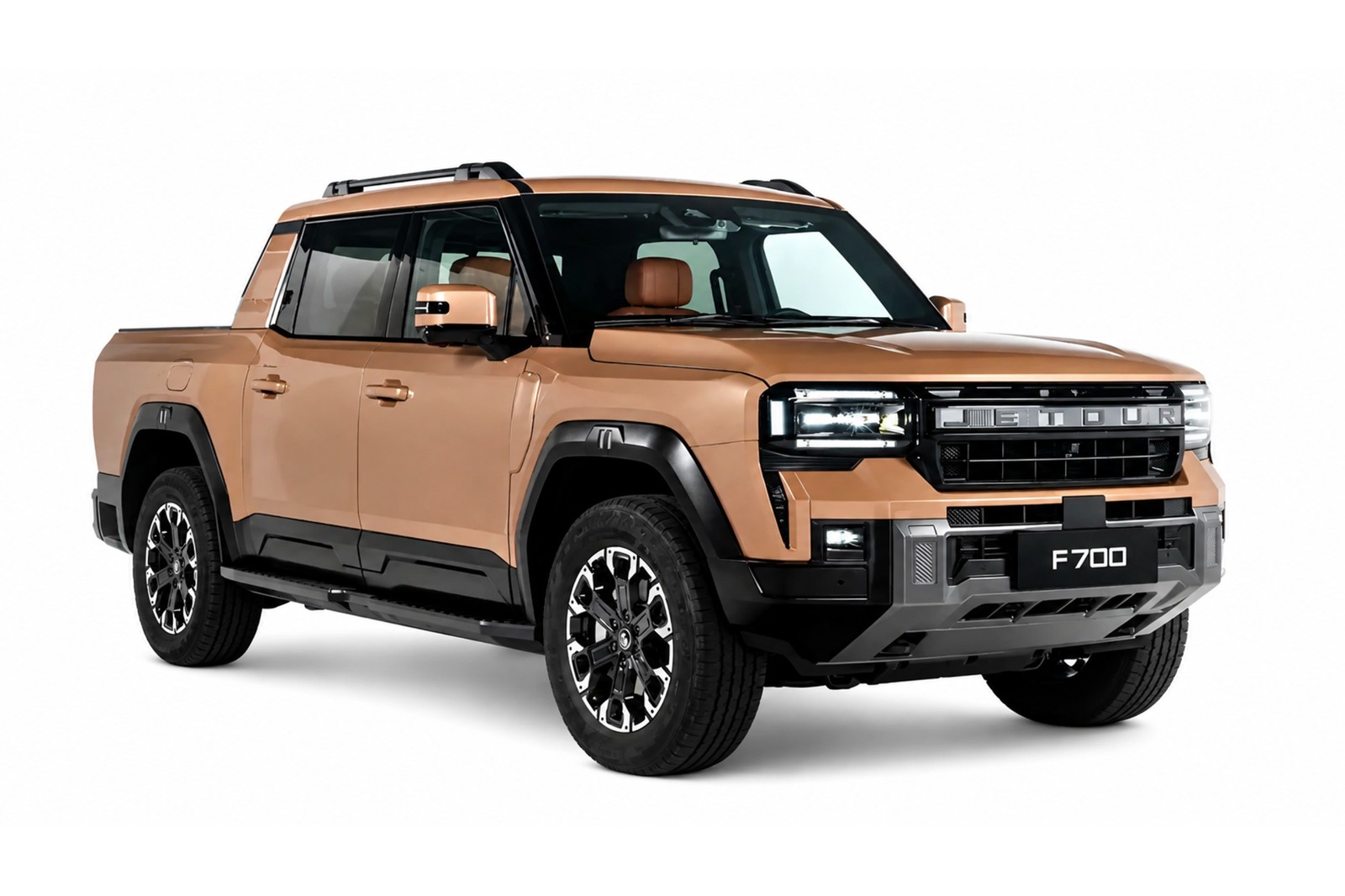
Jetour Unleashes F700 Hybrid Pickup as Abuja Experience Begins Tuesday
Jetour is taking its premium pickup game to Abuja as the automaker prepares to showcase the powerful F700 hybrid pickup at the Jetour Experience Abuja, bringing a blend of electrified performance, luxury and rugged off-road capability to the Federal Capital Territory.
The three-day event, scheduled for September 22 to 24 at Maha Event Centre, Area 8, Garki, comes on the heels of strong reception in Lagos and is expected to draw commercial fleet operators, corporate buyers and luxury pickup enthusiasts keen to experience Jetour’s latest hybrid workhorse.
Following high-impact reception in Lagos, the Abuja activation, which holds at Maha Event Centre, Area 8, Garki, answers massive demand from commercial fleet leaders, corporate buyers, and luxury truck enthusiasts eager for an electrified workhorse built without compromise.
Jetour’s rapid ascendancy as Nigeria’s Fastest Growing Auto Brand and Auto Brand of the Year is backed by nationwide after-sales infrastructure, certified technicians, and genuine parts availability through its authorized dealer network including Elizade Nigeria Limited, New Era AutoVehicle Services, Germaine Auto Centre, Kojo Motors, Mandilas Autos, R.T. Briscoe and
Tab Autos.
The Ultimate Hybrid Powerhouse
Engineered on the heavy-duty platform of Jetour’s G700 luxury SUV, the double-cab F700 redefines utility.
READ ALSO:
- Delta Police Intercept Sienna With Military Uniforms, Suspected Drugs
- Jehovah’s Witnesses Adjust Blood Transfusion Rules, Allow Personal Choice
- Ogun 2027: APC Highlights Adeola’s Projects, Challenges Adebutu
Stretching nearly 5.5 meters, it commands road presence via a high-tensile ladder-frame chassis and independent double-wishbone suspension engineered for punishing industrial demands and refined highway cruising alike.
Under the hood lies the revolutionary Kunpeng Super Hybrid CDM-O powertrain—pairing dual high-output electric drive motors with an onboard turbo petrol generator that seamlessly feeds the battery pack on the fly, eliminating range anxiety entirely.
According to Jetour, an advanced CATL 800V architecture surges the battery from 20% to 80% in just 10 minutes, achieving ultra-fast charging.
The vehicle delivers a monumental combined cruising range of up to 1,300 km on a single charge and tank, and achieves exceptional fuel economy, sipping as low as 1.39 L/100 km.
Conquering Terrain in First-Class Luxury
Engineered for unforgiving terrain, the F700 deploys Jetour’s intelligent XWD all-wheel-drive system governed by front, center, and rear mechanical differential locks.
With 9.5 inches of ground clearance and an imposing 900 mm water-wading capability, the F700 glides through deep water crossings, unpaved construction corridors, and rocky trails effortlessly.
Inside, the cabin abandons utilitarian compromises for bespoke executive refinement, featuring
35.4-inch Panoramic “Sky Screen” dominating the dash architecture.
Also, it features the 15.6-inch Central Command Touchscreen for seamless telematics and vehicle dynamics, Sculpted Luxury Finishes combining aviation-grade acoustic insulation, premium materials, and active driver-assist safety suites.
The three-day Jetour Experience Abuja will feature live technical walkarounds, rugged dynamic tests, and hands-on driving trials at the capital.
Jetour Unleashes F700 Hybrid Pickup as Abuja Experience Begins Tuesday
Auto
26th Abuja Motor Fair: NADDC, BKG Set November 10 Date for Auto Industry Show

26th Abuja Motor Fair: NADDC, BGK Set November 10 Date for Auto Industry Showcase
The National Automotive Design and Development Council and BKG Exhibitions Ltd have unveiled plans for the 26th Abuja International Motor Fair, scheduled to hold from November 10 to 13, 2026, at Eagle Square, Abuja.
The four-day event is expected to bring together major players across the automotive value chain, such as vehicle manufacturers and assemblers, component producers, financial institutions, technology firms, transport operators, logistics companies, development partners, investors and government agencies.
A three-day conference will also feature prominently at the fair, with the theme, “Driving Nigeria’s Automotive Transformation: Policy, Production, and Prosperity.”
A statement on Friday by BKG Exhibitions said the conference would examine key issues shaping the development of Nigeria’s automotive industry, with speakers drawn from various sectors of the industry and related fields.
Chairman of the Organising Committee and Managing Director of BKG Exhibitions, Mr Ifeanyi Agwu, said the conference would feature a keynote address by the Director-General of NADDC, Otunba Joseph Osanipin, alongside presentations and speeches by leading stakeholders in the automotive and transport sectors.
READ ALSO:
- BREAKING: Bloodbath at Pakistan Mosque as Suicide Blast Kills 21, Injures 103
- Xenophobia: FG Brings 33 More Nigerians Home From South Africa
- Falconets Thrash England 3-0, Face Colombia in U-20 World Cup Quarter-Finals
According to him, the fair will provide participants with opportunities to engage industry leaders, investors, government officials and business executives while exploring emerging vehicles, technologies, products and investment opportunities.
Other highlights of the event are the Nigeria Automotive Excellence Awards Night, Abuja Automotive Road Show, Ultimate Test-Drive experience, exotic automobile displays and the Automotive and Future Mobility Arena.
Visitors will also have access to professional advice, technical papers and a showcase of some of Abuja’s finest cuisine.
The Abuja International Motor Fair has, over the years, evolved into one of Nigeria’s major automotive exhibitions and platforms for industry and policy dialogue.
The organisers said this year’s edition would further strengthen the platform’s role in promoting investment, innovation, local production and sustainable growth across Nigeria’s automotive sector.
26th Abuja Motor Fair: NADDC, BGK Set November 10 Date for Auto Industry Showcase
-

 Sports3 days ago
Falconets Thrash England 3-0, Face Colombia in U-20 World Cup Quarter-Finals
-

 Politics3 days ago
Yayi Ancestry Row: Stepmother Sets Record Straight as Legal Battle Looms
-
 International3 days ago
BREAKING: Bloodbath at Pakistan Mosque as Suicide Blast Kills 21, Injures 103
-
 metro3 days ago
Tinubu Orders Full Probe Into 37 Miners’ Deaths in NSCDC Custody
-

 metro2 days ago
Niger Miners’ Deaths: Families Demand Compensation, Justice for Victims
-

 metro2 days ago
Mambilla: ICC Raises Questions Over $500,000 Payment to Atiku’s Former Wife
-
 Auto3 days ago
Replace Fuel Subsidy With Vehicle Credit to Drive Mobility, Jobs,LCCI, Ilekuba tell FG
-

 Entertainment2 days ago
“She Wanted to Stay Single”: Rema Opens Up About Rejection That Inspired Hit Song ‘Oh No’