
Business
CBN plans to bar BDCs from street trading, limits cash forex purchase to $500

CBN plans to bar BDCs from street trading, limits cash forex purchase to $500
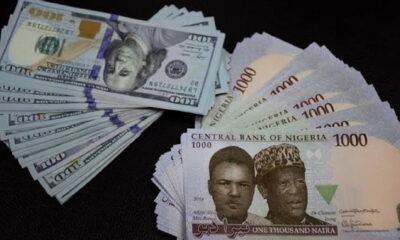
The Central Bank of Nigeria (CBN) is considering banning Bureau De Change (BDC) operators from street trading and limiting the cash payment for selling FX to a maximum of $500.
The apex bank disclosed this in its proposed revised regulatory guidelines for BDC operators in Nigeria published by the bank.
However, the proposed ban on street trading by BDCs is not new as the bank in its revised operational guidelines for BDCs in 2015 prevented street trading by BDCs.
According to the bank, permissible activities by BDCs include; the acquisition of forex from approved sources, sales of FX in line with its guidelines, serving as cashout points for IMTOs etc.
On the other hand, the apex bank prevented BDC from engaging in street trading, account maintenance, accepting deposits and granting of loans, facilitating international outward transfers, dealing in precious stones and metals, establishing subsidiaries and others.
READ ALSO:
- Presidency says Tinubu will visit Qatar in March, denies snub claims
- BREAKING: ECOWAS suspends economic sanctions imposed on Niger, Mali, Guinea
- Cement sells for N11,000 in Lagos
Forex sellers above $10,000 to declare their source
Furthermore, the bank noted that sellers of forex above $10,000 are mandated to disclose the source of the forex and proposed to ban cash payment to customers for forex above $500. It also proposed to ensure digital transfer purchases of foreign currencies by customers are made to the BDCs naira account.
- It stated, “Sellers of the equivalent of USD10,000 and above to a BDC are required to declare the source of the foreign exchange and comply with all AML/CFT/CPF regulations and foreign exchange laws and regulations.
- “Payments to customers for cash purchases of foreign currency, the equivalent of above USD500, shall be by transfer to the customer’s Naira bank account. If the customer is a non-resident (whether Nigerian or not), a BDC shall issue the customer a prepaid NGN card. Where such a card is issued, relevant maximum credit and cumulative limits, in line with relevant Know Your Customer requirements, shall apply.”
What you should know
The CBN in recent times have blamed the whopping depreciation of the naira to speculation with the Governor stating the naira is “undervalued” and with time returns to its true value.
The apex bank in the past few months has introduced a slew of initiatives aimed at boosting liquidity in the forex market and shoring up the value of the naira.
- The proposed regulation aims to sanitise the operations of BDCs across the country, limit the proliferation of BDC operators and enable the CBN to weigh in on their activities. The regulations although a proposal and subject to review over time.
- In the past weeks, security agencies such as the EFCC and DSS have begun a crackdown on street traders of foreign currencies in a bid to formalise the industry. Also, there have been reports of restrictions of Nigerian traders from accessing the Binance forex trading platform in what many adjudge to be a crackdown on the platform for Nigerians.
- One of the spokespersons to President Tinubu, Bayo Onanuga confirmed the report of the blockade of access of Nigerians to forex and crypto trading platforms Binance and Coinbase.
CBN plans to bar BDCs from street trading, limits cash forex purchase to $500






Auto
FG Deepens CNG Expansion with 1,100-Vehicle Capacity Gas Station in Abuja
FG Deepens CNG Expansion with 1,100-Vehicle Capacity Gas Station in Abuja
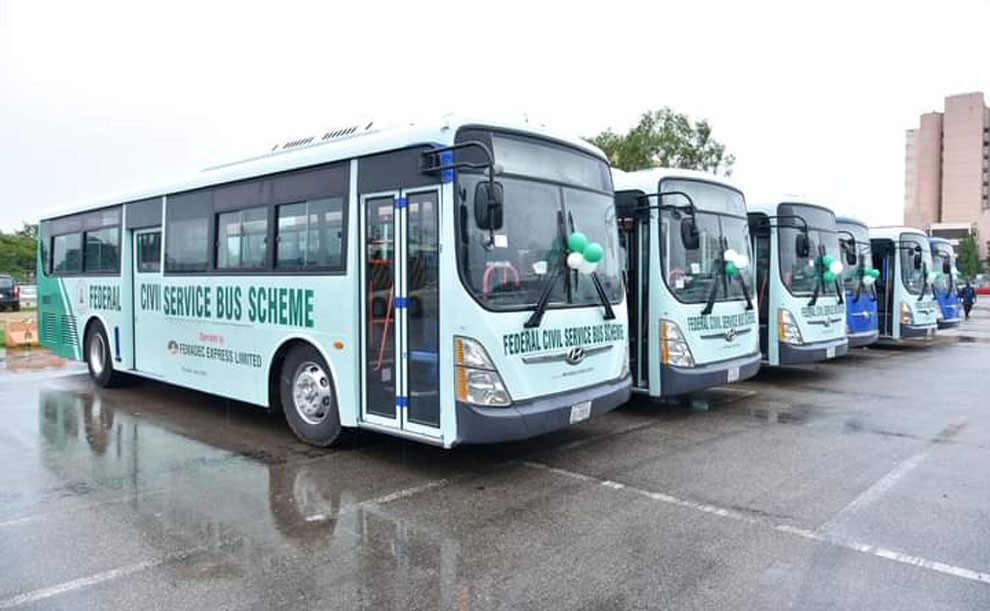
The Federal Government has intensified efforts to deepen the adoption of Compressed Natural Gas (CNG) in Nigeria with the commissioning of a high-capacity refuelling station in Abuja capable of serving more than 1,100 vehicles daily.
The newly inaugurated facility, developed by Rolling Energy Limited in partnership with the Midstream and Downstream Gas Infrastructure Fund (MDGIF), is located in Jahi, Abuja, and is expected to significantly boost access to cleaner and more affordable transportation energy.
The project forms part of the Federal Government’s broader strategy to expand Nigeria’s gas infrastructure, reduce reliance on petrol and diesel, and accelerate the transition to cleaner fuel alternatives under the Presidential Initiative on Compressed Natural Gas (Pi-CNG).
The High Capacity CNG Daughter Booster Station has a sales capacity of 1,000 Standard Cubic Metres (SCM) per hour, supported by two CNG tube skids with a combined storage capacity of 17,000 SCM.
The station also features a Mass Conversion Centre staffed by trained technicians and equipped with conversion kits capable of converting up to 20 vehicles and 25 tricycles daily, providing practical support for motorists and commercial operators seeking to switch to gas-powered transportation.
Speaking during the commissioning ceremony on Friday, the Minister of State for Petroleum Resources (Gas), Rt. Hon. Ekperikpe Ekpo, described the project as a major milestone in Nigeria’s drive to deepen gas utilisation and strengthen access to affordable energy solutions.
Ekpo said the facility would play a strategic role in supporting the nationwide rollout of CNG adoption, particularly as the government continues efforts to cushion the impact of rising fuel costs following the removal of petrol subsidy.
READ ALSO:
- 16 Feared Dead as Bandits Attack Katsina Village After Friday Prayers
- ‘Negotiate, Don’t Let Them Waste Us’: Abducted Oyo Principal Begs Tinubu, Makinde
- The Shettima danger for Tinubu, By Farooq Kperogi
- US Report: ‘We Are Victims, Not Perpetrators’ – MACBAN Fires Back
He said, “Facilities such as this are essential for building the backbone infrastructure required to support widespread CNG penetration in Nigeria.”
The minister commended Rolling Energy Limited and MDGIF for delivering the project, describing it as one of four strategic gas infrastructure projects currently being commissioned across the country.
According to him, similar projects by Ibile Oil and Gas, Portland Energy and Femadec are also being commissioned in Lagos and Owerri, signalling increased private sector confidence in the Federal Government’s gas commercialisation agenda.
Ekpo said the projects align with the Federal Government’s Decade of Gas Initiative, launched to leverage Nigeria’s estimated 215 trillion cubic feet of proven gas reserves to drive industrialisation, transportation reform, economic diversification and long-term energy security.
The minister noted that expanding gas infrastructure remains central to President Bola Tinubu’s energy transition agenda, which aims to provide Nigerians with cleaner, cheaper and more sustainable alternatives to conventional fuels.
Stakeholders in the energy sector have welcomed the development, noting that improved CNG station availability is crucial to encouraging wider adoption among private motorists, commercial transport operators and industrial users.
Analysts also say the establishment of more conversion centres and refuelling stations will help address one of the biggest barriers to mass CNG adoption — inadequate infrastructure.
The Federal Government has reiterated its commitment to supporting private-sector-led investments to ensure that CNG refuelling stations become accessible across major cities and transport corridors nationwide.
FG Deepens CNG Expansion with 1,100-Vehicle Capacity Gas Station in Abuja
Aviation
Airlines Tighten Power Bank Rules Worldwide After Surge in Flight Fire Incidents
Airlines Tighten Power Bank Rules Worldwide After Surge in Flight Fire Incidents
Travellers relying on portable power banks for phones and gadgets are now facing stricter airline restrictions as aviation authorities move to curb growing safety concerns linked to lithium batteries. The new measures follow a rise in incidents involving overheating, smoke, and fires caused by power banks on aircraft, prompting global regulators to take action.
In March 2026, the International Civil Aviation Organization (ICAO) introduced tighter restrictions on lithium battery-powered power banks. Under the updated rules, passengers can carry only two power banks and are banned from charging them during flights. Travellers are also prohibited from checking power banks into aircraft holds and are instead advised to keep them in the cabin, where any potential issue can be seen and addressed by crew members.
Safety concerns intensified recently after an EasyJet flight bound for the United Kingdom was diverted to Rome when a passenger reported that a power bank was charging inside luggage stored in the aircraft hold. The flight from Hurghada in Egypt to London Luton was nearly three hours into its journey, cruising at 36,000 feet over the Adriatic Sea, when the captain decided to divert “in line with safety regulations.” There was no issue with the power bank itself, but regulations strictly prohibit power banks from being charged in the hold during a flight. The airline provided hotel accommodation and meals where available, and the flight was rescheduled for the following morning. The airline’s rules state that power banks are accepted on aircraft in cabin baggage only but are prohibited from use and must not be used to charge other devices.
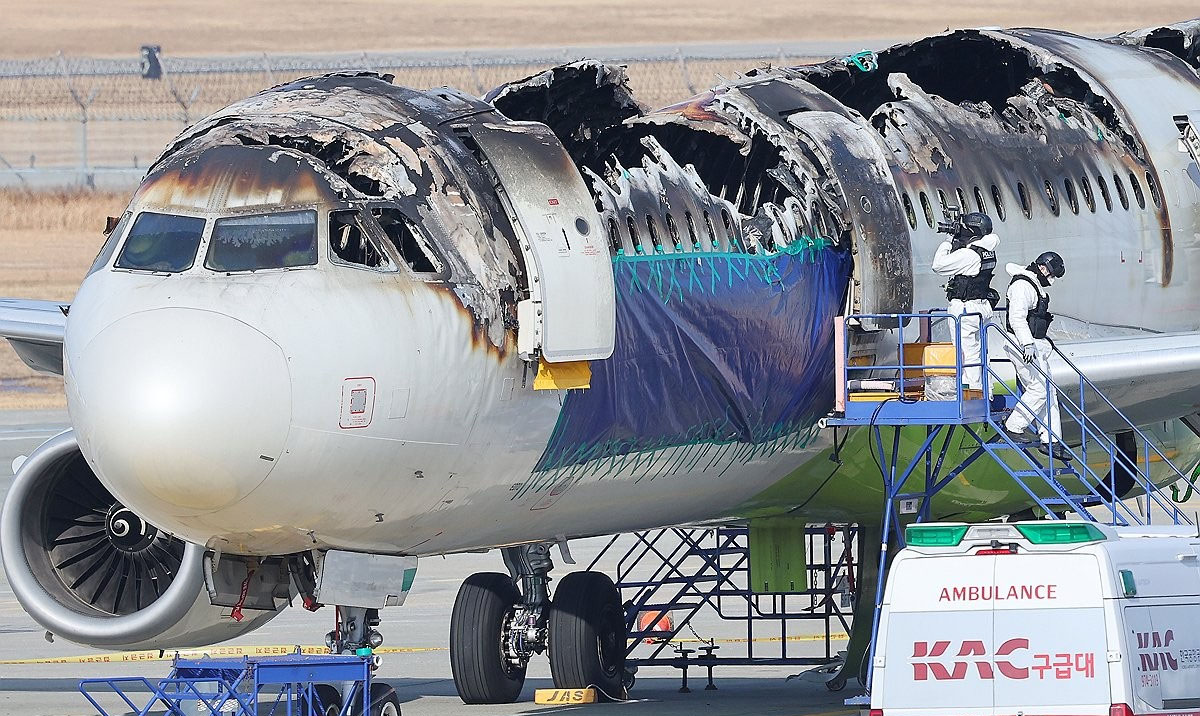
Similar incidents have raised alarm globally. In November 2025, a lithium power bank burst into flames in a passenger’s pocket at Melbourne Airport, leaving the man with burns to his fingers and leg. In January 2025, authorities said a portable power bank was the likely cause of a fire that destroyed a passenger plane in South Korea, leaving three people with minor injuries. In March 2026, a plane departing from Tokyo to New York was evacuated after a portable battery charger caught fire while the plane was taxiing; two seats were burned and the flight was cancelled. In April 2026, an Air Canada flight experienced an overheating power bank that cabin crew placed into a thermal containment bag to prevent fire from spreading.
The Federal Aviation Administration (FAA) has linked 29 in-flight incidents involving smoke, fire, or extreme heat so far this year to power banks on flights connected to the United States. The agency recorded 97 such incidents in 2025, marking a 94 percent increase compared to the previous year. Lithium batteries, including power banks and portable chargers, can act as ignition sources and potentially start onboard fires. Lithium batteries stored in passenger overhead bins or in carry-on baggage may be obscured, difficult to access, or not readily monitored, which can delay detection of thermal runaway and firefighting measures in flight, increasing the risk to safety.
READ ALSO:
- Saudi Crown Prince Hosts Hajj Reception for 1.7M Pilgrims, Muslim Leaders in Mina
- Lagos Sanitation: Wahab’s Unexpected Message to Every Lagos Household
- NAHCON Chairman Orders Refunds for Nigerian Pilgrims Over Substandard Meals
Aviation safety experts explain that lithium batteries pose a danger on aircraft primarily because of their vulnerability to “thermal runaway” – a chain reaction where a damaged, overcharged, or overheated battery undergoes a rapid, uncontrolled rise in temperature, leading to fire, explosion, and the release of toxic fumes. If lithium batteries are damaged, overcharged, or exposed to extreme heat, they can go into thermal runaway, causing serious safety hazards. Traditional firefighting methods using Halon extinguishers can briefly suppress open flames, but they do not halt the thermal runaway process. The primary response involves using large amounts of water to cool the battery and suppress flames.
In Nigeria, the Nigeria Civil Aviation Authority (NCAA) issued directives in January 2026 warning airlines about the growing dangers associated with portable chargers. The regulator barred passengers from checking in power banks, prohibited onboard charging, and limited travellers to carrying only two devices. The NCAA also directed airlines to ensure power banks are not stored in overhead compartments and must remain in visible areas during flights, such as under the passenger’s seat, in seat-back pockets, or in any other location designated by the airline. The directive took effect on March 1, 2026.
Nigerian carriers, including Ibom Air and United Nigeria Airlines, have already begun enforcing the restrictions. Ibom Air announced full compliance with the NCAA safety directive, stating that passengers will no longer be allowed to place power banks in overhead bins or checked-in baggage. The airline explained that lithium-ion batteries, when overheated or damaged, can enter a state known as “thermal runaway,” causing them to ignite fires that are extremely difficult to control, particularly at cruising altitude where emergency response options are limited. Under the rules, power banks rated up to 100 watt-hours (Wh) are allowed without restriction, while those between 100 and 160Wh require prior airline approval. Devices exceeding 160Wh are strictly banned.
Airlines across Asia Pacific have been among the first to implement stricter rules. Singapore Airlines joined major global carriers including Emirates, Air Busan, and Cathay Pacific in imposing new travel safety protocols, limiting passengers to carrying no more than two power banks in carry-on luggage and prohibiting in-flight charging of devices using portable batteries. Hong Kong and Macao airports announced new restrictions citing safety risks linked to lithium battery-powered devices that have caught fire on board. Only flight crew members are excluded from the restrictions, as they may continue using power banks as required for aircraft operations.
Airlines in Japan, South Korea, and Taiwan have also tightened regulations, while China has banned uncertified power banks on domestic flights, with thousands of devices confiscated at Chinese airports. Thai Airways and AirAsia are among other carriers enforcing stricter power bank use aboard aircraft. American Airlines began requiring that flyers keep the devices visible when in use, along with limits on the number of devices they can bring and their watt-hour capacity.
The ICAO’s new specifications represent the most significant global alignment of power bank rules in recent years. The decision reflects emerging expertise around risks presented by passengers’ lithium batteries, with the organization stating the new measures will enhance safety and peace of mind for passengers and airlines alike. The addendum to the Technical Instructions for the Safe Transport of Dangerous Goods by Air has been provided to all ICAO member states for implementation.
Aviation regulators continue to urge passengers to charge devices fully before boarding, use airport lounge and terminal charging facilities, and familiarize themselves with airline-specific power bank policies before flying, as additional restrictions may vary between carriers. Passengers are advised to carry spare batteries, including power banks, in hand luggage instead of checked luggage, ensure devices are below 100Wh, check with the operator for devices between 100 and 160Wh, and avoid using power banks to charge devices onboard the aircraft. Airlines have warned that any operator or passenger found violating these safety regulations could face penalties, and that strict adherence to onboard safety regulations is critical for preventing serious incidents given that lithium battery fires can escalate rapidly.
Airlines Tighten Power Bank Rules Worldwide After Surge in Flight Fire Incidents
Business
Official, Black Market Dollar Rates Narrow as Naira Holds Ground
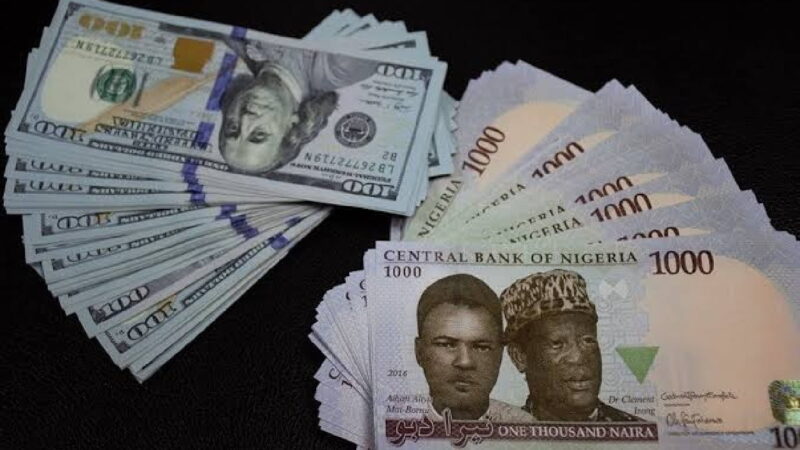
Official, Black Market Dollar Rates Narrow as Naira Holds Ground
The Nigerian naira recorded relative stability against the United States dollar on Friday, May 29, 2026, across both the official and parallel foreign exchange markets, reflecting improved liquidity conditions and sustained interventions by monetary authorities.
Latest figures from the Central Bank of Nigeria showed that the official dollar to naira exchange rate at the Nigerian Foreign Exchange Market stood at ₦1,375.41/$, indicating only marginal movement from recent trading sessions.
The stability at the official window comes as the apex bank continues efforts to boost liquidity and improve transparency in the foreign exchange market through sustained reforms and market-driven pricing mechanisms.
At the black market, also known as the parallel market, the dollar to naira exchange rate today traded at an average buying rate of ₦1,378/$ and a selling rate of about ₦1,390/$, according to data from currency traders.
This places the gap between the official exchange rate and the black market dollar to naira rate at less than ₦15, a significant improvement compared to wider spreads recorded earlier this year.
READ ALSO:
- Tinubu Deepfake: Presidency Alleges Coordinated Plot to Divide Nigerians
- What I Discussed With Amaechi During Abuja Visit — Atiku
- Ondo Police Arrest Five Suspects Over Kidnap of Two Schoolchildren, Recover N251,000 Ransom
Market analysts said the narrowing spread signals stronger confidence in the foreign exchange system and reflects improved supply of foreign currency through formal channels.
Recent trading patterns show the naira to dollar exchange rate has remained within the ₦1,360 to ₦1,390 per dollar range throughout May, despite continued demand from importers, manufacturers, airlines and individuals making foreign payments.
Currency dealers noted that demand for the greenback remains steady, driven by business transactions, international school fee payments, medical expenses abroad and import financing.
Analysts also linked the naira’s relative stability to improved autonomous FX inflows, stronger diaspora remittances and the Central Bank’s continued monitoring of the market.
The Central Bank of Nigeria has repeatedly maintained that its foreign exchange reforms are designed to enhance market efficiency, improve price discovery and attract investor confidence.
Economic experts, however, warned that sustaining the current stability will depend on consistent FX inflows, stronger crude oil earnings and broader macroeconomic stability.
For businesses and consumers, the current exchange rate offers temporary relief from price volatility, although traders remain cautious as global oil prices and external market pressures continue to influence Nigeria’s foreign exchange outlook.
Official, Black Market Dollar Rates Narrow as Naira Holds Ground
-

 metro22 hours ago
Lagos Tenancy Reform 2026: What Tenants, Landlords Must Know
-

 Africa1 day ago
Xenophobia: “South African Men Are Jealous of Us Because We Service Their Women Well in Bed” – Ghanaian Man
-

 metro22 hours ago
Tinubu Launches 145 Tricycle Ambulances, Six Boat Ambulances to Save Mothers, Newborns Across Nigeria
-

 metro1 day ago
Tinubu Marks Third Anniversary, Says Nigeria’s Economy Recovering
-

 Politics3 days ago
Omo-Agege Resigns From APC After Delta Primary Setback
-

 metro2 days ago
Tinubu Deepfake: Presidency Alleges Coordinated Plot to Divide Nigerians
-

 Politics2 days ago
Lagos APC Crisis Deepens as Tinubu’s Daughter Threatens Protest Over Primaries
-

 Politics2 days ago
‘You’re Not Abandoned,’ Tinubu Assures Abducted Oyo, Borno Schoolchildren