

Meanwhile, Messi continues to excel in the MLS 2024 season with Inter Miami, contributing to four goals in three games.
Sports
I can only win Ballon D’or once Messi retires – Haaland
I can only win Ballon D’or once Messi retires – Haaland
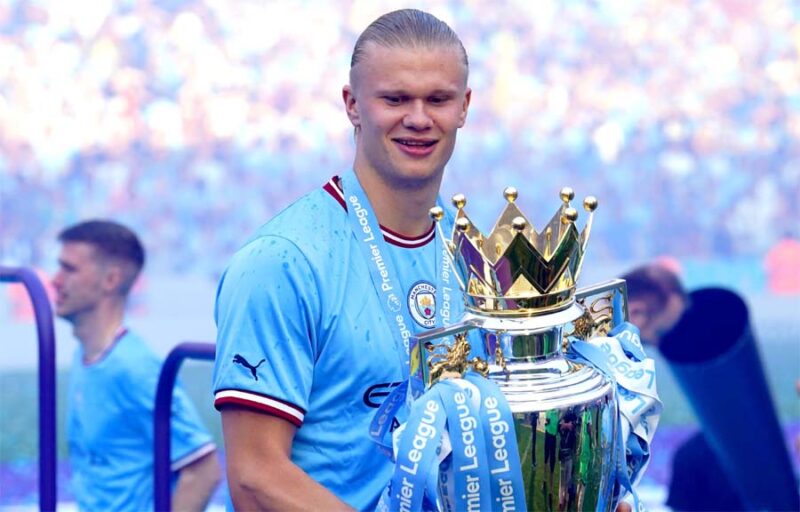
Erling Haaland, the Manchester City star, has hinted that his chances of winning the Ballon d’Or may only materialize once Lionel Messi retires.
The prolific striker, who had an outstanding debut season at Etihad Stadium, scoring 52 goals across all competitions, fell short of claiming the 2023 Ballon d’Or, finishing second to Lionel Messi.
In a press conference on Tuesday, Haaland responded to a question about whether Messi’s retirement would pave the way for his Ballon d’Or aspirations, stating, “Good question! I don’t know. I’ve achieved a lot at 23 but aim to repeat my successes. Messi is unparalleled; perhaps his retirement will open doors for others to be considered the best.”
READ ALSO:
- Man Utd in lead race to get Osimhen’s signature
- Over 880 candidates failed final bar examination – DG
- Gaza: Stop double standard, Nigeria govt tells World
While Haaland has not maintained his extraordinary goal-scoring form from the previous season, he remains a top contender for the Premier League Golden Boot, with 18 league goals in 22 appearances.







Sports
Former Super Eagles Captain Troost-Ekong Embraces Islam, Recites Shahadah in Doha
Former Super Eagles Captain Troost-Ekong Embraces Islam, Recites Shahadah in Doha
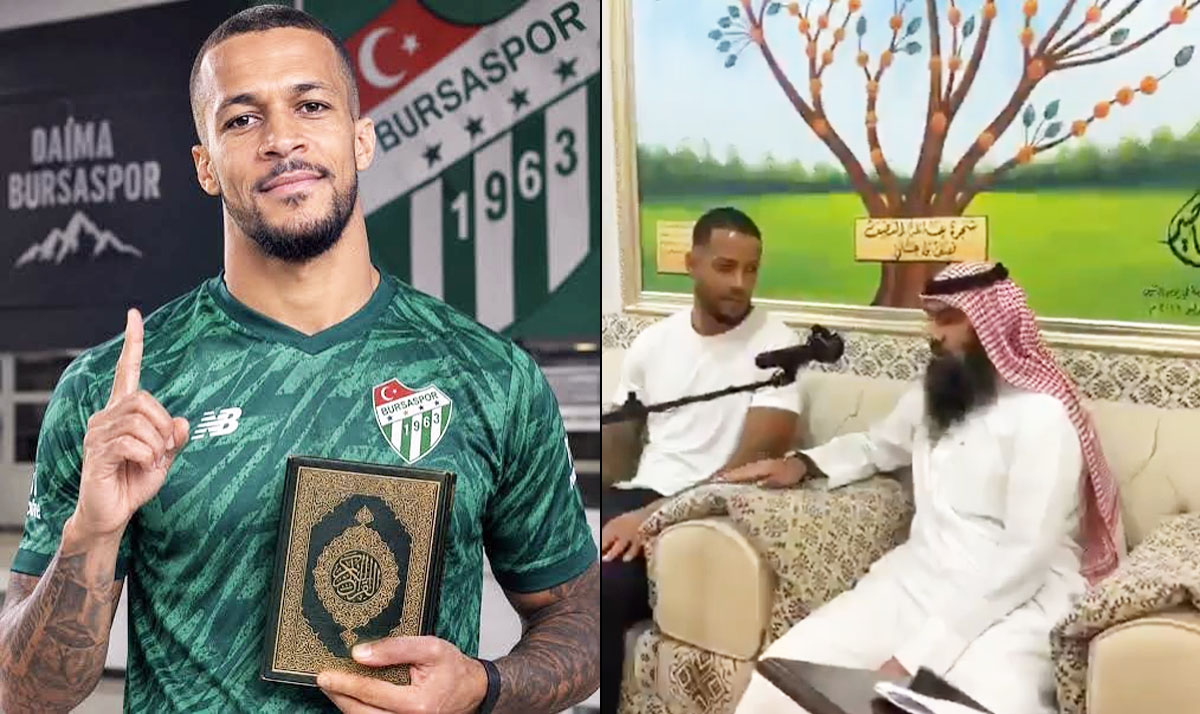
Former Super Eagles captain William Troost-Ekong has embraced Islam after reciting the Shahadah, the Islamic declaration of faith, in Doha, Qatar.
The development was reported on Wednesday, September 23, 2026, after a video emerged showing the 33-year-old Nigerian defender reciting the two testimonies of faith in Arabic.
Qatari newspaper Al-Arab first reported that Troost-Ekong had announced his conversion to Islam while in Doha, where he currently plays for Qatar Stars League club Al-Ahli. The footage subsequently circulated widely on social media and attracted reactions from football fans and Muslim communities.
In the video, Troost-Ekong is seen reciting the Shahadah with the guidance of Sheikh Mansour bin Nasser Al-Khalidi. Al Jazeera reported that the former Nigeria captain expressed a desire to read more and deepen his understanding of Islam.
Al-Khalidi also said Muslim friends around Troost-Ekong at his club had helped introduce him to Islam and influenced his interest in the faith. However, these details were reported by the cleric and have not been separately explained by Troost-Ekong himself.
READ ALSO:
- Milei Slams UN as ‘Useless’ Over Falklands Dispute
- Lagos Arrests Man Over Viral Video of Toddler Being Flogged
- Kwara Police Deny Shooting Motorcyclist at Oyun Bridge, Explain Viral Video
The Shahadah is the declaration of faith in Islam, affirming the oneness of Allah and the prophethood of Muhammad. Its recitation is regarded as the central declaration through which a person enters the Islamic faith.
International Muslim scholar Dr Muhammad Salah also shared footage of Troost-Ekong reciting the Shahadah on his verified Facebook page, welcoming the former Super Eagles captain’s reported conversion. Other media outlets in Nigeria and abroad subsequently reported the development.
Troost-Ekong currently plays for Al-Ahli SC in Doha. He joined the Qatar-based club in January 2026 after leaving Saudi Arabian side Al-Kholood, signing a one-and-a-half-year contract. He had moved to Saudi Arabia in 2024 following his spell with Greek club PAOK.
The defender has built a career across several European and Middle Eastern leagues, with previous spells at clubs including Udinese, Watford, Salernitana and PAOK. His move to Qatar marked another stage in a professional career that has taken him through the Netherlands, Belgium, Norway, Turkey, Italy, England, Greece, Saudi Arabia and Qatar.
Troost-Ekong also enjoyed a decade-long international career with Nigeria. He made his Super Eagles debut in 2015 and went on to earn 83 senior caps and score eight goals before announcing his retirement from international football in December 2025.
He represented Nigeria at the 2018 FIFA World Cup, the Olympic Games and several Africa Cup of Nations tournaments. He was a key member of the Super Eagles squad that reached the final of the 2023 AFCON in Côte d’Ivoire.
Troost-Ekong scored three goals during that tournament, including in the final against the host nation, and was named Player of the Tournament. His performances made him one of the standout defenders of the competition.
Born in the Netherlands to a Nigerian father and Dutch mother, Troost-Ekong developed through youth football in England before beginning his senior career with FC Groningen in the Netherlands. He later represented several clubs across Europe before moving to the Middle East.
His reported conversion to Islam in Qatar has generated significant interest in Nigeria and beyond, particularly because of his profile as a former national-team captain.
While the video documents his recitation of the Shahadah, the precise circumstances surrounding his decision have largely been reported through accounts from Muslim clerics and media outlets. Troost-Ekong himself has not issued a detailed public statement explaining his personal journey or decision beyond what is shown in the video.
The development marks a new personal chapter for the former Super Eagles captain, who continues his professional football career with Al-Ahli in Qatar after ending his international career.
Former Super Eagles Captain Troost-Ekong Embraces Islam, Recites Shahadah in Doha
Sports
Messi Fires Stunning 75th Career Free-Kick to Reach 930 Goals in Inter Miami Draw
Messi Fires Stunning 75th Career Free-Kick to Reach 930 Goals in Inter Miami Draw
The Argentine maestro bags his 101st goal for the Herons alongside a Luis Suárez strike as San Diego FC snatches a 2-2 result.
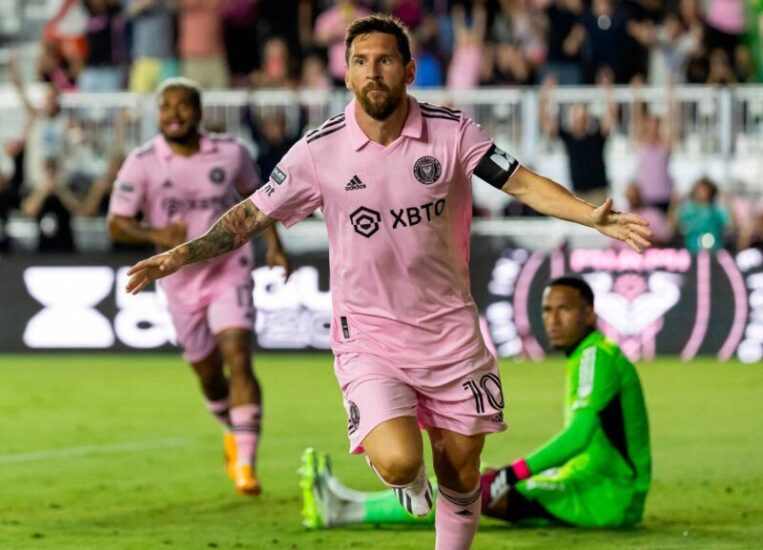
Lionel Messi reached another historic milestone on Sunday night, curling home his 75th career direct free-kick to tally his 930th professional goal during Inter Miami’s pulsating 2-2 draw with San Diego FC.
The 39-year-old Argentine forward stepped up in the 24th minute after drawing a foul outside the penalty area, whipping a trademark left-footed strike off the post past goalkeeper CJ dos Santos to cancel out Anders Dreyer’s early chip for the visitors.
Consequently, the spectacular strike marked Messi’s 101st goal in an Inter Miami shirt, arriving just four days after he surpassed the century mark in a Campeones Cup victory over Mexico’s Cruz Azul and his 20th league goal of the 2026 Major League Soccer campaign.
READ ALSO:
- Lagos Residents Raise Alarm Over Fufu Processing, Preservation Methods
- APC Wins Four of Five By-Elections as APM Takes Bauchi Seat
- Atiku Offers Scholarship to Viral Niger Teen Miner After 37 Miners’ Deaths
Building on that momentum, strike partner Luis Suárez found the net in the 74th minute to hand Miami a 2-1 lead. However, Dreyer struck back for San Diego eight minutes later, capitalizing on defensive space to slot home his second goal of the evening and silence the home crowd.
Ultimately, the late equalizer condemned Inter Miami to their fourth consecutive MLS stalemate, leaving the club on 46 points with a record of 12 wins, four defeats, and 10 draws.
While the shared points frustrated coach and squad alike in the playoff seeding race, Messi continues to defy age, anchoring Miami’s attack and pushing global scoring records to extraordinary heights.
Messi Fires Stunning 75th Career Free-Kick to Reach 930 Goals in Inter Miami Draw
Sports
Enough Is Enough: Muslim Supporters Demand Change of New Man United Owners
Enough Is Enough: Muslim Supporters Demand Change of New Man United Owners
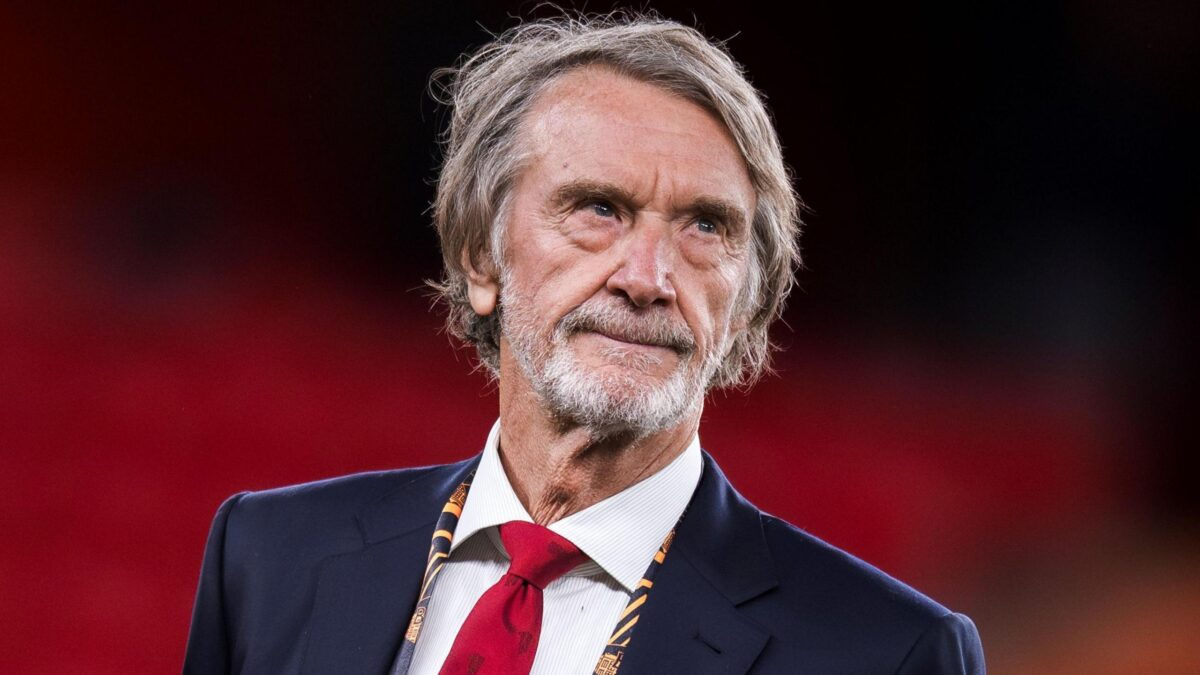
The Manchester United Muslim Supporters’ Club (MUMSC) has called for a change in the ownership of the English Premier League club, demanding that Sir Jim Ratcliffe and the Glazer family leave following fresh comments by the billionaire about immigration, welfare and the state of the United Kingdom.
The supporters’ group issued a strong statement of no confidence in the Manchester United ownership after Ratcliffe, the club’s co-owner and chairman of INEOS, said Britain was “on the slide” and argued that politicians were not being sufficiently tough on immigration and welfare.
Ratcliffe made the comments during a BBC interview in which he discussed Britain’s economic and political challenges. He attributed part of what he sees as the country’s decline to high taxes and immigration and called for politicians to take tougher decisions on immigration and benefits. (The Guardian)
The remarks triggered a fresh response from the Manchester United Muslim Supporters’ Club, which said it had previously hoped Ratcliffe’s apology over earlier immigration comments would mark a change in his approach.
The group said the latest remarks were “deeply disappointing” and “completely unacceptable”, arguing that they were inconsistent with the diverse character of Manchester United.
According to the supporters’ group, the club brings together players, staff, stewards, security personnel and supporters from different countries, cultures, ethnicities, religions and backgrounds.
It said that diversity is not separate from the identity of Manchester United, but is an important part of what the club represents.
The latest dispute follows comments Ratcliffe made earlier in 2026 in which he said Britain had been “colonised by immigrants”. He later apologised for his choice of language and for causing offence.
MUMSC said it had condemned those earlier comments and hoped the apology indicated that a lesson had been learned, but argued that Ratcliffe’s latest remarks showed otherwise.
The supporters’ group also expanded its criticism beyond the billionaire’s comments on immigration, pointing to concerns about Manchester United ticket prices, the condition of Old Trafford, the club’s performances and what it described as repeated unfulfilled promises.
MUMSC said many supporters had initially welcomed Ratcliffe’s arrival because they hoped his investment would bring meaningful change after years under the Glazer family’s ownership.
READ ALSO:
- Stray Bullet Kills 400-Level IBBU Student During Land Dispute in Niger
- Oyo Police: Student Who Died by Suicide Was Charged With Assault, Not ₦8,000 Debt
- Delta Police Intercept Sienna With Military Uniforms, Suspected Drugs
However, the group said its confidence in the current ownership had now been exhausted.
“Enough is enough. It is time for change. The Glazers and Sir Jim Ratcliffe must go,” the group said.
Ratcliffe became a major shareholder in Manchester United in 2024 after his INEOS group acquired a minority stake in the club. The agreement also gave INEOS significant responsibility for football operations, while the Glazer family retained control of the club.
The ownership dispute comes amid a difficult start to the 2026/27 Manchester United season, with results on the pitch adding to the frustration among sections of the supporters.
United were knocked out of the Carabao Cup in the third round after losing 3-2 to Brighton & Hove Albion at Old Trafford despite taking a two-goal lead within the opening 10 minutes.
Teenager Shea Lacey opened the scoring before Mason Mount doubled United’s advantage, but Brighton responded through Charalampos Kostoulas, Pascal Gross and Maxim De Cuyper to complete the comeback.
The defeat ended United’s Carabao Cup campaign at the first hurdle and marked the first time in 50 years that the club had lost at Old Trafford after taking a 2-0 lead. (The Guardian)
Manager Michael Carrick accepted responsibility for the collapse and said the team had to respond quickly by returning to winning football.
The cup defeat followed a 1-0 loss to Manchester City in the Premier League and contributed to a difficult opening period for Carrick’s side. Recent reporting put United 13th in the Premier League after collecting four points from their opening four league matches. (The Guardian)
The football struggles have therefore become another source of tension between sections of the fan base and the club’s leadership, although the MUMSC’s latest statement makes clear that its concerns are broader than results.
The supporters’ group has linked its demand for ownership change at Manchester United to questions about the club’s direction, supporter relations, commercial decisions and its treatment of the diverse community that follows the team.
Ratcliffe’s involvement has already produced significant changes at the club, including restructuring and job cuts, while his decisions on ticketing and other operations have generated criticism from some supporter groups.
His latest comments have now added an additional point of contention, particularly among the Muslim supporters’ group, which says Manchester United’s international and multicultural identity should be reflected in the conduct and public statements of those running the club.
Despite the demand from MUMSC, there has been no indication that Sir Jim Ratcliffe or the Glazer family is preparing to sell their respective interests in Manchester United.
The latest development nevertheless places renewed attention on the relationship between the club’s ownership and its supporters as Manchester United attempts to recover from a difficult start to the new season.
Enough Is Enough: Muslim Supporters Demand Change of New Man United Owners
-
 News3 days ago
NLC Backs ₦500 Petrol Demand, Workers Propose ₦500,000 Salary
-

 Politics3 days ago
Obi vs Soludo: ₦86.67bn Handover Figure Meets ₦127.37bn Debt Claim
-
 metro3 days ago
Saudi Arabia Rejects Nigeria’s Request for More 2027 Hajj Slots
-
 Education3 days ago
UK Student Visa: 63 Countries Exempt From Proof of Funds, Nigeria Excluded
-

 Health3 days ago
Lagos Intensifies Surveillance as Adulterated Palm Oil Raises Food Safety Concerns
-

 metro2 days ago
Nationwide Blackout Looms As Electricity Workers Give NAF Three-Day Ultimatum
-

 Entertainment2 days ago
Phyna, Nkechi Blessing Take Social Media Feud To Boxing Ring In Lagos
-

 Politics20 hours ago
Osun APC Warns Adeleke Govt Over Alleged Victimisation of Local Govt Workers