

metro
Oyo suspends monthly environmental sanitation

Oyo State Government has suspended its monthly environmental sanitation and the restriction of movement during the exercise.
The state Commissioner for Environment and Natural Resources, Dr Idowu Oyeleke, announced this in a statement on Wednesday.
He said, “The state government has suspended the exercise and restriction of vehicular and human movement has been suspended indefinitely. “However the Environmental Task Force would be going around to ensure compliance and adherence to all the environmental laws and regulations of the state.”
The state government urged residents of the state to ensure daily cleaning of their environments because sanitation exercise had become an everyday activity.
Oyeleke stated that failure to comply with the new directive would compel relevant government officials to enforce environmental laws and sanctions against offenders.
The commissioner said residents of the state should ensure that their premises, surroundings and drainage channels are always clean to prevent diseases and flooding.
He stated, “It would be noted that we shall begin to experience rainfall, hence the need to prepare ahead of time in order to avert avoidable floods and loss of properties.
“It is imperative to implore residents in the state to take the daily sanitation exercise seriously, for a healthy environment is a function of wealthy society.
“Residents should desist from acts that could lead to flooding, such as indiscriminate dumping of waste into drainage channels as it hinders the flow of water in its natural path.”
The commissioner also directed all directors of Environmental Health Services in the 33 local government and 35 local council development areas within the state to monitor the daily sanitation.












metro
NNPC Disowns Cannabis-Laden Tanker, Threatens Legal Action Over Brand Misuse

NNPC Disowns Cannabis-Laden Tanker, Threatens Legal Action Over Brand Misuse
The Nigerian National Petroleum Company Limited (NNPC Ltd.) has distanced itself from a 20,000-litre fuel tanker intercepted by the National Drug Law Enforcement Agency (NDLEA) with 2,145 kilogrammes of cannabis concealed in a secret compartment in Ondo State, while threatening legal action against those behind the alleged unauthorised use of its corporate identity.
The company, in a statement issued on Monday by its Chief Corporate Communications Officer, Andy Odeh, said preliminary checks revealed that the vehicle, with registration number MKA 960 XC, was neither owned by NNPC Ltd. nor part of its official fleet or that of any of its authorised dealers. The logo displayed on the vehicle was also inconsistent with the company’s current official branding, and the truck was not listed in its asset database.
The operation took place on September 4, 2026, along the Akoko–Lokoja Expressway in Ondo State after NDLEA operatives reportedly pursued the tanker when its driver refused to stop for inspection. According to the agency, the driver later abandoned the vehicle at a church premises in Ugbe Akoko and fled into the bush. A search of the tanker uncovered 165 bags of cannabis weighing 2,145kg concealed in a false compartment alongside what the NDLEA described as a legitimate fuel cargo destined for Jos, Plateau State. The agency noted that the tanker had allegedly evaded arrest in previous operations.
READ ALSO:
- Bauchi Man, 25, Allegedly Shoots Friend Dead With Dane Gun During Quarrel
- 87-Year-Old Man Arraigned for Severing Judge’s Hand in Adamawa Cutlass Attack
- Three-storey building collapses in Abuja hours after FCTA closure
NNPC said it was engaging with the Nigerian Association of Road Transport Owners (NARTO) to obtain further information and establish the circumstances surrounding the use of its old branding on the vehicle. The company vowed to take the matter seriously, warning that it would explore legal action against individuals or syndicates attempting to exploit its corporate identity as a cover for criminal operations. “NNPC Ltd. takes any unauthorised use of its corporate identity seriously, particularly where such use may be associated with unlawful activity. The Company remains committed to protecting the integrity of its brand and ensuring that its name, trademarks and other corporate identifiers are not misused.” The national oil company said it would cooperate fully with the NDLEA and other relevant security agencies in investigating the incident, including determining the actual ownership and operation of the truck and how NNPC markings came to be displayed on it.
NNPC commended the NDLEA for its vigilance and professionalism in uncovering the illicit consignment. The company reiterated its support for the NDLEA’s efforts to combat illicit drug trafficking and pledged to provide all necessary cooperation to ensure that the facts surrounding the incident were conclusively established. The company also urged members of the public and relevant authorities to verify the ownership or affiliation of vehicles purporting to belong to NNPC through appropriate official channels.
NNPC Disowns Cannabis-Laden Tanker, Threatens Legal Action Over Brand Misuse
metro
Bauchi Man, 25, Allegedly Shoots Friend Dead With Dane Gun During Quarrel
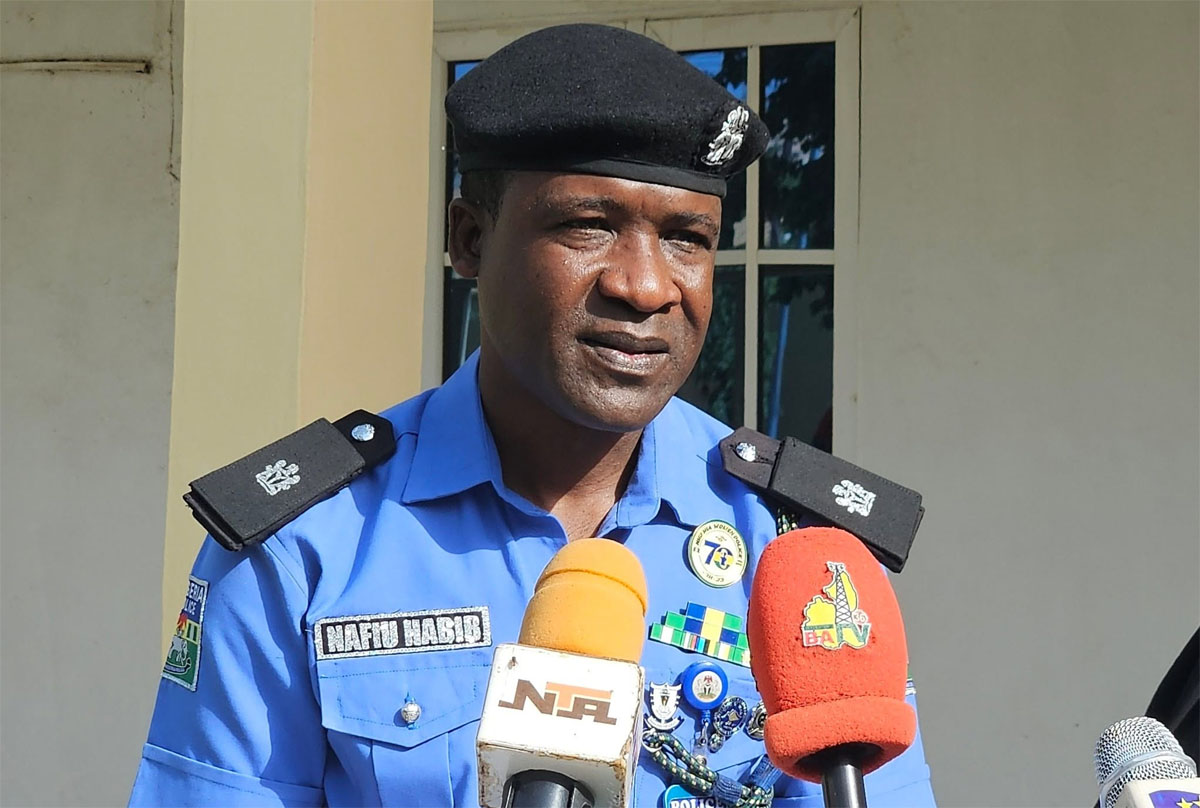
Bauchi Man, 25, Allegedly Shoots Friend Dead With Dane Gun During Quarrel
The Bauchi State Police Command has arrested a 25-year-old man, Jabir Yusuf, for allegedly shooting and killing his friend, Hassan Mohamed, also 25, with a Dane gun in Toro Local Government Area of the state.
The tragic incident occurred on Monday, September 7, 2026, at approximately 11:30 a.m. in Rinjin Gura village, Zalau Ward, following a disagreement between the two friends. According to a statement issued by the command’s spokesperson, SP Nafiu Habib, a distress report was received at the Rishi Divisional Police Headquarters from a resident that Yusuf had allegedly fired a Dane gun at Mohamed, striking him in the neck. Police operatives from the nearby Gumau Division rushed the victim to Toro General Hospital for medical treatment. However, he was later pronounced dead by a medical doctor on duty. Mohamed’s body was subsequently identified, documented, and released to his family for burial in accordance with Islamic rites. The suspect was arrested by police, and the Dane gun allegedly used in the attack was recovered as an exhibit. The case has since been transferred to the State Criminal Investigation Department in Bauchi for a discreet investigation and possible prosecution.
READ ALSO:
- 87-Year-Old Man Arraigned for Severing Judge’s Hand in Adamawa Cutlass Attack
- Three-storey building collapses in Abuja hours after FCTA closure
- El-Rufai Demands ₦10bn from Defence Minister Over Southern Kaduna Killings Allegation
The Commissioner of Police, Sani-Omolori Aliyu, expressed condolences to the deceased’s family and directed investigators to thoroughly establish the circumstances surrounding the incident. Aliyu also cautioned residents against the unlawful possession and careless handling of firearms, warning that anyone found violating the law would face prosecution. The command further appealed to members of the public to provide credible and timely information to the police to support efforts to safeguard lives and property across the state.
The incident in Toro comes just days after another fatal Dane gun incident in Bauchi State. On Saturday, September 5, 2026, a 13-year-old boy, Mubarak Mohammed, died after accidentally shooting himself with a loaded Dane gun in Udubo village, Gamawa Local Government Area. According to the police, the gun allegedly belonged to a 35-year-old hunter, Suleiman Hamza, who had returned from hunting and left the loaded weapon unsecured inside his room before going out. The teenager entered the room and pulled the trigger, causing the gun to discharge and inflict fatal injuries on him. The hunter has been arrested, and the case transferred to the State Criminal Investigation Department. These incidents have heightened concerns over the careless handling and storage of locally made firearms, with the Commissioner of Police urging hunters and firearm owners to exercise utmost care.
Bauchi Man, 25, Allegedly Shoots Friend Dead With Dane Gun During Quarrel
metro
87-Year-Old Man Arraigned for Severing Judge’s Hand in Adamawa Cutlass Attack

87-Year-Old Man Arraigned for Severing Judge’s Hand in Adamawa Cutlass Attack
An 87-year-old man, Dahiru Garba, has been arraigned before a Yola Chief Magistrate Court for allegedly attacking an Area Court judge with a cutlass during court proceedings in Adamawa State, severing the judge’s hand in a shocking courtroom assault that has sparked outrage from judicial workers.
Garba, a resident of Korawa village in Fufore Local Government Area, allegedly attacked the Presiding Judge of Mayo-Ine Area Court, Hon. Dauda Hamman, on August 31, 2026, while the judge was presiding over a case involving Garba and one Ismail Yusuf. According to police reports, the elderly suspect suddenly produced a cutlass during the proceedings and struck the judge’s hand several times, inflicting grievous injuries and severing his hand in a moment of unthinkable violence inside the courtroom. Panic swept through the courtroom as security operatives scrambled to restore order and subdue the attacker. Garba was arrested at the scene shortly after the incident. The case was later transferred from the Divisional Police Headquarters in Fufore to the State Criminal Investigation Department (SCID) in Yola on September 4, 2026, for deeper investigation.
Following the conclusion of the investigation, Garba was arraigned on Monday, September 8, 2026, before Chief Magistrate Court I, Yola, presided over by Chief Magistrate Ismail Bello Shelleng. He was charged with one count of causing grievous hurt, contrary to Section 219 of the Penal Code Law of Adamawa State, 2018. When the charge was read and interpreted to him, Garba pleaded guilty on the spot and reportedly blamed the devil for his action, expressing deep remorse for the violence he had unleashed. The court subsequently ordered that he be remanded at the Yola Correctional Facility pending further hearing. Police prosecutor, ASP Zakka Musa, prosecuted the case on behalf of the Commissioner of Police, Adamawa State Command. The Commissioner of Police, CP Kabir Umar Hassan, has assured the public that the case will be diligently prosecuted to ensure justice is served.
READ ALSO:
- Three-storey building collapses in Abuja hours after FCTA closure
- El-Rufai Demands ₦10bn from Defence Minister Over Southern Kaduna Killings Allegation
- Okonkwo Mocks Obi Over Attendance at Makinde’s APM Campaign Office Launch
The Adamawa State chapter of the Judiciary Staff Union of Nigeria (JUSUN) has strongly condemned the attack, describing it as “barbaric, inhuman, heinous, unacceptable” and an assault on the nation’s legal system and constituted authorities. In a statement signed by its chairman, Comrade Fxenty Sanda Jonathan, JUSUN said the judge was macheted while performing his constitutional duties in the courtroom. “An arbiter of justice performing his constitutional duties as a judge should not be descended upon by armed men and macheted helplessly. This is unacceptable,” the union stated. JUSUN urged the government and relevant authorities to apprehend the perpetrators and make them face the full wrath of the law within the shortest possible time. The union also called for adequate security cover for magistrates and area court judges working in remote parts of the state, noting that “judges in rural courts are exposed to high risks due to the nature of cases they handle and the absence of sufficient protection, a situation that must be addressed urgently.” The union further threatened to shut down courts across the state if the perpetrators were not brought to book. Meanwhile, the Adamawa State Police Command has activated its signals and heightened surveillance to facilitate swift action on the matter. The attack has reignited urgent questions about security for judicial officers across Adamawa State, serving as a chilling reminder that courtrooms—built as sanctuaries of law—are not immune to the very violence they exist to adjudicate.
87-Year-Old Man Arraigned for Severing Judge’s Hand in Adamawa Cutlass Attack
-

 Business3 days ago
BREAKING: OPay Warns Customers Against Viral Shutdown Message, Threatens Legal Action
-

 metro3 days ago
Osinbajo raises alarm over chemicals in fruits, recalls wife’s orange juice experience
-

 Politics3 days ago
15 northern states may collapse if fuel subsidy returns, OAU professor warns Atiku
-

 Education3 days ago
JAMB Releases Underage UTME Results, Sets Strict Conditions for Admission
-

 Auto3 days ago
NAJA 19th Auto Awards: Industry’s best to battle for honours December 3
-

 metro2 days ago
APC rally: Suspected thugs attack journalists, smash Radio Nigeria vehicle in Kano
-
 metro3 days ago
Lagos-Ibadan Expressway: FG begins Kara Bridge repairs Tuesday, deploys traffic agencies
-

 Politics3 days ago
‘It’s a lie’ – Wike’s aide challenges Peter Obi’s ‘I don’t give shishi’ claim